Diabetes in Puppy Symptoms
Recognize diabetes in puppy symptoms early. This guide covers milestones, feeding schedules, vaccinations, and when to see your vet about canine diabetes.

Bringing a new puppy home is thrilling, but it also means learning to spot health problems before they escalate. One condition that catches many new owners off guard is juvenile-onset diabetes mellitus. While diabetes in puppy symptoms is relatively uncommon compared to adult-onset cases, understanding the early warning signs — and how they overlap with normal puppy behavior — can make the difference between a quick veterinary intervention and a medical emergency.
This guide walks you through every stage of puppy development while teaching you how to distinguish normal growing-puppy quirks from signs that warrant a vet visit. We will cover feeding, potty training, socialization, vaccinations, teething, crate training, and first-year costs — all while keeping diabetes awareness threaded throughout.
Recognizing Diabetes in Puppy Symptoms vs. Normal Puppy Behavior
Canine diabetes mellitus occurs when the pancreas fails to produce enough insulin (Type 1 / insulin-dependent) or when the body cannot use insulin effectively (Type 2). In puppies, the condition is almost always insulin-dependent diabetes mellitus (IDDM), sometimes called juvenile-onset diabetes. According to the Merck Veterinary Manual, diabetes in dogs under one year old is rare but documented, and certain breeds — including Samoyeds, Cairn Terriers, Keeshonds, and Poodles — carry higher genetic predisposition.
The challenge for puppy owners is that several diabetes symptoms mirror perfectly normal puppy behaviors. Here is how to tell them apart:
| Symptom | Normal Puppy Behavior | Potential Diabetes Red Flag |
|---|---|---|
| Excessive thirst (polydipsia) | Puppies drink more after play, in warm weather, or after eating dry kibble | Constantly at the water bowl, drinking over 100 mL/kg/day consistently |
| Frequent urination (polyuria) | Small bladders mean accidents every 1-2 hours under 4 months | Urinating large volumes frequently, new accidents after being house-trained |
| Increased appetite (polyphagia) | Puppies are food-motivated and beg during growth spurts | Ravenous despite eating full portions, weight loss despite eating more |
| Weight loss | Rarely normal — puppies should steadily gain weight | Visible rib prominence, declining body condition score despite adequate food |
| Lethargy | Puppies sleep 18-20 hours/day, crash after play | Persistent low energy, weakness in hind legs, reluctance to play at all |
Puppy Milestones: What to Expect Week by Week
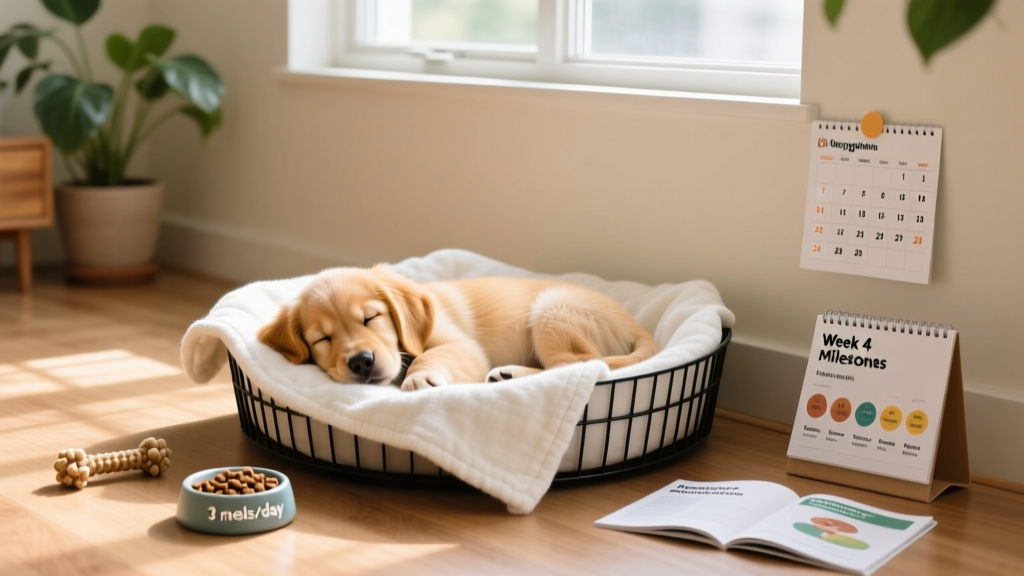
Understanding developmental milestones helps you calibrate expectations and notice when something is genuinely off-track. Below is a concrete timeline for healthy puppy development.
Weeks 4–8: The Neonatal Transition
During this period, puppies transition from mother's milk to soft-solid food. Eyes and ears are fully open. Littermate socialization teaches bite inhibition basics. Puppies should weigh approximately 1-2 lb (0.5-1 kg) for small breeds and 5-15 lb (2-7 kg) for large breeds by week 8. A puppy who is not gaining weight steadily during this window — or who seems excessively thirsty compared to littermates — should be evaluated before going home.
Weeks 8–12: The Homecoming Window
This is when most puppies join their new families. Expect 18-20 hours of sleep daily, frequent potty breaks (every 1-2 hours), and intense curiosity. Your puppy should eat 3-4 meals per day. You will likely schedule the first vet wellness exam within 48-72 hours of bringing your puppy home — mention any excessive thirst or urination patterns you have noticed during this visit.
Weeks 12–16: Rapid Growth Phase
Puppies gain approximately 5-10% of body weight per week during this stage. Energy bursts are followed by deep sleep. Puppy should respond to their name, begin crate training, and show improving bladder control (holding for 2-3 hours). If your puppy is drinking excessively but still losing weight, this is the age when juvenile diabetes symptoms most commonly become noticeable to observant owners.
Weeks 16–24: Adolescence Begins
Teething peaks, adult teeth emerge, and testing boundaries becomes a daily event. Puppies can hold bladder for 4-5 hours. Growth rate slows slightly. By 24 weeks, your puppy should be reliably potty-trained during the day and able to sleep through the night without accidents.
Months 6–12: The Teenage Stretch
Large-breed puppies continue growing until 18-24 months; small breeds reach adult size around 10-12 months. Energy is high but more sustained. This is prime time for advanced training, longer walks, and continued socialization. Transition to two meals per day around 6 months (breed-dependent).
Feeding Schedule: Portions, Frequency, and Diabetes Considerations
Proper nutrition is foundational to puppy health — and it becomes critically important if your vet diagnoses diabetes. Diabetic puppies require carefully timed meals coordinated with insulin injections, typically twice daily at 12-hour intervals.
For healthy puppies without a diabetes diagnosis, here is a general feeding framework based on expected adult weight:
| Age | Meals/Day | Small Breed (adult 10-25 lb / 5-11 kg) | Medium Breed (adult 25-60 lb / 11-27 kg) | Large Breed (adult 60-100 lb / 27-45 kg) |
|---|---|---|---|---|
| 8-12 weeks | 4 | ¼ - ½ cup per meal | ½ - ¾ cup per meal | ¾ - 1¼ cups per meal |
| 3-6 months | 3 | ⅓ - ⅔ cup per meal | ¾ - 1 cup per meal | 1 - 2 cups per meal |
| 6-12 months | 2 | ½ - ¾ cup per meal | 1 - 1¾ cups per meal | 2 - 3½ cups per meal |
Important: These are starting estimates using standard puppy kibble (approximately 400 kcal/cup). Always check the feeding chart on your specific food brand and adjust based on your puppy's body condition score (BCS). Your vet will help fine-tune portions at each wellness visit.
Vaccination Schedule: Protecting Your Puppy's Health
A robust immune system matters even more for a puppy managing a chronic condition like diabetes. Stay on schedule with core vaccines to prevent compounding health issues.
| Age | Vaccine | Notes |
|---|---|---|
| 6-8 weeks | DHPP (Distemper, Hepatitis, Parainfluenza, Parvovirus) — 1st dose | Often given by breeder/rescue; verify records |
| 10-12 weeks | DHPP — 2nd dose; Bordetella (optional, recommended if attending puppy classes) | Leptospirosis and Lyme may be added based on regional risk |
| 14-16 weeks | DHPP — 3rd dose; Rabies (required by law in most US states) | Final puppy series; immunity solidifies ~2 weeks after this dose |
| 12-16 months | DHPP booster; Rabies booster (1-year or 3-year depending on vaccine type) | Consider titer testing before future boosters per AVMA guidelines |
Diabetic puppy consideration: Vaccines are generally safe for diabetic puppies, but your vet may prefer to stabilize blood glucose levels before administering shots. Never skip core vaccines — an infection on top of diabetes can trigger a dangerous metabolic crisis.
Socialization Window (Weeks 3–14): Your Critical Exposure Checklist
The primary socialization window closes around 14 weeks of age, according to the American Kennel Club. What your puppy experiences (or does not experience) during this period shapes their lifelong confidence and stress response. Chronic stress elevates cortisol, which can complicate blood sugar regulation — another reason to keep socialization positive and gradual.
Use this checklist to track exposure. Aim for positive, low-pressure encounters — not overwhelming floods of stimulation:
- Surfaces: Grass, gravel, tile, hardwood, metal grates, wet pavement
- Sounds: Vacuum cleaner, doorbell, thunderstorm recordings (low volume), traffic, children playing
- People: Children, elderly adults, people wearing hats/sunglasses, people using wheelchairs or crutches, delivery workers
- Animals: Fully vaccinated, friendly adult dogs (avoid dog parks until vaccine series is complete); cats if applicable
- Handling: Paw touching, ear inspection, mouth opening, nail trimming practice, gentle restraint
- Environments: Car rides, pet-friendly stores, outdoor café patios, vet clinic waiting room (positive visits with treats, no procedures)
- Objects: Umbrellas opening, plastic bags rustling, bicycles, skateboards, strollers
Rule of thumb: 100 new positive experiences before 16 weeks. Each encounter should end with your puppy relaxed or playful — if they show fear (tucked tail, flattened ears, freezing), increase distance and use high-value treats to build positive associations through counter-conditioning.
Potty Training Timeline and Troubleshooting
Potty training is where diabetes symptoms and normal puppy behavior most commonly overlap, making this section especially important.
Realistic Potty Training Timeline
- 8-10 weeks: Accidents every 1-2 hours. Take puppy out after every meal, nap, and play session. Expect 8-12 outdoor trips daily.
- 10-14 weeks: Bladder capacity improves. Puppy may hold for 2-3 hours during the day. Accidents should decrease if you maintain a consistent schedule.
- 14-20 weeks: Most puppies can hold for 3-4 hours during the day. Nighttime holding extends to 5-6 hours.
- 20-24 weeks: Daytime reliability for most breeds. Occasional accidents still happen during excitement or schedule changes.
- 6-12 months: Full reliability expected. If your puppy was previously trained and suddenly starts having accidents again, this is a red flag — particularly for diabetes or urinary tract infections.
Troubleshooting Common Issues
Submissive urination: Common in young dogs. Avoid scolding; crouch sideways and greet calmly. Usually resolves by 12 months.
Marking behavior: Typically begins around 6 months, more common in intact males. Spaying/neutering reduces but does not always eliminate marking. Manage with supervision and redirecting to appropriate outdoor spots.
Regression after progress: Often triggered by schedule changes, moving, new household members, or medical issues. Rule out health causes (UTIs, diabetes, kidney issues) before assuming it is behavioral.
Teething Timeline and Crate Training Progression
Teething: Months 3–6
Puppies have 28 deciduous (baby) teeth that begin erupting around 3-4 weeks and are fully in by 6-8 weeks. Starting around 12-16 weeks, these baby teeth are pushed out by 42 permanent adult teeth. The teething process causes gum inflammation, increased chewing drive, and sometimes mild bleeding.
Safe relief strategies:
- Frozen wet washcloths (twist, wet, freeze — supervise to prevent swallowing fabric)
- Kong Classic (puppy size) stuffed with plain yogurt and frozen
- Nylabone Puppy Chew (specifically the puppy-formula, softer texture)
- Benebone Puppy Wishbone (size-appropriate, always supervise)
- Chilled carrot sticks or apple slices (remove seeds/core)
Avoid: Hard antlers, cooked bones (splinter hazard), ice cubes for small breeds (tooth fracture risk), and any chew toy smaller than your puppy's mouth.
Crate Training Progression
A crate provides a safe den and supports potty training by leveraging a dog's instinct not to soil their sleeping area. Here is a progressive timeline:
| Age | Maximum Crate Time (Daytime) | Nighttime Expectation |
|---|---|---|
| 8-10 weeks | 30-60 minutes | 2-3 hours before potty break needed |
| 11-14 weeks | 1-2 hours | 3-4 hours |
| 15-16 weeks | 2-3 hours | 4-5 hours |
| 4-6 months | 3-4 hours | 6-8 hours (through the night) |
| 6+ months | 4-6 hours max | 8 hours |
Never use the crate as punishment. Build positive associations by feeding meals inside, providing stuffed Kongs, and keeping the door open during the day so your puppy can enter voluntarily. If your puppy whines, wait for a brief moment of quiet before opening the door — releasing them mid-whine reinforces the behavior.
Common Puppy Problems and Solutions
Puppy Biting and Nipping
Puppies explore the world with their mouths, and teething intensifies the urge. Biting is normal through about 5-6 months but must be shaped toward appropriate outlets.
What works: When teeth touch skin, say "ouch" in a calm tone, withdraw attention for 10-15 seconds (stand up, turn away, or step behind a baby gate), then redirect to an appropriate chew toy. Reward with praise when they chew the toy. Consistency across all household members is essential.
What does not work: Yelling, holding the mouth shut, alpha rolls, or any physical punishment. These methods increase fear and can escalate biting rather than reduce it, according to position statements from the American Veterinary Society of Animal Behavior.
Excessive Whining
Whining in the crate or at night is typically driven by anxiety, a need to eliminate, or learned attention-seeking. First, rule out the potty need (take them out on leash, keep it boring, return to crate). For anxiety-related whining, place the crate near your bed initially and gradually move it to the desired location over 1-2 weeks. A Snuggle Puppy (with heartbeat simulator) or a worn t-shirt with your scent can ease the transition.
Destructive Chewing
Puppies chew to relieve teething discomfort and explore textures. Manage the environment by puppy-proofing rooms, providing 5-8 appropriate chew toys in rotation (novelty maintains interest), and supervising closely. If you catch them chewing something inappropriate, redirect to an approved toy and praise enthusiastically when they take it.
First-Year Cost Breakdown
Budgeting for a puppy is easier when you have real numbers. Below is a realistic first-year cost range for a medium-breed puppy in the United States (2025-2026 pricing). Costs vary by region, breed size, and whether complications arise.
| Category | Low Estimate | High Estimate | Notes |
|---|---|---|---|
| Veterinary (wellness visits, vaccines, deworming) | $400 | $800 | 3-4 puppy visits + spay/neuter |
| Spay/neuter | $250 | $600 | Varies by size, clinic, and region |
| Food (puppy formula, 12 months) | $300 | $700 | AAFCO-complete kibble; premium/fresh diets cost more |
| Preventive medications (heartworm, flea/tick) | $200 | $450 | Monthly preventives year-round |
| Supplies (crate, bed, bowls, leash, harness, toys) | $200 | $500 | One-time purchases; quality gear lasts years |
| Training (puppy class + basic obedience) | $150 | $400 | Group classes; private sessions cost $75-150/hour |
| Pet insurance (annual premium) | $400 | $800 | Enroll early — pre-existing conditions excluded; diabetes treatment without insurance can exceed $3,000/year |
| Total first year | $1,900 | $4,250 | Does not include purchase/adoption fee |
Diabetes-specific costs if diagnosed: Add approximately $1,500-$3,000 annually for insulin (Vetsulin or ProZinc), glucose monitoring supplies, prescription diet food, and increased veterinary visit frequency. Initial stabilization may require hospitalization costing $1,000-$2,500. This is why pet insurance enrollment during the puppy period — before any diagnosis — is financially strategic.
Frequently Asked Questions
When should I bring my puppy home?
The optimal age is 8-10 weeks for most breeds. Some responsible breeders of toy breeds keep puppies until 10-12 weeks due to their fragility and risk of hypoglycemia. Never take a puppy home before 8 weeks — the littermate socialization period (weeks 5-8) teaches critical bite inhibition and canine communication skills.
How often should I feed my puppy?
Feed 4 meals daily from 8-12 weeks, 3 meals from 3-6 months, and transition to 2 meals at around 6 months. If your puppy is diagnosed with diabetes, your vet will likely standardize feeding to exactly 2 meals per day at 12-hour intervals, synchronized with insulin injections. Consistency in meal timing and portion size is essential for blood glucose management.
When will my puppy be fully potty trained?
Most puppies achieve reliable daytime house training between 4-6 months of age, with full reliability (including overnight) by 6-9 months. Smaller breeds may take longer due to proportionally smaller bladders. If your puppy was making steady progress and then regresses — especially with increased urine volume — consult your vet to rule out diabetes, UTIs, or other medical causes.
What vaccines does my puppy need and when?
Core vaccines include DHPP (Distemper, Hepatitis, Parainfluenza, Parvovirus) at 6-8, 10-12, and 14-16 weeks, plus Rabies at 14-16 weeks. Non-core vaccines (Bordetella, Leptospirosis, Lyme, Canine Influenza) are recommended based on lifestyle and regional risk. Your veterinarian will tailor the protocol to your puppy's needs.
How do I stop puppy biting and nipping?
Use the redirect method: when teeth touch skin, calmly say "ouch," withdraw attention for 10-15 seconds, then offer an appropriate chew toy. Praise enthusiastically when they chew the toy. Ensure your puppy gets adequate physical exercise and mental enrichment (snuffle mats, training sessions, puzzle toys) to reduce pent-up energy that fuels mouthing. Most biting diminishes significantly by 5-6 months as adult teeth come in.
When can my puppy go outside and meet other dogs?
Your puppy can explore your own yard (if private and not frequented by unknown dogs) immediately. Public outings and interactions with other dogs should wait until at least 2 weeks after the final DHPP vaccine at 14-16 weeks — typically around 18 weeks of age. Before that, carry your puppy in public spaces for socialization exposure without ground contact. Puppy classes that require proof of first two DHPP doses and sanitized facilities are generally considered safe starting at 10-12 weeks, per AVSAB recommendations.
Can puppies actually get diabetes?
Yes, though it is uncommon. Juvenile-onset diabetes mellitus (IDDM) can appear in puppies as young as a few months old. Certain breeds are predisposed, and autoimmune destruction of pancreatic beta cells is the typical mechanism. If you notice persistent excessive thirst, increased urination with large volumes, ravenous appetite combined with weight loss, and lethargy, consult your veterinarian promptly. Early diagnosis and insulin therapy allow most diabetic puppies to live full, active lives.
Marcus Aldridge
All our authors care for dogs every day — read more of their work on the authors page.