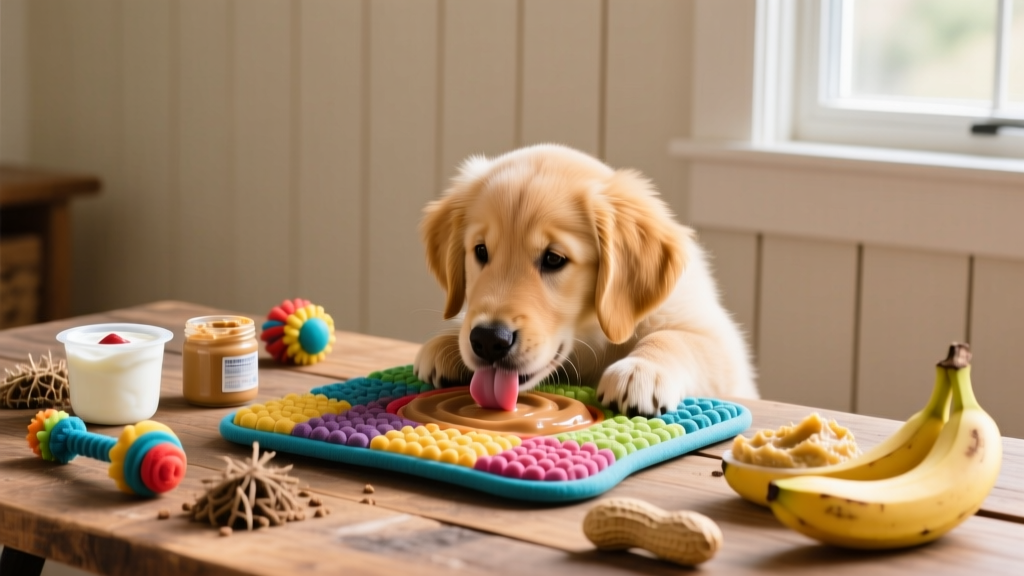
Crate Training a Puppy
Complete crate training a puppy guide for Golden Retrievers: age-specific milestones, potty timelines, feeding schedules, vaccination plans, and first-year costs.

Why Crate Training a Golden Retriever Puppy Is Different
Golden Retrievers are notoriously social, people-oriented dogs — which makes crate training both easier and harder than with more independent breeds. Easier, because Goldens are highly food-motivated and respond beautifully to positive reinforcement. Harder, because their attachment to people can trigger intense separation anxiety if the crate is introduced too fast or used as punishment.
In my years working with Golden Retriever owners, the most common crate training failure isn't the puppy — it's the owner moving too quickly. A Golden puppy who is rushed into four-hour crate sessions at 10 weeks old will often develop whining, pawing, and even crate-soiling habits that take months to undo.
This guide walks you through crate training a puppy with breed-specific timelines, feeding schedules, vaccination milestones, and the socialization windows that matter most for Golden Retrievers. Every recommendation below aligns with AKC crate training guidelines and AVMA puppy care standards.
When Should I Bring My Golden Retriever Puppy Home?
The ideal age to bring a Golden Retriever puppy home is 8 to 10 weeks. Reputable breeders will not release puppies before 8 weeks because critical socialization with littermates and the dam occurs during weeks 4–8. The AKC recommends that puppies remain with their mother until at least 8 weeks of age.
If your breeder offers to let you take a puppy at 6 weeks, walk away. Early-separated Goldens show higher rates of fear-based aggression and resource guarding later in life.
Plan your first day carefully: arrive early in the morning so the puppy has a full day to explore, meet family members, and tire out before the first overnight in the crate.
Golden Retriever Puppy Milestones: Weeks 4 Through 12 Months
Understanding what's developmentally normal at each stage prevents you from expecting too much too soon — or missing a critical window.
Weeks 4–8 (At the Breeder)
- Weight: 4–10 lb / 1.8–4.5 kg
- Development: Teeth emerging, learning bite inhibition from littermates, beginning solid food transition
- Crate exposure: Breeder should introduce an open crate with bedding — no door closed
- Socialization: Exposure to household sounds, different floor textures, gentle handling by multiple people
- What you can do: Visit the litter if possible; bring a blanket that smells like the dam to use in your crate at home
Weeks 8–12 (Home Transition)
- Weight: 10–20 lb / 4.5–9 kg
- Development: Peak fear period (8–11 weeks), rapid bonding, bladder capacity ~1 hour per month of age
- Crate training: Maximum 30–60 minutes during the day; overnight stretches of 2–3 hours before potty breaks
- Socialization: Begin carrying puppy to new environments (not on the ground until vaccinated)
- Common behavior: Crying in crate is normal — respond to potty needs, but avoid rewarding demand-barking
Weeks 12–16 (Foundation Building)
- Weight: 20–35 lb / 9–16 kg
- Development: Second fear period may emerge around 12 weeks; improved bladder control
- Crate training: Daytime sessions up to 2 hours; overnight stretches of 3–4 hours
- Socialization: Post-second-vaccine outdoor exploration begins (see vaccination section below)
- Common behavior: Testing boundaries — may begin ignoring crate entry cues
Weeks 16–24 (Adolescent Transition)
- Weight: 35–55 lb / 16–25 kg
- Development: Adult teeth replacing baby teeth, sexual maturity approaching, energy surges
- Crate training: Daytime sessions up to 3–4 hours; most Goldens sleep 6–8 hours overnight without breaks
- Socialization: Puppy classes, dog parks (post-vaccination), exposure to other breeds
- Common behavior: Chewing intensity peaks — crate becomes essential for safety when unsupervised
6–12 Months (Adolescence)
- Weight: 55–75 lb / 25–34 kg (males larger than females)
- Development: Near-adult size, continued mental maturation, possible regression in training
- Crate training: Can handle 4–6 hours during the day; many Goldens begin choosing to nap in open crates voluntarily
- Common behavior: "Rebellious" phase — may suddenly resist crate entry. Return to high-value treats (frozen Kongs, bully sticks) to rebuild positive associations
Feeding Schedule: Exact Portions by Age and Weight
Golden Retrievers are prone to rapid growth-related orthopedic issues, including hip dysplasia. Feeding a large-breed puppy formula and controlling portions is non-negotiable. The goal is steady, moderate growth — not maximum growth.
| Age | Weight Range | Meals Per Day | Daily Amount (Large-Breed Puppy Kibble) | Crate Timing Note |
|---|---|---|---|---|
| 8–12 weeks | 10–20 lb / 4.5–9 kg | 3–4 meals | 1.5–2 cups (split across meals) | Remove food 2 hours before crate bedtime |
| 3–4 months | 20–35 lb / 9–16 kg | 3 meals | 2–2.5 cups | Feed immediately after crate release |
| 4–6 months | 35–50 lb / 16–23 kg | 2–3 meals | 2.5–3.5 cups | Crate after 30-min digestion period |
| 6–12 months | 50–75 lb / 23–34 kg | 2 meals | 3–4 cups | Transition to adult food at 12 months |
Specific product recommendations: Royal Canin Golden Retriever Puppy, Purina Pro Plan Large Breed Puppy, or Hill's Science Diet Large Breed Puppy. Look for the AAFCO statement confirming the food is formulated for growth/large-breed growth.
Crate-feeding integration: Feed at least one meal per day inside the crate with the door open during weeks 8–16. This builds a powerful positive association. Never withhold food as a crate-training tactic.
Potty Training Timeline: Realistic Expectations for Goldens
Golden Retrievers are generally easier to house-train than many breeds due to their intelligence and eagliness to please — but "easier" does not mean fast. Here's a realistic timeline:
| Age | Bladder Capacity | Expected Accidents Per Week | Crate Role |
|---|---|---|---|
| 8–10 weeks | 1–1.5 hours | 5–10 | Crate prevents accidents when unsupervised; take out every 60 minutes |
| 10–14 weeks | 1.5–2.5 hours | 2–5 | Overnight crate breaks every 2–3 hours |
| 14–20 weeks | 3–4 hours | 1–3 | Begin extending overnight crate time to 4–5 hours |
| 5–6 months | 4–6 hours | 0–2 | Most Goldens signal to go out; crate naps 1–2 hours |
| 6–12 months | 6–8 hours | 0–1 | Fully reliable overnight; occasional regression during adolescence |
When will my puppy be fully potty trained? Most Golden Retrievers are reliably house-trained between 5 and 7 months of age. Some individuals, particularly males, may take up to 9 months. If your puppy is still having daily accidents past 8 months, consult your veterinarian to rule out urinary tract infections or anatomical issues.
Socialization Window: Weeks 3–14 Exposure Checklist
The primary socialization window for puppies closes between 12 and 14 weeks of age, according to the AVMA. For Golden Retrievers — a breed that thrives on social interaction — this window is critical. Under-socialized Goldens are at elevated risk for fear-based reactivity, which contradicts the breed's naturally friendly temperament.
When can my puppy go outside and meet other dogs? Your puppy can begin controlled socialization before full vaccination. Carry your puppy to new environments starting at 8 weeks. Ground-level exposure to public areas should wait until 7 days after the second DHPP vaccine (typically around 12–13 weeks). Puppy classes that require proof of first vaccination are generally safe starting at 10 weeks.
Vaccination Schedule for Golden Retriever Puppies
Golden Retrievers follow the standard core vaccination protocol. Your veterinarian may adjust timing based on local disease prevalence and maternal antibody levels.
| Age | Vaccine | What It Protects Against | Typical Cost |
|---|---|---|---|
| 6–8 weeks | DHPP (1st dose) | Distemper, Hepatitis (Adenovirus), Parainfluenza, Parvovirus | $25–$45 |
| 6–8 weeks | Bordetella (optional) | Kennel cough — recommended if attending puppy classes | $20–$35 |
| 10–12 weeks | DHPP (2nd dose) | Booster for core viral diseases | $25–$45 |
| 10–12 weeks | Leptospirosis (1st dose) | Bacterial infection from contaminated water — relevant for water-loving Goldens | $25–$40 |
| 14–16 weeks | DHPP (3rd dose) | Final core puppy booster | $25–$45 |
| 14–16 weeks | Leptospirosis (2nd dose) | Booster for full immunity | $25–$40 |
| 12–16 weeks | Rabies | Legally required; timing varies by state law | $20–$40 |
| 12+ months | DHPP booster + Rabies booster | 1-year or 3-year protocols per your vet's recommendation | $40–$75 |
What vaccines does my puppy need and when? The core protocol is DHPP at 6–8, 10–12, and 14–16 weeks, plus Rabies at 12–16 weeks. For Golden Retrievers specifically, the Leptospirosis vaccine is strongly recommended due to the breed's affinity for water and outdoor environments where the bacteria thrives. Consult your veterinarian about Lyme disease vaccination if you live in a tick-endemic area.
Crate Training Progression: Time Limits by Age
The most common mistake when crate training a puppy — especially a velcro breed like the Golden Retriever — is exceeding the puppy's physical and emotional capacity. Use this progression as your framework:
Week 1 Home (8–9 Weeks Old)
- Days 1–3: Leave crate door open. Toss high-value treats (small pieces of boiled chicken, freeze-dried liver) inside. Feed all meals in the crate. Do not close the door.
- Days 4–5: Close the door during meals. Open immediately when puppy finishes. Practice 30-second closed-door sessions with you sitting beside the crate.
- Days 6–7: Extend closed-door sessions to 2–5 minutes while you remain in the room. Begin stepping away for 10–30 seconds.
- Overnight: Place crate beside your bed. Expect 2–3 overnight potty breaks. Cover the crate with a breathable blanket to reduce visual stimulation.
Weeks 2–4 Home (9–12 Weeks Old)
- Extend daytime crate sessions to 15, then 30, then 60 minutes — but only if the puppy is calm and quiet at the previous duration.
- Begin leaving the room during short crate sessions. Return before the puppy becomes distressed.
- Introduce a cue word ("crate" or "kennel") paired with a treat toss inside.
- Maximum daytime crating: 60 minutes at a time, with play and potty breaks between sessions.
- Move crate to a quieter location if the puppy is settled — but keep it in a socially connected area (not a basement or garage).
Months 3–6
- Daytime sessions can extend to 2–3 hours for naps, but the puppy should not be crated for more than 4 hours total during the day at this age.
- Overnight: Most Goldens can hold 5–6 hours by 4 months and 7–8 hours by 6 months.
- Begin practicing "crate and leave" — leave the house for 5 minutes, then 15, then 30, building duration gradually.
- Provide a frozen Kong stuffed with puppy-safe peanut butter (xylitol-free) or plain yogurt to create a positive long-duration association.
6–12 Months
- Adult crating capacity: 4–6 hours during the day is acceptable for a healthy, well-exercised adolescent Golden.
- Many Goldens begin voluntarily entering the crate to nap — this is your sign the training has succeeded.
- Transition to leaving the crate door open when you're home so the dog can choose the space.
- Never use the crate as punishment — this is especially destructive with sensitive, people-oriented breeds like Goldens.
Teething Timeline and Safe Chew Recommendations
Golden Retriever puppies begin losing baby teeth around 12–16 weeks, with the full adult set typically in place by 6–7 months. During this period, chewing intensity is extreme, and the crate becomes essential for protecting your home and your puppy from ingesting dangerous objects.
| Age | Teething Stage | Safe Crate Chews | Avoid |
|---|---|---|---|
| 8–12 weeks | Baby teeth firmly in place; exploratory chewing | Soft rubber toys (Kong Classic Puppy), chilled wet washcloth | Hard nylon bones, rawhide, antlers |
| 12–16 weeks | Incisors loosening; increased drooling | Chilled Kong with plain yogurt, Nylabone Puppy Chew (soft) | Cooked bones, ice cubes (too hard for loosening teeth) |
| 16–24 weeks | Peak teething — premolars and molars erupting | Bully sticks (supervised), Benebone Puppy, frozen carrot sticks | Rawhide, pig ears (choking and blockage risk) |
| 6–7 months | Adult teeth set; chewing continues but decreases | Kong Classic (adult rubber), West Paw Zogoflex Hurley | Any chew small enough to swallow whole |
Common Golden Retriever Puppy Problems and Solutions
Puppy Biting and Nipping
How do I stop puppy biting/nipping? Golden Retriever puppies are mouthy — the breed was developed to carry game, and oral fixation is deeply ingrained. Expect nipping to peak between 10 and 16 weeks.
Solution: Use the redirect-and-reward method. When the puppy mouths your skin, immediately offer a chew toy. When they bite the toy, praise calmly. If nipping persists, stand up and leave the room for 10–15 seconds (removing social attention is the most effective consequence for a social breed). Never hold the puppy's mouth shut, yell, or use physical corrections — these methods increase fear and can trigger defensive biting.
Crate Whining and Crying
Whining in the crate during the first 2–3 weeks home is normal and expected. The key is distinguishing need-based whining (potty, pain, fear) from demand-based whining (attention, boredom).
Solution: Take the puppy out to potty on a schedule regardless of whining. If the puppy has recently eliminated and is whining for attention, wait for 3–5 seconds of silence before opening the crate. This teaches that quiet, not noise, opens the door. Covering the crate and playing white noise can reduce overnight whining by 40–60% based on owner reports.
Destructive Chewing
Golden Retrievers are among the most destructive chewing breeds during adolescence (6–12 months). This is when crate use is most valuable for safety.
Solution: Crate the puppy whenever you cannot provide direct supervision. Provide 2–3 approved chews in the crate. Rotate toys every 2–3 days to maintain novelty. Ensure the puppy gets 30–60 minutes of physical exercise and 15–20 minutes of mental enrichment (snuffle mats, puzzle feeders) before crating — a tired Golden is a quiet Golden.
First-Year Cost Breakdown for a Golden Retriever
Budgeting accurately prevents surprises. These ranges reflect 2026 US pricing and account for regional variation (urban areas trend 20–30% higher).
| Category | Low Estimate | High Estimate | Notes |
|---|---|---|---|
| Puppy purchase (responsible breeder) | $2,000 | $4,500 | Includes health testing, AKC registration, early socialization |
| Adoption/rescue alternative | $300 | $600 | Often includes first vaccines, spay/neuter, microchip |
| Veterinary (vaccines, exams, spay/neuter) | $800 | $1,500 | Spay/neuter: $300–$700; wellness visits: $60–$120 each |
| Food (large-breed puppy formula) | $400 | $700 | $50–$65/bag, ~1 bag per month |
| Crate and supplies | $200 | $450 | 42" crate ($60–$120), bed, bowls, leash, collar, gates |
| Training (puppy class + basic obedience) | $200 | $600 | Group classes: $150–$300; private sessions: $75–$150/hour |
| Preventive medications (flea/tick, heartworm) | $250 | $500 | NexGard, Simparica Trio, Heartgard — year-round in most US regions |
| Pet insurance (optional but recommended) | $400 | $900 | $35–$75/month; Goldens are prone to hip dysplasia and cancer |
| Grooming | $300 | $700 | Professional grooming every 6–8 weeks: $50–$80/session |
| Total first-year estimate | $5,050 | $10,450 | Excluding emergency veterinary care |
Golden Retrievers are predisposed to hip dysplasia, elbow dysplasia, and certain cancers — conditions that can cost $3,000–$8,000+ to treat. Pet insurance purchased during puppyhood (before any pre-existing conditions develop) provides the best value for this breed.
Frequently Asked Questions
How often should I feed my Golden Retriever puppy at 10 weeks old?
At 10 weeks, feed 3–4 meals per day, totaling approximately 1.5–2 cups of large-breed puppy kibble daily. Space meals evenly — for example, 7 AM, 12 PM, 5 PM, and 9 PM. Remove food 2 hours before bedtime to reduce overnight potty breaks in the crate.
Is it okay to crate my Golden puppy while I'm at work?
At 8–12 weeks, a puppy cannot be crated for a full workday. You'll need someone to provide a midday break (potty, play, and re-crate). By 6 months, 4–5 hours of crating is manageable if the puppy is well-exercised beforehand. Consider a dog walker, pet sitter, or doggy daycare for longer absences.
My Golden puppy cries every night in the crate. When does it stop?
Most Golden Retriever puppies stop overnight crying within 2–4 weeks of consistent crate training, typically by 10–12 weeks of age. If crying persists beyond 4 weeks, evaluate whether the crate is the right size, the puppy is getting enough daytime exercise, and whether overnight potty breaks are timed correctly.
Should I put a blanket or bed in the crate?
Yes for most Goldens — they are comfort-seeking dogs. Use a machine-washable crate pad or flat blanket. Avoid thick, plush beds during teething months (3–6 months) as many puppies will chew and ingest the stuffing, risking intestinal blockage. Switch to a durable, chew-resistant bed like a Kuranda cot-style pad once teething is complete.
Can I use the crate as a timeout for bad behavior?
No. Using the crate as punishment creates a negative association that undermines all crate training progress. This is especially damaging with Golden Retrievers, who are emotionally sensitive. If you need a timeout space, use a separate, gated area — never the crate.
My puppy pees in the crate right after I bring them back inside. What's wrong?
This usually means the puppy was left in the crate past their bladder capacity, or the crate is too large, allowing them to soil one end and sleep in the other. Use a divider panel, shorten crate intervals, and always take the puppy directly outside immediately after releasing them from the crate — before any play or greeting.
Dr. Hannah Wickes
All our authors care for dogs every day — read more of their work on the authors page.