Cocker Puppy Care Guide: Milestones, Feeding, Training & Costs
Complete cocker puppy guide covering age-specific milestones, feeding portions, potty training timelines, vaccination schedules, and first-year costs.

Bringing Home Your Cocker Puppy: What to Expect by Age
Cocker Spaniel puppies — whether American or English — are a bundle of floppy ears, soulful eyes, and surprising energy. But raising a cocker puppy successfully means understanding exactly what your dog needs at each developmental stage. This guide maps out every critical milestone from weeks 4 through 12 months so you can stay ahead of the curve instead of scrambling to react.
The AKC recommends puppies remain with their littermates and dam until at least 8 weeks of age. For Cocker Spaniels, many responsible breeders prefer to keep puppies until 10–12 weeks. This extra time allows for better bite inhibition learning and emotional stability. If your breeder offers a 10-week release, take it — your cocker puppy will transition more smoothly into your home with less separation anxiety and better social skills.
Cocker Puppy Development Milestones: Week by Week
Cocker Spaniels mature at a moderate pace. They tend to hit adolescence around 6 months and reach full emotional maturity between 18–24 months. Here is what to expect at each stage:
| Age Range | Developmental Milestone | What to Expect |
|---|---|---|
| 4–8 weeks | Socialization with littermates; weaning; early fear imprint period begins (8–10 weeks) | Puppy learns bite inhibition from siblings, begins eating solid food, starts forming attachments. This stage is breeder-managed. |
| 8–12 weeks | Primary bonding period; peak fear imprint window; rapid brain development | Your cocker puppy bonds intensely with you. Avoid traumatic experiences (harsh vet visits, aggressive dogs). Sleeps 18–20 hours/day. Potty accidents every 1–2 hours. Puppy weight: 8–15 lb (3.6–6.8 kg). |
| 12–16 weeks | Fear period ends; confidence building; teething begins; bladder control improves | Puppy becomes bolder and more exploratory. Chewing intensifies. Can hold bladder 3–4 hours. Responds to name reliably. Puppy weight: 12–18 lb (5.4–8.2 kg). |
| 16–24 weeks (4–6 months) | Active teething phase; independence testing; secondary fear period possible around 6 months | Adult teeth emerge. Puppy may suddenly seem "stubborn" or forget training. Second fear period may cause regression in confidence. Puppy weight: 16–22 lb (7.3–10 kg) for American; 22–30 lb (10–13.6 kg) for English. |
| 6–12 months | Adolescence; sexual maturity; energy peak; growth plate closure begins | Highest energy period. Spay/neuter typically performed around 6–9 months per your vet's recommendation. May test boundaries. Still filling out muscularly. Adult weight approached by 10–12 months: American 20–30 lb (9–13.6 kg); English 26–35 lb (11.8–15.9 kg). |
Cocker Puppy Feeding Schedule: Exact Portions by Age
Cocker Spaniels are prone to obesity as adults, making portion control critical from puppyhood. Feed a AAFCO-certified large-breed or medium-breed puppy formula. Look for guaranteed analysis showing minimum 22% protein and 8% fat for growth.
| Age | Meals Per Day | Daily Portion (Dry Kibble) | Notes |
|---|---|---|---|
| 8–12 weeks | 4 meals | ¾ to 1 cup total per day (split into 4 feedings of ~¼ cup each) | Moisten kibble with warm water if puppy has trouble chewing. Remove uneaten food after 15 minutes. |
| 12–16 weeks | 3 meals | 1 to 1¼ cups total per day (~⅓ cup per meal) | Transition to dry kibble. Adjust based on body condition score — you should feel ribs without pressing hard. |
| 4–6 months | 3 meals | 1¼ to 1¾ cups total per day (~½ cup per meal) | Growth rate slows. Monitor weight weekly to prevent excess gain. |
| 6–12 months | 2 meals | 1½ to 2 cups total per day (¾ to 1 cup per meal) | Transition to adult food around 10–12 months. Reduce calories if BCS exceeds 5/9. |
How often should I feed my cocker puppy at each age? Four meals daily from 8–12 weeks, three meals from 12 weeks to 6 months, and two meals from 6 months onward. Consistent meal timing also supports potty training — puppies typically need to eliminate within 15–30 minutes of eating.
Potty Training Your Cocker Puppy: Realistic Timeline
When will my cocker puppy be fully potty trained? Most Cocker Spaniel puppies achieve reliable house training between 4–6 months of age, though some take up to 8 months. Consistency is far more important than speed. Expect accidents — they are data points, not failures.
Cocker Spaniels have smaller bladders relative to body size compared to larger breeds, so they need more frequent outdoor trips early on. Here is a realistic progression:
- 8–10 weeks: Take outside every 1–1.5 hours during the day, plus immediately after waking, eating, drinking, and playing. Expect 2–3 overnight wake-ups.
- 10–12 weeks: Extend to every 1.5–2 hours during the day. Overnight stretch improves to 3–4 hours.
- 12–16 weeks: Every 2–3 hours during the day. Most puppies can sleep 5–6 hours overnight.
- 4–6 months: Every 3–4 hours. Overnight sleep stretches to 7–8 hours for most puppies.
- 6+ months: Every 4–6 hours during the day. Fully reliable if training has been consistent.
General rule: A puppy can hold its bladder approximately one hour per month of age (a 3-month-old = ~3 hours maximum). Never exceed this.
- Regression after vaccinations (12–16 weeks): Normal. Your puppy's routine was disrupted. Go back to basics with more frequent trips outside for 5–7 days.
- Submissive/excitement urination: Common in Cocker Spaniels due to their soft temperament. Do not scold — crouch to greet your puppy at their level, avoid direct eye contact initially, and take them outside immediately after calm greetings.
- Marking behavior (6+ months, especially intact males): Spay/neuter reduces marking in approximately 60–80% of dogs per the AVMA. Manage with increased supervision and belly bands if needed.
Vaccination Schedule for Your Cocker Puppy
What vaccines does my cocker puppy need and when? Cocker Spaniels follow the standard core vaccination protocol recommended by the AVMA and the American Animal Hospital Association (AAHA). Here is the exact schedule:
| Age | Vaccine | Type | Estimated Cost |
|---|---|---|---|
| 6–8 weeks | DHPP (Distemper, Hepatitis/Adenovirus, Parainfluenza, Parvovirus) — 1st dose | Core | $20–$40 |
| 10–12 weeks | DHPP — 2nd dose; Bordetella (kennel cough) — optional but recommended if attending puppy classes | Core + Non-core | $25–$50 (DHPP) + $20–$35 (Bordetella) |
| 14–16 weeks | DHPP — 3rd (final puppy) dose; Rabies — required by law in most US states | Core | $25–$50 (DHPP) + $15–$30 (Rabies) |
| 12–16 months | DHPP booster; Rabies booster (1-year or 3-year depending on local law) | Core | $40–$75 total |
When can my cocker puppy go outside and meet other dogs? Your puppy can explore your own yard (if no unvaccinated dogs have access) immediately. However, avoid public areas — dog parks, pet stores, sidewalks with unknown dog traffic — until 7 days after the final DHPP dose at 14–16 weeks. Puppy socialization classes that require proof of at least one DHPP dose and a clean environment are generally safe from 10 weeks onward, per the Merck Veterinary Manual. The risk of parvovirus from uncontrolled environments is far greater than the risk of incomplete socialization.
The Critical Socialization Window: Weeks 3–14
The primary socialization period for all puppies closes around 12–14 weeks of age. For Cocker Spaniels — a breed that can be prone to shyness and fear-based reactivity if under-socialized — this window is non-negotiable. Under-socialized Cockers are statistically more likely to develop separation anxiety, noise phobias, and resource guarding later in life.
Socialization exposure checklist for your cocker puppy (complete by 14 weeks):
- Surfaces: Walk on grass, gravel, tile, hardwood, carpet, wet pavement, metal grates, and stairs (carry puppy down stairs until 12 weeks to protect joints)
- People: Meet at least 30 different people — men, women, children (supervised), people wearing hats, sunglasses, hoodies, uniforms, and people using mobility aids (wheelchairs, walkers, canes)
- Sounds: Expose to vacuum cleaners, doorbells, thunder recordings (play at low volume, pair with treats), traffic noise, clapping, fireworks recordings, and kitchen sounds
- Handling: Daily gentle handling of ears (critical for Cocker Spaniels — ear infections are the #1 breed health issue), paws, mouth, tail, and belly. Pair every touch with high-value treats
- Other animals: Supervised meetings with vaccinated, calm adult dogs and at least one cat (if safely possible). Avoid uncontrolled dog park introductions
- Objects: Umbrellas opening, plastic bags rustling, bicycles, skateboards, strollers, and car rides (start with 5-minute trips to positive destinations)
- Grooming: Introduce a soft brush, nail clippers (touch without cutting), and a low-setting hair dryer by 10 weeks. Cocker Spaniels require professional grooming every 6–8 weeks as adults — early desensitization prevents grooming anxiety
Each exposure should be positive. If your puppy shows fear (cowering, tail tucked, freezing), increase distance from the stimulus, offer treats, and let them approach at their own pace. Never force a frightened puppy closer to something that scares them — this deepens the fear imprint.
Teething, Crate Training, and Common Cocker Puppy Problems
Teething Timeline: 3–6 Months
Your cocker puppy will begin losing baby teeth around 12–16 weeks, with adult teeth fully erupted by 6–7 months. During active teething, expect increased chewing, mild drooling, and occasional small blood spots on chew toys (normal).
Safe teething relief strategies:
- Frozen Kong Classic (stuff with plain yogurt and banana, freeze 4 hours) — $12–18 for the medium size
- Benebone Wishbone (puppy-specific softer rubber) — $14–20
- Frozen wet washcloth twisted into a rope — free and effective for soothing gums
- Nylabone Puppy Chew (specifically the puppy line, not adult hardness) — $6–10
Avoid: Rawhide (choking and blockage risk), cooked bones (splintering), hard antlers (tooth fractures), and any chew toy harder than your fingernail. If you cannot indent the toy with your thumbnail, it is too hard for a teething puppy.
Crate Training Progression
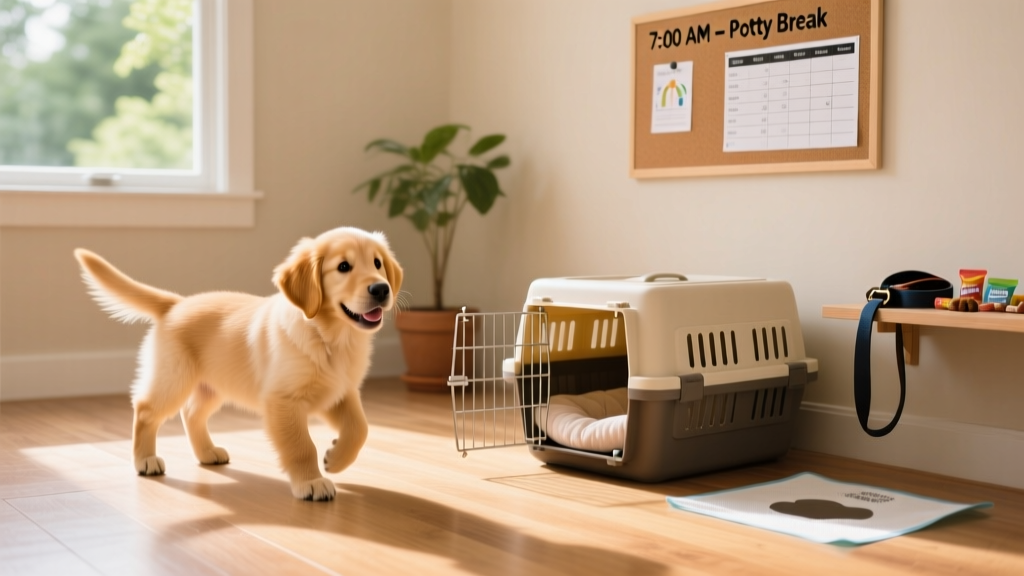
Crate training is essential for house training and gives your cocker puppy a safe den. Use a wire or plastic crate sized for an adult Cocker Spaniel (24-inch crate for American, 30-inch for English) with a divider panel to adjust space as your puppy grows.
| Puppy Age | Maximum Crate Time (Daytime) | Maximum Overnight |
|---|---|---|
| 8–10 weeks | 30–60 minutes | 2–3 hours (set alarm) |
| 10–12 weeks | 1–1.5 hours | 3–4 hours |
| 12–16 weeks | 2–3 hours | 5–6 hours |
| 4–6 months | 3–4 hours | 7–8 hours |
| 6+ months | 4–5 hours | 8 hours |
Always pair crate time with positive associations: feed meals in the crate, provide a stuffed Kong, and never use the crate as punishment. If your puppy whines, wait for 3–5 seconds of silence before opening the door to avoid reinforcing the whining.
Common Cocker Puppy Problems and Solutions
How do I stop my cocker puppy from biting and nipping? Cocker Spaniel puppies are mouthy — it is breed-typical behavior rooted in their retrieving heritage. Biting peaks between 8–16 weeks and usually decreases significantly by 5–6 months with consistent management.
- Redirect: When puppy teeth touch skin, say "ouch" in a calm voice, withdraw attention for 10–15 seconds, then offer an appropriate chew toy. Reward chewing the toy with praise.
- Time-outs: If nipping continues after two redirects, calmly place the puppy in a playpen or crate for 30–60 seconds to reset. This is not punishment — it is a brief cool-down.
- Manage arousal: Overtired puppies bite more. If your cocker puppy becomes a land shark, they likely need a nap — enforce one. Puppies need 18–20 hours of sleep per day at 8–12 weeks.
- Enrichment: Provide 2–3 short (5-minute) training sessions per day using positive reinforcement. Mental stimulation reduces mouthing behavior as effectively as physical exercise.
Excessive whining in the crate: Distinguish between protest whining (stops when ignored) and distress whining (escalating, panicked, with panting or drooling). For protest whining, wait it out. For distress, your puppy may need the crate moved closer to your bed temporarily, or may need shorter crate sessions built up more gradually.
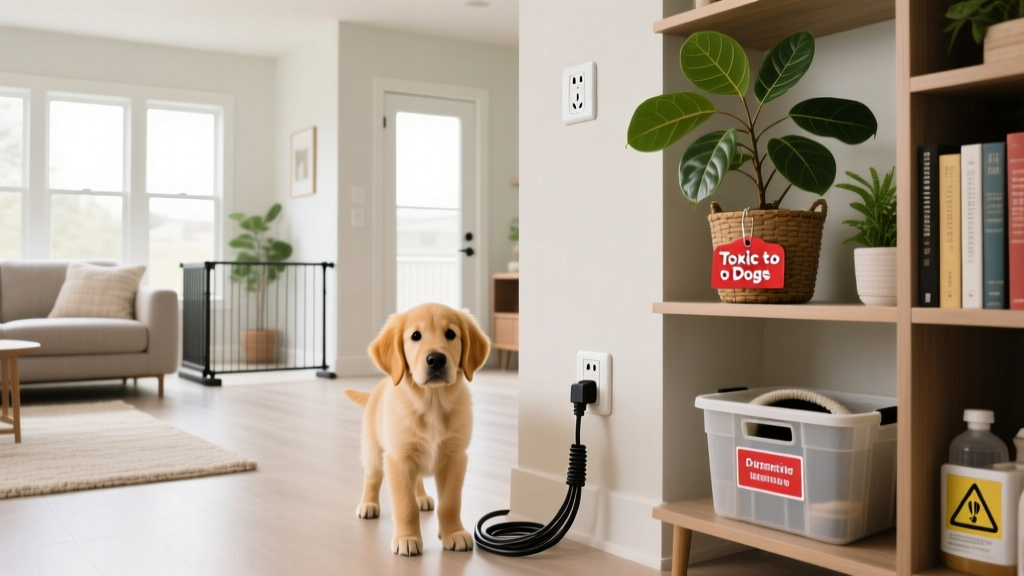
Destructive chewing: Puppy-proof every room your cocker has access to. Use bitter apple spray (Grannick's Bitter Apple, ~$8–12) on baseboards and furniture legs. Rotate chew toys every 2–3 days to maintain novelty. A bored cocker puppy will find its own entertainment — usually at the expense of your shoes.
First-Year Cost Breakdown for a Cocker Puppy
Budgeting for your cocker puppy's first year helps avoid financial surprises. Costs below reflect 2026 US averages and may vary by region:
| Category | Items | Estimated Cost |
|---|---|---|
| Purchase/Adoption | Responsible breeder: $1,800–$3,500; Rescue/adoption: $300–$600 | $300–$3,500 |
| Veterinary (first year) | Initial exam, 3 puppy vaccine visits, deworming, fecal tests, heartworm test, spay/neuter, microchip | $600–$1,200 |
| Food & treats | Premium puppy kibble (12 months), training treats, dental chews | $400–$700 |
| Supplies | Crate, bed, leash/harness, bowls, grooming tools, puppy pads, chew toys, slow feeder | $250–$500 |
| Grooming | Professional grooming every 6–8 weeks starting at 4 months (~6–8 sessions in first year) | $360–$640 ($60–$80/session) |
| Training | Puppy kindergarten class (6–8 weeks), optional private sessions | $150–$400 |
| Preventive medications | Monthly heartworm/flea/tick prevention (12 months) | $200–$400 |
| Pet insurance (optional) | Accident + illness plan for puppy | $350–$600/year |
Total first-year estimated cost: $2,610–$7,940 (excluding purchase price). With a breeder-purchased puppy, expect to invest $4,400–$11,440 in the first year. Pet insurance can offset unexpected emergency costs — Cocker Spaniels are predisposed to ear infections ($150–$400 per visit) and eye conditions like cherry eye ($300–$800 surgical correction), making coverage worthwhile for many owners.
Frequently Asked Questions About Cocker Puppies
Are American and English Cocker Spaniel puppies different to raise?
Yes, slightly. English Cocker Spaniels are larger (adult weight 26–35 lb / 11.8–15.9 kg vs. American at 20–30 lb / 9–13.6 kg) and tend to have a somewhat higher working drive. American Cockers are often more sensitive and prone to separation anxiety, requiring more deliberate alone-time training from puppyhood. Both varieties need the same vaccination, feeding, and socialization protocols outlined above.
My cocker puppy's ears smell — is this normal?
Cocker Spaniels have long, heavy, pendulous ears that trap moisture and debris, making them the most ear-infection-prone breed in the US. A mild yeasty smell can be managed with weekly cleaning using a vet-recommended ear cleaner (Epi-Otic Advanced, ~$15–22). However, a strong foul odor, dark discharge, redness, or head-shaking indicates an active infection — consult your veterinarian promptly. Begin weekly ear cleaning at 8 weeks to establish the routine early.
How much exercise does a cocker puppy need?
Follow the "5 minutes per month of age" rule for structured walks: an 8-week-old gets roughly 10 minutes, a 4-month-old gets 20 minutes, and a 6-month-old gets 30 minutes per walk. Free play in a yard or playpen does not count toward this limit. Avoid repetitive high-impact activity (long runs, jumping from heights, agility equipment) until growth plates close around 12–14 months to protect developing joints from hip dysplasia and luxating patellas, both of which Cocker Spaniels are predisposed to.
Should I get pet insurance for my cocker puppy?
Enrolling at 8–10 weeks, before any pre-existing conditions develop, gives you the best coverage. Cocker Spaniels are predisposed to several conditions that can be costly: progressive retinal atrophy (PRA), familial nephropathy, hip dysplasia, and chronic ear infections. Compare plans from providers like Trupanion, Healthy Paws, and Lemonade. Expect premiums of $30–50/month for comprehensive puppy coverage in 2026.
When should I start training my cocker puppy?
Begin training the day your puppy arrives home. At 8 weeks, focus on name recognition, sit, handling exercises, and crate introduction using positive reinforcement and high-value treats (small pieces of boiled chicken, ~pea-sized). Enroll in a force-free puppy kindergarten class by 10–12 weeks. Cocker Spaniels are intelligent and eager to please but respond poorly to harsh corrections — keep sessions short (3–5 minutes), upbeat, and treat-heavy.
Dr. Hannah Wickes
All our authors care for dogs every day — read more of their work on the authors page.