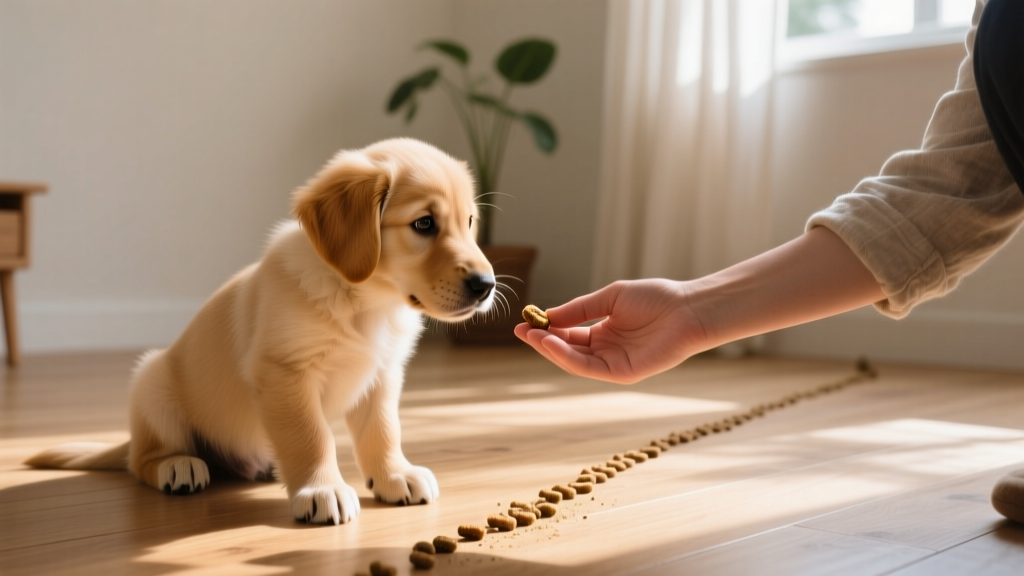
Christmas Puppy Survival Guide: Week-by-Week Care for Holiday Puppies
Bringing home a Christmas puppy? This week-by-week guide covers feeding, potty training, vaccinations, socialization, and costs for your holiday pup.

There's something undeniably magical about a puppy under the Christmas tree. But the reality of raising a Christmas puppy — one that arrives home during the December holiday chaos — comes with a unique set of challenges that most generic puppy guides completely ignore. House guests, holiday decorations, toxic seasonal plants, disrupted routines, and winter weather all collide with the most developmentally critical weeks of your new dog's life.
This guide gives you an evidence-based, week-by-week roadmap for raising a puppy that joins your family during the holiday season. We'll cover exact feeding portions, realistic potty training timelines, critical socialization windows, and the real first-year costs you should budget for. Whether your Christmas puppy is a Golden Retriever, a French Bulldog, a rescue mix, or anything in between, the developmental milestones and seasonal considerations here apply.
When Should You Bring Your Christmas Puppy Home?
The ideal age to bring any puppy home is 8 to 10 weeks. This aligns with the recommendations of the American Kennel Club and ensures the puppy has received initial maternal antibodies, early socialization from littermates, and at least one round of vaccinations from the breeder or rescue.
If you're planning a Christmas puppy arrival, work backward from December 25th. A puppy born in mid-to-late October will hit the 8-week mark right around the holidays. Responsible breeders typically confirm pickup dates 2-4 weeks in advance, so coordinate early.
Avoid bringing a puppy home between December 23-26. The travel chaos, house guests, and disrupted routines create a stressful environment for a puppy's first days in a new home. Aim for either:
- Early December pickup (Dec 1-10): Gives you 2+ weeks to settle the puppy before holiday events begin
- Post-holiday pickup (Jan 2-10): Calmer household, more predictable routines for bonding and training
If the puppy is already committed for Christmas Day, designate one quiet room as the puppy's "safe zone" — crate, water, chew toys, and a white noise machine — away from the tree, wrapping paper, and foot traffic. Puppies this age sleep 18-20 hours per day, and overstimulation leads to stress-induced diarrhea and excessive crying.
Week-by-Week Puppy Milestones and What to Expect
Understanding your Christmas puppy's developmental stage helps you set realistic expectations. Here's what happens at each phase during the first year:
Weeks 4-8 (Still with Breeder/Rescue)
Your puppy is learning bite inhibition from littermates, beginning to eat solid food (gruel/kibble softened with water), and receiving their first DHPP vaccine around 6-8 weeks. This is a fear-imprint period — negative experiences can create lasting phobias. A good breeder handles puppies daily, introduces novel surfaces, and begins name recognition.
Weeks 8-12 (Transition Home)
This is your bonding window. Expect:
- Sleep: 18-20 hours/day, in 2-3 hour bursts
- Potty frequency: Every 1-2 hours during the day, 1-2 overnight wake-ups
- Biting/nipping: Peak mouthing behavior — puppy is exploring with their mouth
- Attention span: 5-10 minutes maximum for training sessions
- Weight gain: Roughly 5-10% of body weight per week (varies by breed size)
Weeks 12-16 (Growing Confidence)
Your puppy becomes bolder and more curious. The second fear period often hits around 12-14 weeks — previously confident puppies may suddenly spook at familiar objects. Continue positive exposures. Bladder control improves to roughly 2-3 hours. Second DHPP booster is due. Start practicing alone-time to prevent separation anxiety.
Weeks 16-24 (Adolescent Transition)
Teething begins around 16 weeks (4 months). Baby teeth loosen and adult teeth erupt — expect increased chewing, drooling, and occasional blood on toys. Bladder capacity reaches 3-4 hours. Recall and basic cues should be solidifying. Spay/neuter is typically discussed with your vet during this window (6 months is standard, though large breeds may wait until 12-18 months per AVMA guidelines).
Months 6-12 (Adolescence)
The "teenage" phase. Hormonal surges (if intact), testing boundaries, selective hearing, and renewed chewing are all normal. Energy levels peak. Continue structured exercise, mental enrichment, and consistent rules. Growth plates in large breeds don't close until 14-18 months — avoid forced running or jumping on hard surfaces.
Feeding Schedule: Exact Portions by Age and Weight
Puppy nutrition during the holidays requires extra attention — well-meaning guests will offer table scraps, and the abundance of holiday food creates temptation. Stick to a structured feeding plan and post it where visitors can see it.
Feed a commercial diet that meets AAFCO standards for growth/all life stages. Look for the AAFCO nutritional adequacy statement on the bag. The portions below assume a standard kibble with approximately 350-400 kcal/cup. Adjust based on your specific food's caloric density and your puppy's body condition score (BCS).
| Puppy Age | Meals Per Day | Small Breed (10-25 lb adult) | Medium Breed (25-50 lb adult) | Large Breed (50-100 lb adult) |
|---|---|---|---|---|
| 8-12 weeks | 4 meals/day | ¼–½ cup total/day | ½–1 cup total/day | 1–2 cups total/day (large breed formula) |
| 12-16 weeks | 3 meals/day | ⅓–¾ cup total/day | ¾–1½ cups total/day | 1½–3 cups total/day |
| 16-24 weeks | 3 meals/day | ½–1 cup total/day | 1–2 cups total/day | 2–4 cups total/day |
| 6-12 months | 2 meals/day | ¾–1¼ cups total/day | 1½–2½ cups total/day | 3–5 cups total/day |
Christmas-specific feeding tips:
- No holiday table scraps. Turkey bones splinter, gravy is too fatty (pancreatitis risk), and stuffing often contains onions/garlic (toxic to dogs).
- Inform guests in advance. Post a sign: "Please don't feed the puppy — they're on a strict diet."
- Use a snuffle mat or Kong stuffed with puppy kibble during holiday meals to keep the puppy occupied and away from dropped food.
- Transition foods slowly over 7-10 days if switching from the breeder's food to your preferred brand. Mix 25% new / 75% old for days 1-3, then 50/50 for days 4-6, then 75% new / 25% old for days 7-9, then 100% new on day 10.
Vaccination Schedule for Your Christmas Puppy
Vaccinations are non-negotiable, and the winter holiday season can disrupt vet appointment schedules. Clinics often have reduced hours between Christmas and New Year's, so book all puppy vaccine appointments in advance — ideally before you bring the puppy home.
Here is the standard core vaccination schedule recommended by the American Veterinary Medical Association:
| Age | Vaccine(s) | What It Protects Against | Estimated Cost |
|---|---|---|---|
| 6-8 weeks | DHPP (1st dose) | Distemper, Hepatitis (Adenovirus), Parainfluenza, Parvovirus | $25-$50 |
| 10-12 weeks | DHPP (2nd dose) + Bordetella (optional) | Same as above + Kennel Cough | $40-$75 |
| 14-16 weeks | DHPP (3rd dose) + Rabies | Core boosters + Rabies (legally required in most US states) | $50-$90 |
| 12-16 months | DHPP booster + Rabies booster | 1-year or 3-year booster depending on vaccine type | $50-$100 |
Non-core vaccines your vet may recommend based on lifestyle and geography: Leptospirosis (common in areas with wildlife/standing water), Lyme disease (tick-endemic regions), and Canine Influenza (H3N2/H3N8 — relevant if your dog will attend daycare or group training).
When can my puppy go outside and meet other dogs? Your puppy is not fully protected until 7 days after their final DHPP dose at 14-16 weeks. Before that, avoid dog parks, pet stores, and areas where unknown dogs have been. You can carry your puppy in public (parks, outdoor cafés) for socialization exposure — just keep them off the ground where parvovirus may be present. Puppy socialization classes that require proof of at least one DHPP dose are generally safe, per the American Veterinary Society of Animal Behavior, which recommends socialization begin before full vaccination due to the critical developmental window.
The Critical Socialization Window: Your Christmas Puppy's Checklist
The primary socialization window closes around 14-16 weeks of age. This is a once-in-a-lifetime developmental period when puppies form lasting impressions about the world. Puppies that miss adequate socialization during this window are significantly more likely to develop fear-based behavioral problems later.
The holiday season actually offers a built-in socialization advantage — more visitors, unusual sounds (carols, fireworks, wrapping paper), novel objects (decorations, trees, lights), and varied schedules. Use this strategically.
Christmas Puppy Socialization Checklist (Weeks 8-14)
The golden rule: Every new experience should be paired with high-value treats (small pieces of boiled chicken, freeze-dried liver, or your puppy's kibble). If your puppy shows fear — cowering, tucked tail, freezing — do not force the interaction. Increase distance, reduce intensity, and let the puppy approach at their own pace. Forced exposure during the fear imprint period (8-10 weeks and again at 12-14 weeks) can create permanent phobias.
Potty Training Timeline: Realistic Expectations for Winter Puppies
Potty training a Christmas puppy comes with one significant complication: cold weather. Many puppies resist going outside in snow, sleet, or freezing temperatures, which extends the training timeline compared to puppies raised in spring or summer.
When will my puppy be fully potty trained? Most puppies achieve reliable house training between 4 and 6 months of age, though small breeds (Chihuahuas, Yorkies, toy Poodles) may take until 8-10 months due to smaller bladders. "Fully trained" means fewer than 1-2 accidents per month with a consistent routine.
Potty Training Progression by Age
| Puppy Age | Bladder Capacity | Daytime Outings | Overnight Expectation | Accident Frequency (Normal) |
|---|---|---|---|---|
| 8-10 weeks | 30-60 minutes | Every 1-2 hours + after every meal, nap, play session | 2-3 wake-ups needed | 1-3 per day is normal |
| 10-14 weeks | 1-2 hours | Every 1.5-2 hours | 1-2 wake-ups | 0-2 per day |
| 14-20 weeks | 2-3 hours | Every 2-3 hours | 0-1 wake-ups | 0-1 per week |
| 5-6 months | 3-4 hours | Every 3-4 hours | Sleeping through the night | Rare (1-2 per month) |
Winter potty training strategies:
- Use a consistent potty spot. Clear a small patch of snow down to the grass so your puppy has a familiar, comfortable surface.
- Consider a puppy coat or sweater for short-haired breeds (Greyhounds, Boxers, Pit Bulls) — cold discomfort makes puppies rush and miss their spot.
- Go out WITH your puppy. Don't just open the back door. Puppies need supervision and immediate reward (treat within 2 seconds of finishing) to build the association.
- Indoor backup option: For extreme cold days or apartment living, use a real-grass patch system (e.g., Fresh Patch, DoggieLawn) placed on a balcony or in a designated indoor area. Avoid pee pads long-term — they teach puppies that soft, absorbent surfaces (like rugs) are appropriate elimination spots.
Troubleshooting common potty problems:
- Puppy won't go outside in cold: Use a covered area (porch, garage entrance) as a transitional potty spot. Reward heavily for outdoor elimination.
- Accidents after seeming "trained": Rule out urinary tract infection (common in winter, especially in females). See your vet for a urinalysis ($40-$80).
- Submissive/excitement urination: Common in puppies under 6 months. Don't punish — it's involuntary. Greet your puppy calmly, take them outside immediately upon arrival.
Crate Training Progression: Building a Safe Holiday Haven
A crate is essential for a Christmas puppy. It provides a safe retreat from holiday chaos, prevents destructive chewing of decorations and gifts, and is the single most effective tool for potty training. However, crate time must be age-appropriate — too long causes distress, and too short undermines the training.
Crate Time Limits by Age
30-60 min
Maximum daytime crate sessions. Overnight: expect to wake up every 2-3 hours for potty.
1-3 hours
Daytime maximum. Overnight stretches may reach 4-5 hours.
3-4 hours
Daytime maximum. Most puppies sleep 7-8 hours overnight at this point.
4-6 hours
Daytime maximum. Never crate any dog longer than 6-8 hours total without a break.
Crate training steps for a Christmas puppy:
- Day 1-3: Leave crate door open. Toss treats inside. Feed meals near (then inside) the crate. Place a worn t-shirt with your scent on the crate bed.
- Day 4-7: Close the door during meals, then open immediately after. Practice 5-minute closed-door sessions while you sit nearby.
- Week 2: Extend closed-door time to 15-30 minutes. Leave the room briefly. Return before puppy cries.
- Week 3-4: Build up to age-appropriate maximums. Use a stuffed Kong or safe chew toy to create positive crate associations.
Holiday-specific crate tip: Place the crate in a quiet bedroom or office during large gatherings — not in the middle of the living room where guests may reach in, tap the crate, or let the puppy out without your knowledge. Cover the crate with a light blanket to reduce visual stimulation. Play white noise or soft classical music to mask party sounds.
Teething Timeline and Safe Chew Strategies
Puppy teething follows a predictable timeline, and the holiday season's abundance of tempting chew targets (tree branches, wrapping paper, ribbons, ornament hooks) makes management critical.
Teething Stages
- 3-4 weeks: Baby (deciduous) teeth begin erupting — usually done before you bring puppy home
- 8-12 weeks: All 28 baby teeth are in. Puppy explores everything by mouth — this is NOT teething, it's normal exploratory mouthing
- 12-16 weeks (3-4 months): Baby teeth begin loosening. You may find tiny teeth on the floor or in toys. Increased chewing, drooling, and gum sensitivity
- 16-24 weeks (4-6 months): Peak teething discomfort. Adult teeth (42 total) push through. Gums may appear red or slightly bloody. Appetite may dip temporarily
- 6-8 months: All adult teeth should be fully erupted. If any baby teeth remain ("retained deciduous teeth"), your vet should evaluate — common in small breeds and may require extraction
Safe teething relief options:
- Frozen Kong stuffed with puppy-safe peanut butter (xylitol-free) or plain yogurt — the cold soothes inflamed gums
- Wet washcloth, twisted and frozen — supervise to prevent swallowing fabric pieces
- Benebone Puppy or Nylabone Puppy — designed for developing teeth, softer than adult versions
- Carrot sticks (frozen) — low-calorie, natural, and safe if puppy is old enough to chew solids (12+ weeks)
Common Christmas Puppy Problems and Solutions
Every puppy stage has its challenges, but holiday puppies face a concentrated set of issues. Here's how to handle the most common ones using force-free, positive reinforcement methods:
Puppy Biting and Nipping
How do I stop puppy biting/nipping? Mouthing is normal puppy behavior — they're not being aggressive, they're exploring. It peaks between 8-16 weeks and gradually diminishes with proper redirection.
- Redirect: When puppy teeth touch skin, say "oops" calmly, withdraw attention for 5 seconds, then offer an appropriate chew toy. Reward chewing the toy with praise.
- Time-outs: If biting persists after 2-3 redirections, calmly place puppy in their crate or a pen for 30-60 seconds. This teaches that biting ends play — not a punishment, just a consequence.
- Avoid: Yelling, holding the mouth shut, or physical corrections. These increase fear and can escalate biting behavior. The AVMA and AVSAB position statements clearly advise against dominance-based techniques.
- Timeline: Expect mouthing to decrease significantly by 5-6 months as adult teeth come in and impulse control develops.
Overstimulation and Hyperactivity
Holiday gatherings create sensory overload. Signs include: zoomies that won't stop, inability to settle, excessive barking, jumping on guests, and frantic mouthing.
- Enforce nap time: Puppies this age need 18-20 hours of sleep. If your puppy has been awake for more than 2 hours, they're overtired. Crate them with a chew toy for a mandatory nap.
- Scatter feeding: Toss kibble on the floor or grass. Sniffing is naturally calming and burns mental energy.
- Pre-guest exercise: A 15-20 minute sniff walk before visitors arrive reduces initial excitement levels.
Whining and Crying in the Crate
Especially common the first 1-2 weeks home and during noisy holiday evenings.
- Distinguish distress from protest: If puppy just ate, played, and pottied, the whining is likely protest. Wait 5-10 minutes — most puppies self-soothe. If the whining escalates to panicked screaming, check for a physical need.
- Never release from crate while crying (unless it's a potty emergency). This teaches that crying = freedom. Wait for 3 seconds of silence, then open.
- Overnight strategy: Place crate next to your bed for the first 2-3 weeks. Your presence and scent reduce anxiety. Gradually move the crate to its permanent location over the next 2 weeks.
Destructive Chewing of Holiday Items
- Manage the environment: Use exercise pens (X-pens) to create puppy-safe zones. Don't rely on "supervision" during busy holiday events — one turned back is all it takes.
- Provide alternatives: A puppy with 3-4 rotating chew toys (bully sticks, yak chews, rubber toys) is less likely to seek out inappropriate items.
- Bitter Apple spray can deter chewing on baseboards and furniture legs, but it doesn't work on all dogs and should supplement — not replace — management.
First-Year Cost Breakdown: Budgeting for Your Christmas Puppy
Puppy costs catch many new owners off guard — especially when layered on top of holiday spending. Here's a realistic breakdown of first-year expenses for a Christmas puppy in the US (2026 estimates):
| Category | Low Estimate | Medium Estimate | High Estimate |
|---|---|---|---|
| Puppy Purchase/Adoption | $200 (shelter) | $1,500 (responsible breeder) | $3,500+ (premium breed) |
| Veterinary (vaccines, exams, spay/neuter) | $500 | $900 | $1,500 |
| Food (quality kibble, 12 months) | $300 | $600 | $1,200 |
| Supplies (crate, bed, leash, harness, toys, bowls, gates) | $200 | $400 | $800 |
| Training (group classes, 2-3 sessions) | $150 | $400 | $1,200 (private trainer) |
| Preventives (flea/tick, heartworm — 12 months) | $150 | $300 | $500 |
| Pet Insurance (annual premium) | $350 | $600 | $900 |
| Emergency Fund (recommended reserve) | $500 | $1,000 | $2,000+ |
| FIRST-YEAR TOTAL | $2,350 | $5,700 | $11,600+ |
Budget tip: Enroll in pet insurance before your puppy has any health issues. Pre-existing conditions are excluded by all major insurers. Policies from providers like Trupanion, Healthy Paws, or Lemonade typically have 14-day waiting periods for illnesses, so enroll immediately after bringing your puppy home.
Frequently Asked Questions About Christmas Puppies
Is a Christmas puppy a good idea for families with young children?
A puppy can be wonderful for families with children, but the holidays are the worst time to introduce one. Children are excited, routines are disrupted, and supervision lapses are common. If you proceed, assign one adult as the primary puppy caretaker — do not make the puppy a child's "responsibility." Children under 5 should never be left unsupervised with any puppy, and children under 10 need active adult oversight during all puppy interactions.
How do I handle my Christmas puppy around the tree and decorations?
Use a sturdy exercise pen (X-pen) around the base of the tree. Anchor the tree to a wall or ceiling hook to prevent tipping. Avoid tinsel entirely — it causes life-threatening intestinal blockages. Use shatterproof ornaments on the bottom two-thirds of the tree. Keep electrical cords behind barriers or in cord covers. Supervise all tree-area access until the puppy is at least 6 months old and reliably responds to "leave it."
Should I get pet insurance for my Christmas puppy?
Yes. Puppyhood is when your dog is most likely to ingest foreign objects, suffer injuries from play, and develop conditions that will be classified as "pre-existing" if you wait. Emergency surgeries for swallowed objects (ornament hooks, ribbons, toy parts) typically cost $2,000-$7,000. A comprehensive pet insurance policy with accident and illness coverage costs $40-$80/month for most breeds and can reimburse 70-90% of covered expenses.
When should I start puppy training classes?
Enroll in a positive-reinforcement puppy kindergarten class as soon as your puppy has had their first DHPP vaccine (usually given at 6-8 weeks by the breeder). The Merck Veterinary Manual and AVSAB both recommend that socialization and training begin before the vaccine series is complete, because the behavioral risks of delayed socialization outweigh the disease risks in controlled class environments. Look for classes that require proof of at least one DHPP dose and maintain clean facilities.
How much exercise does my Christmas puppy need?
Use the "5 minutes per month of age, twice daily" guideline as a starting point. An 8-week-old puppy needs roughly 10 minutes of structured exercise (leash walks, fetch) twice per day. A 4-month-old needs about 20 minutes twice daily. Mental enrichment (sniffing, training sessions, puzzle toys) is equally important and often more tiring than physical exercise. Avoid forced running, jogging, or jumping until growth plates close (12-18 months for large breeds).
What if my Christmas puppy gets sick over the holidays?
Identify your nearest 24-hour emergency veterinary clinic before the holidays. Many regular clinics close December 24-26 and December 31-January 1. Know the signs that require immediate emergency care: repeated vomiting (3+ times in 24 hours), bloody diarrhea, inability to keep water down, difficulty breathing, seizures, collapse, bloated/distended abdomen, or suspected toxin ingestion. Save the ASPCA Poison Control number — (888) 426-4435 — in your phone now.
This guide provides general puppy care information and is not a substitute for professional veterinary advice. Always consult your veterinarian for decisions about your puppy's specific health needs, vaccination schedule, and nutrition plan. Individual puppies may vary based on breed, size, health status, and temperament.
Anouk Beaumont
All our authors care for dogs every day — read more of their work on the authors page.