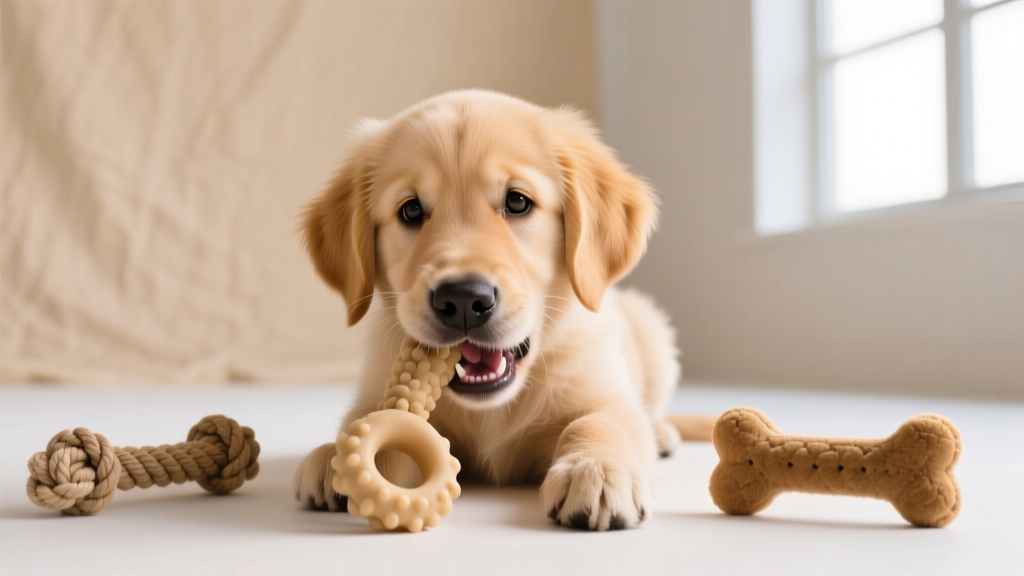
Chow Dog Puppy: Complete Week-by-Week Care & Training Guide
Raising a chow dog puppy? This week-by-week guide covers feeding schedules, potty training timelines, vaccinations, socialization, and first-year costs.

The Chow Chow is unlike any other breed you'll raise. Known for their lion-like mane, blue-black tongue, and famously independent temperament, a chow dog puppy requires a different approach than your typical eager-to-please retriever. Their intelligence is matched only by their stubbornness, and their loyalty is reserved for those who earn it early.
If you're bringing home a Chow Chow puppy — or preparing to — this guide gives you the exact milestones, feeding portions, vaccination timelines, and socialization strategies you need. Chow puppies are not forgiving of missed socialization windows or inconsistent training. Get the foundation right between 8 and 16 weeks, and you'll have a confident, well-mannered companion. Skip it, and you may face reactivity and fear-based aggression that's notoriously difficult to reverse in this breed.
When Should You Bring Your Chow Dog Puppy Home?
The optimal age to bring a Chow Chow puppy home is 8 to 10 weeks. While some states legally allow sales at 6 weeks, reputable Chow Chow breeders typically keep puppies until 8 weeks minimum — and many prefer 10 weeks for this breed specifically.
Here's why the extra two weeks matter for Chows: the breed is predisposed to several health conditions including hip dysplasia and entropion, and a responsible breeder will want to observe puppies through their 7- and 8-week veterinary checks before releasing them. Chow puppies also tend to be more sensitive to environmental changes than other breeds, and the additional time with littermates helps build bite inhibition and social confidence.
Before pickup day, prepare:
- A 36-inch wire crate (they'll grow into it; use a divider panel)
- Stainless steel food and water bowls (Chows are prone to acne — plastic bowls worsen it)
- Large-breed puppy food (AAFCO-certified, formulated for large breeds to control growth rate)
- An enzymatic cleaner for accidents (Nature's Miracle or Rocco & Roxie)
- A martingale collar and 6-foot leather leash (Chows have thick necks that slip standard buckle collars)
Chow Dog Puppy Milestones: Week by Week
Chow Chow puppies develop on a similar physical timeline to other medium-large breeds, but their behavioral development has breed-specific quirks. They tend to be more aloof with strangers earlier than other breeds, making the socialization window even more critical.
Weeks 4–8: Littermate Phase (Breeder's Care)
At this stage, your puppy is still with the breeder. Key developments include:
- Physical: Eyes and ears fully open; deciduous (baby) teeth erupting; weight reaches approximately 5–8 lb (2.3–3.6 kg)
- Behavioral: Learning bite inhibition from littermates; early social hierarchy forming; first fear imprint period begins around week 8
- What you can do: If visiting, handle the puppy gently for 5–10 minutes daily. Expose to different floor textures (tile, carpet, grass)
Weeks 8–12: Home Transition & Bonding
This is your most impactful window. Chow puppies at this age are observant but cautious — they watch before engaging.
- Physical: Weighing 8–15 lb (3.6–6.8 kg); sleeping 18–20 hours per day; rapid growth phase
- Behavioral: Critical socialization window is OPEN; puppy forms primary attachment bonds; may show early wariness of strangers (normal for breed)
- Key tasks: Begin crate training (30-minute sessions max); establish feeding routine; start name recognition; handle paws, ears, and mouth daily to prepare for grooming
Weeks 12–16: Confidence Building
Your Chow puppy is becoming more opinionated. This is when their characteristic independence emerges.
- Physical: 15–25 lb (6.8–11.3 kg); adult teeth begin pushing in around week 16; coat transitioning from puppy fluff to denser texture
- Behavioral: Testing boundaries; may "forget" learned commands (normal regression); fear imprint period #2 can occur around 14–16 weeks
- Key tasks: Enroll in puppy kindergarten (force-free, positive reinforcement only); practice recall in low-distraction environments; continue socialization exposures
Weeks 16–24: Adolescence Begins
The "teenage" phase hits Chows hard. Expect selective hearing and increased independence.
- Physical: 25–40 lb (11.3–18.1 kg); full adult teeth in; teething subsiding; growth rate slowing; spay/neuter typically discussed with your vet around 6 months
- Behavioral: May challenge household hierarchy; increased territorial barking; possible same-sex aggression emerging (common in the breed)
- Key tasks: Increase training difficulty gradually; maintain socialization exposures; begin structured leash walking; establish grooming routine (30+ minutes of brushing, 2–3x per week)
6–12 Months: Young Adult Transition
Your Chow is approaching physical maturity but still mentally adolescent.
- Physical: 40–60 lb (18.1–27.2 kg); approaching adult height (17–20 inches / 43–51 cm at shoulder); full double coat developing
- Behavioral: Personality solidifying; guard instincts may surface; training consistency from earlier months pays off — or lapses become ingrained habits
- Key tasks: Transition to adult food around 12 months; complete advanced obedience or canine good citizen prep; maintain grooming discipline
Feeding Your Chow Dog Puppy: Schedule & Portions
Chow Chows are classified as a medium-large breed, and their growth rate must be managed carefully. Overfeeding during puppyhood increases the risk of hip dysplasia and joint disorders. Feed a large-breed puppy formula that meets AAFCO standards for growth — these contain controlled calcium-to-phosphorus ratios and moderate caloric density.
Chows are also prone to obesity as adults, so establishing portion discipline early prevents lifelong weight struggles. Their thick coat hides body condition, making it easy to overfeed without noticing.
| Age | Meals Per Day | Daily Portion (Dry Kibble) | Notes |
|---|---|---|---|
| 8–12 weeks | 4 meals | 1.0–1.5 cups/day | Soak kibble in warm water for first 2 weeks if puppy struggles with hard food |
| 3–4 months | 3 meals | 1.5–2.0 cups/day | Reduce to 3 meals; monitor body condition score weekly |
| 4–6 months | 3 meals | 2.0–2.5 cups/day | Growth rate peaks; do NOT free-feed — Chows will overeat |
| 6–12 months | 2 meals | 2.5–3.0 cups/day | Transition to 2 meals; adjust based on BCS (ribs should be palpable under coat) |
| 12+ months | 2 meals | 2.0–2.75 cups/day (adult food) | Transition to adult formula over 7–10 days; reduce calories as growth stops |
Recommended large-breed puppy foods for Chow Chows (2026):
- Royal Canin Large Puppy ($65–$75 per 30-lb bag)
- Purina Pro Plan Large Breed Puppy ($55–$65 per 34-lb bag)
- Hill's Science Diet Large Puppy ($70–$80 per 30-lb bag)
Always transition foods gradually over 7–10 days, mixing increasing ratios of new to old food to avoid GI upset. Chow Chows can have sensitive stomachs, and sudden diet changes often trigger diarrhea.
Vaccination Schedule for Your Chow Dog Puppy
Chow Chows follow the standard core vaccination protocol recommended by the American Veterinary Medical Association. However, because Chow puppies should not be exposed to unvaccinated dogs or public areas until their series is complete, timing is especially important — missing a vaccine window means extending their indoor confinement period.
| Age | Vaccines Administered | Typical Cost (per visit) |
|---|---|---|
| 6–8 weeks | DHPP (Distemper, Hepatitis, Parainfluenza, Parvovirus) — 1st dose; Bordetella (optional, based on exposure risk) | $75–$100 |
| 10–12 weeks | DHPP — 2nd dose; Leptospirosis (2-part series, 1st dose); Lyme disease (if in endemic area) | $85–$120 |
| 14–16 weeks | DHPP — 3rd (final) dose; Rabies (legally required, timing varies by state); Leptospirosis (2nd dose) | $90–$140 |
Important notes for Chow owners:
- Chow Chows are not known for unusual vaccine reactions, but their dense coat can hide injection-site swelling. Check the injection area for 48 hours post-vaccine.
- Do NOT take your puppy to dog parks, pet stores, or public sidewalks until 7 days after the final DHPP dose (approximately 17 weeks of age).
- Carry your puppy in a sling or stroller for socialization outings during the vaccine series — they can observe the world without paws touching contaminated ground.
The Critical Socialization Window: Weeks 3–14
This is the single most important section of this guide. The AKC emphasizes that puppies have a primary socialization period between approximately 3 and 14 weeks of age. After this window closes, unfamiliar stimuli are more likely to trigger fear rather than curiosity.
For Chow Chows, this window is non-negotiable. The breed's natural aloofness and guarding instinct mean that an undersocialized Chow is at high risk for fear-based aggression, reactivity toward strangers, and difficulty with veterinary handling. Chow rescue organizations consistently report that behavioral surrenders trace back to inadequate early socialization.
Chow Puppy Socialization Checklist
Aim for positive, low-pressure exposure to the following before 14 weeks. Each exposure should be paired with high-value treats (boiled chicken, cheese bits) to create positive associations.
| Category | Exposures (check off) | Target Count |
|---|---|---|
| People | Men with beards, women with hats, children (supervised), tall people, people in uniforms, people using canes/wheelchairs, delivery workers | 15+ different people |
| Surfaces | Grass, gravel, tile, metal grates, wet pavement, carpet, stairs, elevator floors | 8+ surfaces |
| Sounds | Vacuum cleaner, thunder (play recordings at low volume), doorbells, car horns, clapping, hair dryer, garbage truck | 10+ sounds |
| Handling | Paw handling, ear inspection, mouth opening, tail touching, nail clipping (just touching clipper), being held on side, gentle restraint | Daily practice |
| Animals | Vaccinated adult dogs (calm temperament), cats (if household has them), birds, livestock from a distance | 5+ vaccinated dogs |
| Environments | Vet clinic lobby (social visit, no procedures), car rides, outdoor café (carried), friend's house, grooming salon (social visit) | 6+ locations |
Socialization rules for Chow puppies:
- Never force interaction. If your Chow puppy backs away from a person or object, let them observe from a distance and toss treats toward the stimulus. Forcing contact creates negative associations.
- Keep sessions short: 5–10 minutes per exposure, 2–3 sessions per day.
- Puppy kindergarten classes (force-free, reward-based) are ideal — they provide structured dog-to-dog interaction in a controlled setting. Look for classes certified by CCPDT or KPA trainers.
- Chow puppies may appear "uninterested" in new people. This is breed-typical, not necessarily fear. Reward any voluntary approach or calm observation.
Potty Training Timeline: Realistic Expectations
Chow Chows are actually one of the easier breeds to house-train — they're naturally clean dogs and often develop a preference for eliminating away from their sleeping area early. That said, "easier" doesn't mean "effortless." Expect a realistic timeline:
- 8–10 weeks: Accidents every 1–2 hours. You are managing, not training.
- 10–14 weeks: Puppy begins signaling (sniffing, circling, heading to door). Accidents drop to 1–2 per day with consistent schedule.
- 14–20 weeks: Reliable with supervision. Occasional accident if schedule is disrupted.
- 20–28 weeks: Fully house-trained in most cases. May still need one overnight bathroom break until 6 months.
Potty Training Log Template
Track these data points for the first 4 weeks to identify your puppy's natural rhythm:
- Time of outing (e.g., 7:00 AM)
- Result (urinated / defecated / both / nothing)
- Trigger (after waking / after eating / after play / scheduled)
- Accidents (time, location, what happened before)
Most Chow puppies develop a predictable pattern within 10–14 days of consistent logging. Take puppy out:
- Immediately upon waking (morning and after every nap)
- Within 15 minutes after eating
- After vigorous play sessions
- Every 1 hour per month of age (8-week-old = every 2 hours max)
Troubleshooting common issues:
- Submissive urination: Some Chow puppies urinate when greeted enthusiastically. Ignore the puppy for the first 2 minutes when arriving home; greet calmly at their level.
- Nighttime accidents: Set a 3 AM alarm for puppies under 4 months. Remove water 2 hours before bedtime. If accidents persist past 6 months, consult your vet to rule out UTI.
- Marking behavior: Male Chows may begin leg-lifting as early as 5 months. Interrupt with a neutral "let's go" and redirect outside; reward outdoor elimination heavily.
Crate Training Progression & Time Limits
Crate training is essential for Chow Chows — they benefit from having a defined den space, and it supports house training by leveraging their instinct not to soil their sleeping area. The breed's independent nature also means they often seek out their crate voluntarily once trained.
| Puppy Age | Max Crate Time (Day) | Overnight | Notes |
|---|---|---|---|
| 8–10 weeks | 30–60 minutes | 3–4 hours (then potty break) | Crate beside your bed; cover with light blanket |
| 10–14 weeks | 1–2 hours | 4–5 hours | Begin moving crate to permanent location |
| 14–18 weeks | 2–3 hours | 6–7 hours | Can begin leaving room while puppy is crated |
| 18–24 weeks | 3–4 hours | 7–8 hours | Most Chows sleep through the night by now |
| 6+ months | 4–5 hours | 8 hours | Never exceed 5 hours crated during the day without a break |
Crate training tips for Chows:
- Use a 36" or 42" wire crate with a divider. Chows chew less than retrievers, so soft-sided crates may work after 6 months, but wire provides better ventilation for their thick coat.
- Feed meals in the crate with the door open for the first week to build positive association.
- Chow puppies may whine initially — this is normal. Wait for a 10-second pause in whining before opening the door. Never release during active whining, or you reinforce the behavior.
- Provide a frozen Kong stuffed with plain pumpkin and kibble for longer crate sessions.
Teething Timeline & Relief Strategies
Chow Chow puppies begin teething around 3 to 4 months and typically have their full set of 42 adult teeth by 6 to 7 months. The breed's strong jaw means they can destroy flimsy toys quickly, and their chewing during this phase can be intense.
Teething phases:
- 3–4 months: Incisors loosen first. Puppy may drool more and chew on fingers.
- 4–5 months: Canines and premolars erupt. Peak chewing intensity. You may find tiny teeth on the floor (many puppies swallow them — this is harmless).
- 5–7 months: Molars come in. Chewing gradually decreases as adult teeth settle.
Safe chew recommendations for Chow puppies:
- Benebone Wishbone (puppy size): $13–$16 — nylon, bacon-infused, withstands heavy chewing
- KONG Puppy (medium, blue/pink rubber): $10–$14 — stuff and freeze for 20-minute relief sessions
- Frozen carrot sticks: Free, natural, and safe — supervise to prevent choking on large pieces
- Nylabone Puppy Chew Keys: $8–$12 — textured surface massages gums
Avoid: rawhide (choking and blockage risk), cooked bones (splinter hazard), antlers (too hard — can fracture puppy teeth), and any toy small enough to swallow whole. If you have concerns about what your puppy has ingested, contact the ASPCA Animal Poison Control Center at (888) 426-4435 (24/7, consultation fee applies).
Common Chow Puppy Problems & Solutions
Every breed has puppy-stage challenges. Chow Chows present a specific set of behaviors rooted in their genetics as an ancient, independent working breed.
🦷 Biting & Nipping
Why it happens: Chow puppies explore with their mouths, and their strong jaws make nipping painful even at 8 weeks.
Solution: When teeth touch skin, say "ouch" in a calm voice and immediately withdraw attention for 15–20 seconds (stand up, turn away). Redirect to an appropriate chew toy. Never use physical punishment — it escalates aggression in this breed. Consistency from all household members is critical.
😢 Whining in the Crate
Why it happens: Chow puppies are den-oriented but still experience separation anxiety during the transition to a new home.
Solution: Ensure the puppy has been exercised and has eliminated before crating. Place a worn t-shirt with your scent in the crate. Use white noise or a Snuggle Puppy (heartbeat toy, ~$30–$40) for the first 2–3 weeks. Gradually increase distance between you and the crate.
🛋️ Destructive Chewing
Why it happens: Teething combined with boredom. Chows left alone too long without stimulation will find their own entertainment.
Solution: Puppy-proof one room or use an exercise pen. Provide 3–4 rotating chew toys (novelty prevents boredom). Ensure 20–30 minutes of structured play before alone time. A tired puppy chews less.
🚫 Stubbornness / "Not Listening"
Why it happens: This is breed character, not defiance. Chow Chows were bred to think independently, not to take orders blindly.
Solution: Use high-value rewards (real meat, cheese) and keep training sessions to 5 minutes. End on a success. If your Chow walks away from training, respect it — resume later. Force-free, positive reinforcement methods are the only effective approach for this breed.
First-Year Cost Breakdown: Budgeting for Your Chow Dog Puppy
Chow Chows are a significant financial commitment, particularly in the first year when veterinary costs, supplies, and grooming infrastructure converge. Below is a realistic 2026 cost estimate based on national averages.
| Category | Low Estimate | High Estimate | Details |
|---|---|---|---|
| Puppy purchase | $1,500 | $3,500 | AKC-registered from health-tested parents; rescue/adoption: $300–$600 |
| Veterinary (vaccines, exams) | $400 | $700 | 3 puppy visits + rabies + microchip + fecal tests |
| Spay/neuter | $300 | $700 | Varies by clinic and region; low-cost clinics available |
| Food (12 months) | $480 | $720 | Large-breed puppy formula, then adult; ~$40–60/month |
| Supplies (crate, collar, bowls, toys) | $200 | $400 | One-time purchases; include grooming tools ($40–$80 for undercoat rake + slicker brush) |
| Training classes | $200 | $500 | Puppy kindergarten + basic obedience (6–8 week sessions, $150–$250 each) |
| Grooming (professional) | $0 | $600 | Home grooming = $0; professional baths/blowouts $60–$100/session, 4–6x/year |
| Pet insurance (optional) | $360 | $600 | $30–$50/month; recommended for Chows due to hip dysplasia and entropion risk |
| TOTAL FIRST YEAR | $3,440 | $7,720 | Excluding emergency veterinary care; set aside $500–$1,000 emergency fund |
Frequently Asked Questions
When can my Chow puppy go outside and meet other dogs?
Your puppy can go outside in your own yard immediately, provided no unvaccinated dogs have access to it. For public spaces (sidewalks, parks, pet stores), wait until 7 days after the final DHPP vaccine at 14–16 weeks — typically around 17 weeks of age. Socialization outings before full vaccination should involve carrying your puppy or using a stroller so they can see and hear the world without ground contact. Puppy kindergarten classes that verify vaccination status are safe from 10–12 weeks onward.
How do I stop my Chow puppy from biting my hands and ankles?
Redirect every bite to an appropriate toy. When teeth contact skin: say "ouch" calmly, stand up, and turn away for 15–20 seconds. This teaches that biting ends play. For ankle-biting specifically (common in herding-adjacent breeds), carry a tug toy on walks and redirect before the puppy targets your ankles. Never hold the puppy's mouth shut, tap their nose, or use any physical correction — Chow Chows respond poorly to force and may escalate to defensive aggression.
How often should I feed my 10-week-old Chow puppy?
Four meals per day, spaced approximately 4 hours apart (e.g., 7 AM, 11 AM, 3 PM, 7 PM). Each meal should be roughly 0.25–0.375 cups of large-breed puppy kibble, depending on the specific food's caloric density and your puppy's current weight. Follow the feeding chart on your food bag as a starting point, then adjust based on body condition — you should feel ribs easily under the coat without seeing them.
When will my Chow puppy be fully potty trained?
Most Chow Chows are reliably house-trained by 5 to 7 months of age, which is slightly earlier than many breeds due to their naturally clean instincts. However, "fully trained" means zero accidents with a consistent schedule. Any disruption to routine (travel, new household members, illness) can cause temporary regression. If your puppy is still having frequent accidents past 6 months, consult your veterinarian to rule out urinary tract infections or anatomical issues.
Should I be concerned about breed-specific legislation where I live?
Chow Chows are occasionally included in breed-specific legislation (BSL) or insurance breed restriction lists in certain municipalities and under some homeowner's insurance policies. While they are less commonly targeted than pit bull-type breeds, some jurisdictions and insurers classify them as restricted. Check your local ordinances and homeowner's or renter's insurance policy before committing to the breed.
When is the best time to start grooming my Chow puppy?
Begin handling and brushing your puppy from day one at home — daily 5-minute sessions with a slicker brush and metal comb. Schedule the first professional grooming visit around 14–16 weeks (after final vaccinations) as a "happy visit" — no full groom, just a bath, light brush, and positive experience. This prevents the grooming anxiety that plagues many adult Chow Chows who weren't introduced to the process early. Expect to spend 30+ minutes brushing 2–3 times per week throughout the dog's life; during the twice-yearly coat blow, daily brushing is necessary.
Robin Maitland
All our authors care for dogs every day — read more of their work on the authors page.