Chorkie Puppy Care Guide: Milestones, Feeding, Training & Costs
Complete chorkie puppy care guide covering age milestones, feeding schedules, potty training timelines, vaccination weeks, and first-year costs for this

Understanding Your Chorkie Puppy: What to Expect
A chorkie puppy — the cross between a Chihuahua and a Yorkshire Terrier — typically weighs between 4 and 10 pounds (1.8–4.5 kg) at maturity and stands roughly 6 to 9 inches (15–23 cm) tall. This small-statured designer mix inherits traits from two toy breeds recognized by the American Kennel Club, though the chorkie itself is not AKC-registered. Expect a lifespan of 10 to 15 years, a spirited personality, and a coat that can range from silky and long (Yorkie-dominant) to short and smooth (Chihuahua-dominant).
Because chorkies are small-breed dogs, their puppy development moves faster than larger breeds in some areas (they reach physical maturity around 10–12 months) but slower in others (bladder control and emotional regulation can take longer). Their tiny size also means they are prone to hypoglycemia as young puppies, making consistent feeding schedules non-negotiable during the first 12 weeks.
Bringing Your Chorkie Puppy Home: Timing and First Days
When should I bring my puppy home? The ideal age to bring a chorkie puppy home is 10 to 12 weeks. While some breeders release toy-breed puppies at 8 weeks, many responsible breeders of Chihuahua and Yorkie crosses hold puppies until 10–12 weeks because smaller breeds benefit from extra time with their littermates and mother for social development. A chorkie puppy brought home at 8 weeks will weigh roughly 1 to 2 pounds (0.5–0.9 kg) and will need more frequent feeding and closer supervision than one adopted at 12 weeks.
Your first 72 hours should focus on decompression. Set up a confined area — a playpen with a crate inside — in a low-traffic room. Limit visitors. Let your puppy explore on their own terms. Offer meals on the same schedule and food brand the breeder was using; any diet transition should happen gradually over 7 to 10 days to avoid gastrointestinal upset.
Age-Specific Milestones: Week by Week
Weeks 4–8: The Litter Phase (With Breeder)
During this period, your chorkie puppy is still with the breeder. Key developments include:
- Weeks 4–5: Baby teeth emerge; puppy begins lapping soft food mixed with mother's milk. Eyes fully open and coordination improves.
- Weeks 5–6: First social play with littermates — learning bite inhibition through sibling feedback. First deworming typically occurs.
- Weeks 6–7: Startle responses to loud sounds develop. Puppy begins forming attachments to humans who handle them gently.
- Weeks 7–8: First DHPP vaccine administered by breeder's vet. Puppy is neurologically ready to leave the litter, though 10–12 weeks is preferred for toy breeds.
Weeks 8–12: The Homecoming Window
This is your puppy's most impressionable period. Expect:
- Sleep: 18–20 hours per day. Puppies this age crash hard after short bursts of activity.
- Bladder control: Roughly 1 hour per month of age, so a 2-month-old chorkie can hold it for about 2 hours maximum during the day.
- Bite exploration: Everything goes in the mouth. Nipping is normal communication, not aggression.
- Fear periods: A brief fear imprint window occurs around 8–10 weeks. Avoid traumatic experiences (harsh corrections, loud environments, rough handling by children) during this time, as negative imprints can persist into adulthood.
- Weight gain: Expect roughly 0.25 to 0.5 lb (0.1–0.2 kg) per week during this phase.
Weeks 12–16: Growing Confidence
- Teething begins: Baby teeth start loosening around 12–14 weeks. You may find tiny teeth on the floor or notice increased chewing.
- Bladder control improves: A 3-month-old can hold for roughly 3 hours; a 4-month-old for about 4 hours during the day.
- Testing boundaries: Your puppy will start ignoring cues they previously followed — this is developmental, not defiance.
- Socialization urgency: The primary socialization window closes around 14–16 weeks. Every positive exposure now pays dividends for years.
- Second fear period: Some puppies show a second fear window around 14–16 weeks. Keep new experiences positive and low-pressure.
Weeks 16–24: The Adolescent Transition
- Adult teeth: By 6 months, all 42 adult teeth should be in. If baby teeth haven't fallen out (common in toy breeds — retained deciduous teeth), your vet may need to extract them during spay/neuter.
- Energy spikes: Expect "zoomies" and higher activity levels. Mental stimulation (puzzle toys, short training sessions) becomes as important as physical exercise.
- Coat changes: If your chorkie inherited Yorkie coat genetics, the puppy coat may start showing adult coloring shifts around 4–5 months.
- Regression: Potty training progress may temporarily regress. Stay consistent — this is normal.
Months 6–12: Approaching Maturity
- Physical growth slows: Most chorkies reach their adult weight by 8–10 months, though they may fill out slightly until 12 months.
- Sexual maturity: Intact females may experience their first heat cycle as early as 6 months. Discuss spay/neuter timing with your veterinarian — many vets recommend 6–9 months for toy breeds.
- Behavioral settling: Adolescents start showing their adult personality. Independence increases; recall may need reinforcement.
- Adult feeding transition: Around 10–12 months, transition from puppy food to an adult small-breed formula over 7–10 days.
Chorkie Puppy Feeding Schedule by Age and Weight
How often should I feed my puppy at each age? Small-breed puppies have high metabolic rates and tiny stomachs. They need calorie-dense small-breed puppy food fed in multiple small meals to prevent hypoglycemia.
Use the following table as a starting framework. These portions assume a high-quality small-breed puppy kibble with approximately 400–450 kcal per cup (check your food's guaranteed analysis). Adjust based on your puppy's body condition score (BCS) — you should be able to feel but not see ribs, and a visible waist should be present when viewed from above.
| Age | Meals Per Day | Estimated Daily Amount | Notes |
|---|---|---|---|
| 8–12 weeks | 4 meals | ¼ to ⅓ cup total per day | Space meals 3–4 hours apart; leave kibble available for 15 min per meal |
| 3–4 months | 3 meals | ⅓ to ½ cup total per day | Monitor body condition; adjust up or down by 10% |
| 4–6 months | 3 meals | ½ to ⅔ cup total per day | Peak growth phase; calorie needs are highest relative to body size |
| 6–9 months | 2 meals | ½ to ¾ cup total per day | Growth rate slows; watch for overfeeding |
| 9–12 months | 2 meals | ½ to ¾ cup total per day | Transition to adult formula around 10–12 months |
Food selection guidance: Look for an AAFCO statement confirming "complete and balanced for growth" on the label. Recommended small-breed puppy formulas include Royal Canin X-Small Puppy, Hill's Science Diet Small Paws Puppy, and Purina Pro Plan Small Breed Puppy. These are formulated with smaller kibble size and higher caloric density appropriate for toy breeds.
Water: Fresh water should be available at all times. A chorkie puppy typically drinks about ½ to 1 ounce of water per pound of body weight daily — roughly 2 to 6 ounces for most puppies in this size range.
Vaccination Schedule for Your Chorkie Puppy
What vaccines does my puppy need and when? Your veterinarian will customize a protocol, but the standard schedule for small-breed puppies follows the AVMA-recommended core vaccination guidelines. The DHPP vaccine (distemper, hepatitis/adenovirus, parainfluenza, parvovirus) is the primary core vaccine series.
| Age | Vaccine | Type | Notes |
|---|---|---|---|
| 6–8 weeks | DHPP (1st dose) | Core | Usually given by breeder's vet before pickup |
| 10–12 weeks | DHPP (2nd dose), Bordetella | Core + Lifestyle | Bordetella recommended if attending puppy classes or grooming |
| 14–16 weeks | DHPP (3rd dose), Rabies | Core | Rabies required by law in most US states; final DHPP ensures full immunity |
| 12–16 months | DHPP booster, Rabies booster | Core | Then DHPP every 3 years; rabies per local law (1 or 3 year) |
When can my puppy go outside and meet other dogs? Until your puppy has completed the full DHPP series (final dose at 14–16 weeks, with immunity developing approximately 2 weeks after), avoid high-risk environments like dog parks, pet store floors, and areas where unknown dogs congregate. However, controlled socialization is still critical — carry your puppy to outdoor environments, let them observe from a blanket or carrier, and arrange playdates with fully vaccinated, known-healthy adult dogs in private yards.
Potty Training Your Chorkie Puppy: Realistic Timeline
When will my puppy be fully potty trained? For chorkie puppies, expect reliable potty training between 4 and 6 months of age, with some individuals taking up to 8 months. Toy breeds are notoriously slower to house-train than larger breeds for two reasons: their bladders are physically smaller (requiring more frequent outings), and many owners are less consistent because accidents from a 5-pound puppy are easier to overlook than those from a 60-pound Labrador.
Potty Training Framework by Age
- 8–12 weeks: Take outside every 1–2 hours during the day, immediately after waking, eating, playing, and napping. Expect accidents — your goal is building a habit, not perfection. Reward with a high-value treat (small piece of boiled chicken or commercial training treat) immediately after outdoor elimination.
- 3–4 months: Extend intervals to every 2–3 hours. Begin using a consistent verbal cue ("go potty" or "do your business") during elimination so your puppy associates the command with the action.
- 4–6 months: Most chorkies can hold for 4–5 hours during the day. Nighttime control typically develops around this stage — many puppies can sleep 6–7 hours without a potty break by 4 months.
- 6+ months: If accidents persist beyond 6 months, evaluate consistency, rule out urinary tract infections with your vet, and consider whether anxiety or marking behavior is a factor.
Common Potty Training Troubleshooting
My puppy pees inside right after coming back in: Your puppy hasn't learned that outside is the only acceptable spot. Go back out immediately, wait 5 more minutes, and reward generously if they eliminate. Avoid letting them inside until they've gone.
My puppy only goes on pee pads: If you started with pads, transition gradually by moving the pad closer to the door each day, then placing it outside, then removing it entirely. Some chorkie owners successfully use indoor grass patches (like Fresh Patch or DoggieLawn) as a permanent indoor option for apartment living — this is a valid choice if outdoor access is limited.
My puppy has accidents when I'm not watching: This is a supervision problem, not a training failure. Use the crate or a playpen when you cannot actively watch your puppy. An 8–12 week old chorkie should not have free roam of the house.
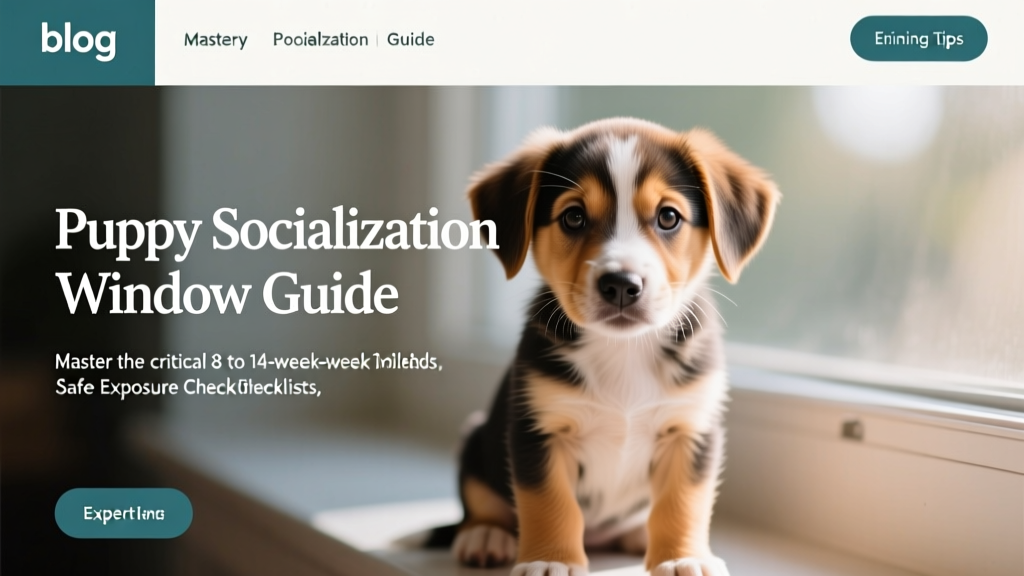
Socialization Window: Weeks 3–14
The primary socialization window — the period when puppies are most receptive to new experiences without fear — runs from approximately 3 to 14 weeks of age, according to the Merck Veterinary Manual. After this window closes, unfamiliar stimuli are more likely to trigger fear responses rather than curiosity.
Because you typically bring your chorkie home at 8–12 weeks, you have a narrow 2–6 week window to make the most impact. Every day counts.
Socialization Exposure Checklist
Aim to expose your puppy to each of the following categories in a positive, low-pressure manner. Pair every new experience with treats and praise. If your puppy shows fear, increase distance or reduce intensity — never force exposure.
| Category | Specific Exposures | Target Frequency |
|---|---|---|
| People | Men with beards, people wearing hats/sunglasses, children (supervised), tall people, people in wheelchairs, delivery workers | 5–10 new people per week |
| Surfaces | Grass, gravel, tile, hardwood, metal grates, wet pavement, carpet | Daily variety |
| Sounds | Vacuum cleaner (low/distant), doorbell, thunderstorm recordings (low volume), traffic, clapping, kitchen noises | 3–5 different sounds per week |
| Handling | Paw touching, ear inspection, mouth opening, nail clipping simulation, being held by different people, gentle restraint | Daily handling sessions (2–3 min) |
| Animals | Fully vaccinated adult dogs (calm temperament), cats (if applicable), observing dogs from distance | 2–3 supervised interactions per week |
| Environments | Car rides, pet-friendly store parking lots, outdoor café patios, friend's houses, elevator rides | 2–3 new locations per week |
Chorkie-specific note: Both Chihuahuas and Yorkies can be prone to fearfulness and reactivity if under-socialized. Prioritize positive exposures to larger dogs (to prevent small-dog defensiveness) and to being handled by strangers (both parent breeds tend to bond tightly to one person and be wary of newcomers).
Crate Training Progression and Time Limits
Crate training serves multiple purposes for a chorkie puppy: it aids potty training by leveraging a dog's natural instinct not to soil their sleeping area, it provides a safe den, and it prevents destructive behavior when unsupervised.
Crate Size and Setup
Choose a crate that allows your adult chorkie to stand up, turn around, and lie down comfortably — typically a 22-inch or 24-inch crate for most chorkies. If you buy a larger crate to "grow into," use a divider panel to block off excess space. Too much room allows a puppy to eliminate in one corner and sleep in another, defeating the potty training benefit.
Time Limits by Age
| Age | Maximum Daytime Crate Time | Nighttime Expectations |
|---|---|---|
| 8–10 weeks | 1–2 hours | 2–3 hours before needing a potty break |
| 10–12 weeks | 2 hours | 3–4 hours |
| 3–4 months | 3 hours | 4–5 hours |
| 4–6 months | 3–4 hours | 6–7 hours |
| 6+ months | 4–5 hours | 7–8 hours (full night) |
Progression steps:
- Days 1–3: Leave the crate door open. Feed meals inside the crate. Toss treats in for your puppy to retrieve. No pressure to stay inside.
- Days 4–7: Close the door during meals. Open immediately when finished. Begin closing for 30-second intervals while you sit nearby.
- Week 2: Extend closed-door time to 5–10 minutes while you remain in the room. Give a stuffed Kong or chew to create positive association.
- Week 3: Leave the room briefly (30 seconds to 2 minutes) while puppy is crated with a safe chew. Return before they become distressed.
- Week 4+: Gradually extend alone time. Begin leaving the house for short periods (5–15 minutes).
If your puppy whines in the crate: First, rule out a potty need — take them outside immediately. If they eliminate, the whining was communication. If they don't, return them to the crate and wait for a moment of silence before releasing. Never release a whining puppy while they are actively vocalizing, as this teaches that noise opens the door.
Teething Timeline and Relief Strategies
Chorkie puppies go through two teething phases:
- Deciduous (baby) teeth emerge: Weeks 3–6 (usually complete before you bring puppy home)
- Adult teeth replace baby teeth: Months 3–6, with the most intense chewing period between 12 and 20 weeks
Toy breeds are particularly prone to retained deciduous teeth — baby teeth that don't fall out when adult teeth erupt. This can cause crowding, misalignment, and periodontal disease. Check your chorkie's mouth weekly starting at 12 weeks. If you see an adult tooth emerging behind or beside a baby tooth that hasn't loosened, mention it at your next vet visit.
Safe Chew Recommendations by Stage
- 3–4 months (early teething): Frozen washcloth twisted into a rope, KONG Puppy teething rubber toys (size XS or S), Nylabone Puppy Chew (softer formula). Avoid hard rubber or antlers — puppy teeth can fracture.
- 4–5 months (peak chewing): Frozen carrots (supervised — they soften as the puppy chews), Benebone Puppy Wishbone (small size), frozen KONG stuffed with plain yogurt or pumpkin purée. Rotate toys daily to maintain interest.
- 5–6 months (finishing phase): Introduce slightly firmer chews like bully sticks (supervised, remove when small enough to swallow). Begin toothbrushing with a finger brush and enzymatic dog toothpaste (poultry or beef flavor — never human toothpaste, which contains xylitol or fluoride, both toxic to dogs).
Common Chorkie Puppy Problems and Solutions
Puppy Biting and Nipping
How do I stop puppy biting/nipping? Mouthing is normal puppy behavior — chorkies explore the world with their mouths, and baby teeth are needle-sharp. The goal is not to eliminate mouthing immediately but to teach bite inhibition (soft mouth) and then redirect to appropriate objects.
Step-by-step approach:
- When teeth touch skin, say "ouch" in a calm, slightly high-pitched tone and withdraw your hand (stand up and turn away for 5–10 seconds).
- Return and offer an appropriate chew toy. Praise enthusiastically when they chew the toy.
- If biting continues after three "ouch" responses in a session, end playtime with a brief crate rest (not as punishment — frame it as a nap). Overtired puppies bite more.
- Never hold your puppy's mouth shut, tap their nose, or use physical corrections. These methods increase fear and can escalate biting or create hand-shyness.
Expect biting to decrease significantly by 5–6 months as adult teeth come in and impulse control develops. Consistent redirection is the key — this phase will pass.
Excessive Whining and Crying
Chorkie puppies can be vocal, inheriting the Yorkie's tendency to alert-bark and the Chihuahua's attachment-driven anxiety. Common whining triggers:
- Nighttime crate whining (first 1–2 weeks): Place the crate near your bed initially. A Snuggle Puppy (heartbeat toy) or a warm water bottle wrapped in a towel can provide comfort. Gradually move the crate to its permanent location over 1–2 weeks.
- Attention-seeking whining during the day: Ignore the whining. Wait for 3 seconds of silence, then reward with attention or a treat. Teaching a "quiet" cue using positive reinforcement is effective by 4–5 months.
- Separation distress: Begin with very short departures (30 seconds to 2 minutes) and build up. Practice pre-departure cues (picking up keys, putting on shoes) without actually leaving to desensitize your puppy to these triggers.
Destructive Chewing
Chorkie puppies may be small, but they can damage shoes, cords, furniture legs, and baseboards. Solutions:
- Provide 5–7 appropriate chew toys, rotating them every 2–3 days to maintain novelty.
- Use bitter apple spray (like Grannick's Bitter Apple) on furniture legs and baseboards as a deterrent — but pair this with offering attractive alternatives, not as a standalone solution.
- Puppy-proof your home: cover electrical cords with cord protectors, remove shoes from accessible areas, and use baby gates to restrict access.
- Ensure adequate physical exercise (20–30 minutes of active play/walking per day for a puppy) and mental stimulation (food puzzles, 5-minute training sessions 2–3 times daily).
First-Year Cost Breakdown
Budgeting accurately for a chorkie puppy's first year helps prevent financial surprises. Costs below reflect 2026 US averages and may vary by region.
| Category | Items | Estimated Cost |
|---|---|---|
| Puppy Purchase/Adoption | Responsible breeder: $800–$2,500; Rescue/adoption: $200–$500 | $200–$2,500 |
| Veterinary Care | 3 puppy wellness visits, DHPP series, rabies vaccine, Bordetella, fecal tests, deworming, spay/neuter | $600–$1,200 |
| Food | Small-breed puppy food (~$45–$65 per 5-lb bag, 4–5 bags per year), treats | $250–$400 |
| Supplies | Crate, bed, harness, leash, collar, ID tags, bowls, puppy pads, toys, grooming tools, enzymatic cleaner | $200–$400 |
| Training | Puppy socialization class (6–8 weeks), basic obedience group class | $150–$350 |
| Grooming | Professional grooming every 6–8 weeks (if long-coated), $50–$80 per session | $300–$600 (long coat) or $50–$100 (short coat) |
| Preventive Medications | Flea/tick preventive, heartworm preventive (monthly) | $150–$300 |
| Pet Insurance (Optional) | Monthly premium for small breed puppy, accident + illness plan | $300–$500/year |
| Estimated First-Year Total (excluding puppy purchase) | $1,650–$3,750 | |
Cost-saving tips: Pet insurance purchased during puppyhood locks in lower premiums and covers unexpected illnesses (chorkies are prone to dental disease, luxating patellas, and tracheal collapse — conditions that can cost $1,500–$5,000 to treat). Some veterinary offices offer puppy wellness packages that bundle vaccinations and exams at a 15–20% discount.
Frequently Asked Questions
Are chorkie puppies good with children?
Chorkies can be wonderful family dogs, but their small size (4–10 lb adult weight) makes them fragile. Children under age 8 should always be supervised, and all children must be taught to handle the puppy gently — no picking up without support, no squeezing, no dropping. Both Chihuahuas and Yorkies can snap if handled roughly, so teaching children to respect the puppy's space is essential. Never leave a chorkie puppy alone with a young child.
Do chorkie puppies shed a lot?
Shedding depends on which parent breed's coat your puppy inherits. Yorkie-dominant chorkies have long, silky, low-shedding hair that requires regular brushing (daily for long coats) and professional grooming every 6–8 weeks. Chihuahua-dominant chorkies have shorter coats that shed moderately year-round with seasonal increases. Neither coat type is truly hypoallergenic, though Yorkie-type coats produce less dander.
How much exercise does a chorkie puppy need?
Follow the "5 minutes per month of age, twice daily" guideline. An 8-week-old puppy needs roughly 10 minutes of structured activity per session; a 4-month-old needs about 20 minutes. This includes short walks, indoor play, and training sessions. Avoid forced exercise (long walks, jogging) until growth plates close around 10–12 months. Chorkies get significant exercise just playing indoors due to their small stride.
Should I get pet insurance for my chorkie puppy?
Strongly consider it. Chorkies are predisposed to several conditions that are expensive to treat: dental disease requiring extractions ($500–$2,000+), luxating patella surgery ($1,500–$3,500 per knee), and tracheal collapse management ($500–$5,000 depending on severity). Enrolling during puppyhood ensures no pre-existing condition exclusions and lower monthly premiums ($25–$45/month for a small breed puppy in 2026). Compare plans from providers like Trupanion, Healthy Paws, and Lemonade.
When should I start training my chorkie puppy?
Training begins the day you bring your puppy home. Start with simple name recognition, handling exercises, and crate training from day one. Formal cues like "sit," "come," and "leave it" can be introduced at 8–10 weeks using food lures and positive reinforcement. Keep sessions to 2–5 minutes — chorkie puppies have short attention spans. Enroll in a force-free puppy socialization class once your puppy has had at least their first DHPP vaccine (check with the class provider for their vaccination requirements).
What health problems are chorkie puppies prone to?
As a crossbreed, chorkies may inherit conditions from either parent breed. Common concerns include: hypoglycemia (especially in puppies under 12 weeks), luxating patella (kneecap dislocation), dental crowding and periodontal disease, tracheal collapse, patent ductus arteriosus (PDA — a congenital heart defect), and portosystemic shunt (liver shunt). Ask your breeder for health clearances on both parent dogs and discuss screening with your veterinarian at your puppy's first wellness visit.
Beth Carrasco
All our authors care for dogs every day — read more of their work on the authors page.