Chinese Shar Pei Puppies: The Complete Week-by-Week Puppy Care Guide
Everything you need to raise Chinese Shar Pei puppies: age milestones, feeding schedules, vaccination timelines, potty training, and first-year costs.

When Should I Bring My Chinese Shar Pei Puppy Home?
The ideal window to bring a Chinese Shar Pei puppy home is between 8 and 10 weeks of age. While some breeders release puppies at 8 weeks, many experienced Shar Pei breeders prefer to hold them until 10 weeks. This extra time allows the puppy to pass through the first fear period (weeks 8–10) in a familiar environment, which matters for a breed already predisposed to wariness of strangers.
Shar Pei puppies go through significant developmental shifts in their first year. This breed matures slowly — you won't see full physical and temperamental maturity until 18–24 months. Understanding what's normal at each stage prevents unnecessary vet visits and training missteps.
Age-Specific Developmental Milestones
Chinese Shar Pei puppies develop along a predictable timeline, but their independent, strong-willed temperament means behavioral milestones don't always match physical ones. Here's what to expect at each stage.
Weeks 4–8: Litter Learning Phase
At this stage, puppies are still with the breeder (or should be). Critical developments include:
- Bite inhibition begins as littermates yelp when bitten too hard
- Weaning completes — puppies transition fully to softened puppy kibble by week 6
- Sensory maturation — eyes fully functional, hearing sharp, coordination improving rapidly
- First deworming typically at weeks 2, 4, 6, and 8 (pyrantel pamoate protocol)
- Wrinkle development — Shar Pei pups are born extremely wrinkled; excess skin begins tightening around the face by week 6
Weeks 8–12: Home Adjustment and Bonding
This is the primary socialization window and the most impressionable period. Expect:
- Sleep: 18–20 hours per day — puppies need enforced naps in the crate
- Potty frequency: every 1–2 hours during the day, 2–3 nighttime wakings
- Attachment behaviors: following you room to room, whining when separated
- First fear period (weeks 8–10): sudden startle responses to previously neutral stimuli — avoid forcing scary experiences
- Teething begins: deciduous (baby) teeth fully in; chewing intensity ramps up
Weeks 12–16: Confidence Building
- Bladder control improves: can hold 3–4 hours during the day
- Command retention: begins reliably responding to "sit," "come," and name recognition
- Independence testing: may start ignoring recalls in favor of environmental exploration
- Coat transition: puppy coat may feel rougher; adult coat texture starts emerging
- Growth rate: expect 2–3 lb weight gain per week during this window
Weeks 16–24 (4–6 Months): Adolescence Begins
- Teething peak: adult teeth erupting, intense chewing, possible appetite dips
- Second fear period may appear around 6 months — sudden wariness of previously familiar things
- Size: reaching approximately 60–70% of adult weight (25–35 lb / 11–16 kg)
- Energy shifts: bursts of play followed by long rest periods
- Training regression: previously reliable commands may be "forgotten" — stay consistent
Months 6–12: Young Adult Transition
- Sexual maturity: females may experience first heat cycle (estrus) between 6–10 months; discuss spay timing with your vet
- Adult weight: approaching full size, typically 45–60 lb (20–27 kg) for standard-type Shar Pei
- Temperament settling: natural aloofness toward strangers becomes more pronounced — continued socialization is essential
- Exercise capacity: can handle 30–45 minute walks; avoid high-impact activities until growth plates close (~14–18 months)
Feeding Schedule: Exact Portions by Age and Weight
Chinese Shar Pei puppies need a large-breed puppy formula to support controlled growth and reduce the risk of hip dysplasia. Look for an AAFCO statement confirming "growth" or "all life stages" nutritional adequacy. Brands like Royal Canin Medium Puppy, Hill's Science Diet Large Breed Puppy, or Purina Pro Plan Large Breed Puppy are solid options.
Shar Pei are prone to food allergies and skin sensitivities, so monitor for itching, ear infections, or loose stools after introducing any new food. If issues arise, your vet may recommend a limited-ingredient diet with a novel protein (such as salmon or lamb).
| Age | Meals Per Day | Estimated Daily Amount | Notes |
|---|---|---|---|
| 8–12 weeks | 3–4 | 1.5–2 cups/day (split across meals) | Soften kibble with warm water if needed; monitor for bloat |
| 12–16 weeks | 3 | 2–2.5 cups/day | Transition to dry kibble; weigh weekly to track growth |
| 4–6 months | 2–3 | 2.5–3.5 cups/day | Appetite may dip during teething; offer food at room temperature |
| 6–9 months | 2 | 3–4 cups/day | Adjust based on body condition score (BCS); aim for ribs palpable but not visible |
| 9–12 months | 2 | 3–4 cups/day | Begin transitioning to adult formula around 12 months (gradual 7-day switch) |
Important: These are starting estimates. Individual needs vary based on activity level, metabolism, and the specific food's caloric density. Check the guaranteed analysis on your food bag (calories per cup) and adjust. A Shar Pei puppy at a healthy weight should have a visible waist when viewed from above and ribs you can feel without pressing hard.
Vaccination Schedule for Chinese Shar Pei Puppies
Shar Pei puppies follow the standard canine vaccination protocol, but this breed has a known sensitivity to certain vaccines — particularly leptospirosis and, in some lines, coronavirus components. Discuss vaccine selection with your veterinarian before the first appointment. Some vets prefer to administer vaccines individually rather than in combination (e.g., separating DHPP from leptospirosis) for Shar Pei patients.
| Age | Vaccine | Details |
|---|---|---|
| 6–8 weeks | DHPP (1st dose) | Distemper, Hepatitis (Adenovirus), Parainfluenza, Parvovirus. Often given by breeder. |
| 10–12 weeks | DHPP (2nd dose) + Bordetella | Bordetella (kennel cough) recommended if attending puppy classes or boarding. Intranasal or injectable. |
| 14–16 weeks | DHPP (3rd dose) + Rabies | Rabies is legally required in most US states. Final DHPP booster ensures immunity after maternal antibodies wane. |
| 12–16 weeks (optional) | Leptospirosis (2-dose series) | Discuss with your vet — Shar Pei may have higher adverse reaction rates. Recommended in areas with wildlife exposure. |
| 1 year | DHPP booster + Rabies booster | After the 1-year booster, your vet may recommend 3-year intervals for DHPP and rabies, or titer testing. |
Post-vaccine monitoring: Watch your Shar Pei puppy for 24–48 hours after each vaccine. Mild lethargy and soreness at the injection site are normal. Contact your vet immediately if you notice facial swelling, hives, vomiting, difficulty breathing, or collapse — these indicate an allergic reaction requiring emergency treatment.
For a comprehensive overview of core versus non-core vaccines, the AVMA vaccination guidelines provide detailed recommendations your vet follows.
Potty Training Timeline and Troubleshooting
Chinese Shar Pei puppies are generally clean dogs — the breed's natural fastidiousness works in your favor. However, their stubborn streak means consistency matters more than with eager-to-please breeds. Here's a realistic timeline:
| Age | Expected Progress | Accident Frequency |
|---|---|---|
| 8–12 weeks | Learning the routine; no real bladder control yet | 2–4 accidents/day is normal |
| 12–16 weeks | Beginning to signal (going to door, whining) | 1–2 accidents/day; fewer if on strict schedule |
| 4–6 months | Reliable signals; can hold 3–4 hours | Occasional accidents after play or excitement |
| 6–9 months | Mostly house-trained with supervision | Rare accidents; may regress during fear periods |
| 9–12 months | Fully reliable in most situations | Accidents only with schedule disruption or illness |
Key strategies for Shar Pei puppies:
- Take them out immediately after waking, eating, drinking, and playing — these are universal trigger points
- Use a consistent verbal cue like "go potty" said calmly as they eliminate; reward with a treat within 2 seconds of finishing
- Crate between outings when you can't supervise — puppies won't soil their sleeping space (within reason)
- Enzymatic cleaner (Nature's Miracle or Rocco & Roxie) for accidents — ammonia-based cleaners attract puppies back to the same spot
- Never punish accidents — rubbing their nose in it or yelling creates fear of eliminating in front of you, not fear of eliminating indoors
Troubleshooting: If your 5-month-old Shar Pei is still having frequent accidents (3+ per day), rule out a urinary tract infection with a vet visit before assuming it's a training issue. Shar Pei are prone to skin fold infections around the vulva in females, which can cause secondary UTIs.
Socialization Window: Weeks 3–14
The primary socialization period for all puppies closes around 14 weeks, according to the American Kennel Club. For Chinese Shar Pei puppies — a breed naturally inclined toward suspicion of strangers and other dogs — this window is arguably the most critical aspect of their entire upbringing.
An under-socialized Shar Pei becomes a dog that is difficult to handle at the vet, aggressive toward visitors, and reactive on walks. A well-socialized Shar Pei remains reserved with strangers but is calm, manageable, and not fear-based.
- ☐ At least 10 different people (varying ages, genders, ethnicities, wearing hats/glasses/coats)
- ☐ 5+ children of different ages (supervised, calm interactions)
- ☐ 3+ other fully vaccinated, friendly adult dogs
- ☐ Surfaces: grass, gravel, tile, wood floor, metal grate, wet pavement
- ☐ Sounds: vacuum, doorbell, thunderstorms (play recordings at low volume), traffic, clapping
- ☐ Handling: paw touching, ear inspection, mouth opening, nail clipping simulation, towel wrapping
- ☐ Objects: umbrellas opening, plastic bags rustling, brooms, wheelchairs, bicycles
- ☐ Environments: car rides, pet store (carry puppy if not fully vaccinated), outdoor café patio, friend's house
- ☐ Grooming tools: introduce brush, comb, and dryer at low setting — Shar Pei need lifelong skin/wrinkle care
Breed-specific note: Shar Pei puppies should have positive experiences, not just exposure. If your puppy shows fear (cowering, tail tucking, freezing), increase distance from the stimulus and let them observe. Pair the scary thing with high-value treats (small pieces of boiled chicken or cheese). Never force a Shar Pei puppy into a frightening situation — this breed holds grudges against triggers associated with negative experiences.
Crate Training Progression and Time Limits
Crate training serves multiple purposes for Shar Pei puppies: it aids potty training, provides a safe den, prevents destructive chewing during unsupervised hours, and helps them cope with alone time — important for a breed that bonds intensely with their family.
| Age | Maximum Crate Time (Day) | Maximum Crate Time (Night) | Notes |
|---|---|---|---|
| 8–10 weeks | 1–1.5 hours | 2–3 hours (will need overnight potty break) | Keep crate in bedroom; use a blanket over top for den feel |
| 10–14 weeks | 2–3 hours | 3–4 hours | Begin moving crate to permanent location if desired |
| 4–5 months | 3–4 hours | 5–6 hours | May sleep through the night without potty break |
| 6–8 months | 4–5 hours | 7–8 hours | Should be comfortable for full overnight stretches |
| 9–12 months | 5–6 hours | 8 hours | Transition to free-roaming during day if reliably house-trained |
Setup tips: Use a wire crate (36-inch for most adult Shar Pei) with a divider panel so the space grows with your puppy. Too much space too early defeats the potty training benefit. Line the crate with a washable bed — avoid thick padding initially, as Shar Pei puppies may chew and ingest fabric. A Kong Classic stuffed with frozen peanut butter keeps them occupied during crate time.
Teething Timeline and Relief Strategies
Chinese Shar Pei puppies begin losing deciduous teeth around 3.5–4 months, with the full set of 42 adult teeth typically in by 6–7 months. During this period, expect increased chewing, drooling, mild gum bleeding, and occasional appetite reduction.
Safe chew recommendations:
- Benebone Wishbone (puppy size) — durable nylon, bacon-flavored, angled for easy gripping
- Kong Puppy (pink or blue rubber) — fill with wet food and freeze for soothing cold relief
- Nylabone Puppy Chew — softer formulation designed for developing teeth
- Frozen washcloth — wet a clean washcloth, twist into a rope, freeze; supervise use
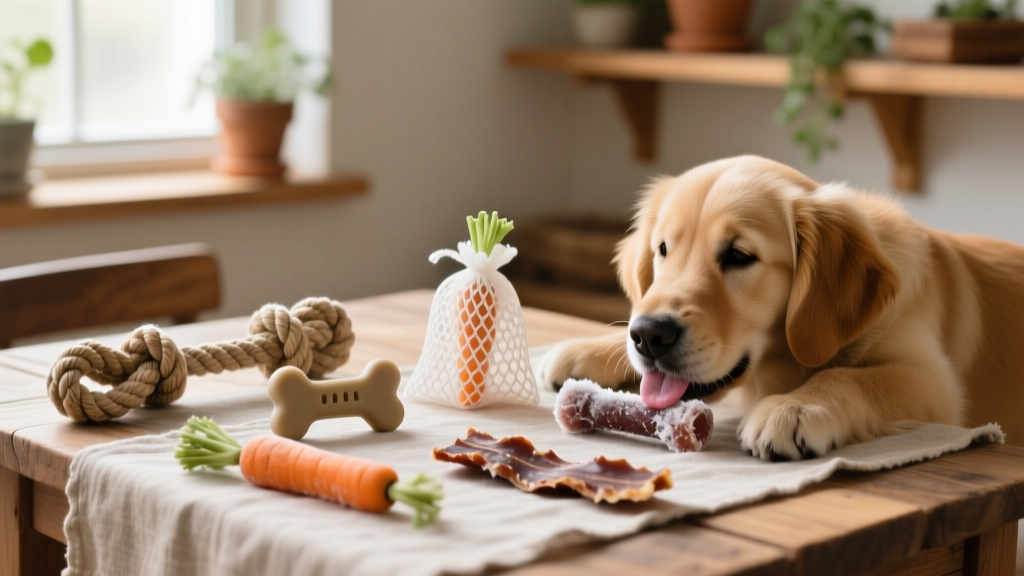
- Carrots (whole, raw, large enough not to choke) — natural, low-calorie, and satisfying crunch
Avoid: Rawhide chews (choking and blockage risk), antlers (too hard — can fracture puppy teeth), cooked bones (splinter), and any chew toy small enough to swallow whole. If your Shar Pei puppy swallows a foreign object, call your vet or the ASPCA Animal Poison Control at (888) 426-4435 (24/7, consultation fee applies).
Retained baby teeth: Shar Pei are among the breeds prone to retained deciduous teeth, where baby teeth don't fall out as adult teeth erupt. Check your puppy's mouth weekly starting at 4 months. If you see a "double row" of teeth — an adult tooth emerging alongside a retained baby tooth — schedule a veterinary dental exam. Retained teeth can cause misalignment and trap food, leading to early dental disease.
Common Shar Pei Puppy Problems and Solutions
Puppy Biting and Nipping
Shar Pei puppies explore with their mouths, and their wrinkled faces can make bites feel more surprising. To stop nipping:
- Redirect: when teeth touch skin, say "ouch" in a calm, slightly high-pitched tone, then immediately offer a chew toy
- Time-outs: if biting persists after 2–3 redirects, calmly place puppy in their crate or a pen for 30–60 seconds — not as punishment, but as a "reset"
- Hand-feeding: feed meals by hand for the first 2–3 weeks; the puppy learns that gentle mouth behavior earns rewards
- Consistency across all family members: if one person allows mouthing and another doesn't, the puppy won't learn the rule
Whining and Crying (Especially at Night)
New Shar Pei puppies whine for several reasons: separation anxiety, need to potty, discomfort, or overstimulation. For nighttime whining:
- Place the crate next to your bed for the first 2–3 weeks so they can hear and smell you
- Set an alarm for one overnight potty break (around 2–3 AM) until bladder control improves
- If you're confident they don't need to potty (they just went 30 minutes ago), wait 5–10 minutes before responding — rewarding silence, not whining
- A Snuggle Puppy (with heartbeat simulator) can ease the transition from littermates
Destructive Chewing
Shar Pei puppies are moderate chewers, but boredom amplifies the behavior. Solutions:
- Rotate toys every 3–4 days to maintain novelty
- Provide at least 2–3 appropriate chew options at all times
- Puppy-proof your home: use bitter apple spray (Grannick's Bitter Apple) on furniture legs and baseboards
- Increase mental stimulation: 10 minutes of sniffing on a snuffle mat tires a puppy as much as 30 minutes of walking
Skin Fold Irritation
Unique to the breed, Shar Pei puppies have deep wrinkles that trap moisture, dirt, and bacteria. Starting in puppyhood, establish a wrinkle care routine:
- Wipe face folds daily with a damp cloth or Squishface Wrinkle Wipe
- Dry folds thoroughly — moisture is the enemy
- Watch for redness, odor, or discharge in folds, which indicate yeast or bacterial infection
- Ask your vet about wrinkle balm (e.g., Wrinkle Paste by Squishface) for puppies with particularly deep folds
First-Year Cost Breakdown
Budgeting accurately for a Chinese Shar Pei puppy prevents financial surprises. This breed carries higher-than-average veterinary costs due to skin, eye, and joint predispositions. Here's a realistic first-year estimate based on 2026 US pricing:
| Category | Low Estimate | High Estimate | Details |
|---|---|---|---|
| Puppy purchase | $1,200 | $3,000 | From a responsible breeder with OFA health testing; rescue/adoption: $300–$600 |
| Veterinary care (routine) | $600 | $1,200 | Initial exam, vaccine series, deworming, fecal tests, spay/neuter |
| Veterinary care (breed-specific) | $200 | $800 | Skin fold treatment, ear infections, possible cherry eye or entropion evaluation |
| Food | $400 | $700 | High-quality large-breed puppy formula; prescription diet if allergies develop |
| Supplies | $300 | $600 | Crate, bed, leash/harness, bowls, grooming tools, enzymatic cleaner, puppy pen |
| Training | $200 | $600 | Group puppy class ($150–$300 for 6-week course) or private sessions ($75–$125/session) |
| Pet insurance | $480 | $960 | $40–$80/month; highly recommended for Shar Pei given breed-specific conditions |
| Grooming | $0 | $300 | Shar Pei are low-maintenance for grooming; occasional professional bath/nail trim if needed |
| Total First Year | $3,380 | $8,160 |
Cost-saving tips: Enroll in pet insurance before your puppy's first vet visit — pre-existing conditions are excluded by all major insurers, and Shar Pei are predisposed to conditions like entropion (eyelid rolling inward), hip dysplasia, and Shar Pei fever (familial autoinflammatory disease). Early enrollment ensures coverage if these develop later. Consider Trupanion, Healthy Paws, or Figo for breed-specific condition coverage.
When Can My Puppy Go Outside and Meet Other Dogs?
This is one of the most common questions new Shar Pei puppy owners ask, and the answer balances disease risk against the closing socialization window.
Before full vaccination (prior to 16 weeks):
- Safe: carrying your puppy in a sling or backpack in public spaces; setting them on clean grass in your own yard; supervised play with known, fully vaccinated adult dogs in private homes
- Unsafe: dog parks, pet store floors, areas where unknown dogs have eliminated, group classes where vaccination status isn't verified
- Puppy classes: The AVMA supports puppy socialization classes starting at 7–8 weeks (after first DHPP dose), provided the facility requires proof of vaccination and maintains sanitation protocols
After full vaccination (1–2 weeks after the 16-week DHPP booster):
- Your Shar Pei puppy can safely visit dog parks, attend daycare, go on public trails, and interact freely with other dogs
- Continue to monitor interactions — Shar Pei tend to be dog-selective rather than dog-social, and early negative experiences with rough-playing dogs can create lasting reactivity
Frequently Asked Questions
How often should I feed my Chinese Shar Pei puppy at 10 weeks?
At 10 weeks, feed 3–4 meals per day. Divide the daily total (approximately 1.5–2 cups of large-breed puppy kibble) evenly across meals. Feed at consistent times — for example, 7 AM, 12 PM, 5 PM, and optionally 9 PM. Remove uneaten food after 15–20 minutes to establish a routine and monitor appetite.
When will my Shar Pei puppy be fully potty trained?
Most Chinese Shar Pei puppies are reliably house-trained by 6–9 months if you follow a consistent schedule. Some individuals — particularly males — may take until 10–12 months. Neutering can reduce marking behavior that complicates late-stage training. If accidents persist beyond 9 months despite consistent effort, consult your vet to rule out medical causes.
Are Chinese Shar Pei puppies good with children?
Shar Pei puppies can coexist well with respectful children, but they are not naturally "nanny dogs." They tend to be independent and may not tolerate ear-pulling or tail-grabbing. Supervise all interactions, teach children to let the puppy approach them (not the reverse), and provide the puppy with a child-free retreat space (their crate or a gated room). Early, positive exposure to children during the socialization window is essential.
How do I know if my Shar Pei puppy needs eyelid surgery?
Entropion — where the eyelid rolls inward and lashes scratch the cornea — is common in Shar Pei. Signs include excessive tearing, squinting, pawing at the eye, and redness. Some puppies outgrow mild cases as facial skin tightens, but moderate-to-severe entropion requires surgical correction, typically performed after 6 months of age. Consult a veterinary ophthalmologist if you notice persistent eye discomfort. Surgery costs range from $500–$1,500 per eye depending on severity and location.
What is Shar Pei fever and should I worry about it in my puppy?
Familial Shar Pei fever (also called familial canine autoinflammatory disease) causes recurrent episodes of high fever (103–107°F / 39.4–41.7°C) and swelling of the hocks (ankle joints). Episodes last 24–36 hours and may first appear in puppies as young as 4–6 months. While episodes resolve on their own, the condition can lead to amyloidosis — a serious kidney complication — over time. If your puppy develops unexplained fever and joint swelling, seek veterinary evaluation. The Merck Veterinary Manual provides detailed clinical information on this breed-specific condition.
Jonas Cole
All our authors care for dogs every day — read more of their work on the authors page.