Chesapeake Retriever Puppy: Week-by-Week Care, Feeding & Training Guide
Complete Chesapeake Retriever puppy guide covering milestones, feeding schedules, vaccination timelines, potty training, socialization, and first-year costs for 2026.

The Chesapeake Bay Retriever isn't your average sporting dog. Bred to break ice and retrieve waterfowl in the frigid Chesapeake Bay, these dogs carry a tenacity and independence that sets them apart from Labs and Goldens — even as puppies. A Chesapeake Retriever puppy will test your patience, charm you with their amber eyes, and demand a level of mental engagement that many first-time owners underestimate.
This guide maps out exactly what to expect from your Chessie puppy from the moment you bring them home through their first year, with breed-specific insights you won't find in generic puppy manuals.
When to Bring Your Chesapeake Retriever Puppy Home
Responsible Chessie breeders typically release puppies between 8 and 10 weeks of age. While some sporting breeders hold puppies until 10-12 weeks to evaluate retrieving instinct and temperament, bringing a puppy home at 8 weeks is standard and gives you maximum overlap with the critical socialization window.
The American Kennel Club emphasizes that the primary socialization period closes around 14-16 weeks. Every week you have your puppy at home during this window matters — especially for Chessies, who can develop wariness of strangers and novel environments if under-socialized.
Before pickup day, prepare:
- A 42-inch wire crate (they'll grow into it; use a divider panel for now)
- Enzymatic cleaner (Nature's Miracle or Rocco & Roxie — Chessie puppies are heavy chewers and accidents will happen)
- High-density rubber chew toys (Kong Classic Large, West Paw Tux)
- A 6-foot leather or biothane leash — avoid retractable leashes for a breed this strong
Chesapeake Retriever Puppy Milestones: Week by Week
Chessies mature more slowly than many retriever breeds. Expect puppy behaviors — mouthiness, selective hearing, bursts of energy — to persist well into the second year. Here's what each developmental stage looks like for this breed specifically.
Weeks 4–8 (Still with Breeder)
Your puppy is learning bite inhibition from littermates and developing early retrieving drive. A good Chessie breeder introduces pups to water — even a shallow kiddie pool — during this period. Puppies should receive their first DHPP vaccine around 6-8 weeks and begin deworming protocols. Ask your breeder for records of early neurological stimulation (ENS) and introduction to novel surfaces (tarps, grates, wobble boards).
Weeks 8–12 (Home Transition)
Expect 18-20 hours of sleep per day, broken by intense 15-20 minute bursts of activity. Your Chessie puppy will mouth everything — this breed carries high oral fixation tied to their retrieving heritage. Weight at 8 weeks typically ranges from 10-14 lb (4.5-6.4 kg). Begin name recognition, short 2-3 minute training sessions, and crate acclimation. Keep all outings in your arms or on a blanket in public until vaccinations are complete.
Weeks 12–16 (Foundation Building)
Attention span extends to 5-7 minutes. Your puppy can learn sit, down, recall to a whistle (critical for hunting lines), and loose-leash walking basics. Fear periods commonly hit around 12-14 weeks — your puppy may suddenly react to objects or sounds they previously ignored. Don't force exposure; let them investigate at their own pace while pairing novel stimuli with high-value treats (freeze-dried liver, boiled chicken).
Weeks 16–24 (Adolescence Begins)
Weight reaches 35-50 lb (16-23 kg). Energy increases substantially. This is when Chessie independence emerges — recall that worked perfectly at 12 weeks may suddenly fail. Increase physical exercise to 30-45 minutes daily (structured walks, swimming, retrieving games) but avoid forced running on hard surfaces until growth plates close around 14-18 months. Second fear period typically occurs around 6-8 months.
Months 6–12 (Teenage Phase)
Your Chessie puppy approaches adult size — males reaching 55-70 lb (25-32 kg), females 45-60 lb (20-27 kg). Hormonal changes in intact dogs increase roaming and territorial behavior. Training consistency is essential; Chessies who learn they can ignore commands during this window will carry that habit into adulthood. Enroll in intermediate obedience or intro hunt training if field work is your goal.
Feeding Schedule: Exact Portions by Age and Weight
Chesapeake Bay Retrievers are prone to rapid growth, which increases the risk of hip and elbow dysplasia. The Merck Veterinary Manual notes that large-breed puppies fed calorie-dense diets free-choice show significantly higher rates of skeletal abnormalities. Feed measured meals on a schedule.
Use a large-breed puppy formula with AAFCO certification showing calcium at 1.0-1.5% and phosphorus at 0.8-1.2% on a dry matter basis. Target a body condition score (BCS) of 4-5/9 — ribs should be easily felt but not prominently visible.
| Age | Meals Per Day | Estimated Daily Amount* | Target Weight Range |
|---|---|---|---|
| 8–12 weeks | 4 meals | 2–3 cups/day | 10–22 lb (4.5–10 kg) |
| 3–4 months | 3 meals | 2.5–3.5 cups/day | 22–35 lb (10–16 kg) |
| 5–6 months | 2–3 meals | 3–4.5 cups/day | 35–50 lb (16–23 kg) |
| 7–9 months | 2 meals | 3.5–5 cups/day | 45–60 lb (20–27 kg) |
| 10–12 months | 2 meals | 4–5.5 cups/day | 55–75 lb (25–34 kg) |
*Portions based on a large-breed puppy kibble at approximately 350-400 kcal/cup. Adjust based on your specific food's caloric density and your puppy's body condition score. Always provide fresh water — Chessies drink heavily, especially after activity.
Vaccination Schedule for Your Chesapeake Retriever Puppy
The American Veterinary Medical Association outlines core vaccination protocols that protect against life-threatening diseases. Your veterinarian will tailor this schedule based on local disease prevalence and your puppy's risk factors, but expect the following framework:
| Age | Vaccines | Notes |
|---|---|---|
| 6–8 weeks | DHPP (Distemper, Hepatitis/Adenovirus, Parainfluenza, Parvovirus) | Typically given by breeder; first in the series |
| 10–12 weeks | DHPP booster + Bordetella (optional based on lifestyle) | Bordetella recommended if attending group puppy classes |
| 14–16 weeks | DHPP final booster + Rabies (at 14-16 weeks per state law) | Maternal antibodies wane by this point — final DHPP is critical |
| 12–16 months | DHPP booster + Rabies booster | After this, boosters move to 3-year intervals for most protocols |
Leptospirosis consideration: Chessies are water dogs by nature. If your dog will swim in ponds, lakes, or marshes, ask your vet about adding the Leptospirosis vaccine — this bacterial disease is transmitted through contaminated water and is increasingly diagnosed in sporting breeds. It's typically given as a two-dose series starting at 12 weeks.
Socialization Window: The Critical Weeks 3–14
This is the single most important section of this guide. Chesapeake Bay Retrievers have a genetic predisposition toward wariness with strangers and protective instincts over their family and property. Without deliberate, positive socialization during the 3-14 week window (with the most impactful period being 8-12 weeks while in your care), these traits can harden into fear-based reactivity or aggression.
Socialization doesn't mean flooding your puppy with stimuli. It means controlled, positive exposures paired with treats and praise. Aim for 3-5 novel experiences per day during the peak window.
Potty Training: Realistic Timeline and Troubleshooting
Chesapeake Retriever puppies typically achieve reliable house training between 4 and 6 months of age, though some individuals — particularly females — may take until 7-8 months. Their intelligence works in your favor once they understand the routine, but their independence means they won't always "ask" to go out. You must maintain the schedule.
The protocol:
- 8–12 weeks: Take puppy out every 45–60 minutes during waking hours, immediately after every meal, after every nap, and after every play session. Use a consistent door and verbal cue ("go potty" or "do your business"). Reward with a treat immediately upon elimination — not after coming back inside.
- 3–4 months: Extend intervals to 60–90 minutes. Begin associating a bell on the door with going outside (teach them to nose-target the bell).
- 5–6 months: Most Chessies can hold for 2–3 hours during the day. Overnight bladder control typically reaches 6–7 hours by this age.
- 7+ months: Reliable 4–6 hour daytime holds. If accidents regress, rule out urinary tract infection before assuming behavioral causes.
Crate Training Progression and Time Limits
Crate training serves dual purposes for Chessies: house training management and providing a secure den for a breed that bonds intensely to their people. A properly crate-trained Chessie will voluntarily retreat to their crate for naps well into adulthood.
Time limits by age (maximum continuous crating):
- 8–10 weeks: 30–60 minutes during the day (set a timer; they cannot hold bladder longer)
- 11–14 weeks: 1–2 hours during the day, up to 4 hours overnight (set one overnight potty alarm)
- 3–4 months: 2–3 hours during the day, 5–6 hours overnight
- 5–6 months: 3–4 hours during the day, 7–8 hours overnight
- 7+ months: 4–5 hours during the day maximum; never crate a dog for a full 8-hour workday without a midday break
Crate training steps specific to Chessies:
- Feed all meals inside the crate with the door open for the first week.
- Introduce a stuffed Kong or frozen West Paw Toppl as a crate-only enrichment item.
- Close the door for 30 seconds, then open before puppy protests. Gradually extend duration.
- Begin leaving the room for 1 minute, then 5, then 15. Chessies are velcro dogs — separation distress is common if not practiced incrementally.
- Never use the crate as punishment. This breed holds grudges against things associated with negative experiences.
Teething Timeline and Safe Chew Strategies
Chesapeake Retriever puppies begin losing deciduous (baby) teeth around 3.5–4 months, with the process typically complete by 6–7 months. During this window, chewing intensity reaches its peak — and a Chessie's jaw strength means they'll destroy cheap toys in minutes.
Teething phases:
- 3–4 months: Incisors loosen first. You may find tiny teeth in bedding or toys. Offer chilled (not frozen) carrots, damp frozen washcloths, and rubber teething rings designed for puppies.
- 4–5 months: Canines and premolars erupt. This is peak destruction time. Rotate between Benebone Wishbone (puppy formula), Kong Puppy (softer rubber than adult version), and Nylabone Puppy Chew. Supervise all chew sessions.
- 5–7 months: Molars come in. Transition to adult-strength chews. Introduce bully sticks and yak cheese chews for longer sessions. Always choose chews larger than your puppy's mouth to prevent choking.
Common Chesapeake Retriever Puppy Problems and Solutions
Every breed has its puppy-phase challenges. Chessies are no exception — and their combination of high drive, strong jaws, and independent thinking creates a specific set of issues that catch many owners off guard.
Excessive Biting and Nipping
Chessie puppies mouth more intensely than most retrievers. This isn't aggression — it's a breed selected to carry ducks through icy water. Their mouths are their primary interaction tool.
Solution: Redirect to appropriate chew toys every time teeth touch skin. If nipping persists, implement a "game over" protocol: the moment teeth touch skin, say "ouch" in a calm voice, stand up, and leave the room for 15-20 seconds. Return and resume play. Consistency from every family member is essential — Chessies will exploit inconsistency within 48 hours.
Whining and Vocalization in the Crate
Chessie puppies are social and may protest crating with prolonged whining or barking.
Solution: Distinguish between protest whining (ignore — do not release while vocalizing) and potty whining (if it's been more than 2 hours, take them out calmly on leash, no play, then return to crate). A Snuggle Puppy heartbeat toy or a worn t-shirt with your scent can ease the transition. White noise machines help mask household sounds that trigger alertness.
Destructive Chewing Beyond Teething
Chessies chew out of boredom as much as teething pain. A mentally under-stimulated Chessie puppy will dismantle furniture, baseboards, and shoes.
Solution: Provide 10-15 minutes of nosework daily — scatter kibble in a snuffle mat, hide treats in cardboard boxes for them to shred, or introduce basic scent articles. Mental fatigue reduces destructive chewing more effectively than physical exercise alone in this breed. Rotate toys every 3-4 days to maintain novelty.
Resource Guarding Tendencies
Some Chessie lines show early resource guarding — stiffening over food bowls, growling when approached with high-value chews.
Solution: Practice "trading up" from day one: offer a piece of chicken in exchange for whatever they have. Never forcibly take items from a Chessie puppy's mouth. Hand-feed 25% of their daily meals during the first 3 months to build positive associations with human hands near food. If guarding escalates to snapping, consult a certified force-free behaviorist (IAABC or CPDT-KA certified).
First-Year Cost Breakdown for a Chesapeake Retriever Puppy
Budgeting accurately prevents surprises. Here's a realistic first-year cost estimate for a Chessie puppy in 2026, based on national averages with regional variation noted.
| Category | Low Estimate | High Estimate | Details |
|---|---|---|---|
| Puppy Purchase | $1,200 | $2,500 | AKC-registered, health-tested parents (OFA hips/elbows, PRA clear). Adoption from Chessie rescue: $300-$600 |
| Veterinary (Year 1) | $600 | $1,200 | Vaccine series, spay/neuter ($300-$600), fecal exams, heartworm prevention |
| Food | $480 | $840 | Large-breed puppy formula, $40-$70/month depending on brand |
| Supplies | $350 | $650 | Crate, bed, leash, collar, bowls, toys, grooming tools, baby gates |
| Training | $200 | $800 | Group puppy class ($150-$300) + optional private sessions ($75-$150/session) |
| Preventive Medications | $200 | $400 | Monthly heartworm + flea/tick prevention (Simparica Trio, NexGard, etc.) |
| Pet Insurance (optional) | $360 | $720 | $30-$60/month; recommended for breed predisposed to hip dysplasia |
| Total First Year | $3,390 | $7,110 | Excluding emergency veterinary care |
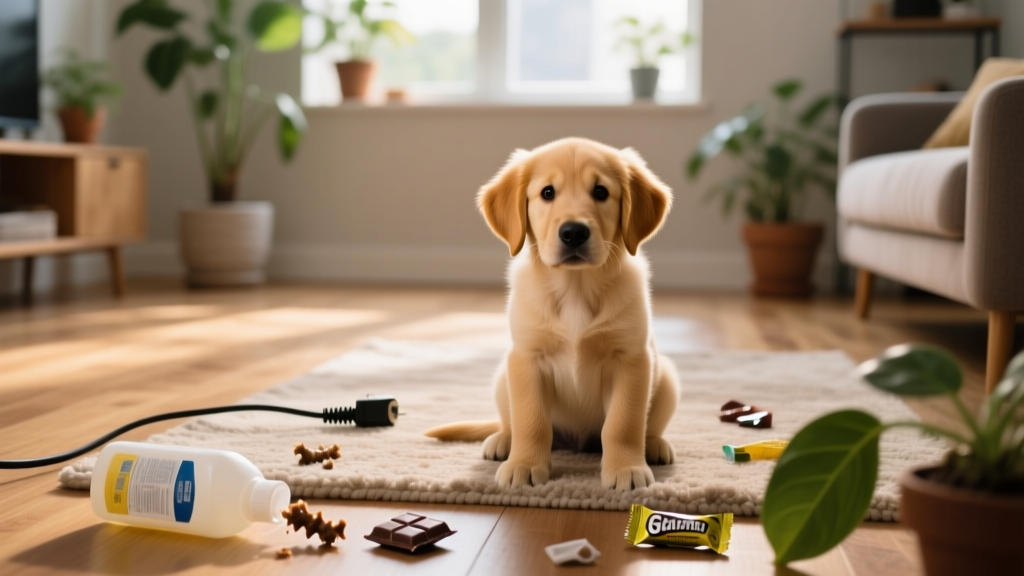
Emergency fund recommendation: Set aside an additional $1,000–$2,000 for unexpected veterinary care. Chessie puppies are athletic and curious — foreign body ingestion, lacerations, and orthopedic injuries are the most common emergency visits in this breed during the first year.
When Can Your Puppy Go Outside and Meet Other Dogs?
This question creates tension between disease risk and socialization urgency. Here's the evidence-based approach:
- Immediately (carried): You can carry your puppy in public spaces — outdoor cafés, hardware stores, friends' homes — from day one. They must not touch the ground where unknown dogs have been.
- Your yard: If your yard is fenced and no unknown dogs access it, supervised yard time is safe immediately.
- After 10–12 week vaccines: Brief, controlled walks on low-traffic sidewalks are acceptable. Avoid dog parks, pet store floors, and high-traffic dog areas.
- After 16-week final DHPP: Full public access is safe. This is when dog parks, group hikes, and off-leash areas become options — though many Chessie owners avoid dog parks entirely due to the breed's potential same-sex aggression and rough play style.
- Puppy classes: The AVMA supports puppy socialization classes beginning 7 days after the first DHPP vaccine (typically around 9-10 weeks), provided all puppies in the class are vaccinated and the environment is sanitized between sessions.
Frequently Asked Questions
When should I bring my Chesapeake Retriever puppy home?
Between 8 and 10 weeks of age. Some field-line breeders prefer to hold until 10-12 weeks to evaluate working aptitude. Bringing your puppy home at 8 weeks maximizes your time in the critical socialization window, which closes around 14-16 weeks.
How often should I feed my Chessie puppy at each age?
Four meals daily from 8-12 weeks, three meals from 3-5 months, and two meals from 6 months onward. Never free-feed a large-breed puppy — measured meals help control growth rate and reduce dysplasia risk. Always feed a formula specifically labeled for large-breed puppies.
When will my Chesapeake Retriever puppy be fully potty trained?
Most Chessies achieve reliable house training between 4 and 6 months, though some individuals take until 7-8 months. Consistency with a schedule — taking them out every 60-90 minutes during the day and rewarding immediately — is the single biggest factor. Accidents after 8 months warrant a veterinary check for underlying conditions.
What vaccines does my Chessie puppy need and when?
Core vaccines include DHPP at 6-8 weeks, 10-12 weeks, and 14-16 weeks, plus Rabies at 14-16 weeks. Bordetella is recommended if attending group classes. Because Chessies are water dogs, discuss the Leptospirosis vaccine with your veterinarian — it's increasingly recommended for sporting breeds with water exposure.
How do I stop my Chesapeake Retriever puppy from biting and nipping?
Use redirection to appropriate chew toys combined with a "game over" protocol: when teeth touch skin, calmly say "ouch," stand, and leave for 15-20 seconds. Never physically punish a Chessie puppy — this breed responds poorly to force and will escalate defensive behaviors. Ensure your puppy gets 10-15 minutes of structured chewing time daily with appropriate items like Benebones and frozen Kongs.
When can my puppy go outside and meet other dogs?
You can carry your puppy in public immediately for socialization exposure. Controlled walks on quiet sidewalks are safe after the 10-12 week DHPP booster. Full access to dog parks and off-leash areas is safe after the final 14-16 week DHPP booster. Puppy socialization classes can begin 7 days after the first vaccine, per AVMA guidelines.
Are Chesapeake Bay Retrievers good for first-time dog owners?
Chessies can work for dedicated first-time owners, but they're not the easiest retriever breed. Their independence, sensitivity, and strong guarding instincts require more intentional training and socialization than a Labrador or Golden Retriever. If you're a first-time owner committed to attending puppy classes, daily training, and thorough socialization, a Chessie from a temperament-tested, well-socialized litter can absolutely succeed in your home.
Raising a Chesapeake Retriever puppy rewards patience with one of the most loyal, capable, and character-rich companions in the dog world. Their puppy phase demands more structure and intentionality than many breeds, but the foundation you build in these first 12 months shapes a dog who will work, play, and protect alongside you for the next decade or more. When in doubt about any health concern, consult your veterinarian — and keep the ASPCA Poison Control number (888) 426-4435 saved in your phone.
Dr. Hannah Wickes
All our authors care for dogs every day — read more of their work on the authors page.