Chesapeake Bay Retriever Puppies: Complete Growth & Care Guide
Everything you need to know about raising Chesapeake Bay Retriever puppies — milestones, feeding schedules, training timelines, and first-year costs.

Raising Chesapeake Bay Retriever puppies is a uniquely rewarding experience — and a uniquely demanding one. Known as "Chessies" among their devoted owners, these dogs are the only retriever breed developed entirely in the United States, and they carry that American work ethic in every paw step. Unlike the softer-tempered Labrador or Golden Retriever, a Chessie puppy will test your consistency, challenge your patience, and reward your dedication with a bond that is intensely loyal.
This guide covers every critical stage from the day you bring your puppy home through the end of their first year, with breed-specific expectations that account for the Chessie's strong will, high drive, and sensitivity to heavy-handed training methods.
Chesapeake Bay Retriever Puppy Milestones: Week by Week
Chessies mature more slowly than many sporting breeds — both physically and mentally. While a Labrador might seem "grown up" by 18 months, many Chessie owners report their dogs don't fully settle into adult temperament until age 3. Understanding this extended developmental arc prevents frustration and sets realistic expectations.
Weeks 4–8: The Breeder's Domain
During this period, your Chessie puppy is still with their breeder. Critical neurological development is happening: eyes and ears are fully functional, deciduous (baby) teeth are erupting, and the puppy is learning bite inhibition from littermates. A responsible breeder will begin early neurological stimulation (ENS) protocols — brief daily handling exercises that research from the American Kennel Club shows improve stress resilience later in life.
What you should expect from your breeder: First deworming at 2 weeks, second at 4-6 weeks. Introduction to solid food (gruel consistency) by week 4. Initial exposure to household sounds, various floor textures, and gentle human handling. Health screening of both parents for hip dysplasia (OFA or PennHIP), PRA (progressive retinal atrophy), and EIC (exercise-induced collapse).
Weeks 8–12: The Homecoming Window
This is when most Chessie puppies go to their new homes. Expect weight between 10–16 lb (4.5–7.3 kg) depending on sex and lineage. Your puppy will sleep 18–20 hours per day in short bursts. The Chessie's natural wariness of strangers begins emerging during this window — unlike a Golden Retriever puppy who greets everyone enthusiastically, a Chessie pup may hang back and observe new people before approaching.
Key developmental markers: Full deciduous dentition (28 baby teeth), ability to hold bladder approximately 1 hour per month of age (so roughly 2 hours at 8 weeks), recognition of their name within 3–5 days of consistent use, and the beginning of imprinting on primary caregivers.
Weeks 12–16: The Fear Impact Period
Around 8–11 weeks and again at approximately 6–14 months, puppies experience "fear impact periods" — developmental windows where negative experiences can create lasting phobias. The 12–16 week window is also when your Chessie's independence streak becomes more apparent. They may begin ignoring recalls they previously responded to, or showing early signs of the breed's characteristic stubbornness.
Weight range: 18–30 lb (8–14 kg). Teething begins: You'll notice increased chewing, drooling, and possibly blood-tinged drool as baby teeth start loosening around 12–16 weeks.
Weeks 16–24: The Adolescent Surge
This is where Chessie puppies start showing the athletic drive they're famous for. Energy levels spike, attention spans shorten, and the urge to chew becomes almost insatiable. Your puppy will gain approximately 2–3 lb (0.9–1.4 kg) per week during peak growth. By 6 months, expect a weight of 35–50 lb (16–23 kg).
Months 6–12: The Long Adolescence
Sexual maturity arrives between 6–9 months in females (first estrus cycle) and 7–10 months in males (marking behavior, roaming interest). Spaying or neutering is typically discussed with your veterinarian during this window. Many Chessie breeders and veterinarians recommend waiting until at least 12–18 months for large-breed dogs to allow growth plates to close, based on research linking early alteration to increased joint disorder risk. Your puppy will reach approximately 80–90% of adult height by 10–12 months, though they'll continue filling out in chest and muscle mass until age 2–3.
Feeding Schedule: Exact Portions by Age and Weight
Chesapeake Bay Retriever puppies need a large-breed puppy formula to support controlled growth. Feeding a standard puppy formula can cause growth that's too rapid, increasing the risk of hip and elbow dysplasia — conditions the breed is already predisposed to. Look for an AAFCO-approved food with the statement: "This food is formulated to support growth of large-breed dogs (expected adult weight over 70 lb)."
| Age | Estimated Weight | Meals Per Day | Total Daily Amount (Dry Kibble) |
|---|---|---|---|
| 8–12 weeks | 10–18 lb (4.5–8 kg) | 4 meals | 1.5–2.5 cups |
| 3–4 months | 18–30 lb (8–14 kg) | 3 meals | 2.5–3.5 cups |
| 4–6 months | 30–50 lb (14–23 kg) | 3 meals | 3.5–4.5 cups |
| 6–9 months | 45–65 lb (20–29 kg) | 2 meals | 4–5.5 cups |
| 9–12 months | 55–75 lb (25–34 kg) | 2 meals | 4.5–6 cups |
Important breed-specific note: Chessies are prone to bloat (gastric dilatation-volvulus), a life-threatening emergency. Never feed one large meal per day. Always use a slow-feeder bowl if your puppy inhales food, and enforce a 30-minute rest period after eating before any vigorous exercise. Estimated cost for quality large-breed puppy kibble (brands such as Purina Pro Plan Large Breed Puppy, Royal Canin Giant Puppy, or Fromm Gold Large Breed Puppy): $55–$90 per 30-lb bag, lasting approximately 2–3 weeks during peak growth months.
Vaccination Schedule for Your Chessie Puppy
Your puppy's immune system is immature at 8 weeks, which is why vaccines are administered in a series. Maternal antibodies from the dam's colostrum interfere with early vaccines, so boosters are essential to ensure protection once those antibodies wane. According to the American Veterinary Medical Association, core vaccines for all puppies include DHPP (distemper, hepatitis/adenovirus, parainfluenza, parvovirus) and rabies.
| Age | Vaccine(s) | Notes |
|---|---|---|
| 6–8 weeks | DHPP (1st dose), Bordetella (optional, if group classes planned) | Usually given by breeder before pickup |
| 10–12 weeks | DHPP (2nd dose), Leptospirosis (1st dose, recommended for sporting breeds), Lyme (1st dose if in endemic area) | Your first vet visit after bringing puppy home |
| 14–16 weeks | DHPP (3rd dose), Leptospirosis (2nd dose), Lyme (2nd dose if applicable), Rabies (single dose, legally required) | Final puppy series — full protection approximately 2 weeks after this visit |
Leptospirosis is particularly relevant for Chessies. As a water-retrieving breed, your dog will likely spend time in ponds, lakes, and marshes where Leptospira bacteria thrive. Discuss this vaccine with your veterinarian — many sporting breed owners consider it essential even though it's classified as "non-core." Estimated cost per vet visit: $75–$150 depending on your region and number of vaccines administered.
Socialization Window: The Critical 3–14 Week Period
The American Veterinary Society of Animal Behavior (AVSAB) identifies the primary socialization window as 3–14 weeks of age. For Chesapeake Bay Retriever puppies, this window is especially important because the breed's natural tendency toward wariness and protectiveness can tip into fearfulness or reactivity without deliberate, positive exposure to novel stimuli.
Your goal during this period is not to overwhelm your puppy but to create positive associations. Every new experience should be paired with high-value treats (small pieces of boiled chicken, freeze-dried liver) and should end while your puppy is still comfortable — not after they've shut down or panicked.
- Surfaces: Grass, gravel, wet pavement, metal grates, sand, snow (if seasonal), wooden decks, tile floors
- People: Children (supervised), elderly individuals, people wearing hats/sunglasses, people in uniforms, people using mobility aids, people of various ethnicities and body types
- Animals: Calm adult dogs (fully vaccinated), cats (if household has them), livestock (if rural setting)
- Sounds: Vacuum cleaner, thunderstorms (recordings at low volume), fireworks (recordings), doorbell, car horns, construction noise, clapping, dropped pots/pans
- Objects: Umbrellas opening, flags waving, plastic bags rustling, bicycles, skateboards, wheelchairs, strollers
- Handling: Paw handling (for nail trims), ear examination, mouth opening (for dental checks), gentle restraint, towel drying, brushing
- Water exposure: Shallow wading pools, gentle hose spray, calm lake edges — start with feet only, never force a Chessie into water
- Environments: Car rides (short trips ending in fun destinations), pet-friendly stores, outdoor seating areas, parking lots, friend's homes
Breed-specific caution: Do not force a Chessie puppy into water before they are ready. Unlike Labrador puppies who often plunge in without hesitation, many Chessies prefer to investigate water gradually. Forcing the issue can create lasting water aversion — the opposite of what you want in a retrieving breed. Let curiosity drive the process.
Potty Training Timeline and Realistic Expectations
Chesapeake Bay Retriever puppies are generally quick to house-train compared to some toy breeds, thanks to their intelligence and desire for routine. However, "quick" still means weeks, not days. Here's what a realistic timeline looks like:
- 8–10 weeks: Accidents every 1–2 hours. You are taking puppy out constantly — after waking, after eating, after play, and every 60–90 minutes in between.
- 10–14 weeks: Beginning to signal (sniffing, circling, heading to the door). Accidents drop to 1–3 per week if you're consistent.
- 14–20 weeks: Bladder control improves significantly. Puppy can hold for 3–4 hours during the day. Nighttime holding reaches 5–6 hours.
- 5–6 months: Most Chessie puppies are reliably house-trained during the day with zero accidents for 2+ weeks.
- 6–8 months: Full reliability, including overnight. Note: some males may begin marking indoors around sexual maturity — this is hormonal, not a house-training regression, and is addressed through neutering discussion with your vet and management (belly bands, increased outdoor potty opportunities).
Problem: Puppy won't potty on leash but goes immediately when brought back inside.
Solution: Chessies are easily distracted outdoors. Use a 6-foot leash (not retractable), stand in one spot, and wait up to 10 minutes. Use a consistent cue word ("go potty" or "hurry up"). Reward immediately with a high-value treat the moment they finish — not after they come back inside.
Problem: Puppy has accidents in the crate.
Solution: The crate may be too large. Use a divider to make the space just big enough for puppy to stand, turn, and lie down. Also rule out urinary tract infection with your vet if accidents are sudden and frequent.
Problem: Puppy pees submissively when greeted.
Solution: This is common in sensitive breeds like Chessies. Ignore puppy for the first 2–3 minutes when you arrive home. Greet calmly at their level without leaning over them. Never scold submissive urination — it worsens the behavior.
Crate Training Progression and Time Limits
Crating is invaluable for Chessie puppies, who are notorious for destructive chewing during adolescence. A crate protects your belongings and keeps your puppy safe from ingesting dangerous objects when unsupervised. The general rule for maximum crate time is one hour per month of age, plus one hour.
| Puppy Age | Maximum Daytime Crate Time | Expected Overnight Holding |
|---|---|---|
| 8–10 weeks | 1–2 hours | 3–4 hours (set an alarm) |
| 11–14 weeks | 2–3 hours | 4–5 hours |
| 15–16 weeks | 3–4 hours | 5–6 hours |
| 4–6 months | 4–5 hours | 7–8 hours |
| 6+ months | 5–6 hours max | 8+ hours |
Recommended crate size for an adult Chessie: 42-inch wire crate (e.g., MidWest iCrate 42" or Frisco Double Door 42"). Use a divider panel during puppy months. Expect to spend $60–$100 for a quality crate. Place it in a common area — Chessies are velcro dogs who want to be near their people, and isolating the crate in a basement or garage will increase whining and anxiety.
Teething Timeline and Relief Strategies
Chesapeake Bay Retriever puppies go through two dentition phases. The first involves their 28 deciduous teeth erupting between 3–6 weeks (handled by the breeder). The second — the one that will test your sanity — is the loss of those baby teeth and eruption of 42 permanent teeth between approximately 3.5 and 7 months of age.
Peak chewing intensity: 4–5 months, when the canine teeth and premolars are pushing through. You'll find tiny baby teeth around the house (or your puppy will swallow them, which is harmless). Expect increased mouthing, chewing on furniture edges, and occasionally blood-tinged drool.
Safe relief options:
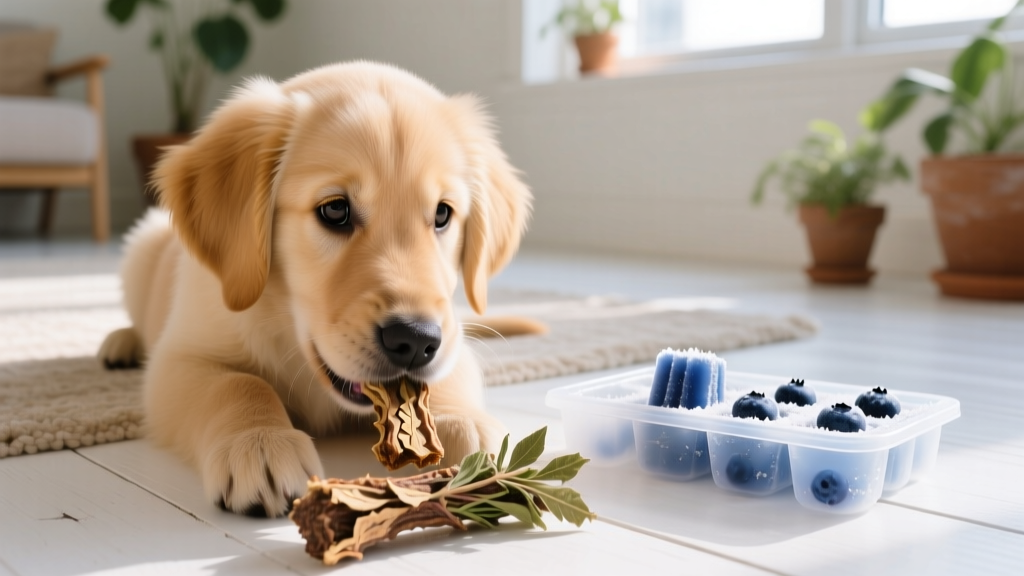
- Kong Classic (red or black, size Large for Chessies, $12–$18): Fill with a mixture of plain yogurt and mashed banana, then freeze. The cold numbs sore gums while the chewing action helps loosen baby teeth.
- Nylabone Puppy Chew (Power Chew size, $6–$10): Designed for aggressive chewers. Replace when worn down to the size of a large coin.
- Frozen washcloth: Wet a clean washcloth, twist into a rope, freeze for 2 hours. Supervise to prevent swallowing fabric pieces.
- Benebone Wishbone (Large, $14–$20): Bacon-infused nylon that holds up to Chessie jaw strength. The wishbone shape allows paw gripping.
What to avoid: Rawhide (choking and blockage risk), antlers (tooth fracture risk — Chessies have powerful jaws), ice cubes (can crack teeth), and any chew toy small enough to swallow whole.
Common Chessie Puppy Problems and Solutions
Every breed has its puppy-stage challenges. Chessies come with a specific set rooted in their retrieving heritage, intelligence, and strong-willed temperament.
Puppy Biting and Mouthing
Chessie puppies are mouthy — this is a breed developed to carry ducks through icy Chesapeake waters, so carrying things in their mouths is hardwired. Expect nipping, sleeve-grabbing, and "land shark" attacks on ankles, especially during excited play. This typically peaks between 10–16 weeks.
Solution using positive reinforcement: When teeth touch skin, say "ouch" in a calm voice and immediately withdraw attention (stand up, turn away, or step behind a baby gate for 15–30 seconds). Redirect to an appropriate chew toy when puppy calms. Reward calm, closed-mouth interactions with treats and praise. Never hold the puppy's mouth shut, shake them, or use physical punishment — Chessies are sensitive despite their tough appearance, and harsh methods damage trust and can trigger defensive biting.
Whining and Vocalization in the Crate
Chessie puppies are vocal, particularly during the first 2–3 weeks in their new home. Nighttime crate whining is nearly universal. The key is distinguishing between protest whining (ignore it — responding teaches that whining = freedom) and need-based whining (puppy needs to potty).
Practical approach: Take puppy out for a boring, business-only potty trip at your bedtime (11 PM or so), then again if they whine after 3+ hours. If they whine before 3 hours, wait 5 minutes — if they settle, they were protesting. If whining escalates, take them out. Keep nighttime trips dim, quiet, and brief.
Destructive Chewing
A bored Chessie puppy is a destructive force. This breed needs mental stimulation as much as physical exercise. If your puppy is destroying baseboards, shoes, or furniture, the solution is almost always: more enrichment, not more punishment.
Enrichment strategies: Puzzle feeders (Outward Hound Nina Ottosson Dog Brick, $18–$25), snuffle mats for nose work, frozen stuffed Kongs rotated throughout the day, short 5–10 minute training sessions 3–4 times daily, and structured sniff walks where the puppy sets the pace and explores at will.
First-Year Cost Breakdown for a Chesapeake Bay Retriever
Budgeting realistically for a Chessie puppy prevents financial stress and ensures your dog receives proper care. Costs below reflect 2026 estimates for the US market and vary by region (urban areas typically 20–40% higher).
| Category | Low Estimate | Medium Estimate | High Estimate |
|---|---|---|---|
| Puppy purchase (responsible breeder) | $1,500 | $2,200 | $3,000 |
| Veterinary (vaccines, spay/neuter, wellness exams, fecal tests, heartworm prevention) | $800 | $1,200 | $1,800 |
| Food (large-breed puppy formula, 12 months) | $600 | $900 | $1,200 |
| Supplies (crate, bed, leash, collar, bowls, grooming tools, toys, baby gates) | $300 | $500 | $800 |
| Training (puppy class, basic obedience, possible board-and-train) | $200 | $500 | $1,500 |
| Pet insurance (annual premium) | $480 | $720 | $960 |
| Emergency/unexpected vet costs | $0 | $500 | $2,000+ |
| TOTAL FIRST YEAR | $3,880 | $6,520 | $11,260+ |
Cost-saving note: Pet insurance premiums are lowest when enrolled at 8 weeks (before any pre-existing conditions develop). For a Chessie puppy, expect $40–$80/month for accident-and-illness coverage with a $250 deductible. Companies like Trupanion, Healthy Paws, and Figo are commonly recommended for large sporting breeds due to their coverage of hereditary conditions like hip dysplasia.
Frequently Asked Questions About Chessie Puppies
When should I bring my Chesapeake Bay Retriever puppy home?
The ideal age is 8–9 weeks. Reputable Chessie breeders rarely release puppies before 8 weeks because the additional littermate time is critical for bite inhibition and social development. Some breeders of working-line Chessies prefer to hold puppies until 10–12 weeks to better evaluate temperament for hunting or field trial homes. Avoid any breeder offering puppies younger than 7 weeks — this is a red flag and is illegal in many US states.
How often should I feed my puppy at each age?
At 8–12 weeks: 4 meals per day (approximately every 4 hours during waking hours). At 3–6 months: 3 meals per day. At 6+ months: 2 meals per day. Never free-feed a Chessie puppy — they are food-motivated and will overeat, leading to rapid growth that stresses developing joints.
When will my puppy be fully potty trained?
Most Chessie puppies achieve reliable daytime house training by 5–6 months and full reliability (including overnight) by 6–8 months. Consistency is the single biggest variable — puppies with owners who follow a strict schedule (out after every nap, meal, and play session) train significantly faster than those with inconsistent routines.
What vaccines does my puppy need and when?
Core vaccines: DHPP at 6–8, 10–12, and 14–16 weeks; Rabies at 14–16 weeks. Recommended non-core vaccines for sporting breeds: Leptospirosis (2-dose series starting at 10–12 weeks), Lyme disease (2-dose series, if in a tick-endemic region), and Bordetella (if attending group training classes). Consult your veterinarian for a protocol tailored to your geographic area and your puppy's expected lifestyle.
How do I stop puppy biting and nipping?
Use a three-step approach: (1) Redirect to an appropriate chew toy the moment teeth touch skin. (2) Withdraw attention for 15–30 seconds if redirection fails (step behind a gate or turn away). (3) Reward calm, closed-mouth behavior with treats and praise. This process takes 4–8 weeks of consistent application. Expect an extinction burst — a temporary increase in biting intensity — around week 2–3 before improvement. This is normal and means the method is working.
When can my puppy go outside and meet other dogs?
Your puppy can explore your private yard immediately upon coming home. However, public areas (dog parks, pet stores, sidewalks with heavy dog traffic) should be avoided until 2 weeks after the final DHPP booster at 14–16 weeks — so approximately 18 weeks of age. During the socialization window before full vaccination, you can carry your puppy in public spaces, arrange playdates with known-vaccinated adult dogs in private yards, and attend puppy classes that require proof of first DHPP vaccination and maintain sanitized facilities. The Merck Veterinary Manual notes that parvovirus can survive in soil for months, making uncontrolled environments risky for partially vaccinated puppies.
Raising a Chesapeake Bay Retriever puppy is a marathon, not a sprint. The breed's slow maturation means you'll invest significant time in training, socialization, and patience during the first two to three years. But the payoff — a steady, capable, deeply bonded companion who excels in the field and at the hearth — is why Chessie owners rarely switch to another breed. Plan for the long game, stay consistent with positive reinforcement methods, and lean on your veterinarian and breeder as resources throughout those puppy months.
Dr. Hannah Wickes
All our authors care for dogs every day — read more of their work on the authors page.