Cattle Dog Puppies: Week-by-Week Growth, Training & Care Guide
Complete guide to raising cattle dog puppies: age milestones, feeding schedules, vaccination timelines, potty training, socialization, and first-year costs.

Australian Cattle Dogs — Blue Heelers, Red Heelers, Queensland Heelers, whatever you call them — are not your average puppies. Bred to move stubborn cattle across rough Australian terrain, these dogs arrive in your home with a genetic blueprint for high stamina, sharp intelligence, and an instinct to nip at anything that moves. Raising cattle dog puppies requires a deliberate plan that accounts for their herding drive, their bitey play style, and their intense need for structured mental work from an early age.
This guide walks you through every developmental stage from weeks 4 through 12 months, with breed-specific feeding portions, vaccination timing, socialization checklists, and realistic cost projections. If you're preparing to bring a Cattle Dog puppy home — or you're already in the trenches with one — this is your roadmap.
When Should I Bring My Cattle Dog Puppy Home?
The ideal window to bring a Cattle Dog puppy home is between 8 and 10 weeks of age. While some breeders release puppies at exactly 8 weeks, many experienced Cattle Dog breeders prefer to hold pups until 9 or 10 weeks. Here's why that matters for this specific breed:
Cattle Dogs are an intensely social, pack-oriented breed. The weeks between 8 and 10 are critical for learning bite inhibition from littermates. A Cattle Dog puppy that leaves too early (before 8 weeks) misses essential feedback from siblings about how hard is too hard when nipping — and this breed already has a genetic predisposition to mouthy, nippy behavior thanks to their herding heritage.
According to the American Kennel Club breed standard, Australian Cattle Dogs are alert, curious, and naturally protective. Puppies need those extra littermate weeks to develop emotional regulation before transitioning to a human-only household.
Cattle Dog Puppy Milestones: Week by Week
Cattle Dogs mature physically faster than many breeds but take longer to mentally settle. Expect a physically capable adolescent by 10 months who still makes impulsive decisions until age 2 or 3. Here's what to expect at each stage:
| Age Range | Weight Range (Approx.) | Key Milestones & Expectations |
|---|---|---|
| Weeks 4–8 | 4–10 lb (1.8–4.5 kg) | Weaning onto solid food; first socialization with littermates; beginning to explore beyond the whelping box; baby teeth fully erupted; breeder introduces crate and basic handling; first deworming and DHPP vaccine at 6–8 weeks. |
| Weeks 8–12 | 10–18 lb (4.5–8.2 kg) | Primary socialization window peaks; intense nipping/mouthing phase begins; name recognition and recall foundations; potty training starts in earnest; puppy can learn sit, down, and touch; second DHPP booster; begin leash introduction indoors. |
| Weeks 12–16 | 18–25 lb (8.2–11.3 kg) | Fear imprint period (12–14 weeks) — avoid traumatic experiences; herding instinct may emerge (chasing children's feet, nipping ankles); can hold bladder 2–3 hours; third DHPP booster; safe to explore controlled outdoor environments after final vaccines. |
| Weeks 16–24 | 25–35 lb (11.3–15.9 kg) | Teething peaks (3–6 months); chewing intensity surges; adolescent independence kicks in; may "forget" known cues; ideal time for puppy kindergarten classes; can begin structured agility foundations (flatwork only, no jumps). |
| 6–12 Months | 35–50 lb (15.9–22.7 kg) | Approaching adult size (AKC standard: 35–50 lb / 16–23 kg); sexual maturity (spay/neuter discussion with vet); energy output demands 60–90 minutes of structured activity daily; advanced training — herding instinct work, advanced obedience, dog sports introduction. |
Feeding Your Cattle Dog Puppy: Schedule and Portions
Cattle Dogs are a medium-sized, high-energy breed. They need a diet formulated for medium-breed puppies — not large-breed formulas (which restrict calcium/phosphorus ratios for joint protection in giant breeds, unnecessary here) and not all-breed adult food (which lacks the caloric density a growing Cattle Dog pup requires).
Look for a food that carries the AAFCO statement: "This product is formulated to meet the nutritional levels established for growth" or "all life stages." First-listed ingredient should be a named animal protein (chicken, lamb, beef). Target crude protein of 22–28% and crude fat of 12–18% for growing puppies.
How Often Should I Feed My Puppy at Each Age?
| Age | Meals Per Day | Daily Portion (Cups) | Notes |
|---|---|---|---|
| 8–12 weeks | 4 meals | ¾ – 1 cup total (split into 4) | Soften kibble with warm water if needed; feed at 7am, 11am, 3pm, 7pm |
| 12–16 weeks | 3 meals | 1 – 1¼ cups total (split into 3) | Drop midday meal last; transition to dry kibble |
| 16–24 weeks | 3 meals | 1¼ – 1¾ cups total | Adjust based on body condition score (BCS); ribs should be palpable but not visible |
| 6–12 months | 2 meals | 1½ – 2¼ cups total | Transition to 2 meals around 6 months; switch to adult formula at 10–12 months |
Important note: These portions assume a mid-range kibble at approximately 350–400 kcal/cup. If you use a higher-calorie performance puppy food (450+ kcal/cup), reduce portions by 15–20%. Always adjust based on your individual puppy's body condition — an active Cattle Dog pup with access to a yard may need more than a puppy in an apartment with structured walk times.
Vaccination Schedule for Cattle Dog Puppies
Cattle Dog puppies follow the standard core vaccination protocol, but their active, outdoor-oriented future lifestyle makes certain non-core vaccines particularly relevant. Discuss your puppy's expected exposure risk with your veterinarian at the first visit.
What Vaccines Does My Puppy Need and When?
| Age | Vaccine | Type | Typical Cost |
|---|---|---|---|
| 6–8 weeks | DHPP (Distemper, Hepatitis, Parainfluenza, Parvovirus) | Core — 1st dose | $25–$50 |
| 10–12 weeks | DHPP (2nd dose) + Bordetella (optional) | Core booster + Non-core | $40–$75 |
| 14–16 weeks | DHPP (3rd dose) + Rabies | Core final booster + Core (legal requirement) | $50–$90 |
| 12–16 weeks (seasonal) | Leptospirosis (2-dose series, 3–4 weeks apart) | Non-core — recommended for outdoor/working Cattle Dogs | $30–$50 per dose |
| 16+ weeks (if tick area) | Lyme disease vaccine | Non-core — consider for hiking/trail dogs | $25–$45 |
The AVMA core vaccine guidelines recommend the DHPP series because maternal antibodies can interfere with early doses, making the full three-shot series essential. Skipping the 14–16 week booster is one of the most common mistakes that leaves puppies vulnerable to parvovirus.
The Socialization Window: Weeks 3–14
This is arguably the most important section in this entire guide. Cattle Dog puppies have a primary socialization window between approximately 3 and 14 weeks of age. After this window closes, unfamiliar stimuli that weren't positively introduced during this period are far more likely to trigger fear, reactivity, or aggression later in life.
For Cattle Dogs specifically, this window is critical because the breed is genetically wired to be suspicious of strangers and protective of their "herd" (your family). Without deliberate, positive exposure to diverse people, environments, and experiences during this window, that protective instinct can curdle into problematic reactivity.
Socialization Exposure Checklist
Aim for positive, non-flooding exposure to the following before 14 weeks. "Positive" means your puppy is relaxed, taking treats, and not showing avoidance behavior (tail tucking, hiding, freezing).
- People: At least 10 different people — men, women, children (supervised), people wearing hats, sunglasses, hoodies, uniforms, people using wheelchairs or crutches, people of different ethnicities and heights
- Surfaces: Grass, gravel, tile, hardwood, metal grates, tarps, plastic sheeting, wet ground, sand
- Sounds: Vacuum cleaner (from a distance, with treats), doorbell, thunderstorm recordings (low volume), car horns, construction noise, children yelling, clapping, dropping pots
- Handling: Paw touching, ear examination, mouth opening, nail clipping simulation, collar/leash pressure, being lifted, being placed on a table
- Objects: Umbrellas opening, plastic bags rustling, bicycles, skateboards, strollers, rolling trash cans, flags/banners in wind
- Other animals: Fully vaccinated, temperament-tested adult dogs (not dog parks); cats (if safe); livestock exposure if you plan herding work
- Environments: Car rides, pet-friendly store parking lots (carry puppy until fully vaccinated), outdoor café patios (held), friend's houses, elevators, stairs
Potty Training Your Cattle Dog Puppy: Realistic Timeline
When Will My Puppy Be Fully Potty Trained?
Most Cattle Dog puppies achieve reliable house training between 4 and 6 months of age, with occasional accidents possible until 8–9 months. Cattle Dogs are intelligent and pick up routines quickly, but their small puppy bladders and high water intake (especially after play) mean accidents are normal in the early months.
The bladder math: A puppy can typically hold their bladder for approximately one hour per month of age, plus one. So a 3-month-old puppy can hold for roughly 4 hours maximum — but that's a ceiling, not a target. Take them out far more frequently than that.
| Age | Take Out Every | Nighttime Holds | Accidents Expected |
|---|---|---|---|
| 8–10 weeks | 30–60 minutes | 2–3 hours (set alarm) | Multiple daily — completely normal |
| 10–14 weeks | 60–90 minutes | 3–4 hours | 1–2 daily, decreasing |
| 14–20 weeks | 90–120 minutes | 5–7 hours (overnight) | A few per week |
| 5–7 months | 2–3 hours | 7–9 hours (overnight) | Rare — usually signals schedule gap |
Cattle Dog potty training tip: This breed is highly routine-oriented. Feed at the same times daily, take out at the same intervals, use the same door, and reward with the same high-value treat (freeze-dried liver works well) immediately upon elimination outside. Cattle Dogs thrive on predictability — use that to your advantage.
Troubleshooting: If accidents persist past 6 months, rule out urinary tract infection (UTI) with your vet before assuming a training failure. Cattle Dogs are also prone to submissive urination when greeting — crouch sideways, avoid direct eye contact on arrival, and greet calmly to minimize this.
Crate Training Progression and Time Limits
Crate training is non-negotiable for Cattle Dog puppies. This is a breed that will dismantle your baseboards, eat your drywall, and excavate your carpet if left unsupervised during their destructive adolescent phase. A crate keeps them safe and teaches them to settle.
| Age | Max Crate Time (Day) | Max Crate Time (Night) | Crate Size |
|---|---|---|---|
| 8–10 weeks | 1–2 hours | 2–3 hours (alarm needed) | 24" crate with divider |
| 10–14 weeks | 2–3 hours | 3–4 hours | 24" crate, expand divider |
| 4–6 months | 3–4 hours | 7–8 hours | 30" crate (adult size for most) |
| 6–12 months | 4–5 hours max | 8 hours | 30"–36" depending on adult size |
Choose a wire crate (MidWest iCrate or Frisco double-door are reliable options in the $45–$75 range) with a divider panel so the space grows with your puppy. The crate should be just large enough for your adult Cattle Dog to stand, turn around, and lie down — approximately 30"L × 19"W × 21"H for most dogs in the 35–50 lb range. Too much space invites a potty corner.
Always provide a safe chew (stuffed Kong, bully stick in a holder) when crating. Never use the crate as punishment. If your puppy whines after settling time (10–15 minutes of initial fussing is normal), wait for a brief pause in vocalization before opening the door — this teaches quiet, not screaming, earns freedom.
Teething Timeline and Relief Strategies
Cattle Dog puppies begin losing their 28 deciduous (baby) teeth around 12–16 weeks, with the full set of 42 adult teeth typically erupted by 6–7 months. The peak discomfort period — and peak destructive chewing — falls between 3 and 6 months.
Teething progression:
- 3–4 months: Incisors loosen and fall out first; you may find tiny teeth in bedding or notice increased drooling
- 4–5 months: Canines and premolars shed; this is peak "mouthy" behavior — everything goes in the puppy's mouth
- 5–6 months: Molars erupt; gum inflammation may cause temporary appetite reduction
- 6–7 months: Full adult set in; retained baby teeth (especially canines) should be evaluated by your vet
Safe chew recommendations for Cattle Dog puppies:
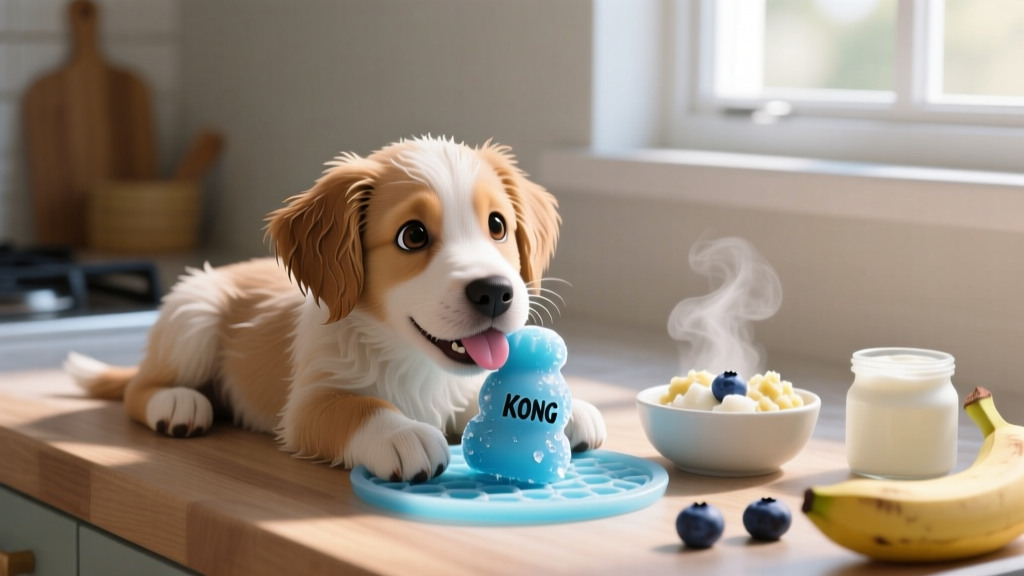
- Kong Classic (puppy rubber, pink/blue): Stuff with plain yogurt mixed with kibble and freeze — $12–$15
- Benebone Wishbone (puppy formula): Softer nylon designed for developing teeth — $14–$18
- Frozen carrot sticks: Full-size carrots, frozen; supervise to prevent choking on large chunks
- Wet washcloth twist: Soak a clean washcloth in low-sodium chicken broth, twist, freeze — $2
- Yak cheese chews (Himalayan Dog Chew): Hard, long-lasting, fully digestible — $8–$12 each; supervise
Common Cattle Dog Puppy Problems and Solutions
How Do I Stop Puppy Biting and Nipping?
This is the number one complaint from Cattle Dog puppy owners, and for good reason. Cattle Dogs were bred to herd cattle by nipping at their heels. That instinct is hardwired — your puppy isn't being aggressive, they're being a Cattle Dog. But ankle-biting toddlers and children is not acceptable, so you need to redirect early and consistently.
The protocol (force-free, positive reinforcement only):
- Redirect to a toy: The instant puppy teeth touch skin, say "oops" in a neutral tone, withdraw attention for 3–5 seconds, then present an appropriate chew toy. When puppy bites the toy, praise and engage.
- Reverse time-out: If redirecting fails after 2 attempts, stand up, cross your arms, and become boring for 15–30 seconds. No talking, no eye contact. Resume play only when puppy is calm with four paws on the floor.
- Satisfy the herding drive: Provide appropriate outlets — flirt pole sessions (5–10 minutes, twice daily), herding ball (Jolly Ball, $20–$35), or structured tug with rules ("drop it" on cue).
- Teach an incompatible behavior: Train "go to your mat" or "carry your toy" as default behaviors when greeting people. A dog carrying a toy in their mouth cannot nip.
Expect the nipping to intensify before it improves — extinction bursts are normal around 12–16 weeks as the puppy tests whether the old behavior still works. Consistency from every household member is critical.
Other Breed-Specific Puppy Challenges
Excessive chewing/destruction: Cattle Dogs are mouth-oriented and highly intelligent. Without adequate mental stimulation (puzzle feeders, training sessions, snuffle mats), they'll create their own entertainment — usually at the expense of your furniture. Budget for at least 15–20 minutes of structured training daily plus food-dispensing toys for meals.
Whining and vocalization: Cattle Dogs are vocal dogs. They whine when bored, when frustrated, and when they want something. Teach "quiet" by marking and rewarding silence: wait for a natural pause in vocalization, say "quiet," treat. Gradually extend the duration of silence required before the reward.
Herding children and pets: Circling, body-blocking, and nipping at running children or other pets is classic Cattle Dog behavior. Manage the environment (baby gates, separate play times) while training alternative behaviors. Never leave a Cattle Dog puppy unsupervised with young children.
First-Year Cost Breakdown for a Cattle Dog Puppy
Cattle Dogs are generally a healthy, hardy breed, which helps keep veterinary costs lower than many breeds. However, their high energy and intelligence mean you'll spend more on training, enrichment, and quality nutrition than you would for a lower-drive dog.
| Category | Low Estimate | Mid Estimate | High Estimate |
|---|---|---|---|
| Puppy purchase (responsible breeder) | $1,200 | $1,800 | $3,000 |
| Adoption/rescue fee (alternative) | $200 | $400 | $600 |
| Veterinary (vaccines, spay/neuter, wellness exams, flea/tick/heartworm prevention) | $600 | $1,000 | $1,500 |
| Food (quality puppy food, 12 months) | $350 | $550 | $800 |
| Supplies (crate, leash, harness, bowls, toys, chews, bed, gate) | $200 | $400 | $700 |
| Training (puppy kindergarten + group classes) | $150 | $350 | $800 (private sessions) |
| Pet insurance (optional but recommended) | $360/yr ($30/mo) | $540/yr ($45/mo) | $720/yr ($60/mo) |
| TOTAL (first year, breeder puppy) | $2,860 | $4,640 | $7,520+ |
These figures assume no major health emergencies. Cattle Dogs are predisposed to certain conditions that may emerge in puppyhood or adolescence — hip dysplasia (approximately 15% of the breed per OFA breed statistics), progressive retinal atrophy, and congenital deafness (particularly in puppies with predominantly white coats). Pet insurance or a dedicated emergency fund of $1,500–$3,000 is strongly recommended.
When Can My Puppy Go Outside and Meet Other Dogs?
This is one of the most common questions from new Cattle Dog puppy owners, and the answer requires balancing disease risk against the closing socialization window.
Before full vaccination (before 16 weeks):
- Carry your puppy to outdoor environments — pet store parking lots, outdoor cafés, friend's yards (if no unvaccinated dogs have been there)
- Arrange playdates with fully vaccinated, temperament-tested adult dogs in private homes
- Attend puppy socialization classes that require proof of first DHPP and maintain sanitized facilities
- Avoid: Dog parks, pet store floors, public sidewalks in high-dog-traffic areas, and any area where unknown dogs have eliminated
After final DHPP booster (16+ weeks, wait 5–7 days post-vaccine):
- Public walks are safe — start with low-traffic residential streets
- Dog parks are technically safe from a disease standpoint but are not recommended for Cattle Dog puppies — the chaotic, unstructured environment often triggers herding behavior and can create negative social experiences
- Structured playgroups, hiking trails, and supervised beach visits are better socialization options for this breed
Frequently Asked Questions
Are Cattle Dog puppies good for first-time dog owners?
Cattle Dogs can work for dedicated first-time owners who have researched the breed thoroughly and committed to structured training. However, their combination of high energy, nipping instinct, intelligence (they learn bad habits as fast as good ones), and sensitivity makes them a better fit for owners with at least some prior dog experience. If you're a first-time owner, invest in professional positive-reinforcement training from day one.
How much exercise does a Cattle Dog puppy need?
Follow the "5 minutes per month of age, twice daily" rule for structured walks (so a 4-month-old gets 20 minutes, twice a day). Supplement with free play, training sessions, and mental enrichment (puzzle toys, sniffing games). Avoid repetitive high-impact exercise (long runs, jumping) until growth plates close around 12–14 months. Over-exercising a puppy won't create a calmer adult — it creates joint damage.
Why does my Cattle Dog puppy bite my ankles when I walk?
This is herding instinct. Your puppy is doing what generations of breeding selected for — controlling the movement of large animals by nipping at their heels. Redirect to a flirt pole or herding ball for appropriate outlet, and teach "leave it" and "go to your mat" as incompatible behaviors. Consistency and patience are key — this instinct doesn't disappear, it gets managed.
Should I get my Cattle Dog puppy's ears taped or corrected?
Cattle Dog ears typically stand naturally by 3–6 months. Some puppies go through a floppy-ear phase during teething (calcium is diverted to adult teeth). This is temporary. Ear taping is unnecessary for pet dogs and is primarily a cosmetic practice. Consult your vet if ears haven't stood by 7 months, but in most cases, patience is the only intervention needed.
When should I spay or neuter my Cattle Dog?
Current veterinary research, including studies referenced by the Merck Veterinary Manual, suggests waiting until after physical maturity for medium breeds — typically 6–9 months for females (before or after first heat, discuss with your vet) and 9–12 months for males. Early spay/neuter (before 6 months) has been associated with increased risk of certain orthopedic conditions and some cancers in multiple breeds. Your veterinarian can advise based on your individual puppy's health profile.
Robin Maitland
All our authors care for dogs every day — read more of their work on the authors page.