Can Puppies Pass Worms to Humans? A New Puppy Parent's...
Can puppies pass worms to humans? Learn about zoonotic parasite risks, puppy deworming schedules, and safe handling practices for your new puppy's first year.

The Real Risk: Can Puppies Pass Worms to Humans?
If you've just brought home a new puppy or are preparing to, one question deserves an honest answer before all the cuddles begin: can puppies pass worms to humans? The short answer is yes — certain intestinal parasites found in puppies are zoonotic, meaning they can transmit from animals to people. But with proper deworming protocols, hygiene habits, and veterinary care, the risk to your family is very manageable.
According to the Centers for Disease Control and Prevention (CDC), the most common zoonotic parasites from puppies include:
- Roundworms (Toxocara canis) — Eggs shed in puppy feces can cause visceral larva migrans or ocular larva migrans in humans, particularly children who play in contaminated soil.
- Hookworms (Ancylostoma caninum) — Larvae can penetrate human skin, causing cutaneous larva migrans (creeping eruption).
- Tapeworms (Dipylidium caninum) — Transmitted via accidental ingestion of infected fleas; rare in adults but seen in young children.
- Giardia — A protozoan (not technically a worm) that causes gastrointestinal illness in both dogs and humans.
The American Veterinary Medical Association (AVMA) emphasizes that the highest risk occurs when puppies are under 6 months old and have not completed their deworming protocol. Puppies can acquire roundworms from their mother's milk and hookworms transplacentally or through nursing — meaning many puppies arrive in your home already carrying parasites.
Bringing Your Puppy Home: Timing, Health Checks, and Parasite Screening
When Should I Bring My Puppy Home?
The ideal age to bring a puppy home is 8 to 10 weeks. Reputable breeders and rescue organizations keep puppies with their mother and littermates through at least week 8 because this period is critical for bite inhibition learning, social development, and early immune support through nursing.
Before or within 48 hours of bringing your puppy home, schedule a wellness exam with your veterinarian. This visit should include:
- A fecal flotation test to check for roundworms, hookworms, whipworms, and coccidia
- A Giardia antigen test (ELISA)
- Initial deworming with pyrantel pamoate if not already administered by the breeder
- Heartworm antigen test (if puppy is over 6 months) and preventive start
Expect to pay $65–$120 for this initial fecal panel and $15–$35 for deworming medication at the clinic. Ask your breeder or rescue for any existing veterinary records — puppies from responsible sources should have received their first deworming at 2 weeks, with repeat treatments every 2 weeks until 8 weeks of age, following the Merck Veterinary Manual protocol.
Age-Specific Puppy Milestones: What to Expect Month by Month
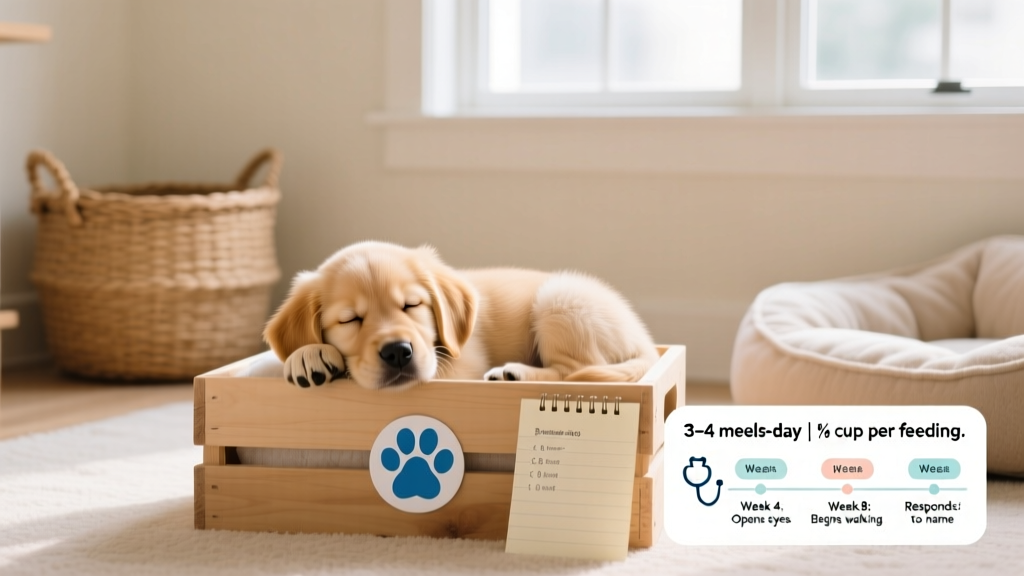
Weeks 4–8 (Breeder/Foster Care Phase)
At this stage, your puppy is still with their mother and littermates. Key developments include:
- Deciduous (baby) teeth fully erupted — 28 teeth total
- First socialization window opens (weeks 3–5 with littermates, weeks 5–8 with humans)
- First DHPP vaccine typically given at 6 weeks
- Deworming rounds at weeks 2, 4, 6, and 8
- Weight gain of approximately 5–10% of body weight per week
Weeks 8–12 (Home Adjustment)
This is when most puppies join their new families. Expect:
- Significant bonding and attachment formation
- Fear imprint period (weeks 8–11) — avoid traumatic experiences
- House training foundation begins
- Second DHPP vaccine at 10 weeks
- Continued deworming (pyrantel pamoate or fenbendazole)
- Sleep needs: 18–20 hours per day
Weeks 12–16 (Confidence Building)
Your puppy is gaining confidence and testing boundaries:
- Third DHPP vaccine at 14–16 weeks
- Rabies vaccine at 14–16 weeks (legally required in most US states)
- Can begin short, structured walks (5 minutes per month of age, twice daily)
- Crate training becomes more reliable
- Teething discomfort may increase chewing behavior
Weeks 16–24 (Adolescent Transition)
Often called the "teenage" phase:
- Baby teeth begin falling out (incisors first, then canines around 5 months)
- Increased independence and potential "selective hearing" on recalls
- Second fear period may occur around 6–8 months
- Spay/neuter surgery typically scheduled (6 months for most breeds)
- Switch from puppy food to adult food for small breeds (toy breeds at 9–10 months, medium breeds at 12 months, large/giant breeds at 18–24 months)
Months 6–12 (Young Adult)
Your puppy is physically maturing but still mentally developing:
- Adult teeth fully in by 7 months (42 teeth)
- Final DHPP booster at 12 months (or one year after last puppy series)
- Heartworm testing and annual preventive protocol established
- Energy levels remain high; structured exercise and mental enrichment critical
- Advanced training and sport foundations can begin
Puppy Feeding Schedule: Portions by Age and Weight
Proper nutrition supports immune function — including your puppy's ability to fight off parasitic infections. Feed an AAFCO-approved puppy food formulated for your dog's expected adult size category.
| Age | Meals Per Day | Toy Breed (5–12 lb adult) | Small Breed (13–25 lb adult) | Medium Breed (26–50 lb adult) | Large Breed (51–90 lb adult) |
|---|---|---|---|---|---|
| 8–12 weeks | 4 | ¼–½ cup/day | ½–¾ cup/day | ¾–1¼ cups/day | 1½–2 cups/day |
| 3–6 months | 3 | ⅓–⅔ cup/day | ¾–1 cup/day | 1–2 cups/day | 2–3½ cups/day |
| 6–12 months | 2 | ½–¾ cup/day | 1–1¼ cups/day | 1½–2½ cups/day | 2½–4 cups/day |
Important: These are starting guidelines. Adjust based on your puppy's body condition score (BCS) — you should be able to feel ribs without pressing hard, and see a visible waist when viewed from above. Large and giant breed puppies MUST eat a large-breed puppy formula to control growth rate and reduce hip dysplasia risk.
Vaccination and Deworming Schedule
What Vaccines Does My Puppy Need and When?
| Age | Vaccine | Protects Against | Estimated Cost |
|---|---|---|---|
| 6–8 weeks | DHPP (1st dose) | Distemper, Hepatitis (Adenovirus-2), Parainfluenza, Parvovirus | $25–$45 |
| 10–12 weeks | DHPP (2nd dose) + Bordetella | Core diseases + Kennel Cough | $40–$65 |
| 14–16 weeks | DHPP (3rd dose) + Rabies | Core diseases + Rabies (legally required) | $45–$75 |
| 12 months | DHPP booster + Rabies booster | Annual/3-year boosters per vet recommendation | $40–$70 |
Deworming protocol (parasite prevention):
- Weeks 2, 4, 6, 8: Pyrantel pamoate (roundworms, hookworms)
- Weeks 10–12: Fenbendazole (Panacur) for 3 consecutive days — covers roundworms, hookworms, whipworms, and some tapeworms
- Monthly: Start broad-spectrum preventive (e.g., Interceptor Plus, Heartgard Plus with separate dewormer, or Nexgard Combo) — consult your veterinarian for the right product
- Quarterly fecal exams for the first year
Socialization Window and Safe Exposure Checklist
The critical socialization period runs from weeks 3 to 14. During this window, puppies form lasting associations with new stimuli. Missing this window can lead to fear-based reactivity later in life.
Parasite safety during socialization: Until your puppy has completed their DHPP series (around 16 weeks), avoid high-contamination areas like dog parks, pet store floors, and public grassy areas where unknown dogs defecate. This protects against both parvovirus and parasite exposure.
When Can My Puppy Go Outside and Meet Other Dogs?
Your puppy can explore your own private yard immediately (assuming no known parvo or parasite contamination). Structured playdates with fully-vaccinated, healthy dogs in private settings can begin at 8 weeks. Wait until one week after the final DHPP dose (approximately 16–17 weeks of age) before visiting dog parks, pet-friendly store patios, or group puppy classes held on public surfaces.
Potty Training Timeline and Troubleshooting
When Will My Puppy Be Fully Potty Trained?
Realistic expectation: most puppies achieve reliable house training between 4 and 6 months of age, though some small breeds may take up to 8–10 months due to smaller bladder capacity. "Fully trained" means fewer than one accident per month under normal conditions.
The bladder rule: A puppy can hold their bladder for approximately one hour per month of age, plus one. So a 3-month-old puppy can hold for about 4 hours maximum — but you should take them out far more frequently than that to prevent accidents and build the habit.
| Puppy Age | Outdoor Trips Per Day | Maximum Crate Time | Nighttime Wake-Up |
|---|---|---|---|
| 8–10 weeks | 12–15 (every 1–2 hours) | 1–2 hours (daytime) | Every 2–3 hours |
| 10–14 weeks | 8–10 (every 2–3 hours) | 2–3 hours | Every 3–4 hours |
| 3–4 months | 6–8 | 3–4 hours | Once or sleeping through |
| 4–6 months | 4–6 | 4–5 hours | Usually sleeping through |
| 6+ months | 3–4 | 6–8 hours (not recommended longer) | Sleeping through |
Hygiene note for parasite prevention: Always pick up puppy feces immediately — both in your yard and on walks. Roundworm eggs become infectious after 2–4 weeks in the environment, so prompt removal dramatically reduces contamination risk. Wear gloves or use a bag as a barrier, and wash hands thoroughly afterward.
Crate Training Progression and Time Limits
A crate provides a safe den for your puppy and is an invaluable potty training tool, as dogs naturally avoid soiling their sleeping area. Choose a crate sized to your puppy's expected adult dimensions, using a divider panel to limit space as they grow.
- 8–10 weeks: Introduce crate with door open. Feed meals inside. Begin closing door for 5–10 minutes while you remain visible. Never use the crate as punishment.
- 10–12 weeks: Extend closed-door time to 30–60 minutes during the day. Puppy may whine — this is normal. Reward quiet behavior with treats delivered through the crate bars.
- 3–4 months: Puppy should tolerate 2–3 hours in the crate during the day and sleep through the night (6–8 hours) with one possible bathroom break.
- 4–6 months: Begin leaving puppy crated while you leave the house briefly (15–30 minutes, building up). Practice departure cues (keys, shoes) without actually leaving to reduce separation anxiety.
- 6+ months: If potty training is reliable and chewing/destructive behavior has decreased, begin offering supervised freedom in a puppy-proofed room as an alternative to crating.
Teething Timeline and Safe Relief Strategies
Puppies begin losing their 28 deciduous teeth around 3 to 4 months, with the process completing by approximately 6 to 7 months. The 42 adult teeth erupt in this order:
- Incisors (3–5 months)
- Canines (4–6 months)
- Premolars (4–6 months)
- Molars (5–7 months)
Safe chew recommendations by age:
- 8–12 weeks: Soft rubber toys (Kong Puppy, Nylabone Puppy), frozen washcloth twisted into a rope, bully sticks (supervised only)
- 3–6 months: Kong Classic stuffed with soaked kibble and frozen, Benebone Wishbone (size-appropriate), carrots and apple slices (remove seeds)
- 6+ months: Yak cheese chews, Kong Extreme, dental chews approved by the Veterinary Oral Health Council (VOHC)
Common Puppy Problems and Solutions
How Do I Stop Puppy Biting and Nipping?
Puppy biting is normal — puppies explore the world with their mouths and learn bite inhibition through feedback. Here's a force-free approach:
- Redirect: When puppy mouths your skin, immediately offer an appropriate chew toy. Reward with praise when they bite the toy instead.
- Withdraw attention: If redirecting doesn't work, stand up and turn away for 10–15 seconds. This teaches that biting ends play — a natural consequence puppies learn from littermates.
- Manage arousal: Puppies bite most when overtired or overstimulated. If biting escalates, your puppy likely needs a nap in their crate (puppies need 18–20 hours of sleep daily).
- Never use physical punishment: Holding the mouth shut, alpha rolls, or tapping the nose increase fear and can worsen biting or create defensive aggression.
Whining in the Crate
Ensure your puppy has been exercised, has eliminated, and isn't hungry before crating. Place the crate in your bedroom at night so your puppy can hear and smell you. A snuggle puppy toy with a heartbeat simulator ($30–$45) can ease the transition from littermates.
Destructive Chewing
Provide 5–7 appropriate chew options rotated weekly to maintain novelty. Puppy-proof your home by removing shoes, cords, and small objects. Use bitter apple spray on furniture legs as a deterrent, but pair it with positive reinforcement for chewing appropriate items.
First-Year Cost Breakdown
Budget realistically for your puppy's first year. Costs below reflect 2026 averages for US veterinary clinics and pet supply retailers:
| Category | Items | Estimated Cost Range |
|---|---|---|
| Veterinary Care | Wellness exams (4+), vaccines, deworming, fecal tests, spay/neuter, microchip | $800–$1,800 |
| Food | AAFCO-approved puppy food (12 months) | $300–$800 |
| Preventive Medications | Heartworm, flea/tick prevention (monthly) | $200–$500 |
| Supplies | Crate, bed, bowls, leash, harness, collar, ID tags, toys, grooming tools | $250–$600 |
| Training | Group puppy class (6–8 weeks) + optional private sessions | $150–$500 |
| Pet Insurance | Monthly premium ($30–$70/month) — optional but recommended | $360–$840 |
| Total First Year | $2,060–$5,040 |
Protecting Your Family: Hygiene Practices for Zoonotic Parasite Prevention
Knowing that puppies can pass worms to humans doesn't mean you should avoid contact — it means you should practice smart hygiene:
- Handwashing: Always wash hands with soap and water after handling puppy feces, cleaning up accidents, or playing in areas where the puppy has defecated.
- Yard maintenance: Remove feces from your yard daily. Roundworm eggs can survive in soil for years, so prompt removal is essential.
- Children's safety: Teach children not to put their hands in their mouths after playing with the puppy or in the yard. Cover sandboxes when not in use to prevent contamination by neighborhood animals.
- Flea control: Since tapeworms transmit via fleas, maintaining a monthly flea preventive on your puppy protects your family too.
- Regular testing: Follow your veterinarian's recommendation for quarterly fecal exams during the first year, then annually for adult dogs.
With consistent deworming, monthly preventives, and basic hygiene, the risk of parasite transmission from your puppy to your family is extremely low. The CDC notes that serious zoonotic parasitic infections in the US are uncommon when pets receive routine veterinary care.
Frequently Asked Questions
Can I get worms from my puppy licking me?
The risk is very low. Roundworm and hookworm eggs are shed in feces, not saliva. However, if your puppy has recently licked their own rear end or walked through contaminated areas and then licks your face or an open wound, there is a theoretical transmission risk. Keep your puppy's deworming current and avoid face-licking until they've completed their parasite treatment protocol.
How often should I deworm my puppy?
Follow the standard protocol: every 2 weeks from birth to 8 weeks, then monthly preventive medication for life. Your veterinarian may recommend additional fecal testing and targeted deworming if parasites are detected. Never use over-the-counter dewormers without veterinary guidance — incorrect dosing can be ineffective or harmful.
Can puppies pass worms to humans through bedding?
Indirectly, yes. If fecal matter contaminates bedding and roundworm eggs are present, they could transfer to human skin or be accidentally ingested. Wash puppy bedding weekly in hot water (at least 140°F / 60°C) and vacuum areas where your puppy sleeps regularly.
Are some breeds more likely to carry parasites?
No breed is inherently more susceptible to parasites. However, puppies from high-volume breeding facilities, pet stores, or unsanitary environments have higher parasite loads due to environmental contamination. This is one reason adopting from responsible breeders or reputable rescues — who follow deworming protocols — matters for both your puppy's health and your family's safety.
Should I get tested for parasites if my puppy had worms?
If your puppy was diagnosed with roundworms or hookworms and you have young children, immunocompromised family members, or anyone who had direct contact with the puppy's feces, mention it to your physician. They may recommend a stool test or blood work as a precaution, though routine testing of asymptomatic family members is not generally recommended.
Jonas Cole
All our authors care for dogs every day — read more of their work on the authors page.