Can Puppies Have Peanut Butter? A Complete Feeding & Care Timeline
Can puppies have peanut butter safely? Learn exact ages, serving sizes, xylitol risks, and a full puppy feeding, training, and health milestone timeline.

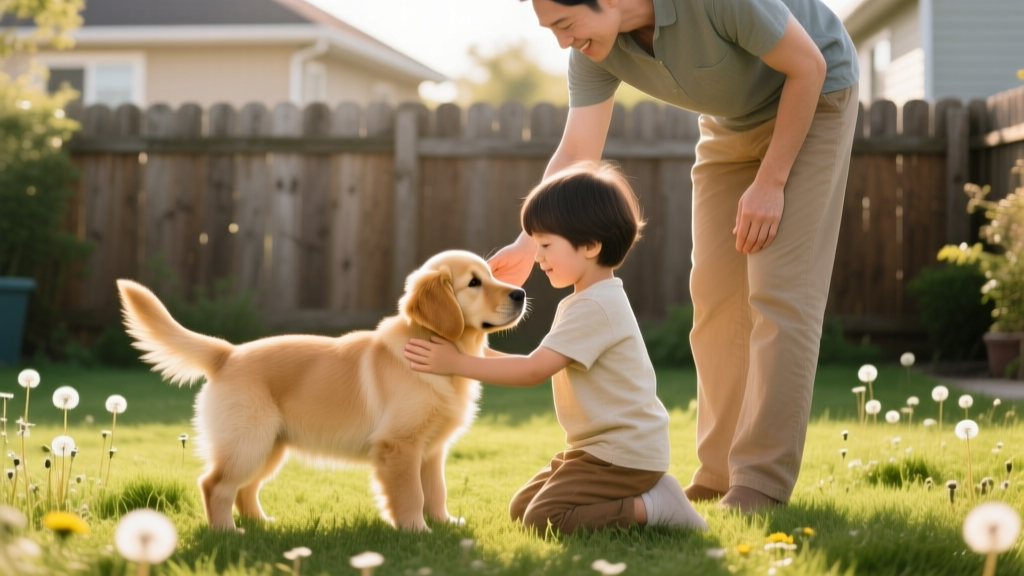
Every new puppy parent eventually asks: can puppies have peanut butter? The short answer is yes — but only after a specific age, in precise amounts, and only if the product is free of xylitol (also listed as birch sugar), a sweetener that is acutely toxic to dogs. This guide walks you through exactly when and how to introduce peanut butter to your puppy, alongside every other milestone you need to track from week 4 through month 12.
Xylitol (birch sugar) causes rapid insulin release in dogs, leading to hypoglycemia within 30–60 minutes and potential liver failure within 24–72 hours. The toxic dose is approximately 0.1 g/kg body weight. Always read every ingredient label before offering any human food to your puppy. If ingestion is suspected, call ASPCA Animal Poison Control: (888) 426-4435 (24/7, consultation fee applies) or Pet Poison Helpline: (855) 764-7661 immediately.
When Can Puppies Have Peanut Butter? Age & Safety Rules
Puppies can safely eat peanut butter starting at approximately 8–10 weeks of age, once they are fully weaned and eating solid kibble or puppy-formulated wet food consistently. Before this age, a puppy's digestive system is not equipped to process the high fat content, and the choking risk from sticky textures is significant.
Serving Sizes by Puppy Weight
| Puppy Weight | Max Serving (per day) | Frequency |
|---|---|---|
| 5–10 lb / 2.3–4.5 kg | ¼ teaspoon | 2–3 times per week |
| 10–25 lb / 4.5–11.3 kg | ½ teaspoon | 2–3 times per week |
| 25–50 lb / 11.3–22.7 kg | 1 teaspoon | 2–3 times per week |
| 50+ lb / 22.7+ kg | 1–1½ teaspoons | 2–3 times per week |
These amounts assume the peanut butter is a minor treat, not a dietary staple. Treats of any kind should not exceed 10% of total daily caloric intake, per AKC nutrition guidelines. For a 15-lb puppy eating roughly 500 kcal/day, that means no more than 50 kcal from treats — and one teaspoon of standard peanut butter contains approximately 33 kcal.
Safe vs. Unsafe Peanut Butter: What to Check
- SAFE: Unsalted, no added sugar, single-ingredient (peanuts only) or peanuts + salt only. Brands like Smucker's Natural, Teddie, or Crazy Richard's.
- UNSAFE: Any product containing xylitol, birch sugar, erythritol (emerging concern — FDA warnings), chocolate, raisins, or macadamia nuts.
- AVOID: "Reduced fat" varieties — these often replace fat with added sugars or artificial sweeteners.
The best use of peanut butter for puppies is as a high-value training reward or a stuffing for enrichment toys like the Kong Classic (size-appropriate). Spread a thin layer inside a Kong, freeze for 30 minutes, and you have a 15–20 minute occupation tool for crate training sessions.
Age-Specific Puppy Milestones: Weeks 4 Through Month 12
Weeks 4–8: Transitional Period
- Weaning from mother's milk to gruel (kibble soaked in warm water or puppy milk replacer)
- First deworming (pyrantel pamoate, typically at 2, 4, 6, and 8 weeks)
- Introduction to solid textures; teeth erupting (deciduous incisors at 3–4 weeks, canines at 3 weeks)
- Social play with littermates — bite inhibition learning begins
- Weight gain: approximately 5–10% of body weight per week depending on breed
Weeks 8–12: Homecoming Window
- Ideal age to bring puppy home (8–10 weeks for most breeds; giant breeds like Great Danes may benefit from staying with breeder until 10–12 weeks)
- First veterinary wellness exam within 48–72 hours of arrival
- First DHPP vaccine (if not already given by breeder at 6–8 weeks)
- Can begin peanut butter introduction (tiny amounts on a spoon or toy)
- Crate training begins — 30-minute max intervals during the day, overnight with potty breaks every 2–3 hours
- Potty training starts: take outside every 1–2 hours, after every meal, nap, and play session
Weeks 12–16: Rapid Learning Phase
- Second and third DHPP boosters administered
- Rabies vaccine given at 12–16 weeks (legally required in all US states)
- Socialization window closes around week 14–16 — this is your critical deadline
- Can increase peanut butter to serving sizes listed above
- Begin leash training with a front-clip harness (e.g., Ruffwear Front Range)
- Attention span increases to 5–10 minutes per training session
Weeks 16–24: Adolescence Begins
- Deciduous teeth start falling out; adult teeth erupt (expect 42 adult teeth by 6–7 months)
- Chewing intensity peaks — provide Nylabone Puppy Chew, frozen carrot sticks, or Kong frozen with peanut butter
- Spay/neuter discussion with veterinarian (traditional recommendation: 6 months; large breeds may wait until 12–18 months per AVMA guidelines)
- May transition from 3 meals to 2 meals per day around 4–6 months
- Potty training reliability improves but regression is normal during this phase
Months 6–12: Young Adult Transition
- Final DHPP booster at 6 months or 1 year (depending on vet protocol)
- Bordetella vaccine if attending group classes or boarding facilities
- Transition to adult food at 10–12 months for small/medium breeds; 18–24 months for giant breeds
- Full bladder control typically achieved (can hold 1 hour per month of age, up to ~8 hours)
- Continue mental enrichment — puzzle feeders, snuffle mats, frozen peanut butter Kongs
Feeding Schedule: Exact Portions by Age and Weight
Every puppy's caloric needs depend on breed, expected adult size, activity level, and metabolic rate. The table below uses AAFCO growth-stage guidelines and assumes a kibble with approximately 400 kcal/cup (check your specific food's guaranteed analysis).
| Age | Meals/Day | Small Breed (10–25 lb adult) | Medium Breed (25–50 lb adult) | Large Breed (50–90 lb adult) |
|---|---|---|---|---|
| 8–12 weeks | 4 | ¼–½ cup total | ½–¾ cup total | ¾–1¼ cups total |
| 3–4 months | 3 | ⅓–⅔ cup total | ¾–1¼ cups total | 1¼–2 cups total |
| 4–6 months | 3 | ½–¾ cup total | 1–1¾ cups total | 1¾–3 cups total |
| 6–12 months | 2 | ½–1 cup total | 1½–2½ cups total | 2½–4 cups total |
Key rules: These are daily totals divided across meals, not per-meal amounts. Adjust based on body condition score (BCS) — you should be able to feel ribs without pressing hard, and see a waist tuck from above. Always provide fresh water. Consult your veterinarian if your puppy is gaining too quickly or too slowly.
Vaccination Schedule: Exact Timing and Names
| Age | Vaccine | What It Protects Against | Estimated Cost |
|---|---|---|---|
| 6–8 weeks | DHPP #1 | Distemper, Hepatitis (Adenovirus), Parainfluenza, Parvovirus | $20–$40 |
| 10–12 weeks | DHPP #2 + optional Bordetella, Leptospirosis | Booster immunity + kennel cough, leptospirosis | $25–$60 |
| 14–16 weeks | DHPP #3 + Rabies | Final puppy booster + rabies (legally mandated) | $30–$70 |
| 6–12 months | DHPP #4 booster + Rabies booster (at 1 year) | Full adult immunity | $30–$60 |
The AVMA and the American Animal Hospital Association (AAHA) recommend the DHPP series at 3–4 week intervals. Maternal antibodies interfere with early vaccines, which is why multiple boosters are necessary — a single shot at 8 weeks may not provide adequate protection. Never skip the rabies vaccine; it is required by law in every US state and is critical for public health.
Potty Training Timeline and Troubleshooting
Realistic expectations matter here. Most puppies achieve reliable house training between 4–6 months of age, though some small breeds (with proportionally smaller bladders) may take until 8–10 months. A puppy can generally hold their bladder for one hour per month of age — so a 3-month-old puppy needs a bathroom break roughly every 3 hours.
Potty Training Log Template
Track these data points daily for the first 4 weeks:
| Time | Activity | Outcome | Notes |
|---|---|---|---|
| 7:00 AM | Wake + outside | ✅ Urinated | Took 4 min, praised + treat |
| 7:30 AM | After breakfast | ✅ BM + urinated | Within 10 min of eating |
| 9:00 AM | After nap | ❌ Accident in crate | Slept 2.5 hrs — too long |
Adjust intervals based on accident patterns. If accidents cluster at a specific time, shorten the interval before that window.
Common Potty Training Problems
- Submissive/excitement urination: Common in puppies under 6 months. Do not scold — crouch to their level, avoid direct eye contact during greetings, and take them outside immediately after calm settles.
- Regression at 4–6 months: Often coincides with teething distraction and increased environmental awareness. Return to shorter intervals and higher-value treats for outdoor success.
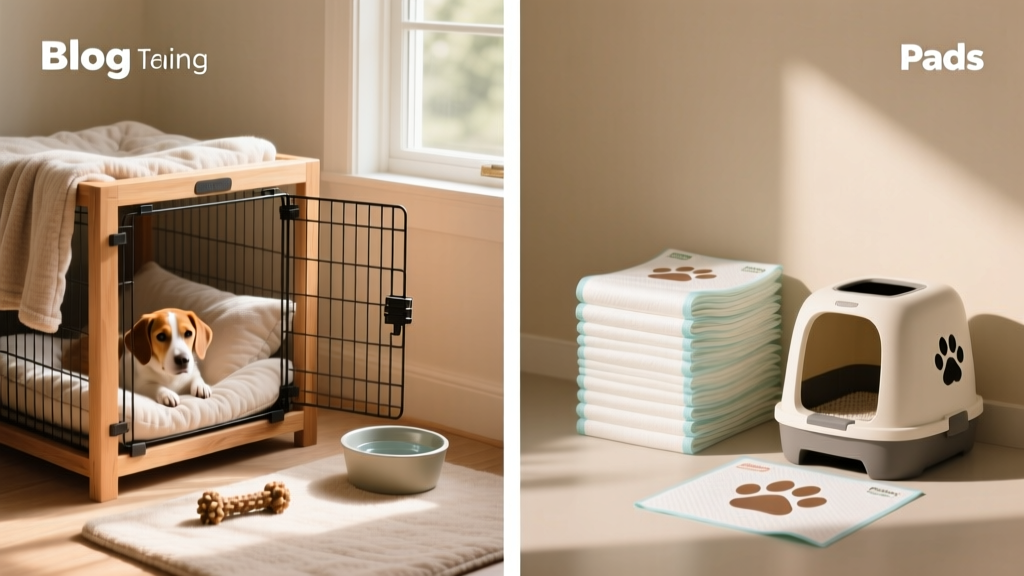
- Crate accidents: If the crate is too large, the puppy may eliminate in one corner and sleep in another. Use a divider panel so the crate is just big enough for standing, turning, and lying down.
Socialization Window: Weeks 3–14 Exposure Checklist
The primary socialization period — when puppies are most receptive to new experiences without fear — runs from approximately 3 to 14 weeks of age, per the AKC. After this window closes, unfamiliar stimuli are more likely to trigger fear responses. This does not mean socialization stops at 14 weeks, but the ease of building positive associations drops significantly.
Socialization Exposure Checklist
Aim for positive (treat-paired) exposure to each item below before week 14:
- ☐ People: Children, elderly individuals, people wearing hats/sunglasses/masks, people of different heights and ethnicities, people using wheelchairs or crutches
- ☐ Surfaces: Grass, gravel, tile, metal grates, wet pavement, stairs, elevator floors
- ☐ Sounds: Vacuum cleaner, thunder (play recordings at low volume), doorbell, car horns, fireworks recordings, clapping, hair dryer
- ☐ Handling: Paw touching, ear inspection, mouth opening, nail clipping simulation, being held on back, collar/harness grabbing
- ☐ Objects: Umbrellas opening, plastic bags rustling, bicycles, skateboards, shopping carts, balloons
- ☐ Animals: Fully vaccinated adult dogs (known health status), cats (supervised), livestock if rural
- ☐ Environments: Pet store (carry puppy if not fully vaccinated), car rides, outdoor café patio, friend's house, groomer visit (just for a positive hello)
Rule of thumb: If the puppy shows fear (cowering, tail tucking, freezing), increase distance from the stimulus and offer high-value treats. Never force exposure. The goal is positive association, not flooding.
Teething Timeline and Safe Relief Strategies
Puppies have 28 deciduous (baby) teeth that begin erupting at 3–4 weeks and are typically all in by 6–8 weeks. The replacement process starts around 3–4 months, with adult teeth pushing out baby teeth. By 6–7 months, all 42 adult teeth should be fully erupted.
Teething Phases
| Age | What's Happening | Safe Relief Options |
|---|---|---|
| 3–6 weeks | Baby teeth erupting; nursing discomfort may cause early weaning interest | Soft gruel, warm damp washcloth to chew |
| 3–4 months | Incisors loosening; chewing intensity increases sharply | Frozen carrot sticks, rubber puppy toys (Kong Puppy), chilled (not frozen solid) rope toys |
| 4–6 months | Canines and premolars replacing; peak chewing and nipping | Benebone Puppy, frozen peanut butter-stuffed Kong, Nylabone Puppy Power Chew |
| 6–7 months | Final molars erupting; chewing gradually decreases | Transition to adult chew toys; monitor for retained baby teeth (common in small breeds) |
Retained deciduous teeth: If a baby tooth has not fallen out by the time the adult tooth is visibly erupted alongside it, schedule a veterinary dental exam. Retained teeth can cause malocclusion and trap food, leading to periodontal disease. Extraction typically costs $50–$200 per tooth.
Crate Training Progression and Time Limits
A crate should be a safe retreat, not a punishment tool. Use positive reinforcement — feed meals inside the crate, offer peanut butter-stuffed Kongs only when crated, and never use the crate as a timeout for bad behavior.
| Puppy Age | Max Daytime Crate Duration | Max Overnight Duration | Notes |
|---|---|---|---|
| 8–10 weeks | 30–60 minutes | 2–3 hours (then potty break) | Expect crying; place crate near your bed |
| 11–14 weeks | 1–2 hours | 3–4 hours | Begin moving crate to permanent location |
| 15–16 weeks | 2–3 hours | 4–5 hours | Should settle more quickly |
| 4–6 months | 3–4 hours | 6–7 hours | Can leave door open when home for free access |
| 6+ months | 4–5 hours | 7–8 hours | Never exceed 5 hours daytime without a midday break |
No puppy or adult dog should be crated for more than 5 consecutive hours during the day. If you work full-time, arrange a midday dog walker or come home during lunch. Extended crating leads to anxiety, muscle stiffness, and urinary tract issues.
Common Puppy Problems and Solutions
Puppy Biting and Nipping
Puppies explore the world with their mouths, and biting peaks during teething (3–6 months). To stop nipping:
- Redirect: When teeth touch skin, say "oops" in a neutral tone and immediately offer an appropriate chew toy.
- Withdraw attention: If the puppy continues biting, stand up and turn away for 10–15 seconds. This teaches that biting ends play — a natural consequence that mimics littermate behavior.
- Never use physical punishment: Hitting, muzzle-grabbing, or alpha rolls increase fear and aggression. The American Veterinary Society of Animal Behavior explicitly recommends against aversive training methods.
Whining and Crying (Especially at Night)
Nighttime crying is most intense in the first 1–2 weeks home. Strategies:
- Place the crate beside your bed initially so the puppy can hear and smell you.
- Use a Snuggle Puppy (a plush toy with a heartbeat simulator and heat pack) — approximately $30–$45.
- If crying persists after a potty break and comfort check, wait 5–10 minutes before responding to avoid reinforcing vocalization for attention.
- Cover the crate with a breathable blanket to create a den-like environment.
Destructive Chewing
Puppies chew to relieve teething pain and explore their environment. Puppy-proof your home by removing shoes, cords, and small objects. Provide 5–7 appropriate chew toys of varying textures and rotate them every few days to maintain novelty. A frozen Kong stuffed with peanut butter and banana can occupy a puppy for 20–30 minutes.
When Can Your Puppy Go Outside and Meet Other Dogs?
This is one of the most common questions new owners ask. The answer involves balancing disease risk against the socialization window:
- Before full vaccination (before 16 weeks): Avoid public dog parks, pet store floors, and areas where unknown dogs congregate. Parvovirus can survive in soil for over a year and is lethal to unvaccinated puppies.
- Safe socialization options pre-vaccination: Carry your puppy in public spaces (no ground contact), invite known fully-vaccinated dogs to your home, attend puppy classes that require proof of first DHPP vaccine (many training facilities follow this protocol).
- After final DHPP at 14–16 weeks: Wait 1–2 weeks after the last booster, then your puppy can safely explore public spaces, dog parks, and meet unknown dogs. Most veterinarians clear puppies for full outdoor access around 17–18 weeks.
Always consult your veterinarian for timing specific to your area's disease prevalence — parvovirus outbreaks in your county may warrant extended caution.
First-Year Cost Breakdown
| Category | Low Estimate | Mid Estimate | High Estimate |
|---|---|---|---|
| Veterinary (vaccines, wellness exams, spay/neuter, fecal tests, heartworm prevention) | $500 | $900 | $1,800 |
| Food (AAFCO-complete puppy formula, transitioning to adult) | $250 | $500 | $900 |
| Supplies (crate, bed, harness, leash, bowls, toys, grooming tools, puppy pads) | $200 | $450 | $800 |
| Training (group puppy classes, private sessions if needed) | $100 | $350 | $1,200 |
| Pet insurance (annual premium, accident + illness plan) | $300 | $600 | $900 |
| Emergency fund reserve (recommended) | $500 | $1,000 | $2,000 |
| TOTAL FIRST YEAR | $1,850 | $3,800 | $7,600 |
These ranges reflect 2026 pricing across US markets. Urban areas (New York, San Francisco, Seattle) trend toward the high end, while rural and midwestern regions trend lower. Pet insurance premiums are significantly cheaper when enrolled at 8–12 weeks (before any pre-existing conditions are documented).
Frequently Asked Questions
When should I bring my puppy home?
The ideal age is 8–10 weeks for most breeds. Giant breeds (Great Danes, Mastiffs) may benefit from staying with the breeder until 10–12 weeks for additional socialization with littermates. Never bring a puppy home before 8 weeks — early separation is linked to increased behavioral problems including separation anxiety and poor bite inhibition.
How often should I feed my puppy at 10 weeks old?
At 10 weeks, feed 4 meals per day, spaced roughly 4 hours apart during waking hours (e.g., 7 AM, 11 AM, 3 PM, 7 PM). Total daily portions depend on your puppy's expected adult weight and your food's caloric density — see the feeding schedule table above. Always follow the feeding guide on your specific food's packaging as a starting point and adjust based on body condition.
When will my puppy be fully potty trained?
Most puppies achieve reliable house training between 4–6 months, though small breeds may take until 8–10 months. "Fully trained" means fewer than 1 accident per month. Consistency is the single biggest factor — puppies with a regular feeding schedule and timed outdoor breaks train faster than those on free-feeding schedules.
Can puppies have peanut butter in a Kong toy?
Yes, starting at 8–10 weeks. Use only xylitol-free, unsalted peanut butter in amounts appropriate for your puppy's weight (see serving table above). Smear a thin layer inside a puppy-sized Kong and freeze for 15–30 minutes to extend engagement time. This is one of the most effective crate training tools available.
How do I stop puppy biting and nipping?
Redirect every bite to an appropriate chew toy. If nipping persists, withdraw attention for 10–15 seconds (stand up, turn away, no eye contact). This mimics how littermates teach bite inhibition — a puppy that bites too hard during play gets ignored by siblings. Ensure your puppy has adequate physical exercise and mental enrichment; bored puppies bite more. Never use physical punishment, which damages trust and can escalate to fear-based aggression.
This article provides general educational information and does not replace professional veterinary care. Always consult your veterinarian before introducing new foods, starting vaccination protocols, or if your puppy shows any signs of illness (lethargy, vomiting, diarrhea lasting more than 24 hours, refusal to eat, or difficulty breathing). Individual puppies may have allergies, sensitivities, or health conditions that require personalized guidance.
Tom Renshaw
All our authors care for dogs every day — read more of their work on the authors page.