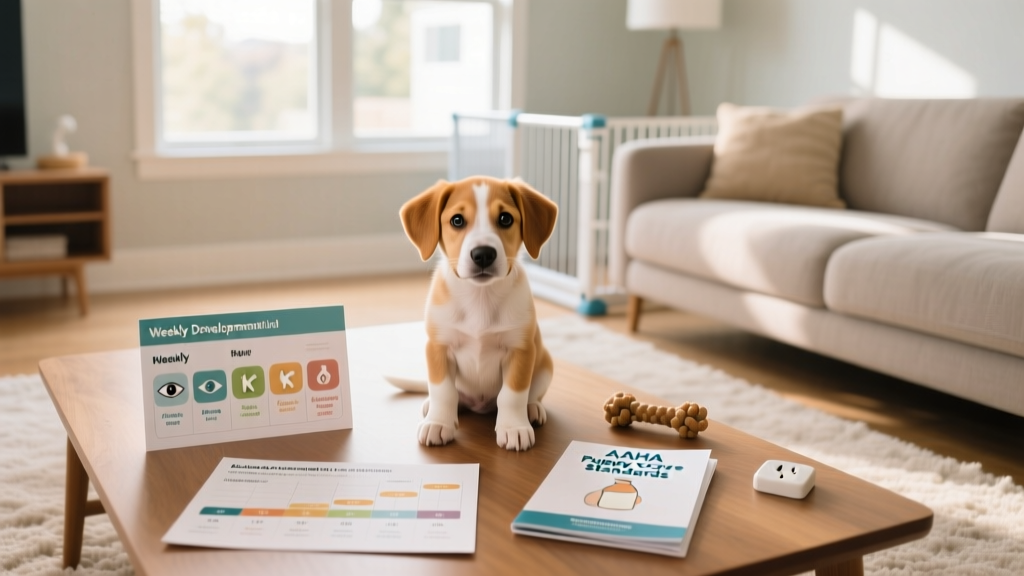
Can Humans Catch Worms From Puppies? Zoonotic Parasite
Can humans catch worms from puppies? Learn which parasites are zoonotic, how transmission happens, and follow our complete puppy care timeline for prevention.

Can Humans Catch Worms From Puppies? The Honest Answer
Yes — humans can catch certain worms from puppies. The parasites that pose a zoonotic (transmissible between animals and humans) risk include roundworms (Toxocara canis), hookworms (Ancylostoma caninum), and, less commonly, tapeworms (Dipylidium caninum). According to the CDC, approximately 10,000 children in the United States are infected with Toxocara annually, and puppies under six months are the most common source of environmental contamination.
The risk is real but manageable. Transmission doesn't happen from simply touching your puppy — it requires ingestion of microscopic eggs from contaminated soil or feces, or, in the case of hookworms, direct skin penetration by larvae in contaminated environments. Understanding the risk timeline and integrating deworming into your puppy's early care schedule is the most effective protection for your family.
- Children under 5 who put hands in mouths after playing in contaminated soil
- Puppies that haven't completed their deworming protocol (typically 2, 4, 6, and 8 weeks of age)
- Yards or sandboxes where infected dogs have defecated
- Failure to pick up feces promptly — roundworm eggs become infectious after 2-4 weeks in soil
- Walking barefoot in areas contaminated with hookworm larvae
This guide walks you through your puppy's first year — with parasite prevention woven into every developmental stage — so you can raise a healthy puppy and keep your household safe.
Week-by-Week Puppy Milestones: What to Expect From 4 Weeks to 12 Months
Puppies develop rapidly, and each life stage carries specific parasite risks, behavioral changes, and care requirements. Here's a concrete timeline based on veterinary developmental science.
Weeks 4–8: The Litter Phase
Size & Weight: Most puppies weigh 1–4 lb (0.5–1.8 kg) depending on breed.
Development: Eyes and ears fully open. Baby teeth erupting. Puppies begin eating gruel (kibble soaked in puppy milk replacer) alongside nursing. Critical socialization with littermates — bite inhibition begins here.
Parasite Risk: HIGHEST. Nearly all puppies acquire roundworms transplacentally (before birth) or through their mother's milk. The Merck Veterinary Manual notes that Toxocara canis larvae migrate through the puppy's lungs and intestines, causing potbellied appearance, diarrhea, and poor growth. Hookworms can also be transmitted through milk.
Deworming Protocol: Puppies should be dewormed at 2, 4, 6, and 8 weeks using pyrantel pamoate (commonly sold as Nemex or Strongid). Dosage: 5 mg/kg (2.27 mg/lb) orally, repeated every 2 weeks. Your breeder or rescue should provide deworming records.
Weeks 8–12: Homecoming & Adjustment
Size & Weight: Breed-dependent; small breeds 2–5 lb (0.9–2.3 kg), large breeds 8–20 lb (3.6–9.1 kg).
Development: Fear imprint period (8–11 weeks). Puppies form strong attachments but are also highly susceptible to lasting negative associations. Housetraining begins. Crate training starts. Puppy explores everything with their mouth.
Parasite Risk: Still high. Puppies need another deworming at this stage. A fecal flotation test at your first vet visit (ideally within 48 hours of bringing puppy home) will identify specific parasites present.
Human Safety: Wash hands thoroughly after handling puppy feces. Do not let children handle puppy waste. Pick up feces from yard immediately — use bags, not bare hands.
Weeks 12–16: Building Confidence
Size & Weight: Small breeds 4–8 lb (1.8–3.6 kg), large breeds 15–35 lb (6.8–15.9 kg).
Development: Socialization window is still open but closing rapidly (ends around 14 weeks). Puppy can attend puppy kindergarten classes after second DHPP vaccine. Chewing intensifies as adult teeth begin developing beneath gums. Basic commands (sit, down, come) are highly trainable now.
Parasite Risk: Moderate. Monthly heartworm/intestinal parasite preventives should now be started (e.g., Heartgard Plus, Interceptor Plus, or Simparica Trio). These prevent roundworm, hookworm, whipworm, and heartworm simultaneously.
Weeks 16–24: The Juvenile Stage
Size & Weight: Small breeds approaching adult size (8–15 lb / 3.6–6.8 kg), large breeds 30–60 lb (13.6–27.2 kg).
Development: Second fear period (around 6–14 months in large breeds, 4–8 months in small breeds). Teething peaks. Energy levels surge. Testing boundaries with selective hearing. Spay/neuter typically performed during this window (6 months for most breeds; some large-breed vets recommend waiting until 12–18 months — consult your veterinarian for breed-specific timing).
Parasite Risk: Lower if monthly preventives are maintained. However, environmental exposure continues — puppies sniffing and eating things off the ground remain at risk for reinfection.
Months 6–12: Adolescence
Size & Weight: Small breeds reach adult weight; large breeds continue growing (may reach 70–120 lb / 31.8–54.4 kg by 12 months for giant breeds).
Development: Sexual maturity (if intact). Energy and independence peak — this is when many dogs are surrendered due to "unmanageable" behavior that is actually normal adolescence. Consistent training and exercise are non-negotiable. Transition from puppy food to adult food typically happens around 10–12 months for small breeds, 12–18 months for large breeds.
Parasite Risk: Low with consistent monthly preventives. Annual fecal exam recommended by the AVMA for all dogs regardless of age.
Puppy Feeding Schedule: Exact Portions by Age and Weight
Proper nutrition supports immune function, which helps puppies resist and recover from parasitic infections. Underfeeding weakens immunity; overfeeding causes rapid growth that stresses developing joints.
All portions below assume a high-quality, AAFCO-approved puppy food with a caloric density of approximately 380–420 kcal/cup. Adjust based on your specific food's guaranteed analysis and your puppy's body condition score (BCS).
| Age | Meals Per Day | Small Breed (Adult 5–20 lb / 2.3–9.1 kg) | Medium Breed (Adult 21–50 lb / 9.5–22.7 kg) | Large Breed (Adult 51–100+ lb / 23.1–45.4+ kg) |
|---|---|---|---|---|
| 6–8 weeks | 3–4 | ¼–½ cup/day | ½–¾ cup/day | ¾–1¼ cups/day |
| 8–12 weeks | 3–4 | ⅓–¾ cup/day | ¾–1½ cups/day | 1½–2½ cups/day |
| 3–6 months | 3 | ½–1 cup/day | 1½–2½ cups/day | 2½–4 cups/day |
| 6–12 months | 2 | ¾–1¼ cups/day | 2–3 cups/day | 3–5 cups/day |
Important notes: Free-feeding (leaving food out all day) makes it impossible to monitor appetite changes — one of the earliest signs of illness, including parasitic infection. Always measure food with a standard 8 oz measuring cup, not by eye. Puppies with roundworms often have a distended belly despite visible ribs; this "potbellied" look is a red flag, not a sign of good health.
Vaccination & Deworming Schedule: Protecting Puppy and People
Vaccines protect your puppy from deadly viral diseases. Deworming protects both your puppy and your family from zoonotic parasites. These two protocols run on parallel timelines during the first four months.
| Age | Vaccines | Deworming | Notes |
|---|---|---|---|
| 6–8 weeks | DHPP (Distemper, Hepatitis, Parainfluenza, Parvovirus) — 1st dose | Pyrantel pamoate (roundworm, hookworm) | Often administered by breeder/rescue before adoption |
| 10–12 weeks | DHPP — 2nd dose; Bordetella (kennel cough) optional | Pyrantel pamoate; fecal flotation test | Fecal test identifies whipworm, giardia, coccidia that pyrantel doesn't cover |
| 14–16 weeks | DHPP — 3rd dose; Rabies (required by law in most states) | Fenbendazole (Panacur) 50 mg/kg for 3 consecutive days if fecal positive | After 3rd DHPP, puppy is considered protected against parvovirus |
| 6 months | — | Heartworm test; start monthly preventive (e.g., Interceptor Plus: milbemycin oxime + praziquantel) | Monthly preventives cover heartworm + roundworm + hookworm + whipworm + tapeworm |
| 12 months | DHPP booster; Rabies booster (1-year or 3-year depending on vaccine type) | Annual fecal flotation; continue monthly preventives | Some vets recommend fecal testing 2x/year for puppies' first year |
A consistent deworming and monthly preventive protocol reduces environmental contamination with roundworm and hookworm eggs by over 95%. The Companion Animal Parasite Council (CAPC) recommends year-round monthly preventives for all dogs in the United States, regardless of indoor/outdoor status.
The Socialization Window (Weeks 3–14): Balancing Exposure and Infection Risk
The primary socialization period — when puppies are neurologically primed to accept new experiences without fear — closes between 12 and 14 weeks of age. This creates a tension: your puppy needs social exposure, but their immune system isn't fully protected until after the third DHPP vaccine at 14–16 weeks. And you also need to avoid contaminated environments where parasite larvae and eggs persist.
The American Veterinary Society of Animal Behavior (AVSAB) recommends that puppies begin socialization classes before completing their full vaccine series, as the behavioral risks of under-socialization (fear, aggression, anxiety) outweigh the disease risk in controlled environments.
Socialization Checklist: Safe Exposures by Week
Parasite safety rule: Until your puppy has received their third DHPP vaccine, avoid public dog parks, communal pet relief areas, and any soil where unknown dogs have defecated. Carry your puppy or use a stroller/sling in public spaces. Hookworm larvae can penetrate bare skin (including paw pads) from contaminated soil.
Potty Training Timeline and Housetraining Realities
Here's the honest timeline that most puppy resources sugarcoat: most puppies are not reliably house-trained until 4–6 months of age, and small breeds may take up to 8–10 months due to smaller bladder capacity. A puppy's bladder control roughly equals their age in months plus one — so a 3-month-old can hold for approximately 4 hours maximum.
Realistic Potty Training Schedule
| Puppy Age | Max Bladder Hold Time | Outing Frequency | What to Expect |
|---|---|---|---|
| 8–10 weeks | 1–2 hours | Every 30–60 min when awake; after every meal, nap, play session | Multiple accidents daily are normal. You are building the habit, not expecting perfection. |
| 10–14 weeks | 2–3 hours | Every 1–2 hours when awake | Accidents decrease if schedule is consistent. Puppy may start going to door. |
| 3–4 months | 3–4 hours | Every 2–3 hours | Noticeable improvement. Regression possible during fear periods or routine changes. |
| 4–6 months | 4–6 hours | Every 3–4 hours | Most puppies are reliable with occasional accidents. Teething distractions may cause setbacks. |
| 6+ months | 6–8 hours | 3–4 times daily | Considered "trained" if accidents are rare (1–2 per month). Marking behavior may emerge in intact males. |
Parasite connection: Puppies with intestinal worms often have loose stools or diarrhea, making housetraining significantly harder. If your puppy is having frequent loose accidents despite a consistent schedule, request a fecal test before blaming the training process. Treating the parasites often resolves the "training failure" overnight.
Track these data points in a notebook or phone app:
- Time puppy ate/drank
- Time taken outside
- Result (urinated/defecated/both/neither)
- Accident time and location
- Stool consistency (firm/soft/liquid — liquid or mucous-laden stool warrants a fecal test)
After 10–14 days, you'll see patterns that let you anticipate needs rather than react to accidents.
Teething, Biting, and Chewing: Surviving Months 3–6
Puppies have 28 deciduous (baby) teeth that erupt between 3–6 weeks of age. These are replaced by 42 adult teeth between 3–6 months. The teething process causes gum inflammation, pain, and an overwhelming drive to chew — which is why this period coincides with peak destructive behavior and puppy biting complaints.
Teething Timeline
- 3–4 months: Incisors begin loosening. You may find tiny teeth on the floor or in toys. Increased mouthing of hands and clothing.
- 4–5 months: Canines and premolars erupt. This is peak biting intensity. Gums may appear red or slightly bloody — this is normal.
- 5–6 months: Molars erupt. Chewing shifts from soft items to hard furniture legs, shoes, and baseboards. Most baby teeth should be gone by 6 months; retained baby teeth (common in small breeds) require veterinary extraction.
Safe Chew Recommendations
- KONG Classic (puppy rubber, pink/blue): Fill with plain yogurt and freeze for 30 minutes. The cold soothes inflamed gums. Size appropriately — the toy should be larger than your puppy's mouth to prevent choking.
- Benebone Puppy Wishbone: Nylon chew designed for puppies under 6 months. Softer than adult versions. Replace when wear grooves exceed ¼ inch deep.
- Frozen wet washcloth: Wet a clean washcloth, twist into a rope, and freeze. Supervise use — remove once puppy starts tearing fabric pieces off.
- Yak cheese chews (small size): Fully digestible, long-lasting. Microwave puffed ends to prevent choking on small hard pieces. Not suitable for puppies under 4 months due to hardness.
Stopping Puppy Biting: A Positive Reinforcement Protocol
Puppy nipping is normal — littermates teach bite inhibition by yelping and withdrawing from play. You can replicate this process using force-free methods:
- Redirect: When teeth touch skin, immediately offer an appropriate chew toy. Praise enthusiastically when puppy chews the toy instead.
- Withdraw attention: If redirecting doesn't work within 3 seconds, stand up, cross your arms, and become still and boring for 10–15 seconds. No talking, no eye contact. Resume interaction when puppy is calm.
- Time-out (last resort): If biting persists, calmly place puppy in their crate or a puppy-proofed pen for 30–60 seconds. This is not punishment — it's a chance to decompress. Puppies that bite excessively are often overtired; a nap is the solution.
- Never: Hold the mouth shut, tap the nose, alpha-roll, or use bitter sprays on hands. These methods create fear and can escalate biting into defensive aggression.
Crate Training Progression: Building a Safe Space
A crate serves multiple purposes: safe den, housetraining tool, travel carrier, and recovery space after surgery. The key is gradual introduction — never use the crate as punishment.
| Age | Maximum Crate Time (Daytime) | Maximum Crate Time (Nighttime) | Training Focus |
|---|---|---|---|
| 8–10 weeks | 30–60 minutes | 2–3 hours (will need overnight potty break) | Build positive association: feed meals in crate, give special chew only in crate |
| 10–14 weeks | 1–2 hours | 3–4 hours | Practice closing door while you're home; brief departures (5–15 min) |
| 3–4 months | 2–3 hours | 5–6 hours | Increase duration gradually; puppy should enter crate voluntarily for treats |
| 4–6 months | 3–4 hours | 6–8 hours | Most puppies sleep through the night; transition to longer daytime crating if needed |
| 6+ months | 4–6 hours maximum | 8 hours | Begin testing unsupervised freedom in puppy-proofed room; some dogs are ready, many aren't until 12–18 months |
Crate sizing: The crate should be large enough for your puppy to stand, turn around, and lie down — but no larger. Excess space allows puppies to eliminate in one corner and sleep in another, undermining housetraining. Use a divider panel in a full-size crate and expand as puppy grows. For a medium-breed puppy expected to reach 40 lb (18.1 kg), a 36-inch crate with divider is appropriate.
First-Year Cost Breakdown: Budgeting for Puppy Care
New puppy owners frequently underestimate first-year costs. The figures below reflect 2026 national averages for a medium-breed dog (30–50 lb / 13.6–22.7 kg) in a suburban U.S. market. Urban areas may run 20–40% higher; rural areas 10–20% lower.
| Category | Items | Estimated Cost Range |
|---|---|---|
| Veterinary (Preventive) | Initial exam, 3 DHPP vaccines, rabies vaccine, fecal tests (2x), deworming medications, heartworm test, spay/neuter, microchip | $600–$1,200 |
| Monthly Preventives | Flea/tick + heartworm/intestinal parasite combo (e.g., Simparica Trio: $25–$35/month) | $300–$420/year |
| Food | Quality puppy food (e.g., Purina Pro Plan, Royal Canin, Hill's Science Diet): $55–$80/bag, 1 bag per month | $660–$960/year |
| Supplies | Crate ($50–$120), bed ($30–$60), leash/harness ($25–$50), bowls ($15–$30), toys ($50–$100), grooming tools ($20–$50), enzymatic cleaner ($15–$25) | $205–$435 |
| Training | Puppy kindergarten group class (6–8 weeks): $150–$300; optional private sessions: $80–$150/session | $150–$450 |
| Pet Insurance | Accident + illness plan, $30–$60/month (enroll before any pre-existing conditions) | $360–$720/year |
| Emergency Fund | Intestinal blockage surgery, parvo treatment, toxin ingestion — set aside for unexpected costs | $500–$2,000 (reserve) |
Total first-year estimate: $2,775–$6,185 (excluding emergency reserve). This does not include the purchase or adoption fee for the puppy itself, which ranges from $50–$500 (shelter/rescue) to $1,500–$4,000+ (responsible breeder).
When Can Your Puppy Go Outside and Meet Other Dogs?
This is one of the most common questions new puppy owners ask, and the answer balances disease risk against socialization urgency:
- Immediately (8 weeks): Your own yard is safe IF no unknown dogs have access to it and you pick up all feces promptly. Carry puppy in a sling or stroller for neighborhood walks to provide visual/social stimulation without ground contact.
- After 2nd DHPP (10–12 weeks): Puppy kindergarten classes with vaccinated peers are recommended by the AVSAB. Controlled playdates at homes of known-vaccinated dogs are safe.
- After 3rd DHPP (14–16 weeks): Public walks on leash are now safe. Avoid dog parks until at least 6 months — the combination of unknown vaccination status, high parasite load in soil, and unpredictable dog interactions makes dog parks risky for young puppies.
- 6+ months: Dog parks become an option if your puppy is well-socialized, has reliable recall, and is current on all preventives. However, many certified trainers recommend structured playgroups over public dog parks for adolescent dogs.
Frequently Asked Questions
When should I bring my puppy home?
Between 8 and 10 weeks of age is the standard recommendation. Puppies separated from their mother and littermates before 8 weeks often develop behavioral issues including excessive biting, separation anxiety, and poor social skills with other dogs. Some toy breeds benefit from staying with the breeder until 10–12 weeks due to fragility and hypoglycemia risk. Avoid bringing a puppy home during a chaotic household period (holidays, moves, major renovations) — the 8–11 week fear imprint period means traumatic experiences can create lasting phobias.
How often should I feed my puppy at each age?
At 8–12 weeks: 3–4 meals per day, spaced evenly. At 3–6 months: 3 meals per day. At 6–12 months: 2 meals per day. Splitting daily portions across multiple meals prevents hypoglycemia in small breeds and reduces bloat risk in large breeds. Never feed a single large meal to a giant-breed puppy — this is a known risk factor for gastric dilatation-volvulus (GDV).
When will my puppy be fully potty trained?
Reliable housetraining typically takes 4–6 months with a consistent schedule, though small breeds (under 15 lb / 6.8 kg) may take 8–10 months. "Fully trained" means fewer than 1–2 accidents per month. If your puppy is still having daily accidents past 6 months despite consistent management, consult your veterinarian to rule out urinary tract infections, parasites, or anatomical issues like ectopic ureters.
What vaccines does my puppy need and when?
Core vaccines per the AAHA (American Animal Hospital Association) guidelines: DHPP at 6–8, 10–12, and 14–16 weeks; Rabies at 14–16 weeks (timing varies by state law). Non-core vaccines based on lifestyle risk: Bordetella (boarding/daycare dogs), Leptospirosis (dogs near wildlife/water), Lyme (tick-endemic areas), Canine Influenza (social dogs in outbreak regions). Your veterinarian will recommend based on your geographic location and puppy's expected lifestyle.
How do I stop puppy biting and nipping?
Use a three-step positive reinforcement approach: (1) Redirect teeth to an appropriate chew toy and praise the choice. (2) If biting continues, withdraw all attention for 10–15 seconds — stand still, no eye contact, no talking. (3) If puppy is persistently mouthy, they are likely overtired; offer a crate nap with a frozen KONG. Most puppies outgrow intense mouthing by 5–6 months as adult teeth fully erupt. Consistency from all household members is critical — if one person allows mouthing, the puppy will continue the behavior with everyone.
Can I catch worms from my puppy licking me?
The risk is very low from a lick alone, but not zero. Roundworm eggs are shed in feces, not saliva — however, puppies often lick their own anal area and then lick your face or hands. Hookworm larvae are not transmitted through saliva. The practical advice: don't let puppies lick your mouth or open wounds, wash hands before eating, and maintain your puppy's deworming schedule. Children and immunocompromised individuals face higher risk and should be particularly careful about hand hygiene after puppy contact.
When can my puppy go outside and meet other dogs?
Controlled socialization can begin immediately in your own clean yard and at the homes of known-vaccinated dogs. After the second DHPP vaccine (around 10–12 weeks), puppy classes are safe and strongly recommended. Full public access (sidewalks, trails, pet-friendly stores) is appropriate after the third DHPP at 14–16 weeks. Dog parks should be avoided until at least 6 months due to parasite contamination and unpredictable interactions. Always consult your veterinarian about the specific disease risk profile in your area — parvovirus prevalence varies significantly by region and season.
- Puppy has visible worms in stool or vomit (looks like white spaghetti for roundworms, rice grains for tapeworm segments)
- Diarrhea lasting more than 24 hours, especially with blood or mucus
- Potbellied appearance combined with weight loss or poor appetite
- Pale gums (sign of hookworm-induced anemia)
- Any family member develops unexplained abdominal pain, vision changes, or skin rashes after puppy contact — consult your physician and mention pet exposure
ASPCA Animal Poison Control: (888) 426-4435 (24/7, consultation fee applies) — call if your puppy ingests an unknown substance or an overdose of deworming medication.
This article provides educational guidance and does not replace professional veterinary advice. Always consult your veterinarian for diagnosis, treatment plans, and deworming protocols tailored to your puppy's specific health status and geographic risk factors.
Robin Maitland
All our authors care for dogs every day — read more of their work on the authors page.