Brittany Puppy Care Guide: Care, Training & First-Year Costs
Complete Brittany puppy guide covering age-specific milestones, feeding portions, vaccination schedule, potty training timeline, and first-year cost breakdown.
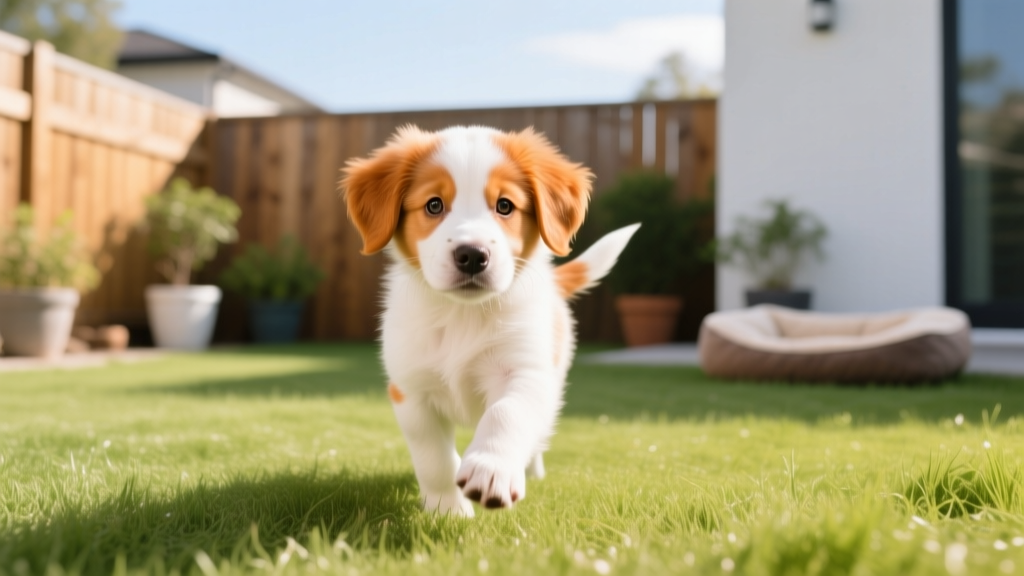
When to Bring Your Brittany Puppy Home (And What to Expect)
The Brittany puppy is a high-energy, intelligent sporting breed that demands an engaged owner from day one. Originally bred in France as a versatile pointing and retrieving dog, the Brittany (formerly the Brittany Spaniel) packs tremendous drive into a medium-sized frame. As a puppy, that drive manifests as boundless curiosity, rapid learning, and a mouth that wants to carry everything it finds.
Bring your Brittany puppy home between 8 and 10 weeks of age. Reputable breeders typically keep puppies until at least 8 weeks to ensure proper littermate socialization and weaning. Some breeders of sporting breeds prefer 10 weeks, allowing slightly more neurological maturity before the transition. Never take a Brittany puppy before 7 weeks — early separation correlates with increased fear responses and bite inhibition problems later in life, according to research published in the AVMA's puppy care guidelines.
Adult Weight: 30–40 lb (14–18 kg) | Adult Height: 17.5–20.5 in (44–52 cm) at shoulder
Expected Adult Lifespan: 12–14 years | AKC Group: Sporting
Coat: Dense, flat or wavy, orange-and-white or liver-and-white
Energy Level: Very high — expect 60–90 minutes of structured exercise daily once fully grown
Before your puppy arrives, puppy-proof one room thoroughly. Brittanys are athletic climbers and jumpers even as young puppies. Block access to stairs, secure electrical cords behind furniture, and remove small objects from floor level. Have a wire crate (30×20 inches for a puppy, upgrading to 36×24 inches for adulthood), an exercise pen, and enzymatic cleaner ready.
Brittany Puppy Milestone Timeline: Weeks 4 Through 12 Months
Understanding developmental stages prevents unrealistic expectations. A 10-week-old Brittany simply does not have the bladder control or attention span of a 6-month-old. Here is what to expect at each phase:
Weeks 4–8 (Still With the Breeder)
Your puppy is learning bite inhibition from littermates, beginning to eat solid food, and undergoing a critical socialization window. The breeder should expose the puppy to varied surfaces (tile, grass, gravel), household sounds, and gentle handling by different people. Ask your breeder about Early Neurological Stimulation (ENS) protocols — responsible Brittany breeders often use the Bio-Sensor program developed by the military, which involves brief daily handling exercises from days 3–16.
Weeks 8–12 (Home Transition and Bonding)
This is the peak fear imprint period. Negative experiences during weeks 8–11 can create lasting phobias. Keep veterinary visits positive — bring high-value treats (boiled chicken, freeze-dried liver). Your Brittany puppy will sleep 18–20 hours per day but will be intensely active during waking periods. Expect crying in the crate for the first 3–7 nights; this is normal separation behavior, not a training failure.
Weeks 12–16 (Learning Foundations)
Attention span increases to roughly 5–10 minutes per training session. Your Brittany puppy can learn sit, down, come, and loose-leash basics. Bladder capacity extends to approximately 2–3 hours during the day. The second fear period may emerge around 14–16 weeks — your puppy may suddenly seem wary of previously familiar things. Respond with calm encouragement, never force exposure.
Weeks 16–24 (Adolescent Energy Surge)
This is where many first-time Brittany owners feel overwhelmed. Energy levels spike, chewing peaks, and previously reliable recall may deteriorate as the puppy's prey drive activates. Brittanys have a strong pointing instinct that can emerge as early as 12 weeks but intensifies now — you may see your puppy freeze and "point" at birds, squirrels, or even leaves. Channel this drive into structured activities: introductory field work, scent games, and impulse-control exercises.
Months 6–12 (Adolescence and Refinement)
Your Brittany puppy approaches adult size but remains mentally juvenile. Males may begin marking territory. Females typically experience their first heat cycle (estrus) between 6–12 months — discuss spay timing with your veterinarian, as recent research suggests delaying spay/neuter until after growth plate closure (around 12–18 months for medium breeds) may reduce orthopedic risks. Training should now include advanced recall, steadiness exercises, and introduction to water retrieves if you plan to use your Brittany for hunting.
Brittany Puppy Feeding Schedule: Portions by Age and Weight
Feed a high-quality puppy food formulated for medium-breed or sporting-breed puppies. Look for an AAFCO statement confirming "complete and balanced nutrition for growth." Avoid large-breed puppy formulas — Brittanys do not need the reduced caloric density designed for giant breeds, and underfeeding can impair their muscular development.
| Age | Meals Per Day | Approximate Daily Amount | Estimated Puppy Weight |
|---|---|---|---|
| 8–12 weeks | 3 meals | 1.25–1.75 cups/day | 8–14 lb (3.6–6.4 kg) |
| 3–6 months | 3 meals | 1.75–2.5 cups/day | 14–25 lb (6.4–11.3 kg) |
| 6–12 months | 2 meals | 2.25–3 cups/day | 25–38 lb (11.3–17.2 kg) |
| 12+ months (adult) | 2 meals | 2–2.75 cups/day (adult food) | 30–40 lb (14–18 kg) |
Important notes on feeding your Brittany puppy: These portions assume a kibble with approximately 380–420 kcal/cup. Adjust based on your specific food's caloric density — check the guaranteed analysis on the bag. Active Brittany puppies burning significant energy through training and play may need 10–15% more. Transition to adult food around 11–12 months. Always provide fresh water and pick up uneaten food after 15–20 minutes to establish meal-time structure.
Vaccination Schedule for Your Brittany Puppy
Your Brittany puppy needs a series of core vaccines administered at specific intervals. Maternal antibodies interfere with vaccine efficacy in young puppies, which is why boosters are given every 2–4 weeks until approximately 16 weeks of age. Always consult your veterinarian for a schedule tailored to your region's disease prevalence.
| Age | Vaccines | Notes |
|---|---|---|
| 6–8 weeks | DHPP (Distemper, Hepatitis/Adenovirus, Parainfluenza, Parvovirus) — 1st dose | Often given by breeder before you take puppy home |
| 10–12 weeks | DHPP — 2nd dose; Bordetella (optional, recommended if attending group classes) | First vet visit after home transition; fecal parasite screening |
| 14–16 weeks | DHPP — 3rd dose; Rabies (required by law in most US states) | Puppy is considered "fully vaccinated" approximately 2 weeks after final DHPP |
| 12–16 months | DHPP booster; Rabies booster (1-year or 3-year depending on local law) | Annual wellness exam; discuss Lyme and Leptospirosis vaccines if in endemic areas |
When can your puppy go outside and meet other dogs? Until your Brittany puppy completes the full DHPP series (approximately 16 weeks + 2 weeks for immunity), avoid high-traffic dog areas: dog parks, pet store floors, and communal walking paths where unknown dogs defecate. However, controlled socialization with known, fully vaccinated adult dogs in private yards is safe and critical. The American Veterinary Society of Animal Behavior (AVSAB) recommends structured socialization begin before full vaccination because the risk of behavioral euthanasia from poor socialization exceeds the risk of infectious disease when managed carefully.
Potty Training Your Brittany Puppy: Realistic Timeline and Troubleshooting
When will your Brittany puppy be fully potty trained? Expect reliable house training between 4 and 6 months of age, with occasional accidents until 8–10 months. Brittanys are intelligent and generally learn quickly, but their high energy and distractibility can cause them to "forget" to eliminate before rushing outside to chase a scent.
8–12 weeks: Take outside every 1–1.5 hours during the day, immediately after meals, naps, and play. Expect 2–3 overnight wake-ups.
3–4 months: Extend to every 2 hours. Overnight stretches of 4–5 hours become possible.
5–6 months: Every 3–4 hours. Most Brittany puppies can hold overnight (7–8 hours).
7–12 months: Every 4–6 hours. Full bladder control achieved.
Troubleshooting common potty training issues specific to Brittanys:
- Submissive urination when greeting: Common in young Brittanys. Ignore the puppy for the first 30 seconds when entering your home, then greet calmly at floor level. Never punish — this worsens the behavior.
- Excitement urination during play: Schedule potty breaks before high-energy activities. Take a 2-minute calm-down break before going outside.
- Marking behavior (especially males, 6+ months): Interrupt with a neutral "let's go" redirect. Supervise closely indoors. Neutering reduces but does not always eliminate marking.
- Refusing to potty on leash: Some Brittanys prefer to roam while eliminating. Use a 10–15 foot long line in your yard. Stand still and let the puppy circle. Reward immediately with a treat and verbal praise.
Socialization Window: Weeks 3–14 Exposure Checklist
The primary socialization period closes around 14 weeks of age. For a Brittany puppy brought home at 8 weeks, you have approximately 6 weeks of intensive socialization opportunity. Brittanys that miss this window are more prone to fear-based reactivity — a significant problem in a breed that needs to work confidently in varied field environments.
Aim for positive exposure to each item. Your puppy does not need to interact with everything — observing calmly from a distance counts as successful socialization.
- ☐ At least 12 different people (children, elderly, people wearing hats, sunglasses, uniforms, carrying umbrellas)
- ☐ 5+ vaccinated, friendly adult dogs of varying sizes
- ☐ Surfaces: grass, gravel, metal grates, wet pavement, carpet, tile, wood floors
- ☐ Sounds: vacuum cleaner, doorbell, thunderstorms (play recordings at low volume), gunfire recordings (start at very low volume — critical for sporting breeds), traffic, fireworks
- ☐ Handling: paw touching, ear examination, mouth opening, nail trim simulation, collar/harness grabs
- ☐ Environments: car rides, parking lots, outdoor café patios, friend's houses, farm/field settings
- ☐ Objects: bicycles, skateboards, strollers, wheelchairs, plastic bags blowing in wind
- ☐ Water exposure: shallow puddles, kiddie pool, gentle hose spray — Brittanys often need positive early water introduction for future retrieving work
- ☐ Alone time: 5–30 minutes in crate while you are in another room (prevents separation anxiety)
- ☐ Grooming: brush handling, ear cleaner introduction, toothbrush familiarization
Pair every new experience with high-value treats. If your Brittany puppy shows fear, increase distance and reduce intensity — never push a fearful puppy closer to the stimulus. Enroll in a puppy kindergarten class that requires proof of at least one DHPP vaccine and maintains clean facilities. The AKC recommends structured puppy classes as one of the most efficient socialization tools available.
Crate Training Progression and Time Limits
Brittanys adapt well to crate training when introduced properly. The crate becomes a den, a safe space, and an essential management tool. Use a 30×20-inch wire crate for your puppy, placing a divider in a 36×24-inch adult crate so you can expand space as your dog grows.
| Age | Maximum Daytime Crate Time | Maximum Overnight Time | Training Focus |
|---|---|---|---|
| 8–10 weeks | 1–1.5 hours | 3–4 hours (expect wake-ups) | Positive association; feed meals in crate |
| 11–14 weeks | 2–2.5 hours | 5–6 hours | Short absences from home while crated |
| 15–24 weeks | 3–4 hours | 7–8 hours | Building duration; calm settling |
| 6–12 months | 4–5 hours | 8–9 hours | Transitioning to free-roam when reliable |
Never use the crate as punishment. If your Brittany puppy whines in the crate, wait for a brief pause in vocalization (even 3 seconds of silence) before releasing. This teaches that quiet earns freedom, not noise. For severe crate anxiety — persistent howling, self-injury attempts, excessive drooling — consult a certified professional dog trainer (CPDT-KA) or veterinary behaviorist.
Teething Timeline and Safe Chew Strategies
Brittany puppies begin losing deciduous (baby) teeth around 12–16 weeks, with the process completing by approximately 6 months. During peak teething (3–5 months), your puppy will chew everything. Brittanys are already mouth-oriented as a retrieving breed, making this phase particularly intense.
Safe chew recommendations by stage:
- 12–16 weeks (early teething): Frozen damp washcloths, rubber puppy teething rings (KONG Puppy, Nylabone Puppy), chilled carrot sticks. Avoid hard nylon bones — puppy teeth can fracture.
- 4–5 months (peak chewing): Frozen KONG stuffed with plain yogurt and blueberries, Benebone Puppy, bully sticks (supervise closely, remove when small enough to swallow). Rotate chews to maintain interest.
- 5–6 months (adult teeth emerging): Introduce medium-hardness chews. Yak cheese chews, collagen sticks. Begin transitioning to adult-appropriate chew items.
Never give your Brittany puppy rawhide (choking and blockage risk), cooked bones (splintering), antlers or hooves (tooth fracture risk in young dogs), or any chew small enough to swallow whole. If your puppy ingests a foreign object, contact your veterinarian or the ASPCA Animal Poison Control Center at (888) 426-4435 (24/7, consultation fee applies).
Common Brittany Puppy Problems: Biting, Whining, and Destructive Chewing
How to Stop Puppy Biting and Nipping
Brittany puppies are notoriously mouthy. This is breed-typical behavior — they were developed to carry game birds gently, so their mouths are always "on." However, puppy bites on human skin must be redirected consistently.
Step-by-step bite inhibition protocol:
- When teeth touch skin, say "oops" or "too bad" in a calm, neutral tone (not a high-pitched yelp, which can excite some Brittanys more).
- Immediately redirect to an appropriate chew toy. Praise when the puppy mouths the toy.
- If biting continues after 2–3 redirects, end the interaction. Stand up, turn away, or step behind a baby gate for 15–30 seconds.
- Return and offer a toy. Resume play only if the puppy engages with the toy, not your hands.
- Ensure your puppy is getting adequate physical exercise and mental stimulation — overtired and under-exercised Brittany puppies bite significantly more.
Never use physical punishment, alpha rolls, or muzzle-holding. These methods damage trust and can trigger defensive aggression. Positive reinforcement and consistent redirection resolve mouthing in most Brittany puppies by 5–6 months as adult teeth emerge and impulse control improves.
Excessive Whining and Vocalization
Brittanys are communicative dogs. Whining typically signals one of four things: need to eliminate, boredom, anxiety, or learned attention-seeking. Identify the trigger before responding. If the puppy has been exercised, fed, watered, and recently eliminated, brief whining in the crate can be ignored (extinction protocol). Reward quiet behavior with attention and treats.
Destructive Chewing
A Brittany puppy left unsupervised with access to the full house will destroy baseboards, shoes, and furniture. Management is the solution: confine to a puppy-proofed area or crate when you cannot actively supervise. Provide 4–6 appropriate chew items and rotate them every few days to maintain novelty. Increase daily mental stimulation — 10 minutes of scent work or puzzle toy feeding tires a Brittany puppy as effectively as 30 minutes of physical exercise.
First-Year Cost Breakdown for a Brittany Puppy
Budget realistically before committing. Brittany puppies from health-tested, AKC-registered breeders typically cost $800–$1,500 depending on lineage and region. Adoption from a breed-specific rescue (such as the American Brittany Rescue) typically runs $300–$600 and often includes initial veterinary care.
| Category | Low Estimate | High Estimate | Details |
|---|---|---|---|
| Puppy purchase/adoption | $300 | $1,500 | Rescue vs. breeder |
| Veterinary (vaccines, exams, spay/neuter, heartworm prevention) | $600 | $1,200 | Varies by region and clinic |
| Food (puppy + transition to adult) | $350 | $600 | Mid-range to premium kibble |
| Supplies (crate, bed, leash, harness, bowls, toys, grooming tools) | $250 | $500 | Initial setup; ongoing toy replacement |
| Training (puppy kindergarten + basic obedience) | $150 | $400 | Group classes; private sessions cost more |
| Pet insurance (optional but recommended) | $360 | $600 | $30–$50/month for puppy enrollment |
| Flea/tick prevention (year-round) | $150 | $300 | Oral or topical; critical for outdoor sporting dogs |
| Total First-Year Estimate | $2,160 | $5,100 | Excludes emergency veterinary care |
Hidden costs to anticipate: Emergency veterinary visits (foreign body ingestion is common in mouthy puppies — expect $1,500–$4,000 if surgery is needed), boarding or pet sitting ($30–$60/night), and potential field training or hunt test entry fees if you pursue sporting activities with your Brittany ($50–$200 per event).
Frequently Asked Questions About Brittany Puppies
Are Brittany puppies good for first-time dog owners?
Brittanys can work for committed first-time owners who understand the exercise commitment. They are biddable (eager to please) compared to more independent sporting breeds like English Pointers, but they need 60–90 minutes of vigorous daily activity as adults. If you cannot commit to running, hiking, or structured field work, a lower-energy breed may be a better fit.
How much exercise does a Brittany puppy need?
Follow the "5 minutes per month of age, twice daily" guideline. A 4-month-old Brittany puppy needs roughly 20 minutes of structured exercise (leash walks, gentle play) twice daily. Avoid forced running on hard surfaces until growth plates close around 12–14 months. Free play in a fenced yard on grass is safe at any age — the puppy will self-regulate.
Do Brittany puppies shed a lot?
Brittanys have moderate shedding year-round with heavier seasonal shedding in spring and fall. Their medium-length coat requires brushing 2–3 times per week with a slicker brush. Puppy coats are softer and may mat behind the ears — check weekly. Professional grooming is optional but helpful every 8–12 weeks for trimming feathering on the legs and ears.
Should I get a male or female Brittany puppy?
Males tend to be slightly larger (35–40 lb vs. 30–35 lb) and may be more outwardly affectionate. Females often mature faster and may be slightly easier to house train. Temperament varies more by individual lineage than by sex. Meet the parents if possible — the dam's temperament is a strong predictor of puppy behavior.
When should I start training my Brittany puppy?
Begin the day you bring your puppy home. Focus on name recognition, handling exercises, and crate training in the first week. Formal positive-reinforcement training sessions (2–5 minutes each) can start at 8 weeks. Enroll in puppy kindergarten at 10–12 weeks, after the first DHPP vaccine. Brittanys excel in obedience, agility, and field trials — early foundation work pays dividends.
Aaron Whyte
All our authors care for dogs every day — read more of their work on the authors page.


