Bland Diet for Puppies: A Complete Puppy Care & Recovery Guide
Learn how to safely use a bland diet for puppies during stomach upset, plus a full puppy care timeline covering feeding, potty training, vaccines, and costs.
Why and When Puppies Need a Bland Diet
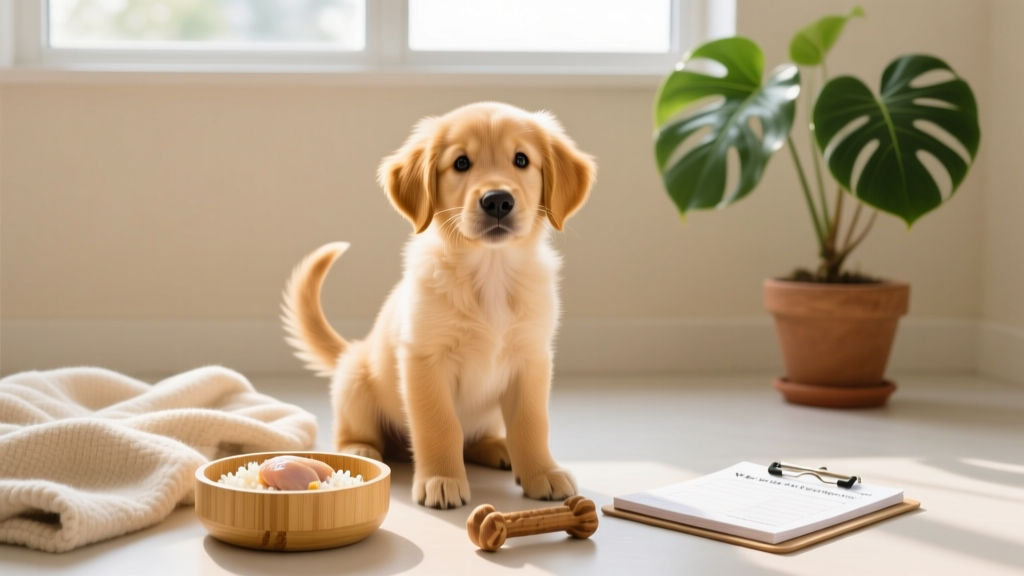
Puppies have notoriously sensitive digestive systems. Their gut microbiomes are still developing, and their immune systems aren't fully mature until around 16 weeks of age. When a puppy experiences vomiting, diarrhea, or loss of appetite, veterinarians frequently recommend a bland diet — a simple, easily digestible combination of lean protein and simple carbohydrates that gives the gastrointestinal tract time to recover.
A bland diet for puppies typically consists of boiled, skinless chicken breast (or lean ground turkey) and plain white rice in a 1:2 ratio (one part protein to two parts rice). Some veterinarians recommend adding a spoonful of canned plain pumpkin (not pie filling) for fiber. The goal isn't long-term nutrition — it's short-term gut rest and recovery, usually lasting 24 to 72 hours before transitioning back to regular puppy food.
The Merck Veterinary Manual notes that highly digestible diets reduce the osmotic load on the intestines, allowing inflamed tissue to heal. For puppies specifically, the caloric density must remain adequate — growing puppies need roughly 2x the calories per pound that adult dogs require, so even during GI upset, calorie restriction is dangerous.
Preparing a Bland Diet for Puppies: Recipe and Portions
The standard bland diet ratio is straightforward, but portions must be scaled to your puppy's weight and age. Here's the base recipe:
| Puppy Weight | Chicken (cooked, shredded) | White Rice (cooked) | Meals Per Day | Total Daily Amount |
|---|---|---|---|---|
| 5 lb (2.3 kg) | ¼ cup | ½ cup | 4 meals | ¾ cup total |
| 10 lb (4.5 kg) | ½ cup | 1 cup | 4 meals | 1½ cups total |
| 20 lb (9 kg) | ¾ cup | 1½ cups | 3 meals | 2¼ cups total |
| 30 lb (13.6 kg) | 1 cup | 2 cups | 3 meals | 3 cups total |
| 50 lb (22.7 kg) | 1½ cups | 3 cups | 3 meals | 4½ cups total |
Preparation method: Boil boneless, skinless chicken breast in plain water (no salt, garlic, onion, or broth) for 12–15 minutes until fully cooked to an internal temperature of 165°F (74°C). Shred finely. Cook white rice according to package directions using water only. Let both cool to room temperature before serving. Mix at the 1:2 ratio per meal.
Transitioning Back to Regular Puppy Food
After 24–72 hours on the bland diet (once stools are firm and vomiting has stopped for at least 12 hours), begin a gradual transition back to your puppy's regular food:
- Day 1 of transition: 75% bland diet + 25% regular puppy kibble (moistened with warm water)
- Day 2: 50% bland diet + 50% regular puppy food
- Day 3: 25% bland diet + 75% regular puppy food
- Day 4: 100% regular puppy food
If diarrhea returns at any point during the transition, go back to the previous day's ratio and hold there for another 24 hours before advancing. According to the AVMA's nutrition guidelines, abrupt diet changes are one of the most common causes of puppy GI upset — so even during recovery, slow transitions protect the gut.
Full Puppy Care Timeline: Milestones from 4 Weeks to 12 Months
Whether you're managing a puppy's first stomach upset or navigating the broader challenges of puppyhood, understanding developmental milestones helps you respond appropriately. Here's a comprehensive timeline:
Weeks 4–8: The Neonatal-to-Weaning Transition
What's happening: Puppies transition from mother's milk to solid food. Teeth begin erupting. Eyes and ears are fully functional. Critical socialization with littermates teaches bite inhibition basics.
Feeding: If you have a puppy this young (rare for pet owners — most puppies stay with breeders until 8 weeks), feed a gruel of puppy-specific milk replacer (like Esbilac) mixed with soaked puppy kibble, 4 times daily. A bland diet is generally NOT recommended at this age without direct veterinary supervision.
Key milestone: Puppies should be dewormed at 2, 4, 6, and 8 weeks. If you acquire a puppy at 6–8 weeks, request deworming records.
Weeks 8–12: The Homecoming Window
What's happening: This is when most puppies join their new families. Fear periods can occur around 8–10 weeks. Puppies are highly impressionable — every experience shapes lifelong associations.
Feeding: 3–4 meals per day of AAFCO-approved puppy food. Portions depend on expected adult weight and breed size. A typical 10 lb (4.5 kg) puppy needs roughly ½ to ¾ cup of high-quality kibble daily, split across meals. This is the age where a bland diet for puppies is most commonly needed — stress of rehoming frequently triggers loose stools.
Key milestone: First DHPP vaccine (distemper, hepatitis, parainfluenza, parvovirus) at 6–8 weeks, with boosters every 2–4 weeks until 16 weeks.
Weeks 12–16: Socialization Prime Time
What's happening: The socialization window closes around 14–16 weeks. Puppies develop stronger attachments, may show early signs of resource guarding or fear-based reactivity if not properly exposed to novel stimuli.
Feeding: Transition to 3 meals per day. Increase portions by approximately 25% from the 8–12 week amounts as growth accelerates. Monitor body condition score (BCS) — you should be able to feel ribs without pressing hard, and see a visible waist from above.
Key milestone: Second and third DHPP boosters. Rabies vaccine at 12–16 weeks (varies by state law). Bordetella vaccine recommended if attending puppy classes.
Weeks 16–24: The Adolescent Shift
What's happening: Teething peaks between 3–6 months. Puppies may regress in training, test boundaries, and exhibit increased chewing/destructive behavior. Secondary fear period often occurs around 6–10 months.
Feeding: Transition to 2 meals per day by 6 months. Caloric needs remain high for growth but feeding frequency decreases. For large/giant breeds (expected adult weight over 50 lb / 23 kg), use large-breed puppy formula to control growth rate and reduce hip dysplasia risk.
Key milestone: Spay/neuter discussion with your vet. Many veterinarians now recommend waiting until 6–12 months depending on breed size for orthopedic health reasons, per AKC health guidelines.
Months 6–12: Approaching Adulthood
What's happening: Small breeds may reach adult size by 9–10 months; large breeds continue growing until 18–24 months. Energy levels remain high but focus improves. Sexual maturity arrives if not yet altered.
Feeding: Small breeds can transition to adult food at 9–12 months. Medium breeds at 12 months. Large/giant breeds at 12–18 months. Transition gradually over 7–10 days. Adult feeding is typically 2 meals per day.
Key milestone: Final rabies booster at 12 months (then every 1–3 years per local law). Annual wellness exam recommended.
Vaccination Schedule: Protecting Your Puppy
Puppies receive maternal antibodies through colostrum (first milk) that gradually wane between 6–16 weeks. The vaccination series is designed to close immunity gaps as those antibodies decline.
| Age | Vaccine | Diseases Covered | Type |
|---|---|---|---|
| 6–8 weeks | DHPP (1st dose) | Distemper, Adenovirus (hepatitis), Parainfluenza, Parvovirus | Core |
| 8–10 weeks | Bordetella (optional) | Kennel cough | Lifestyle |
| 10–12 weeks | DHPP (2nd dose) | Same as above — booster | Core |
| 10–12 weeks | Leptospirosis (1st dose) | Leptospira bacteria (kidney/liver disease) | Lifestyle |
| 12–14 weeks | Rabies (1st dose) | Rabies virus | Core (legally required) |
| 14–16 weeks | DHPP (3rd dose) | Final puppy booster — critical for full immunity | Core |
| 14–16 weeks | Leptospirosis (2nd dose) | Booster | Lifestyle |
Cost expectation: The full puppy vaccine series typically costs $200–$400 at a general practice vet, or $75–$150 at low-cost vaccine clinics. Individual DHPP shots run $25–$45 each; rabies vaccines are $15–$35.
- Bloody diarrhea or vomit (bright red or dark "coffee ground" appearance)
- Vomiting more than 3 times in 24 hours
- Refusal to eat or drink for more than 12 hours (puppies under 12 weeks: 8 hours)
- Lethargy, collapse, or inability to stand
- Abdominal distension (swollen, tight belly — possible bloat/GDV in large breeds)
- Fever above 103.5°F (39.7°C) or hypothermia below 99°F (37.2°C)
If you suspect your puppy ingested a toxic substance, call ASPCA Animal Poison Control: (888) 426-4435 (24/7, consultation fee applies) or Pet Poison Helpline: (855) 764-7661.
Potty Training Timeline and Realistic Expectations
Potty training is one of the most frustrating aspects of puppy ownership, and unrealistic expectations are the #1 reason owners give up. Here's what to actually expect:
The bladder math: A puppy can hold their bladder for approximately one hour per month of age, plus one. So a 3-month-old puppy can hold it for roughly 4 hours — but only while resting. Active puppies need more frequent breaks.
| Age | Outdoor Trips Per Day | Max Hold Time | Expected Accidents/Week | Training Focus |
|---|---|---|---|---|
| 8–10 weeks | 12–15 | 1–2 hours | Daily (normal) | Establishing routine, reward immediately outdoors |
| 10–14 weeks | 8–12 | 2–3 hours | 3–5 | Cue word association, crate training support |
| 3–4 months | 6–8 | 3–4 hours | 1–3 | Reducing frequency, door-signal training |
| 4–6 months | 5–6 | 4–6 hours | 0–2 | Reliability, marking prevention (males) |
| 6–12 months | 4–5 | 6–8 hours | Rare (regression possible) | Full reliability, adolescent regression management |
When will my puppy be fully potty trained? Most puppies achieve reliable house training between 4–6 months of age, though small breeds (Chihuahuas, Yorkshire Terriers) often take 6–9 months due to their tiny bladders. Adolescent regression around 6–10 months is common — don't panic, just return to a more frequent schedule for 1–2 weeks.
Troubleshooting: If accidents increase suddenly, rule out urinary tract infection (UTI) — common in puppies, especially females. Signs include frequent small-volume urination, straining, licking the genital area, and accidents in a previously reliable puppy. A vet visit and urinalysis ($45–$80) will confirm or rule this out.
The Critical Socialization Window (Weeks 3–14)
Research published in the AVMA's socialization guidelines confirms that puppies have a primary socialization period between approximately 3 and 14 weeks of age. During this window, puppies form lasting associations with novel stimuli — and what they don't encounter during this period is more likely to trigger fear responses later in life.
This creates a tension: puppies aren't fully vaccinated until 16 weeks, but the socialization window closes around 14 weeks. The American Veterinary Society of Animal Behavior (AVSAB) recommends that puppies begin socialization after their first DHPP vaccine (around 7–8 weeks), at least one week before the second dose, in controlled environments.
When can my puppy go outside and meet other dogs? After the first DHPP vaccine (6–8 weeks), your puppy can explore low-risk environments like your own yard, carried outings in a sling or carrier, and controlled playdates with known-vaccinated dogs. Avoid dog parks, pet stores, and high-traffic public areas until 7 days after the final DHPP booster at 14–16 weeks. Puppy classes that require proof of first vaccination are generally considered safe.
Teething, Biting, and Common Puppy Problems
Puppy teething follows a predictable timeline, and understanding it helps you manage the destructive chewing and painful nipping that drives many new owners to frustration.
Teething timeline:
- 3–4 weeks: Deciduous (baby) incisors and canines erupt
- 4–6 weeks: Baby premolars come in — 28 total deciduous teeth
- 12–16 weeks: Baby teeth begin falling out; adult incisors erupt first
- 4–5 months: Adult canines and premolars erupt — peak chewing/discomfort phase
- 5–7 months: Adult molars erupt; full set of 42 permanent teeth typically in place by 7 months
How do I stop puppy biting and nipping? Puppies bite because they're exploring their world with their mouths and learning bite inhibition. The force-free approach involves:
- Redirect: When teeth touch skin, immediately offer an appropriate chew toy (KONG Puppy, Nylabone Puppy Chew, or a frozen wet washcloth twisted into a rope).
- Withdraw attention: If the puppy continues biting, stand up, cross your arms, and be still for 10–15 seconds (a "time-out" from play). This teaches that biting ends fun interaction.
- Reward gentle play: When the puppy licks or mouths gently without pressure, praise and continue play. This builds bite inhibition — the dog learns to control jaw pressure.
- Never use physical punishment: Alpha rolls, muzzle grabbing, or hitting create fear and can escalate aggression. The AVSAB's position statement on punishment clearly documents the risks of aversive methods.
Safe teething relief products (2026 recommendations):
- KONG Puppy (sizes XS–L, $8–$15): Stuff with plain canned pumpkin or xylitol-free peanut butter and freeze for 2 hours. The cold soothes inflamed gums.
- Benebone Puppy Wishbone ($12–$18): Made from nylon infused with real bacon flavor; designed for puppies under 30 lb.
- Frozen carrots: A whole peeled carrot, frozen, provides a cheap and safe chewing outlet. Supervise to prevent choking on large pieces.
- Wet washcloth method: Soak a clean washcloth in water (or low-sodium chicken broth), twist, and freeze. Let puppy chew under supervision. Discard when fraying begins.
Other common puppy problems:
- Whining in the crate at night: Place the crate near your bed for the first 2–3 weeks. A Snuggle Puppy (heartbeat toy, $30–$40) reduces separation anxiety. Ignore attention-seeking whining once you've confirmed the puppy doesn't need to eliminate.
- Destructive chewing: Puppy-proof by removing shoes, cords, and small objects. Provide 5–7 approved chew options rotated weekly to maintain novelty. Use bitter apple spray ($8–$12) on furniture legs as a deterrent.
- Jumping on people: Teach "four on the floor" — reward the puppy with attention only when all four paws are grounded. Ask guests to ignore the puppy until calm.
Crate Training Progression and Time Limits
A crate is a management tool, not a punishment space. When introduced correctly, most dogs come to view their crate as a safe den. Here's a progressive crate training plan:
- Week 1 (8–9 weeks): Crate door open, meals fed inside, treats tossed in. Goal: puppy enters voluntarily. Maximum closed time: 15–30 minutes while you're home and visible.
- Week 2–3 (9–11 weeks): Begin closing door during meals, then opening immediately after. Start short absences (5–15 minutes) while puppy is calm and tired. Maximum closed time: 1–2 hours.
- Week 4–6 (11–14 weeks): Puppy naps in closed crate. Overnight crating begins (expect 1–2 nighttime potty breaks). Maximum daytime closed time: 2–3 hours.
- Months 4–6: Maximum daytime crating: 3–4 hours. Puppies this age need exercise, training, and socialization outside the crate. A dog walker or midday potty break is essential if you work full-time.
- Months 6–12: Most puppies can handle 4–6 hours of daytime crating if they receive adequate exercise before and after. Transition to a larger adult crate if the puppy has outgrown the initial size.
Crate sizing rule: The crate should be large enough for the puppy to stand up, turn around, and lie down — but not so large they can eliminate in one corner and sleep in another. Use a divider panel in a full-size crate and expand as the puppy grows. For a medium-breed puppy (expected adult weight 30–50 lb / 14–23 kg), a 36-inch crate with divider works well. Cost: $40–$70 for a quality wire crate (MidWest iCrate or Frisco brand).
First-Year Cost Breakdown: What to Budget
New puppy owners frequently underestimate first-year costs. Here's a realistic breakdown based on 2026 veterinary pricing data across US metropolitan areas:
| Category | Low Estimate | Medium Estimate | High Estimate | Notes |
|---|---|---|---|---|
| Veterinary (vaccines, exams, deworming) | $350 | $550 | $800 | Includes 3–4 wellness visits, full vaccine series, fecal tests |
| Spay/neuter surgery | $200 | $450 | $800 | Varies by clinic type, breed size, pre-anesthetic bloodwork |
| Food (puppy formula, 12 months) | $300 | $500 | $900 | Small breeds ~$25/mo; large breeds ~$75/mo |
| Preventive medications (flea/tick, heartworm) | $150 | $250 | $400 | Simparica Trio, NexGard, or Interceptor Plus |
| Supplies (crate, bed, leash, bowls, toys) | $150 | $300 | $500 | One-time purchases plus chew toy replacements |
| Training (puppy class, private sessions) | $100 | $250 | $600 | Group class: $100–$200 for 6 weeks; private: $75–$150/session |
| Pet insurance (optional but recommended) | $300 | $480 | $720 | $25–$60/month; enroll early before pre-existing conditions |
| Emergency fund buffer | $0 | $500 | $2,000 | Puppies are prone to foreign body ingestion, parvo, injuries |
| TOTAL FIRST YEAR | $1,550 | $3,280 | $6,720 | Excludes purchase/adoption price |
When should I bring my puppy home? The optimal age is 8–10 weeks for most breeds. Puppies removed before 8 weeks miss critical littermate socialization (bite inhibition, canine communication skills). Some breeders of toy breeds keep puppies until 10–12 weeks due to fragility and hypoglycemia risk. When you bring a puppy home on a bland diet (common for stress-related GI upset), maintain that diet for 48 hours before transitioning to the food you plan to use long-term.
Frequently Asked Questions
How long can a puppy stay on a bland diet?
A bland diet for puppies should be limited to 24–72 hours. Beyond that, the diet lacks essential nutrients puppies need for growth — particularly calcium, phosphorus, DHA, and fat-soluble vitamins. If GI symptoms persist beyond 72 hours on a bland diet, your puppy needs veterinary evaluation for underlying causes like parasites (giardia, coccidia), parvovirus, or dietary intolerance.
Can I use ground beef instead of chicken in a bland diet?
Yes, but use extra-lean ground beef (93% lean or higher) and drain all fat after cooking. High-fat proteins can worsen diarrhea and, in severe cases, trigger pancreatitis — a serious condition even in puppies. Boiled, skinless chicken breast or lean ground turkey are preferred because they're naturally lower in fat.
How often should I feed my puppy at 10 weeks old?
At 10 weeks, feed 3–4 meals per day, spaced roughly 4–5 hours apart during waking hours. For a 10 lb puppy eating ¾ cup of kibble daily, that's roughly ¼ cup per meal at 3 meals, or slightly under ¼ cup at 4 meals. Consistency matters more than precision — feed at the same times daily to support digestive regularity and potty training predictability.
Is rice or pumpkin better for puppy diarrhea?
They serve different functions. White rice provides easily digestible carbohydrates and helps firm stools by binding water. Plain canned pumpkin (1–2 tablespoons per meal for a medium puppy) adds soluble fiber that feeds beneficial gut bacteria. Many veterinarians recommend using both together: rice as the carbohydrate base and a small amount of pumpkin as a fiber supplement.
My puppy is on a bland diet but still has diarrhea — what now?
If diarrhea persists beyond 48 hours on a bland diet, or if you see blood, mucus, or your puppy becomes lethargic, stop home treatment and see your vet. Puppies dehydrate rapidly. Your vet may run a fecal flotation ($35–$55), Giardia snap test ($35–$50), and possibly a parvo test ($45–$65) to identify the underlying cause. Deworming with fenbendazole (Panacur) is often prescribed empirically since intestinal parasites are extremely common in puppies.
Can I give my puppy Pepto-Bismol or Imodium?
Do not give any over-the-counter human anti-diarrheal medications to a puppy without explicit veterinary instruction. Bismuth subsalicylate (Pepto-Bismol) contains salicylates, which can be toxic to dogs, especially at puppy body weights. Loperamide (Imodium) can cause dangerous side effects in certain breeds (particularly herding breeds with the MDR1 gene mutation). Always consult your veterinarian before administering any medication.
When should I worry about my puppy not eating?
For puppies under 12 weeks: any meal skipped warrants close monitoring; two consecutive missed meals (or 12 hours without food) requires a vet call due to hypoglycemia risk. For puppies 12–24 weeks: 12–18 hours without eating warrants a vet call. For puppies over 6 months: 24 hours without eating, especially if accompanied by vomiting or lethargy, requires veterinary attention. Small/toy breeds are at higher risk of dangerous blood sugar drops at all ages.
Beth Carrasco
All our authors care for dogs every day — read more of their work on the authors page.