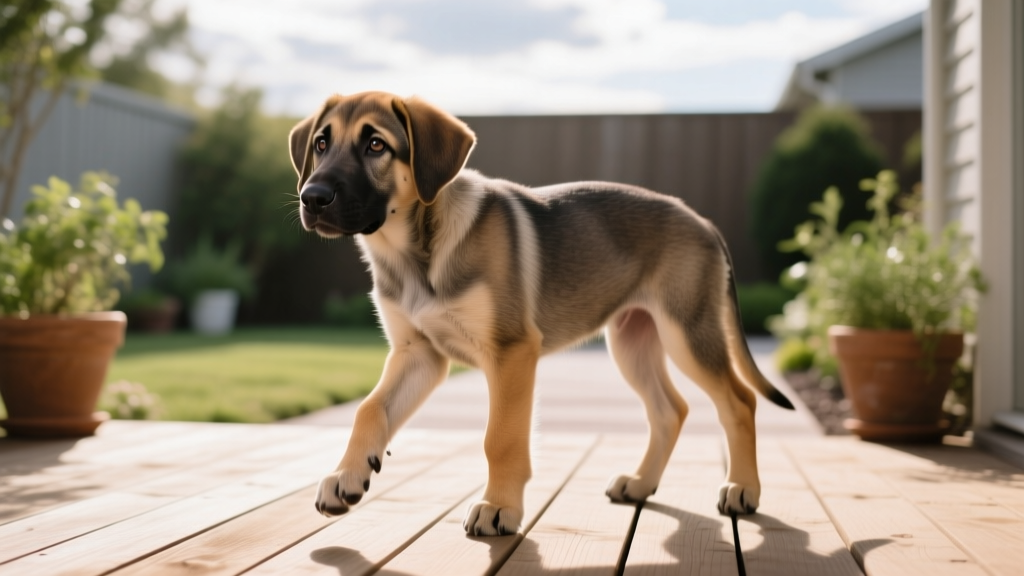
Black Labrador Retriever Puppy Guide: Milestones, Feeding & Training
Complete guide to raising black Labrador Retriever puppies.

Bringing Home Black Labrador Retriever Puppies: What Makes Them Special
If you've decided to welcome one of those irresistible puppies that are black into your family — specifically a Black Labrador Retriever — you're joining millions of owners who've chosen America's most iconic working breed. Black Labs consistently rank among the top three most popular breeds in the US, and for good reason: they're intelligent, eager to please, and remarkably versatile family companions.
But raising a Black Lab puppy requires more than enthusiasm. These are high-energy, mouthy, food-motivated dogs that need structured guidance from day one. This guide gives you the exact timelines, portions, and training frameworks you'll need from 8 weeks through your puppy's first birthday.
When Should I Bring My Black Lab Puppy Home?
The optimal age to bring your Black Labrador puppy home is 8 to 10 weeks. While some breeders release puppies at 8 weeks, many reputable Lab breeders now prefer to keep litters until 9-10 weeks to allow for additional littermate socialization and early neurological stimulation.
Never accept a puppy younger than 8 weeks. The AVMA emphasizes that the critical socialization period (3-14 weeks) requires puppies to remain with their mother and littermates during the earliest weeks for bite inhibition learning and stress resilience development.
Before pickup day, prepare a "puppy-proofed" space: remove electrical cords at floor level, secure toxic houseplants (lilies, sago palms, pothos), and set up a 36-inch wire crate (the adult size your Lab will need — Labs typically reach 55-80 lb / 25-36 kg as adults). Use a crate divider panel so the space grows with your puppy.
Black Lab Puppy Milestones: Week-by-Week Development
Understanding what's developmentally normal at each stage prevents unnecessary panic and helps you set realistic expectations. Here's what to expect from your black-coated Lab puppy:
| Age Range | Expected Weight | Key Milestones | What to Expect |
|---|---|---|---|
| Weeks 4-8 | 4-15 lb (2-7 kg) | Weaning, first social play, baby teeth emerge, startle reflex develops | Puppy learns bite inhibition from littermates; black coat may appear slightly brownish ("rusting") in sunlight — this is normal pigment variation |
| Weeks 8-12 | 15-25 lb (7-11 kg) | Peak socialization window, fear imprint periods begin, name recognition, basic sit/come | Extreme mouthing and nipping; first fear period (8-11 weeks) — avoid traumatic experiences; sleep 18-20 hours/day |
| Weeks 12-16 | 25-40 lb (11-18 kg) | Improved bladder control, leash walking basics, recall strengthening, teething begins | Chewing intensifies dramatically; may seem to "forget" training (normal); testing boundaries; second fear period possible around 14-16 weeks |
| Weeks 16-24 | 40-55 lb (18-25 kg) | Adult teeth emerging, spay/neuter window, advanced obedience, social maturity begins | Peak chewing destruction phase; may show early signs of food resource guarding (address immediately with positive methods); energy levels surge |
| 6-12 months | 55-75 lb (25-34 kg) | Sexual maturity, adolescent rebellion, adult coat fully in, growth plates closing | "Selective hearing" phase; may regress on potty training; needs 60-90 min structured exercise daily; second fear period possible around 6-14 months |
Feeding Your Black Lab Puppy: Exact Portions and Schedule
Black Labrador Retrievers are notoriously food-motivated and prone to rapid weight gain. Overfeeding during puppyhood increases the risk of hip and elbow dysplasia — conditions that affect an estimated 12-15% of Labs according to the Orthopedic Foundation for Animals. Feed a large-breed puppy formula (AAFCO-approved for growth) to control calcium-phosphorus ratios and growth rate.
| Puppy Age | Meals Per Day | Daily Portion (Large-Breed Puppy Kibble) | Calorie Target |
|---|---|---|---|
| 8-12 weeks | 4 meals/day (every 4 hours) | 1.5 - 2 cups total/day | ~600-800 kcal/day |
| 12-16 weeks | 3 meals/day | 2 - 2.75 cups total/day | ~800-1,100 kcal/day |
| 4-6 months | 3 meals/day → transition to 2 | 2.5 - 3.5 cups total/day | ~1,100-1,400 kcal/day |
| 6-12 months | 2 meals/day | 3 - 4 cups total/day | ~1,400-1,700 kcal/day |
Key feeding rules for Black Labs:
- Use a slow-feeder bowl (like the Outward Hound Fun Feeder) from day one — Labs inhale food and are at higher risk for bloat (gastric dilatation-volvulus)
- Never free-feed; Labs will eat until they're sick
- Body Condition Score (BCS) should stay at 4-5/9 — you should feel ribs without pressing hard, and see a waist tuck from above
- Transition to adult food at 12-15 months (not earlier — large breeds need extended growth nutrition)
- Wait 60 minutes after eating before vigorous exercise to reduce bloat risk
Vaccination Schedule for Your Black Lab Puppy
Labrador puppies follow the standard core vaccination protocol, but because Labs are often destined for active outdoor lifestyles (hunting, hiking, swimming), your vet may recommend additional non-core vaccines based on your region and lifestyle.
| Age | Vaccine | What It Protects Against | Estimated Cost |
|---|---|---|---|
| 6-8 weeks | DHPP (1st dose) | Distemper, Hepatitis (Adenovirus), Parainfluenza, Parvovirus | $25-$45 |
| 10-12 weeks | DHPP (2nd dose) + Bordetella | Same as above + Kennel Cough (recommended for puppies attending group classes) | $40-$65 |
| 14-16 weeks | DHPP (3rd dose) + Rabies | Final puppy DHPP booster + legally required Rabies vaccine | $45-$75 |
| 12-16 weeks (lifestyle-dependent) | Leptospirosis (2 doses, 3-4 weeks apart) | Bacterial infection from contaminated water — critical for Labs that will swim in ponds/lakes | $30-$50 per dose |
| 12+ weeks (lifestyle-dependent) | Lyme disease (2 doses, 3-4 weeks apart) | Tick-borne illness — recommended in Northeast, Upper Midwest, and Pacific Northwest | $30-$45 per dose |
According to the AKC's vaccination guidelines, puppies are not considered fully protected until approximately one week after their final DHPP booster at 14-16 weeks. Until then, avoid dog parks, pet store floors, and areas where unknown dogs have eliminated.
Your Black Lab puppy can explore your own yard immediately (if no unknown dogs have access). Public outings in a carrier or stroller are safe from 8 weeks. Structured playdates with fully vaccinated, known dogs are acceptable from 10 weeks. Dog parks and group settings should wait until 1 week after the 16-week DHPP booster — typically around 17 weeks of age.
Socialization Window: The Critical Weeks 3-14 Checklist
The socialization window closes between 12-14 weeks. What your Black Lab puppy experiences (or doesn't experience) during this period permanently shapes their adult temperament. Labs are generally confident and outgoing, but undersocialized Labs can develop fear-based reactivity, separation anxiety, or hyper-excitability.
Aim for 100 positive exposures by 16 weeks. Here's your structured checklist:
- Surfaces (10+): Grass, gravel, sand, wet pavement, metal grates, carpet, tile, wood floors, tarps, wobble boards
- People types (15+): Children (supervised), elderly, people in hats, sunglasses, hoodies, uniforms, wheelchairs, crutches, tall/deep-voiced people
- Sounds (15+): Vacuum, thunderstorms (play recordings at low volume), fireworks recordings, doorbell, car horns, construction noise, clapping, dropping pots
- Objects (10+): Umbrellas opening, balloons, plastic bags blowing, bicycles, skateboards, strollers, garbage trucks
- Animals (5+): Other vaccinated puppies, calm adult dogs, cats (if available), livestock (if rural)
- Handling exercises (10+): Paw touching, ear inspection, mouth opening, nail clipping practice, being held on side, gentle restraint, towel wrapping
- Locations (10+): Vet clinic (happy visits only), parking lots, quiet sidewalks, friends' homes, car rides, outdoor café patios, hardware stores (pet-friendly)
- Body equipment: Harness introduction, collar, leash pressure, gentle head halter, booties, coat/sweater
Rule: Every new experience must be paired with high-value treats (boiled chicken, cheese, commercial training treats). If your puppy shows fear, increase distance and decrease intensity — never force exposure.
Potty Training Your Black Lab Puppy: Realistic Timeline
Black Labs are generally quick to house-train thanks to their eagerness to please and food motivation. However, "fully potty trained" means different things at different ages:
| Age | Bladder Capacity | Expected Accident Frequency | Outing Schedule |
|---|---|---|---|
| 8-10 weeks | 30-45 minutes | 2-4 accidents/day is normal | Every 30-45 min during day, every 2-3 hours overnight |
| 10-14 weeks | 1-1.5 hours | 1-2 accidents/day | Every 60-90 min, 2-3 overnight trips |
| 14-20 weeks | 2-3 hours | 0-1 accidents/week | Every 2 hours, 1 overnight trip (if needed) |
| 5-6 months | 4-5 hours | Rare accidents | Every 3-4 hours, sleeping through night (8 hours) |
| 6-12 months | 6-8 hours | Fully trained (occasional regression possible) | Every 4-6 hours, reliable overnight |
When will my puppy be fully potty trained? Most Black Labs achieve reliable house training between 5-7 months with consistent scheduling. However, adolescent regression around 6-9 months is common — don't panic if accidents resume temporarily. Return to more frequent outings and higher-value outdoor rewards.
Troubleshooting tips:
- Submissive/excitement urination: Common in Labs under 6 months. Don't punish — greet calmly, take outside immediately upon arrival, avoid direct eye contact during greetings
- Crate accidents overnight: If your puppy soils the crate, the crate may be too large (use divider), or the last water offering was too close to bedtime (remove water 90 minutes before sleep)
- Marking behavior (6+ months): Intact males may begin lifting legs indoors — spay/neuter reduces this behavior in ~80% of cases, but consult your vet on optimal timing for large breeds (often 12-18 months for Labs to allow growth plate closure)
Crate Training Progression and Time Limits
Black Labs generally adapt well to crate training because they're den-oriented and food-motivated. Use the crate as a safe retreat, never as punishment.
| Puppy Age | Maximum Crate Time (Daytime) | Maximum Crate Time (Overnight) |
|---|---|---|
| 8-10 weeks | 1-2 hours | 2-3 hours (set alarm) |
| 11-14 weeks | 2-3 hours | 3-4 hours |
| 15-16 weeks | 3-4 hours | 5-6 hours |
| 4-6 months | 4-5 hours | 7-8 hours |
| 6-12 months | 5-6 hours | 8-9 hours |
Crate training progression steps:
- Week 1 (8-9 weeks): Leave crate door open, feed all meals inside, toss high-value treats in, introduce cue word ("kennel" or "crate"). Puppy should voluntarily enter for treats within 1-3 days.
- Week 2-3: Close door during meals, then open immediately after. Begin 5-10 minute closed-door sessions while you're visible. Give a frozen Kong stuffed with puppy-safe peanut butter (xylitol-free) or plain yogurt.
- Week 4-6: Extend to 20-30 minutes with you out of sight. Practice leaving and returning calmly — no dramatic departures or greetings.
- Month 3+: Gradually extend duration. If puppy whines, wait for 10-15 seconds of silence before releasing (prevents reinforcing whining). If whining persists beyond 20 minutes, puppy likely needs a potty break — take out, then return to crate.
Teething Timeline and Safe Chew Strategies
Black Lab puppies are among the most orally fixated breeds — they explore the world with their mouths, and teething amplifies this drive significantly.
Teething milestones:
- 3-4 weeks: Deciduous (baby) teeth begin erupting — 28 total
- 8-10 weeks: All baby teeth in; peak nipping phase begins
- 12-16 weeks: Baby incisors begin loosening; you may find tiny teeth on the floor (many puppies swallow them — this is harmless)
- 4-5 months: Canines and premolars shedding; bleeding gums are normal; chewing intensity peaks
- 5-7 months: All 42 adult teeth should be in place; if any baby teeth remain alongside adult teeth ("retained deciduous teeth"), your vet should extract them at spay/neuter
Safe chew recommendations by age:
- 8-12 weeks: Frozen washcloths (wet, twisted, frozen), rubber puppy teething rings (KONG Puppy, Nylabone Puppy), chilled carrot sticks
- 3-5 months: Frozen KONG Classic stuffed with soaked kibble and plain pumpkin, Benebone Wishbone (puppy formula), yak cheese chews (supervised), bully sticks (supervised, remove when small enough to swallow)
- 5-7 months: Standard KONG Classic (black rubber for power chewers — most Labs need the "Extreme" version by adulthood), Nylabone Dura Chew, deer antler splits (split, not whole — whole antlers can fracture carnassial teeth)
Common Black Lab Puppy Problems and Solutions
Every breed has its challenges. Here are the problems most specific to Black Labrador puppies and how to address them using positive reinforcement methods:
Puppy Biting and Nipping
How do I stop puppy biting/nipping? Lab puppies mouth everything — hands, ankles, clothing. This is normal breed behavior, not aggression. Use this protocol:
- When teeth touch skin, say "Oops!" in a neutral tone and immediately withdraw attention (stand up, fold arms, look away) for 10-15 seconds
- Redirect to an appropriate chew toy — reward chewing the toy with praise and engagement
- If biting continues, implement a brief "time-out" — step over a baby gate for 30 seconds, then return
- Teach "Leave it" and "Drop it" using treat-trade games starting at 10 weeks
- Ensure adequate physical exercise (5 minutes per month of age, twice daily) and mental enrichment (snuffle mats, puzzle feeders, training sessions)
Mouthing typically decreases significantly by 5-6 months as adult teeth come in and impulse control develops. If biting breaks skin or seems fear-based after 4 months, consult a certified professional dog trainer (CPDT-KA) or veterinary behaviorist.
Whining and Vocalization
Labs are moderate vocalizers. Whining in the crate during the first 2-3 weeks is normal. Address it by:
- Ensuring puppy has eliminated before crating
- Providing a food-stuffed enrichment toy (frozen KONG)
- Covering the crate with a breathable blanket to reduce visual stimulation
- Placing crate near your bed for the first 2-3 weeks, then gradually moving to the desired permanent location
- Never releasing puppy from crate while actively whining (reinforces the behavior)
Destructive Chewing
Black Labs can be power chewers well into adulthood. Management strategies:
- Provide 5-7 approved chew options at all times, rotated weekly to maintain novelty
- Use bitter apple spray on furniture legs and baseboards during the 3-8 month peak chewing window
- Restrict unsupervised house access using baby gates or an exercise pen until chewing habits are established (typically 12-18 months)
- Ensure 60-90 minutes of daily physical and mental exercise for puppies over 6 months — under-exercised Labs destroy homes
First-Year Cost Breakdown for a Black Lab Puppy
Budgeting accurately prevents financial stress. Here's a realistic first-year cost range for a Black Labrador Retriever puppy in 2026:
| Category | Low Estimate | Average | High Estimate |
|---|---|---|---|
| Puppy purchase (responsible breeder, health-tested parents) | $1,200 | $1,800 | $3,000+ |
| Veterinary care (vaccines, spay/neuter, wellness exams, heartworm/flea prevention) | $600 | $900 | $1,500 |
| Food (large-breed puppy formula → adult transition, 12 months) | $480 | $720 | $1,100 |
| Supplies (crate, bed, leash, harness, bowls, gates, toys, chews, grooming tools) | $300 | $500 | $800 |
| Training (puppy kindergarten + basic obedience classes) | $200 | $400 | $800 |
| Pet insurance (accident + illness, annual premium) | $480 | $720 | $1,100 |
| TOTAL FIRST YEAR | $3,260 | $5,040 | $8,300+ |
Cost-saving tips: Enroll in pet insurance at 8 weeks (before any conditions are documented — pre-existing conditions are universally excluded). Compare providers like Trupanion, Healthy Paws, and Nationwide. A $25-$50/month premium can save thousands if your Lab develops hip dysplasia (surgical correction: $3,000-$7,000 per hip) or needs emergency bloat surgery ($3,000-$7,000).
Frequently Asked Questions About Black Lab Puppies
Are black Lab puppies different in temperament from yellow or chocolate Labs?
Coat color alone does not determine temperament. However, because black is the dominant color gene in Labs, black puppies appear in litters from all color pairings. Some breeders specializing in field/trial lines (which historically favor black) may produce puppies with higher drive and energy. English/show-bred Labs (any color) tend to be calmer. Always evaluate the individual puppy's temperament and the parents' behavior rather than selecting by color.
How often should I feed my 10-week-old Black Lab puppy?
At 10 weeks, feed 4 meals per day, spaced approximately 4 hours apart (e.g., 7 AM, 11 AM, 3 PM, 7 PM). Each meal should be approximately 0.4-0.5 cups of large-breed puppy kibble. Remove the bowl after 15-20 minutes even if food remains — this establishes a feeding routine and helps with potty training predictability.
Will my black Lab puppy's coat change color?
Some black Lab puppies are born with a slightly brownish or "rusty" cast to their coat, especially visible in direct sunlight. This typically deepens to true black by 6-12 months as the adult coat comes in. A true black Lab will have black skin pigment (nose, eye rims, paw pads). If a black puppy carries the recessive chocolate gene, the coat remains black but may show subtle brownish highlights. This is cosmetic only and doesn't affect health.
How much exercise does a Black Lab puppy need?
Follow the "5 minutes per month of age, twice daily" rule for structured exercise: a 4-month-old puppy gets 20-minute walks, twice daily. Unstructured free play in a safe yard can be longer. Avoid forced running, jumping from heights, or repetitive fetch on hard surfaces until growth plates close (12-18 months for Labs) to protect developing joints. Mental exercise (training sessions, puzzle toys, scent games) tires a Lab puppy as effectively as physical exercise.
When should I start formal training classes?
Enroll in a puppy kindergarten class as soon as your puppy has had their second DHPP vaccine (typically at 10-12 weeks). The AVMA supports early socialization classes for puppies as young as 7-8 weeks, noting that the disease risk in well-managed class environments is far lower than the behavioral risk of missing the socialization window. Look for classes that require proof of age-appropriate vaccination and use positive reinforcement methods exclusively.
What health tests should my Black Lab breeder have performed?
Responsible breeders of Labrador Retrievers should provide OFA (or PennHIP) hip and elbow scores, OFA eye clearance from a veterinary ophthalmologist (updated annually), and genetic testing for Exercise-Induced Collapse (EIC), Centronuclear Myopathy (CNM), and Progressive Retinal Atrophy (PRA-prcd). Ask for documentation — not verbal assurances. Both parents should be cleared. The AKC's Breeder of Merit program and the Labrador Retriever Club's breeder referral are good starting points for finding tested stock.
Beth Carrasco
All our authors care for dogs every day — read more of their work on the authors page.