Black and Tan Coonhound Puppies: Complete Puppy Care & Training Guide
Everything you need to know about raising black and tan coonhound puppies — milestones, feeding, potty training, vaccines, and first-year costs.

Bringing Home Black and Tan Coonhound Puppies: What to Expect
Black and Tan Coonhounds are American originals — scenthounds bred to track raccoons through Appalachian forests all night and bark loud enough for hunters to follow. That heritage shapes everything about raising one as a puppy: the nose-driven curiosity, the booming bay, the independent streak, and the deep need to sniff everything within a quarter-mile radius.
If you're preparing to bring home black and tan coonhound puppies, this guide covers the first year of life with breed-specific timelines, feeding portions, training milestones, and realistic cost expectations. Coonhound puppies mature slower than many breeds — expect puppy behaviors well into the second year — so patience and a structured plan are essential.
When Should I Bring My Black and Tan Coonhound Puppy Home?
The ideal age to bring your puppy home is 8 to 10 weeks. While some breeders release puppies at 8 weeks, coonhound breeders working with hunting lines sometimes hold puppies until 10 weeks to evaluate scenting drive and temperament more accurately. Do not accept a puppy younger than 8 weeks — early separation from the litter can cause bite inhibition problems and social deficits that last a lifetime.
If adopting from a rescue, puppies may arrive at varying ages. Adjust your socialization and training plan to match the puppy's developmental stage rather than chronological age alone.
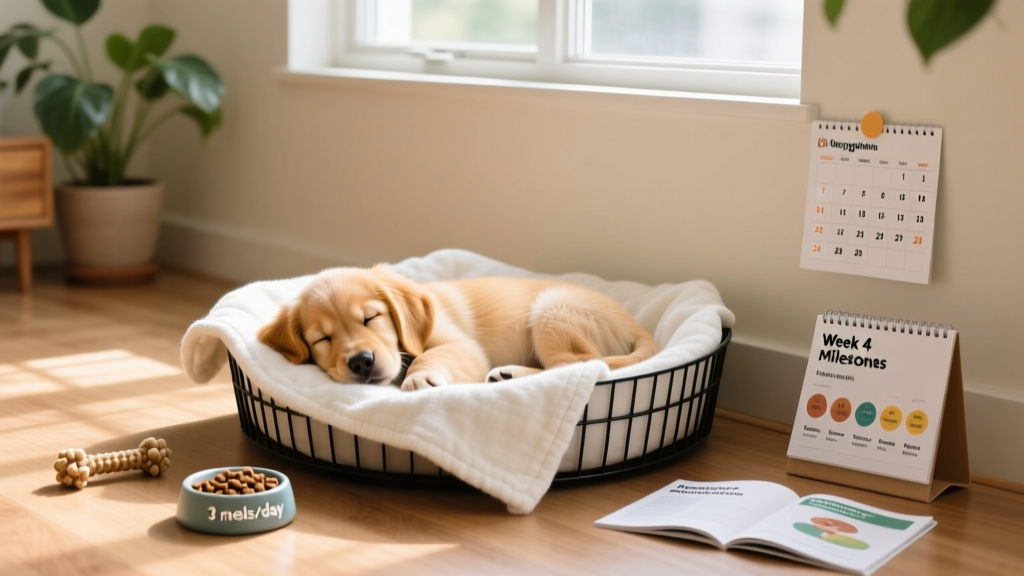
Black and Tan Coonhound Puppy Milestones by Age
| Age Range | Weight Range | Key Milestones & Expectations |
|---|---|---|
| Weeks 4–8 | 5–12 lb (2.3–5.4 kg) | Weaning onto solid food; littermate social play; first deworming; eyes and ears fully functional; start of fear imprint period (week 8). Puppies learn bite inhibition from siblings. |
| Weeks 8–12 | 12–22 lb (5.4–10 kg) | Primary socialization window opens. Fear imprint period (8–11 weeks) — negative experiences can create lasting phobias. Crate training begins. First DHPP vaccine. Expect frequent potty breaks (every 1–2 hours). |
| Weeks 12–16 | 22–35 lb (10–15.9 kg) | Socialization window begins closing (week 14). Puppy can explore controlled outdoor environments after second DHPP. Scent-tracking behavior emerges — puppy follows nose obsessively. Chew intensity increases. |
| Weeks 16–24 | 35–55 lb (15.9–24.9 kg) | Teething peaks (baby teeth fall, adult teeth erupt). Baying and howling vocalizations develop. Leash training with long lines in safe areas begins. Potty training consistency should yield reliable results. Fear period may reappear around 6 months. |
| 6–12 Months | 55–75+ lb (24.9–34+ kg) | Adolescent testing of boundaries. High prey drive and scent distraction make recall unreliable off-leash. Spay/neuter typically performed around 6–9 months (discuss timing with your vet). Energy remains high — structured exercise and nose work essential. Growth plates still closing; avoid forced running on hard surfaces. |
Black and Tan Coonhounds reach adult size (males: 50–75 lb / 22.7–34 kg, females: 40–65 lb / 18.1–29.5 kg) by around 18–24 months, but mental maturity — especially impulse control around scents — may take up to 3 years.
Feeding Schedule: Exact Portions by Age and Weight
Coonhound puppies grow rapidly and need a diet formulated for large-breed puppies to support controlled bone growth. Look for an AAFCO-complete large-breed puppy formula with calcium levels between 1.0–1.5% on a dry matter basis. Feeding too much or using a standard puppy formula can accelerate growth and increase hip dysplasia risk.
| Age | Meals per Day | Approximate Daily Amount (Large-Breed Puppy Kibble) | Notes |
|---|---|---|---|
| 8–12 weeks | 4 meals | 1.5–2.5 cups/day (split into 4) | Moisten kibble with warm water if needed. Monitor body condition — ribs should be palpable but not visible. |
| 12–16 weeks | 3 meals | 2.5–3.5 cups/day (split into 3) | Transition to dry kibble. Adjust based on growth rate and vet-recommended body condition score (BCS 4–5/9). |
| 16–24 weeks | 3 meals | 3–4.5 cups/day (split into 3) | Growth rate peaks. Do not free-feed — coonhounds will overeat. Remove food after 15–20 minutes per meal. |
| 6–12 months | 2 meals | 3.5–5 cups/day (split into 2) | Transition to 2 meals at 6 months. Switch to adult large-breed formula around 12 months (consult your vet). |
Brand examples for large-breed puppy formulas: Purina Pro Plan Large Breed Puppy, Royal Canin Large Puppy, Hill's Science Diet Large Breed Puppy. Expect to spend $55–$85 per 30-lb bag. A coonhound puppy will consume roughly $40–$60/month in food during the first year.
Vaccination Schedule for Black and Tan Coonhound Puppies
Your puppy's vaccination protocol should follow AVMA and AAHA canine vaccination guidelines. The exact schedule may vary by your veterinarian's assessment of local disease risk, but here is the standard core protocol:
| Age | Vaccine(s) | Purpose |
|---|---|---|
| 6–8 weeks | DHPP (Distemper, Hepatitis/Adenovirus, Parainfluenza, Parvovirus) — 1st dose | Core protection; maternal antibodies still present but waning |
| 10–12 weeks | DHPP — 2nd dose; Bordetella (optional, recommended if attending puppy classes) | Booster to overcome maternal antibody interference; kennel cough protection |
| 14–16 weeks | DHPP — 3rd (final puppy) dose; Rabies (required by law in most states) | Final core puppy series; rabies legally mandated — timing varies by state (12–16 weeks typical) |
| 12–16 months | DHPP booster; Rabies booster (1-year or 3-year depending on vaccine type) | First adult booster to establish long-term immunity |
Non-core vaccines to discuss with your vet: Leptospirosis (relevant for coonhounds that will be in wetlands or wooded areas), Lyme disease (if in a tick-endemic region), and Canine Influenza (H3N2/H3N8) if your puppy will attend daycare or group classes.
Estimated vaccine costs: $25–$45 per individual vaccine visit, or $100–$200 for a puppy vaccine package at most clinics. Rabies vaccine: $15–$30.
Socialization Window (Weeks 3–14): Your Exposure Checklist
The critical socialization window for puppies closes between 12–14 weeks. For black and tan coonhound puppies, this window is especially important because the breed's independent nature and high prey drive can become problematic without early positive exposure. You are racing the clock — prioritize quality positive experiences over quantity.
Important safety note: Before your puppy completes the DHPP series, avoid dog parks, pet store floors, and areas with unknown dog traffic. Carry your puppy or use a stroller for outings. Enroll in a puppy kindergarten class that requires proof of at least one DHPP vaccine — the risk of behavioral problems from poor socialization outweighs the minimal disease risk in controlled environments, per the American Veterinary Society of Animal Behavior.
- ✅ Varied ground surfaces: gravel, grass, mud, wet pavement, metal grates (builds confidence for fieldwork)
- ✅ Loud and sudden noises: thunderstorm recordings (low volume, paired with treats), gunshots at extreme distance (if hunting-line puppy), fireworks audio, vacuum cleaners
- ✅ Other animals at safe distance: cats, livestock, wildlife sounds — coonhounds must learn to redirect from prey triggers on cue
- ✅ Scent enrichment: hide treats in snuffle mats, let puppy track a dragged treat trail on grass — channel the nose-drive constructively
- ✅ Handling exercises: ear inspection (coonhounds are prone to ear infections due to long, pendulous ears), paw handling, mouth examination, nail trimming practice
- ✅ People variety: children, people wearing hats/sunglasses, people using mobility aids, delivery workers
- ✅ Alone-time training: start with 5-minute separations in the crate, gradually increasing — coonhounds are pack-oriented and prone to separation distress
- ✅ Car rides: short, positive trips ending in fun (park, walk) not just vet visits
Potty Training Timeline: Realistic Expectations for Coonhound Puppies
Black and Tan Coonhound puppies typically achieve reliable house training between 4 and 6 months of age, though some individuals — especially those with strong scenting drives who get distracted outdoors — may take until 7–8 months. "Trained in 3 days" claims are unrealistic for any breed, and especially for a scenthound puppy whose nose overrides bladder awareness.
Core schedule: Take your puppy outside immediately after waking, after every meal, after play sessions, and before crating. For an 8–12 week old, that means outings every 1–2 hours during the day. Use a consistent verbal cue ("go potty") and reward with a high-value treat immediately after elimination outdoors — not after coming back inside.
| Age | Max Crate Time (Hours) | Daytime Potty Breaks | Nighttime Breaks |
|---|---|---|---|
| 8–12 weeks | 2 hours max | Every 1–2 hours | 1–2 breaks (set alarm for 2–3 hours after bedtime) |
| 12–16 weeks | 3 hours max | Every 2–3 hours | 1 break (around 3–4 hours after bedtime) |
| 4–6 months | 4 hours max | Every 3–4 hours | Most can hold through the night (8 hours) |
| 6–12 months | 5–6 hours max | Every 4–6 hours | Sleeping through the night reliably |
Troubleshooting coonhound-specific potty issues: If your puppy sniffs obsessively and forgets to eliminate, take them to a low-distraction spot on a short leash. Stand still and wait. Do not walk around — let the puppy circle and settle. If nothing happens in 5 minutes, go inside, crate for 10 minutes, and try again. This prevents the puppy from learning that outdoor time = playtime instead of potty time.
Crate Training Progression and Time Limits
Crate training is essential for coonhound puppies. The breed's curiosity and powerful nose mean an unsupervised puppy will investigate — and likely destroy — anything within reach. A properly introduced crate also becomes a safe retreat during thunderstorms (coonhounds can be noise-sensitive) and a management tool during the adolescent chewing phase.
Progression plan:
- Week 1 (8–9 weeks): Leave the crate door open. Feed meals inside. Toss high-value treats in for the puppy to retrieve. Nap in the crate with the door closed while you sit nearby. Goal: puppy enters voluntarily.
- Weeks 2–3: Close the door for 5–10 minutes while you remain in the room. Gradually step out of sight for 1–2 minutes. Return before the puppy cries. Build duration, not distance, first.
- Weeks 4–6: Puppy naps in closed crate for 30–60 minutes. You leave the room for short periods. Begin crating at night near your bed.
- Months 3–4: Crate for up to 3 hours during the day. Move crate to a common area. Puppy should settle quietly within 5–10 minutes of crating.
- Months 5–6: Up to 4 hours during the day. Begin testing short periods of freedom in a puppy-proofed room to assess readiness for less confinement.
Absolute time limits: No puppy under 6 months should be crated for more than their age in months plus one hour (e.g., a 3-month-old = 4 hours maximum). Coonhound puppies are active and need adequate exercise outside the crate — a tired puppy is a quiet crated puppy. Aim for 5 minutes of structured exercise per month of age, twice daily (e.g., a 4-month-old gets 20-minute walks).
Teething Timeline (3–6 Months): Relief Strategies and Safe Chews
Coonhound puppies begin losing baby teeth around 12–16 weeks, with adult teeth fully erupted by approximately 6 months. During this window, chewing intensity will peak. Coonhounds are powerful chewers even as puppies — a 4-month-old can destroy soft rubber toys and cheap plush items quickly, creating choking and intestinal blockage risks.
Safe chew recommendations by stage:
- 12–16 weeks: Frozen wet washcloths (twist and freeze), rubber puppy teething rings (Kong Puppy, Nylabone Puppy), chilled carrot sticks (supervised only)
- 16–24 weeks: Classic Kong (black, stuffed with soaked kibble and frozen), Benebone puppy chew, yak milk chews (supervised — remove when small enough to swallow)
- 5–6 months: Transition to adult-strength rubber toys. Avoid rawhide (choking/blockage risk), cooked bones (splintering), and antlers (tooth fracture risk for powerful chewers)
Common Black and Tan Coonhound Puppy Problems and Solutions
Excessive Biting and Nipping
Coonhound puppies explore the world with their mouths, and their playful littermate behavior carries over into the home. When your puppy nips, immediately stop all movement and interaction — stand still, cross your arms, and wait 10–15 seconds. Resume play only when the puppy is calm. Redirect biting to an appropriate chew toy. Never hit, hold the mouth shut, or use alpha rolls — these methods increase fear and can escalate biting. If nipping persists past 16 weeks, consult a certified positive-reinforcement trainer (look for CPDT-KA or KPA-CTP credentials).
Baying, Howling, and Vocalization
Coonhounds are vocal dogs — it's bred into them. Puppy baying may start as early as 10–12 weeks when they encounter an interesting scent. Do not punish vocalization; instead, teach a "quiet" cue by rewarding silence. If howling occurs when left alone, this signals separation distress — increase alone-time training gradually and consider a white noise machine or calming pheromone diffuser (Adaptil). For persistent separation anxiety, consult your veterinarian about a behavior modification plan.
Scent Obsession and Leash Pulling
By 12–16 weeks, your coonhound puppy will put their nose down and pull toward smells. Start leash training early with a front-clip harness (such as the Ruffwear Front Range or 2 Hounds Design Freedom Harness). Reward the puppy frequently for walking with a loose leash. Practice "find it" games to channel the scent drive into structured activities. Never use prong collars, choke chains, or shock collars — these suppress behavior without addressing the underlying motivation and can damage your relationship with a sensitive breed.
Ear Infections
The long, pendulous ears of black and tan coonhounds trap moisture and debris, making ear infections common even in puppies. Check ears weekly starting at 8 weeks. Clean with a veterinarian-recommended ear cleanser (e.g., Epi-Otic Advanced, TrizULTRA) when you see wax buildup. Signs of infection include head shaking, scratching, redness, odor, or dark discharge — see your vet promptly if these appear.
First-Year Cost Breakdown for a Black and Tan Coonhound Puppy
| Category | Estimated Cost Range | Details |
|---|---|---|
| Puppy Purchase/Adoption | $600–$1,500 (breeder) / $150–$400 (rescue) | Reputable breeders health-test parents and provide guarantees. Rescue fees include initial vetting. |
| Veterinary Care | $500–$900 | Vaccine series ($200–$400), spay/neuter ($200–$500), deworming, flea/tick/heartworm prevention ($150–$250/year), wellness exams. |
| Food | $480–$720 | $40–$60/month on large-breed puppy formula, transitioning to adult food at 12 months. |
| Supplies | $250–$500 | Crate ($50–$120), harness and leash ($30–$60), bowls, chew toys, grooming supplies, enzymatic cleaner, baby gates, long line (15–30 ft for scent work). |
| Training | $150–$500 | Puppy kindergarten ($100–$200 for 6-week course), optional private sessions ($75–$150/session) for leash reactivity or recall work. |
| Pet Insurance | $360–$600/year | $30–$50/month for accident/illness coverage. Enroll at 8 weeks to avoid pre-existing condition exclusions. Companies like Trupanion, Healthy Paws, or Lemonade are popular options. |
| Total First Year | $2,340–$4,720 | Excludes emergency vet care. Budget an additional $500–$1,500 emergency fund or rely on pet insurance. |
Frequently Asked Questions About Black and Tan Coonhound Puppies
When can my puppy go outside and meet other dogs?
Your puppy can explore your own yard (if no unknown dogs have access) immediately after coming home. For public spaces and meeting other dogs, wait until at least 7 days after the second DHPP vaccine (around 12–13 weeks) for controlled, low-risk environments like puppy classes. Full outdoor freedom — dog parks, hiking trails — should wait until 7 days after the final DHPP at 16 weeks. Avoid dog parks entirely until 6 months minimum; the unpredictable environment poses both disease and behavioral risks for a young scenthound.
How often should I feed my puppy at each age?
At 8–12 weeks, feed 4 meals per day. At 12–16 weeks, reduce to 3 meals. At 6 months, transition to 2 meals per day. See the detailed feeding schedule table above for exact portion guidelines based on age and kibble caloric density. Always follow the feeding guide on your specific food's packaging and adjust based on your puppy's body condition score — your vet can assess this at each wellness visit.
How do I stop my coonhound puppy from biting and nipping?
Use the "stop and redirect" method: freeze all movement when bitten, wait for calm, then redirect to a toy. Consistency from every household member is critical. Provide ample appropriate chews (especially during teething at 3–6 months). Ensure your puppy gets adequate physical exercise and mental enrichment — a bored coonhound puppy will mouth more. If biting causes skin breaks or persists past 5 months, consult a certified force-free trainer.
When will my puppy be fully potty trained?
Most black and tan coonhound puppies are reliably house-trained by 5–6 months with a consistent schedule. Some individuals take until 7–8 months, particularly if they are easily distracted by scents outdoors. Accidents after this age warrant a veterinary check to rule out urinary tract infections. Never punish accidents — clean with an enzymatic cleaner (Nature's Miracle or Rocco & Roxie) and review your supervision and outing frequency.
What vaccines does my black and tan coonhound puppy need and when?
The core puppy vaccine series is DHPP at 6–8 weeks, 10–12 weeks, and 14–16 weeks, plus a rabies vaccine at 14–16 weeks (timing varies by state law). Non-core vaccines like Bordetella, Leptospirosis, and Lyme may be recommended based on your puppy's lifestyle and geographic location. Consult your veterinarian to build a protocol tailored to your dog's risk profile.
Should I enroll my coonhound puppy in training classes?
Yes. Puppy kindergarten (starting at 10–12 weeks, after at least one DHPP) provides critical socialization and foundational skills. For a breed as independent and scent-driven as the Black and Tan Coonhound, early positive-reinforcement training builds communication patterns that make adolescent and adult training far easier. Look for classes that use treats, play, and force-free methods — avoid any trainer who recommends dominance-based techniques, prong collars, or electronic collars for a puppy.
Tom Renshaw
All our authors care for dogs every day — read more of their work on the authors page.