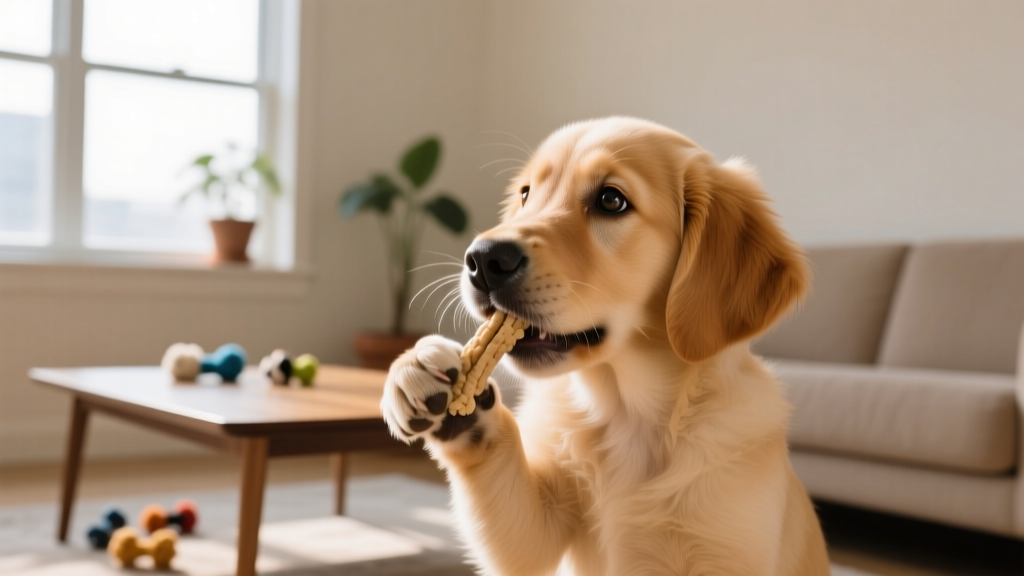
Best Puppy Names & Complete Golden Retriever Puppy Guide
Discover the best puppy names for Golden Retrievers plus a complete week-by-week puppy care guide covering feeding, training, vaccines, and first-year costs.

Choosing the Best Puppy Names for Your Golden Retriever
Bringing home a Golden Retriever puppy is equal parts thrilling and overwhelming. Before you tackle potty training schedules and vaccination timelines, there's one delightful decision that sets the tone for everything: picking the best puppy names that suit your new companion. Golden Retrievers, with their warm amber coats and eager-to-please personalities, inspire names that reflect their sunny disposition — or contrast it with something unexpectedly dignified.
According to AKC naming trend data, the most popular Golden Retriever names consistently include nature-inspired choices like Daisy, Cooper, and Willow, alongside classic human names like Charlie, Max, and Bella. But the best puppy names for your Golden should reflect more than popularity — they should be easy to call across a dog park (two syllables works best for recall training), distinct from common command words, and fitting for the dog who'll grow from a 10-pound fluffball into a 65-pound athletic adult.
- Nature-Inspired: River, Aspen, Cedar, Maple, Sunny, Meadow
- Classic & Friendly: Cooper, Daisy, Tucker, Sadie, Oliver, Molly
- Dignified & Regal: Winston, Duchess, Bentley, Athena, Sterling
- Food-Inspired (Popular for Goldens!): Biscuit, Honey, Cinnamon, Waffles, Peanut
- Adventure-Themed: Scout, Ranger, Atlas, Journey, Kodiak
Pro tip: Test your top 3 names by calling them in an excited voice. If it feels natural and your puppy perks up (even at 8 weeks, puppies orient to their name within days), you've found a winner.
Once you've settled on a name, it's time to prepare for the real work ahead. This guide walks you through every critical milestone of your Golden Retriever's first year — the feeding portions, vaccination windows, socialization deadlines, and budget realities that new owners often discover too late.
Golden Retriever Puppy Milestones: Week by Week
Golden Retrievers mature more slowly than many breeds, both physically and mentally. While a Border Collie might hit behavioral milestones faster, Goldens retain their puppy exuberance well into their second year. Understanding what's normal at each stage prevents unnecessary panic and helps you set realistic expectations.
| Age Range | Weight (Approx.) | Key Milestones | What to Expect |
|---|---|---|---|
| 4–8 weeks | 5–15 lb / 2–7 kg | Weaning, litter socialization, first deworming | Learning bite inhibition from littermates, transitioning to solid food, eyes and ears fully functional. Still with breeder — this is NOT the time to bring puppy home. |
| 8–12 weeks | 15–25 lb / 7–11 kg | Going home, first vaccines, crate training begins, name recognition | Peak fear period (8–10 weeks). Puppy may startle easily. Sleeps 18–20 hours/day. Biting and mouthing are intense. Bladder control: ~1 hour per month of age. |
| 12–16 weeks | 25–35 lb / 11–16 kg | Second and third vaccine rounds, socialization window closing, basic commands | Confidence building. Can hold bladder 2–3 hours. Starts testing boundaries. Chewing escalates as baby teeth loosen. Responds to name and sits for treats. |
| 16–24 weeks (4–6 months) | 35–50 lb / 16–23 kg | Teething peak, spay/neuter window, reliable recall foundation | Adult teeth erupting — destructive chewing peaks. May regress on potty training. Second fear period possible around 6 months. Growth plates still open — limit forced exercise. |
| 6–12 months | 50–65 lb / 23–29 kg | Sexual maturity, adult coat comes in, adolescent energy surge | Looks like an adult but acts like a teenager. May "forget" training. Males begin marking. Females may have first heat cycle (if intact). Energy and mouthiness persist longer than most breeds. |
Feeding Schedule: Exact Portions by Age and Weight
Golden Retrievers are notorious food-motivated dogs, which makes portion control critical. Overfeeding a Golden puppy accelerates growth and significantly increases the risk of hip dysplasia and elbow dysplasia — conditions the breed is already genetically predisposed to. A Merck Veterinary Manual review confirms that keeping large-breed puppies lean during growth reduces orthopedic disease incidence by up to 25%.
Feed a large-breed puppy formula (look for the AAFCO statement specifying "growth" or "all life stages" with large-breed growth testing). These formulas have controlled calcium-to-phosphorus ratios (1.0:1 to 1.5:1) and moderate calorie density to prevent rapid skeletal growth.
| Puppy Age | Meals Per Day | Daily Amount (Large-Breed Puppy Kibble) | Calories/Day (Approx.) |
|---|---|---|---|
| 8–12 weeks | 4 meals | 1.5–2 cups total | 600–800 kcal |
| 3–4 months | 3 meals | 2–2.75 cups total | 800–1,100 kcal |
| 5–6 months | 2–3 meals | 2.5–3.5 cups total | 1,100–1,400 kcal |
| 7–12 months | 2 meals | 3–4 cups total | 1,300–1,700 kcal |
Body Condition Score (BCS) check: You should be able to feel your puppy's ribs without pressing hard, and see a visible waist when looking from above. If ribs are hard to find, reduce portions by 10%. If ribs are visible, increase by 10%. Your vet will assess BCS at every wellness visit — use those check-ins to calibrate.
Recommended brands for large-breed puppies: Purina Pro Plan Large Breed Puppy, Royal Canin Golden Retriever Puppy, Hill's Science Diet Large Breed Puppy, or Fromm Gold Large Breed Puppy. Expect to pay $55–$85 per 30-lb bag in 2026.
Vaccination Schedule: What Your Golden Retriever Needs and When
The AVMA vaccination guidelines and the AAHA Canine Vaccination Guidelines provide the framework your veterinarian will follow. Golden Retrievers receive the same core vaccines as all puppies, but their large size means they may be more prone to post-vaccine soreness — splitting doses across visits (rather than combining everything in one appointment) can reduce adverse reactions.
| Age | Vaccines Administered | Notes |
|---|---|---|
| 6–8 weeks | DHPP (Distemper, Hepatitis/Adenovirus, Parainfluenza, Parvovirus) — Dose 1 | Usually given by breeder. Maternal antibodies may still partially protect. |
| 10–12 weeks | DHPP — Dose 2; Bordetella (optional, based on lifestyle) | Bordetella recommended if attending puppy classes or visiting dog parks later. |
| 14–16 weeks | DHPP — Dose 3 (final puppy booster); Rabies (required by law) | This final DHPP is critical — maternal antibodies have waned by this age. Full protection takes 1–2 weeks after this dose. |
| 12–16 months | DHPP booster; Rabies booster (1-year or 3-year, per local law) | After this, DHPP and Rabies typically move to 3-year intervals. |
Optional/Lifestyle vaccines to discuss with your vet: Leptospirosis (recommended in most US regions, especially if your Golden will swim in ponds or lakes — a breed-typical activity), Lyme disease (tick-endemic areas), and Canine Influenza (H3N2/H3N8, if boarding or in outbreak regions).
Cost expectation: Each puppy vaccine visit typically costs $75–$150 depending on your region and clinic type. Budget $300–$500 total for the full puppy vaccination series in the first year.
The Socialization Window: Weeks 3–14 (Don't Miss This)
This is arguably the most time-sensitive aspect of raising a Golden Retriever puppy. The primary socialization window closes between 12–14 weeks of age. After this period, unfamiliar experiences trigger caution and fear rather than curiosity. While Goldens are famously friendly, a puppy who misses critical socialization can still develop reactivity, fear of strangers, or noise sensitivity.
The challenge: your puppy is not fully vaccinated until 16 weeks. The AVMA position on puppy socialization states that the risk of behavioral problems from inadequate socialization outweighs the disease risk, provided you use controlled environments.
- ☐ Meet 10+ different people (children, elderly, people wearing hats/sunglasses/masks, tall/short, different ethnicities)
- ☐ Encounter 5+ other vaccinated, friendly adult dogs (not just puppies)
- ☐ Experience car rides (short trips ending in fun — not just vet visits)
- ☐ Hear household sounds: vacuum, blender, doorbell, thunder recordings (start at low volume)
- ☐ Walk on 5+ surfaces: grass, gravel, tile, metal grates, wet pavement
- ☐ Tolerate handling: paw touching, ear inspection, mouth opening, nail trimming practice
- ☐ Visit 3+ new environments: pet-friendly store parking lot, friend's house, outdoor café (carried if not fully vaccinated)
- ☐ See unusual objects: umbrellas opening, balloons, plastic bags blowing, bicycles
- ☐ Practice brief separations (5–15 minutes alone in crate while you're in another room)
- ☐ Attend at least one structured puppy socialization class (vaccination-checked attendees)
Safe socialization before full vaccination: Carry your puppy in a sling or backpack to new places. Invite vaccinated dogs to your home. Attend puppy classes that require proof of at least one DHPP dose and maintain sanitized facilities. Avoid dog parks, pet store floors, and areas with unknown dog traffic until 1–2 weeks after the 14–16 week vaccine.
Potty Training Timeline: Realistic Expectations for Golden Retrievers
Golden Retrievers generally learn house rules faster than many breeds thanks to their intelligence and eagerness to please, but "faster" still means weeks to months, not days. Here's the physiological reality: a puppy can hold their bladder for approximately one hour per month of age, plus one. An 8-week-old puppy (2 months) can hold it roughly 2–3 hours maximum — and that's during rest, not active play.
| Puppy Age | Max Bladder Hold Time | Outdoor Trips Per Day | Accidents Expected |
|---|---|---|---|
| 8–10 weeks | 1–2 hours | 10–12 trips | Daily — this is normal |
| 10–14 weeks | 2–3 hours | 8–10 trips | 3–5 per week |
| 14–20 weeks | 3–4 hours | 6–8 trips | 1–2 per week |
| 5–6 months | 4–6 hours | 4–6 trips | Occasional (regression possible during teething) |
| 7–12 months | 6–8 hours | 3–5 trips | Rare — if frequent, rule out UTI with vet |
Method that works: Take puppy outside immediately after waking, eating, drinking, playing, and every 1–2 hours otherwise. Use a consistent phrase like "go potty" while they eliminate. Reward with a high-value treat (small piece of chicken or cheese) within 2 seconds of finishing — not after coming back inside. Supervise 100% of the time indoors (crate or tether to you when you can't watch). Clean accidents with enzymatic cleaner (Nature's Miracle or Rocco & Roxo — $12–$18 per bottle) to prevent re-soiling.
When to call the vet: If your puppy is having accidents more than once per hour, straining to urinate, or producing only drops, this could signal a urinary tract infection — common in Golden puppies and requiring antibiotics.
Crate Training Progression and Teething Relief
Crate training serves dual purposes for Golden Retrievers: it accelerates potty training (dogs avoid soiling their sleeping space) and provides a safe haven during the destructive chewing phase. Goldens are mouthy dogs — they were bred to carry game — and this oral fixation means the crate protects both your belongings and your puppy from ingesting dangerous objects.
Crate time limits by age:
- 8–10 weeks: 30–60 minutes max during the day, overnight as needed (expect 1–2 overnight potty breaks)
- 10–14 weeks: 1–2 hours during the day, overnight stretches of 4–5 hours possible
- 14–16 weeks: 2–3 hours during the day, overnight 6–7 hours
- 4–6 months: 3–4 hours during the day, overnight 7–8 hours
- 6+ months: Up to 4–5 hours during the day (never exceed this regularly — Goldens need movement and mental stimulation)
Crate size: Get a 42-inch crate with a divider panel (MidWest iCrate or Frisco double-door — $55–$85). The divider lets you adjust space as your puppy grows. The crate should be large enough for your adult Golden to stand, turn around, and lie down — but not so large they can eliminate in one corner and sleep in another.
Teething timeline and relief:
- 3–4 weeks: Baby teeth (28 deciduous teeth) erupt — you won't see this, puppy is still with breeder
- 8–12 weeks: All baby teeth in, puppy uses them on everything (fingers, shoes, furniture)
- 12–16 weeks: Baby teeth begin loosening, adult teeth start pushing through — chewing intensity increases
- 4–6 months: Peak teething. All 42 adult teeth should be in by 6 months. You may find tiny teeth on the floor (many puppies swallow them — harmless)
- 6–7 months: Teething complete, but chewing behavior continues as breed trait
Safe chew recommendations: Frozen Kong Classic ($12–$16) stuffed with plain yogurt and banana, Nylabone Puppy Chew ($6–$10), frozen wet washcloths (twist, wet, freeze — supervise to prevent swallowing fabric), Benebone Puppy Wishbone ($14–$18). Avoid rawhide, pig ears, and hard antlers during teething — they risk tooth fractures and intestinal blockage.
Common Golden Retriever Puppy Problems and Solutions
Puppy Biting and Nipping: Golden Retrievers are mouthy by genetics — they were bred to retrieve waterfowl with soft mouths, and that oral drive manifests as constant mouthing in puppyhood. This is NOT aggression. To stop puppy biting, use redirection: when teeth touch skin, say "ouch" in a calm voice, withdraw attention for 10–15 seconds, then offer an appropriate chew toy. Consistency from every family member is essential. Never hold the puppy's mouth shut, slap their nose, or use physical punishment — these methods increase fear and can create defensive biting. Most Golden puppies significantly reduce mouthing by 5–6 months with consistent redirection.
Jumping on People: Goldens greet the world with enthusiasm, and a 50-pound adolescent launching at guests is a liability. Teach "four on the floor" from day one: ignore jumping (turn away, no eye contact), reward when all paws are on the ground. Ask guests to crouch to puppy level rather than encouraging jumping with high-pitched excitement.
Whining in the Crate: Distinguish between protest whining (puppy wants out to play) and need-based whining (puppy needs to eliminate). If you've followed the schedule above and puppy was recently outside, wait out the whining — responding teaches that noise opens the door. If it's been 2+ hours since the last potty break, take them out silently, then return to crate.
Destructive Chewing: Puppy-proof your home at Golden-level, which means removing shoes, remote controls, children's toys, and anything at puppy-mouth height. Provide a rotation of 5–7 approved chew toys, rotating every 2–3 days to maintain novelty. Confine puppy to a puppy-proofed area or crate when unsupervised — this isn't punishment, it's management.
First-Year Cost Breakdown for a Golden Retriever
Budgeting realistically prevents surrender — Golden Retrievers are among the most expensive breeds to maintain in their first year due to their size (everything costs more for large dogs: food, medication, crates, beds).
| Category | Low Estimate | Average Estimate | High Estimate |
|---|---|---|---|
| Puppy Purchase (responsible breeder) | $1,500 | $2,500 | $4,000+ |
| Veterinary (vaccines, spay/neuter, wellness exams, flea/tick/heartworm prevention) | $800 | $1,200 | $2,000 |
| Food (large-breed puppy formula, 12 months) | $500 | $700 | $1,000 |
| Supplies (crate, bed, leash, collar, bowls, toys, grooming tools, enzymatic cleaner) | $250 | $450 | $700 |
| Training (puppy class, basic obedience) | $150 | $300 | $600 |
| Pet Insurance (optional but recommended — Golden Retrievers have high cancer rates) | $480/yr | $720/yr | $1,080/yr |
| Grooming (professional grooming every 8–12 weeks) | $200 | $350 | $500 |
| FIRST-YEAR TOTAL | $3,880 | $6,220 | $9,880+ |
Emergency fund recommendation: Set aside an additional $1,000–$2,000 for unexpected vet visits. Golden puppies are curious chewers and foreign body surgery (removing a swallowed sock or toy) typically costs $2,000–$5,000 without insurance.
Frequently Asked Questions
When should I bring my Golden Retriever puppy home?
The ideal age is 8–9 weeks. Before 8 weeks, puppies are still learning critical bite inhibition and social skills from their mother and littermates. A responsible breeder will not release a puppy before 8 weeks. Some breeders of large breeds prefer to keep puppies until 9–10 weeks to ensure adequate socialization within the litter. If your puppy is coming home at exactly 8 weeks, prioritize the socialization checklist immediately — you have roughly 6 weeks before the window narrows.
How often should I feed my Golden Retriever puppy at 10 weeks old?
At 10 weeks, feed 4 meals per day, totaling approximately 1.5–2 cups of large-breed puppy kibble. Divide evenly: roughly 3/8 to 1/2 cup per meal. Space meals 3–4 hours apart during waking hours. Always provide fresh water. Remove uneaten food after 15–20 minutes to establish meal-time routines rather than free-feeding (which makes potty training timing unpredictable).
When will my Golden Retriever puppy be fully potty trained?
Most Golden Retrievers are reliably house-trained by 5–6 months of age, meaning fewer than 1–2 accidents per month. Full reliability (months without accidents) typically occurs by 8–12 months. Males may take slightly longer, especially as they begin lifting their leg and marking territory around 6–8 months. Consistency in schedule and supervision is the single biggest factor — puppies with erratic routines take significantly longer.
When can my Golden Retriever puppy go outside and meet other dogs?
Your puppy can go outside in controlled, low-risk environments (your own yard, carried in a sling to new places) immediately after coming home. For public areas with unknown dog traffic (dog parks, pet stores, hiking trails with off-leash dogs), wait until 1–2 weeks after the final DHPP booster at 14–16 weeks — so approximately 16–18 weeks of age. Structured puppy classes with vaccination requirements are safe starting at 10 weeks (after first DHPP) and strongly recommended during the socialization window.
How do I stop my Golden Retriever puppy from biting and nipping?
Use the redirect-and-withdraw method: when teeth contact skin, say "ouch" calmly, stand up and turn away for 10–15 seconds (removing the attention the puppy wants), then return and offer an appropriate chew toy. Reward chewing on the toy with praise. Every family member must follow this protocol consistently. Additionally, ensure your puppy gets adequate physical exercise (short, age-appropriate walks and play sessions) and mental stimulation (food puzzles, short training sessions of 5 minutes, 3–4 times daily). Overtired puppies bite more — enforce nap times in the crate if mouthing escalates.
What should I do if my puppy eats something toxic?
Golden Retrievers are indiscriminate eaters. If your puppy ingests anything potentially toxic (chocolate, grapes/raisins, xylitol-sweetened products, rat poison, human medications), call ASPCA Animal Poison Control immediately at (888) 426-4435 (24/7, consultation fee applies) or the Pet Poison Helpline at (855) 764-7661. Do not wait for symptoms to appear — early intervention dramatically improves outcomes. Keep these numbers saved in your phone before bringing your puppy home.
This guide provides general educational information. Always consult your veterinarian for personalized advice regarding your Golden Retriever puppy's health, vaccination schedule, nutrition, and any behavioral concerns. Individual puppies may have needs that differ from breed averages.
Beth Carrasco
All our authors care for dogs every day — read more of their work on the authors page.