Belgian Malinois Puppies: Complete Care Guide From 8 Weeks to 1 Year
Everything you need to raise Belgian Malinois puppies: feeding schedules, vaccination timelines, socialization checklists, and breed-specific training

Bringing home a Belgian Malinois puppy is not the same as bringing home a Labrador or a Golden Retriever. These dogs were bred for herding, protection, and sustained working drive — and those traits show up fast. By 10 weeks old, a Malinois puppy is already testing boundaries, learning bite pressure, and absorbing every stimulus in its environment at a rate that can overwhelm an unprepared owner.
This guide gives you week-by-week structure for the first year. If you've been searching for reliable information on Belgian Malinois puppies, you've likely noticed most resources stay surface-level. Here, you'll find exact feeding portions, crate time limits by age, a breed-specific socialization checklist, and realistic cost projections so you can plan properly.
When Should You Bring Your Belgian Malinois Puppy Home?
The standard recommendation from the American Kennel Club is 8 weeks for most breeds. For Belgian Malinois puppies, 8 to 10 weeks is the ideal window. Here's why the timing matters specifically for this breed:
- Weeks 3–5 (with littermates): Critical bite inhibition learning happens here. Puppies that leave too early (before 7 weeks) often develop harder mouths and more persistent nipping.
- Weeks 6–8 (with littermates): Social hierarchy play, resource sharing, and canine body language fluency develop during this period.
- Weeks 8–10 (transition home): The puppy is old enough to handle environmental change but still within the primary socialization window (3–14 weeks) where novel experiences are accepted rather than feared.
A responsible breeder will typically release Belgian Malinois puppies between 8 and 10 weeks. If a breeder offers you a puppy at 6 weeks or younger, that's a red flag — it suggests either a puppy mill operation or a breeder who doesn't understand developmental milestones. Some working-line breeders hold puppies until 10–12 weeks to complete early temperament testing (such as the Volhard Puppy Aptitude Test, typically administered at 49 days) and begin foundational imprinting.
Belgian Malinois Puppy Milestones: Week by Week
Malinois puppies develop rapidly, and their high drive means behavioral milestones often arrive earlier — and more intensely — than in lower-energy breeds. Here's what to expect across the first year.
Weeks 4–8 (Still with Breeder)
During this period, your puppy is learning from its mother and littermates. Key developments include:
- Deciduous (baby) teeth fully erupted — 28 teeth by week 6
- Solid food consumption: high-quality puppy kibble softened with warm water, 3–4 meals daily
- First socialization exposures: varied surfaces (tarps, grates, wobble boards), novel sounds, gentle handling by multiple people
- First deworming treatments (typically at 2, 4, 6, and 8 weeks per Merck Veterinary Manual protocols)
- Introduction to crate: open-door exposure with bedding and food inside
Weeks 8–12 (Home Transition)
This is your bonding and foundation period. Expect:
- Significant sleep: 18–20 hours per day, including frequent naps
- Intense mouthing and nipping — Malinois are mouth-oriented herding dogs; this is normal but must be redirected immediately
- Short attention spans: training sessions of 3–5 minutes maximum, 4–6 times daily
- Beginning name recognition, sit, and engagement (eye contact on cue)
- First vet visit within 72 hours of homecoming for wellness exam and fecal test
- Bladder capacity: roughly 1 hour per month of age (so a 2-month-old puppy needs a potty break every 2 hours, including overnight)
Weeks 12–16 (Foundation Building)
Your puppy's confidence grows, and so does its testing behavior:
- Teething begins: deciduous teeth start loosening around 12–14 weeks; expect increased chewing
- Attention span increases to 5–10 minutes per session
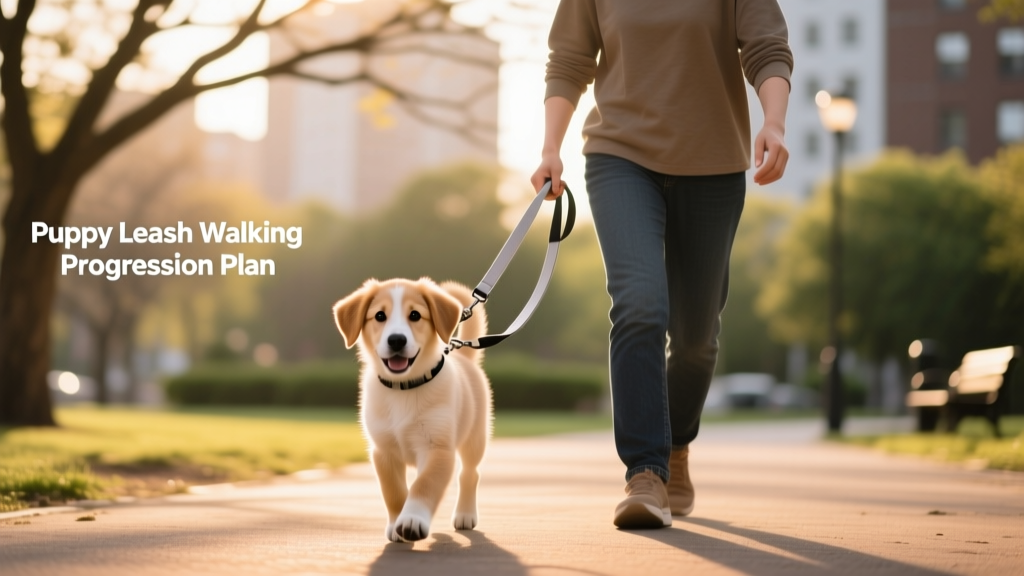
- Introduction to leash walking: 5-minute structured walks, increasing by 5 minutes per month of age (the "5-minute rule")
- Crate tolerance: puppy should nap in closed crate for 1–2 hour stretches during the day
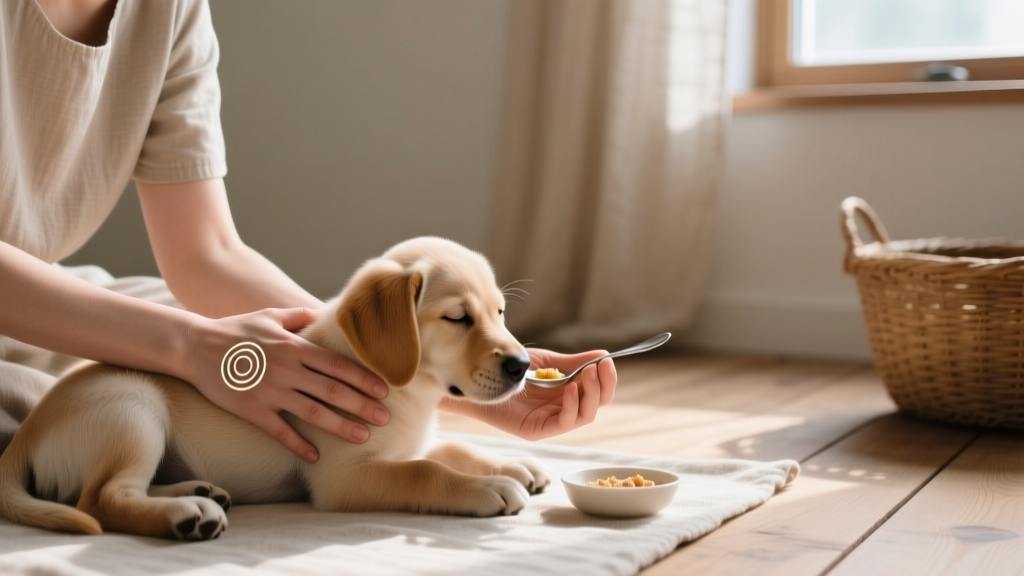
- Begin handling exercises: paw touching, ear inspection, mouth opening, nail clipping practice
- Second fear period may emerge around 12–14 weeks — previously confident puppy may suddenly show caution around novel stimuli
Weeks 16–24 (Adolescent Drive Emergence)
This is where many first-time Malinois owners feel overwhelmed. The puppy's working drive becomes obvious:
- Energy surges: 45–60 minutes of structured physical exercise daily, plus 20–30 minutes of mental stimulation
- Prey drive intensifies: chasing squirrels, lunging at bicycles, nipping at running children
- Adolescent chewing peak (4–6 months): destruction risk is highest during this window
- Adult teeth fully in by 6 months — 42 teeth
- Begin structured impulse control work: "leave it," "wait," settle/mat training
- Spay/neuter discussion with your veterinarian (many working-breed vets recommend waiting until 12–18 months for large breeds to allow growth plate closure; discuss breed-specific timing)
Months 6–12 (Young Dog Phase)
Your Malinois is no longer a puppy in size, but emotionally and behaviorally still maturing:
- Exercise needs: 60–90 minutes daily, split across multiple sessions; include hiking, flirt pole, structured fetch, and scent work
- Advanced training introduction: agility foundations, obedience competition prep, tracking, or protection sport foundations (with qualified trainer only)
- Secondary fear period may occur around 6–14 months — sudden reactivity to previously familiar stimuli is possible
- Height: approaching adult size (males 24–26 inches / 61–66 cm at shoulder; females 22–24 inches / 56–61 cm per AKC breed standard)
- Weight: males 60–80 lb (27–36 kg); females 40–60 lb (18–27 kg)
- Continue socialization: new environments, new dogs, novel challenges weekly
Feeding Schedule for Belgian Malinois Puppies
Malinois puppies are lean, active, and fast-growing. Overfeeding can stress developing joints and increase hip dysplasia risk, while underfeeding compromises muscle development and energy. Feed a large-breed puppy formula that meets AAFCO standards for growth — look for a guaranteed analysis showing 22–28% protein and 12–17% fat, with controlled calcium (1.0–1.5% on a dry matter basis) to support healthy bone growth without rapid skeletal expansion.
| Age | Estimated Weight | Meals/Day | Total Daily Kibble (cups) | Notes |
|---|---|---|---|---|
| 8–12 weeks | 10–20 lb (4.5–9 kg) | 3–4 | 1.5–2.5 cups | Moisten kibble if transitioning; feed measured amounts, not free-choice |
| 3–4 months | 20–30 lb (9–14 kg) | 3 | 2.5–3.5 cups | Monitor body condition score (BCS): ribs should be easily felt, waist visible from above |
| 4–6 months | 30–45 lb (14–20 kg) | 2–3 | 3–4.5 cups | Transition to 2 meals/day at 5–6 months |
| 6–12 months | 45–70 lb (20–32 kg) | 2 | 3.5–5 cups | Adjust based on activity level; working-line dogs in training may need more |
Key feeding rules for Malinois puppies:
- Never feed a single large meal — Malinois have a deep chest, and while bloat (gastric dilatation-volvulus) is more common in adults, establishing a habit of smaller, frequent meals early reduces lifetime risk.
- Remove food after 15–20 minutes per meal. If your puppy doesn't eat, pick it up and offer again at the next scheduled meal. This prevents grazing habits and helps you monitor appetite changes (an early illness indicator).
- Use a slow-feeder bowl or snuffle mat for at least one meal daily — Malinois eat fast, and slowing intake aids digestion and provides mental stimulation.
- Transition to adult food between 12–18 months (not earlier), and choose a performance or active adult formula with 26–30% protein to support the breed's muscle mass and energy demands.
- Always provide fresh water. A 30 lb puppy needs roughly 30 oz (about 3.75 cups) of water daily, more in heat or after exercise.
Vaccination Schedule for Belgian Malinois Puppies
Your puppy's vaccination timeline follows core protocols recommended by the American Veterinary Medical Association. The exact schedule may vary based on your region's disease prevalence and your veterinarian's assessment. Below is the standard framework:
| Age | Vaccine | Type | Notes |
|---|---|---|---|
| 6–8 weeks | DHPP (Distemper, Hepatitis/Adenovirus-2, Parainfluenza, Parvovirus) | Core — 1st dose | Often given by breeder before puppy goes home |
| 10–12 weeks | DHPP (2nd dose) + Bordetella (kennel cough) | Core + Non-core | Bordetella recommended if attending puppy classes or visiting grooming facilities |
| 14–16 weeks | DHPP (3rd dose) + Rabies | Core | Rabies required by law in most US states; some vets add Leptospirosis based on regional risk |
| 12–16 months | DHPP booster + Rabies booster | Core | Subsequent boosters every 1–3 years depending on vaccine type and local regulations |
Important timing note: Maternal antibodies interfere with vaccine efficacy in young puppies. This is why the DHPP series requires multiple doses — the final dose at 14–16 weeks is the one most likely to produce lasting immunity. Until your puppy has completed the full DHPP series, avoid high-risk environments like dog parks, pet store floors, and areas where unknown dogs defecate. Parvovirus can survive in soil for months and is frequently fatal in unvaccinated puppies.
Socialization Window: The Most Critical Period for Malinois Puppies
The primary socialization window for all puppies closes around 14 weeks of age, according to the AVMA. For Belgian Malinois puppies — a breed prone to environmental sensitivity, suspicion of strangers, and high reactivity if under-socialized — this window is arguably more important than for any other breed.
Your goal between weeks 3 and 14 is not to overwhelm your puppy but to build a library of positive associations with the stimuli it will encounter throughout life. Carry treats (small, soft, high-value — think boiled chicken or freeze-dried liver pieces) on every outing. Pair every new experience with food and calm praise.
Belgian Malinois Puppy Socialization Checklist (Weeks 8–14)
Surfaces & Environments
- ☐ Grass, gravel, sand, wet pavement, metal grates, wooden bridges
- ☐ Elevators, automatic doors, revolving doors
- ☐ Car rides (short trips to pleasant destinations, not only the vet)
- ☐ Stairs (up and down, with non-slip backing if needed)
- ☐ Indoors: tile, hardwood, carpet transitions
People
- ☐ Men with hats, beards, sunglasses
- ☐ Children (supervised, calm interactions — no grabbing)
- ☐ People in uniforms (mail carriers, delivery drivers)
- ☐ People using mobility aids (wheelchairs, crutches, walkers)
- ☐ People of different heights, builds, and ethnicities
- ☐ Visitors entering your home (practice calm greetings)
Sounds
- ☐ Thunderstorms, fireworks (play recordings at low volume, pair with treats)
- ☐ Vacuum cleaner, blender, power tools (start at distance, gradually closer)
- ☐ Traffic noise, sirens, car horns
- ☐ Gunshots (play recordings — critical for working/sport Malinois destined for high-drive environments)
- ☐ Doorbells, knocking
Other Animals
- ☐ Friendly, vaccinated adult dogs (one-on-one, not group)
- ☐ Puppies of other breeds in structured puppy class
- ☐ Cats (supervised, with escape route for the cat)
- ☐ Livestock (if accessible — goats, horses, chickens at a safe distance)
Handling & Body Awareness
- ☐ Nail trimming practice (touch paws, then clipper near nails, then one nail)
- ☐ Tooth brushing introduction (finger brush, enzymatic dog toothpaste)
- ☐ Ear inspection and cleaning
- ☐ Being gently restrained (simulating vet exam holds)
- ☐ Wearing a harness, muzzle (positive introduction only), and boots
When can your puppy go outside and meet other dogs? You can carry your puppy outside immediately for environmental exposure. For ground-level exploration in public spaces, wait until at least 7 days after the second DHPP vaccine (around 12–13 weeks of age) for low-risk areas like quiet sidewalks. For dog-to-dog interaction, only allow contact with dogs you know are fully vaccinated and temperamentally sound. Structured puppy classes (where all attendees show proof of vaccination) are generally safe from 10–12 weeks onward and strongly recommended for Malinois puppies.
Potty Training Your Belgian Malinois Puppy
Malinois puppies are intelligent and tend to learn routines quickly, which works in your favor for potty training. However, their small bladders and high metabolism mean frequent elimination needs in the first months.
Realistic Timeline
- 8–12 weeks: Expect accidents. Your job is management, not perfection. Take puppy out every 1–2 hours, immediately after eating, drinking, waking, and playing.
- 3–4 months: Puppy begins to show pre-elimination signals (circling, sniffing, moving toward the door). Accidents decrease to 1–3 per week with consistent management.
- 4–6 months: Most Malinois puppies are reliably signaling to go out during the day. Overnight bladder control extends to 5–7 hours.
- 6–8 months: Your puppy should be considered fully potty trained for daytime. Occasional accidents may occur during excitement, illness, or schedule disruption.
Any claim that a puppy can be "fully potty trained in 3 days" is unrealistic. Bladder physiology doesn't work that way — a 10-week-old puppy physically cannot hold urine for more than 2–3 hours.
Potty Training Protocol
- Choose one designated outdoor potty spot and always go to the same area. The scent of previous eliminations triggers the urge.
- Use a consistent verbal cue: "go potty" or "do your business" — said while the puppy is eliminating, not before.
- Reward immediately after elimination finishes (within 1–2 seconds) with a high-value treat and verbal praise. Don't wait until you're back inside.
- Supervise 100% of indoor time. If you can't watch, the puppy goes in the crate. Unsupervised roaming is the #1 cause of potty training setbacks.
- For accidents: never punish. Interrupt if you catch them mid-act (a calm "oops" and carry outside), then clean the spot with an enzymatic cleaner (Nature's Miracle or Rocco & Roxa) to eliminate residual odor that attracts repeat accidents.
Crate Training Progression
The crate is your potty training anchor — dogs instinctively avoid soiling their sleeping area. Here are safe time limits by age:
| Age | Max Daytime Crate Time | Max Overnight Time | Crate Size |
|---|---|---|---|
| 8–10 weeks | 1–2 hours | 2–3 hours (set alarm) | 36-inch crate with divider panel |
| 11–14 weeks | 2–3 hours | 4–5 hours | 36-inch with divider (expand gradually) |
| 3–4 months | 3–4 hours | 6–7 hours | 42-inch crate (remove divider) |
| 5–6 months | 4–5 hours | 7–8 hours | 42-inch (adult size for most females) |
| 7–12 months | 5–6 hours max | 8 hours | 42–48 inch depending on adult size |
Important: A Malinois puppy should never be crated for 8 hours during the day. This is a high-drive working breed — prolonged confinement without stimulation leads to barrier frustration, excessive barking, and even self-injury. If you work full-time, arrange a midday dog walker or come home for a break.
Teething Timeline and Relief Strategies
Belgian Malinois puppies go through teething in two phases, and both are intense because of the breed's natural mouthiness:
- 3–4 months: Deciduous incisors and canines begin loosening. You may find tiny teeth in bedding or toys. Gums appear red and swollen.
- 4–6 months: Premolars and molars erupt. This is peak chewing destruction time. By 6 months (sometimes 7), all 42 adult teeth should be in place.
Safe chew options for teething Malinois puppies:
- Kong Classic (puppy rubber, pink/blue): Stuff with plain yogurt mixed with kibble and freeze for 2–4 hours. The cold soothes gums and the puzzle extends engagement.
- Benebone Puppy Wishbone: Nylon chew designed for puppies under 30 lb; softer than adult versions.
- Frozen carrots or apple slices: Natural, low-calorie, and the cold provides relief. Supervise to prevent choking on large pieces.
- Wet washcloth trick: Soak a clean washcloth in water (or low-sodium chicken broth), twist into a rope, and freeze. Let puppy chew under supervision; discard when it starts tearing.
Avoid: Rawhide (choking and blockage risk), antlers (tooth fracture risk in young dogs with developing enamel), and any chew toy harder than your fingernail (the "thumbnail test" — if you can't leave an indent, it's too hard for puppy teeth).
Breed-Specific Puppy Problems and Solutions
Malinois puppies come with a distinct set of challenges that generic puppy guides don't address. Here's how to handle the most common issues:
Excessive Biting and Nipping
This is the #1 complaint from new Malinois owners. These puppies were literally bred to grip and hold livestock. Nipping at ankles, hands, and clothing isn't misbehavior — it's genetic drive expressing itself. Here's your protocol:
- Redirect to appropriate chew: When teeth touch skin, say "oops" in a neutral tone, withdraw attention for 3–5 seconds, then present a toy. Praise enthusiastically when teeth go on the toy.
- Time-outs, not punishment: If redirecting fails after 2–3 attempts, calmly place puppy in a pen or crate for 30–60 seconds to reset. This teaches that biting ends play, not that biting gets a reaction.
- Provide outlet activities: Tug games with clear rules ("drop it" cue), flirt pole sessions (5–10 minutes, always let puppy "win" the toy periodically to maintain motivation), and scent work all satisfy mouth and prey drive constructively.
- Bite inhibition training: Allow gentle mouthing during play. If pressure increases beyond a light touch, yelp softly and stop play for 5 seconds. Over weeks, lower the threshold until any tooth-to-skin contact ends play.
Whining and Vocalization
Malinois are vocal dogs. Puppy whining typically stems from one of four causes:
- Needs-based: Needs to potty, is hungry, or is in physical discomfort. Address the need.
- Crate protest: If puppy is safe, exercised, fed, and has pottied, ignore whining in the crate. Rewarding whining with release teaches "whining opens the door." Wait for 3–5 seconds of silence, then open.
- Boredom/frustration: Increase mental stimulation. A 10-minute training session tires a Malinois puppy more than a 30-minute walk.
- Anxiety: If whining is paired with pacing, drooling, or destruction, consult your veterinarian to rule out separation anxiety — early intervention is critical in this breed.
Destructive Chewing
Peak destruction occurs between 4 and 7 months. Puppy-proof your home: use bitter apple spray (Grannick's Bitter Apple) on baseboards and furniture legs, provide a rotation of 5–7 approved chew toys (rotating maintains novelty), and never leave a Malinois puppy unsupervised in a room with tempting items. A playpen with approved toys is your best management tool during this phase.
First-Year Cost Breakdown for Belgian Malinois Puppies
Budgeting accurately prevents unpleasant surprises. These estimates reflect 2026 US averages and assume a puppy purchased from a reputable breeder. Costs are higher in major metropolitan areas and lower in rural regions.
| Category | Low Estimate | High Estimate | Details |
|---|---|---|---|
| Puppy purchase price | $1,500 | $3,500 | Working-line breeders with health-tested parents (OFA hips, elbows, eyes); imported European lines can exceed $5,000 |
| Veterinary care | $600 | $1,200 | Wellness exams (3–4), DHPP series, rabies, fecal tests, heartworm prevention, spay/neuter if done in year 1 |
| Food & treats | $500 | $900 | Large-breed puppy formula (Purina Pro Plan, Royal Canin, Orijen); training treats |
| Supplies & gear | $400 | $800 | Crate (42–48" wire), exercise pen, harness (Ruffwear Front Range), leash, collar, ID tags, chew toys, Kong, snuffle mat, enzymatic cleaner, grooming supplies |
| Training classes | $300 | $1,000 | Puppy socialization class ($150–$250 for 6-week session), basic obedience ($200–$400); private sessions with Malinois-experienced trainer ($75–$150/hour) if needed |
| Pet insurance | $400 | $700 | Monthly premiums $35–$60 for accident/illness coverage (Trupanion, Healthy Paws, Nationwide); enroll before first vet visit for pre-existing condition coverage |
| Miscellaneous | $200 | $500 | Microchip registration, licensing, puppy-proofing supplies, replacement of destroyed items |
| Total First Year | $3,900 | $8,600 | Does not include emergency veterinary care (budget an additional $500–$2,000 emergency fund) |
Frequently Asked Questions About Belgian Malinois Puppies
How often should I feed my Belgian Malinois puppy at each age?
At 8–12 weeks, feed 3–4 meals per day. From 3–4 months, reduce to 3 meals. At 5–6 months, transition to 2 meals daily, which you'll maintain for the dog's adult life. Never feed one large meal per day due to bloat risk in deep-chested breeds.
How do I stop my Malinois puppy from biting my hands and ankles?
Redirect every bite to an appropriate toy, use brief time-outs (30–60 seconds in a pen) when redirection fails, and provide sufficient drive outlets like tug, flirt pole, and scent work. Avoid physical punishment or alpha rolls — these damage trust and can escalate aggression in a breed that responds to pressure with resistance. Consistent positive reinforcement and management typically reduce nipping significantly by 5–6 months.
When will my Belgian Malinois puppy be fully potty trained?
With consistent management, most Malinois puppies are reliably potty trained during the day by 5–6 months. Overnight reliability usually arrives by 4–5 months. Individual variation exists — some puppies grasp the routine by 3 months, while others take until 7–8 months. Setbacks during fear periods or schedule changes are normal.
What vaccines does my puppy need and when?
The core series includes DHPP at 6–8 weeks, 10–12 weeks, and 14–16 weeks, plus rabies at 14–16 weeks. Non-core vaccines like Bordetella (kennel cough) and Leptospirosis are recommended based on lifestyle and regional risk. Consult your veterinarian for a schedule tailored to your area and your puppy's planned activities.
When can my puppy go outside and meet other dogs?
You can carry your puppy outside for environmental exposure immediately. For ground-level walks in low-risk areas, wait until 7 days after the second DHPP vaccine (around 12–13 weeks). For dog-to-dog interaction, stick to known, vaccinated dogs and structured puppy classes starting at 10–12 weeks. Avoid dog parks until the full DHPP series is complete (after 16 weeks).
Is a Belgian Malinois puppy right for a first-time dog owner?
Honestly, this breed is challenging for first-time owners. Malinois puppies require 2+ hours daily of structured activity, consistent training from day one, and an owner who understands working-dog psychology. If you're a first-time owner set on a Malinois, commit to professional training classes starting at 10 weeks, join a breed-specific community (the American Belgian Malinois Club offers mentorship), and be prepared for a steep learning curve. Consider adopting an adult Malinois from a breed-specific rescue if you want the breed with a known temperament and lower puppy-stage intensity.
Anouk Beaumont
All our authors care for dogs every day — read more of their work on the authors page.