Australian Shepherd Puppies in Sullivan, MO: Your Complete Puppy Guide
Everything you need to know about raising Australian Shepherd puppies in Sullivan, MO — milestones, feeding, training, vet care, and first-year costs.

Raising an Australian Shepherd puppy is one of the most rewarding — and demanding — experiences a dog owner can have. These intelligent, high-energy herding dogs need structured guidance from day one, and the choices you make in those first critical months shape the adult dog you'll live with for the next 12 to 15 years. If you're preparing to bring home one of the Australian Shepherd puppies available in the Sullivan, MO area, or you've just welcomed one through your door, this guide gives you the week-by-week, month-by-month roadmap you need.
Aussies are not a breed you can put on autopilot. Their intelligence means they learn fast — both the good habits you teach and the bad ones you accidentally reinforce. This guide is built around concrete timelines, exact portions, and real expectations so you can stay ahead of your puppy's development curve.
When Should You Bring Your Australian Shepherd Puppy Home?
The ideal age to bring an Australian Shepherd puppy home is 8 to 10 weeks. While Missouri law permits the sale of puppies at 8 weeks (once they've been weaned and examined by a licensed veterinarian per Missouri Department of Agriculture regulations), many responsible breeders in the Sullivan area prefer to hold puppies until 9 or 10 weeks. This extra time allows the breeder to complete the puppy's first DHPP vaccination, begin early socialization protocols, and evaluate temperament for proper home matching.
Bringing a puppy home before 8 weeks is not recommended. Puppies separated from their litter too early often develop bite inhibition problems, resource guarding tendencies, and heightened separation anxiety — traits that are particularly difficult to manage in a breed already predisposed to vigilance and sensitivity.
Age-Specific Milestones: What to Expect Week by Week
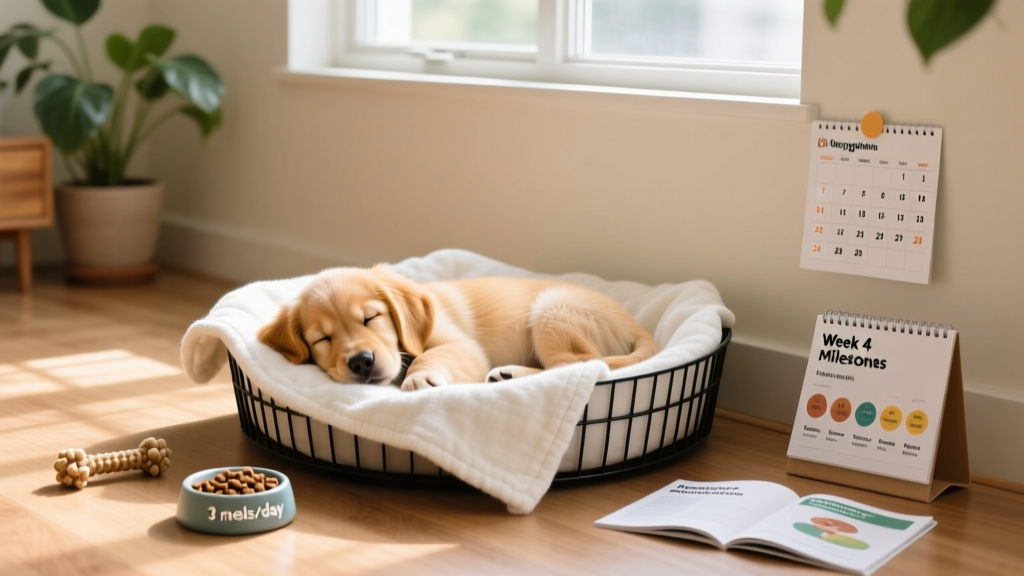
Australian Shepherd puppies develop rapidly, and their needs shift significantly across each stage. Here's what you should expect — and what you should be doing — at each milestone window.
Weeks 4–8 (Still With the Breeder)
At this stage, your puppy is still with the breeder, but it's worth understanding what should be happening. The breeder should be introducing solid food (high-quality puppy kibble softened with warm water), beginning early neurological stimulation, exposing puppies to varied surfaces and sounds, and starting individual handling sessions. The critical socialization window opens at approximately week 3 and extends through week 14, meaning a significant portion of this window falls under the breeder's care.
Weeks 8–12 (The Transition Home)
This is the most impressionable period. Expect your puppy to sleep 18 to 20 hours per day, wake frequently for potty breaks, and test boundaries constantly. Australian Shepherd puppies at this age are sponges — they will learn your household routines, sounds, and people rapidly. Begin short (5-minute) training sessions using food lures and positive reinforcement. Introduce the crate as a positive space with meals fed inside it. Keep socialization exposures positive but brief — 5 to 10 minutes per new experience.
Weeks 12–16 (Building Foundations)
Your puppy's confidence grows, and so does their independence. This is when leash reactivity and nipping often peak. Increase training sessions to 10 minutes, twice daily. Begin structured socialization outings to low-traffic areas (avoid dog parks until vaccinations are complete). Your puppy will start to show early signs of herding instinct — nipping at heels, circling, and staring at moving objects. Redirect these behaviors toward appropriate outlets like flirt poles and tug toys.
Weeks 16–24 (The Adolescent Shift)
Teething begins around 16 weeks and continues through 6 months. Your puppy may regress in potty training, ignore previously learned commands, and test boundaries aggressively. This is normal adolescent behavior, not a sign of failure. Maintain consistent routines, increase physical exercise to 30 to 40 minutes of structured activity daily, and consider enrolling in a positive reinforcement puppy class. Many trainers in the Sullivan and greater Franklin County area offer group classes starting at this age.
Months 6–12 (Approaching Maturity)
By 6 months, your Australian Shepherd will have most adult teeth and should be reliably potty trained. Energy levels remain high — plan for 45 to 60 minutes of structured exercise plus mental enrichment daily. This is when spay/neuter discussions with your veterinarian typically occur. Continue advanced obedience training and begin introducing more complex tasks like agility foundations, scent work, or trick training to channel the breed's drive constructively.
Feeding Schedule: Exact Portions by Age and Weight
Australian Shepherds are an active, medium-sized breed. Adult males typically reach 50 to 65 lb (23–29 kg) and females 40 to 55 lb (18–25 kg). Feeding the right amount at the right frequency prevents growth-related orthopedic issues and supports their high metabolic demands during puppyhood.
Choose a food that meets AAFCO nutritional standards for growth or all life stages. Look for a named protein source (chicken, lamb, or salmon) as the first ingredient and a guaranteed analysis showing minimum 22% protein and 8% fat for puppies.
| Age | Meals Per Day | Estimated Daily Amount (cups) | Notes |
|---|---|---|---|
| 8–12 weeks | 3–4 | 1.0–1.5 cups | Soften kibble with warm water if needed; feed measured amounts, not free-choice |
| 12–16 weeks | 3 | 1.5–2.0 cups | Transition to dry kibble; monitor body condition score weekly |
| 16–24 weeks | 2–3 | 2.0–2.5 cups | Adjust based on growth rate; you should feel ribs without pressing hard |
| 6–9 months | 2 | 2.0–3.0 cups | Reduce to twice daily; split portions evenly between morning and evening |
| 9–12 months | 2 | 2.5–3.5 cups | Transition to adult food at 10–12 months if growth has plateaued |
These are starting estimates. Individual puppies vary based on metabolism, activity level, and the caloric density of the specific food. A puppy that appears too thin (visible ribs, hip bones prominent) or too heavy (no waist tuck, ribs difficult to feel) needs a portion adjustment. Consult your veterinarian if you're unsure about your puppy's body condition score.
Vaccination Schedule: Protecting Your Aussie Puppy
Australian Shepherd puppies in Sullivan, MO face the same core disease risks as puppies anywhere in the United States. The AKC-recommended vaccination protocol follows a series designed to protect puppies as maternal antibodies wane.
| Age | Vaccine | Details |
|---|---|---|
| 6–8 weeks | DHPP (1st dose) | Distemper, Hepatitis (Adenovirus), Parainfluenza, Parvovirus — typically administered by the breeder or shelter |
| 10–12 weeks | DHPP (2nd dose) | Booster critical for building adequate immunity; maternal antibodies may have interfered with first dose |
| 14–16 weeks | DHPP (3rd dose) | Final puppy booster; this dose is considered the most important for long-term immunity |
| 12–16 weeks | Rabies | Required by Missouri law; administered as a single dose, then boosted per state schedule |
| 12+ weeks | Bordetella (optional) | Recommended if attending puppy classes, boarding, or visiting grooming facilities; intranasal or injectable |
| 12+ weeks | Leptospirosis (optional) | Consider for dogs with outdoor/wildlife exposure in rural Sullivan-area properties; two-dose series, 2–4 weeks apart |
Do not take your puppy to dog parks, pet stores, or high-traffic dog areas until at least one week after the final DHPP booster at 14–16 weeks. Parvovirus is highly contagious, environmentally persistent, and potentially fatal. Carrying your puppy in a sling or visiting controlled environments (a vaccinated friend's yard, for example) is safe for socialization during this waiting period.
Socialization Window: The Critical 3-to-14-Week Period
The primary socialization window for puppies closes around 14 weeks of age. What your Australian Shepherd experiences — positively — during this window profoundly shapes their adult temperament. Aussies are naturally reserved with strangers and can develop fear-based reactivity if under-socialized.
Here is a structured exposure checklist to work through between weeks 8 and 14 (the portion you control after bringing your puppy home):
- Surfaces: Grass, gravel, concrete, tile, metal grates, wet pavement, wooden stairs
- People: Children (supervised), elderly individuals, people wearing hats, sunglasses, hoodies, uniforms; people of varying heights and body types
- Sounds: Thunderstorm recordings (played softly, paired with treats), vacuum cleaners, doorbells, car engines, fireworks recordings, clapping, dropped pots
- Handling: Paw touching, ear inspection, mouth opening, nail trimming simulation, being held in various positions, gentle restraint
- Objects: Umbrellas opening, plastic bags rustling, bicycles passing, skateboards, wheelchairs, strollers
- Animals: Fully vaccinated, friendly adult dogs (one at a time, controlled introductions); cats if applicable to your household; livestock if relevant to your property
- Environments: Car rides (short trips, ending at fun destinations), outdoor seating areas, quiet parking lots, your veterinarian's waiting room (carry puppy in; do not place on floor)
Each exposure should be brief (5–10 minutes), positive (paired with high-value treats like small pieces of boiled chicken or freeze-dried liver), and at the puppy's pace. If your puppy shows fear — tucked tail, crouching, refusal to take treats — increase distance from the stimulus and reduce intensity. Never force an interaction.
Potty Training Timeline: Realistic Expectations
Australian Shepherd puppies are generally quick learners, but potty training still requires consistency and patience. A realistic timeline looks like this:
- 8–10 weeks: Accidents every 1–2 hours. Take puppy out immediately upon waking, after every meal, after play sessions, and before crating. Use a consistent outdoor spot and a verbal cue ("go potty"). Reward immediately with a treat after elimination.
- 10–14 weeks: Accidents decrease to 1–2 per day if you maintain a strict schedule. Puppy begins to signal (sniffing, circling, heading to the door). Bladder capacity is still approximately 1 hour per month of age — so a 3-month-old puppy can hold it roughly 3 hours maximum during the day.
- 14–20 weeks: Most Australian Shepherd puppies are largely reliable with supervision and a schedule. Occasional accidents are still normal, especially during excitement or routine changes.
- 5–6 months: Your puppy should be reliably potty trained with minimal accidents. If accidents persist beyond 6 months, consult your veterinarian to rule out urinary tract infections or anatomical issues.
- Submissive/excitement urination: Common in young Aussies. Avoid greeting with high energy; crouch sideways and let puppy approach you calmly. Do not punish — it worsens the behavior.
- Regression at 4–6 months: Often coincides with teething and adolescent hormonal shifts. Return to a stricter schedule temporarily.
- Refusal to go outside in bad weather: Aussies have a double coat and tolerate cold reasonably well, but rain and wind can deter puppies. Use a covered area or a puppy raincoat, and reward generously for outdoor elimination.
Crate Training Progression and Teething Relief
Crate training provides your Australian Shepherd puppy with a safe den, aids in potty training, and prevents destructive behavior when unsupervised. Use a wire or plastic crate sized for an adult Australian Shepherd (42-inch length) with a divider panel to reduce the space as your puppy grows.
| Puppy Age | Maximum Daytime Crate Time | Overnight | Notes |
|---|---|---|---|
| 8–10 weeks | 30–60 minutes | 2–3 hours (expect overnight potty breaks) | Feed meals in crate; keep door open when supervised |
| 10–14 weeks | 1–2 hours | 3–4 hours | Introduce a stuffed Kong or chew toy for quiet time |
| 14–20 weeks | 2–3 hours | 5–6 hours | Puppy should begin settling without vocalizing |
| 5–6 months | 3–4 hours | 7–8 hours | Do not exceed 4 hours daytime crating regularly |
Teething typically begins around 12 to 16 weeks as adult teeth push through, and it continues through approximately 6 months. During this period, your puppy will chew relentlessly. Provide appropriate outlets:
- Frozen rubber chew toys (Kong Classic, West Paw Toppl) filled with plain yogurt or pumpkin puree
- Chilled, wet washcloths twisted into a rope shape (supervise to prevent swallowing fabric)
- Bully sticks or yak cheese chews (supervise; remove when small enough to be a choking hazard)
- Carrot sticks or frozen banana slices as edible chew alternatives
Avoid rawhide chews, which pose choking and intestinal blockage risks, and never use old shoes or socks as chew toys — your puppy cannot distinguish between old and new belongings.
Common Australian Shepherd Puppy Problems and Solutions
Aussie puppies come with a specific set of behavioral challenges rooted in their herding heritage and high intelligence. Here are the most common issues and how to address them using positive reinforcement methods:
Nipping and Heel Herding
Australian Shepherd puppies nip and herd ankles because it's genetically hardwired. When your puppy nips, immediately stop moving and redirect to an appropriate toy. Teach an incompatible behavior like "sit" or "go to your mat" that replaces the herding impulse. Never use physical punishment — it damages trust and can escalate to fear-based biting. For persistent nipping, implement a brief (30-second) timeout by calmly leaving the room, then returning when the puppy is calm.
Destructive Chewing
Beyond teething, Aussies chew when under-stimulated. Ensure your puppy receives adequate mental enrichment: puzzle feeders (Outward Hound Dog Brick, Kong Wobbler), scent games, and short training sessions. A tired mind prevents more destruction than a tired body. Rotate toys every few days to maintain novelty.
Whining and Vocalization
Aussies are vocal dogs. Crate whining in the first weeks is normal — distinguish between distress whining (sharp, escalating, paired with frantic pacing) and attention-seeking whining (intermittent, checking your reaction). Respond to distress by adjusting the crate environment (cover it partially, add a warm blanket). For attention-seeking whining, wait for 3 to 5 seconds of silence before opening the crate or providing attention.
Separation Anxiety Risk
This breed bonds intensely and is prone to separation anxiety. From week one, practice short departures (30 seconds to 5 minutes) without fanfare. Give your puppy a long-lasting treat (stuffed frozen Kong) as you leave. Gradually increase absence duration. Never make departures or arrivals emotional events.
First-Year Cost Breakdown for Your Australian Shepherd
Budgeting accurately prevents surprises. Here's a realistic first-year cost estimate for raising an Australian Shepherd puppy in the Sullivan, MO area, based on 2025–2026 regional pricing:
| Category | Low Estimate | High Estimate | Details |
|---|---|---|---|
| Puppy purchase/adoption | $300 | $2,500 | Rescue adoption fee vs. AKC-registered breeder; health-tested lines command higher prices |
| Veterinary care (wellness) | $400 | $800 | Vaccine series, wellness exams, fecal tests, heartworm prevention, deworming |
| Spay/neuter | $250 | $600 | Varies by clinic and procedure complexity; some shelters include in adoption fee |
| Food | $360 | $720 | $30–$60/month for quality puppy food; Aussies eat 2–3.5 cups daily |
| Supplies (initial) | $200 | $500 | Crate, bed, leash, harness, bowls, toys, grooming tools, baby gates |
| Training classes | $150 | $400 | Group puppy class (6–8 weeks); private sessions cost $60–$100/hour |
| Preventive medications | $200 | $400 | Monthly heartworm, flea, and tick prevention year-round in Missouri |
| Grooming | $0 | $300 | Aussies are owner-groomed typically; professional grooming optional for trims |
| Pet insurance (optional) | $360 | $720 | $30–$60/month; recommended for breed prone to hip dysplasia and eye conditions |
| Total first year | $2,220 | $6,940 | Excludes emergency veterinary care; set aside $500–$1,000 for unexpected illness |
Finding Australian Shepherd puppies in Sullivan, MO and the surrounding Franklin County area involves researching both responsible breeders and rescue organizations. Check the Australian Shepherd Club of America (ASCA) breeder referral list and local rescue networks. A responsible breeder will provide OFA or PennHIP hip scores, CERF eye certifications, and MDR1 genetic testing results for both parents. Adoption through an Aussie-specific rescue is equally valid and typically costs $300 to $500.
Frequently Asked Questions
When can my Australian Shepherd puppy go outside and meet other dogs?
Your puppy can explore your own yard immediately if no other unvaccinated dogs have access. For public areas and meeting unfamiliar dogs, wait until one week after the final DHPP booster (typically around 15–17 weeks). Controlled playdates with known, fully vaccinated adult dogs in private yards are safe earlier and valuable for socialization.
How do I stop my Aussie puppy from biting and nipping?
Redirect nipping to appropriate chew toys consistently. When teeth touch skin, say "ouch" in a calm tone and withdraw attention for 30 seconds. Teach "leave it" and "drop it" commands early using high-value treat exchanges. Provide adequate physical exercise and mental enrichment — an under-stimulated Aussie puppy nips more. Never use physical corrections or muzzle-holding, which can create fear-based aggression.
When will my puppy be fully potty trained?
Most Australian Shepherd puppies are reliably potty trained by 5 to 6 months with consistent scheduling and positive reinforcement. Some individuals may take longer, especially if the routine has been inconsistent. If your puppy is having frequent accidents beyond 6 months, schedule a veterinary exam to rule out medical causes.
How often should I feed my Australian Shepherd puppy at each age?
Feed 3 to 4 meals daily from 8 to 12 weeks, 3 meals daily from 12 to 16 weeks, then transition to 2 meals daily from 6 months onward. Split the daily portion evenly across meals. Avoid free-feeding, as it makes potty training unpredictable and can lead to overeating in food-motivated individuals.
Anouk Beaumont
All our authors care for dogs every day — read more of their work on the authors page.