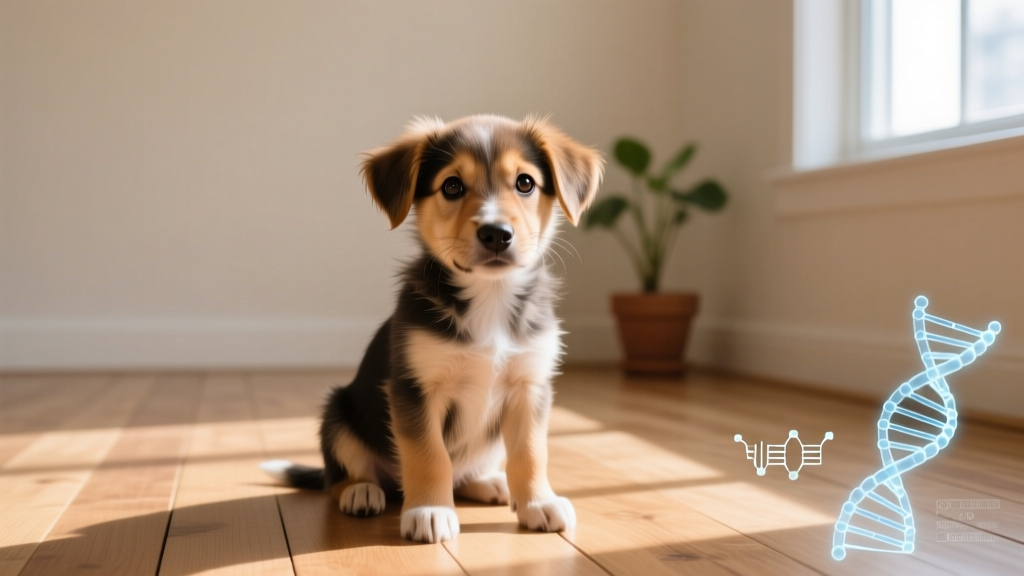
Australian Cattle Puppy: Complete Week-by-Week Care Guide
Your complete Australian Cattle puppy guide covering feeding schedules, vaccination timelines, potty training milestones, and first-year costs.

If you're bringing home an Australian Cattle puppy, you're signing up for one of the most intelligent, energetic, and demanding breeds in the canine world. Originally bred to herd cattle across the harsh Australian outback, these dogs — also known as Blue Heelers or Queensland Heelers — arrive in your home with a genetic blueprint for relentless activity, sharp problem-solving, and mouthy herding behavior that catches many first-time owners off guard.
This guide walks you through every developmental stage from 4 weeks through 12 months, with breed-specific expectations, exact feeding portions, vaccination timing, and realistic cost projections. Whether you adopted from a rescue or purchased from an AKC-registered breeder, the milestones below will help you raise a well-adjusted adult dog.
When Should You Bring Your Australian Cattle Puppy Home?
The ideal window for bringing an Australian Cattle puppy home is between 8 and 10 weeks of age. While some breeders may offer puppies as early as 6 weeks, the American Veterinary Medical Association emphasizes that puppies benefit critically from littermate and maternal interaction through at least 8 weeks. For Australian Cattle Dogs specifically, this early period shapes bite inhibition — a crucial skill given the breed's genetic tendency to nip at heels during play.
If you're acquiring a puppy at 10-12 weeks, don't worry about missing the socialization window. You'll have slightly less runway during the primary socialization period (which closes around 14 weeks), but a structured exposure plan can compensate. Puppies from working ranch lines may stay with breeders until 12 weeks for early livestock exposure — this is normal and beneficial for their temperament development.
Age-Specific Milestones: What to Expect and When
Weeks 4-8: Breeder or Foster Care Phase
During this period, your Australian Cattle puppy is still with their mother and littermates. Key developments include:
- Sensory: Full vision and hearing established; startle responses to loud noises normalize
- Social: Littermate play teaches bite inhibition — puppies learn that hard bites end play sessions
- Physical: Baby teeth fully erupted; weight should reach 5-8 lb (2.3-3.6 kg) depending on lineage
- Cognitive: Begin recognizing human voices and forming early human associations
- Your role: If visiting the breeder, handle the puppy daily for short sessions. Observe which puppy approaches you confidently versus cautiously — Australian Cattle Dogs range from bold to reserved, and early temperament is predictive
Weeks 8-12: Homecoming and Bonding
This is your primary attachment-building window. Expect:
- Sleep: 18-20 hours per day — enforce crate naps even when puppy seems energetic
- Potty: Bladder capacity roughly 1 hour per month of age, so a 9-week-old needs outdoor trips every 2 hours maximum
- Bite pressure: Mouthing and nipping are intense in this breed; redirect to chew toys consistently
- Weight: Expect 8-15 lb (3.6-6.8 kg) by 12 weeks
- Crate: Begin crate training immediately; expect 2-4 nights of protest whining before settling
Weeks 12-16: Expanding Horizons
- Training: Can reliably learn "sit," "down," "come," and "leave it" with 5-minute sessions, 3x daily
- Social: Peak fear imprint period (weeks 8-11) has passed; confidence building is critical now
- Physical: Growth rate accelerates; weight should reach 15-22 lb (6.8-10 kg)
- Exercise: Structured walks of 15-20 minutes; avoid repetitive high-impact activity (jumping, long runs) to protect developing joints
- Behavior: May begin showing herding instincts — circling children, nipping at moving feet. Redirect immediately to appropriate toys
Weeks 16-24: The Adolescent Transition
- Teething: Adult teeth erupt between 4-6 months; chewing intensity peaks
- Training: Attention span lengthens to 10-15 minutes; introduce leash walking with loose-leash criteria
- Weight: Should reach 25-35 lb (11.3-15.9 kg); growth plates remain open
- Independence: May begin testing boundaries; consistency with house rules is essential
- Exercise: Increase to 30-40 minutes of structured activity daily; introduce mental enrichment (puzzle feeders, scent games)
Months 6-12: Approaching Adulthood
- Size: Reaches 80-90% of adult weight (35-50 lb / 15.9-22.7 kg) by 9 months; final fill-out continues to 18 months
- Spay/neuter: Many veterinarians recommend waiting until 6-9 months for this breed; discuss timing with your vet
- Training: Ready for advanced obedience, introductory agility, or herding instinct tests
- Energy: Adult energy patterns emerge — expect 60-90 minutes of vigorous daily exercise minimum
- Social: May become more selective or reserved with unfamiliar dogs; continued positive exposure prevents reactivity
Feeding Schedule: Exact Portions by Age and Weight
Weeks 4-8: Breeder or Foster Care Phase
During this period, your Australian Cattle puppy is still with their mother and littermates. Key developments include:
- Sensory: Full vision and hearing established; startle responses to loud noises normalize
- Social: Littermate play teaches bite inhibition — puppies learn that hard bites end play sessions
- Physical: Baby teeth fully erupted; weight should reach 5-8 lb (2.3-3.6 kg) depending on lineage
- Cognitive: Begin recognizing human voices and forming early human associations
- Your role: If visiting the breeder, handle the puppy daily for short sessions. Observe which puppy approaches you confidently versus cautiously — Australian Cattle Dogs range from bold to reserved, and early temperament is predictive
Weeks 8-12: Homecoming and Bonding
This is your primary attachment-building window. Expect:
- Sleep: 18-20 hours per day — enforce crate naps even when puppy seems energetic
- Potty: Bladder capacity roughly 1 hour per month of age, so a 9-week-old needs outdoor trips every 2 hours maximum
- Bite pressure: Mouthing and nipping are intense in this breed; redirect to chew toys consistently
- Weight: Expect 8-15 lb (3.6-6.8 kg) by 12 weeks
- Crate: Begin crate training immediately; expect 2-4 nights of protest whining before settling
Weeks 12-16: Expanding Horizons
- Training: Can reliably learn "sit," "down," "come," and "leave it" with 5-minute sessions, 3x daily
- Social: Peak fear imprint period (weeks 8-11) has passed; confidence building is critical now
- Physical: Growth rate accelerates; weight should reach 15-22 lb (6.8-10 kg)
- Exercise: Structured walks of 15-20 minutes; avoid repetitive high-impact activity (jumping, long runs) to protect developing joints
- Behavior: May begin showing herding instincts — circling children, nipping at moving feet. Redirect immediately to appropriate toys
Weeks 16-24: The Adolescent Transition
- Teething: Adult teeth erupt between 4-6 months; chewing intensity peaks
- Training: Attention span lengthens to 10-15 minutes; introduce leash walking with loose-leash criteria
- Weight: Should reach 25-35 lb (11.3-15.9 kg); growth plates remain open
- Independence: May begin testing boundaries; consistency with house rules is essential
- Exercise: Increase to 30-40 minutes of structured activity daily; introduce mental enrichment (puzzle feeders, scent games)
Months 6-12: Approaching Adulthood
- Size: Reaches 80-90% of adult weight (35-50 lb / 15.9-22.7 kg) by 9 months; final fill-out continues to 18 months
- Spay/neuter: Many veterinarians recommend waiting until 6-9 months for this breed; discuss timing with your vet
- Training: Ready for advanced obedience, introductory agility, or herding instinct tests
- Energy: Adult energy patterns emerge — expect 60-90 minutes of vigorous daily exercise minimum
- Social: May become more selective or reserved with unfamiliar dogs; continued positive exposure prevents reactivity
Australian Cattle Dogs are medium-sized, high-metabolism athletes. They require a diet formulated for active breeds with adequate protein (minimum 22% for growth, per AAFCO growth standards) and controlled calcium-to-phosphorus ratios to support joint development.
Feed a high-quality kibble specifically labeled for "growth" or "all life stages." Avoid large-breed puppy formulas unless your puppy is from an oversized lineage — Australian Cattle Dogs are medium-breed and benefit from standard puppy nutrition density.
| Age | Weight Range | Meals Per Day | Daily Kibble (cups) | Notes |
|---|---|---|---|---|
| 8-12 weeks | 8-15 lb (3.6-6.8 kg) | 4 | 1.0-1.5 cups | Soak kibble in warm water for easier digestion |
| 12-16 weeks | 15-22 lb (6.8-10 kg) | 3 | 1.5-2.0 cups | Transition to dry kibble if not already |
| 4-6 months | 22-35 lb (10-15.9 kg) | 3 | 2.0-2.75 cups | Increase protein-rich training treats |
| 6-9 months | 30-42 lb (13.6-19 kg) | 2 | 2.5-3.25 cups | Switch to adult maintenance formula at 9-12 months |
| 9-12 months | 35-50 lb (15.9-22.7 kg) | 2 | 2.5-3.5 cups | Adjust based on body condition score (ribs palpable, waist visible) |
How often should I feed my puppy at each age? Four meals daily from 8-12 weeks, three meals from 12 weeks to 6 months, then two meals for life. Never free-feed an Australian Cattle puppy — this breed will overeat if bored, and rapid growth strains developing joints.
Vaccination Schedule: Core and Non-Core Protection
Your Australian Cattle puppy needs a series of core vaccines administered at specific intervals. Maternal antibodies interfere with vaccine response in early weeks, which is why boosters are spaced 2-4 weeks apart until maternal immunity wanes around 16 weeks.
| Age | Vaccine | Type | Notes |
|---|---|---|---|
| 6-8 weeks | DHPP (1st dose) | Core — Distemper, Hepatitis (Adenovirus), Parainfluenza, Parvovirus | Often administered by breeder; verify records |
| 6-8 weeks | Bordetella (optional) | Non-core | Recommended if attending puppy socialization classes |
| 10-12 weeks | DHPP (2nd dose) | Core | Leptospirosis may be added based on regional risk |
| 10-12 weeks | Lyme (1st dose, if indicated) | Non-core | Discuss with vet if in tick-endemic area |
| 14-16 weeks | DHPP (3rd dose) | Core | Some vets add a 4th dose at 18-20 weeks for high-risk environments |
| 14-16 weeks | Rabies | Core (legally required) | Timing varies by state law; typically 12-16 weeks |
| 14-16 weeks | Lyme (2nd dose) | Non-core | Booster required 2-4 weeks after first dose |
When can my puppy go outside and meet other dogs? Your puppy can explore your own yard immediately after homecoming, provided no unvaccinated dogs have access to the space. Public areas (dog parks, pet stores, sidewalks with heavy dog traffic) should be avoided until 7 days after the final DHPP dose — typically around 17 weeks. Controlled puppy socialization classes that require proof of at least one DHPP dose and a Bordetella vaccine are generally safe starting at 10-12 weeks, per Merck Veterinary Manual guidance.
The Socialization Window: Weeks 3-14 Exposure Checklist
Australian Cattle Dogs have a well-documented tendency toward wariness with strangers and reactivity with unfamiliar dogs if under-socialized. The primary socialization window — when puppies form lasting positive or negative associations — peaks between 3 and 14 weeks. After this window closes, fear-based responses become significantly harder to modify.
Rule of thumb: Every new experience should be paired with high-value treats (small pieces of chicken, cheese, or commercial training treats). If your puppy shows fear — tucked tail, flattened ears, avoidance — increase distance from the stimulus and let them observe from safety. Never force an Australian Cattle puppy into a frightening situation; this breed holds grudges against specific triggers for years.
Potty Training: Realistic Timeline and Troubleshooting
Australian Cattle Dogs are highly intelligent and typically learn potty routines faster than many breeds — but "faster" still means 4-6 months for reliable house training, not days.
When will my puppy be fully potty trained? Expect consistent reliability between 5 and 7 months of age. Accidents will happen during the learning period and occasionally during adolescence (7-10 months) even in previously trained dogs. This is normal developmental regression, not failure.
Daily Potty Schedule Template (8-16 weeks):
| Time | Activity | Expected Result |
|---|---|---|
| Wake-up (6:00-7:00 AM) | Immediate outdoor trip — carry puppy, don't let them walk | Urination within 2-5 minutes |
| After each meal (3-4x daily) | Outside within 15-20 minutes of eating | Bowel movement typically occurs |
| After each nap | Carry outside immediately upon waking | Urination expected |
| After play sessions | Outdoor trip after 15-20 minutes of active play | Often urinates after exertion |
| Before bedtime (10:00-11:00 PM) | Final trip outside; limit water 1.5 hours before bed | Should empty bladder for overnight hold |
| Overnight (2:00-3:00 AM) | Set alarm for one mid-night trip until 14 weeks | Gradually phase out as bladder matures |
Troubleshooting common issues:
- Frequent small accidents indoors: Your puppy may have a urinary tract infection. See your vet for a urinalysis — common in puppies and easily treated with antibiotics.
- Submissive urination when greeted: Ignore the puppy for the first 2 minutes upon entering. Crouch sideways rather than looming over them. This behavior typically resolves by 6-8 months.
- Refuses to eliminate outdoors in rain: Australian Cattle Dogs often dislike wet conditions. Use a covered area or teach a "go potty" cue word during dry weather, then practice in light rain with high-value rewards.
- Crate accidents: The crate may be too large (puppy eliminates in one corner, sleeps in another). Use a divider to size it so the puppy can stand, turn, and lie down — no more. Also rule out feeding too close to bedtime.
Crate Training Progression and Time Limits
Crate training is non-negotiable for this breed. Australian Cattle Dogs are destructive chewers during adolescence and will dismantle furniture, baseboards, and drywall if left unsupervised. The crate is their safe den, not a punishment tool.
| Age | Maximum Crate Time (Daytime) | Overnight Expectation | Crate Size |
|---|---|---|---|
| 8-10 weeks | 1-2 hours between potty breaks | 3-4 hours (set alarm for mid-night break) | Small wire crate with divider (24" length) |
| 10-14 weeks | 2-3 hours | 5-6 hours | Expand divider as puppy grows |
| 4-6 months | 3-4 hours | 7-8 hours | Transition to 30" or 36" crate |
| 6-12 months | 4-5 hours maximum | 8 hours | Final adult size: 36"L x 24"W x 26"H for most ACDs |
Progression steps:
- Days 1-3: Leave crate door open. Feed all meals inside. Toss treats in for puppy to retrieve. Do not close the door.
- Days 4-7: Close door during meals. Open immediately when finished. Begin 5-minute closed sessions while you sit nearby.
- Week 2: Extend closed sessions to 15-20 minutes. Leave the room briefly. Return before puppy protests.
- Week 3-4: Puppy should settle quietly for 30-60 minutes with a stuffed Kong or chew. Begin using crate for nap times.
- Ongoing: Always provide a long-lasting chew (bully stick, frozen Kong) when crating. Never crate as punishment after a behavioral incident.
Teething Timeline and Relief Strategies (3-6 Months)
Australian Cattle puppies are notably intense chewers during teething. Between 12 and 24 weeks, all 28 baby teeth are replaced by 42 adult teeth. Gums become inflamed, and the puppy seeks relief by gnawing on everything within reach.
What to expect:
- 12-16 weeks: Incisors loosen first; you may find tiny teeth on the floor or notice puppy swallowing them (harmless)
- 16-20 weeks: Canines and premolars erupt; chewing intensity peaks; may see slight gum bleeding on toys
- 20-24 weeks: Molars come in; chewing behavior begins to decline as adult teeth settle
Safe chew recommendations:
- Frozen washcloths: Wet a clean washcloth, twist into a rope, freeze for 2 hours. Supervise to prevent swallowing fabric.
- Kong Classic (puppy size, pink/blue rubber): Stuff with plain yogurt mixed with kibble and freeze overnight. The softer puppy-formula rubber is gentler on developing teeth than the adult red/black versions.
- Benebone Puppy Wishbone: Nylon chew designed for puppies under 30 lb; softer than adult versions.
- Bully sticks (6-inch, odor-free): Fully digestible single-ingredient chew. Supervise and discard when piece becomes small enough to swallow whole.
Avoid: Rawhide (choking and intestinal blockage risk), antlers and weight-bearing bones from large animals (tooth fractures), and any cooked bones (splinter hazard). If your puppy breaks a tooth or you notice persistent bleeding beyond normal teething, consult your veterinarian.
Common Australian Cattle Puppy Problems and Solutions
This breed comes with specific behavioral challenges rooted in their herding heritage. Understanding the "why" behind each behavior helps you respond effectively.
Biting and Nipping
How do I stop puppy biting and nipping? Australian Cattle Dogs were literally bred to nip at cattle heels — it's genetic wiring, not bad manners. You cannot eliminate the instinct, but you can redirect it:
- When puppy mouths your skin, immediately stop moving (prey drive is triggered by movement). Say "ouch" in a calm, flat tone — not a high-pitched yelp, which can excite some herding breeds further.
- Offer an appropriate chew toy within 2 seconds. Praise calmly when they take it.
- If nipping persists, implement a 30-second time-out: calmly place puppy in their crate or a pen with no attention. Release and resume play.
- Ensure your puppy gets 2-3 structured play sessions daily (tug with rules, fetch, flirt pole). A mentally and physically tired puppy nips less.
- Never use physical punishment, muzzle-grabbing, or alpha rolls. These methods increase anxiety and can trigger defensive biting in this sensitive breed.
Herding Children and Moving Objects
Many Australian Cattle puppies will circle, bark at, or nip the heels of running children, joggers, or bicycles. Management strategies:
- Teach a strong "leave it" cue by 12 weeks using positive reinforcement with high-value treats.
- Use baby gates to separate puppy from children during high-energy play until the puppy has learned calm behavior around them.
- Practice "go to your mat" — send puppy to a designated bed/mat when children are active. Reward heavily for staying there.
Whining and Vocalization
ACDs are vocal dogs — they bark, whine, and "talk" more than many breeds. Distinguish between needs-based whining (potty, pain, hunger) and attention-seeking whining:
- Needs-based: Respond immediately. Take outside, check for injury, assess food/water.
- Attention-seeking (crate whining at night, whining while you eat): Wait for 3-5 seconds of silence before rewarding with attention or release. This teaches that quiet earns results, not noise.
- Boredom vocalization: Increase mental enrichment. A 10-minute snuffle mat session tires an ACD more than a 20-minute walk.
Destructive Chewing
Beyond teething, adolescent ACDs chew from boredom and under-stimulation. Prevention:
- Provide a rotation of 4-5 chew toys — novelty maintains interest. Swap toys every 2-3 days.
- Puppy-proof your home: use bitter apple spray on baseboards, keep shoes in closed closets, use cord protectors on electrical wires.
- If you catch puppy chewing an inappropriate item, redirect to an approved chew and praise. If you find damage after the fact, do not scold — dogs cannot connect punishment to past actions.
First-Year Cost Breakdown
Budgeting accurately prevents unpleasant surprises. Below are realistic 2026 cost ranges for raising an Australian Cattle puppy through their first year, based on US averages. Costs vary by region — expect 15-25% higher in major metro areas.
| Category | Low Estimate | Mid Estimate | High Estimate | Notes |
|---|---|---|---|---|
| Puppy purchase/adoption | $150 (rescue) | $1,200 (AKC breeder) | $2,500+ (show/working lines) | Rescue fees often include initial vaccines and spay/neuter |
| Veterinary (first year) | $600 | $1,000 | $1,800 | Includes vaccines, spay/neuter, fecal tests, heartworm prevention |
| Food (12 months) | $360 | $540 | $780 | Premium kibble at $1.20-$2.60/day depending on brand and puppy size |
| Supplies (crate, bed, leash, bowls, toys) | $200 | $400 | $700 | Wire crate, orthopedic bed, martingale collar, 6-ft leash, puzzle toys |
| Training classes | $0 (DIY) | $300 | $800 | Puppy kindergarten ($150-$200) + basic obedience ($150-$250) + possible private sessions |
| Pet insurance (annual) | $360 | $540 | $720 | $30-$60/month depending on deductible and coverage level |
| Grooming | $0 | $100 | $300 | ACDs are low-maintenance (brush weekly, bathe monthly); professional grooming optional |
| Preventive medications | $180 | $300 | $480 | Monthly heartworm + flea/tick prevention year-round |
| Total First Year | $1,850 | $4,380 | $8,080 | Excludes emergency vet visits (budget $500-$2,000+ emergency fund) |
Frequently Asked Questions
When should I start formal training classes with my Australian Cattle puppy?
Enroll in a puppy kindergarten class as soon as your puppy has received their first DHPP vaccine and a Bordetella vaccine — typically around 10-12 weeks. These classes focus on socialization and basic cues in a controlled environment. Look for classes that use positive reinforcement methods exclusively. Formal obedience classes can follow at 5-6 months.
How much exercise does an Australian Cattle puppy need daily?
Follow the "5 minutes per month of age" guideline for structured exercise: a 4-month-old gets roughly 20 minutes of leash walking per day, split into two sessions. Supplement with mental enrichment (training sessions, puzzle toys, scent games) which tires this breed more effectively than physical activity alone. Avoid forced running, jogging, or repetitive jumping until growth plates close around 12-15 months.
My Australian Cattle puppy nips my children — is this aggressive?
No. Nipping is herding behavior, not aggression. However, it must be managed immediately to prevent escalation. Teach children to freeze (not run or squeal) when the puppy nips. Redirect the puppy to a toy. Never leave children under 10 unsupervised with any puppy. If nipping breaks skin or intensifies despite consistent redirection, consult a certified professional dog trainer (CPDT) or veterinary behaviorist.
Should I get pet insurance for my Australian Cattle puppy?
Yes, strongly recommended. Enroll before any pre-existing conditions are documented — ideally within the first month of ownership. Australian Cattle Dogs are predisposed to hip dysplasia, progressive retinal atrophy (PRA), and deafness (particularly in dogs with extensive white markings). Treatment for these conditions can range from $1,500 to $6,000+. Policies from providers like Trupanion, Healthy Paws, or Lemonade typically cost $35-$55/month for a puppy with a $250-$500 deductible.
When do Australian Cattle Dogs calm down?
Most ACDs begin showing signs of maturity between 2 and 3 years of age, with full behavioral settling around 3-4 years. However, this remains a high-energy breed throughout their life. Expect to provide 60-90 minutes of vigorous daily exercise and ongoing mental challenges for the dog's entire lifetime. An under-stimulated ACD will create its own "entertainment" — usually in ways that damage your home.
This guide provides general information for raising an Australian Cattle puppy. Always consult your veterinarian for individualized health advice, vaccination timing, and dietary recommendations specific to your puppy's needs.
Dr. Hannah Wickes
All our authors care for dogs every day — read more of their work on the authors page.