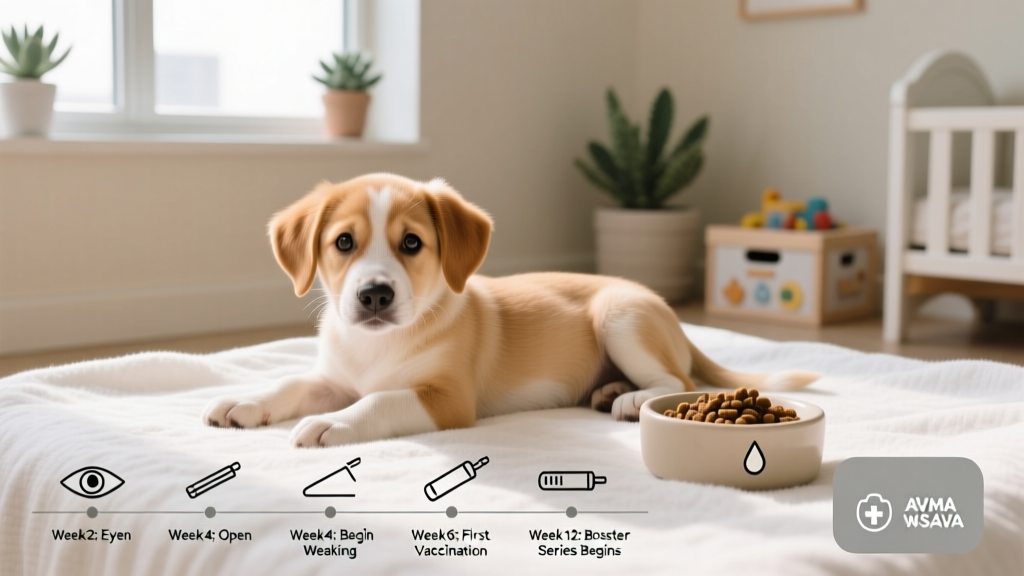
Anatolian Shepherd Dog Puppy: Complete Care Guide From 8 Weeks to 1 Year
Raising an Anatolian Shepherd dog puppy? Get age-specific milestones, feeding schedules, vaccination timelines, socialization checklists, and first-year costs.

The Anatolian Shepherd Dog is not a typical puppy experience. Bred for thousands of years to guard livestock across the harsh terrain of central Turkey, these independent, powerful dogs mature slowly — often not reaching full emotional and physical maturity until 3 to 4 years of age. What you do between 8 weeks and 12 months sets the foundation for a 110–150 lb guardian who will make his own decisions about threats, boundaries, and trust.
This guide gives you breed-specific, week-by-week expectations for raising an Anatolian Shepherd dog puppy — not generic large-breed advice. If you're prepared for the commitment, you'll be rewarded with one of the most loyal and capable guardians in the canine world.
Anatolian Shepherd Puppy Breed Snapshot
| Adult Weight | Males: 110–150 lb (50–68 kg) | Females: 80–120 lb (36–54 kg) |
| Adult Height | Males: 29+ in (74+ cm) | Females: 27+ in (69+ cm) |
| Lifespan | 11–13 years |
| Coat Type | Short to rough double coat; fawn with black mask most common |
| AKC Group | Working Group (recognized 1996) |
| Puppy Energy Level | Moderate — bursts of play followed by long rest periods |
| Temperament | Independent, reserved with strangers, fiercely loyal to family |
| Training Difficulty | High — responds to respect-based positive methods, not force |
When Should I Bring My Anatolian Shepherd Puppy Home?
For an Anatolian Shepherd dog puppy, the ideal homecoming window is 8 to 10 weeks of age. While some breeders of giant breeds may hold puppies until 10–12 weeks to complete additional socialization rounds, the critical socialization window (weeks 3–14) means you want maximum overlap with this period under your roof.
Anatolians are naturally suspicious of novelty as adults. Puppies removed from their litter too early (before 8 weeks) miss vital bite-inhibition lessons from siblings. Puppies kept past 14 weeks without broad human-directed socialization often develop heightened wariness that becomes nearly impossible to reverse. The 8–10 week window gives you 4–6 weeks of prime socialization time to work with.
Day-one checklist: Have a 48-inch wire crate (they grow fast — a properly sized crate with a divider panel works best), a confined potty area, and 4–5 days of the breeder's food to transition gradually.
Age-Specific Milestones: Week by Week
Weeks 4–8 (At the Breeder)
During this period, your Anatolian puppy is learning bite inhibition from littermates, developing early social hierarchies, and receiving maternal antibodies. A responsible breeder will begin introducing varied surfaces (gravel, grass, tarps), novel sounds (thunderstorm recordings at low volume), and gentle handling by multiple people. By week 6–7, the breeder should begin the first DHPP vaccine and administer initial deworming.
Weeks 8–12 (Homecoming & Bonding)
Expect 2–3 days of adjustment. Your puppy may cry at night, refuse food for the first meal, and sleep 18–20 hours per day. Anatolian puppies are notably observant — they'll spend significant time watching household activity before engaging. Key milestones:
- Name recognition by day 3–5
- Crate tolerance for 30–45 minutes by week 10
- Beginning to follow you room to room
- First signs of guarding behavior: alerting to door knocks, watching windows
Weeks 12–16 (Confidence Building)
Your puppy gains physical coordination and begins testing boundaries. This is when Anatolians show their independent streak — they may "ignore" known cues not out of defiance but because they've assessed the situation and decided compliance isn't necessary. Keep training sessions short (3–5 minutes) and high-value. Milestones:
- Reliable recall in low-distraction environments (70–80% success rate)
- Beginning leash walking without constant pulling
- Teething onset — increased mouthing and chewing
- May begin barking at unfamiliar people approaching the property
Weeks 16–24 (Social Maturity Begins)
This is the most critical behavioral window for an Anatolian Shepherd dog puppy. Fear periods commonly hit around 16–20 weeks — your previously confident puppy may suddenly react to trash cans, strangers, or novel objects with suspicion or avoidance. Do not force exposure. Use counter-conditioning: pair the scary stimulus with high-value treats at a distance where your puppy remains comfortable. Milestones:
- Permanent teeth erupting (3–6 months)
- Increased independence — may wander farther during off-leash time in safe areas
- Sexual maturity beginning — discuss spay/neuter timing with your vet (many large-breed specialists now recommend waiting until 12–18 months for joint health)
- Growth rate slowing; adult proportions becoming visible
Months 6–12 (Adolescence)
Anatolian adolescence is long and testing. Your puppy knows the rules and will deliberately choose when to follow them. Guarding instincts intensify — barking at night, patrolling fence lines, and wariness of visitors become pronounced. This is not aggression; it is breed-appropriate behavior emerging. Key expectations:
- Adult size reached by 10–12 months (though filling out continues to age 3)
- May challenge household hierarchy — consistent, calm leadership is essential
- Exercise needs increase to 45–60 minutes daily
- Advanced training (reliable recall, place command, leash manners) should be solidified
Feeding Schedule: Portions by Age and Weight
Anatolian Shepherd puppies grow rapidly and are at elevated risk for developmental orthopedic diseases like hip dysplasia and osteochondritis dissecans (OCD). Overfeeding accelerates growth rate and increases joint stress. Feed a large-breed puppy formula with controlled calcium (1.0–1.5% on a dry matter basis) and moderate fat (12–17% DM).
| Age | Estimated Weight | Meals/Day | Daily Amount (Large-Breed Puppy Kibble) |
|---|---|---|---|
| 8–12 weeks | 15–30 lb (7–14 kg) | 3–4 meals | 2–3 cups/day |
| 3–4 months | 30–50 lb (14–23 kg) | 3 meals | 3–4.5 cups/day |
| 5–6 months | 50–75 lb (23–34 kg) | 2–3 meals | 4.5–6 cups/day |
| 7–9 months | 75–110 lb (34–50 kg) | 2 meals | 5.5–7 cups/day |
| 10–12 months | 90–140 lb (41–64 kg) | 2 meals | 6–8 cups/day |
Body Condition Score (BCS) check: Ribs should be easily felt but not visible. A visible waist when viewed from above and an abdominal tuck from the side indicate proper condition. If you can't feel ribs without pressing, reduce portions by 10–15%. Adjust based on your individual puppy's growth curve, not the bag's recommendation — kibble feeding charts assume average activity and are often generous.
Vaccination Schedule for Your Anatolian Shepherd Puppy
Anatolian puppies follow the standard AAHA canine vaccination guidelines, but their large size means higher vaccine volumes and slightly higher rates of post-vaccine lethargy. Monitor your puppy for 24–48 hours after each round.
| Age | Vaccines Administered | Notes |
|---|---|---|
| 6–8 weeks | DHPP (Distemper, Hepatitis, Parainfluenza, Parvovirus) — 1st dose | Usually given by breeder; verify records |
| 10–12 weeks | DHPP — 2nd dose; Bordetella (optional, recommended if attending group classes) | Partial immunity developing; avoid high-dog-traffic areas |
| 14–16 weeks | DHPP — 3rd (final) dose; Rabies (required by law in most US states) | Full parvo/distemper immunity ~2 weeks after this dose |
| 12–16 months | DHPP booster; Rabies booster (1-year or 3-year depending on local law) | Discuss titer testing as alternative to future DHPP boosters |
Optional vaccines to discuss with your vet: Leptospirosis (4-serovar, recommended in areas with wildlife exposure — relevant for Anatolians who patrol large properties), Lyme disease (tick-endemic regions), and Canine Influenza (H3N2/H3N8, if boarding or in outbreak areas).
Socialization Window: Weeks 3–14
The primary socialization period closes around 12–14 weeks. For an Anatolian Shepherd dog puppy — a breed genetically wired for suspicion — this window is the single most important developmental phase. Under-socialized Anatolians become difficult, sometimes dangerous, adults who cannot distinguish genuine threats from normal life.
Anatolian Puppy Socialization Checklist
Aim for positive, non-threatening exposure to the following by 14 weeks. Carry your puppy in a sling or cart before full vaccination is complete — do not let paws touch public ground.
- People (minimum 50 unique individuals): Men with beards, children running/laughing, people in hats/sunglasses/uniforms, delivery workers, people using canes/wheelchairs, tall people, people of different ethnicities
- Surfaces: Gravel, wet grass, metal grates, tarps, stairs (carry down — joints are developing), sand, snow
- Sounds: Thunder recordings, fireworks (low volume), vacuum cleaners, doorbells, car horns, livestock sounds (if rural), power tools
- Objects: Umbrellas opening, plastic bags blowing, bicycles, skateboards, flags, balloons
- Handling exercises: Paw handling (for future nail trims), ear inspection, mouth opening, collar grabs paired with treats, being gently restrained
- Other animals (controlled settings only): Fully vaccinated, calm adult dogs; cats (supervised); livestock if applicable to your household
- Environments: Car rides, pet-friendly stores (carried), outdoor café patios, quiet parks, friend's homes
Rule of thumb: If your puppy shows fear (tucked tail, flattened ears, freezing, hiding), increase distance from the stimulus and offer high-value treats. Never force interaction. A negative experience during this window can create a permanent fear imprint.
Potty Training: Realistic Timeline and Troubleshooting
Large and giant breeds mature more slowly than smaller dogs. Expect your Anatolian Shepherd puppy to achieve reliable house training between 5 and 7 months of age — not the 3-day promises you'll see online. Their bladder capacity increases gradually, and the neurological maturity for consistent sphincter control develops later in large breeds.
| Age | Maximum Crate/Bladder Hold Time | Outdoor Trips/Day | Expected Accident Frequency |
|---|---|---|---|
| 8–10 weeks | 1–2 hours (daytime) | 8–12 | 3–5 per week is normal |
| 10–14 weeks | 2–3 hours | 6–8 | 1–3 per week |
| 3–5 months | 3–4 hours | 5–6 | 0–2 per week |
| 5–7 months | 4–6 hours | 4–5 | Rare — mostly regressions during stress |
| 7–12 months | 6–8 hours | 3–4 | Should be fully reliable |
Anatolian-specific potty training tips:
- Use a consistent verbal cue ("go potty") paired with immediate treat reward. Anatolians are intelligent and will learn to eliminate on command — useful in bad weather.
- Enzyme cleaner is non-negotiable. Use a product like Nature's Miracle or Rocco & Roxie. Standard cleaners leave uric acid residue that draws the puppy back to the same spot.
- Watch for the "Anatolian squat": These puppies tend to circle once, then drop quickly. When you see circling, move immediately — you have 10–15 seconds.
- Regression at 6–8 months is common and usually coincides with hormonal changes or fear periods. Return to frequent outings and heavy praise without punishment.
Crate Training Progression
Anatolians are den-accepting dogs — they naturally seek enclosed resting spaces, which makes crate training more straightforward than with some breeds. However, their size demands planning. You'll need a 54-inch crate for a male or a 48-inch crate for a female at adult size. Start with a divider to limit space during puppyhood.
| Age | Max Daytime Crate Duration | Overnight Duration | Milestone |
|---|---|---|---|
| 8–10 weeks | 30–60 minutes | 3–4 hours (then potty break) | Entering voluntarily for meals |
| 10–14 weeks | 1–2 hours | 4–5 hours | Sleeping through night (some nights) |
| 4–6 months | 2–3 hours | 6–7 hours | Choosing crate as resting spot voluntarily |
| 6–12 months | 3–4 hours max | 7–8 hours | Door can be left open; dog self-crates |
Never crate an Anatolian puppy for more than 4 hours during the day at any age. These are working dogs who need environmental stimulation. Extended crating leads to frustration-based destruction and heightened anxiety — the opposite of the calm, confident guardian you're raising.
Teething Timeline and Relief Strategies
Anatolian Shepherd puppies begin losing deciduous (baby) teeth around 12–16 weeks, with the process completing by 6–7 months. The peak discomfort period — and peak destructive chewing — hits between 4 and 6 months when the large premolars and canines erupt.
Safe chew options by age:
- 8–12 weeks: Soft rubber toys (Kong Classic, puppy size), frozen wet washcloths, soft bully sticks
- 3–5 months: Medium Kong stuffed with frozen peanut butter (xylitol-free), Nylabone Puppy Chew, frozen carrot sticks
- 5–7 months: Large Kong Classic or Extreme, yak cheese chews (supervised — remove when small enough to swallow), beef tendons
Avoid: Raw bones (splintering risk, bacterial contamination), antlers (too hard — risk of tooth fracture in powerful chewers), and any edible chew small enough to be a choking hazard for a puppy who will soon weigh 100+ lb.
Common Anatolian Puppy Problems and Solutions
Puppy Biting and Nipping
Anatolian puppies are moderate mouthers — less intense than retrievers but more persistent than some breeds. Their guarding heritage means they use their mouths to control movement, which manifests as ankle-nipping or sleeve-grabbing.
Solution: Redirect to an appropriate chew toy the instant teeth touch skin. If biting persists, implement a "game over" protocol: stand up, fold arms, and withdraw attention for 15–30 seconds. Resume interaction only when puppy is calm. Consistency across all household members is critical — one person allowing mouthing undermines everyone else's work.
Nighttime Whining
Expect 5–10 nights of crate whining after homecoming. Anatolians are vocal dogs, and separation from littermates triggers distress vocalizations.
Solution: Place the crate in your bedroom for the first 2–3 weeks so your puppy can hear and smell you. Use a heartbeat toy (Snuggle Puppy brand) and a blanket that smells like the breeder's home. Take puppy out for a potty break if whining continues past 30 minutes — then return to crate without play or extended interaction.
Destructive Chewing
Between 4–8 months, Anatolian puppies can destroy baseboards, furniture legs, and shoes with alarming efficiency. Their jaw strength is considerable even as juveniles.
Solution: Puppy-proof proactively — use bitter apple spray on furniture legs, block access to rooms with baby gates, and provide a rotating selection of 5–7 appropriate chews. Supervise or confine (crate or exercise pen) whenever you cannot watch directly. A tired puppy chews less: ensure adequate physical exercise and mental enrichment (snuffle mats, frozen Kongs, scatter feeding).
Guarding Behavior Emerging Early
Some Anatolian puppies as young as 10–12 weeks will position themselves between their owner and approaching strangers, or bark alertly at visitors. This is normal breed behavior — not aggression — but needs shaping.
Solution: Teach a "place" command (go to a designated mat/bed) using positive reinforcement. Reward calm behavior around visitors heavily. Never punish alert barking — instead, acknowledge the alert ("thank you, I see them") and redirect to a trained behavior. You want a dog who alerts and then defers to your judgment, not one who escalates independently.
When Can My Puppy Go Outside and Meet Other Dogs?
This is a critical balance: the socialization window closes around 14 weeks, but full vaccination immunity isn't achieved until approximately 18 weeks (2 weeks after the final DHPP at 14–16 weeks).
Safe exposure before full immunity:
- Carry your puppy in public spaces — parks, outdoor markets, friend's homes
- Arrange playdates with fully vaccinated, known-healthy dogs in private yards
- Attend puppy socialization classes that require proof of first DHPP and maintain sanitized facilities
- Avoid dog parks, pet store floors, and areas with unknown dog traffic until 1 week after the final DHPP booster
After full immunity (~18 weeks): Gradually introduce dog parks (start during low-traffic hours), hiking trails, and group walks. Anatolians tend to be selective with unfamiliar dogs — don't expect dog-park friendliness. One or two trusted dog friends is more realistic for this breed.
First-Year Cost Breakdown
Raising an Anatolian Shepherd dog puppy is a significant financial commitment. Giant breeds eat more, require larger supplies, and carry higher veterinary costs due to size-based medication dosing and breed-specific health screening.
| Category | Item | Estimated Cost (USD) |
|---|---|---|
| Purchase/Adoption | Reputable breeder (health-tested parents, AKC registered) | $1,500–$3,000 |
| Breed rescue adoption (less common but available) | $300–$600 | |
| Veterinary | Puppy vaccine series (3 rounds + rabies) | $200–$400 |
| Spay/neuter (large breed, 12–18 months) | $400–$800 | |
| Heartworm/test + year-round preventive | $150–$300 | |
| Flea/tick preventive (year-round) | $150–$250 | |
| Hip/elbow X-rays (OFA preliminary, ~24 months) | $200–$400 | |
| Food | Large-breed puppy food (first year total) | $600–$1,000 |
| Supplies | Crate (54" with divider), bed, bowls, leash/harness | $250–$500 |
| Fencing (6-foot minimum — Anatolians can climb/jump) | $1,500–$5,000+ | |
| Training | Group puppy class (6–8 weeks) | $150–$300 |
| Private training sessions (2–4 recommended) | $200–$600 | |
| Insurance | Pet insurance (annual premium, large breed) | $600–$1,200 |
Estimated first-year total (excluding fencing): $4,500–$8,500 depending on your region, veterinary costs, and whether you purchase from a breeder or adopt. Fencing is a one-time infrastructure cost that varies enormously based on property size. For an Anatolian, secure fencing is not optional — their roaming and guarding instincts make escape-proof containment essential.
Frequently Asked Questions
How often should I feed my Anatolian Shepherd puppy at each age?
From 8–12 weeks, feed 3–4 meals per day. Reduce to 3 meals at 12 weeks, then transition to 2 meals per day around 5–6 months. Never feed a single large meal to a giant-breed dog — splitting food into two meals reduces bloat (gastric dilatation-volvulus) risk, which is a life-threatening emergency in deep-chested breeds like the Anatolian.
When will my puppy be fully potty trained?
Most Anatolian Shepherd puppies achieve reliable house training between 5 and 7 months. Some males take closer to 8–9 months, particularly if they begin marking behavior during adolescence. Consistency in schedule, supervision, and positive reinforcement for outdoor elimination are the primary factors. If accidents increase suddenly after a period of reliability, consult your veterinarian to rule out urinary tract infection.
How do I stop my Anatolian puppy from biting and nipping?
Use redirection and withdrawal of attention rather than physical punishment. When teeth touch skin, say a calm "oops" or "too bad," redirect to a chew toy, and praise enthusiastically when the puppy chews the toy instead. If biting continues, stand up and leave the area for 15–30 seconds. All household members must follow the same protocol. Puppy biting typically decreases significantly by 5–6 months as permanent teeth erupt and impulse control improves.
Are Anatolian Shepherd puppies good with children?
Anatolians raised with respectful children from puppyhood are typically gentle and protective. However, their size alone poses a risk — a 60-lb 5-month-old puppy can knock over a toddler during play. Always supervise interactions, teach children not to pull ears/tail or disturb the puppy while eating or sleeping, and provide the puppy with a child-free retreat space (crate or gated room). The AKC recommends structured introductions and ongoing supervision for all dog-child interactions.
Do Anatolian Shepherd puppies need a job?
While not every Anatolian needs to guard livestock, they do need a sense of purpose. Without an outlet for their guarding instincts, they'll create their own "job" — which may include patrolling windows all day, barking at every passing car, or becoming overly protective of one family member. Structured activities like scent work, obedience training, cart pulling, or simply having a designated "watch spot" with clear boundaries satisfy their need for purpose.
Anouk Beaumont
All our authors care for dogs every day — read more of their work on the authors page.