American Akita Puppy: Complete Week-by-Week Care & Training Guide
Raise your American Akita puppy with confidence. Week-by-week milestones, feeding schedules, vaccination timelines, and breed-specific training tips for 2026.

The American Akita is a large, powerful, and deeply loyal breed that demands thoughtful preparation before you bring a puppy home. Unlike more forgiving breeds, Akitas mature into strong-willed guardians that require early socialization, structured routines, and consistent positive reinforcement training from day one. This guide walks you through every critical stage of your American Akita puppy's first year — with breed-specific data you won't find in generic puppy manuals.
When Should You Bring Your American Akita Puppy Home?
Responsible American Akita breeders will not release puppies before 8 weeks of age, and many reputable breeders of large guardian breeds prefer to keep puppies until 10–12 weeks. This extended time with the litter allows critical bite inhibition learning from littermates and early neurological development that you simply cannot replicate at home.
The American Kennel Club recommends bringing puppies home between 8 and 12 weeks. For Akitas specifically, a 10-week pickup gives the breeder time to complete the first DHPP vaccination series and begin early temperament assessments — both of which set your puppy up for a smoother transition.
American Akita Puppy Milestones: Week-by-Week Timeline
| Age Range | Weight (approx.) | Key Milestones | Owner Action Items |
|---|---|---|---|
| Weeks 4–8 (with breeder) |
5–15 lb / 2.3–6.8 kg | Eyes/ears fully open; solid food transition; littermate social play; first DHPP vaccine at 6–8 weeks | Visit breeder; observe litter temperament; verify health testing of parents (OFA hips, thyroid, cardiac) |
| Weeks 8–12 | 15–30 lb / 6.8–13.6 kg | Home transition; rapid bonding phase; fear imprint period begins (8–11 weeks); crate introduction; second DHPP at 10–12 weeks | Establish routine; begin name recognition; short positive exposures to novel surfaces, sounds, and calm people |
| Weeks 12–16 | 30–45 lb / 13.6–20.4 kg | Third DHPP at 14–16 weeks; teething begins; testing boundaries; longer attention spans for training | Enroll in puppy kindergarten (positive reinforcement only); increase structured socialization; introduce handling exercises |
| Weeks 16–24 | 45–70 lb / 20.4–31.8 kg | Rabies vaccine; peak teething discomfort; juvenile independence phase; guarding instincts may begin surfacing | Continue group classes; introduce leash walking structure; begin resource-sharing exercises to prevent guarding |
| 6–12 Months | 70–110 lb / 31.8–49.9 kg (males); 55–85 lb / 24.9–38.6 kg (females) | Sexual maturity; adolescent regression in training; adult coat transition; growth plates still open | Discuss spay/neuter timing with vet (often 12–18 months for large breeds); maintain training consistency; avoid forced high-impact exercise |
American Akitas are slow-maturing dogs. According to the AKC breed standard, males reach 100–130 lb (45–59 kg) and females 70–100 lb (32–45 kg) at full adult size, but many Akitas don't reach their final physical and mental maturity until 2.5 to 3 years of age. Expect puppy-like behavior to persist well beyond the first year.
Feeding Schedule for Your American Akita Puppy
Large-breed puppies like the American Akita require a diet formulated specifically for large-breed growth. The ASPCA and veterinary nutritionists emphasize that feeding an adult-formula or all-life-stages food to a large-breed puppy can cause excessively rapid growth, increasing the risk of hip dysplasia and other orthopedic conditions.
Look for a food that states on the label: "This product is formulated to meet the nutritional levels established by the AAFCO Dog Food Nutrient Profiles for growth/all life stages including growth of large-size dogs."
Portion Guide by Age and Weight
| Puppy Age | Expected Weight | Meals Per Day | Approx. Daily Amount (Large-Breed Puppy Kibble) |
|---|---|---|---|
| 8–12 weeks | 15–30 lb / 6.8–13.6 kg | 3–4 meals | 2–3 cups total (split across meals) |
| 12–16 weeks | 30–45 lb / 13.6–20.4 kg | 3 meals | 3–4 cups total |
| 4–6 months | 45–70 lb / 20.4–31.8 kg | 2–3 meals | 4–5.5 cups total |
| 6–12 months | 70–110 lb / 31.8–49.9 kg | 2 meals | 5–7 cups total |
Important: These are starting estimates. Individual caloric needs vary based on activity level, metabolism, and specific food caloric density (kcal/cup). Use body condition scoring — you should be able to feel your puppy's ribs without pressing hard, and see a visible waist from above. Adjust portions up or down by 10–15% based on weekly weight checks. Your veterinarian will help you fine-tune this at each wellness visit.
Vaccination Schedule: What Your American Akita Puppy Needs and When
Your puppy's immune system is immature at 8 weeks, and maternal antibodies from the dam gradually wane between 6 and 16 weeks. The vaccination series is designed to close that immunity gap. The American Veterinary Medical Association (AVMA) outlines core vaccination protocols that your vet will customize based on your region and lifestyle.
| Age | Vaccines Administered | Notes |
|---|---|---|
| 6–8 weeks | DHPP (Distemper, Hepatitis/Adenovirus, Parainfluenza, Parvovirus) — 1st dose | Typically given by breeder; verify documentation |
| 10–12 weeks | DHPP — 2nd dose; Bordetella (optional, recommended if attending puppy classes) | First vet visit for you; fecal test and deworming likely included |
| 14–16 weeks | DHPP — 3rd dose; Rabies (required by law in most states) | Final puppy series visit; discuss Leptospirosis and Lyme based on your area |
| 12–16 months | DHPP booster; Rabies booster (1-year or 3-year depending on local law) | Annual wellness exam; heartworm test if on preventive |
Non-core vaccines to discuss with your vet: Leptospirosis (increasingly common in suburban areas), Lyme disease (tick-endemic regions), and Canine Influenza (if your dog will be boarded or attend doggy daycare). Your veterinarian will determine which are appropriate based on your local disease prevalence and your puppy's lifestyle.
Socialization Window: The Critical Weeks 3–14 Period
The primary socialization window for puppies closes between 12 and 14 weeks of age. For a breed as naturally reserved and protective as the American Akita, this window is arguably the single most important developmental period. Under-socialized Akitas are significantly more likely to develop fear-based reactivity, territorial aggression, and inability to cope with novel stimuli as adults.
Because your puppy will not be fully vaccinated until approximately 16 weeks, you must balance socialization with disease risk. The AVMA and the American Veterinary Society of Animal Behavior (AVSAB) recommend that puppies begin socialization as early as 7–8 weeks, even before the full vaccine series is complete, in controlled environments.
American Akita Puppy Socialization Checklist
People & Handling (Weeks 8–14):
- Meet at least 15–20 different people (varied ages, ethnicities, hat-wearers, people with canes/wheelchairs, children with supervision)
- Accept handling of paws, ears, mouth, and tail without resistance (practice daily for 2–3 minutes)
- Tolerate being gently restrained for 10–15 seconds (simulates vet exams)
- Accept treats from strangers (builds positive association)
Environments & Surfaces (Weeks 8–14):
- Walk on grass, gravel, metal grates, wet pavement, and slippery floors
- Experience car rides (start with 5-minute trips, build to 20 minutes)
- Visit a veterinary clinic for a "happy visit" (no procedures, just treats and praise)
- Hear vacuum cleaners, doorbells, thunderstorms (use recorded sounds at low volume, gradually increasing)
Other Animals (Weeks 10–16, post-2nd vaccine):
- Attend a structured puppy kindergarten class (4–6 puppies, all vaccinated to age)
- Observe cats, livestock, and small animals from a calm distance
- Play with 2–3 known, fully vaccinated, temperament-tested adult dogs
- Practice calm behavior around other leashed dogs on walks (no on-leash greetings initially)
Akita-Specific Priorities:
- Practice being approached while eating (drop high-value treats near bowl to build positive associations — prevents resource guarding)
- Introduce grooming tools early: brush, nail clippers, ear cleaner — pair every touch with treats
- Expose to other dogs of the same sex (Akitas, particularly males, tend toward same-sex aggression as adults — early positive exposure helps but may not fully eliminate this breed trait)
Potty Training Timeline and Realistic Expectations
American Akita puppies are generally clean dogs and tend to potty train faster than some breeds — but "faster" still means 4 to 6 months for reliable house training, with occasional accidents possible until 8–10 months. Any source claiming to potty train a puppy in 3 days is setting you up for frustration.
Potty Training Progression
| Age | Bladder Capacity | Outdoor Trips Per Day | Expectation |
|---|---|---|---|
| 8–10 weeks | 20–30 minutes | 12–15 trips | Accidents every day; take out after every nap, meal, and play session |
| 10–14 weeks | 45–60 minutes | 8–12 trips | Accidents 2–4 times per week; puppy begins signaling (sniffing, circling) |
| 14–20 weeks | 1.5–2.5 hours | 6–8 trips | Accidents 0–2 times per week; reliable if on schedule |
| 5–8 months | 3–5 hours | 4–6 trips | Mostly reliable; occasional regression during teething or routine changes |
Troubleshooting tips specific to Akitas:
- Submissive/excited urination: Some Akita puppies urinate when greeting. Keep greetings low-key — ignore the puppy for the first 2 minutes when you come home, then greet calmly.
- Refusing to go in bad weather: Akitas dislike rain and cold despite their thick coats. Use a covered potty area or a large umbrella during storms. Be patient — never force or punish.
- Marking behavior: Intact males may begin lifting a leg and marking indoors as early as 5 months. Interrupt calmly, carry outside, and reward elimination outdoors. Discuss neuter timing with your vet.
Crate Training Progression and Time Limits
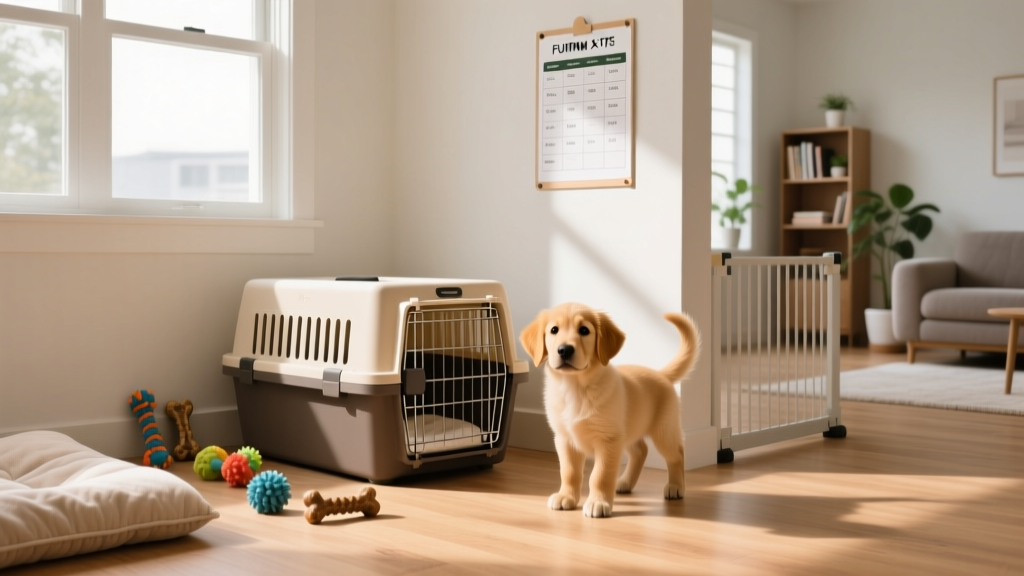
Crate training is essential for American Akitas — both for house training and for providing a secure den that satisfies their instinct to seek a defined territory. Akitas who are crate-trained as puppies handle boarding, vet hospitalization, and travel far better throughout life.
Crate size: Purchase a 48-inch (122 cm) wire or plastic crate with a divider panel. The crate should allow your adult Akita to stand, turn around, and lie down — but no larger, or they may eliminate in one corner and sleep in another.
| Puppy Age | Maximum Crate Time (Daytime) | Nighttime Expectation |
|---|---|---|
| 8–10 weeks | 30–60 minutes | 2–3 hours before needing a potty break |
| 10–14 weeks | 1–2 hours | 3–4 hours |
| 14–20 weeks | 2–3 hours | 5–6 hours (may sleep through the night) |
| 5–8 months | 3–4 hours | 7–8 hours |
Never use the crate as punishment. Feed meals inside the crate with the door open, provide a stuffed Kong or frozen chew, and gradually build duration. If your Akita puppy whines in the crate, wait for a brief pause in vocalization (even 3 seconds of silence) before opening the door — this teaches that calm behavior, not whining, earns freedom.
Teething Timeline and Relief Strategies (3–6 Months)
American Akita puppies begin losing their 28 deciduous (baby) teeth around 12–16 weeks, with the full set of 42 adult teeth typically in place by 6–7 months. During this window, your puppy will chew aggressively to relieve gum pain — and an Akita's jaw strength means they can destroy furniture, baseboards, and cheap toys rapidly.
Safe Chew Recommendations by Stage
- 12–16 weeks (early teething): Frozen wet washcloths (twist and freeze), rubber puppy Kongs stuffed with softened kibble and frozen, Nylabone Puppy Chew (soft flex variety)
- 16–24 weeks (peak chewing): Benebone Wishbone (puppy formula), bully sticks (supervised only — remove when small enough to swallow), frozen carrot sticks, West Paw Zogoflex Hurley
- 24–30 weeks (adult teeth setting): Transition to medium-density rubber toys; avoid hard antlers, cooked bones, and nylon bones harder than a fingernail — these can fracture developing teeth
Common American Akita Puppy Problems and Solutions
Puppy Biting and Nipping
Akita puppies explore the world with their mouths, and their strong jaws make even playful nipping painful. Here is how to stop puppy biting using force-free methods:
- Redirect: When teeth touch skin, immediately offer an appropriate chew toy. Praise enthusiastically when they bite the toy instead.
- Withdraw attention: If redirecting doesn't work, stand up, cross your arms, and turn away for 10–15 seconds. This mimics littermate behavior — puppies that bite too hard are ignored by siblings.
- Time-outs: For persistent biting, calmly place the puppy in a playpen or crate for 30–60 seconds to calm down. Release and resume play.
- Never use physical punishment: Hitting, muzzle-grabbing, or alpha-rolling an Akita puppy will damage trust and can trigger defensive aggression — particularly dangerous in a breed that matures into a 100+ lb guardian.
Whining and Crying (Especially at Night)
First nights home are the hardest. Your Akita puppy has never been separated from littermates. Place the crate next to your bed for the first 1–2 weeks so they can hear and smell you. A Snuggle Puppy (with heartbeat simulator) or a warm water bottle wrapped in a towel can ease the transition. Expect 2–5 nights of intermittent whining before they settle.
Destructive Chewing
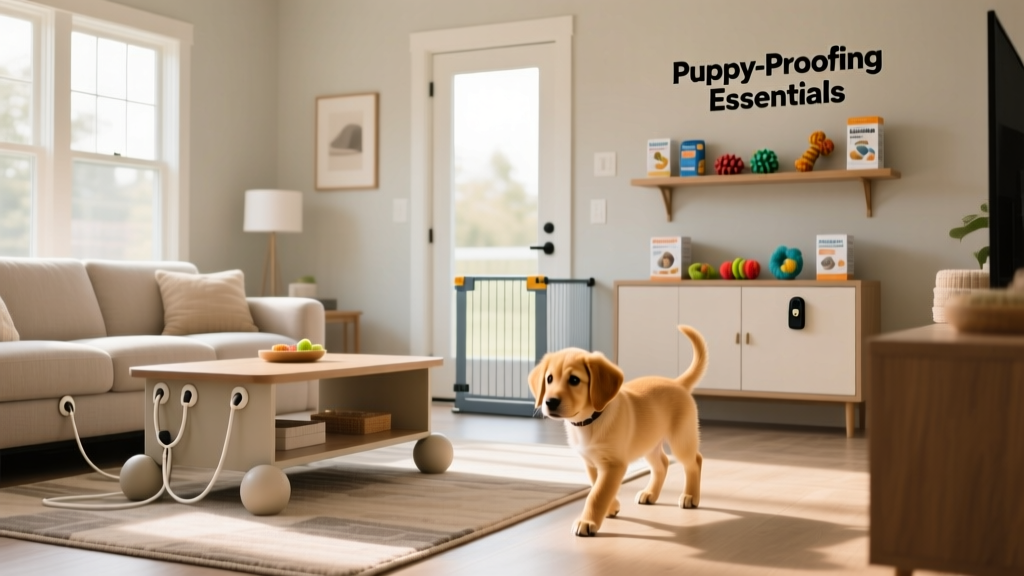
Akitas are powerful chewers. Puppy-proof your home by removing shoes, cords, and small objects from floor level. Provide 4–5 approved chew options at all times, rotating them every few days to maintain novelty. If you catch your puppy chewing something forbidden, redirect to an approved chew and reward — do not chase or scold, as this can inadvertently reinforce the behavior through attention.
Stubbornness and Independence
This is not a problem — it's a breed trait. Akitas were bred to think independently while hunting large game. Training sessions should be short (5–8 minutes for puppies under 16 weeks), highly rewarding, and varied. If your puppy disengages, end the session on a positive note and try again later. Force-free, reward-based training is the only approach that builds the trust this breed requires.
First-Year Cost Breakdown for an American Akita
Large-breed puppies cost significantly more than small breeds in food, medication (heartworm and flea/tick preventives are dosed by weight), and supplies. Here is a realistic first-year budget based on 2026 pricing:
| Category | Estimated Cost Range | Details |
|---|---|---|
| Puppy Purchase | $1,500–$3,500 | From a responsible breeder with OFA health testing; adoption from breed rescue: $300–$600 |
| Veterinary Care | $800–$1,500 | 3–4 puppy visits, vaccines, fecal tests, deworming, spay/neuter ($400–$800 for large breed) |
| Food (Year 1) | $600–$1,000 | Premium large-breed puppy food; transitioning to adult formula at 12–18 months |
| Preventive Medications | $250–$500 | Heartworm, flea/tick (weight-based dosing increases cost as puppy grows) |
| Supplies | $400–$700 | 48" crate, heavy-duty leash/harness, grooming tools, chew toys, slow-feeder bowls, baby gates |
| Training | $300–$800 | Puppy kindergarten ($150–$250 for 6-week course), plus private sessions if needed ($80–$150/session) |
| Pet Insurance (Optional) | $500–$900 | Annual premium for large-breed puppy; highly recommended for Akitas given orthopedic and autoimmune risks |
| Total Estimated First Year | $4,350–$8,900 | Excludes emergency veterinary care (budget an additional $1,000–$3,000 emergency fund) |
When Can Your American Akita Puppy Go Outside and Meet Other Dogs?
This is one of the most common questions new Akita owners ask, and the answer requires balancing disease risk against the closing socialization window:
- Immediately (8+ weeks): Carry your puppy to novel environments — outdoor seating areas, parking lots, quiet neighborhoods — without placing them on the ground where unknown dogs have been. Let them observe from your arms or a stroller.
- After 2nd DHPP (approximately 12 weeks): Begin short, controlled walks in low-traffic areas. Avoid dog parks, pet store floors, and areas with heavy dog feces contamination.
- After 3rd DHPP and Rabies (approximately 16 weeks): Your puppy is considered fully vaccinated. You can now visit public parks, attend group training classes, and arrange playdates with known, vaccinated dogs.
- Dog parks: Delay until at least 6 months, and consider whether dog parks are appropriate at all for Akitas. Many adult Akitas do not enjoy unstructured play with unfamiliar dogs, and their size and strength make any conflict potentially dangerous.
Frequently Asked Questions
How often should I feed my American Akita puppy at each age?
Feed 3–4 meals daily from 8–12 weeks, 3 meals from 12–16 weeks, transition to 2 meals from 4–6 months onward. Consistent meal timing helps regulate digestion and supports potty training predictability. Free-feeding is not recommended for Akitas, as it complicates appetite monitoring (a key early indicator of illness) and contributes to rapid growth.
When will my American Akita puppy be fully potty trained?
Most American Akita puppies are reliably house-trained by 5–6 months if you maintain a consistent schedule. Some individuals may have occasional accidents until 8–10 months, especially during periods of excitement, routine changes, or adolescence. If your puppy is having frequent accidents beyond 6 months despite consistent training, consult your veterinarian to rule out urinary tract infections or anatomical issues.
How do I stop my Akita puppy from biting and nipping?
Redirect to appropriate chew toys, withdraw attention for 10–15 seconds when teeth touch skin, and use brief time-outs for persistent biting. Never use physical punishment. Enroll in a positive reinforcement puppy class where your puppy learns bite inhibition through structured play with other puppies. Most Akita puppies significantly reduce mouthing by 5–6 months as adult teeth come in.
What vaccines does my American Akita puppy need?
Core vaccines include DHPP (Distemper, Hepatitis, Parainfluenza, Parvovirus) given at 6–8, 10–12, and 14–16 weeks, plus Rabies at 14–16 weeks. Non-core vaccines like Bordetella, Leptospirosis, and Lyme are recommended based on your puppy's lifestyle and regional disease prevalence. Your veterinarian will create a customized protocol.
Are American Akitas good with children?
American Akitas can be excellent family dogs when raised with children and properly socialized. However, they are large, powerful dogs with strong prey drive and low tolerance for rough handling. Never leave any Akita unsupervised with children under 10. Teach children to respect the dog's space, especially during eating and sleeping. Early, positive exposure to children during the socialization window is critical.
Should I get pet insurance for my American Akita puppy?
Yes, strongly consider it. Akitas are predisposed to hip dysplasia (estimated 12–15% prevalence per OFA data), autoimmune thyroiditis, progressive retinal atrophy, and gastric dilatation-volvulus — conditions that can cost $3,000–$8,000+ to treat. Enrolling at 8–10 weeks, before any pre-existing conditions are documented, ensures the broadest coverage. Compare plans from at least 3 providers and look for policies that cover hereditary conditions without per-incident caps.
Jonas Cole
All our authors care for dogs every day — read more of their work on the authors page.