Ambull Puppy Guide: Milestones, Feeding, Training & First-Year Care
Complete Ambull puppy guide covering age milestones, feeding portions, potty training, vaccination schedule, socialization, and first-year costs for this

The Ambull — a designer cross between the American Bulldog and the Neapolitan Mastiff (sometimes called the American Bandogge Mastiff in certain registries) — is a powerful, loyal companion that demands thoughtful preparation from day one. An Ambull puppy will grow rapidly, potentially reaching 80–120 lb (36–54 kg) as an adult, which means every early decision about nutrition, socialization, and training carries outsized consequences. This guide walks you through each developmental stage with specific numbers, timelines, and strategies so you can raise a confident, well-mannered dog.
When Should You Bring Your Ambull Puppy Home?
Reputable breeders of large and giant breeds like the Ambull typically release puppies between 8 and 10 weeks of age. While some smaller breeds can transition at 8 weeks, giant-breed puppies benefit from an extra week or two with their littermates and dam. During weeks 6–8, puppies learn critical bite inhibition and social signals from siblings — removing them too early often results in harder mouthiness and poor canine communication skills later.
Bring your Ambull puppy home during a quiet period when you can dedicate at least 3–5 consecutive days to the transition. Avoid bringing a new puppy home during holidays, moves, or major schedule changes. The first 72 hours set the tone for crate acceptance, potty habits, and bonding.
Pro tip: Ask your breeder for a blanket or towel that has been with the litter. The familiar scent dramatically reduces first-night whining and helps your puppy settle into the crate faster.
Ambull Puppy Development Milestones by Age
Large-breed puppies like the Ambull follow a slightly extended developmental timeline compared to smaller breeds. Here is what to expect at each stage:
| Age Range | Expected Weight (Approx.) | Key Milestones | Your Focus |
|---|---|---|---|
| 4–8 weeks | 5–15 lb (2–7 kg) | Eyes/ears fully open; weaning onto solid food; littermate play teaches bite inhibition; fear imprint period begins at ~5 weeks | Breeder handles daily exposure to surfaces, sounds, and gentle handling exercises |
| 8–12 weeks | 15–30 lb (7–14 kg) | Rapid bonding phase; bladder control ~1 hour per month of age; first fear period peaks (8–11 weeks); deciduous teeth fully erupted | Crate training, potty routine, name recognition, gentle handling, first vet visit |
| 12–16 weeks | 30–45 lb (14–20 kg) | Socialization window closing; improved bladder control (3–4 hours); testing boundaries; chewing intensifies | Continued socialization, basic obedience (sit, down, recall), leash introduction |
| 16–24 weeks | 45–70 lb (20–32 kg) | Teething begins (~16 weeks); second fear period may appear (6–8 months); growth plates still open; independence increases | Chew management, continued training, avoid forced high-impact exercise, spay/neuter discussion |
| 6–12 months | 70–110 lb (32–50 kg) | Sexual maturity (if intact); adolescent regression in obedience; adult teeth fully set by ~7 months; approaching adult frame size | Advanced training, impulse control, structured exercise, continued socialization with unfamiliar dogs/people |
Ambull puppies, inheriting genetics from both the American Bulldog and the Neapolitan Mastiff, tend to mature slowly. Expect your dog to continue filling out musculoskeletally until 18–24 months of age, even though height growth slows significantly after 12 months.
Feeding Schedule: Exact Portions by Age and Weight
Large-breed puppies require a diet formulated specifically for controlled growth. Feeding a standard puppy formula can cause your Ambull to grow too quickly, increasing the risk of hip dysplasia, osteochondritis dissecans (OCD), and other developmental orthopedic diseases. Look for kibble that meets AAFCO guidelines for large-breed puppy growth — the label must state "growth" and ideally note it is appropriate for large-size dogs (70 lb+ adult weight).
Recommended Feeding Schedule
| Puppy Age | Meals Per Day | Approx. Daily Portion* | Notes |
|---|---|---|---|
| 8–12 weeks | 4 meals | 2.5–3.5 cups/day | Soften kibble with warm water if needed; feed at 7am, 11am, 3pm, 7pm |
| 12–16 weeks | 3 meals | 3.5–4.5 cups/day | Transition to dry kibble; space meals evenly (7am, 12pm, 6pm) |
| 16–24 weeks | 3 meals | 4.5–6 cups/day | Monitor body condition score (BCS) — ribs should be palpable but not visible |
| 6–9 months | 2 meals | 5–7 cups/day | Reduce to twice daily; adjust based on activity and BCS |
| 9–12 months | 2 meals | 5–8 cups/day | Begin transitioning to large-breed adult formula over 7–10 days around 12 months |
*Portion sizes are estimates based on a large-breed puppy kibble providing approximately 350–400 kcal/cup (e.g., Royal Canin Giant Puppy, Purina Pro Plan Large Breed Puppy, or Hill's Science Diet Large Breed Puppy). Always use the feeding chart on your specific food's packaging as a starting point, then adjust based on your puppy's body condition. Your veterinarian can help determine the ideal caloric intake.
Vaccination Schedule: What Your Ambull Puppy Needs and When
Your Ambull puppy receives maternal antibodies from colostrum that gradually wane between 6 and 16 weeks. Vaccinations are timed to fill immunity gaps as those antibodies decline. The American Veterinary Medical Association (AVMA) and the American Animal Hospital Association (AAHA) recommend the following core puppy vaccination protocol:
| Age | Vaccine(s) | Type | Estimated Cost |
|---|---|---|---|
| 6–8 weeks | DHPP (Distemper, Hepatitis/Adenovirus, Parainfluenza, Parvovirus) — 1st dose | Core | $25–$45 |
| 10–12 weeks | DHPP — 2nd dose; Bordetella (intranasal or injectable) | Core + Lifestyle | $40–$65 |
| 14–16 weeks | DHPP — 3rd dose; Rabies (required by law in most US states) | Core + Legal | $45–$75 |
| 12–16 months | DHPP booster; Rabies booster (1-year or 3-year depending on product) | Core + Legal | $50–$80 |
Non-core vaccines to discuss with your vet based on lifestyle:
- Leptospirosis — recommended if your puppy will hike, swim in natural water, or live in areas with wildlife/rodent exposure
- Lyme disease (Borrelia burgdorferi) — recommended in tick-endemic regions (Northeast, Upper Midwest, Pacific Northwest)
- Canine influenza (H3N2/H3N8) — recommended for dogs in boarding, daycare, or frequent dog-park settings
When Can Your Puppy Go Outside and Meet Other Dogs?
This is one of the most common — and most consequential — questions new puppy owners ask. The traditional advice was to wait until all vaccinations are complete (~16 weeks). However, the American Veterinary Society of Animal Behavior (AVSAB) recommends that puppies begin socialization outings as early as 7–8 weeks, at least 7 days after their first DHPP vaccine. The reasoning: the critical socialization window closes around 14–16 weeks, and the behavioral risks of under-socialization (fear, aggression, anxiety) statistically outweigh the disease risks when basic precautions are followed.
Safe early outings (8–16 weeks, before full immunity):
- Carry your puppy through pet-friendly stores (home improvement stores, garden centers)
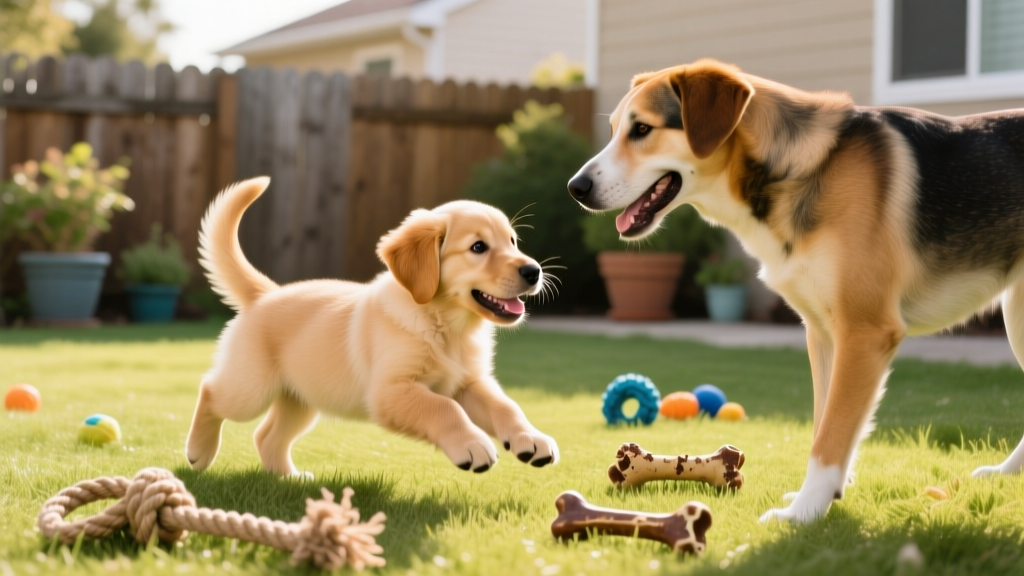
- Arrange playdates with fully vaccinated, healthy adult dogs in private yards
- Visit friends' homes with known-vaccinated pets
- Attend puppy socialization classes that require proof of first vaccination
Avoid until full vaccination series is complete (~1 week after 16-week DHPP):
- Dog parks
- Areas with unknown dog feces
- Boarding facilities without verified vaccination requirements
- Walking on public sidewalks in high-dog-traffic areas
Socialization Window: The Critical 3–14 Week Period
The window between 3 and 14 weeks of age is when your Ambull puppy's brain is most receptive to new experiences. After 14 weeks, novel stimuli are more likely to trigger fear responses rather than curiosity. For a breed combination that inherits guardian instincts from both the American Bulldog and Neapolitan Mastiff, thorough early socialization is non-negotiable. Under-socialized Ambulls are at higher risk for leash reactivity, territorial aggression, and fear-based biting.
Ambull Puppy Socialization Checklist
Aim to expose your puppy to at least 5–10 new experiences per week during the socialization window. Keep every exposure positive — pair new stimuli with high-value treats (small pieces of boiled chicken, cheese, or commercial training treats). If your puppy shows fear, increase distance and let them observe from a safe spot rather than forcing interaction.
- ☐ Different floor surfaces: tile, hardwood, gravel, grass, metal grates
- ☐ Sounds: vacuum cleaner (low, from another room), doorbell, thunderstorm audio (low volume), car engine
- ☐ Handling: ears examined, paws touched, mouth opened gently, nails clipped (just tips)
- ☐ People: at least 5 different people of varying ages, heights, and appearances
- ☐ Objects: umbrella opening, hat, sunglasses, backpack, bicycle (stationary, then rolling at distance)
- ☐ Car rides (short, positive — end at a fun destination)
- ☐ Children (supervised, calm children who follow "gentle hands" rules)
- ☐ Other vaccinated dogs (1-on-1 playdates, not group settings)
- ☐ Novel environments: parking lot, outdoor café patio (carried), friend's backyard
- ☐ Grooming tools: brush, comb, nail grinder (turned on near puppy, not touching)
- ☐ Walk on leash in low-traffic neighborhood
- ☐ Puppy class attendance (positive-reinforcement based)
- ☐ Meeting a large dog (calm, vaccinated adult)
- ☐ Exposure to livestock or farm animals if accessible (from safe distance)
- ☐ Being left alone for short periods (start with 5 minutes, build to 20)
Potty Training Timeline: Realistic Expectations for Giant-Breed Puppies
Large-breed puppies like the Ambull typically develop full bladder control between 5 and 7 months of age. This is slightly later than smaller breeds, whose faster neurological maturation allows earlier reliability. Set realistic expectations: you will have accidents, and that is normal.
Potty Training Schedule by Age
| Puppy Age | Max Bladder Hold Time | Outdoor Trips Per Day | Expected Accident Frequency |
|---|---|---|---|
| 8–10 weeks | 1–2 hours | 10–12 (including overnight) | 2–4 per day (normal) |
| 10–14 weeks | 2–3 hours | 8–10 | 1–2 per day |
| 14–20 weeks | 3–4 hours | 6–8 | 0–1 per day |
| 5–7 months | 5–7 hours | 4–6 | Rare (occasional regression possible) |
Potty Training Rules That Work
- Take your puppy out on a consistent schedule: immediately after waking, after every meal, after play sessions, and before crate time.
- Use a specific cue word ("go potty" or "do your business") while they are eliminating, then reward with a high-value treat within 2 seconds of finishing.
- Supervise or confine. When you cannot watch your puppy, they should be in a crate or exercise pen. Unsupervised roaming is the #1 cause of potty training setbacks.
- Clean accidents with enzymatic cleaner (Nature's Miracle, Rocco & Roxie, or Simple Solution). Standard household cleaners do not break down uric acid crystals, and residual scent will attract repeat accidents.
- Never punish accidents. Rubbing a puppy's nose in urine or yelling after the fact only teaches your puppy to hide when they need to eliminate — making future training harder.
Most Ambull puppies achieve reliable daytime house training by 5–6 months if you maintain a consistent schedule. Overnight reliability (sleeping 7–8 hours without accidents) typically arrives around 6–7 months. Some individuals, especially males, may take until 8–9 months. If your puppy is still having daily accidents after 7 months, consult your veterinarian to rule out urinary tract infections or anatomical issues.
Crate Training Progression and Time Limits
Crate training is essential for an Ambull puppy — a 100-lb adolescent with powerful jaws can cause significant property damage if left unsupervised. The crate also accelerates potty training by leveraging a dog's natural instinct to keep their sleeping area clean.
Crate Time Limits by Age
- 8–10 weeks: Maximum 1–2 hours at a time (never leave an 8-week-old crated longer than 2 hours during the day)
- 10–14 weeks: Maximum 2–3 hours
- 14–18 weeks: Maximum 3–4 hours
- 4–6 months: Maximum 4–5 hours
- 6+ months: Maximum 6 hours during the day (overnight crating for 7–8 hours is acceptable once bladder control is established)
Choose the right crate size. Your Ambull puppy will need a 48-inch or 54-inch wire crate as an adult (e.g., MidWest iCrate or Frisco Ultimate Dog Crate, $70–$130). Buy the full-size crate now and use the included divider panel to limit space to only what your puppy needs — enough room to stand, turn around, and lie down. Too much space undermines potty training because the puppy can eliminate in one corner and sleep in another.
Crate Training Steps
- Days 1–3: Leave the crate door open. Toss treats inside. Feed meals in the crate. Let your puppy nap there voluntarily.
- Days 4–7: Close the door during meals. Sit nearby. Open the door as soon as they finish eating.
- Week 2: Close the door for 5–10 minute intervals while you are in the room. Gradually increase to 20–30 minutes.
- Week 3+: Leave the room for brief periods (start with 2 minutes, build to 30). Return calmly — do not make a big fuss when releasing your puppy.
Expect protest barking or whining during the first 3–7 nights. This is normal. If you are confident your puppy does not need to eliminate, wait for a brief pause in the whining before releasing them — otherwise, you teach them that noise equals freedom. A white noise machine or a snuggle puppy toy with a heartbeat simulator (SmartPetLove Snuggle Puppy, ~$40) can ease the transition.
Teething Timeline and Relief Strategies
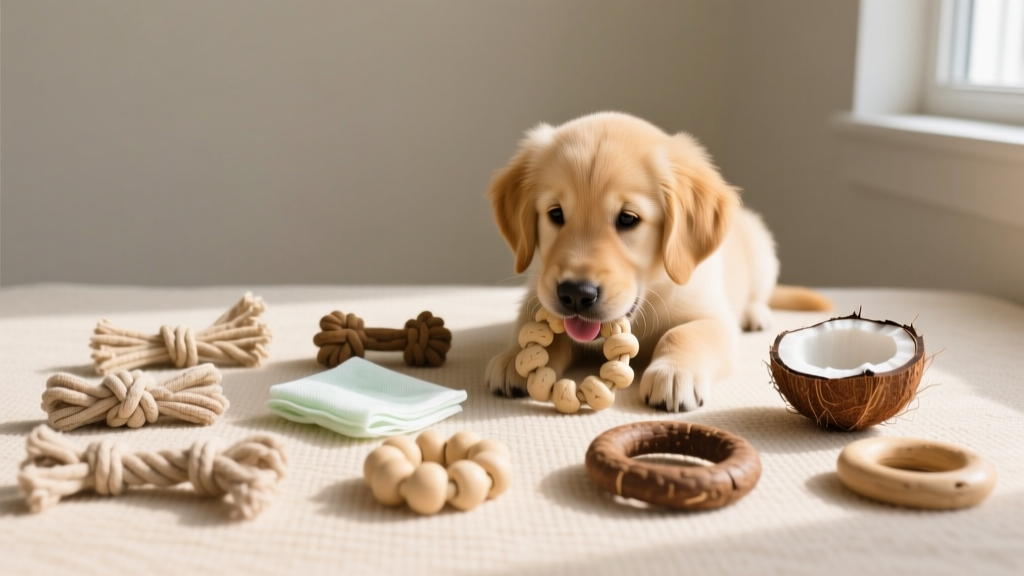
Ambull puppies begin losing their 28 deciduous (baby) teeth around 12–16 weeks, with the process continuing through approximately 6–7 months as 42 adult teeth erupt. During this period, your puppy will chew relentlessly to relieve gum discomfort. Without appropriate outlets, your furniture, shoes, and baseboards become targets.
Teething Phases
- 3–4 months: Incisors loosen first. You may find tiny teeth on the floor, or your puppy may swallow them (harmless).
- 4–5 months: Canines and premolars erupt. This is peak chewing intensity. Gums may appear red or slightly bloody — this is normal.
- 5–7 months: Molars come in. Chewing gradually decreases as adult teeth set. By 7 months, all adult teeth should be present.
Safe Chew Recommendations
- Kong Classic (red or black rubber, XL or XXL for Ambull size, $15–$22): Fill with a mixture of plain yogurt and mashed banana, then freeze for 2–4 hours. The cold numbs sore gums.
- Benebone Wishbone or Zaggler (giant size, $18–$25): Nylon chews flavored with bacon or chicken. Replace when edges become sharp or chunks break off.
- Frozen carrots (whole, large): Cheap, low-calorie, and soothing. Supervise to prevent choking on large pieces.
- Nylabone Puppy Chew (Power Chew line, $10–$16): Designed for aggressive chewers; choose the large or wolf size.
Common Ambull Puppy Problems and Solutions
Every breed combination has predictable behavioral tendencies. Here are the most common issues Ambull puppy owners encounter and evidence-based solutions using positive reinforcement methods.
Puppy Biting and Nipping
Ambull puppies inherit a strong mouth orientation from both parent breeds — the American Bulldog was historically a catch dog, and the Neapolitan Mastiff is a guardian breed. Expect significant mouthing behavior between 8 weeks and 6 months.
How to stop puppy biting:
- Redirect to an appropriate chew. When teeth touch skin, say "oops" calmly, withdraw your hand, and immediately offer a toy. Praise enthusiastically when they bite the toy instead.
- Use a reverse time-out. If redirecting fails, stand up and leave the room for 15–30 seconds. This teaches that biting ends play — a powerful consequence for social puppies.
- Provide adequate enrichment. Overtired and under-stimulated puppies bite more. Ensure your puppy gets 16–18 hours of sleep per day (yes, puppies need that much) and has access to puzzle toys and chews.
- Teach "leave it" and "drop it" early. Start with low-value items and trade up to high-value treats. This gives you a verbal tool to manage mouthing before it happens.
Whining and Vocalization
Ambull puppies tend to be more vocal than some breeds, particularly during crate time and when separated from their people. Address whining by:
- Ensuring physical needs are met (potty, hunger, exercise) before crating
- Not releasing from the crate during whining (wait for a pause)
- Providing a long-lasting chew or frozen Kong in the crate to create positive associations
- Gradually increasing alone time rather than going from 0 to 4 hours abruptly
Destructive Chewing
Large-breed puppies have powerful jaws even at 4 months old. Manage destructive chewing through prevention:
- Puppy-proof your home: use bitter apple spray on baseboards, keep shoes in closets, secure electrical cords
- Rotate chew toys every 2–3 days to maintain novelty
- Ensure adequate physical and mental exercise — a tired puppy is a well-behaved puppy
- Confine to a puppy-safe area or crate when unsupervised
First-Year Cost Breakdown for Your Ambull Puppy
Raising an Ambull puppy is a significant financial commitment. Large and giant breeds cost more to feed, medicate (most preventatives are weight-based), and equip than smaller dogs. Here is a realistic budget for the first 12 months, based on 2025–2026 US pricing:
| Category | Items | Estimated Cost |
|---|---|---|
| Purchase/Adoption | Reputable breeder (health-tested parents) or breed-specific rescue | $1,500–$3,500 (breeder) / $300–$600 (rescue) |
| Veterinary Care | Initial exam, 3 DHPP vaccines, rabies, fecal test, deworming, heartworm test, spay/neuter | $600–$1,200 |
| Food | Large-breed puppy kibble (premium brand, ~$60–$85 per 30-lb bag, 1 bag per 3–4 weeks) | $700–$1,100 |
| Preventatives | Heartworm, flea/tick prevention (weight-based; large-breed doses cost more) | $250–$500 |
| Supplies | Crate (48–54"), bed, leash/harness, bowls, toys, enzymatic cleaner, gates | $300–$500 |
| Training | Puppy socialization class + basic obedience (group classes or private trainer) | $200–$800 |
| Pet Insurance (optional) | Monthly premium for large-breed puppy (Trupanion, Healthy Paws, or similar) | $500–$900/year |
| Total First-Year Estimate | $4,050–$8,500+ | |
These figures do not include emergency veterinary care. A single emergency visit for bloat, a swallowed foreign object, or parvovirus treatment can cost $2,000–$8,000. Pet insurance or a dedicated emergency fund of at least $2,000 is strongly recommended for giant-breed owners.
Frequently Asked Questions About Ambull Puppies
How often should I feed my Ambull puppy at 10 weeks old?
At 10 weeks, feed your Ambull puppy 4 meals per day, spaced approximately 4 hours apart during waking hours (e.g., 7am, 11am, 3pm, 7pm). Each meal should be roughly 0.6–0.9 cups of large-breed puppy kibble, depending on your puppy's current weight and the caloric density of the food. Remove uneaten food after 15–20 minutes to establish a routine and monitor appetite.
How do I stop my Ambull puppy from biting my children?
Supervise every interaction between your puppy and children under age 12. Teach children to offer a toy when the puppy mouths them, and to "be a tree" (stand still, cross arms, look away) rather than squealing and running, which triggers chase-and-bite instincts. Enroll in a positive-reinforcement puppy class that includes children in sessions. Never leave a puppy and young child alone together, regardless of how gentle the puppy seems.
Should I spay or neuter my Ambull puppy, and when?
Current veterinary research on large and giant breeds suggests that delaying spay/neuter until after growth plates close (typically 12–18 months for giant breeds) may reduce the risk of certain orthopedic conditions, including hip dysplasia and cranial cruciate ligament tears, as well as some cancers. Discuss timing with your veterinarian, who can evaluate your individual puppy's development and your household circumstances. If you keep your puppy intact, be prepared to manage heat cycles (females) and roaming/marking behavior (males) responsibly.
My Ambull puppy seems lazy — is that normal?
Yes. Giant-breed puppies are often described as "couch potatoes in training." They have bursts of energy followed by long naps. A general exercise guideline is 5 minutes of structured exercise per month of age, twice daily — so a 4-month-old puppy gets about 20 minutes of leash walking or play per session. Avoid forced running, jumping from heights, or repetitive high-impact activities until growth plates close (confirmed by your vet via X-ray, typically around 14–18 months). Over-exercising a growing giant-breed puppy can damage developing joints.
What should I do if my Ambull puppy eats something toxic?
Call ASPCA Animal Poison Control at (888) 426-4435 (24/7, consultation fee applies) or the Pet Poison Helpline at (855) 764-7661 immediately. Common household toxins for puppies include xylitol (sugar-free gum, some peanut butters), chocolate, grapes and raisins, onions, garlic, rodent bait, and certain houseplants (lilies, sago palm). Keep these substances completely inaccessible and know your nearest emergency veterinary clinic's hours and location.
Raising an Ambull puppy is rewarding but demanding. The investment you make in structured socialization, consistent training, and proper nutrition during these first 12 months will shape a loyal, well-adjusted companion for the next decade or more. When in doubt, your veterinarian and a certified positive-reinforcement trainer are your best resources — do not wait until problems escalate to seek professional guidance.
Tom Renshaw
All our authors care for dogs every day — read more of their work on the authors page.