Alaskan Puppy Breeds: Complete First-Year Care & Milestone Guide
Everything you need to raise alaskan puppy breeds — milestones, feeding, vaccines, potty training, socialization, and first-year costs for Huskies
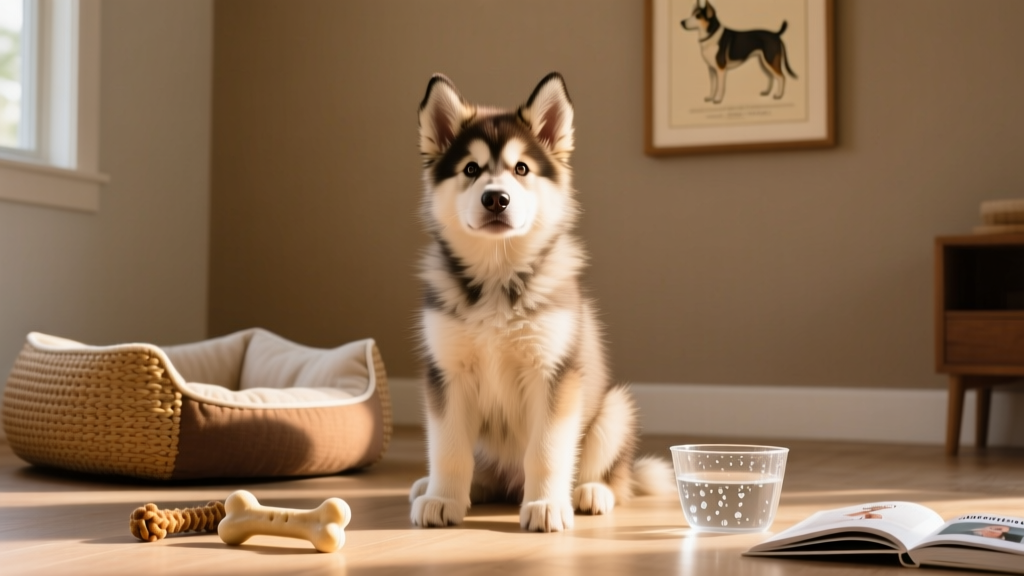
Bringing home an Alaskan puppy is unlike welcoming almost any other breed group. Whether you've chosen a Siberian Husky, an Alaskan Malamute, or an Alaskan Klee Kai, you're signing up for a high-energy, high-intelligence, cold-weather dog with a strong prey drive and an even stronger will. These traits are magnificent in a mature dog — but in a puppy, they demand a structured, informed approach from day one.
This guide covers the entire first year for the three most popular alaskan puppy breeds raised in family homes. Every timeline, portion size, and cost figure reflects current 2026 pricing and veterinary recommendations. Bookmark it, print the tables, and share it with everyone in your household — consistency is the single biggest predictor of success with these breeds.
Choosing Your Alaskan Puppy Breed: Quick Comparison
Before we get into week-by-week care, here's how the three primary alaskan puppy breeds compare on the metrics that matter most to first-year owners:
| Trait | Siberian Husky | Alaskan Malamute | Alaskan Klee Kai |
|---|---|---|---|
| Adult Weight | 35–60 lb / 16–27 kg | 75–100 lb / 34–45 kg | 5–22 lb / 2–10 kg |
| Adult Height | 20–23.5 in | 23–25 in | 13–17 in |
| Lifespan | 12–14 years | 10–14 years | 12–16 years |
| Energy Level | Very High | High | Moderate–High |
| Vocalization | Howls, talks, rarely barks | Howls, "talks" frequently | Barks and howls |
| Prey Drive | Very High | High | Moderate–High |
| First-Year Cost (est.) | $3,200–$5,500 | $4,000–$7,000 | $2,800–$4,500 |
Data sourced from the American Kennel Club breed standards. The Alaskan Klee Kai is recognized by the UKC and was added to the AKC Foundation Stock Service; full AKC recognition is anticipated.
When Should I Bring My Alaskan Puppy Home?
The ideal age to bring home any alaskan puppy breed is 8 to 10 weeks. This aligns with the end of the primary socialization window's most sensitive phase and gives you maximum influence during the critical 8–14 week period.
Why not earlier? Puppies removed from their litter before 8 weeks miss essential bite-inhibition lessons from siblings and maternal weaning. Huskies and Malamutes, in particular, develop dog-to-dog social skills during weeks 5–8 that are very difficult to replicate in a human household. The AVMA recommends puppies remain with littermates until at least 7 weeks, and most responsible breeders of alaskan breeds hold puppies to 8–10 weeks.
Why not later? After 12 weeks, the primary socialization window begins closing. Puppies kept in kennel or limited-exposure environments past this point often develop fear responses to novel stimuli — a particular concern with Alaskan Klee Kai, which are already prone to wariness of strangers.
Age-Specific Milestones: What to Expect Week by Week
Alaskan puppy breeds develop on a slightly different trajectory than many companion breeds. Their working-dog heritage means physical maturity arrives before emotional maturity — a 10-month-old Malamute may look adult-sized but still think like a puppy. Here's what to expect at each stage:
Weeks 4–8 (With the Breeder)
You likely won't have your puppy yet, but this period shapes everything that follows. During these weeks, the breeder should be:
- Introducing solid food (gruel transition from mother's milk) by week 4
- Beginning early neurological stimulation (ENS) protocols — gentle handling, temperature variation, novel textures
- Exposing puppies to household sounds: vacuums, doorbells, children's voices
- Starting litter-box or designated elimination area training (yes, even at this age)
- Administering first deworming at 2, 4, 6, and 8 weeks per Merck Veterinary Manual parasite protocols
Weeks 8–12 (Homecoming and Bonding)
This is your honeymoon period. Your alaskan puppy will be curious, relatively compliant, and eager to follow you. Key milestones:
- Sleep: 18–20 hours per day — enforced naps in the crate are essential to prevent overtired biting
- Bladder control: Approximately 1 hour per month of age (a 2-month-old puppy can hold for ~2 hours maximum)
- Bite inhibition: Mouthing and nipping are normal; littermate lessons continue with you
- Fear periods: A developmental fear period peaks around 8–11 weeks — avoid traumatic experiences (harsh corrections, loud environments, forced interactions)
- Exercise limit: 5 minutes of structured walking per month of age, twice daily (so 10 minutes per walk for a 10-week-old)
Weeks 12–16 (Testing Boundaries)
Your puppy's confidence surges. Expect:
- Increased independence — recall becomes harder, especially for Huskies with emerging prey drive
- Second fear period possible around 12–14 weeks
- Chewing intensifies as juvenile teeth prepare to shed
- Energy spikes: Malamute puppies may begin "zoomies" lasting 5–15 minutes
- Start puppy kindergarten classes (positive reinforcement only — force-free methods)
Weeks 16–24 (The Adolescent Shift Begins)
This is where many first-time alaskan breed owners feel overwhelmed. Your puppy is larger, stronger, and selectively deaf to commands.
- Teething peak: Adult teeth erupt between 4–6 months; destructive chewing is at its worst
- Sexual maturity: Males may begin marking; females of smaller breeds (Klee Kai) can enter first heat as early as 6 months
- Prey drive emergence: Squirrels, cats, and small dogs become targets — leash discipline is non-negotiable
- Exercise capacity increases: 20–30 minute walks, 2–3 times daily, plus mental enrichment
Months 6–12 (Adolescence and Beyond)
Alaskan breeds are notorious for prolonged adolescence. Huskies often don't "settle" until 2–3 years; Malamutes may take 3–4 years.
- Full adult coat begins replacing puppy coat (expect heavy shedding — "blowing coat" — around 9–12 months)
- Spay/neuter timing: discuss with your vet; many orthopedic specialists now recommend waiting until 12–18 months for large breeds like Malamutes to allow growth plate closure
- Exercise can increase to 45–60 minutes of structured activity daily, but avoid repetitive high-impact exercise (jumping, long-distance running) until 18 months
- Advanced training classes recommended — these breeds need jobs or they invent their own (usually destructive ones)
Feeding Schedule: Portions by Age and Breed Size
Alaskan puppy breeds have varying nutritional needs based on their adult size class. A Klee Kai puppy and a Malamute puppy should not be fed the same way. Use an AAFCO-certified large-breed puppy formula for Huskies and Malamutes to prevent rapid growth-related orthopedic issues; standard puppy formula is appropriate for Klee Kai.
| Age | Klee Kai (Toy/Mini) | Siberian Husky | Alaskan Malamute | Meals/Day |
|---|---|---|---|---|
| 8–12 weeks | ⅓–½ cup per meal | ¾–1 cup per meal | 1–1½ cups per meal | 4 |
| 3–4 months | ½–¾ cup per meal | 1–1½ cups per meal | 1½–2 cups per meal | 3 |
| 5–6 months | ¾–1 cup per meal | 1½–2 cups per meal | 2–2½ cups per meal | 3 |
| 7–9 months | 1–1¼ cups per meal | 2–2½ cups per meal | 2½–3 cups per meal | 2 |
| 10–12 months | Transition to adult food | 2½–3 cups per meal | 3–4 cups per meal | 2 |
Important notes: These are starting ranges. Adjust based on your puppy's body condition score (BCS) — you should be able to feel ribs without pressing hard, and see a visible waist from above. Huskies are notoriously efficient eaters and may need less than expected; Malamute puppies often eat enthusiastically and need portion monitoring to prevent obesity. High-quality kibble brands like Orijen Puppy Large, Purina Pro Plan Large Breed Puppy, or Royal Canin Giant Puppy provide appropriate calcium-to-phosphorus ratios for large alaskan breeds.
Transition to adult food: Klee Kai can transition at 10–12 months. Huskies at 12–14 months. Malamutes at 14–18 months. Transition over 7–10 days, mixing increasing proportions of adult food with puppy food.
Vaccination Schedule for Alaskan Puppy Breeds
Alaskan puppy breeds follow the standard core vaccination protocol, but there's a breed-specific consideration: Siberian Huskies and Malamutes can be more sensitive to vaccine reactions than some breeds. Watch for facial swelling, hives, lethargy, or vomiting within 24 hours of any vaccination. Your vet may recommend pre-medicating with an antihistamine for subsequent rounds if a reaction occurs.
| Age | Vaccines Administered | Notes |
|---|---|---|
| 6–8 weeks | DHPP (Distemper, Hepatitis/Adenovirus, Parainfluenza, Parvovirus) — 1st dose | Often given by breeder before pickup. Confirm documentation. |
| 10–12 weeks | DHPP — 2nd dose; Bordetella (optional, recommended if attending puppy classes) | Avoid high-dog-traffic areas (dog parks) until series complete. |
| 14–16 weeks | DHPP — 3rd dose; Rabies (required by law in most US states) | Some vets give a 4th DHPP at 18–20 weeks for high-risk areas. |
| 12–16 months | DHPP booster; Rabies booster (1-year or 3-year depending on vaccine type) | After this, DHPP typically every 3 years. Discuss titer testing as an alternative with your vet. |
Non-core vaccines to discuss with your vet: Leptospirosis (recommended in areas with wildlife exposure — relevant for alaskan breeds that spend time outdoors), Lyme disease (if you live in a tick-endemic region), and Canine Influenza (H3N2/H3N8) if you board your dog or attend group classes.
When can my puppy go outside and meet other dogs? Your puppy can explore your own yard immediately. For public spaces, wait until 7 days after the final DHPP dose (typically around 17 weeks). Controlled playdates with fully vaccinated, healthy adult dogs in private yards are acceptable from 10 weeks onward — this is actually critical for socialization. Avoid dog parks entirely until the full vaccine series is complete and your puppy is at least 16 weeks old.
The Socialization Window: Weeks 3–14 (Your Most Critical Deadline)
The American Veterinary Society of Animal Behavior (AVSAB) identifies weeks 3–14 as the primary socialization period for puppies. For alaskan puppy breeds — which are genetically predisposed to wariness of strangers and high prey drive — this window is arguably the most important 11 weeks of your dog's life. After 14 weeks, novel experiences increasingly trigger fear rather than curiosity.
How to socialize safely before vaccines are complete: Carry your puppy in a sling or stroller. Invite vaccinated dogs to your home. Host puppy playdates in sanitized environments. Attend puppy kindergarten classes that require proof of first DHPP vaccination (most reputable trainers follow this protocol).
Alaskan Puppy Socialization Checklist
- Surfaces: Gravel, wet grass, metal grates, slick floors, snow, sand, rubber mats — at least 10 different surfaces
- People: Children (supervised), elderly adults, people in hats/sunglasses, people with canes or wheelchairs, delivery workers, people of different ethnicities — at least 30 unique individuals
- Animals: Vaccinated adult dogs (various sizes), cats (if household has one), livestock (from safe distance), birds
- Sounds: Thunderstorms (play recordings at low volume, gradually increase), fireworks, sirens, construction noise, vacuum cleaners, hair dryers
- Handling: Paw touching, ear inspection, mouth opening, nail clipping simulation, being held on side, being lifted — daily for 5 minutes
- Environments: Car rides, pet-friendly stores, outdoor café patios, school pickup lines, parking garages, elevators
- Objects: Umbrellas opening, balloons, plastic bags blowing, flags, skateboards, bicycles
Rule of thumb: Every new experience should be paired with high-value treats (boiled chicken, cheese, freeze-dried liver). If your puppy shows fear — cowering, tail tucking, refusal to take treats — increase distance from the stimulus and decrease intensity. Never force exposure.
Potty Training: Timeline, Expectations, and Troubleshooting
Let's set realistic expectations: alaskan puppy breeds typically take 4 to 6 months to become reliably house-trained, with occasional accidents possible until 8–10 months. This is longer than many companion breeds, and it's not a reflection of intelligence — Huskies and Malamutes are brilliant dogs, but they were bred to eliminate in snow and cold, and adapting to indoor living conventions takes patience.
When Will My Puppy Be Fully Potty Trained?
"Fully trained" means going 4+ weeks without an indoor accident. For most alaskan puppy breeds:
- 3–4 months: Accidents every few days are still normal. You're building the routine.
- 4–5 months: Accidents drop to 1–2 per week if you've been consistent.
- 5–6 months: Most puppies are reliable during waking hours; overnight reliability usually comes first.
- 6–8 months: Adolescent regression is common — a previously reliable puppy may have setbacks. Stay consistent.
Alaskan-Specific Potty Training Tips
Huskies and Malamutes often refuse to eliminate in rain or cold if they're accustomed to going on snow. If you live in a warm climate, train on a specific surface (grass, gravel) and use it consistently. In cold climates, clear a snow-free patch or use a designated area — these breeds will sometimes hold it uncomfortably long rather than step onto wet ground.
Crate training supports potty training because dogs naturally avoid soiling their sleeping area. But crate time must be age-appropriate:
- 8–10 weeks: Maximum 1–2 hours during the day; overnight wake-ups every 3–4 hours
- 11–14 weeks: 2–3 hours during the day; overnight 4–5 hours
- 3–4 months: 3–4 hours during the day; overnight 5–6 hours
- 5–6 months: 4–5 hours during the day; overnight 7–8 hours
- 6+ months: Up to 6 hours during the day (but alaskan breeds should not be crated this long regularly — they need exercise and stimulation)
Never use the crate as punishment. A wire crate (such as the MidWest iCrate or Frisco Heavy Duty) works well for alaskan breeds because it allows airflow — important for double-coated dogs that overheat easily. Place a washable mat inside; avoid thick bedding until chewing subsides around 6–7 months.
Teething Timeline and Relief Strategies
Alaskan puppy breeds follow a standard teething progression, but their powerful jaws (especially Malamutes) mean they can destroy inappropriate items with alarming speed during this period.
- 3–4 weeks: Deciduous (baby) teeth erupt — 28 total
- 8–12 weeks: Baby teeth fully in; puppy begins exploring the world with its mouth
- 12–16 weeks: Baby teeth begin loosening; you may find small teeth on the floor or in toys (many are swallowed — this is normal)
- 4–6 months: Peak teething discomfort; adult teeth erupting (42 total); chewing intensity at maximum
- 6–7 months: All adult teeth should be in. If baby teeth remain (retained deciduous teeth — common in Klee Kai and small breeds), your vet may need to extract them to prevent crowding and dental disease.
Safe Chew Recommendations by Stage
8–16 weeks (soft chews): Frozen washcloths soaked in low-sodium chicken broth, Nylabone Puppy Chew (soft rubber), KONG Puppy (blue or pink rubber, stuff with plain yogurt and freeze)
4–6 months (medium durability): KONG Classic (red rubber, frozen with pumpkin puree), Benebone Puppy, yak cheese chews (supervise — break off small pieces to prevent choking)
6+ months (durable): KONG Extreme (black rubber), Goughnuts MAXX, antler chews (split/soft variety only — whole antlers can fracture teeth in powerful chewers like Malamutes)
Common Alaskan Puppy Problems and Solutions
How Do I Stop Puppy Biting and Nipping?
Alaskan puppy breeds are mouthy by nature — they were bred to carry, pull, and grip. Biting peaks between 8–16 weeks and again during teething at 4–6 months. Solutions:
- Redirect, don't punish: When teeth touch skin, say "ouch" in a calm voice, withdraw attention for 10–15 seconds, then offer an appropriate chew toy.
- Enforced naps: 80% of biting episodes in my experience come from overtired puppies. If your puppy is biting excessively, they likely need a crate nap, not more stimulation.
- Satisfy the mouth: Frozen KONGs, tug toys (with rules — tug only on command, release on cue), and food puzzles channel the oral fixation productively.
- Never use physical punishment: Alpha rolls, muzzle grabbing, or hitting increase fear and aggression. These methods are especially counterproductive with alaskan breeds, which tend to shut down or escalate rather than submit.
Excessive Howling and Vocalization
Huskies howl; Malamutes "talk"; Klee Kai bark and howl. This is breed-typical behavior, not a problem to eliminate — but it can be managed:
- Don't reward howling with attention (even negative attention like scolding reinforces it)
- Teach a "quiet" cue using positive reinforcement: wait for a pause in vocalization, mark with "yes," reward
- Provide adequate physical and mental exercise — under-stimulated alaskan breeds vocalize more
- White noise machines or calming music (classical or specifically designed canine playlists) can reduce separation-related howling
Destructive Chewing and Digging
These are working dogs with energy to burn. A bored Husky or Malamute puppy will chew baseboards, dig through carpets, and dismantle furniture. Prevention:
- Minimum 30–60 minutes of structured exercise daily (age-appropriate)
- Daily mental enrichment: snuffle mats, frozen KONGs, training sessions (5–10 minutes, 2–3 times daily)
- Puppy-proof one room or use exercise pens when unsupervised
- Rotate toys every 3–4 days to maintain novelty
Leash Pulling and Escape Attempts
Alaskan breeds are notorious escape artists. Huskies, in particular, will bolt through an open door and run for miles. Solutions start in puppyhood:
- Use a front-clip harness (Ruffwear Front Range or similar) from day one — never attach a leash to a collar on a pulling puppy (tracheal damage risk)
- Practice "wait" at every door before going outside
- Recall training: start in low-distraction environments with high-value rewards; never punish a dog that comes back to you, even if it took 10 minutes
- Secure fencing: minimum 6 feet for Huskies and Malamutes, with dig-proof barriers (concrete footer or buried hardware cloth) — these breeds dig under fences as readily as they jump them
First-Year Cost Breakdown for Alaskan Puppy Breeds
Budgeting accurately prevents unpleasant surprises. These figures reflect 2026 US averages and vary by region and breed size:
| Category | Klee Kai | Siberian Husky | Alaskan Malamute |
|---|---|---|---|
| Purchase/Adoption | $1,500–$3,000 / $300–$500 rescue | $800–$2,500 / $200–$500 rescue | $1,200–$3,000 / $300–$600 rescue |
| Veterinary (vaccines, exams, deworming, spay/neuter) | $600–$1,000 | $700–$1,200 | $800–$1,500 |
| Food (12 months) | $300–$500 | $500–$800 | $700–$1,100 |
| Supplies (crate, harness, leash, bed, bowls, toys, grooming tools) | $250–$450 | $350–$600 | $400–$700 |
| Training (puppy class + intermediate) | $200–$500 | $200–$500 | $200–$500 |
| Pet Insurance (annual premium) | $400–$700 | $500–$900 | $600–$1,000 |
| Fencing/Yard Prep (if needed) | $0–$500 | $500–$2,000 | $500–$2,000 |
| Estimated First-Year Total | $3,750–$6,650 | $3,550–$8,500 | $4,400–$9,800 |
Emergency fund recommendation: Set aside an additional $1,000–$2,000 for unexpected veterinary costs. Alaskan breeds are predisposed to conditions like gastric dilatation-volvulus (bloat) in Malamutes, which requires emergency surgery costing $3,000–$7,000. Pet insurance (Trupanion, Healthy Paws, or Lemonade) purchased before any conditions develop can offset these costs significantly.
Frequently Asked Questions
How often should I feed my alaskan puppy at 8 weeks old?
Four meals per day, spaced roughly 4 hours apart during waking hours. A typical schedule: 7 AM, 11 AM, 3 PM, 7 PM. Remove uneaten food after 15–20 minutes to establish meal routines rather than free-feeding. Fresh water should always be available, but you can remove the water bowl 2 hours before bedtime to reduce overnight potty needs.
My Husky puppy screams in the crate at night. What do I do?
Place the crate in your bedroom for the first 2–3 weeks so your puppy can hear and smell you. Cover the crate with a light blanket to create a den feel. Take your puppy out for a potty break at a set time overnight (set an alarm for 4 hours after bedtime). When they cry, wait for 10–15 seconds of silence before opening the crate — this prevents reinforcing the screaming. Never let the puppy out while actively howling unless it's a potty emergency. Most alaskan puppies adjust to overnight crating within 5–10 nights with consistency.
Are alaskan puppy breeds good with children?
Siberian Huskies and Malamutes are generally excellent with children — they're pack-oriented and tolerant. However, their size and energy mean they can accidentally knock over toddlers during play. Alaskan Klee Kai can be more reserved with unfamiliar children. Regardless of breed, always supervise interactions between puppies and children under 10, and teach children to respect the puppy's crate and sleep time.
Can alaskan puppy breeds live in hot climates?
Yes, with precautions. Huskies, Malamutes, and Klee Kai all adapt to warm climates, but they require air conditioning, access to shade and fresh water, and exercise during early morning or evening hours. Never shave a double-coated alaskan breed — the undercoat actually insulates against heat. Watch for signs of heatstroke: excessive panting, drooling, bright red gums, vomiting, collapse. If you observe these, apply cool (not ice-cold) water and seek emergency veterinary care immediately.
When should I start formal training classes?
Puppy kindergarten (positive reinforcement group classes) can begin as early as 10 weeks, after the first DHPP vaccination. Look for classes certified by the Association of Professional Dog Trainers (APDT) or trainers holding CPDT-KA credentials. For alaskan breeds, continued training through adolescence is essential — plan for puppy class (8–16 weeks), intermediate obedience (4–6 months), and consider advanced classes or dog sports like canicross, bikejoring, or rally obedience to channel their working drive.
What health screenings should my alaskan puppy's parents have had?
For Siberian Huskies: OFA or PennHIP hip evaluation, CERF/OFA eye examination (Huskies are predisposed to progressive retinal atrophy and juvenile cataracts). For Alaskan Malamutes: OFA hip evaluation, OFA elbow evaluation, eye exam, and ideally a cardiac evaluation and polyneuropathy DNA test. For Alaskan Klee Kai: OFA patella evaluation, eye exam, and cardiac evaluation. Ask your breeder for documentation — reputable breeders provide this willingly.
Raising an alaskan puppy breed is one of the most rewarding and challenging experiences in dog ownership. These dogs will test your patience, destroy your favorite shoes, and howl at 3 AM — and then look at you with those striking eyes and remind you exactly why you chose them. With the structured approach outlined here, consistent positive reinforcement training, and regular veterinary guidance, your alaskan puppy will grow into the loyal, athletic, extraordinary companion these breeds are known to be.
Robin Maitland
All our authors care for dogs every day — read more of their work on the authors page.