AKC Puppy Weight Calculator: Tracking Growth Milestones by Breed & Age
Use the AKC puppy weight calculator alongside our breed-specific growth chart, feeding portions, vaccination schedule, and milestone timeline for 2026.

Why the AKC Puppy Weight Calculator Matters for New Owners
Bringing a puppy home is equal parts joy and anxiety. One of the first questions every new owner asks: Is my puppy growing at a normal rate? The AKC puppy weight calculator and breed-specific growth charts give you a data-driven baseline, but raw numbers alone don't tell the full story. A Labrador Retriever puppy at 10 weeks should weigh roughly 15-18 lb (6.8-8.2 kg), while a French Bulldog the same age may only tip the scales at 6-9 lb (2.7-4.1 kg). Genetics, litter size, nutrition, and early health events all shift the curve.
This guide uses the AKC framework as a starting point and layers in the practical, week-by-week expectations you actually need — feeding portions, potty training timelines, vaccination windows, socialization checklists, and first-year costs. We'll use the Labrador Retriever as our reference breed (the most popular AKC-registered breed and the one most commonly searched in weight calculators), with notes where other breed sizes diverge.
Week-by-Week Puppy Milestones: What to Expect From 4 Weeks to 12 Months
Puppy development follows predictable windows. Missing these windows — especially the socialization period — creates behavioral gaps that are far harder to fix later. Here's what each stage looks like for a medium-to-large breed puppy.
Weeks 4-8: The Litter Stage (Still With Breeder)
- Weight (Lab): 4-8 lb (1.8-3.6 kg)
- Senses: Eyes and ears fully functional; startle reflexes emerging
- Social skills: Bite inhibition learned from littermates; yelp feedback teaches pressure control
- Mobility: Walking, running, play-bowing; first clumsy attempts at stairs
- What you can do: If visiting the litter, handle the puppy gently for short sessions; expose to novel textures (grass, tile, carpet)
Weeks 8-12: Homecoming and Bonding
- Weight (Lab): 10-20 lb (4.5-9.1 kg)
- Fear imprint period (8-11 weeks): Traumatic events can create lasting phobias — avoid forced interactions, loud environments, or painful procedures if possible
- Attention span: 2-5 minutes per training session maximum
- Sleep: 18-20 hours per day; enforced naps in crate prevent overtired biting
- Teething: Deciduous (baby) teeth fully erupted — 28 teeth total
Weeks 12-16: Confidence Building
- Weight (Lab): 20-35 lb (9.1-15.9 kg)
- Independence: Puppy starts exploring farther from you; recall training becomes critical
- Chewing: Intensifies as jaw strength increases; redirect to approved chews
- Second fear period may begin (~14 weeks): Previously confident puppy may suddenly seem nervous about familiar things
- Bladder control: Improving but not reliable; roughly 1 hour per month of age plus one
Weeks 16-24: The Adolescent Transition
- Weight (Lab): 35-55 lb (15.9-24.9 kg)
- Teething: Adult teeth erupting (see teething section below)
- Testing boundaries: May "forget" known cues; consistency is non-negotiable
- Energy: Noticeable increase; structured exercise and mental enrichment prevent destructive behavior
- Social hierarchy awareness: Puppy begins reading dog-to-dog communication more fluently
6-12 Months: Adolescence Proper
- Weight (Lab): 55-75 lb (24.9-34 kg) — approaching 75-90% of adult weight by 12 months
- Sexual maturity: Intact females may experience first heat cycle (estrus) between 6-12 months; discuss spay/neuter timing with your veterinarian
- Training regression: Normal and temporary; revisit basics with higher-value rewards
- Adult coat: Puppy coat sheds out; grooming needs may change
- Exercise capacity: Growth plates still open in large breeds — avoid forced running, jumping from heights, or repetitive high-impact activity until 18-24 months per Merck Veterinary Manual
Feeding Schedule: Exact Portions by Age and Weight
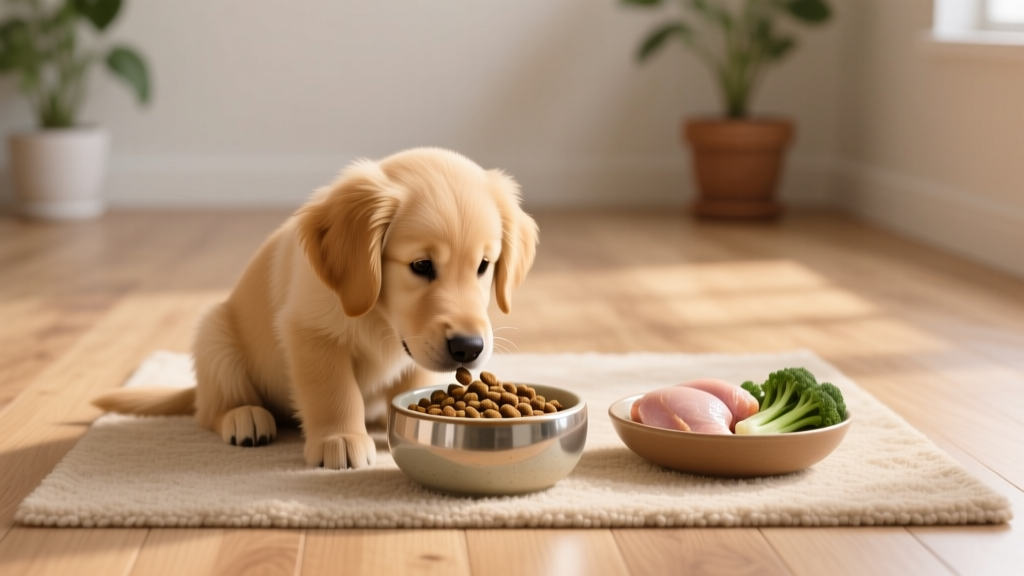
Overfeeding large-breed puppies increases the risk of developmental orthopedic diseases like hip dysplasia and osteochondrosis. Underfeeding stunts growth and compromises immune function. The AKC puppy weight calculator helps you track whether your feeding plan is on target, but you need portion specifics to act on that data.
The table below assumes an AAFCO-approved, large-breed puppy formula with approximately 350-400 kcal/cup (check your specific food's guaranteed analysis). Adjust up or down 10-15% based on body condition score — you should feel ribs easily without pressing hard, and see a visible waist from above.
| Puppy Age | Expected Weight (Lab) | Meals Per Day | Total Daily Portion | Per Meal |
|---|---|---|---|---|
| 8-12 weeks | 10-20 lb / 4.5-9.1 kg | 3-4 meals | 1.5-2.5 cups | ~0.5-0.6 cups |
| 12-16 weeks | 20-35 lb / 9.1-15.9 kg | 3 meals | 2.5-3.5 cups | ~0.8-1.2 cups |
| 16-24 weeks | 35-55 lb / 15.9-24.9 kg | 2-3 meals | 3.5-4.5 cups | ~1.2-1.5 cups |
| 6-12 months | 55-75 lb / 24.9-34 kg | 2 meals | 4-5 cups | ~2-2.5 cups |
Small breed adjustment: Toy and small breeds (under 20 lb / 9 kg adult weight) have faster metabolisms and higher kcal-per-pound needs. Increase portions by 20-30% relative to body weight, and maintain 3-4 meals per day through 6 months to prevent hypoglycemia.
Transitioning to adult food: Large breeds should stay on puppy formula until 18-24 months. Small breeds can transition at 10-12 months. Mix new food with old over 7-10 days (25% new → 50% → 75% → 100%) to avoid gastrointestinal upset.
Vaccination Schedule: Core and Non-Core Protection
Your puppy arrives with maternal antibodies from colostrum that gradually wane between 6-16 weeks. Vaccinations are timed to catch the window when maternal immunity drops but before environmental exposure creates risk. The American Veterinary Medical Association (AVMA) recommends the following core schedule, with non-core vaccines based on lifestyle and regional disease prevalence.
| Age | Vaccines Administered | Type | Estimated Cost |
|---|---|---|---|
| 6-8 weeks | DHPP (Distemper, Hepatitis/Adenovirus, Parainfluenza, Parvovirus) — 1st dose | Core | $20-$40 |
| 10-12 weeks | DHPP — 2nd dose; Bordetella (intranasal or injectable); Leptospirosis (1st dose, if recommended) | Core + Non-Core | $40-$75 |
| 14-16 weeks | DHPP — 3rd dose; Rabies (required by law in all US states); Leptospirosis (2nd dose); Lyme (if endemic area) | Core + Non-Core | $60-$120 |
| 12-16 months | DHPP booster; Rabies booster (1-year or 3-year depending on local law); Bordetella, Lepto, Lyme as needed | Booster | $80-$150 |
The Critical Socialization Window: Weeks 3-14
Behavioral research consistently shows that the primary socialization period closes between 12-14 weeks of age. Puppies not exposed to a wide range of stimuli during this window are statistically more likely to develop fear-based reactivity, anxiety, and aggression later in life. This doesn't mean flooding your puppy with overwhelming experiences — it means positive, controlled exposure to novel things.
Before full vaccination is complete, carry your puppy or use a stroller/sling to expose them to the world without placing them on high-risk surfaces (dog park ground, pet store floors where unvaccinated dogs walk). The AKC's socialization guidelines emphasize quality over quantity — one good experience beats ten stressful ones.
Rule of thumb: If your puppy tucks tail, freezes, or tries to hide, you've pushed too fast. Increase distance from the stimulus, reduce intensity, and pair the experience with high-value treats (boiled chicken, cheese, commercial training treats). This is called counter-conditioning — you're building a positive emotional association rather than forcing tolerance.
Potty Training Timeline and Troubleshooting
Realistic expectations prevent frustration. A puppy's bladder capacity roughly equals their age in months plus one, measured in hours. An 8-week-old puppy (2 months) can hold it for approximately 3 hours maximum — and that's during rest, not active play. Most puppies are mostly reliable by 4-6 months, but full reliability (including overnight and during high-distraction situations) often takes until 8-12 months.
| Puppy Age | Max Hold Time (Awake) | Nighttime Expectation | Outdoor Trips Per Day |
|---|---|---|---|
| 8-10 weeks | 1-2 hours | 1-2 wake-ups needed | 12-15 trips |
| 10-14 weeks | 2-3 hours | 1 wake-up (set alarm for 3 AM) | 8-12 trips |
| 14-20 weeks | 3-4 hours | May sleep 6-7 hours | 6-8 trips |
| 5-8 months | 4-6 hours | Sleeping through (8 hours) | 4-6 trips |
Troubleshooting common setbacks:
- Submissive/excitement urination: Common in young dogs; crouch sideways rather than leaning over, avoid direct eye contact during greetings, take puppy outside immediately upon your arrival home
- Regression at 4-6 months: Often coincides with teething discomfort or emerging independence; return to higher-frequency outdoor trips and reward heavily
- UTIs: If accidents suddenly increase and puppy seems to strain or lick genitals excessively, see your veterinarian — urinary tract infections require antibiotics, not training corrections
- Surface preference: Puppies trained exclusively on pee pads may struggle to transition to outdoor surfaces; if your goal is outdoor elimination, start there from day one
Teething Timeline: Relief Strategies and Safe Chew Recommendations
Puppies have 28 deciduous teeth that begin erupting at 3-4 weeks. The real discomfort phase arrives between 3-6 months when 42 adult teeth push through the gums, displacing baby teeth. You'll find tiny teeth on the floor (or swallowed — this is harmless). Signs include increased chewing, drooling, mild gum bleeding, and temporary appetite changes.
Safe chew options by age:
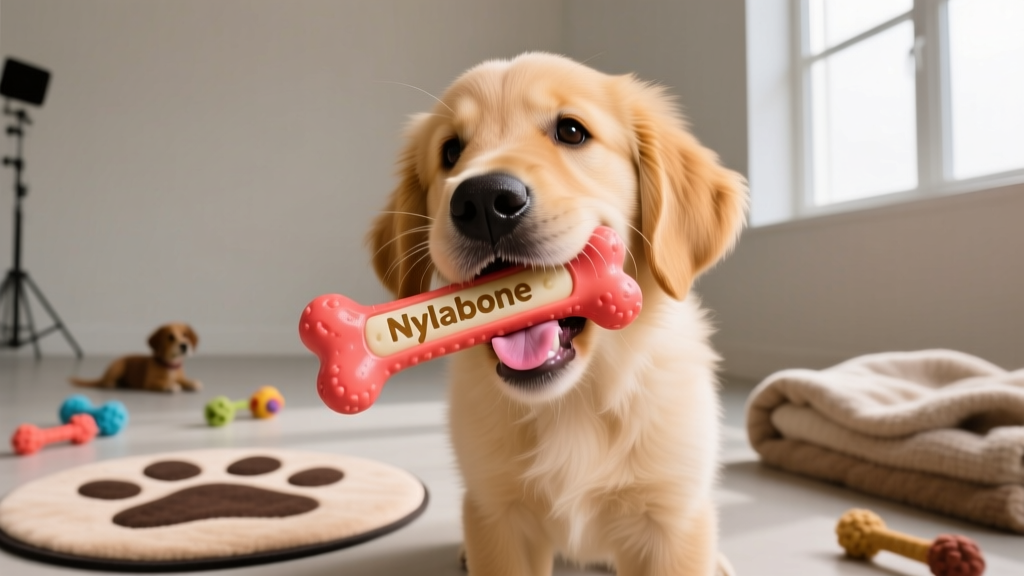
- 8-12 weeks: Soft rubber toys (Kong Puppy, West Paw Toppl), frozen washcloths soaked in low-sodium chicken broth, Nylabone Puppy Chew (soft formula)
- 12-24 weeks: Kong Classic (red, medium), Benebone Puppy, bully sticks (supervised — remove when small enough to swallow), frozen carrots
- 6+ months: Kong Classic (black for power chewers), yak cheese chews, antler alternatives (coffee wood, olive wood — avoid real antlers which can fracture teeth)
Crate Training Progression and Time Limits
A crate is not a punishment — it's a den substitute that aids potty training (dogs avoid soiling their sleeping space) and prevents destructive behavior when unsupervised. The key is gradual introduction and never exceeding age-appropriate time limits.
Crate size: Large enough for the puppy to stand, turn around, and lie down stretched out. For large breeds, buy a full-size crate with a divider panel so you can expand the space as the puppy grows. A crate that's too large defeats the potty-training benefit because the puppy can eliminate in one corner and sleep in another.
| Puppy Age | Max Crate Time (Daytime) | Nighttime | Notes |
|---|---|---|---|
| 8-10 weeks | 30-60 minutes | 2-3 hours between potty breaks | Crate in bedroom; cover with light blanket |
| 10-14 weeks | 1-2 hours | 3-5 hours | Begin moving crate to permanent location |
| 14-20 weeks | 2-3 hours | 6-7 hours | Puppy should enter voluntarily for meals/naps |
| 5-8 months | 3-4 hours | 8 hours | Can leave door open when home; puppy chooses crate |
Crate training protocol: Feed all meals in the crate with the door open for the first week. Toss high-value treats inside and let puppy exit freely. Gradually close the door for 30 seconds, then 1 minute, then 5 minutes while you sit nearby. Only leave the room once puppy is relaxed with the door closed for 10+ minutes. If puppy whines, wait for a 3-second pause in vocalization before opening — releasing during whining reinforces the behavior.
Common Puppy Problems: Breed-Specific Solutions
Puppy Biting and Nipping
All puppies mouth — it's how they explore the world. But Labrador-type breeds are particularly oral; they were bred to carry game softly, and that retrieve instinct translates into constant mouthing of hands, clothing, and furniture. Solutions:
- Redirect: Always have a chew toy within arm's reach; when teeth touch skin, say "oops" calmly and present the toy
- Reverse time-out: If redirecting fails, stand up and leave the room for 15-30 seconds; puppy learns that biting ends play
- Enforced naps: Overtired puppies bite harder and more persistently; if biting escalates after 90+ minutes awake, crate for a nap
- Satisfy the urge: Frozen Kong stuffed with peanut butter (xylitol-free), soaked kibble frozen in ice cube trays, or tug toys give appropriate oral stimulation
Nighttime Whining
First 3-5 nights home, expect crying. Puppy has never been alone. Place the crate next to your bed, drape a blanket over three sides, and use a Snuggle Puppy (heartbeat toy with warm pack) to simulate littermate contact. If you're confident puppy has been out to eliminate and is safe, do not open the crate during crying — this teaches that whining opens the door.
Destructive Chewing
Between 3-8 months, chewing intensity peaks. Management is more effective than correction: puppy-proof rooms by removing shoes, cords, and small objects; confine puppy to a pen or crate when unsupervised; rotate chew toys weekly to maintain novelty. A tired puppy (physical exercise + mental enrichment like snuffle mats or training sessions) is a less destructive puppy.
First-Year Cost Breakdown: What to Budget
Puppy costs vary significantly by region, breed size, and your choices around insurance and training. The table below reflects 2026 US averages for a large-breed puppy (Labrador-sized, 60-80 lb / 27-36 kg adult weight).
| Category | Low Estimate | Mid Estimate | High Estimate |
|---|---|---|---|
| Puppy purchase (responsible breeder) | $1,200 | $2,000 | $3,500 |
| Veterinary (vaccines, spay/neuter, fecal tests, heartworm prevention) | $600 | $1,200 | $2,000 |
| Food (large-breed puppy formula, 12 months) | $480 | $720 | $1,100 |
| Supplies (crate, bed, leash, collar, bowls, toys, gates, grooming tools) | $250 | $500 | $900 |
| Training (group puppy class + optional private sessions) | $150 | $400 | $1,200 |
| Pet insurance (annual premium, accident + illness) | $480 | $720 | $1,080 |
| Emergency fund / unexpected illness | $0 | $500 | $2,500 |
| TOTAL FIRST YEAR | $3,160 | $6,040 | $12,280 |
Adoption alternative: Rescue puppies typically cost $200-$600 and often include initial vaccines, deworming, and microchip. Annual care costs remain the same regardless of acquisition source. Both responsible breeders and rescues are valid paths — choose based on your needs and values.
Frequently Asked Questions
When should I bring my puppy home?
Between 8-10 weeks of age. Puppies removed from the litter before 8 weeks miss critical bite-inhibition learning and social development with littermates. Some states legally prohibit sale before 8 weeks. For breeds prone to fear-based behaviors (German Shepherds, herding breeds), waiting until 9-10 weeks with a breeder who runs structured early socialization programs (like Puppy Culture or Avidog) can produce a more resilient puppy.
How often should I feed my puppy at each age?
At 8-12 weeks: 3-4 meals daily. At 12-24 weeks: 3 meals daily. At 6+ months: 2 meals daily. Free-feeding (leaving food out all day) is not recommended for large breeds due to bloat risk and difficulty monitoring intake for the AKC puppy weight calculator tracking. Small breeds prone to hypoglycemia may need more frequent meals — consult your veterinarian.
When will my puppy be fully potty trained?
Most puppies are mostly reliable by 4-6 months, with occasional accidents through 8-12 months. "Fully trained" means zero accidents for 30+ consecutive days. Setbacks are normal during teething, moves, schedule changes, or illness. If accidents persist past 6 months despite consistent routine, ask your veterinarian to rule out medical causes (UTI, ectopic ureters, diabetes).
What vaccines does my puppy need and when?
Core vaccines: DHPP at 6-8, 10-12, and 14-16 weeks; Rabies at 14-16 weeks (legally required). Non-core based on lifestyle: Bordetella (kennel cough, required by most boarding/daycare facilities), Leptospirosis (urban/wetland areas), Lyme (tick-endemic regions), Canine Influenza (H3N2, social dogs in outbreak areas). Your veterinarian determines which non-core vaccines apply to your puppy's risk profile.
How do I stop puppy biting and nipping?
Redirect to appropriate chew toys every time teeth touch skin. If biting persists, implement reverse time-outs (leave the room for 15-30 seconds) and enforce naps when puppy is overtired. Never hit, hold the mouth shut, or use alpha rolls — these create fear and damage the trust relationship. Most puppies significantly reduce mouthing by 5-6 months as adult teeth fully erupt and impulse control improves.
When can my puppy go outside and meet other dogs?
You can carry your puppy in public spaces immediately (parks, outdoor cafés, friend's houses) for socialization exposure. However, avoid placing puppy on ground where unknown dogs have eliminated until the DHPP series is complete (typically 16-18 weeks). Controlled playdates with fully vaccinated, temperament-tested dogs in private yards are safe from 8 weeks onward. Dog parks should wait until 1-2 weeks after the final puppy vaccine, and even then, choose low-traffic times to avoid overwhelming encounters.
Marcus Aldridge
All our authors care for dogs every day — read more of their work on the authors page.