Afghan Hound Puppies: Complete Week-by-Week Care Guide
Raising Afghan Hound puppies? This week-by-week guide covers feeding schedules, potty training timelines, socialization, vaccines, and first-year costs.

Afghan Hound puppies are unlike any other breed you'll raise. Behind those floppy puppy ears and impossibly soft coats lies an independent, sensitive sighthound who processes the world differently than a Labrador or Golden Retriever. They're not stubborn — they're thinkers. And that distinction changes everything about how you train, socialize, and bond with them during their first year.
This guide walks you through every developmental stage from the moment you bring your Afghan Hound puppy home through adolescence, with breed-specific expectations, exact feeding portions, vaccination timelines, and real-world troubleshooting from the whelping box to the first birthday.
When to Bring Your Afghan Hound Puppy Home
Responsible Afghan Hound breeders typically release puppies between 10 and 12 weeks of age, not the 8 weeks common with many other breeds. There's a practical reason for this delay: Afghan Hounds mature more slowly than most breeds, both physically and emotionally. The extra weeks with their littermates and dam teach critical bite inhibition and social skills that an 8-week-old Afghan simply hasn't mastered yet.
During weeks 8–12 with the breeder, your puppy should be:
- Receiving early socialization with novel surfaces, sounds, and gentle handling
- Learning littermate play boundaries (Afghan Hounds can be mouthy in play)
- Starting crate familiarity and basic house routine exposure
- Receiving their first DHPP vaccination (typically at 8 weeks)
- Being temperament-tested so the breeder can match puppy to household
If a breeder offers you an Afghan Hound puppy at 6 or 7 weeks, consider this a red flag. The American Kennel Club recommends puppies remain with their mother and littermates for a minimum of 8 weeks, and many sighthound breeders extend this to 10–12 weeks for good developmental reasons.
Developmental Milestones: Week by Week
Afghan Hound puppies follow a distinct developmental arc. Their sighthound instincts emerge early, their coat transitions are dramatic, and their "fear periods" can be more pronounced than in bolder breeds. Here's what to expect at each stage.
Weeks 4–8: The Breeder's Window
Your puppy is still with the breeder during this period, but it's the most formative socialization window. Eyes and ears are fully functional by week 4. The puppy begins exploring solid food (puppy mush transitioning to kibble), learns canine communication from littermates, and develops early bite inhibition through play. By week 8, the puppy should weigh approximately 10–15 lb (4.5–6.8 kg) and show early signs of the breed's characteristic aloofness with strangers — a normal trait, not poor socialization.
Weeks 8–12: Home Adjustment
This is your bonding window. Afghan Hound puppies form deep attachments to their primary person during this period. Expect clingy behavior the first 3–5 nights, intermittent appetite suppression from stress (normal for 24–48 hours after the car ride home), and rapid learning of your household rhythm. Your puppy will likely weigh 15–22 lb (6.8–10 kg) by week 12. Key milestone: Begin short, positive exposure to grooming tools — a soft pin brush for 30 seconds daily prevents lifelong coat-care battles.
Weeks 12–16: Confidence Building
Your puppy's personality crystallizes. Afghan Hounds at this age are playful but easily overstimulated. They may develop selective hearing (responding to the treat bag but ignoring recall cues) — this is the sighthound visual-driven brain at work. Weight reaches approximately 22–30 lb (10–13.6 kg). The second fear period often hits around 14–16 weeks: your previously confident puppy may suddenly bark at the mailbox or refuse to walk past a garbage can. Respond with calm encouragement, never force exposure.
Weeks 16–24: The Sighthound Awakens
Prey drive intensifies noticeably. Your Afghan Hound puppy will begin tracking squirrels, fixating on cats through windows, and testing fence boundaries with surprising athleticism. This is when recall training becomes critical — but understand that even well-trained Afghan Hounds may not recall reliably off-leash around moving prey. Their visual cortex overrides learned commands. Weight at 6 months: approximately 30–40 lb (13.6–18.1 kg). The puppy coat begins transitioning to the adult silky texture, requiring significantly more grooming time.
Months 6–12: Adolescence
Afghan Hounds enter adolescence with a reputation for being "difficult." They test boundaries, may regress on potty training, and develop the breed's signature dignified independence. Growth slows but continues — males may reach 50–55 lb (22.7–24.9 kg) by 12 months, females 40–48 lb (18.1–21.8 kg). Full skeletal maturity doesn't arrive until 18–24 months. Spaying or neutering is typically discussed with your vet around 6–9 months, though some sighthound specialists recommend waiting until 12–18 months for joint development.
Feeding Schedule and Portions by Age
Afghan Hound puppies have deep, narrow chests and are at elevated risk for gastric dilatation-volvulus (GDV or bloat) as they grow. This makes feeding strategy — not just food choice — critically important.
Feed a large-breed puppy formula (look for the AAFCO statement specifying growth for large-breed dogs, meaning the expected adult weight is over 70 lb). Large-breed formulas contain controlled calcium and phosphorus ratios that slow bone growth to protect developing joints.
| Age | Meals Per Day | Approximate Daily Portion* | Notes |
|---|---|---|---|
| 8–12 weeks | 3–4 | 1.5–2.5 cups | Soak kibble in warm water for first week home |
| 12–16 weeks | 3 | 2.5–3.5 cups | Transition to dry kibble if not already done |
| 4–6 months | 2–3 | 3–4 cups | Drop to 2 meals by 6 months to reduce bloat risk |
| 6–9 months | 2 | 3.5–4.5 cups | Monitor body condition score closely |
| 9–12 months | 2 | 3.5–5 cups | Begin transitioning to adult food at 12 months |
*Portions based on large-breed puppy kibble with approximately 350–400 kcal/cup. Adjust based on your individual puppy's body condition score (BCS). You should be able to feel ribs without pressing hard, and see a visible waist from above. Afghan Hounds should be lean but not emaciated — the breed standard calls for prominent hip bones, but puppy condition should be slightly more padded.
- No vigorous exercise 1 hour before or 2 hours after meals
- Use a slow-feeder bowl if your puppy inhales food in under 2 minutes
- Elevate food bowls only if recommended by your vet (evidence on elevation and bloat risk is mixed)
- Never allow free-access water immediately after eating a large meal
Vaccination Schedule for Afghan Hound Puppies
Afghan Hound puppies follow the standard core vaccination protocol, but timing matters because maternal antibodies interfere with early vaccines. Your vet will tailor this schedule, but here's the framework recommended by the American Veterinary Medical Association:
| Age | Vaccine(s) | What It Protects Against |
|---|---|---|
| 6–8 weeks | DHPP (1st dose) | Distemper, Hepatitis (Adenovirus), Parainfluenza, Parvovirus |
| 10–12 weeks | DHPP (2nd dose) + Bordetella (optional) | Booster for core diseases + kennel cough |
| 14–16 weeks | DHPP (3rd dose) + Rabies | Final core booster + legally required rabies protection |
| 12–16 months | DHPP booster + Rabies booster | First adult boosters |
Your veterinarian may also recommend Leptospirosis or Lyme vaccines depending on your geographic area and your puppy's expected outdoor exposure. Afghan Hounds who will participate in lure coursing or attend group training classes may benefit from the Bordetella vaccine due to close proximity with other dogs.
The Socialization Window: Weeks 3–14
The American Veterinary Society of Animal Behavior identifies the primary socialization period as weeks 3 through 14 — a narrow window during which puppies form lasting impressions about what is safe versus threatening. For Afghan Hounds, who are genetically predisposed to wariness of strangers and novel environments, this window is arguably the most important investment you'll make in your dog's future temperament.
Before vaccinations are complete, carry your puppy in a sling or carrier to expose them to the world without letting their paws touch public ground where parvovirus may be present.
Afghan Hound Socialization Checklist
- People: Meet at least 15–20 different people (varying ages, heights, skin tones, clothing styles including hats, sunglasses, and hoodies). Afghan Hounds can develop stranger suspicion if underexposed.
- Surfaces: Walk on gravel, grass, wet pavement, metal grates, shiny tile floors, and carpet. Sighthounds are sensitive to unusual footing.
- Sounds: Exposure to vacuum cleaners, doorbells, thunder (play recordings at low volume), traffic, children shouting, and clapping. Pair each new sound with a high-value treat.
- Handling: Daily gentle handling of paws, ears, mouth, and tail. Afghan Hounds require extensive grooming as adults — start desensitizing now so brushing sessions aren't battles later.
- Other animals: Supervised meetings with fully vaccinated, temperament-tested adult dogs. Cat introductions only if the cats are dog-savvy and the puppy is on leash (prey drive can emerge as early as 10 weeks).
- Environments: Car rides (short trips to pleasant destinations), outdoor café patios, parking lots, pet-friendly stores, and friends' homes.
- Objects: Umbrellas opening, plastic bags rustling, bicycles passing, skateboards, and strollers. Afghan Hounds may startle at fast-moving objects — controlled exposure prevents reactive behavior.
Your puppy can explore your own yard immediately. For public spaces and dog-to-dog introductions, wait until 7 days after the second DHPP vaccine (typically around 13 weeks). Puppy socialization classes that require proof of first vaccination are generally considered safe from 10 weeks onward, per AVSAB guidelines.
Potty Training: Realistic Timeline and Strategies
Here's the honest truth that most breed guides won't tell you: Afghan Hounds are among the slower breeds to potty train. Their independent nature means they don't look to you for cues the way a Border Collie does, and their sensitivity means harsh corrections will shut down progress entirely. Plan for 4–6 months of consistent effort before you can consider your Afghan Hound puppy reliably house-trained. Some individuals take 8–10 months.
Potty Training Timeline
- 8–12 weeks: Take outside every 45–60 minutes while awake. Puppies this age have minimal bladder control. Expect 2–3 accidents per day despite your best efforts — this is normal, not failure.
- 12–16 weeks: Bladder capacity increases. Extend intervals to 60–90 minutes. Begin using a consistent verbal cue ("go potty") paired with the act. Reward immediately with a high-value treat within 3 seconds of elimination.
- 4–6 months: Most Afghan Hounds can hold for 2–3 hours during the day. Nighttime hold extends to 5–6 hours. You should see clear "I need to go" signals: circling, sniffing, moving toward the door.
- 6–9 months: Reliability improves significantly, but adolescent regression is common. If accidents resume, return to the 4-month-old protocol for 2 weeks. Spaying/neutering may reduce marking behavior.
- 9–12 months: Most Afghan Hounds are reliably house-trained by this age if the protocol was followed consistently. Occasional accidents during excitement or illness are still normal.
Crate training is your most powerful potty training tool. Dogs naturally avoid soiling their sleeping space, and the crate teaches bladder control between outings.
Crate Training Progression and Time Limits
Choose a crate sized for your puppy's current body with a divider panel — too much space defeats the potty training benefit. Afghan Hounds are tall and lean, so a 42-inch wire crate with a divider works well for the full growth period.
| Puppy Age | Maximum Daytime Crate Time | Overnight Expectation |
|---|---|---|
| 8–10 weeks | 1–1.5 hours | 3–4 hours (set an alarm for a potty break) |
| 10–14 weeks | 1.5–2 hours | 4–5 hours |
| 3–4 months | 2–3 hours | 5–6 hours |
| 4–6 months | 3–4 hours | 6–7 hours |
| 6+ months | 4–5 hours | 7–8 hours |
These are maximums, not targets. The less time your puppy spends crated, the better. Arrange for a midday dog walker or neighbor visit if you work full-time outside the home.
Teething Timeline and Relief Strategies
Afghan Hound puppies begin losing their 28 deciduous (baby) teeth around 12–16 weeks, with the full set of 42 adult teeth typically in place by 6–7 months. The peak discomfort period falls between 3 and 5 months, and during this window, your puppy will chew anything they can reach.
What to Expect During Each Teething Phase
- 3–4 months: Incisors loosen first. You may find tiny teeth on the floor or notice your puppy's breath smells metallic. Chewing intensity increases sharply.
- 4–5 months: Canines and premolars erupt. This is peak chewing destruction time. Afghan Hound puppies are particularly drawn to leather, shoes, and wooden furniture legs.
- 5–7 months: Molars come in. Chewing gradually decreases as the adult set completes. Some puppies experience mild gum bleeding — this is normal unless bleeding is profuse or persistent beyond 30 minutes.
Safe Chew Recommendations
- Frozen Kong Classic (puppy size): Fill with a mixture of plain yogurt and mashed banana, freeze for 4 hours. The cold numbs sore gums.
- Nylabone Puppy Chew (soft flex material): Choose the lamb & apple flavor — the softer texture is appropriate for puppy teeth. Avoid hard nylon versions until adult teeth are fully set.
- Wet washcloth twist: Soak a clean washcloth in low-sodium chicken broth, twist into a rope shape, and freeze. Supervise to prevent ingestion of fabric.
- Benebone Puppy Wishbone: The ergonomic shape lets Afghan Hound puppies grip with their narrow jaws. Choose the puppy-specific (softer) version.
- Never give rawhide — it poses choking and intestinal blockage risks, especially for deep-chested breeds
- Avoid antlers and weight-bearing bones from large animals — these fracture puppy teeth
- Supervise all chew sessions and discard toys that break into swallowable pieces
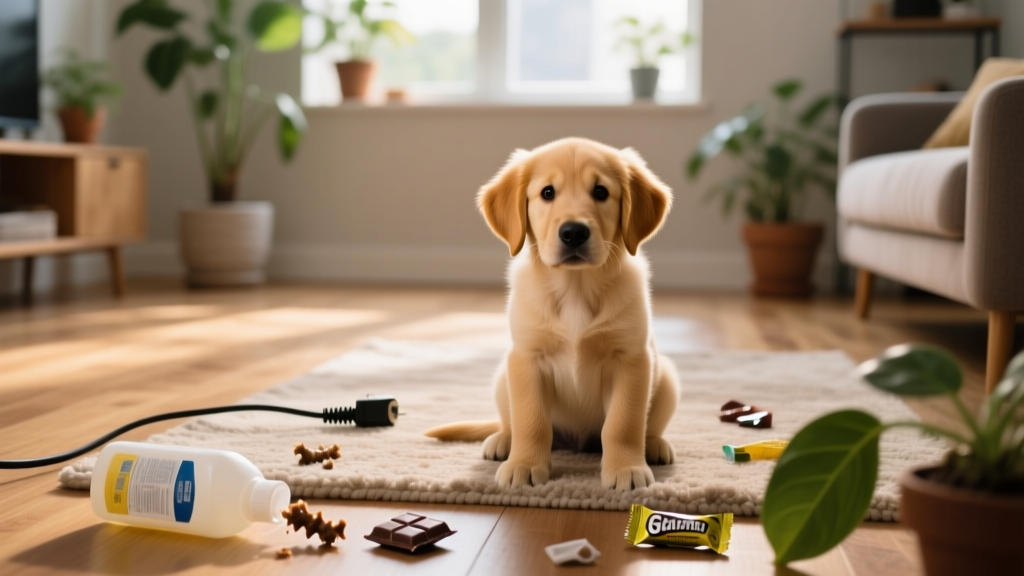
- If your puppy swallows a non-food object, contact your vet or ASPCA Animal Poison Control at (888) 426-4435 (24/7, consultation fee applies)
Breed-Specific Puppy Problems and Solutions
Afghan Hound puppies present a distinct set of challenges that differ from more commonly owned breeds. Understanding the "why" behind each behavior helps you respond effectively.
Mouthing and Nipping
Afghan Hound puppies are mouthier than many owners expect. Their long jaws can make nipping feel more intense. When your puppy nips:
- Say "ouch" in a calm, slightly surprised tone (not a shout — Afghans are sound-sensitive and will shut down).
- Withdraw attention for 10–15 seconds by standing still or stepping behind a baby gate.
- Redirect to an appropriate chew toy when they return.
- If nipping persists during play, end the session. Overstimulation is the most common trigger.
Never hold the mouth shut, tap the nose, or use physical corrections. These methods damage trust with a sensitive breed and often escalate defensive biting.
Selective Hearing and Recall Challenges
Your Afghan Hound puppy hears you perfectly well — they're choosing whether to respond. Sighthounds are visually driven, and a squirrel 200 yards away will override your recall cue every time. Start recall training in low-distraction indoor environments and build gradually. Use extraordinarily high-value rewards (real chicken, cheese, hot dog pieces) that compete with environmental stimulation. Accept that off-leash reliability in unfenced areas may never be safe for this breed.
Whining and Vocalization
Afghan Hounds are not excessive barkers, but puppies will whine when crated, when left alone, or when frustrated. Distinguish between distress whining (new puppy, first nights home — comfort with a warm blanket and a ticking clock to simulate littermate heartbeat) and attention-seeking whining (ignore completely; reward silence). Separation anxiety is more common in Afghan Hounds than in many breeds, so practice short departures from day one — leave for 30 seconds, return calmly, and gradually extend duration.
Leash Reactivity and Sensitivity
Some Afghan Hound puppies develop leash reactivity as early as 4–5 months, particularly toward fast-moving objects (bikes, joggers, other dogs at a run). This is prey drive meeting frustration. Counter-condition by rewarding calm behavior at increasing proximity to triggers. A front-clip harness (such as the Ruffwear Front Range) reduces pulling leverage without the neck pressure that can injure a sighthound's trachea.
First-Year Cost Breakdown
Afghan Hounds are among the more expensive breeds to raise through the first year, primarily due to grooming costs and the need for sighthound-specific supplies. Here's a realistic budget based on 2026 pricing:
| Category | Low Estimate | High Estimate | Details |
|---|---|---|---|
| Puppy Purchase | $2,000 | $3,500 | AKC-registered from health-tested parents (OFA hips, eye CERF, thyroid) |
| Veterinary (First Year) | $600 | $1,200 | 3 puppy visits, vaccinations, spay/neuter, fecal tests, heartworm prevention |
| Food (12 Months) | $480 | $720 | Large-breed puppy formula, transitioning to adult at 12 months |
| Grooming Supplies | $150 | $350 | Pin brush, slicker brush, detangling spray, grooming table, blow dryer |
| Professional Grooming | $0 | $1,200 | $80–$120/session if you don't groom at home (monthly recommended) |
| Supplies | $300 | $600 | Crate, bed, harness, leash, bowls, baby gates, puppy pen, toys |
| Training Classes | $150 | $400 | Puppy kindergarten + basic obedience (group classes) |
| Pet Insurance (Annual) | $480 | $840 | $40–$70/month for accident/illness coverage |
| Miscellaneous | $200 | $500 | Microchip, license, boarding/daycare, emergency fund contribution |
| Total First Year | $4,360 | $9,310 |
The wide range reflects whether you groom at home (saving $1,200/year) and your choice of pet insurance deductible. Afghan Hounds are generally healthy as puppies, but having an emergency fund of $1,000–$2,000 is wise — GDV treatment alone can cost $3,000–$7,000.
Frequently Asked Questions
When should I bring my Afghan Hound puppy home?
Ideally between 10 and 12 weeks of age. Afghan Hounds mature slowly and benefit from extra time with their littermates. A responsible breeder will not release a puppy before 8 weeks at the absolute minimum, and most reputable Afghan Hound breeders keep puppies until 10–12 weeks for optimal social development.
How often should I feed my Afghan Hound puppy?
At 8–12 weeks, feed 3–4 meals per day totaling 1.5–2.5 cups of large-breed puppy kibble. At 12–16 weeks, reduce to 3 meals (2.5–3.5 cups daily). From 4–6 months, transition to 2–3 meals (3–4 cups daily). By 6 months, feed 2 meals per day (3.5–4.5 cups). Always divide daily portions across meals rather than feeding once daily — this significantly reduces bloat risk in deep-chested breeds.
When will my Afghan Hound puppy be fully potty trained?
Realistically, plan for 4–6 months of consistent training before your Afghan Hound is reliably house-trained. Some individuals take 8–10 months. This breed's independent nature and slower maturation mean potty training requires more patience than with biddable breeds like retrievers. Consistency — taking the puppy out on a strict schedule and rewarding every outdoor elimination — is the single biggest predictor of success.
What vaccines does my Afghan Hound puppy need and when?
The core protocol includes DHPP (distemper, hepatitis, parainfluenza, parvovirus) at 6–8 weeks, 10–12 weeks, and 14–16 weeks. The rabies vaccine is given at 14–16 weeks (timing varies by state law). Bordetella, Leptospirosis, and Lyme vaccines are optional based on your vet's assessment of your puppy's risk profile. First-year boosters are given at 12–16 months.
How do I stop my Afghan Hound puppy from biting and nipping?
Use a three-step protocol: (1) Say "ouch" calmly when teeth touch skin. (2) Withdraw attention for 10–15 seconds. (3) Redirect to an appropriate chew toy. End play sessions if nipping escalates — overstimulation is the most common trigger. Never use physical punishment, which damages trust and can worsen biting in sensitive breeds. Most Afghan Hound puppies outgrow intense mouthing by 5–6 months as adult teeth come in.
When can my Afghan Hound puppy go outside and meet other dogs?
Your puppy can explore your private yard immediately. For public spaces and introductions to other dogs, wait until 7 days after the second DHPP vaccination (typically around 13 weeks of age). Puppy socialization classes that require proof of first vaccination are considered safe from 10 weeks onward. Until fully vaccinated, carry your puppy in a sling or carrier for outdoor exposure — socialization shouldn't wait for full immunity, but parvovirus risk is real and deadly.
Aaron Whyte
All our authors care for dogs every day — read more of their work on the authors page.