Affenpinscher Puppies & Breeders: The Complete First-Year Puppy Guide
Everything you need to know about raising Affenpinscher puppies: finding ethical breeders, feeding schedules, potty training milestones, vet costs, &...
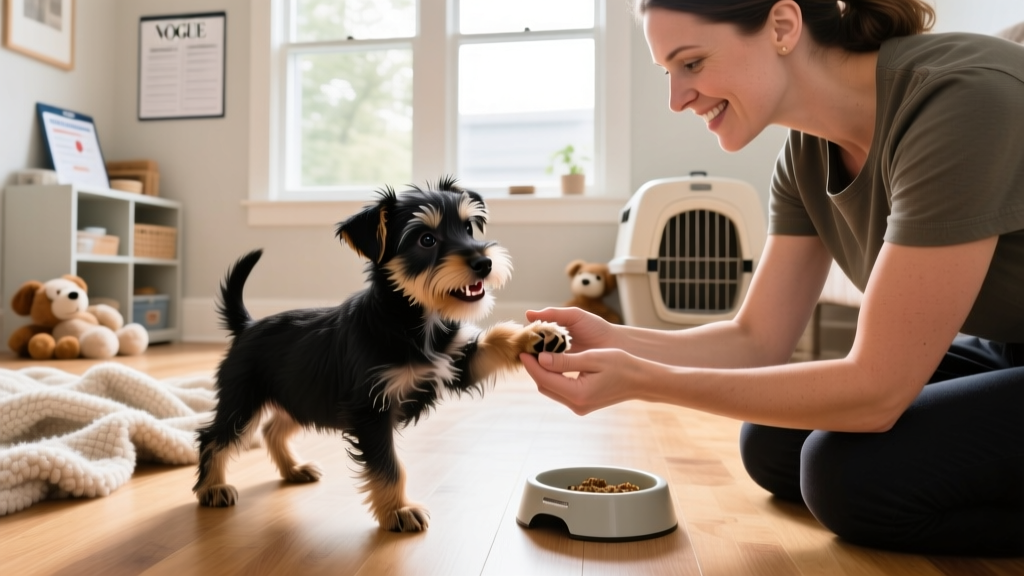
The Affenpinscher — that wiry, monkey-faced charmer from Germany — is one of the rarest toy breeds in the United States. The AKC registers only a few hundred each year, which means finding Affenpinscher puppies from responsible breeders requires patience, preparation, and a willingness to wait on a list for six months or longer. If you've secured a spot with a reputable breeder or are preparing to bring one of these bold little dogs home, this guide walks you through every milestone of the first year with breed-specific, age-by-age detail.
Veterinary disclaimer: This guide provides general puppy care information. Always consult your veterinarian for personalized health advice, vaccination protocols, and dietary recommendations for your individual Affenpinscher puppy.
Finding Ethical Affenpinscher Puppies: What Reputable Breeders Do Differently
Because Affenpinschers are uncommon, the breeder landscape is small but important to navigate carefully. The AKC Marketplace and the Affenpinscher Club of America are your best starting points. Here is what separates an ethical Affenpinscher breeder from a backyard operation:
- Health-tests both parents for patellar luxation, hip dysplasia, and cardiac conditions (OFA or PennHIP certifications available on request)
- Raises puppies in the home with early neurological stimulation (ENS) protocols starting day 3
- Does not release puppies before 12 weeks of age — toy breeds mature slowly and need extra time with littermates
- Provides a written contract with a health guarantee (minimum 1 year), spay/neuter clause for pet-quality puppies, and a take-back clause
- Asks you detailed questions about your household, experience, and plans
- Can show you the dam (mother) and provides references from previous puppy buyers
- Puppies "ready to go" at 6–8 weeks (dangerously early for a 7–10 lb breed)
- No health testing documentation — "vet checked" is not the same as genetic/orthopedic screening
- Multiple litters available simultaneously or year-round
- Prices significantly below market ($1,500 or less — see cost breakdown below)
- Unwillingness to let you visit the breeding facility or meet the dam
When Should I Bring My Affenpinscher Puppy Home?
Most responsible Affenpinscher breeders release puppies between 12 and 14 weeks of age. This is later than many larger breeds, and for good reason. Toy breeds like the Affenpinscher (adult weight: 7–10 lb / 3–4.5 kg) are physically fragile and emotionally dependent on littermates during the critical socialization window. Early separation — before 10 weeks — is associated with higher rates of fear-based reactivity and difficulty with bite inhibition in toy breeds.
By 12 weeks, your puppy should have received:
- At least two rounds of DHPP vaccines
- A first deworming series (typically pyrantel pamoate at 2, 4, 6, and 8 weeks)
- Microchip implantation
- Initial socialization exposure to household sounds, surfaces, and handling
Pro tip: Ask your breeder for a "puppy passport" — a written record of every vaccine, deworming dose, and socialization exposure your puppy has had. This saves your first vet visit from being guesswork.
Affenpinscher Puppy Milestones: Week-by-Week Development Timeline
Understanding what to expect at each stage helps you respond appropriately rather than reacting to normal developmental behavior as if it's a problem. Here's your Affenpinscher-specific timeline:
| Age Range | Developmental Stage | What to Expect | Your Action Items |
|---|---|---|---|
| Weeks 4–8 (with breeder) |
Socialization period begins; weaning onto solid food; littermate play teaches bite inhibition | Puppy learns dog-to-dog communication; starts exploring textures and sounds; first fear imprint period (weeks 8–10) | Visit breeder if possible; ask about ENS protocol and early exposure work; prepare your home |
| Weeks 8–12 (transition home) |
Peak socialization window; attachment bonding; first fear period peaks around week 8–10 | Clingy behavior, whining at night, startle responses to new sounds; puppy explores with mouth; sleep needs: 18–20 hours/day | Keep experiences positive — never force exposure; begin crate training; start potty schedule; limit visitors to prevent overwhelm |
| Weeks 12–16 | Confidence building; testing boundaries; teething begins around 12–14 weeks | Increased independence; may "forget" learned cues; chewing intensifies; second fear period may begin around 14–16 weeks | Enroll in positive-reinforcement puppy class; increase socialization outings; provide appropriate chew outlets; maintain consistent rules |
| Weeks 16–24 | Juvenile period; adult teeth emerging; socialization window closing (around 14–16 weeks) but continued exposure critical | Energy surges; may become selectively fearful of previously neutral stimuli; chewing peaks as adult teeth set; Affenpinscher boldness emerges | Continue structured socialization; begin leash training in low-distraction areas; practice handling exercises for grooming prep |
| 6–12 months | Adolescence; sexual maturity (if intact); potential behavior regression | May ignore recall; territorial barking may emerge; Affenpinscher stubbornness becomes more pronounced; growth slows toward adult size | Discuss spay/neuter timing with your vet (typically 6–9 months for toy breeds); continue training; maintain socialization; begin coat-stripping grooming routine |
Affenpinscher Puppy Feeding Schedule: Portions, Frequency, and Food Selection
Affenpinschers are toy-breed dogs with fast metabolisms and small stomachs. Hypoglycemia (dangerously low blood sugar) is a real risk in puppies under 12 weeks, especially if meals are skipped. Choose an AAFCO-approved small-breed or toy-breed puppy formula — kibble size matters for a mouth this small.
| Age | Estimated Weight | Meals Per Day | Daily Total (Dry Kibble) | Notes |
|---|---|---|---|---|
| 8–12 weeks | 2–4 lb (0.9–1.8 kg) | 4 meals | ¼–⅓ cup/day | Moisten kibble with warm water; keep Nutri-Cal or Karo syrup on hand for hypoglycemia emergencies |
| 12–16 weeks | 3–5 lb (1.4–2.3 kg) | 3–4 meals | ⅓–½ cup/day | Transition to dry kibble; monitor body condition score (BCS) — ribs should be palpable but not visible |
| 4–6 months | 5–7 lb (2.3–3.2 kg) | 3 meals | ½–⅔ cup/day | Growth rate begins to slow; adjust portions based on BCS rather than age alone |
| 6–12 months | 7–10 lb (3.2–4.5 kg) | 2 meals | ½–¾ cup/day | Transition to adult small-breed formula around 10–12 months; consult your vet for exact timing |
Recommended food brands for Affenpinscher puppies (2026): Royal Canin X-Small Puppy (kibble size designed for breeds under 10 lb), Hill's Science Diet Small Paws Puppy, or Purina Pro Plan Toy Breed Puppy. All carry an AAFCO statement for growth/all life stages.
Potty Training Your Affenpinscher: Realistic Timeline and Troubleshooting
Let's set expectations early: toy breeds are notoriously slower to house-train than larger dogs. The Affenpinscher's tiny bladder (holding capacity roughly equals their age in months plus one, in hours — so a 3-month-old puppy can hold approximately 4 hours maximum) means more frequent trips outside. Most Affenpinschers are reliably house-trained between 4 and 6 months of age, though some take until 8–9 months, especially in cold or wet climates where the puppy may resist going outdoors.
Potty Training Schedule by Age
- 12–16 weeks: Take outside every 1–2 hours during the day, immediately after meals, naps, and play sessions. Expect 1–2 overnight trips.
- 4–6 months: Every 2–3 hours during the day. Overnight holding improves to 5–6 hours.
- 6–9 months: Every 3–4 hours. Most puppies can sleep 7–8 hours overnight without a break.
Troubleshooting Common Potty Training Problems
Problem: Puppy refuses to go outside in cold/rainy weather.
Solution: Affenpinschers have a short, wiry coat with minimal undercoat — they feel cold acutely. Use a fitted puppy raincoat or sweater (Ruffwear Overcoat Fuse is a solid option for small breeds) and create a covered potty area if possible. Some owners successfully litter-train their Affenpinscher as a weather backup using a real-grass pad like Fresh Patch or DoggieLawn.
Problem: Puppy has accidents after seeming trained.
Solution: Regression is normal around 5–7 months (adolescence). Return to a more frequent schedule, increase supervision, and rule out urinary tract infection with your vet — toy breeds are predisposed to UTIs and bladder stones.
Problem: Puppy only goes on puppy pads, won't transition outside.
Solution: Gradually move the pad closer to the door over several days, then place it just outside the threshold, then remove it entirely. Pair outdoor elimination with high-value treats (freeze-dried chicken liver works well for food-motivated Affenpinschers). Never punish accidents — this creates fear-based hiding behavior, not bladder control.
The Critical Socialization Window: Weeks 3–14 Exposure Checklist
The primary socialization window for puppies closes around 14–16 weeks (some veterinary behaviorists narrow it to 3–12 weeks). For Affenpinschers — a breed that can be aloof with strangers and bold to the point of recklessness with larger dogs — structured socialization is not optional. It's the single most important thing you can do during the first three months.
Goal: positive, low-pressure exposure — never force interaction. Let the puppy observe and approach at their own pace.
- ☐ Meet 10+ different people: varying ages, genders, skin tones, heights, wearing hats/glasses/masks
- ☐ Gentle handling by strangers: ear touching, paw handling, mouth opening (prep for grooming and vet exams)
- ☐ Exposure to 5+ vaccinated, friendly adult dogs (avoid dog parks until fully vaccinated)
- ☐ Walk on 5+ different surfaces: grass, gravel, tile, carpet, metal grates
- ☐ Hear 10+ novel sounds at low volume, gradually increasing: vacuum, doorbell, thunderstorm audio, clapping, umbrellas opening
- ☐ Ride in car (short trips to pleasant destinations, not just vet visits)
- ☐ Visit 3+ novel environments: pet-friendly store patio, friend's house, outdoor café
- ☐ Encounter children (supervised, calm children only — teach kids to sit and let the puppy approach)
- ☐ See novel objects: wheelchairs, bicycles, strollers, luggage, brooms
- ☐ Practice brief separations: leave puppy in safe area for 5–15 minutes, gradually increasing to prevent separation anxiety
Key Affenpinscher consideration: This breed has a strong prey drive inherited from its ratting-dog origins. Early exposure to cats, small animals, and birds — even if just visual exposure through a window or barrier — helps modulate this instinct. Never leave an Affenpinscher unsupervised with pet rodents or birds.
Vaccination Schedule for Affenpinscher Puppies
Your breeder should have started the vaccination series. Continue with your veterinarian according to the AVMA-recommended core vaccine protocol. Toy breeds like the Affenpinscher may be more prone to mild vaccine reactions (lethargy, facial swelling, vomiting) — discuss pre-medication with diphenhydramine (Benadryl) with your vet if your puppy has had a prior reaction.
| Age | Vaccines Administered | Type | Notes |
|---|---|---|---|
| 6–8 weeks | DHPP (Distemper, Hepatitis/Adenovirus, Parainfluenza, Parvovirus) — Dose 1 | Core | Typically administered by breeder; deworming (pyrantel) often given concurrently |
| 10–12 weeks | DHPP — Dose 2; Bordetella (optional, recommended if attending puppy class) | Core + Lifestyle | First vet visit for most new owners; fecal parasite panel recommended |
| 14–16 weeks | DHPP — Dose 3 (final puppy booster); Rabies (required by law in most US states) | Core | Rabies is typically given at 12–16 weeks depending on state law; puppy is considered fully protected approximately 2 weeks after final DHPP |
| 12–16 months | DHPP booster; Rabies booster (1-year or 3-year depending on vaccine type) | Core | After this, DHPP is typically given every 3 years; discuss titer testing as an alternative with your vet |
When can my puppy go outside and meet other dogs? After the final DHPP booster at 14–16 weeks, wait approximately 2 weeks for full immunity — so around 16–18 weeks your puppy can safely walk in public areas, visit dog-friendly parks, and interact with unknown dogs. Before that, carry your puppy or use a stroller for socialization outings, and arrange playdates only with known, fully vaccinated dogs in private yards.
Crate Training, Teething, and Managing Common Affenpinscher Puppy Problems
Crate Training Progression
Affenpinschers adapt reasonably well to crate training because they are den-oriented dogs that like a defined personal space. Choose a crate sized for a dog under 15 lb — the MidWest iCrate XS (18" x 12" x 14") or a similar small-breed wire crate with a divider panel works well. The puppy should be able to stand, turn around, and lie down comfortably, but excess space encourages pottying in one corner.
| Age | Maximum Crate Time (Daytime) | Overnight |
|---|---|---|
| 12–14 weeks | 1–2 hours | 3–4 hours (set an alarm) |
| 14–16 weeks | 2–3 hours | 4–5 hours |
| 4–6 months | 3–4 hours | 6–7 hours |
| 6–12 months | 4–5 hours | 7–8 hours |
Nighttime whining protocol: Take the puppy out to potty immediately, keep lights low, no play, return to crate. If whining continues after a confirmed potty trip, wait 5–10 minutes before checking — rewarding whining with attention teaches the puppy that noise equals freedom. A Snuggle Puppy (with heartbeat simulator) can ease the transition for the first few nights.
Teething Timeline and Relief Strategies
Affenpinscher puppies begin losing deciduous (baby) teeth around 12–16 weeks, with the full set of 42 adult teeth typically erupted by 6–7 months. Toy breeds are especially prone to retained deciduous teeth — where baby teeth don't fall out on their own — which can cause crowding, misalignment, and periodontal disease. Your vet will check for this at each visit and may recommend extraction of retained teeth during spay/neuter surgery.
Safe chew options for a teething Affenpinscher puppy:
- KONG Puppy (XS or Small) stuffed with softened kibble and frozen — the rubber is gentle on emerging teeth
- Nylabone Puppy Chew (Power Chew is too hard for puppy teeth — use the Puppy-specific line)
- Frozen washcloth: wet, twist, freeze — supervise to prevent swallowing fabric pieces
- Benebone Puppy (size XS) — the angled shape helps puppies grip with small paws
Avoid: Hard antlers, cooked bones, ice cubes (too hard for puppy teeth), and any rawhide products. If you can't indent the chew with your thumbnail, it's too hard and risks tooth fracture.
Stopping Puppy Biting and Nipping
Affenpinscher puppies explore the world with their mouths, and their terrier heritage means they can be persistent nippers. Here's a force-free protocol:
- Redirect: When teeth touch skin, immediately offer an appropriate chew toy. Praise enthusiastically when the puppy mouths the toy instead.
- Withdraw attention: If redirecting fails, stand up and walk away for 10–15 seconds. This mimics littermate behavior — puppies who bite too hard get ignored by siblings.
- Manage arousal: Biting intensifies when puppies are overtired. If nipping escalates, your puppy likely needs a nap — place them in the crate with a chew for a forced rest period.
- Never: Hold the mouth shut, alpha-roll, yell, or use any physical punishment. These methods increase fear and aggression, and the American Veterinary Society of Animal Behavior opposes dominance-based training.
First-Year Cost Breakdown: Budgeting for Your Affenpinscher Puppy
Affenpinschers are expensive to acquire and moderately expensive to maintain. Here's a realistic first-year budget based on 2026 US pricing:
| Category | Low Estimate | Mid Estimate | High Estimate |
|---|---|---|---|
| Puppy purchase (from ethical breeder) | $2,500 | $3,500 | $5,000+ |
| Veterinary care (vaccines, wellness exams, spay/neuter, fecal tests, heartworm prevention) | $800 | $1,200 | $1,800 |
| Food (high-quality small-breed puppy formula, transitioning to adult) | $200 | $350 | $500 |
| Supplies (crate, bed, harness, leash, bowls, toys, grooming tools, puppy pads) | $250 | $400 | $600 |
| Training (puppy class, positive-reinforcement group classes) | $150 | $300 | $500 |
| Grooming (professional hand-stripping or clipping every 6–8 weeks) | $300 | $450 | $600 |
| Pet insurance (optional but recommended for a rare breed) | $300 | $480 | $700 |
| TOTAL FIRST YEAR | $4,500 | $6,680 | $9,700+ |
Hidden costs to budget for: Emergency vet visits ($500–$3,000 per incident — toy breeds are prone to patellar luxation and tracheal collapse), dental cleaning under anesthesia ($500–$900 by age 2–3, as Affenpinschers are predisposed to early periodontal disease), and professional grooming if you choose hand-stripping over clipping (hand-stripping preserves the breed's characteristic wiry coat texture but costs 30–50% more per session).
Frequently Asked Questions About Affenpinscher Puppies
How often should I feed my Affenpinscher puppy at each age?
At 8–12 weeks, feed 4 small meals per day (every 4–5 hours during waking hours). At 12–16 weeks, reduce to 3–4 meals. At 4–6 months, feed 3 meals daily. At 6 months and beyond, transition to 2 meals per day. Never free-feed an Affenpinscher puppy — their small size makes portion control essential to prevent obesity, which stresses their joints and exacerbates patellar luxation risk.
When will my Affenpinscher puppy be fully potty trained?
Most Affenpinschers achieve reliable house training between 4 and 6 months, but some take until 8–9 months. Consistency matters more than speed — a rigid schedule with frequent outdoor trips and immediate positive reinforcement (treat within 2 seconds of elimination) will get you there faster than any shortcut method. Cold weather and apartment living can add 1–2 months to the timeline.
What vaccines does my Affenpinscher puppy need and when?
Core vaccines: DHPP at 6–8, 10–12, and 14–16 weeks, with a booster at 12–16 months. Rabies at 12–16 weeks (timing varies by state). Lifestyle vaccines your vet may recommend: Bordetella (if attending group classes), Leptospirosis (if in an endemic area or near wildlife), and Canine Influenza (H3N2/H3N8) if you plan to board or visit dog daycare facilities.
How do I stop my Affenpinscher puppy from biting and nipping?
Use a redirect-and-withdraw protocol: offer a chew toy when teeth touch skin, and if the puppy persists, calmly stand up and leave for 10–15 seconds. Ensure the puppy is getting 18–20 hours of sleep per day — overtired puppies bite more. Enroll in a positive-reinforcement puppy class where controlled play with other puppies reinforces bite inhibition naturally. Never use physical punishment.
When can my Affenpinscher puppy go outside and meet other dogs?
You can carry your puppy in public spaces immediately for socialization exposure (this is encouraged during the 8–14 week window). However, your puppy should not walk in public areas or interact with unknown dogs until approximately 2 weeks after the final DHPP booster — typically around 16–18 weeks of age. Arrange playdates with known, vaccinated dogs in private settings before that milestone.
Are Affenpinscher puppies good with children?
Affenpinschers can do well with respectful, older children (ages 8+) who understand how to interact gently with a small dog. They are not recommended for homes with toddlers or very young children, as a 3-pound puppy can be seriously injured by rough handling, and Affenpinschers will snap defensively if frightened or hurt. Always supervise all interactions between puppies and children.
Beth Carrasco
All our authors care for dogs every day — read more of their work on the authors page.