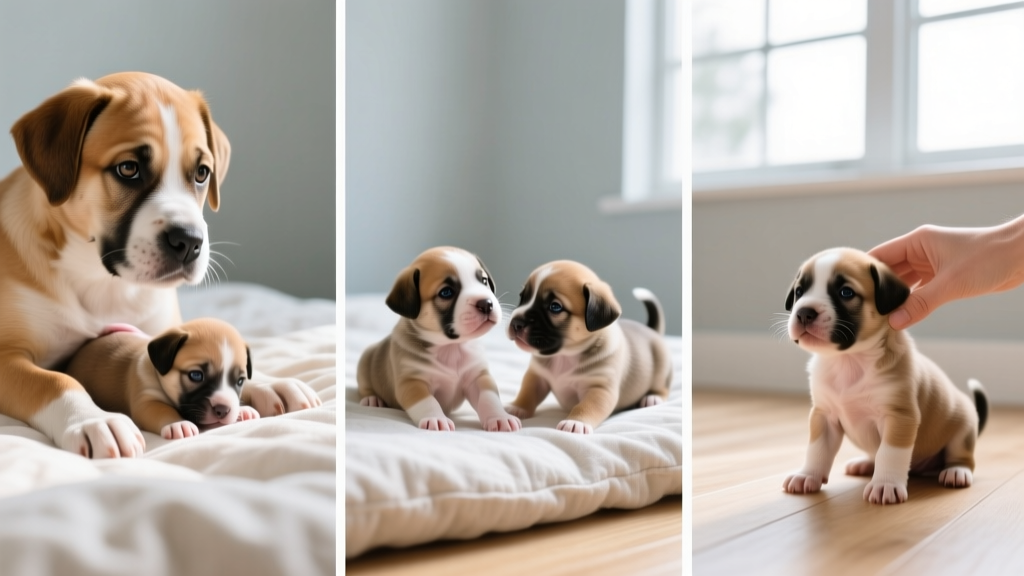
Your 8 Week Old Puppy
Everything you need to know about your 8 week old puppy — feeding schedules, potty training timelines, vaccination plans, and week-by-week milestones.

When Should You Bring Your Puppy Home?
Most responsible breeders and rescue organizations release puppies between 8 and 10 weeks of age. The American Veterinary Medical Association (AVMA) and the American Kennel Club (AKC) both recognize 8 weeks as the minimum appropriate age for rehoming, though many breed specialists now advocate for 10–12 weeks, particularly for smaller breeds that mature more slowly.
At 8 weeks, your puppy has passed the primary socialization period with littermates (weeks 3–7), learned basic bite inhibition from siblings, and is developmentally ready to bond with a new family. However, this is also the exact moment when fear periods begin — meaning the experiences you provide in the first two weeks home will shape your dog's lifelong temperament.
Week-by-Week Development Milestones: Weeks 4 Through 12 Months
Understanding what's developmentally appropriate at each stage prevents frustration and sets realistic expectations. Here's your comprehensive milestone map:
Weeks 4–8 (Still with Breeder)
- Physical: Baby teeth fully erupted; coordination improving rapidly; able to eat moistened kibble independently by week 5
- Social: Learning bite inhibition through littermate play; first fear imprint period peaks around week 8
- Sensory: Full vision and hearing established; startle responses to loud noises are normal
- Elimination: Beginning to move away from sleeping area to eliminate (den instinct emerging)
Weeks 8–12 (First Month Home)
- Physical: Gaining weight rapidly — expect 5–10% body weight gain per week depending on breed size
- Sleep: 18–20 hours of sleep per day is normal; overtired puppies become hyperactive and bitey
- Behavior: Peak mouthing/nipping phase; testing boundaries; separation distress when left alone
- Bladder control: Approximately 1 hour of hold time per month of age (2-month-old = ~2 hours maximum)
- Learning: Capable of learning name recognition, sit, and basic recall using food motivation
Weeks 12–16 (Settling In)
- Physical: Adult coat beginning to replace puppy coat; growth rate continues but begins to plateau in small breeds
- Second fear period: Often occurs between 12–14 weeks — previously confident puppies may suddenly seem fearful of familiar objects or sounds
- Behavior: Increased independence; may start ignoring recall; chewing intensifies as teething begins
- Bladder control: Hold time extends to approximately 3–4 hours during the day
Weeks 16–24 (Adolescence Begins)
- Physical: Baby teeth fall out (you may find them in bedding or toys); adult teeth fully in by 6 months
- Social: Socialization window closes around 14–16 weeks; continued exposure is still valuable but requires more effort
- Behavior: Adolescent regression — previously reliable commands may be "forgotten"; increased interest in environment over handler
- Sexual maturity: Small breeds may enter first heat cycle as early as 6 months; discuss spay/neuter timing with your veterinarian
Months 6–12 (Full Adolescence)
- Physical: 75–100% of adult height reached; large and giant breeds continue growing until 18–24 months
- Behavior: Peak adolescent energy and boundary-testing; impulse control is low; counter-surfing, leash pulling, and selective hearing are common
- Training: This is the age when many dogs are surrendered — consistent positive reinforcement training is critical during this period
Feeding Schedule: Exact Portions by Age and Weight
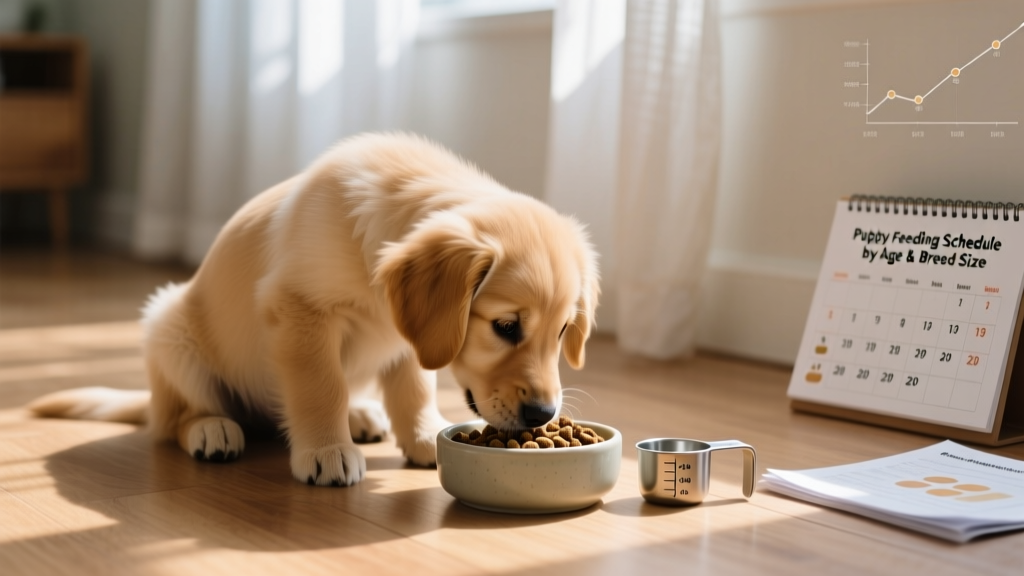
Nutritional needs change rapidly in the first year. Always choose a food that meets AAFCO standards for growth or all life stages. Below are general feeding guidelines — your specific puppy's needs may vary based on breed size, activity level, and metabolism. Consult your veterinarian for individualized recommendations.
| Puppy Age | Meals Per Day | Small Breed (10–25 lb adult) Cups/Day | Medium Breed (25–60 lb adult) Cups/Day | Large Breed (60–100+ lb adult) Cups/Day |
|---|---|---|---|---|
| 8–12 weeks | 4 meals | ½ – ¾ cup | 1 – 1½ cups | 1½ – 2½ cups |
| 12–16 weeks | 3 meals | ¾ – 1 cup | 1½ – 2 cups | 2½ – 3½ cups |
| 4–6 months | 3 meals | ¾ – 1¼ cups | 2 – 3 cups | 3 – 5 cups |
| 6–12 months | 2 meals | ¾ – 1 cup (transition to adult food at 9–12 months) | 2 – 3½ cups (transition at 12 months) | 3½ – 6 cups (transition at 12–18 months) |
Key feeding rules:
- Never free-feed a puppy — measured meals allow you to monitor appetite changes (an early illness indicator) and support potty training predictability
- Large and giant breed puppies require food specifically formulated for large-breed growth to prevent rapid bone development and orthopedic issues like hip dysplasia
- Remove uneaten food after 15–20 minutes to establish a feeding routine
- Always provide fresh water; expect your puppy to drink ½ to 1 ounce per pound of body weight daily
- Wait 30 minutes after meals before crating or vigorous play to reduce bloat risk, especially in deep-chested breeds
Vaccination Schedule: What Your Puppy Needs and When
Your veterinarian will customize a vaccination protocol based on your region, lifestyle, and local disease prevalence. The following represents the standard core vaccine schedule recommended by the AVMA and the American Animal Hospital Association (AAHA) canine vaccination guidelines.
| Age | Vaccine | Notes |
|---|---|---|
| 6–8 weeks | DHPP (Distemper, Hepatitis/Adenovirus, Parainfluenza, Parvovirus) — 1st dose | Often administered by breeder or rescue before pickup |
| 10–12 weeks | DHPP — 2nd dose; Bordetella (optional, recommended if attending puppy classes or boarding) | Maternal antibodies declining; immune response strengthening |
| 14–16 weeks | DHPP — 3rd dose; Rabies (required by law in most US states) | Final puppy booster; maternal antibodies should be fully cleared by this point |
| 12–16 months | DHPP booster; Rabies booster; Bordetella booster (if applicable) | Transition to adult vaccine schedule; some vets recommend titers testing before boosters |
Non-core vaccines your vet may recommend based on risk factors: Leptospirosis (urban/wildlife exposure), Lyme disease (tick-endemic areas), and Canine Influenza (H3N2/H3N8 — boarding/daycare environments).
The Socialization Window: Weeks 3–14
The primary socialization window — the period when puppies most readily accept new experiences without fear — closes between 12 and 14 weeks of age. According to the Merck Veterinary Manual, insufficient socialization during this window is the leading behavioral risk factor for fear-based aggression and anxiety in adult dogs.
This creates a tension: your puppy needs socialization before full vaccination. The AVMA and the American Veterinary Society of Animal Behavior (AVSAB) recommend that puppies begin socialization at least 7 days after their first DHPP vaccine, using controlled environments rather than high-risk public areas.
Your Socialization Checklist
Aim for positive exposure to as many of these categories as possible before 14 weeks. Each exposure should be paired with high-value treats and should never be forced — let your puppy approach at their own pace.
- Surfaces: Grass, gravel, tile, hardwood, metal grates, wet pavement, carpet, stairs
- Sounds: Vacuum cleaner, doorbell, thunderstorms (use recordings at low volume), traffic, children screaming, fireworks (recorded), hair dryer, blender, garbage truck
- People: Men with beards, people wearing hats/sunglasses, children (supervised), people in wheelchairs, people using crutches, delivery workers, people of different ethnicities and heights
- Animals: Fully vaccinated adult dogs (various sizes), cats (controlled introductions), livestock if rural
- Handling: Paw touching, ear inspection, mouth opening, nail clipping practice, being held on back, collar grabbing, towel drying
- Environments: Car rides, vet office (happy visits with treats only), pet-friendly stores, outdoor seating areas, friends' houses, elevators, automatic doors
- Objects: Umbrellas opening, balloons, plastic bags fluttering, bicycles, skateboards, strollers, shopping carts
Potty Training Timeline: Realistic Expectations and Troubleshooting
Let's set honest expectations: most puppies achieve reliable house training between 4 and 6 months of age, though some small breeds (with proportionally smaller bladders and faster metabolisms) may take until 8–10 months. The "trained in 3 days" programs you see online create unrealistic benchmarks that set owners up for frustration.
Bladder Capacity by Age
A general guideline: puppies can hold their bladder for approximately one hour per month of age, plus one hour, during the day. Overnight control develops faster because metabolism slows during sleep.
| Puppy Age | Daytime Hold Time | Overnight Hold Time | Expected Accidents Per Week |
|---|---|---|---|
| 8–10 weeks | 1–2 hours | 3–4 hours (set an alarm) | Daily accidents are normal |
| 10–14 weeks | 2–3 hours | 4–6 hours | 3–5 per week |
| 3–4 months | 3–4 hours | 6–8 hours | 1–3 per week |
| 4–6 months | 4–6 hours | 7–8 hours | 0–2 per week |
| 6+ months | 6–8 hours | 8+ hours | Rare (consult vet if frequent) |
Potty Training Protocol
- Take your puppy out on a leash to the same spot every time — the scent of previous elimination triggers the urge to go
- Use a consistent cue word ("go potty," "do your business") while they're eliminating, then reward immediately after with a high-value treat and verbal praise
- Go out at these critical times: immediately upon waking, within 15–20 minutes after eating, after play sessions, after naps, before crating, and before bedtime
- Supervise 100% of the time when loose indoors — use a tether (leash attached to your belt) or confine to one room where you can watch for sniffing, circling, or sudden stillness
- If you catch them mid-accident: interrupt with a neutral sound ("oops"), carry or lead them outside immediately, and reward if they finish outdoors
- Never punish accidents — rubbing noses in urine, yelling, or hitting creates fear of eliminating in front of you, which makes puppies hide to eliminate (behind furniture, in closets)
- Clean accidents with enzymatic cleaner (products containing bacterial enzymes that break down uric acid crystals — standard household cleaners do not eliminate the scent markers dogs detect)
Crate Training Progression and Time Limits
A crate is not a punishment tool — it's a den substitute that leverages your puppy's natural instinct to keep their sleeping area clean. Proper crate training supports potty training, prevents destructive chewing when unsupervised, and gives your puppy a safe retreat when overwhelmed.
Crate Time Limits by Age
The maximum time a puppy should spend in a crate during the day follows the same bladder-capacity rule. Overnight, puppies can typically hold longer. These are maximums, not targets — puppies also need extensive supervised floor time, play, and training sessions throughout the day.
| Age | Max Daytime Crate Time | Max Overnight Crate Time |
|---|---|---|
| 8–10 weeks | 1–2 hours | 3–4 hours (expect overnight wakeup) |
| 11–14 weeks | 2–3 hours | 5–6 hours |
| 15–16 weeks | 3–4 hours | 6–7 hours |
| 4–6 months | 4–5 hours | 7–8 hours |
Crate Training Steps
- Days 1–3: Leave the crate door open; toss high-value treats inside; feed all meals in the crate with door open; place a worn t-shirt with your scent inside
- Days 4–7: Close the door during meals, open immediately after; practice closing the door for 30-second intervals while you sit beside the crate
- Week 2: Extend closed-door time to 5–10 minutes while you remain in the room; begin stepping away briefly (out of sight for 30 seconds, then return)
- Week 3+: Gradually extend absences; practice leaving the house for short trips (5 minutes, then 15, then 30)
Whining protocol: If your puppy whines in the crate at night, first determine if they need to eliminate. Take them out on leash, stand quietly for 3–5 minutes. If they eliminate, reward and return to crate. If they don't, return them to the crate without interaction. Avoid letting them out while actively whining (unless it's been longer than their bladder capacity), as this reinforces whining as an exit strategy.
Teething Timeline and Relief Strategies
Puppy teething occurs in two phases. Deciduous (baby) teeth erupt between 3–6 weeks. These 28 baby teeth begin falling out around 12–16 weeks, replaced by 42 adult teeth, with the process typically complete by 6–7 months.
Teething Signs by Phase
- 3–4 months: Increased chewing intensity; you may find small teeth in bedding or toys; mild gum bleeding is normal; decreased appetite for hard kibble
- 4–5 months: Peak chewing phase; puppy seeks hard, textured objects to relieve gum pressure; may chew furniture legs, baseboards, shoes
- 5–7 months: Adult canines and molars erupting; chewing gradually decreases as teeth settle
Safe Teething Relief Options
- Frozen Kong (classic rubber model): Stuff with plain yogurt or pumpkin puree and freeze for 4+ hours — the cold numbs gums while the texture satisfies chewing urge
- Wet washcloth twist: Soak a clean washcloth in water, twist into a rope shape, freeze — supervise use and discard if pieces break off
- Benebone or Nylabone puppy-specific chews: Choose the puppy-formula versions which are softer than adult versions; select size based on your puppy's current weight
- Carrot sticks (frozen): A low-calorie edible option; supervise to prevent choking on large pieces
Common Puppy Problems and Solutions
Puppy Biting and Nipping
Mouthing is completely normal puppy behavior — they explore the world with their mouths and haven't yet learned that human skin is off-limits. This behavior typically peaks between 8 and 16 weeks.
What works:
- Redirect to appropriate chew toys: Every time teeth touch skin, say "oops" in a neutral tone, withdraw your hand, and immediately offer a toy. Reward enthusiastically when they chew the toy.
- Time-outs: If biting persists after 2–3 redirects, calmly stand up and leave the play area for 10–15 seconds. This teaches that biting ends fun interaction.
- Ensure adequate sleep: Overtired puppies bite more intensely and cannot learn. Enforce naps in the crate every 1–2 hours during the day.
- Provide sufficient physical and mental exercise: 5 minutes of structured walking per month of age (so 10 minutes for an 8-week-old), plus training sessions and sniffing games
What doesn't work: Yelling, holding the mouth shut, alpha rolls, or physical punishment. These methods create fear and can escalate biting into defensive aggression. The American Veterinary Society of Animal Behavior explicitly advises against dominance-based training techniques.
Nighttime Whining and Crying
Your puppy has spent every night of their life sleeping against warm littermates. The first nights alone are genuinely distressing. Solutions:
- Place the crate in your bedroom for the first 2–3 weeks so your puppy can hear and smell you
- Use a Snuggle Puppy or similar heartbeat toy that mimics littermate warmth and pulse
- Set a phone alarm for 3–4 hours after bedtime to take your puppy out for a quiet, boring potty break (minimal light, no play, straight back to crate)
- Gradually move the crate to the desired permanent location over 1–2 weeks once your puppy is sleeping through the night
Destructive Chewing
Chewing is a biological need, not a behavioral problem. The solution is management:
- Puppy-proof every room before giving access: remove shoes, electrical cords, small objects, toxic plants, and medications
- Provide 5–7 appropriate chew toys of varying textures, rotated every few days to maintain novelty
- Use bitter apple spray (test on fabrics first) on furniture legs and baseboards as a deterrent alongside providing alternatives
- Never give your puppy old shoes or socks as toys — they cannot distinguish between old items and new ones
When Can Your Puppy Go Outside and Meet Other Dogs?
This is one of the most common questions new puppy owners ask, and the answer requires balancing disease risk against the closing socialization window.
Safe from day one (8 weeks):
- Carrying your puppy in a sling or carrier through public spaces for sight and sound exposure
- Private yard exploration (if no unvaccinated dogs have had access)
- Playdates with known, fully vaccinated, healthy adult dogs in private homes
- Puppy kindergarten classes that require proof of first DHPP vaccination and maintain sanitized facilities
Safe after final DHPP booster (approximately 16–17 weeks, allowing 5–7 days post-vaccine):
- Public dog parks (though many trainers recommend avoiding these permanently due to unpredictable dog behavior)
- Pet store floors
- Dog-friendly restaurant patios
- Group walks with unknown dogs
- Boarding facilities and doggy daycare
First-Year Cost Breakdown
Budgeting realistically prevents financial stress and ensures your puppy receives appropriate care. The following estimates reflect 2025–2026 US averages and vary by region, breed size, and provider.
| Category | Low Estimate | Average Estimate | High Estimate |
|---|---|---|---|
| Puppy veterinary visits (3–4 wellness exams + vaccines) | $300 | $500 | $800 |
| Spay/neuter surgery | $200 | $500 | $900 |
| Monthly heartworm/flea/tick prevention (12 months) | $150 | $250 | $400 |
| Food (puppy formula, varies significantly by breed size) | $250 | $500 | $900 |
| Supplies (crate, bed, leash, collar, bowls, toys, gates, enzymatic cleaner) | $200 | $400 | $700 |
| Training (puppy kindergarten + basic manners group classes) | $150 | $350 | $800 |
| Microchip + registration | $25 | $50 | $75 |
| Pet insurance (optional, annual premium) | $300 | $600 | $1,000 |
| TOTAL FIRST YEAR | $1,575 | $3,150 | $5,575 |
Emergency fund recommendation: Set aside an additional $500–$1,500 for unexpected veterinary costs. Common puppy emergencies include foreign body ingestion ($1,500–$5,000 for surgical removal), parvovirus treatment ($1,500–$5,000+), and fracture repair ($2,000–$6,000). Pet insurance purchased before any conditions develop typically covers these scenarios after deductible.
Frequently Asked Questions
How often should I feed my 8 week old puppy?
At 8 weeks, feed 4 meals per day spaced roughly 4 hours apart during waking hours (for example: 7 AM, 11 AM, 3 PM, 7 PM). Consistent meal timing creates predictable elimination patterns, which directly supports potty training. Transition to 3 meals at 12 weeks and 2 meals at 6 months.
When will my puppy be fully potty trained?
Most puppies achieve reliable house training between 4 and 6 months of age, meaning they can signal or hold it for appropriate intervals with fewer than 1–2 accidents per month. Small and toy breeds often take longer (up to 8–10 months) due to smaller bladder capacity. If your puppy is 6 months or older and still having daily accidents, consult your veterinarian to rule out medical causes such as urinary tract infection, ectopic ureters, or diabetes.
How do I stop my puppy from biting my hands and ankles?
Puppy biting decreases as adult teeth come in (around 5–6 months) if you consistently redirect to toys and use time-outs. The key is that every person in the household must follow the same protocol — inconsistency prolongs the behavior. For ankle-biting specifically (common in herding breeds), redirect to a tug toy and reward calm walking beside you with treats. Manage the environment by keeping puppies on a leash or in a pen during high-energy periods until they learn appropriate play.
My puppy is sleeping 18 hours a day — is that normal?
Yes. Puppies aged 8–16 weeks typically sleep 18–20 hours per day, including overnight. Growth hormone is primarily released during sleep, and the mental stimulation of learning new things in a new environment is genuinely exhausting. If your puppy seems lethargic when awake (uninterested in food, play, or interaction), that warrants a veterinary check. But a puppy who alternates between bursts of intense energy and deep sleep is developing normally.
Should I wake my puppy up at night to go potty?
For the first 2–4 weeks home (8–12 weeks of age), yes — set an alarm for 3–4 hours after bedtime and take your puppy out. This prevents overnight accidents that undermine crate training. Most puppies can sleep 6–7 hours without a potty break by 14–16 weeks. If your puppy wakes you before the alarm, always take them out — they're telling you they need to go, which is exactly the communication you want to reinforce.
Robin Maitland
All our authors care for dogs every day — read more of their work on the authors page.