What Breed of Dog Is Best for Your Home? A 2026 Match...
Wondering what breed of dog is best for your family, apartment, or budget? This 2026 guide compares top breeds with real cost data and care criteria.

Why "Best" Depends on Your Life, Not a Ranking
Asking "what breed of dog is best" is like asking "what shoe is best" — it depends entirely on whether you're running marathons, commuting in the rain, or chasing toddlers. The right breed for a remote worker with a fenced yard in Portland is completely wrong for a frequent-traveling sales rep in a Chicago studio. This guide flips the usual approach: instead of ranking breeds, we'll walk you through the exact criteria that matter, then match those criteria to specific breeds with real numbers — costs, exercise minutes, grooming hours, and health risk data — so you can make an evidence-based decision.
Top 8 Breed Matches for Common Lifestyles in 2026
Below are eight breeds that consistently match well with specific owner profiles. These aren't ranked — they're categorized by the lifestyle they serve best. All data reflects 2026 pricing and AKC breed standards.
1. Labrador Retriever — Best for Active Families with Kids
Why it works: Labs have been the most popular breed in the US for decades because they combine trainability, patience with children, and athletic versatility. They excel in obedience, agility, and field work, and their food motivation makes positive-reinforcement training straightforward.
- Weight: 55–80 lb / 25–36 kg
- Height: 21.5–24.5 in / 55–62 cm
- Lifespan: 11–13 years
- Exercise need: 60–90 minutes/day (swimming, fetch, hiking)
- Grooming: Weekly brushing, heavy shedding twice yearly
- First-year cost: $2,500–$4,500 (puppy from health-tested breeder + supplies + vet care)
- Annual cost: $1,800–$2,800
Pros: Highly trainable, excellent with children, versatile, widely available from reputable breeders and rescues.
Cons: Prone to obesity (38% of Labs are overweight per AVMA data), high shedding, hip/elbow dysplasia risk (~12% prevalence), needs consistent exercise or becomes destructive.
2. Cavalier King Charles Spaniel — Best for Apartment Dwellers and Seniors
Why it works: Cavaliers adapt to small spaces, require moderate exercise (30–45 minutes/day), and are known for their "Velcro dog" attachment style — ideal for someone who wants a constant companion.
- Weight: 13–18 lb / 6–8 kg
- Height: 12–13 in / 30–33 cm
- Lifespan: 9–14 years
- Exercise need: 30–45 minutes/day
- Grooming: Brushing 3x/week, professional grooming every 6–8 weeks (~$50–$70/session)
- First-year cost: $3,500–$6,000
- Annual cost: $2,000–$3,500 (higher due to cardiac monitoring)
Pros: Gentle temperament, low exercise requirement, excellent therapy dog candidates, good with other pets.
Cons: Mitral valve disease affects up to 50% of Cavaliers by age 5 (Merck Veterinary Manual), syringomyelia risk, separation anxiety prone, expensive health screening needed.
3. Greyhound — Best for Surprisingly Low-Key Households
Why it works: Despite their racing reputation, retired Greyhounds are famously lazy indoors — often called "45-mph couch potatoes." They need one good sprint daily (a fenced area or lure coursing session) but otherwise lounge contentedly.
- Weight: 60–70 lb / 27–32 kg
- Height: 27–30 in / 69–76 cm
- Lifespan: 10–13 years
- Exercise need: 30–60 minutes/day (one sprint + leash walks)
- Grooming: Minimal — wipe down weekly
- First-year cost: $800–$2,000 (adoption from racing rescue is $300–$600)
- Annual cost: $1,200–$2,000
Pros: Low grooming, quiet indoors, gentle, adoption-friendly (many retired racers need homes), relatively healthy breed.
Cons: High prey drive (not ideal with cats/small dogs without careful introduction), thin coat means they feel cold easily, need secure fencing (can reach 45 mph in seconds), sensitive to anesthesia due to low body fat.
4. Standard Poodle — Best for Allergy-Sensitive Households
Why it works: Poodles have hair (not fur), which produces less dander and sheds minimally. They're also the second-most intelligent breed (behind Border Collies), making them highly trainable for complex tasks including service work.
- Weight: 40–70 lb / 18–32 kg
- Height: 15+ in / 38+ cm
- Lifespan: 12–15 years
- Exercise need: 60 minutes/day (mental stimulation equally important)
- Grooming: Professional grooming every 4–6 weeks ($65–$120/session = $800–$1,500/year)
- First-year cost: $3,000–$5,500
- Annual cost: $2,200–$3,800 (grooming is the major cost driver)
Pros: Hypoallergenic coat, highly intelligent, versatile (agility, obedience, therapy, service work), long lifespan for a large dog.
Cons: High grooming cost and time commitment, can develop anxiety without adequate mental stimulation, Addison's disease and bloat risk, not a low-effort breed despite the "fancy" appearance.
5. Mixed Breed / "All-American" — Best for Budget-Conscious Adopters
Why it works: Mixed breeds benefit from hybrid vigor — greater genetic diversity reduces the prevalence of inherited disorders. A 2023 study in the Journal of Veterinary Internal Medicine found mixed breeds had lower rates of 10 of 24 common genetic disorders compared to purebreds.
- Weight: Highly variable (10–100+ lb / 5–45+ kg)
- Height: Variable
- Lifespan: 12–16 years (smaller mixes tend to live longer)
- Exercise need: Variable — assess individual dog
- Grooming: Variable
- First-year cost: $1,000–$2,500 (adoption fee $50–$500 + vet + supplies)
- Annual cost: $1,200–$2,500
Pros: Lower upfront cost, genetic diversity health advantage, saves a life, wide variety of sizes and temperaments available through rescues.
Cons: Unpredictable adult size/temperament in puppies (less so in adult adoptions), no health-tested lineage documentation, may have unknown trauma history requiring patience.
6. Border Collie — Best for Dedicated Trainers and Sport Enthusiasts
Why it works: If you want a dog that will learn 200+ commands, excel at agility, and run 10 miles with you daily, the Border Collie is unmatched. They thrive with owners who view training as a hobby, not a chore.
- Weight: 30–55 lb / 14–25 kg
- Height: 18–22 in / 46–56 cm
- Lifespan: 12–15 years
- Exercise need: 90–120 minutes/day (physical AND mental — puzzle toys, training sessions, herding, agility)
- Grooming: Brushing 2–3x/week
- First-year cost: $2,500–$4,500
- Annual cost: $1,500–$2,500
Pros: Unmatched intelligence, athletic excellence, deep bond with handler, long lifespan, excels in every dog sport.
Cons: Will develop neurotic behaviors (compulsive spinning, shadow-chasing, destruction) without sufficient stimulation, not suitable for sedentary owners or 8-hour-alone lifestyles, herding instinct means nipping at children's heels.
7. Bichon Frise — Best for First-Time Owners Who Want a Small Companion
Why it works: Bichons are forgiving of beginner training mistakes, cheerful, adaptable, and small enough for apartments. They're less fragile than toy breeds and less yappy than many small dogs.
- Weight: 12–18 lb / 5–8 kg
- Height: 9.5–11.5 in / 24–29 cm
- Lifespan: 14–15 years
- Exercise need: 30–45 minutes/day
- Grooming: Professional grooming every 4–6 weeks ($45–$75/session)
- First-year cost: $2,500–$4,500
- Annual cost: $1,800–$3,000
Pros: Hypoallergenic, cheerful temperament, good lifespan, adaptable to various living situations, trainable.
Cons: Prone to separation anxiety, grooming costs add up, can be difficult to housebreak, allergies (skin) common in the breed.
8. Australian Shepherd — Best for Active Rural or Suburban Households
Why it works: Aussies combine athletic endurance with striking appearance and intense loyalty. They're ideal for owners who hike, trail run, or live on properties where the dog can have a "job" (even if that job is just watching the yard).
- Weight: 40–65 lb / 18–29 kg
- Height: 18–23 in / 46–58 cm
- Lifespan: 12–15 years
- Exercise need: 60–90 minutes/day
- Grooming: Brushing 2–3x/week, heavy seasonal shedding
- First-year cost: $2,500–$5,000
- Annual cost: $1,500–$2,800
Pros: Athletic, intelligent, loyal, beautiful, versatile working/sport dog, good lifespan.
Cons: High herding drive (may chase cars, children, bicycles), wariness of strangers requires early socialization, MDR1 gene mutation common (affects drug sensitivity — test before certain medications), heavy shedding.
Breed Comparison Matrix: The Numbers That Matter
| Breed | Exercise (min/day) | Annual Cost | Grooming Cost/Year | Apartment OK? | Child-Friendly | First-Time Owner? |
|---|---|---|---|---|---|---|
| Labrador Retriever | 60–90 | $1,800–$2,800 | $0–$200 | With yard access | ★★★★★ | Yes |
| Cavalier King Charles | 30–45 | $2,000–$3,500 | $300–$500 | Yes | ★★★★☆ | Yes |
| Greyhound (retired racer) | 30–60 | $1,200–$2,000 | $0–$50 | Yes (surprisingly) | ★★★☆☆ | Yes |
| Standard Poodle | 60 | $2,200–$3,800 | $800–$1,500 | Yes | ★★★★☆ | Yes |
| Mixed Breed | Variable | $1,200–$2,500 | Variable | Variable | Variable | Yes |
| Border Collie | 90–120 | $1,500–$2,500 | $0–$200 | No | ★★★☆☆ | No |
| Bichon Frise | 30–45 | $1,800–$3,000 | $500–$900 | Yes | ★★★★☆ | Yes |
| Australian Shepherd | 60–90 | $1,500–$2,800 | $0–$200 | No | ★★★★☆ | Experienced preferred |
How to Choose: A Decision Framework
Instead of scrolling through lists, work through this structured decision process. It's based on the framework used by certified dog behavior consultants when matching rescue dogs to adopters.
- Step 1 — Time audit: Track your actual available exercise/training time for one week. If it's under 30 minutes/day, eliminate high-energy breeds (Border Collie, Australian Shepherd, Labrador). If it's over 90 minutes/day, you can consider any breed.
- Step 2 — Space reality check: Measure your actual outdoor access. No yard? Eliminate breeds that need sprinting space (Greyhounds, sporting breeds) unless you commit to daily dog park or field visits. Apartment living? Focus on breeds under 50 lb with moderate energy.
- Step 3 — Budget ceiling: Calculate your maximum annual dog budget (include pet insurance at $40–$80/month for purebreds). If it's under $2,000/year, avoid breeds with high grooming needs (Poodles, Doodles) or known expensive health issues (Cavaliers, Bulldogs, German Shepherds).
- Step 4 — Household vulnerability: Children under 5? Eliminate toy breeds (injury risk from dropping) and herding breeds (nipping). Elderly household members? Avoid giant breeds that can pull someone over on leash. Cat in home? Avoid high-prey-drive breeds (Greyhounds, terriers) without careful introduction planning.
- Step 5 — Grooming honesty: Will you actually brush a dog 3x/week and pay $800+/year for professional grooming? If no, eliminate Poodles, Bichons, Shih Tzus, and any "hypoallergenic" breed (they all require coat maintenance).
- Step 6 — Meet before committing: Attend breed-specific rescue events, talk to owners at dog parks, or foster before adopting. Online research cannot replace meeting the actual energy level and personality of a breed.
Breed-Specific Health Risks: What You're Signing Up For
Every breed carries genetic predispositions. Knowing them upfront lets you budget for preventive screening and pet insurance appropriately. Here's what the data shows for the breeds above:
| Breed | Top Health Concern | Prevalence | Typical Treatment Cost | Screening Recommendation |
|---|---|---|---|---|
| Labrador Retriever | Hip/Elbow Dysplasia | ~12% (OFA data) | $3,500–$7,000 per surgery | OFA/PennHIP at 24 months |
| Cavalier King Charles | Mitral Valve Disease | ~50% by age 5 | $500–$2,000/year (medications) | Annual cardiac auscultation from age 2 |
| Greyhound | Osteosarcoma | Higher than average | $5,000–$10,000 (amputation + chemo) | Annual senior wellness exams |
| Standard Poodle | Gastric Dilatation-Volvulus (bloat) | ~4% lifetime risk | $5,000–$8,000 (emergency surgery) | Prophylactic gastropexy during spay/neuter |
| Border Collie | Epilepsy (idiopathic) | ~3–5% | $500–$2,000/year (medications) | Neurological evaluation if seizures begin |
| Bichon Frise | Patellar Luxation | ~7% | $1,500–$3,500 per knee | Annual orthopedic exam |
| Australian Shepherd | MDR1 Drug Sensitivity | ~30% carry mutation | N/A (prevention-focused) | MDR1 genetic test before any medication |
Safety Considerations: What to Know Before Bringing Any Breed Home
Critical Safety Steps for New Dog Owners
- Veterinary exam within 72 hours: Whether from a breeder or rescue, schedule a wellness exam immediately. Request a fecal test, heartworm test (if over 7 months), and breed-appropriate genetic screening.
- Pet insurance enrollment: Enroll before your first vet visit if possible — pre-existing conditions are excluded by all major insurers. Average monthly cost: $40–$80 for purebreds, $25–$50 for mixed breeds.
- Toxic home audit: Before your dog arrives, secure xylitol-containing products, grapes/raisins, chocolate, rodenticides, and toxic houseplants (lilies, sago palm). Save the ASPCA Animal Poison Control number: (888) 426-4435 (24/7, consultation fee applies).
- Breed-specific legislation check: If you're considering a pit bull-type breed, Rottweiler, or Doberman, check your local jurisdiction's breed-specific legislation (BSL) and your landlord's or HOA's breed restrictions. Laws vary by city and state.
- Force-free training only: The AVMA recommends positive reinforcement training methods. Avoid trainers who use shock collars, prong collars, or dominance-based techniques — these increase anxiety and aggression risk.
Where to Find Your Dog: Breeders, Rescues, and What to Avoid
The source of your dog affects health outcomes, temperament predictability, and ethics. Here's how to evaluate each option:
Responsible Breeders (for purebred seekers)
A responsible breeder will:
- Provide OFA or PennHIP health clearances for both parents (not just "vet checked")
- Allow you to meet the dam (mother) and see the living conditions
- Have a take-back clause in the contract (they'll take the dog back at any point in its life if you can't keep it)
- Ask YOU as many questions as you ask them
- Price puppies at $1,500–$5,000 depending on breed (prices far below this often indicate backyard breeders or puppy mills)
Rescues and Shelters (for mixed breeds and surrendered purebreds)
Breed-specific rescues exist for nearly every breed — they pull dogs from shelters, foster them in homes (so temperament is known), and often provide initial veterinary care. Adoption fees ($200–$600) typically include spay/neuter, vaccinations, and microchip. Search the AKC Rescue Network or Petfinder for breed-specific options.
Red Flags to Walk Away From
- Breeder has multiple litters available simultaneously
- Puppies shipped directly to you without meeting
- No health testing documentation ("parents are healthy" is not health testing)
- Price significantly below breed average
- Pressure to buy immediately
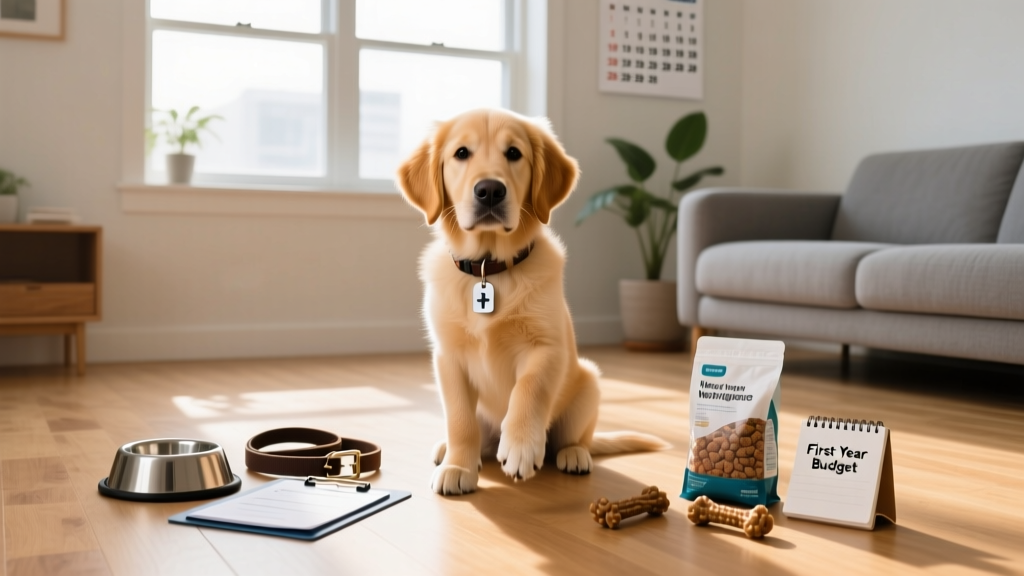
First-Year Budget Breakdown: What It Actually Costs
| Expense Category | Low End (Mixed Breed, Adopted) | Mid Range (Common Purebred) | High End (Rare/High-Need Breed) |
|---|---|---|---|
| Acquisition (purchase/adoption) | $50–$500 | $1,500–$3,500 | $4,000–$8,000 |
| Spay/neuter | $0–$300 (often included in adoption) | $300–$800 | $400–$1,200 |
| Initial veterinary (vaccines, microchip, tests) | $300–$600 | $400–$800 | $600–$1,500 |
| Supplies (crate, bed, leash, bowls, toys) | $200–$400 | $300–$600 | $500–$1,000 |
| Food (12 months) | $300–$600 | $500–$900 | $800–$1,500 |
| Pet insurance (12 months) | $300–$600 | $480–$960 | $600–$1,200 |
| Training (group classes or private) | $150–$400 | $200–$600 | $400–$1,500 |
| Grooming (12 months) | $0–$100 | $200–$600 | $800–$1,500 |
| Total First Year | $1,300–$3,500 | $3,880–$8,760 | $8,100–$17,900 |
Frequently Asked Questions
What breed of dog is best for a first-time owner?
The Labrador Retriever, Bichon Frise, Cavalier King Charles Spaniel, and Standard Poodle are consistently recommended for first-time owners due to their trainability, forgiving temperament, and predictable health profiles. Mixed breeds from foster-based rescues (where temperament has been evaluated in a home setting) are equally excellent choices.
What breed of dog is best for apartments?
Greyhounds, Cavalier King Charles Spaniels, Bichon Frises, and smaller mixed breeds adapt well to apartment living. The key is not just size but energy level — a 70-lb Greyhound is a better apartment dog than a 15-lb Jack Russell Terrier because Greyhounds lounge indoors while terriers need constant stimulation.
What breed of dog is best for families with young children?
Labrador Retrievers, Golden Retrievers, Beagles, and Bichon Frises rank highest for families with children under 10. Avoid toy breeds (injury risk from rough handling) and herding breeds (nipping instinct) until children are old enough to interact calmly. Always supervise dog-child interactions regardless of breed.
How much does the "best" dog breed cost annually?
Annual costs range from $1,200 (healthy mixed breed, minimal grooming) to $4,500+ (large purebred with health conditions and professional grooming). The single biggest cost variable is veterinary care — breeds with known genetic predispositions (Cavaliers, German Shepherds, Bulldogs) can push annual vet costs above $3,000 in middle to senior years.
Are mixed breeds healthier than purebreds?
On average, yes — but it's not guaranteed. Mixed breeds benefit from greater genetic diversity, which reduces the prevalence of breed-specific inherited disorders. However, mixed breeds can still develop common conditions like hip dysplasia, allergies, and cancer. The advantage is statistical, not absolute.
Should I consult a veterinarian before choosing a breed?
Yes, especially if you have specific concerns about allergies, household health conditions, or if you're considering a breed with known expensive health predispositions. Your veterinarian can provide personalized guidance on which breeds align with your budget, lifestyle, and risk tolerance. They can also recommend breed-specific screening protocols to discuss with your breeder.
What's the best way to test if a breed is right for me?
Foster a dog of that breed through a breed-specific rescue (even for two weeks), arrange playdates with owners of that breed, or volunteer at a shelter that has breed representation. Reading about energy levels is very different from experiencing a Border Collie's intensity or a Greyhound's zoomies in your actual living space.
This guide is for informational purposes and does not replace professional veterinary or behavioral consultation. Always consult your veterinarian before making decisions that affect your dog's health. Individual dogs vary significantly from breed averages — temperament testing and health screening of the specific dog matter more than breed generalizations.
Tom Renshaw
All our authors care for dogs every day — read more of their work on the authors page.