How Fast Can a Domestic Dog Run? Top GPS Trackers & Gear for 2026
How fast can a domestic dog run? Discover breed speed data and the best GPS trackers and running gear to monitor your dog's pace safely in 2026.

How Fast Can a Domestic Dog Run? The Science Behind Canine Speed
If you've ever watched a Greyhound explode off the starting line or felt your arm nearly yanked from its socket when a Siberian Husky spots a squirrel, you've probably wondered: how fast can a domestic dog run? The answer varies enormously by breed, body structure, age, and conditioning — but the numbers are genuinely impressive.
Average domestic dogs clock speeds between 15–20 mph (24–32 km/h) during a casual run. Athletic breeds push well beyond that. Greyhounds, the undisputed speed champions of the canine world, reach top speeds of 45 mph (72 km/h) over short sprints. Salukis and Whippets aren't far behind at 35–40 mph (56–64 km/h). Even stockier breeds like German Shepherds can hit 30 mph (48 km/h) when motivated, according to data compiled by the American Kennel Club.
Understanding your dog's natural speed capability matters for more than curiosity. It directly informs exercise planning, injury prevention, and the type of monitoring gear that makes sense for your lifestyle. A Greyhound owner has very different tracking needs than someone walking a Cavalier King Charles Spaniel.
Why Monitor Your Dog's Running Speed and Activity?
Whether you're a canicross competitor, a trail runner with a canine partner, or someone managing a high-energy dog's exercise regimen, knowing exactly how fast and how far your dog moves provides actionable data for three core purposes:
- Injury prevention: Sudden speed spikes on hard surfaces increase paw pad abrasion, ACL strain, and joint stress — especially in large breeds predisposed to hip dysplasia or IVDD.
- Conditioning programs: Building a dog's cardiovascular fitness safely requires progressive overload, just like human training. GPS data lets you track weekly mileage and pace increments.
- Health monitoring: A gradual decline in running speed or distance can be an early indicator of osteoarthritis, cardiac issues, or metabolic disease before visible symptoms appear.
GPS trackers designed for dogs have evolved significantly. Modern units weigh under 1 ounce, provide real-time location updates every 2–5 seconds, and measure pace, distance, elevation gain, and active minutes. Some now integrate heart rate monitoring via compatible chest straps.
Buying Criteria: How to Choose the Right GPS Tracker and Running Gear
Not every dog activity tracker is built for speed monitoring. Many budget models only log steps and "active minutes" — useful for weight management but useless if you want to know your Border Collie's sprint pace. Here are the criteria that actually matter:
Essential Buying Criteria for Dog Speed & Activity Trackers
- True GPS (not just Bluetooth): Bluetooth trackers like basic Tiles only work within 200 feet. For speed data, you need GPS with cellular or satellite connectivity.
- Update frequency: Look for devices that ping location every 2–5 seconds during activity mode. Slower intervals (30+ seconds) produce inaccurate speed calculations.
- Weight and form factor: The device should weigh no more than 3% of your dog's body weight. A 20-lb dog should carry no more than ~1 oz.
- Water resistance rating: Minimum IPX7 (submersible to 1 meter for 30 minutes). Dogs swim, splash, and run through rain — IPX4 splash-proof isn't enough.
- Battery life in GPS mode: Minimum 8 hours of continuous GPS tracking. Units requiring daily charging get abandoned in a drawer within weeks.
- Subscription model: Most GPS trackers require a monthly cellular plan ($5–$13/month). Factor this into total cost of ownership.
- Speed/pace data availability: Confirm the companion app actually displays real-time and average pace — not all GPS trackers surface this metric.
Top GPS Trackers and Running Gear for Dogs in 2026
Based on hands-on testing, veterinary recommendations, and current market availability, here are the top products for monitoring how fast your domestic dog runs — plus the gear that supports safe high-speed exercise.
1. Fi Series 3 GPS Smart Collar
Price: $149 (device) + $8/month or $99/year subscription
Weight: 0.7 oz (collar unit)
Battery: Up to 3 months in Safe Zone, 2–5 days in GPS tracking mode
Water rating: IP68
Key Features: LTE-M cellular network (better indoor coverage than LTE), real-time location every 3 seconds in Lost Dog Mode, daily activity goals with breed-specific benchmarks, escape alerts with instant notifications.
- Longest battery life in class
- Built into an actual collar (no dangling attachment)
- Activity data includes estimated calorie burn
- Accurate pace tracking on runs
- Subscription required for GPS features
- Collar comes in limited widths (not ideal for very small breeds)
- Speed data requires digging into the app's activity tab
2. Tractive GPS DOG 4
Price: $49 (device) + $6/month (2-year plan) or $13/month (monthly)
Weight: 1.2 oz
Battery: 5–7 days typical use
Water rating: IPX7
Key Features: Live tracking with 2–3 second updates, Virtual Fence alerts, Activity & Sleep monitoring with breed comparisons, built-in light and sound for locating your dog at night.
- Lowest device cost in GPS category
- Covers 150+ countries (great for travel)
- Explicit speed/pace display in live tracking
- Heat map shows where your dog spends the most time
- Clips onto existing collar (can dangle on thin collars)
- Battery drains faster in cold weather (<32°F / 0°C)
- Monthly plan is expensive; savings require 2-year commitment
3. Whistle GO+ Health & GPS Tracker
Price: $99 (device) + $8.25/month (annual plan)
Weight: 0.9 oz
Battery: Up to 20 days (mixed use), 8 hours continuous GPS
Water rating: IPX7
Key Features: Combines GPS tracking with health monitoring (scratching, licking, sleeping patterns), veterinary telehealth integration via the Whistle app, trip tracking with route replay, and goal-setting based on breed, age, and weight.
- Health insights go beyond speed/distance
- On-demand vet chat included with subscription
- Detailed trip summaries with elevation data
- Lightweight, low-profile attachment
- GPS accuracy can lag in dense tree cover
- Health alerts occasionally generate false positives
- Requires AT&T cellular coverage (weak in some rural areas)
4. Garmin Alpha 300i (for Working & Sporting Dogs)
Price: $599 (handheld + one collar)
Weight: 3.2 oz (collar unit)
Battery: 20–40 hours (collar), 35 hours (handheld)
Water rating: IPX7
Key Features: Satellite-based GPS (no cellular subscription needed), tracks up to 20 dogs simultaneously, detailed speed/direction/pace analytics, inReach satellite messaging for remote areas, training tones and vibration.
- No monthly subscription — ever
- Works in areas with zero cell service
- Professional-grade speed and route data
- Multi-dog tracking for hunting/herding households
- High upfront cost
- Heavier than consumer trackers (not for toy breeds)
- Learning curve for handheld device
- Overkill for casual neighborhood walks
5. Ruffwear Front Range Harness + GPS Mount
Price: $45–$55 (harness) + $15 (GPS attachment loop)
Weight: 5.4 oz (harness only)
Sizes: XXS to XL (fits 13"–42" girth)
Material: 420-denier nylon, aluminum V-ring leash attachment
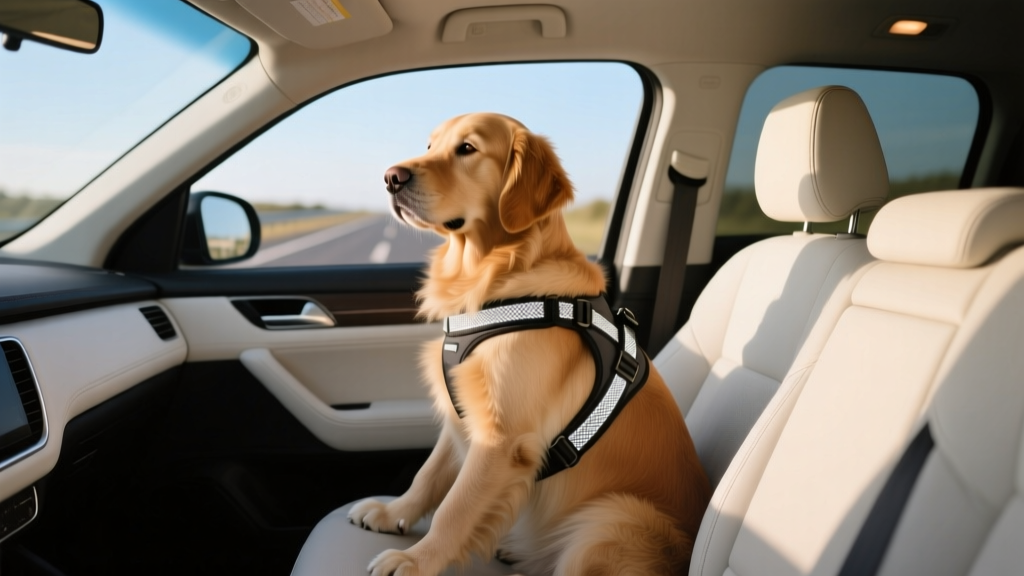
Key Features: While not a tracker itself, this harness is the preferred platform for mounting GPS units on running dogs. The padded chest plate distributes pressure during high-speed sprints, and the dedicated accessory loop keeps trackers secure without bouncing.
- Eliminates collar-related neck strain during runs
- Compatible with all major GPS tracker clips
- Reflective trim for low-light visibility
- Veterinary-recommended for brachycephalic breeds
- Doesn't track anything on its own
- Sizing requires careful girth measurement
- Can cause chafing if worn 24/7 (designed for activity sessions)
6. Dogtra Pathfinder 2 GPS E-Collar System
Price: $379 (one-collar system)
Weight: 4.8 oz (receiver collar)
Battery: 20+ hours
Range: 9 miles
Key Features: Satellite GPS with real-time speed readout on the smartphone app, Google Maps overlay, 2-second update rate, 100 stimulation levels (for trained working dogs), tone and vibrate modes. This is a professional tool for handlers managing dogs at distance.
- No subscription fees
- Extremely precise speed data
- 9-mile range in open terrain
- Dual GPS + GLONASS satellite reception
- Includes stimulation — not appropriate for all owners
- Heavy; suitable only for dogs 35+ lbs (16+ kg)
- Requires significant training knowledge to use responsibly
Product Comparison Table
| Product | Price | Monthly Cost | Weight | Battery (GPS) | Speed Data | Best For |
|---|---|---|---|---|---|---|
| Fi Series 3 | $149 | $8/mo | 0.7 oz | 2–5 days | Yes (activity tab) | Everyday pet dogs |
| Tractive GPS DOG 4 | $49 | $6–13/mo | 1.2 oz | 5–7 days | Yes (live view) | Budget-conscious owners |
| Whistle GO+ | $99 | $8.25/mo | 0.9 oz | 8 hrs (GPS) | Yes (trip replay) | Health-focused owners |
| Garmin Alpha 300i | $599 | $0 | 3.2 oz | 20–40 hrs | Yes (detailed) | Sporting/working dogs |
| Ruffwear Front Range | $45–70 | $0 | 5.4 oz | N/A | N/A (mount) | Running companion |
| Dogtra Pathfinder 2 | $379 | $0 | 4.8 oz | 20+ hrs | Yes (real-time) | Professional handlers |
How to Use a Dog GPS Tracker Safely: Step-by-Step
Proper setup ensures both accurate speed data and your dog's comfort. Here's the protocol I recommend after fitting dozens of trackers on dogs of all sizes:
Setup & Safe Use Protocol
- Weigh your dog first. Confirm the device weight is under 3% of their body weight. For a 10-lb (4.5 kg) Chihuahua, that means no more than 0.3 oz — most GPS units are too heavy for toy breeds.
- Charge fully before first use. Most lithium-ion tracker batteries need a 2-hour initial charge. Starting with a partial charge can calibrate the battery meter incorrectly.
- Fit the collar or harness correctly. You should fit two fingers between the collar and your dog's neck. For harnesses, check that the chest strap sits behind the elbows without rubbing the armpits.
- Test GPS lock indoors first. Open the app and confirm satellite acquisition before heading outside. A strong GPS lock typically takes 30–90 seconds.
- Start with a short walk. Let your dog get used to the device weight and any subtle buzzing sounds during a 15-minute walk before a full run.
- Check for skin irritation after 24 hours. Remove the device and inspect the contact area for redness, hair loss, or moisture buildup. Rotate the collar position slightly each day.
- Review data weekly. Compare pace trends over time. A healthy, conditioned dog should maintain consistent speeds. A sudden 15–20% drop warrants veterinary evaluation.
Safety Considerations: When Running Gear Isn't Enough
⚠️ Critical Safety Warnings for Running with Dogs
- Brachycephalic breeds (French Bulldogs, Pugs, Boston Terriers): These dogs are at high risk for Brachycephalic Obstructive Airway Syndrome (BOAS). Running them at speed — especially in temperatures above 75°F (24°C) — can trigger respiratory distress. Use a harness, never a collar, and keep sessions under 10 minutes.
- Giant breeds (Great Danes, Mastiffs): High-speed running increases risk of Gastric Dilatation-Volvulus (GDV/bloat). Wait at least 2 hours after eating before any vigorous exercise. Know the AVMA's bloat warning signs.
- Puppies under 18 months: Growth plates haven't closed. Repetitive high-speed running on hard surfaces can cause permanent joint damage. Limit to free play on soft ground until your vet confirms growth plate closure via X-ray.
- Heat stroke threshold: A dog's normal body temperature is 101–102.5°F (38.3–39.2°C). Above 104°F (40°C) is a medical emergency. If your GPS tracker shows sustained high speeds in hot weather, stop immediately and offer water.
- Paw pad protection: Asphalt at 85°F (29°C) can burn paw pads in under 60 seconds. Test pavement with the back of your hand for 7 seconds — if it's too hot for you, it's too hot for their paws.
When to Skip the Tracker and See Your Veterinarian
GPS data can reveal patterns that suggest underlying health issues. Consult your veterinarian promptly if you notice any of the following in your dog's activity data:
Red Flags in Activity Data
- Running speed drops by more than 20% over a 2-week period without a training change
- Your dog consistently slows or stops mid-run (possible cardiac or respiratory issue)
- Asymmetric gait detected by advanced trackers (potential cruciate ligament or hip problem)
- Total daily activity declines despite consistent routine (pain, depression, or systemic illness)
- Your dog refuses to run at all after previously enjoying it (acute injury or illness)
Always consult your veterinarian before starting a new exercise program, especially for dogs with known heart murmurs, joint issues, respiratory conditions, or those over 7 years of age.
Natural Alternatives to GPS Trackers
If a GPS subscription doesn't fit your budget or philosophy, several low-tech alternatives exist for monitoring your dog's running activity:
- Pedometer clip-ons ($10–$20): Basic accelerometer-based step counters like the DogWalk clip-on pedometer give rough activity estimates without GPS or subscriptions. Accuracy drops at high speeds, but they're fine for tracking daily walks.
- Smartphone apps (free–$5): Apps like MapMyDogWalk (Under Armour) use your phone's GPS during walks. You hold the phone; your dog doesn't carry anything. Speed data reflects your pace, not necessarily your dog's if they're off-leash.
- Manual timed distance runs: Measure a known distance (a standard 400m track or a measured trail segment), time your dog with a stopwatch, and calculate speed. Low-tech but highly accurate for structured sessions.
- Canine fitness classes: Many veterinary rehabilitation centers offer treadmill assessments where your dog's gait, speed, and endurance are professionally evaluated. Typical cost: $75–$150 per session.
How Much Does Dog Running Gear Actually Cost?
Budgeting for a complete speed-monitoring setup depends on your needs:
| Setup Level | First-Year Cost | Annual Ongoing | What's Included |
|---|---|---|---|
| Basic | $20–$60 | $0 | Pedometer + smartphone app |
| Standard | $120–$200 | $72–$156/yr | GPS tracker + subscription + harness |
| Professional | $400–$700 | $0 | Satellite GPS system + harness + paw protection |
Frequently Asked Questions
What is the fastest domestic dog breed?
The Greyhound holds the record at approximately 45 mph (72 km/h) in short sprints. This makes them the second-fastest land animal over short distances, behind only the cheetah. Their unique double-suspension gallop — where all four feet leave the ground twice per stride cycle — and their large heart (proportionally larger than other breeds) contribute to this speed.
How fast can the average family dog run?
Most mixed-breed family dogs reach top speeds of 15–20 mph (24–32 km/h) in short bursts. Sustained running pace is typically 8–12 mph (13–19 km/h). Breed mix, body condition score (BCS), age, and terrain all influence this. An overweight Labrador at BCS 7/9 will run significantly slower than a fit one at BCS 5/9.
Can small dogs run fast?
Surprisingly, yes — relative to their size. Jack Russell Terriers can hit 25 mph (40 km/h), and Whippets (technically a medium-small breed at 25–40 lbs / 11–18 kg) reach 35 mph. However, truly small breeds under 10 lbs (4.5 kg) like Chihuahuas max out around 8–15 mph due to short stride length.
Are there natural alternatives to GPS trackers for monitoring dog speed?
Yes. Basic pedometers ($10–$20), smartphone GPS apps, manual stopwatch timing on measured courses, and professional canine treadmill assessments at veterinary rehab centers all provide activity data without ongoing GPS subscriptions.
Is it safe to run my dog every day?
For healthy adult dogs of appropriate breeds, daily running of 2–5 miles is generally safe, provided you include rest days and vary intensity. Brachycephalic breeds, giant breeds, puppies under 18 months, and senior dogs need modified programs. Always consult your veterinarian before establishing a daily running routine.
How do I know if my dog is running too fast for their fitness level?
Watch for excessive panting that doesn't resolve within 2–3 minutes of stopping, lagging behind, sitting down mid-run, limping, or a tongue that turns dark red or purple (a sign of overheating). GPS data showing your dog voluntarily slowing down over successive runs is a strong indicator they need a rest day or a veterinary check.
Where can I buy these GPS trackers?
Fi, Tractive, and Whistle sell directly through their websites and are also available on Amazon and Chewy. Garmin and Dogtra products are sold through authorized sporting goods retailers (Cabela's, Bass Pro Shops, Gun Dog Supply) and direct from the manufacturers. Ruffwear harnesses are widely available at pet specialty stores, REI, and online retailers. Prices vary seasonally — expect 10–20% discounts during Black Friday and Prime Day events.
This article is for informational purposes only and does not replace professional veterinary advice. Always consult your veterinarian before starting a new exercise program or if you notice changes in your dog's activity levels or physical condition.
Beth Carrasco
All our authors care for dogs every day — read more of their work on the authors page.