How Fast Can a Dog Run? GPS Trackers & Gear to Measure Speed Safely
How fast can a dog run? Discover breed speed data, top GPS trackers and fitness gear to measure your dog's pace, plus safety tips for high-speed exercise.

You've watched your dog tear across the yard and wondered: how fast can a dog run? The answer varies dramatically — from the leisurely 8 mph trot of a Basset Hound to the astonishing 45 mph sprint of a Greyhound. But knowing your own dog's actual speed isn't just trivia; it directly shapes exercise routines, recall training urgency, and injury prevention strategies.
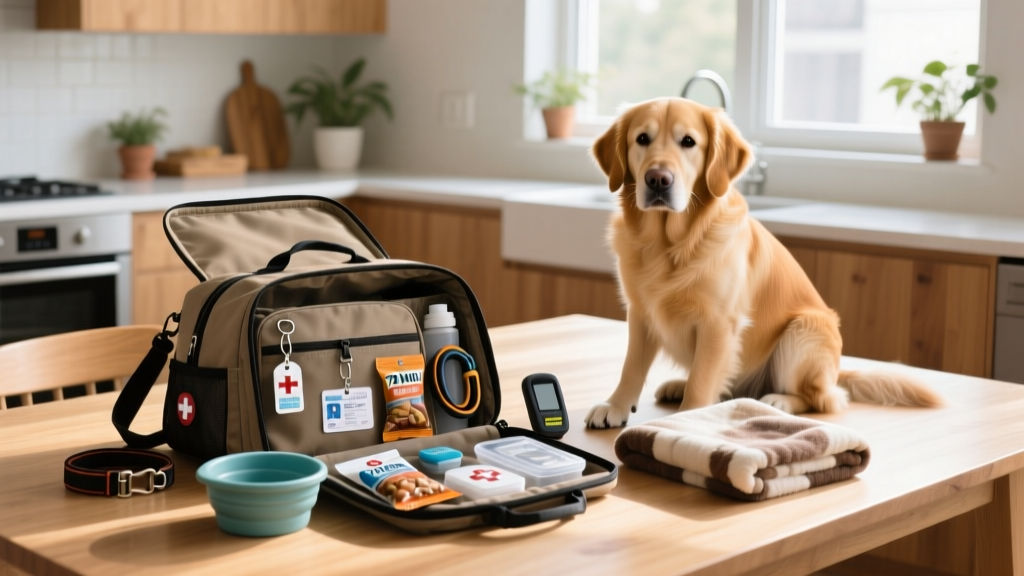
Over the past several years, I've helped multi-dog households match GPS tracking collars and canine fitness monitors to their dogs' activity profiles. The right device tells you not just top speed, but stride patterns, daily distance, rest cycles, and even early lameness indicators. Here's a data-driven guide to the best products for measuring and managing your dog's speed safely.
How Fast Can a Dog Run? Breed-by-Breed Speed Data
Before choosing a tracker, it helps to understand your dog's baseline athletic potential. According to the American Kennel Club, breed speed ranges are surprisingly wide:
| Breed | Top Speed (mph / km/h) | Body Type | Typical Sprint Duration |
|---|---|---|---|
| Greyhound | 45 / 72 | Dolichocephalic, deep-chested | 30–60 seconds |
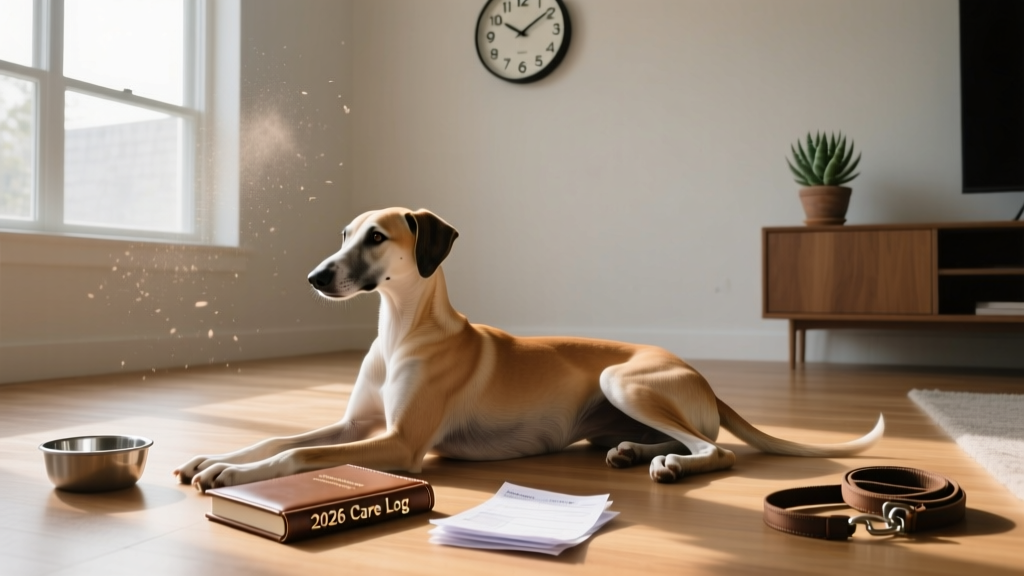
| Saluki | 42 / 68 | Sighthound, lean | 45–90 seconds |
| Vizsla | 40 / 64 | Athletic pointer | 20–40 seconds |
| Border Collie | 30 / 48 | Agile herding build | Sustained 5–10 min |
| German Shepherd | 30 / 48 | Muscular working breed | 15–30 seconds |
| Labrador Retriever | 25 / 40 | Stocky athletic | 20–45 seconds |
| Standard Poodle | 25 / 40 | Lean, long-legged | 15–30 seconds |
| French Bulldog | 10–12 / 16–19 | Brachycephalic, compact | 5–10 seconds max |
These are peak sprint speeds under ideal conditions. Your individual dog's actual speed depends on age, body condition score (BCS), joint health, and fitness level. Most dogs maintain their top speed for only 20–60 seconds before decelerating to a trot.
Why Track Your Dog's Speed? The Case for GPS Fitness Monitors
A GPS tracker or activity monitor serves three practical purposes for dog owners:
- Exercise calibration: Knowing your dog's actual speed and distance helps you design workouts that match their athletic capacity — avoiding both under-exercise (leading to behavioral problems) and over-exercise (leading to joint stress or heat exhaustion).
- Early health detection: A sudden drop in top speed or daily distance often precedes visible lameness by 3–7 days. The Merck Veterinary Manual notes that subtle gait changes are among the earliest indicators of orthopedic conditions like hip dysplasia or cruciate ligament tears.
- Safety and recall: If you know your Border Collie can hit 30 mph in an open field, you understand that a 2-second recall delay means they've covered 88 feet — potentially into danger.
Buying Criteria: What Matters in a Dog Speed Tracker
Key Buying Criteria
- GPS accuracy: Look for multi-constellation support (GPS + GLONASS + Galileo) — single-system trackers lose accuracy under tree canopy and near buildings.
- Update frequency: 1-second intervals capture sprint peaks; 10-second intervals miss short bursts entirely.
- Weight: The device should weigh no more than 3% of your dog's body weight. A 10 lb dog needs a tracker under 4.8 oz.
- Battery life: Real-world GPS mode should last 8–20+ hours. "Up to 7 days" claims usually assume low-power Bluetooth mode, not active GPS.
- Water resistance: Minimum IP67 for rain and puddles; IPX8 for swimming dogs.
- Subscription cost: Many GPS trackers require monthly cellular plans ($5–$13/month). Factor this into your annual budget.
- App data quality: You want speed graphs, heat maps, rest/walk/run breakdowns — not just a dot on a map.
Top 7 GPS Trackers & Activity Monitors for Dogs in 2026
1. Fi Series 3 GPS Dog Collar
Price: $129 (collar) + $8.25/month (2-year plan) or $12.50/month (monthly)
Weight: 1.1 oz (31 g) — suitable for dogs 8+ lb
Key features: LTE-M GPS tracking, 3-month battery on safe-zone mode, escape alerts, daily step goals, LED light ring for night visibility.
- Pros: Exceptional battery life (up to 3 months in safe-zone, 2 weeks with active GPS); lightweight; robust app with speed/distance history; IP68 waterproof for swimming.
- Cons: GPS update rate is ~1 min in normal mode (not ideal for capturing sprint peaks); requires proprietary collar band; no heart rate or advanced biometrics.
2. Whistle Go + Health
Price: $99.95 (device) + $8.25/month (2-year plan)
Weight: 0.92 oz (26 g) — suitable for dogs 8+ lb
Key features: GPS + cellular tracking, activity monitoring (walk/run/play/sleep breakdown), calorie tracking, licking/scratching detection for allergy monitoring.
- Pros: Excellent health-focused metrics beyond location; clips onto any existing collar; real-time tracking with 15-second updates in live mode; IPX7 waterproof.
- Cons: Battery lasts 2–5 days with GPS active (shorter than Fi); subscription required for all features; scratching/licking sensor accuracy varies by coat type.
3. Tractive GPS DOG 4
Price: $49.99 (device) + $5/month (2-year plan) or $13/month (monthly)
Weight: 1.2 oz (35 g) — suitable for dogs 9+ lb
Key features: Live GPS tracking with 2–3 second updates, virtual fences, activity & sleep monitoring, worldwide coverage (150+ countries).
- Pros: Fastest GPS update rate in this roundup — best for capturing sprint speeds; lowest entry price; excellent international coverage for traveling dog owners; IPX7 rated.
- Cons: Battery lasts 2–5 days with active GPS; device is slightly bulkier than competitors; subscription required (no free tier).
4. Garmin Alpha 300 + T 20 Dog Collar
Price: $699.99 (handheld + 1 collar); additional collars $299.99 each
Weight: Collar unit: 3.2 oz (91 g) — suitable for dogs 20+ lb
Key features: Multi-GNSS (GPS + Galileo + GLONASS), 2.5-second tracking updates, 40-mile range without cellular, hunt metrics, inReach satellite messaging integration.
- Pros: No subscription required — operates on direct radio frequency; professional-grade accuracy; tracks up to 20 dogs simultaneously; built for hunting and field trial dogs that run at top speed over vast distances.
- Cons: Expensive initial investment; collar unit too heavy for small breeds; requires carrying the handheld unit; overkill for casual urban walks.
5. Apple AirTag + Dog Collar Mount
Price: $27.99 (AirTag) + $15–$35 (collar mount); no subscription
Weight: 0.39 oz (11 g) — suitable for dogs 5+ lb
Key features: Precision Finding via Ultra Wideband, Find My network (billions of Apple devices), replaceable CR2032 battery lasting ~1 year.
- Pros: Cheapest option; no subscription; excellent battery life; extremely lightweight; useful for escape-prone dogs in urban areas with dense Apple device networks.
- Cons: NOT a real-time GPS tracker — relies on nearby Apple devices to update location; no speed, distance, or activity data; unreliable in rural areas; Apple explicitly discourages use for pet tracking.
6. FitBark 2 Activity Monitor
Price: $59.95 (device); no subscription required
Weight: 0.3 oz (8 g) — suitable for dogs 5+ lb
Key features: Activity scoring (play, active, rest), calorie estimation, sleep quality tracking, syncs with Apple Health/Google Fit for owner-dog activity correlation.
- Pros: No subscription; extremely lightweight; 6-month battery life; veterinary clinics use FitBark data for post-surgical recovery monitoring; integrates with human fitness apps.
- Cons: No GPS — activity only, not location; cannot measure actual speed in mph; less useful for escape risk or off-leash tracking.
7. SportDOG Brand TEK Series 2.0 GPS + E-Collar
Price: $449.99 (handheld + 1 collar)
Weight: Collar: 4.5 oz (128 g) — suitable for dogs 25+ lb
Key features: GPS + GLONASS, 10-mile range, 2-second updates, 100 levels of stimulation + tone + vibration, waterproof to 25 ft (IPX9K).
- Pros: No subscription; rugged build for hunting and field work; accurate speed and distance tracking; tracks up to 21 dogs.
- Cons: Includes e-collar stimulation feature — we recommend using only tone/vibration modes per LIMA (Least Intrusive, Minimally Aversive) training principles; heavy collar unit; high upfront cost.
Side-by-Side Comparison
| Product | GPS Update Rate | Battery (GPS Mode) | Subscription | Min Dog Weight | Speed Tracking | Price (Device) |
|---|---|---|---|---|---|---|
| Fi Series 3 | ~60 sec (normal) | 2 weeks | $8.25–$12.50/mo | 8 lb / 3.6 kg | Yes (daily summary) | $129 |
| Whistle Go + Health | 15 sec (live) | 2–5 days | $8.25/mo | 8 lb / 3.6 kg | Yes (walk/run breakdown) | $99.95 |
| Tractive GPS DOG 4 | 2–3 sec (live) | 2–5 days | $5–$13/mo | 9 lb / 4 kg | Yes (real-time mph) | $49.99 |
| Garmin Alpha 300 | 2.5 sec | 55 hours (collar) | None | 20 lb / 9 kg | Yes (professional grade) | $699.99 |
| Apple AirTag | N/A (Bluetooth) | ~1 year (CR2032) | None | 5 lb / 2.3 kg | No | $27.99 |
| FitBark 2 | N/A (no GPS) | 6 months | None | 5 lb / 2.3 kg | No (activity score only) | $59.95 |
| SportDOG TEK 2.0 | 2 sec | 20 hours (collar) | None | 25 lb / 11 kg | Yes (real-time mph) | $449.99 |
How to Use a GPS Tracker Safely and Effectively
Step-by-Step Setup
- Charge fully before first use. Most GPS trackers ship at 30–40% battery. Charge to 100% to calibrate the battery management system.
- Fit the collar correctly. You should be able to slide two fingers between the collar and your dog's neck. A loose collar causes GPS antenna misalignment and inaccurate readings; a tight collar restricts breathing, especially in brachycephalic breeds.
- Set safe zones (geofences) in the app. Define your home, yard, and any regular locations. This reduces GPS polling frequency when your dog is in a safe zone, extending battery life by 300–500%.
- Test the live tracking feature. Before relying on it in the field, walk around your neighborhood with live tracking enabled. Verify that the GPS pin follows your actual path and that speed readings seem reasonable.
- Establish a baseline. Wear the tracker for 7–10 days during normal routine before drawing conclusions. This gives you a reliable average for daily distance, active minutes, and rest patterns.
- Set speed/distance alerts. If your dog has a history of bolting, configure an alert that triggers when they exceed 15 mph or leave your defined safe zone.
Safety Considerations for High-Speed Dogs
⚠️ Safety Warnings
- Heat exhaustion: Dogs cannot sweat efficiently — they cool via panting and paw pad evaporation. At high exertion levels in temperatures above 80°F (27°C), dogs can develop heat stroke within 10–15 minutes. Use your tracker's activity data to enforce rest breaks every 15 minutes during vigorous exercise in warm weather.
- Joint stress in growing dogs: Puppies' growth plates don't close until 12–18 months (18–24 months for giant breeds). Forced high-speed running before skeletal maturity increases the risk of hip dysplasia and osteochondritis dissecans. Keep puppies under 14 months to free play — avoid sustained jogging or biking.
- Brachycephalic breeds: Bulldogs, Pugs, and French Bulldogs are at extreme risk during high-speed exertion due to brachycephalic obstructive airway syndrome (BOAS). These breeds should never be pushed to sprint. If your Frenchie's tracker shows they've been running above 8 mph for more than 30 seconds, it's time to stop and let them cool down.
- Collar fit checks: Inspect the skin under the GPS collar weekly. Continuous wear can cause pressure sores, especially on short-coated breeds. Rotate collar position by 1–2 inches every few days.
When to See the Vet Instead of Just Tracking
A GPS tracker is a monitoring tool, not a diagnostic device. Consult your veterinarian if you notice any of these patterns in your dog's tracking data:
- Sudden speed decrease: If your dog's average walking speed drops by more than 20% over 3–5 days without a change in routine, this often signals pain — commonly cruciate ligament injury, hip dysplasia, or spinal issues like IVDD.
- Asymmetric movement patterns: Some advanced trackers show stride irregularity. Persistent asymmetry warrants a veterinary orthopedic exam.
- Excessive rest time: If daily rest increases by 3+ hours without environmental cause (weather, schedule change), consider bloodwork to check for hypothyroidism, anemia, or systemic illness.
- Failure to meet breed-typical activity: A healthy adult Labrador should comfortably sustain 45–60 minutes of moderate-to-vigorous exercise daily. If your dog consistently fatigues at 15 minutes, a cardiac evaluation is warranted.
Always consult your veterinarian before making significant changes to your dog's exercise regimen based on tracker data — especially for senior dogs, dogs with known orthopedic conditions, or dogs recovering from surgery.
Natural Alternatives: Measuring Speed Without a GPS Device
If you're not ready to invest in a dedicated tracker, here are practical low-tech and mid-tech alternatives:
- Smartphone GPS apps: Apps like Strava or MapMyRun can track your dog's speed if you carry your phone during runs together. Limitation: only works when you're physically with your dog on a leash.
- Timed distance measurement: Measure a known distance (e.g., 100 yards of a soccer field), time your dog's sprint with a stopwatch, and calculate speed. Formula: Speed (mph) = Distance (miles) ÷ Time (hours). Example: 100 yards (0.0568 miles) in 5 seconds (0.00139 hours) = 40.9 mph.
- Video analysis: Record your dog running past known reference markers and analyze frame-by-frame using free software like Tracker (physlets.org/tracker). This is how canine sports researchers measure sprint mechanics in studies published in the Journal of the American Veterinary Medical Association.
- Canine fitness classes: Many veterinary rehabilitation clinics offer treadmill sessions with built-in speed measurement. A session typically costs $50–$85 and provides professional gait analysis alongside speed data.
Frequently Asked Questions
What is the best GPS tracker for measuring dog speed?
For most dog owners wanting real-time speed data, the Tractive GPS DOG 4 offers the best balance: 2–3 second GPS updates capture sprint peaks, and at $49.99 plus $5/month, it's the most affordable option with true real-time mph readings. For hunting or field trial dogs running at distance, the Garmin Alpha 300 provides professional-grade accuracy without a subscription.
How do I choose the right tracker for my dog's size?
Apply the 3% body weight rule: the tracker should weigh no more than 3% of your dog's weight. For a 10 lb (4.5 kg) Chihuahua, that's under 0.3 oz — only the Apple AirTag or FitBark 2 qualify. For dogs under 20 lb (9 kg), avoid the Garmin and SportDOG units, which are designed for larger working breeds.
How much does a dog GPS tracker cost annually?
Budget ranges based on total first-year cost (device + subscription):
• Low: $28–$75 (AirTag or FitBark, no subscription)
• Medium: $110–$200 (Tractive, Whistle, or Fi with annual subscription)
• High: $450–$700+ (Garmin Alpha or SportDOG, no subscription but high device cost)
How fast can a dog run on average?
The average domestic dog runs at 15–20 mph (24–32 km/h) in a sprint. Sighthound breeds reach 35–45 mph (56–72 km/h), while brachycephalic breeds typically top out at 8–12 mph (13–19 km/h). According to the AKC, the Greyhound holds the canine speed record at 45 mph.
Are there natural alternatives to GPS trackers?
Yes. Smartphone GPS apps, timed distance measurements, and video frame analysis all provide speed data without a dedicated device. For clinical-grade assessment, veterinary rehabilitation clinics offer instrumented treadmill sessions with gait analysis for $50–$85 per session.
When should I skip the tracker and see a vet?
See your veterinarian if your dog shows a sudden 20%+ drop in speed or daily distance, persistent limping lasting more than 48 hours, reluctance to exercise that's new, or panting/collapse during mild exertion. These are clinical signs — not behavioral laziness — and warrant professional evaluation.
Priya Sutaria
All our authors care for dogs every day — read more of their work on the authors page.