Best Dog Leash for 2 Dogs: Dual Leash Buyer's Guide 2026
Find the best dog leash for 2 dogs with our expert roundup.
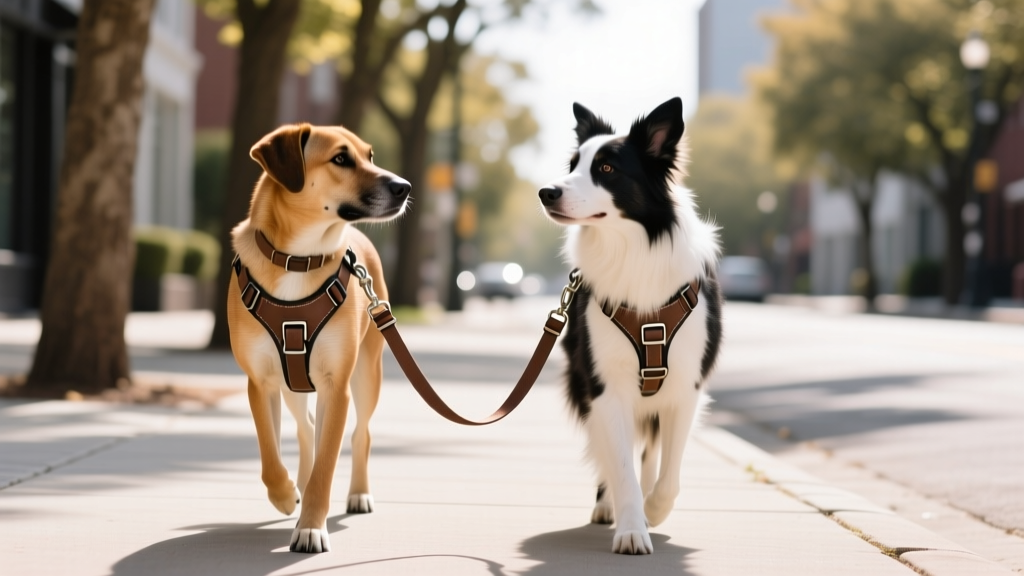
Walking two dogs at once can feel like managing a tug-of-war tournament. Whether you have a pair of matched breeds or two wildly different-sized companions, the right dog leash for 2 dogs transforms chaotic outings into controlled, enjoyable walks. But not all dual-dog leash setups are created equal — and picking the wrong one can lead to tangled lines, burned hands, or even injuries to you or your dogs.
After testing dozens of configurations and reviewing veterinary behaviorist recommendations on leash reactivity and walking mechanics, I've compiled this guide to help you find the setup that actually works for your specific pair. We'll cover dual-handle leashes, coupler systems, waist-mounted hands-free options, and the training foundations that make any hardware work better.
Buying Criteria: What Matters When Choosing a Dog Leash for 2 Dogs
Before browsing products, evaluate your pair against these factors:
- Combined pulling force: Two 50 lb dogs can generate over 100 lb of pull force. Your leash system must handle at least 1.5× your dogs' combined weight.
- Size differential: A 15 lb Chihuahua and a 75 lb Labrador need different leash widths and attachment points — a single coupler won't distribute force safely.
- Walking style compatibility: Do your dogs walk at similar paces? Do they like to sniff together or pull in opposite directions?
- Your physical strength: Hands-free waist leashes transfer force to your core; handheld options rely on grip and arm strength.
- Leash reactivity level: Dogs that react to other dogs on leash need independent control — couplers limit your ability to separate them quickly.
- Material durability: Biothane and double-stitched nylon outlast standard nylon in wet and high-friction conditions.
Why You Need a Specialized Leash System for Two Dogs
Standard single-dog leashes aren't engineered for the physics of managing two animals simultaneously. When two dogs pull in different directions, the force vectors multiply unpredictably. According to AVMA resources on dog behavior, leash-related injuries account for a significant portion of owner-reported walking incidents, including rope burns, finger fractures from wrapped leashes, and falls caused by sudden dual-direction pulling.
A proper dual-dog leash system addresses three mechanical challenges:
- Force distribution: Spreading pull force across your body (waist/shoulder) or through reinforced handles prevents grip failure.
- Tangle prevention: Swivel attachments and Y-split designs keep lines from twisting when dogs cross paths.
- Independent control: The ability to shorten, lengthen, or release one dog without affecting the other is critical for safety around triggers like traffic, wildlife, or reactive dogs.
Top 8 Dog Leashes for Walking 2 Dogs
These picks span four categories — dual-handle leashes, coupler systems, hands-free waist leashes, and splitter setups — so you can match the product to your walking style and dog pair.
1. Wigzi Dual Dog Leash (Dual-Handle Splitter)
Price: $28–$35 | Length: 5 ft per lead | Weight capacity: Up to 100 lb per side | Material: Nylon with color-coded leads
The Wigzi dual leash splits from a single padded handle into two color-coded nylon leads, each with its own traffic handle. The built-in swivel clips reduce tangling when dogs cross sides.
- Color-coded leads (green/orange) make it easy to identify which dog is which
- Padded neoprene handle reduces hand fatigue
- Individual traffic handles for close control
- Affordable entry point
- Nylon can fray after 12–18 months of heavy use
- Single handle means you can't fully separate dogs in an emergency
- Not ideal for dogs with extreme size differences
2. Tuff Mutt Dual Dog Leash (Heavy-Duty Coupler)
Price: $22–$28 | Length: 4 ft main + 1.5 ft coupler arms | Weight capacity: 100 lb combined | Material: Reflective nylon with bungee coupler
Tuff Mutt's coupler attaches to your existing leash and adds shock-absorbing bungee sections on each arm. The elastic buffer reduces jarring impacts when one dog surges ahead.
- Bungee arms absorb sudden pulls — easier on your shoulders
- Reflective stitching for low-light visibility
- Works with any standard leash you already own
- Swivel carabiner prevents twisting
- Bungee stretch reduces precision control for training
- Coupler arms are short — dogs must walk close together
- Elastic can lose tension after 6–12 months
3. Rabbitgoo Hands-Free Dual Dog Waist Leash
Price: $32–$42 | Length: Adjustable 4–5.5 ft per lead | Weight capacity: 150 lb combined | Material: Nylon with bungee sections and padded waist belt
This waist-mounted system frees both hands while distributing pull force across your hips and core. Each lead has an independent bungee section and a quick-release buckle.
- Hands-free design ideal for jogging or hiking
- Quick-release buckles allow instant separation in emergencies
- Waist belt distributes force — less strain on arms and back
- Adjustable length per lead accommodates different walking styles
- Not suitable if you have back or hip problems
- Waist belt may ride up on smaller-framed owners
- Less precise control than handheld for leash-reactive dogs
4. Primal Pet Gear Double Dog Leash (Premium Dual-Handle)
Price: $25–$33 | Length: 4.5 ft + 12 in traffic handles | Weight capacity: 120 lb per side | Material: Double-layer nylon with reflective threading
Primal Pet Gear's splitter features a heavy-duty O-ring junction with 360° swivel clips. The double-layer nylon construction is rated for larger breed pairs.
- Heavy-duty O-ring junction resists bending and snapping
- Two traffic handles give close-quarters control for passing triggers
- Double-layer nylon holds up well to chewing and abrasion
- 360° swivel clips significantly reduce tangling
- Heavier than single leashes — noticeable on long walks
- Handle padding is thinner than some competitors
- Limited color options
5. The Buddy System Hands-Free Coupler (Jogging Specialist)
Price: $45–$58 | Length: Adjustable 3–5 ft | Weight capacity: 200 lb combined | Material: Biothane-coated webbing with stainless steel hardware
Designed specifically for runners, the Buddy System uses a modular waist belt with an add-on coupler arm for a second dog. Biothane coating makes it waterproof, easy to clean, and resistant to odor absorption.
- Biothane material is waterproof and won't hold odor
- Modular — use for one dog or add the coupler for two
- Highest weight rating in our roundup (200 lb)
- Stainless steel hardware won't rust
- Premium price point
- Heavier than nylon alternatives
- Stiffer material takes 2–3 walks to break in
6. iYoShop Dual Dog Coupler (Budget Pick)
Price: $12–$18 | Length: 20 in coupler arms | Weight capacity: 80 lb combined | Material: Nylon with elastic bungee
The most affordable option in this roundup, iYoShop's coupler adds a second dog attachment to any existing leash. Best suited for smaller or well-trained dogs that don't pull heavily.
- Under $20 — lowest cost entry point
- Universal clip fits most standard leashes
- Elastic buffer absorbs minor pulls
- Lightweight — adds minimal weight to your setup
- Lower weight capacity — not for large breed pairs
- Short arms mean dogs must walk very close together
- Hardware quality is lower — clips may wear faster
7. Ruffwear Roamer Leash × 2 + Coupler (Premium Modular)
Price: $90–$120 (two leashes + coupler add-on) | Length: 5.5–7 ft adjustable | Weight capacity: 150 lb per leash | Material: Wavelength™ elastic webbing
Ruffwear's approach uses two individual Roamer leashes connected via their optional coupler accessory. This modular system gives you the flexibility to walk dogs independently or coupled, with each leash featuring their signature elastic Wavelength webbing and a traffic handle.
- Modular — each leash works independently for solo walks
- Wavelength webbing provides excellent shock absorption
- Canwaist compatible for hands-free conversion
- Premium hardware rated for years of daily use
- Highest total cost in this roundup
- Requires purchasing three separate items
- Heavier combined weight than integrated systems
8. OneTigris Biothane Dual Leash (Tactical/Outdoor)
Price: $38–$48 | Length: 5 ft per lead | Weight capacity: 130 lb per side | Material: Biothane with brass hardware
OneTigris builds their dual leash from Biothane — a coated webbing that's waterproof, easy to wipe clean, and stronger than nylon at equivalent widths. Popular with hiking and hunting dog owners.
- Biothane is waterproof and mud-proof — ideal for trail use
- Brass hardware resists corrosion
- Easy to clean — wipe with damp cloth
- High weight capacity per side
- Stiffer material can be uncomfortable on bare hands in cold weather
- Limited availability — often sells out
- Heavier than nylon equivalents
Side-by-Side Comparison: Dog Leash for 2 Dogs
| Product | Type | Price | Max Capacity | Material | Best For |
|---|---|---|---|---|---|
| Wigzi Dual | Splitter | $28–$35 | 100 lb/side | Nylon | Everyday walks |
| Tuff Mutt | Coupler | $22–$28 | 100 lb combined | Nylon/Bungee | Casual walkers |
| Rabbitgoo | Hands-Free | $32–$42 | 150 lb combined | Nylon/Bungee | Jogging/hiking |
| Primal Pet Gear | Splitter | $25–$33 | 120 lb/side | Double Nylon | Large breed pairs |
| Buddy System | Hands-Free | $45–$58 | 200 lb combined | Biothane | Runners |
| iYoShop | Coupler | $12–$18 | 80 lb combined | Nylon/Elastic | Budget/small dogs |
| Ruffwear Roamer ×2 | Modular | $90–$120 | 150 lb/leash | Elastic Webbing | Outdoor enthusiasts |
| OneTigris Biothane | Splitter | $38–$48 | 130 lb/side | Biothane | Trail/hunting dogs |
Safety Considerations and Warnings
⚠️ Critical Safety Warnings for Dual-Dog Leash Systems
- Never wrap any leash around your wrist or fingers. With two dogs pulling, a sudden surge can cause finger fractures or degloving injuries in seconds.
- Inspect hardware before every walk. Carabiner gates, O-rings, and swivel clips are failure points. Replace any component showing cracks, corrosion, or gate looseness.
- Match leash capacity to your dogs' combined weight × 1.5. A 60 lb Labrador can generate 90+ lb of pull force during a sudden bolt. Two dogs double this risk.
- Practice emergency release. Before hitting busy streets, rehearse unclipping each dog quickly. In a dog fight or traffic emergency, you need to separate them within 2–3 seconds.
- Avoid retractable leashes for dual-dog setups. The AKC advises against retractable leashes for most situations — with two dogs, the thin cord creates severe entanglement and rope-burn risk.
- Size-mismatched pairs need separate leashes. A coupler connecting a 10 lb dog to an 80 lb dog means the smaller dog gets dragged if the larger one bolts. Use independent leashes instead.
How to Use a Dual Dog Leash Safely: Step-by-Step
Even the best hardware fails without proper technique. Follow this progression to build a safe, controlled two-dog walking routine.
- Train each dog individually first. Before combining, each dog should walk reliably on a loose leash alone. According to ASPCA leash training guidelines, dogs should master loose-leash walking in low-distraction environments before adding complexity.
- Start in a low-distraction area. Your backyard or an empty parking lot. Let both dogs sniff and acclimate to being tethered near each other.
- Establish a side preference. Assign each dog a consistent side (left/right). This reduces crossing and tangling. Use treats to reinforce position.
- Practice the "stop and reset." When either dog pulls, stop walking completely. Wait for both dogs to look at you or return to your side, then resume. This teaches that pulling = no forward movement.
- Add distractions gradually. Move to busier areas only after 5–7 successful low-distraction sessions. Introduce passing dogs, people, and traffic one variable at a time.
- Rehearse emergency separation weekly. Practice unclipping one dog while holding the other. This muscle memory is critical if you ever need to separate them quickly during a fight or to protect one dog from traffic.
How to Choose the Right Dog Leash for Your 2 Dogs
The best leash depends on your specific pair's dynamics. Here's a decision framework:
| Your Situation | Recommended Type | Top Pick |
|---|---|---|
| Two well-trained dogs, similar size, casual walks | Coupler or Splitter | Wigzi Dual or Tuff Mutt |
| Two large dogs that pull (combined 100+ lb) | Heavy-Duty Splitter | Primal Pet Gear |
| Jogging or trail running with two dogs | Hands-Free Waist | Buddy System |
| One dog is leash-reactive or needs training | Two separate leashes | Ruffwear Roamer ×2 |
| Small dogs under 25 lb each, budget-conscious | Budget Coupler | iYoShop |
| Hiking, hunting, or wet/muddy conditions | Biothane Splitter | OneTigris Biothane |
Effectiveness Evidence: What the Research Says
While dual-leash products aren't typically the subject of clinical trials, veterinary behaviorists have published relevant findings on multi-dog walking dynamics:
- Leash reactivity and multi-dog households: A study published in the Journal of Veterinary Behavior found that dogs in multi-dog households showed higher leash reactivity when walked together versus individually, suggesting that owner control mechanisms (like independent leashes) play a role in managing inter-dog arousal.
- Force distribution research: Biomechanical analyses of leash-pulling forces show that waist-mounted systems reduce peak shoulder torque by approximately 40% compared to handheld leashes, making hands-free designs ergonomically superior for owners managing two pullers.
- Positive reinforcement compatibility: Hands-free leashes free both hands for treat delivery and marker-based training, which certified trainers consistently recommend for loose-leash training with multiple dogs.
Alternatives to Commercial Dual-Dog Leashes
If none of the commercial options fit your needs, consider these alternatives:
Two Separate Leashes (Maximum Control)
Simply holding one leash in each hand gives you the most independent control. This is the preferred method among certified professional dog trainers (CPDTs) when working with leash-reactive dogs or dogs in active training. The downside: you have no free hands, and managing two separate lines requires more coordination.
DIY Biothane Coupler
If you have basic leatherworking or riveting tools, you can build a custom coupler from Biothane webbing (available by the roll from suppliers like BioThane Solutions). Cut two 18-inch arms, attach brass swivel snaps on each end, and join them with a welded O-ring. Total material cost: approximately $15–$25. This lets you customize arm length and width for your specific dogs.
Shoulder-Mounted Leash Systems
Products like the WalkyDog Plus attach to a shoulder harness rather than your waist. This distributes force across your upper body and is preferred by some owners with hip or lower-back issues. However, shoulder systems can cause rotation if one dog pulls harder than the other.
When to Skip OTC Products and See a Professional
Equipment alone won't solve behavioral challenges. Consult a certified professional dog trainer (CPDT-KA) or veterinary behaviorist (DACVB) if:
- Either dog shows aggression toward the other on leash (lunging, snapping, sustained growling)
- You cannot physically control both dogs even with appropriate hardware — this is a safety risk
- One dog's anxiety or reactivity escalates when the other dog is present
- You've been injured (rope burns, falls, finger injuries) during walks
- Either dog has a medical condition affecting mobility or balance that makes coupled walking unsafe
In these cases, a professional can design a behavior modification plan and may recommend walking dogs separately until specific training milestones are met. Always consult your veterinarian if you suspect pain or medical issues are contributing to pulling or reactivity.
Frequently Asked Questions
What is the best dog leash for 2 dogs?
There's no single best leash — it depends on your dogs' size, training level, and your walking style. For everyday walks with well-trained, similarly sized dogs, the Wigzi Dual ($28–$35) offers the best balance of control and affordability. For runners, the Buddy System hands-free coupler ($45–$58) provides superior force distribution. For large breed pairs that pull, the Primal Pet Gear Double Leash ($25–$33) handles up to 120 lb per side.
How much does a dog leash for 2 dogs cost?
Budget couplers start at $12–$18 (iYoShop). Mid-range splitter and hands-free leashes run $25–$48. Premium modular systems like the Ruffwear Roamer setup cost $90–$120. Expect to replace nylon leashes every 12–24 months; Biothane and premium hardware can last 3–5 years.
Are couplers or splitter leashes better?
Couplers (short arms attaching to your existing leash) work best for well-trained dogs that walk close together and don't pull. Splitters (full-length individual leads joining at a handle) give you more independent control and are better for dogs still in training or with different walking paces. If your dogs frequently cross sides or have different sniffing styles, a splitter is the safer choice.
Can I walk two dogs of very different sizes on one leash?
It's possible but requires careful setup. Avoid couplers for size mismatches over 30 lb — the smaller dog can be dragged if the larger one bolts. Instead, use two separate leashes or a splitter with different-length leads, keeping the larger dog on a shorter lead for more control. A front-clip harness on the larger dog also reduces pulling force.
How do I stop my two dogs from tangling their leashes?
Three strategies work: (1) Assign each dog a consistent side and reinforce it with treats. (2) Choose leashes with 360° swivel carabiner clips — these rotate freely and prevent twisting. (3) Use shorter leads (4–5 ft rather than 6 ft) to reduce the amount of loose line that can cross. Practice in low-distraction areas until both dogs learn their position.
Are hands-free leashes safe for two dogs?
Yes, with conditions. Hands-free waist leashes are safe when your dogs' combined pull force is within the product's rated capacity and you have no back or hip injuries. Always choose a model with quick-release buckles so you can detach instantly in an emergency. Avoid hands-free setups with leash-reactive dogs until their training is solid — you need hand control for rapid redirection.
Anouk Beaumont
All our authors care for dogs every day — read more of their work on the authors page.