DIY Dog Enrichment Toys: Homemade Puzzles for Mental Stimulation
Discover budget-friendly DIY dog enrichment toys and homemade puzzles. Keep your pup mentally stimulated with these easy, safe, and fun household crafts.
The most effective DIY dog enrichment toys utilize common household items like cardboard, fleece, and plastic bottles to create interactive challenges that slow down eating and reduce destructive behaviors. If you are a busy dog owner, apartment dweller, or budget-conscious pet parent looking to tire out a high-energy dog without buying expensive commercial gear, this guide provides actionable blueprints. Creating a homemade dog puzzle takes under 15 minutes and provides crucial DIY mental stimulation for dogs, mimicking their natural foraging instincts to improve cognitive health.
Key Takeaways
- 15 minutes of scent-based DIY mental stimulation for dogs equals roughly 45 minutes of physical walking in energy expenditure.
- Household items like cardboard boxes and fleece make safe, zero-cost DIY dog enrichment toys.
- Always supervise your dog with homemade puzzles to prevent accidental ingestion of non-food materials.
The Science Behind DIY Mental Stimulation
Canine Enrichment: Canine enrichment is the practice of enhancing a dog's environment to encourage natural behaviors like foraging, chewing, and problem-solving. By introducing novel stimuli and interactive challenges, owners prevent boredom-induced anxiety and promote cognitive health, directly improving the animal's overall psychological well-being and reducing destructive household habits.
Foraging Instinct: The foraging instinct is a hardwired evolutionary drive compelling dogs to search, track, and work for their food. In domestic settings, fulfilling this instinct through scent work and puzzle-solving prevents frustration, lowers cortisol levels, and provides deep psychological satisfaction that standard bowl-feeding completely fails to deliver.
According to the American Society for the Prevention of Cruelty to Animals, lack of mental stimulation is a primary driver of destructive chewing and excessive barking. Studies published in the Journal of Veterinary Behavior indicate that 15 minutes of active scent work burns as much energy as a 45-minute brisk walk. Providing DIY mental stimulation for dogs reduces stress-related behaviors by up to 40% in shelter and home environments (American Society for the Prevention of Cruelty to Animals).
5 Easy Homemade Dog Puzzle Projects
The Cardboard Box Foraging Maze
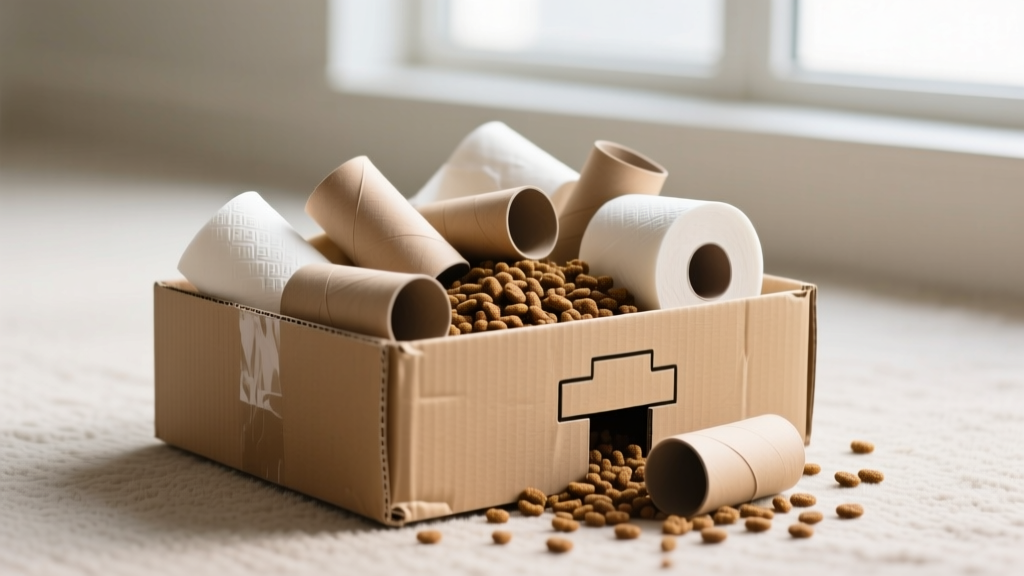
Materials required: 1 medium shipping box, 10 empty toilet paper rolls, and 0.5 cups of dry kibble. Cut random holes in the sides of the box and insert the cardboard tubes. Scatter the kibble inside the box and let your dog sniff and paw at the tubes to dislodge the food.
The Fleece Snuffle Mat
Materials required: 1 rubber sink mat (12x18 inches) and 3 yards of anti-pill fleece. Cut the fleece into 7-inch strips. Tie the strips tightly through every hole in the rubber mat until the surface is completely covered in fleece fringe. Hide high-value treats deep within the fabric strips.
The Frozen Towel Burrito
Materials required: 1 standard bath towel, 2 cups of low-sodium chicken broth, and 3 tablespoons of dog-safe peanut butter. Spread the peanut butter and broth evenly across the towel, roll it tightly into a cylinder, and freeze it for 4 hours. This provides excellent DIY mental stimulation for dogs during hot weather.
The Muffin Tin Shell Game
Materials required: 1 standard 12-cup metal muffin tin, 12 tennis balls, and high-value treats. Place a treat inside several of the muffin cups, then cover all 12 cups with tennis balls. Your dog must use their nose and paws to remove the balls and find the hidden rewards.
The Polyvinyl Chloride Pipe Treat Dispenser
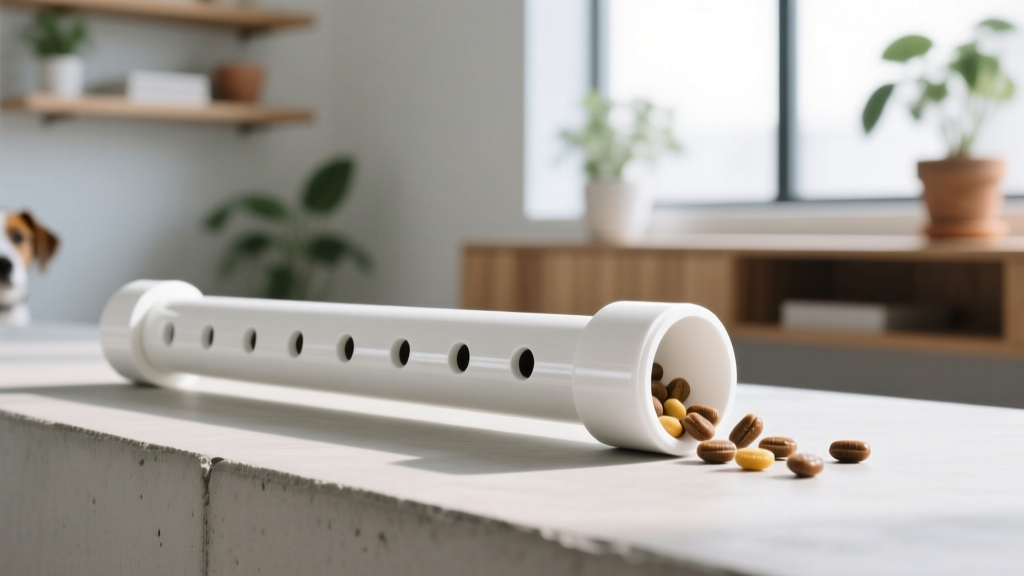
Materials required: 1 length of 3-inch diameter Polyvinyl Chloride pipe (12 inches long) and 2 end caps. Drill three 1.5-inch holes along the side of the pipe. Cap both ends securely, drop in small treats, and let your dog roll the pipe across the floor to dispense the food.
Difficulty and Size Comparison Matrix
| DIY Dog Enrichment Toy | Difficulty Level | Best Dog Size | Estimated Cost | Build Time |
|---|---|---|---|---|
| Cardboard Box Maze | Beginner | All Sizes | $0 | 5 minutes |
| Fleece Snuffle Mat | Intermediate | Small to Medium | $8 | 30 minutes |
| Frozen Towel Burrito | Beginner | Medium to Large | $2 | 5 minutes + freeze |
| Muffin Tin Shell Game | Intermediate | All Sizes | $0 | 2 minutes |
| Polyvinyl Chloride Dispenser | Advanced | Medium to Large | $12 | 15 minutes |
Safety Rules for DIY Dog Enrichment Toys
Always supervise your dog when introducing a new homemade dog puzzle. Inspect cardboard and fabric toys for torn pieces that could be swallowed. The American Kennel Club warns against using easily splintered plastics, toxic adhesives, or small choking hazards in DIY projects (American Kennel Club).
Discard any DIY dog enrichment toys that show signs of structural failure. If your dog is an aggressive chewer, avoid the cardboard and fleece options, and opt for the frozen towel or heavy-duty rubber alternatives instead.
Frequently Asked Questions
How often should I rotate DIY dog enrichment toys?
Rotate your puzzles every 3 to 4 days to maintain novelty. Dogs habituate quickly to static environments, so swapping out a cardboard maze for a snuffle mat keeps their problem-solving skills sharp and prevents boredom.
What is the best DIY mental stimulation for dogs with separation anxiety?
The Frozen Towel Burrito is highly effective for separation anxiety. The prolonged licking and chewing required to melt the ice releases endorphins that naturally soothe the canine nervous system while you are away.
Are homemade dog puzzles safe for aggressive chewers?
Standard cardboard and fleece puzzles are not safe for aggressive chewers due to ingestion risks. For heavy chewers, construct puzzles using solid hardwood blocks or thick, food-grade rubber mats that cannot be torn apart.
Conclusion
You now have the blueprints to transform household recyclables into engaging DIY dog enrichment toys that satisfy your pet's biological needs and protect your furniture. To begin, gather one medium cardboard box and five empty toilet paper rolls today to build the Foraging Maze right before your dog's next meal.
robin-maitland
All our authors care for dogs every day — read more of their work on the authors page.