DIY Dog Enrichment Toys: Homemade Puzzle Feeders Guide
Discover budget-friendly DIY dog enrichment toys and homemade puzzle feeders. Keep your pup mentally stimulated with these easy, safe household crafts.
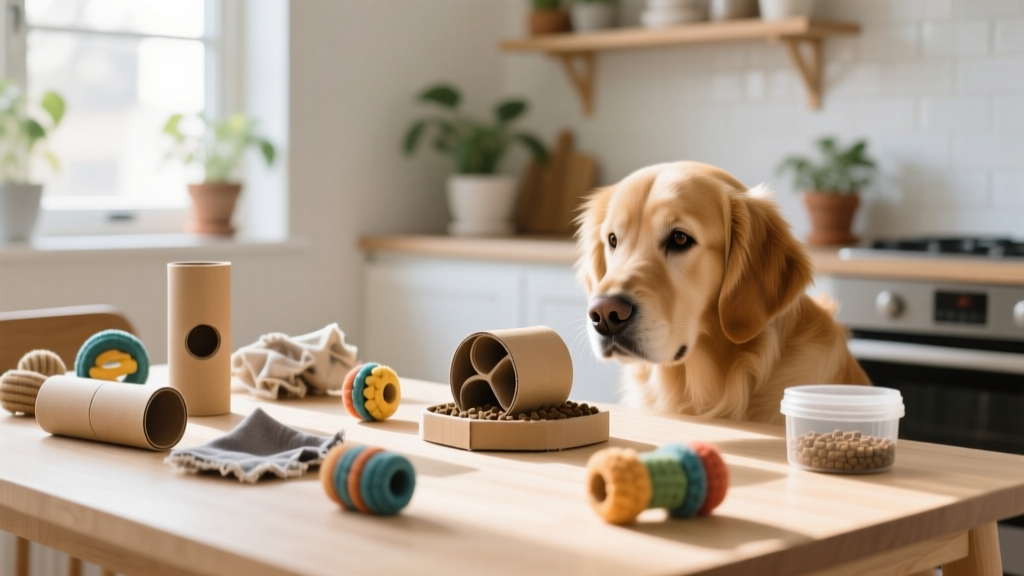
This guide is designed for budget-conscious dog owners and pet parents seeking to reduce their dog's boredom or fast eating habits without buying expensive commercial toys. The most effective DIY dog food puzzles utilize common household items like cardboard boxes, Polyvinyl Chloride (PVC) pipes, or old towels to create interactive feeding experiences that slow down eating and provide mental enrichment. By repurposing safe, non-toxic materials, you can build custom homemade dog puzzle feeders in under 15 minutes that challenge your dog's natural foraging instincts.
Key Takeaways
- Core Answer: You can build effective DIY dog food puzzles using cardboard, towels, or PVC pipes for under $5.00 in less than 15 minutes.
- Audience: Pet parents looking to slow down fast eaters or provide mental stimulation on a budget.
- Safety First: Always supervise your dog with homemade toys to prevent ingestion of non-food materials.
The Science Behind Canine Enrichment
Canine enrichment refers to the process of enhancing a dog's environment to encourage natural behaviors, reduce stress, and prevent cognitive decline. According to the American Kennel Club, engaging a dog's brain through scent work and problem-solving is critical for their overall psychological well-being. Mental fatigue from sniffing and foraging often tires a dog out faster than physical exercise alone.
Research indicates that 15 minutes of intensive sniffing and puzzle-solving burns roughly the same caloric energy as a 1-mile walk. Dogs possess up to 300 million olfactory receptors, making scent-based easy dog brain games highly effective. When you introduce homemade dog puzzle feeders, you transform a standard 5-minute meal into a 20-minute cognitive workout.
3 Easy DIY Dog Food Puzzles You Can Make Today
The Cardboard Foraging Box
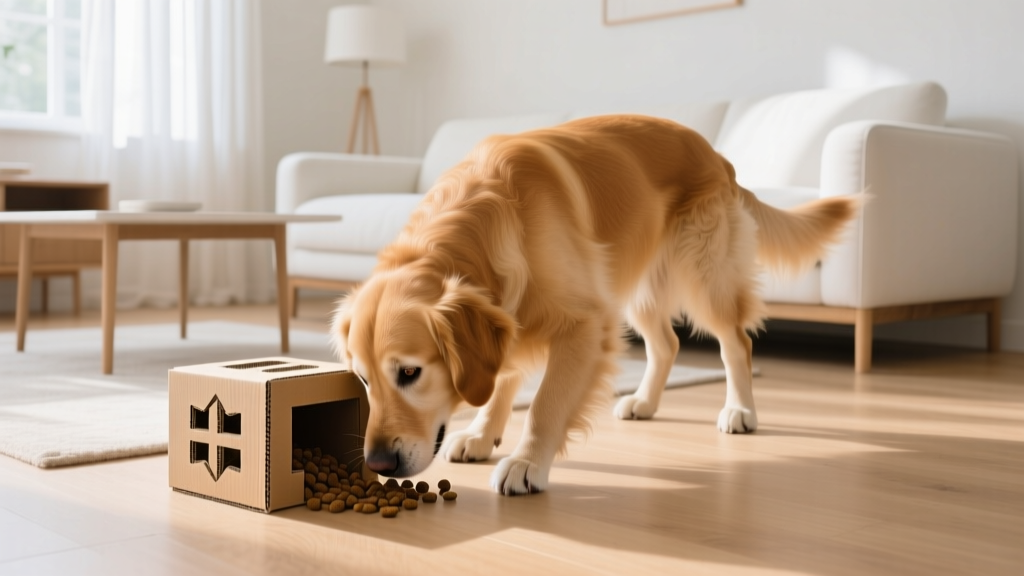
This puzzle mimics natural scavenging behaviors and costs approximately $0.00 if you recycle your shipping boxes. Take a medium-sized cardboard box and fill the bottom with crumpled paper, empty toilet paper rolls, and old clean socks. Scatter 1 cup of your dog's daily kibble throughout the layers.
Your dog must use their nose and paws to dig through the debris to find the food. To increase the difficulty, tape some of the toilet paper rolls shut with dog-safe paper tape. Always remove the box once the food is gone to prevent your dog from chewing and swallowing the cardboard.
The Polyvinyl Chloride (PVC) Pipe Treat Dispenser
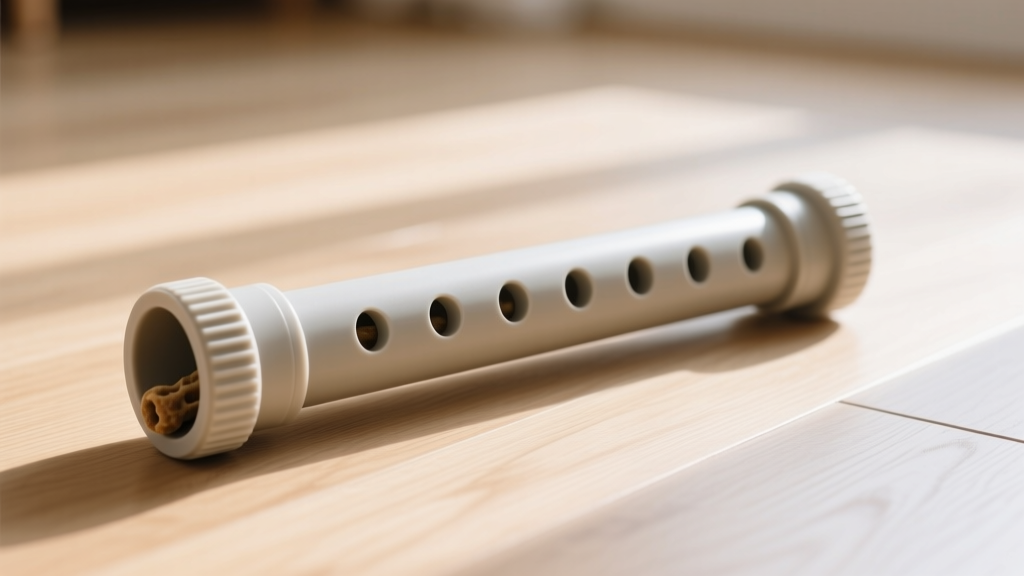
For a durable, long-lasting option, visit a local hardware store and purchase a 1.5-inch diameter PVC pipe. Cut the pipe to a 12-inch length and sand the edges completely smooth to prevent mouth injuries. Drill five to seven 0.75-inch holes along the sides of the pipe.
Cap both ends securely with PVC end caps. Fill the tube with small treats or kibble, and let your dog roll it across the floor. The treats will fall out of the holes as the pipe rotates, requiring the dog to push and manipulate the object to receive their reward.
The Towel Roll-Up Snuffle Mat
DIY snuffle mats are excellent for dogs that inhale their food too quickly. Lay a large, clean bath towel flat on the floor and sprinkle a generous amount of kibble evenly across the surface. Roll the towel tightly into a cylinder, and then tie it into a loose knot.
Your dog must untie the knot and unroll the fabric using only their nose and mouth. For advanced dogs, you can braid three old towels together before hiding the food in the folds. This soft puzzle is completely machine washable and highly portable for travel.
Material Safety and Difficulty Comparison
When building homemade puzzle feeders, material safety is paramount. The American Society for the Prevention of Cruelty to Animals warns that dogs can easily choke on small, detachable parts or suffer intestinal blockages from ingesting fabric or plastic. Use the comparison matrix below to select the right puzzle for your dog's chewing style.
| Puzzle Type | Material | Cost | Dog Profile | Supervision Required |
|---|---|---|---|---|
| Foraging Box | Cardboard, paper | $0.00 | Gentle sniffers, puppies | High (ingestion risk) |
| PVC Dispenser | Polyvinyl Chloride | $4.50 | Heavy chewers, active dogs | Medium |
| Towel Roll-Up | Cotton terrycloth | $0.00 | Fast eaters, senior dogs | Low |
Frequently Asked Questions About Homemade Puzzle Feeders
What is the foraging instinct in dogs?
The foraging instinct is the innate biological drive in canines to search, hunt, and scavenge for food in their environment. In domestic settings, providing outlets for this instinct through puzzle toys prevents destructive behaviors born from frustration and boredom.
Are homemade dog puzzle feeders safe for heavy chewers?
Cardboard and towel puzzles are not safe for heavy chewers due to the risk of intestinal blockages from ingested material. For aggressive chewers, construct puzzles using heavy-duty Polyvinyl Chloride (PVC) or thick rubber materials, and always monitor their play sessions closely.
How often should I rotate my dog's DIY food puzzles?
You should rotate your dog's puzzle toys every 3 to 4 days to maintain their interest and prevent habituation. Introducing new scents, changing the hiding locations, or altering the puzzle's difficulty level keeps the cognitive challenge fresh and engaging.
Conclusion and Next Steps
Building DIY dog food puzzles is a highly effective, low-cost strategy to improve your dog's mental health and slow down their eating pace. By utilizing safe household items like cardboard, towels, or PVC pipes, you can provide essential cognitive enrichment without relying on expensive commercial products. The core answer to keeping your dog entertained and healthy lies in tapping into their natural scavenging drives through interactive feeding.
Your immediate next step is to gather a clean bath towel and a half-cup of your dog's regular kibble to build the Towel Roll-Up puzzle today. Observe how long it takes them to finish their meal compared to a standard bowl, and adjust the knot tightness tomorrow based on their success rate.
priya-sutaria
All our authors care for dogs every day — read more of their work on the authors page.