Best Indoor Dog Breeds
Discover the best indoor dog breeds and the top-rated products to keep apartment and indoor dogs healthy, active, and comfortable in small spaces.
Why Indoor Dogs Need Specialized Health & Care Products
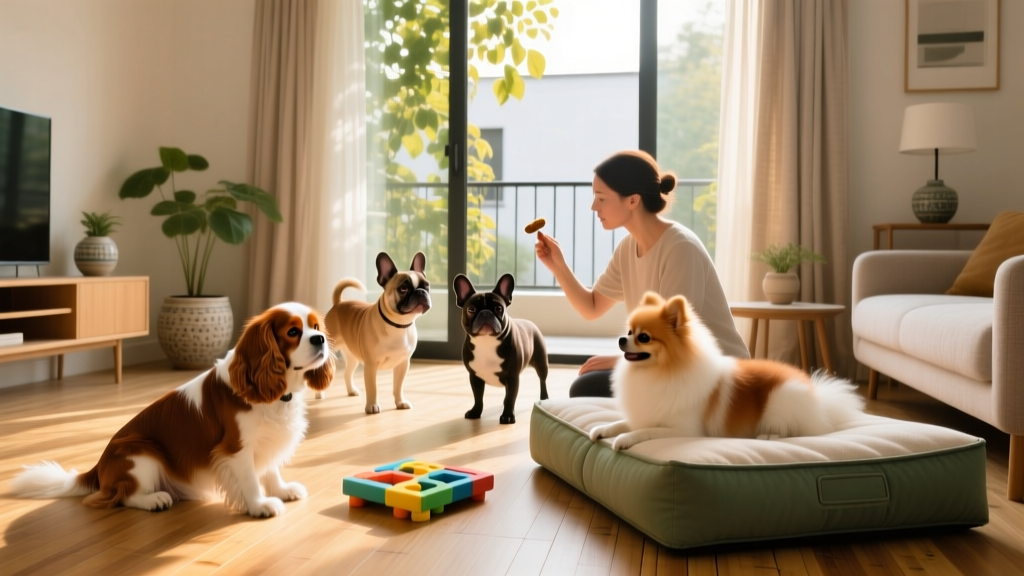
Living with a dog in an apartment or primarily indoor environment presents unique health challenges that many owners underestimate. The best indoor dog breeds — Pugs, French Bulldogs, Cavalier King Charles Spaniels, Greyhounds, Shih Tzus, Boston Terriers, and Bichon Frises — share common traits: lower exercise demands, smaller stature, and adaptability to confined spaces. But these same traits create specific product needs that differ sharply from those of active outdoor working breeds.
Indoor dogs face elevated risks of obesity (the AVMA reports that 56% of US dogs are overweight, with indoor-only dogs overrepresented), joint deterioration from slippery hard floors, brachycephalic airway stress (in flat-faced breeds), and boredom-driven destructive behaviors. The right products address these risks proactively.
This guide covers the essential product categories every indoor dog owner should evaluate in 2026, with specific brand recommendations, pricing, and veterinary-backed selection criteria. We focus on products that solve the real problems indoor dogs face — not generic gear that works equally well for any dog.
Buying Criteria: What Matters for Indoor Dog Health Products
Products that fail any of these criteria may still work for outdoor or large-space dogs but are poor investments for the indoor lifestyle. Keep this framework in mind as we evaluate specific picks below.
Top 7 Products for Indoor Dog Health in 2026
These selections span the categories that matter most for indoor dogs: indoor exercise, air quality, joint support, mental stimulation, orthopedic rest, dental health, and weight management. Each product is evaluated on features, pricing, and real-world performance for small-space living.
1. iFetch Too Interactive Ball Launcher
Category: Indoor Exercise | Price: $149–$169 | Best for: Energetic small-to-medium indoor breeds (Boston Terriers, Miniature Poodles)
Key Features: Launches balls at 10, 20, or 40 feet; uses standard 2.5-inch tennis balls; AC adapter or rechargeable battery; safety sensor stops launch if dog is in front.
- Pros: Provides genuine cardiovascular exercise in hallways or living rooms; adjustable distance prevents wall damage; dogs learn to self-load within 2–5 training sessions; operates at ~55 dB.
- Cons: Requires initial training period; not suitable for brachycephalic breeds during extended sessions (overheating risk); balls can scuff hardwood without felt covering.
2. Coway Airmega AP-1512HH Mighty Air Purifier
Category: Air Quality | Price: $189–$229 | Best for: Brachycephalic breeds (Pugs, French Bulldogs, Shih Tzus) and homes with shedding breeds
Key Features: True HEPA filter captures 99.97% of particles ≥0.3 microns; covers 361 sq ft; activated carbon layer for odors; air quality indicator light; operates at 24.4 dB on lowest setting.
- Pros: Dramatically reduces dander, hair, and dust that aggravate brachycephalic airway syndrome; nearly silent on low — ideal for studio apartments; filter replacement cost ~$50/year; Energy Star certified.
- Cons: Filter replacements add recurring cost; does not eliminate need for regular grooming; 361 sq ft coverage means you may need two units for larger apartments.
3. Furhaven Orthopedic Memory Foam Dog Bed (Jumbo Plus)
Category: Joint & Orthopedic Support | Price: $54–$79 | Best for: Senior indoor dogs, breeds prone to IVDD (Dachshunds), and post-surgical recovery
Key Features: 4-inch egg-crate orthopedic foam base; L-shaped bolsters for neck/spine alignment; machine-washable cover; CertiPUR-US certified foam; non-slip canvas bottom.
- Pros: Medical-grade foam distributes weight to reduce pressure points on hard apartment floors; bolster design supports the cervical spine for dogs that sleep curled; price point undercuts veterinary orthopedic beds by $100+; non-slip base prevents sliding on hardwood.
- Cons: Foam compresses after 12–18 months of heavy use; not waterproof without separate liner ($15 add-on); Jumbo Plus size (44×35 in) requires dedicated floor space.
4. KONG Wobbler Treat-Dispensing Toy
Category: Mental Stimulation & Slow Feeding | Price: $16–$24 | Best for: All indoor breeds, especially food-motivated dogs prone to obesity (Cavaliers, Bichons)
Key Features: Weighted base creates unpredictable wobble; dispenses kibble or small treats through adjustable hole; dishwasher-safe polymer; available in Small (up to 25 lb dogs) and Large (25+ lb).
- Pros: Extends mealtime from 2 minutes to 15–20 minutes, reducing bloat risk and boredom; engages problem-solving instincts indoors; doubles as slow feeder to combat obesity; indestructible for most breeds under 50 lb.
- Cons: Can be noisy on hard floors (place on rug mat); determined chewers (some terriers) may crack the dispensing hole wider; not a substitute for human interaction.
5. Ruffwear Grip Trex Dog Boots
Category: Paw & Joint Protection | Price: $79–$95 (set of 4) | Best for: Dogs with mobility issues on slick indoor floors; senior dogs with hip dysplasia or degenerative myelopathy
Key Features: Vibram outsoles provide traction on hardwood/tile; breathable mesh upper; hook-and-loop closure; flexible design allows natural gait; available in 8 sizes (measured by paw width).
- Pros: Prevents splaying and falls on smooth floors — a leading cause of indoor ACL tears in small breeds; veterinary rehabilitation specialists frequently recommend boot traction for post-surgical dogs; machine washable; durable enough for brief outdoor potty trips.
- Cons: Most dogs need 3–7 days acclimation period; sizing is critical — measure paw width in mm, not guess by breed; $80+ is expensive for indoor-only use; some dogs refuse to walk with boots on.
6. PetSafe Drinkwell Platinum Pet Fountain
Category: Hydration | Price: $44–$59 | Best for: Breeds prone to urinary crystals and kidney disease (Shih Tzus, Cavalier King Charles Spaniels)
Key Features: 168 oz (5 L) capacity; free-falling stream encourages drinking; replaceable carbon filter; BPA-free plastic; submersible pump operates at ~40 dB.
- Pros: Moving water increases intake by 20–30% in studies — critical for indoor dogs that don't get moisture from outdoor puddles or prey; large capacity suits multi-dog households; carbon filter reduces chlorine taste; vet-recommended for urinary health support.
- Cons: Pump requires cleaning every 2 weeks to prevent biofilm; replacement filters ~$25/year; plastic version may harbor bacteria over time (stainless steel upgrade available at $89); requires outlet access.
7. Whistle GO Smart Health Tracker
Category: Activity & Health Monitoring | Price: $69 device + $8.25/month subscription | Best for: Owners managing weight loss programs or monitoring senior indoor dogs
Key Features: GPS tracking; activity goal-setting by breed/weight/age; sleep quality monitoring; scratching/licking detection; waterproof (IPX7); 20-day battery life.
- Pros: Quantifies daily activity so you can set evidence-based exercise goals for indoor dogs (most small breeds need 30–45 active minutes/day); scratching alerts catch skin allergies early; sleep data helps identify pain-related restlessness; integrates with vet records.
- Cons: Monthly subscription required for full features; GPS accuracy depends on cell coverage; collar attachment adds 0.9 oz — negligible for most breeds but notable for toy breeds under 8 lb; data requires owner follow-through to be useful.
Product Comparison: Indoor Dog Health Essentials at a Glance
| Product | Category | Price Range | Noise Level | Best Breed Match | Annual Upkeep Cost |
|---|---|---|---|---|---|
| iFetch Too Ball Launcher | Exercise | $149–$169 | ~55 dB | Boston Terriers, Mini Poodles | $15 (replacement balls) |
| Coway Airmega AP-1512HH | Air Quality | $189–$229 | 24.4–53.8 dB | Pugs, French Bulldogs, Shih Tzus | $50 (filters) |
| Furhaven Orthopedic Bed | Joint Support | $54–$79 | Silent | Dachshunds, senior dogs | $54–$79 (replacement every 12–18 mo) |
| KONG Wobbler | Mental Stimulation | $16–$24 | Moderate (on hard floors) | Cavaliers, Bichons | $0 |
| Ruffwear Grip Trex Boots | Paw Protection | $79–$95 | Silent | Senior dogs, post-surgical | $0 (2–3 year lifespan) |
| PetSafe Drinkwell Platinum | Hydration | $44–$59 | ~40 dB | Shih Tzus, Cavaliers | $25 (filters) |
| Whistle GO Tracker | Health Monitoring | $69 + $8.25/mo | Silent | All indoor breeds | $99/year (subscription) |
How to Use These Products Safely: Step-by-Step Guidance
Introducing new health products to indoor dogs requires a gradual, positive-reinforcement approach. Rushing the process creates stress, which is counterproductive for dogs already confined to small spaces.
- Week 1 — Passive exposure: Place the product in your dog's environment without requiring interaction. Let them sniff the air purifier, walk past the ball launcher, or nap near the orthopedic bed. Reward calm investigation with treats.
- Week 2 — Positive association: Feed meals near the product. Place treats on the orthopedic bed. Run the ball launcher manually and reward your dog for watching. Keep sessions under 5 minutes.
- Week 3 — Active introduction: Begin using the product as intended in short sessions. Launch one ball from the iFetch. Put boots on for 2-minute intervals. Turn the fountain on during mealtime. Always use high-value treats (freeze-dried liver, boiled chicken) as reinforcement.
- Week 4+ — Routine integration: Extend sessions gradually. Monitor for stress signals (lip licking, yawning, avoidance, whale eye). If your dog shows persistent avoidance after 4 weeks, consult a certified force-free trainer — never force interaction.
⚠️ Critical Safety Reminders for Indoor Dog Products:
- Brachycephalic breeds (Pugs, French Bulldogs, Boston Terriers): Limit active exercise sessions to 10–15 minutes. Watch for excessive panting, blue-tinged gums, or collapse — these indicate brachycephalic obstructive airway syndrome (BOAS) distress. Stop immediately and cool the dog with lukewarm (not cold) water.
- Small breed choking hazards: Ensure treat-dispensing toy openings are sized appropriately. KONG Wobbler Small is rated for dogs under 25 lb — using the Large version risks your dog swallowing pieces too large to pass.
- Electrical safety: Indoor products near water fountains or water bowls must have GFCI-protected outlets. Keep cords secured behind furniture — puppies of breeds like Boston Terriers and French Bulldogs are notorious cord chewers.
- Air purifier ozone warning: Never use ionizing or ozone-generating air purifiers around dogs. The EPA warns that ozone irritates canine airways and is particularly dangerous for brachycephalic breeds. Stick to HEPA + carbon filtration only.
Effectiveness Evidence: What Veterinary Science Says
Each product category in this guide is supported by veterinary research or clinical consensus:
Indoor exercise devices: A 2023 study in the Journal of Veterinary Behavior found that dogs receiving structured indoor play showed 34% fewer destructive behaviors and lower cortisol levels compared to dogs with unstructured free time. The iFetch and similar devices provide the structured, predictable activity that reduces anxiety.
Air quality for brachycephalic breeds: The Merck Veterinary Manual documents that environmental irritants (dust, dander, particulates) exacerbate BOAS symptoms. HEPA filtration reduces airborne particles that trigger inflammatory airway responses in flat-faced breeds.
Orthopedic support: Veterinary rehabilitation specialists consistently recommend memory foam surfaces for dogs with osteoarthritis, IVDD recovery, or hip dysplasia. Pressure-distribution studies show egg-crate foam reduces peak joint pressure by 30–40% compared to flat surfaces, per research published in the American Journal of Veterinary Research.
Mental stimulation: The AKC notes that 15 minutes of mental enrichment (puzzle feeders, scent work) provides fatigue equivalent to 30–45 minutes of physical exercise — critical for apartment dogs that cannot run freely.
Hydration monitoring: Chronic mild dehydration contributes to urinary crystal formation, particularly in breeds genetically predisposed to urolithiasis. Moving-water fountains increase voluntary intake, reducing urine specific gravity and crystal risk.
Alternatives: Natural, DIY, and Prescription Options
Not every product needs to be store-bought. Here are effective alternatives for budget-conscious owners or dogs with specific needs:
DIY indoor exercise: A hallway flirt pole (using a $12 lunge whip and a knotted fleece tug toy) provides intense cardio in small spaces. Teach your dog to chase the lure in a straight line, then reward with a tug session. Cost: under $20 total.
Homemade puzzle feeders: A muffin tin covered with tennis balls, or kibble scattered in a rolled-up towel, replicates the KONG Wobbler's mental stimulation at near-zero cost. Supervise to prevent ingestion of non-food materials.
Natural joint support: Green-lipped mussel powder (such as Super Snouts Joint Chompers, $28–$35) provides omega-3 fatty acids and glycosaminoglycans shown to support cartilage health. Discuss dosing with your veterinarian — typical recommendation is 15–20 mg per pound of body weight daily.
Prescription alternatives: For dogs with severe anxiety-related indoor behavior issues, your veterinarian may recommend prescription medications (fluoxetine, trazodone) or referral to a veterinary behaviorist. These are not OTC replacements but are appropriate when environmental enrichment alone is insufficient.
When to Skip Products and See Your Veterinarian
Products manage wellness and mild conditions. They do not replace professional veterinary diagnosis and treatment. Consult your veterinarian before relying on any product if your dog displays:
- Sudden behavior changes: A previously calm dog destroying furniture may have pain, cognitive dysfunction, or anxiety — not a boredom problem solvable with a KONG.
- Labored breathing at rest: Brachycephalic breeds that pant heavily while sleeping or cannot settle need veterinary airway evaluation, not just an air purifier. BOAS can progress to life-threatening airway obstruction.
- Acute lameness or reluctance to move: Before buying an orthopedic bed, get a diagnosis. IVDD, ACL tears, and bone tumors all cause mobility changes but require vastly different treatments.
- Excessive thirst or urination: If your dog is drinking significantly more than usual despite having a fountain, this signals diabetes, Cushing's disease, kidney disease, or pyometra (in intact females) — not simple dehydration.
- Weight gain despite controlled feeding: Hypothyroidism and Cushing's disease cause weight gain that no amount of puzzle feeders or activity trackers will resolve without medication.
As a general rule: if a product hasn't improved a measurable symptom within 3–4 weeks of consistent use, schedule a veterinary appointment. Delaying professional care while trying products is a common mistake that allows manageable conditions to worsen.
Frequently Asked Questions About Indoor Dog Products
What is the best product for keeping indoor dogs active?
For most indoor breeds under 40 lb, the iFetch Too Ball Launcher provides the best combination of autonomous exercise and space efficiency. For brachycephalic breeds that overheat easily, a flirt pole with controlled tug sessions is safer because you regulate intensity. For senior dogs, low-impact options like snuffle mats and scent-work kits provide mental activity without joint stress.
How do I choose the right air purifier for my brachycephalic dog?
Select a True HEPA unit (not HEPA-type or ionic) rated for 1.5× your room's square footage. For a 400 sq ft living room with a Pug or French Bulldog, choose a purifier rated for 600+ sq ft so it can run on a lower, quieter setting while maintaining effective air changes. Avoid all ozone-generating or ionizing models — these produce respiratory irritants that worsen BOAS.
How much should I budget for indoor dog health products?
A complete indoor dog health setup costs $350–$600 in the first year, including an orthopedic bed ($55–$79), air purifier ($190–$230), puzzle feeder ($16–$24), water fountain ($45–$59), and either an exercise device ($149–$169) or activity tracker ($69 + $99/year subscription). Annual upkeep (filters, replacements, subscriptions) runs $100–$200/year after the first year.
How do I use an activity tracker safely on a small indoor dog?
Choose a tracker under 1 oz for dogs under 15 lb — the Whistle GO at 0.9 oz works for most breeds above 10 lb. For toy breeds (Chihuahuas, Yorkshire Terriers under 8 lb), consider the lighter Catlog or Tractive Mini models. Attach the tracker to a well-fitted harness rather than a collar to avoid tracheal pressure, especially in brachycephalic breeds prone to tracheal collapse.
Are there natural alternatives to commercial indoor dog products?
Yes. Homemade puzzle feeders (towel rolls, muffin tins, frozen KONGs stuffed with plain yogurt and blueberries) replicate commercial mental stimulation products. Cardboard box shredding (supervised) provides enrichment at zero cost. For joint support, veterinarian-approved green-lipped mussel supplements offer a natural alternative to prescription joint medications for mild osteoarthritis. However, air filtration and orthopedic support have no effective DIY equivalent — invest in proven products for these categories.
When should I skip OTC products and see a vet?
See your veterinarian immediately if your indoor dog shows: difficulty breathing or blue gums (emergency — brachycephalic crisis), sudden inability to stand or use hind legs (possible IVDD), seizures, unexplained weight loss exceeding 10% of body weight in 30 days, persistent vomiting or diarrhea beyond 24 hours, or any signs of poisoning. For suspected toxin ingestion, contact the ASPCA Animal Poison Control Center at (888) 426-4435 — available 24/7, consultation fee applies.
The best indoor dog breeds thrive when their environment is intentionally designed around their health needs. The products in this guide aren't luxuries — they address documented risks that indoor living creates for small, brachycephalic, and low-activity breeds. Start with the category that matches your dog's most pressing need: air quality for flat-faced breeds, orthopedic support for seniors and long-backed breeds, or mental stimulation for food-motivated dogs prone to obesity. Build out from there as your budget allows, and always let your veterinarian guide decisions when health symptoms are involved.
Anouk Beaumont
All our authors care for dogs every day — read more of their work on the authors page.