Best House Dogs for Seniors: Top Breeds, Supplies & Setup Guide
Discover the best house dogs for seniors, including breed picks, essential gear, costs, and a step-by-step setup guide for comfortable senior-dog ownership.

Why the Right Dog-and-Gear Combo Matters for Senior Owners
Choosing one of the best house dogs for seniors is only half the equation. A well-matched breed paired with the right daily-care products — ergonomic leashes, low-effort feeding systems, joint-support supplements, and easy-grooming tools — determines whether dog ownership remains a joy or becomes a burden. According to the AVMA, seniors who select calm, low-shedding, small-to-medium breeds and invest in senior-friendly gear report significantly higher satisfaction and lower vet bills in the first two years of ownership.
This guide covers the breeds most suited to older adults and the specific products that make daily care manageable for owners with limited mobility, arthritis, or fixed incomes.
Best House Dog Breeds for Seniors: Quick Comparison
Before we get to the gear, here are the breeds that consistently rank as the best house dogs for seniors based on temperament, size, exercise needs, and grooming demands. Data sourced from AKC breed profiles and owner surveys.
| Breed | Weight (lb / kg) | Daily Exercise | Grooming | Lifespan | Puppy Cost |
|---|---|---|---|---|---|
| Cavalier King Charles Spaniel | 13–18 / 6–8 | 20–30 min | Weekly brushing | 12–15 yr | $1,800–$3,500 |
| Bichon Frise | 12–18 / 5–8 | 20–30 min | Professional every 4–6 wk | 14–15 yr | $1,000–$2,500 |
| French Bulldog | 16–28 / 7–13 | 15–20 min | Weekly wipe-down | 10–12 yr | $2,000–$4,000 |
| Shih Tzu | 9–16 / 4–7 | 15–20 min | Professional every 4–6 wk | 10–18 yr | $800–$2,000 |
| Pomeranian | 3–7 / 1.4–3.2 | 15–20 min | Weekly brushing | 12–16 yr | $1,000–$3,000 |
| Miniature/Toy Poodle | 10–15 / 4.5–7 | 30 min | Professional every 4–6 wk | 14–18 yr | $1,500–$3,000 |
| Greyhound (retired racer) | 60–70 / 27–32 | 20–30 min | Minimal | 10–13 yr | $200–$500 (rescue) |
Key insight: Retired racing Greyhounds are an often-overlooked pick. Despite their size, they are famously low-energy indoors — earning the nickname "45-mph couch potatoes" — and rescue adoption fees are far lower than purebred puppy prices.
Essential Products for Senior Dog Owners: Buying Criteria
- Ergonomics: Products must accommodate arthritis, reduced grip strength, or limited bending. Look for padded handles, no-bend designs, and lightweight materials.
- Weight: Any handheld item (leash, brush, food scoop) should weigh under 1 lb / 0.45 kg to reduce wrist fatigue.
- Safety: Non-slip bases, auto-shutoff features, and breakaway clips prevent falls and injuries.
- Low maintenance: Self-cleaning litter-style potty systems, slow-feed bowls, and machine-washable bedding reduce daily effort.
- Cost of ownership: Factor in recurring costs — replacement filters, grooming refills, supplement refills — not just the sticker price.
Top 7 Products That Make Senior Dog Ownership Easier
1. Rabbitgoo No-Pull Dog Harness (Ergonomic Handle)
Price: $22–$36 depending on size
Key features: Padded front-clip and back-clip D-rings, reflective strips, breathable mesh, top grab handle for assisting dogs into cars or up stairs.
Best for: Owners who need control without straining shoulders.
- Front clip discourages pulling without force
- Top handle gives leverage for lifting small breeds
- Machine-washable
- Sizing runs small — measure girth carefully
- Handle not rated for full-weight lifting on large breeds
2. PetSafe Easy Walk No-Pull Harness
Price: $25–$40
Key features: Martingale-style front chest loop, quick-snap buckles, lightweight nylon.
Best for: Seniors walking small-to-medium dogs who pull moderately.
- Veterinary behaviorist recommended for force-free training
- Under 6 oz / 170 g
- Color-coded straps for easy fitting
- No padding — may chafe on thin-coated breeds
- Not ideal for brachycephalic breeds with breathing issues
3. Outward Hound Fun Feeder Slo-Bowl
Price: $12–$18
Key features: Non-slip base, BPA-free plastic, multiple ridge patterns, dishwasher-safe.
Best for: Preventing bloat (GDV) in deep-chested breeds like Greyhounds and reducing mealtime mess.
- Extends eating time 5–10×, reducing regurgitation
- Stable base means less bending to clean spills
- Under $18 — excellent value
- Not suitable for raw diets (hard to clean crevices)
- Flat-nosed breeds may struggle with deep ridges
4. Burt's Bees for Dogs Oatmeal Shampoo + Waterless Foam
Price: $7–$10 per bottle
Key features: pH-balanced for canine skin (6.2–7.4), 97% natural ingredients, waterless foam option for spot cleaning.
Best for: Seniors who cannot manage a full bath in a tub.
- Waterless foam eliminates tub lifting
- No harsh sulfates or colorants
- Lightweight squeeze bottle — easy grip
- Not a full substitute for medicated baths
- Scent may linger 24–48 hours
5. Cosequin DS Plus MSM Chewable Tablets (Joint Supplement)
Price: $28–$45 for 120 chews (approx. 4-month supply for a 25-lb dog)
Key features: Glucosamine HCl 500 mg, chondroitin sulfate 400 mg, MSM 250 mg per 2 tablets. Merck Veterinary Manual notes glucosamine/chondroitin as a standard nutraceutical approach for canine osteoarthritis.
Best for: Aging dogs showing stiffness — proactive joint support reduces vet visits.
- Veterinarian-recommended brand (Nutramax Labs)
- Palatable chew — no pill-hiding needed
- Visible improvement typically within 4–6 weeks
- Not a substitute for prescription pain management
- Some dogs experience mild GI upset in first week
6. Kuranda Elevated Dog Bed (Chewproof, PVC Frame)
Price: $110–$180 depending on size
Key features: Elevated 6 in / 15 cm off floor, orthopedic support without memory foam (no sinking), machine-washable Cordura fabric, supports up to 125 lb / 57 kg.
Best for: Dogs with arthritis who struggle to rise from flat beds — and owners who can't bend to the floor.
- Height reduces owner bending for petting/medication
- Airflow prevents pressure sores
- 10-year frame warranty
- Higher upfront cost than standard beds
- Assembly requires moderate hand strength
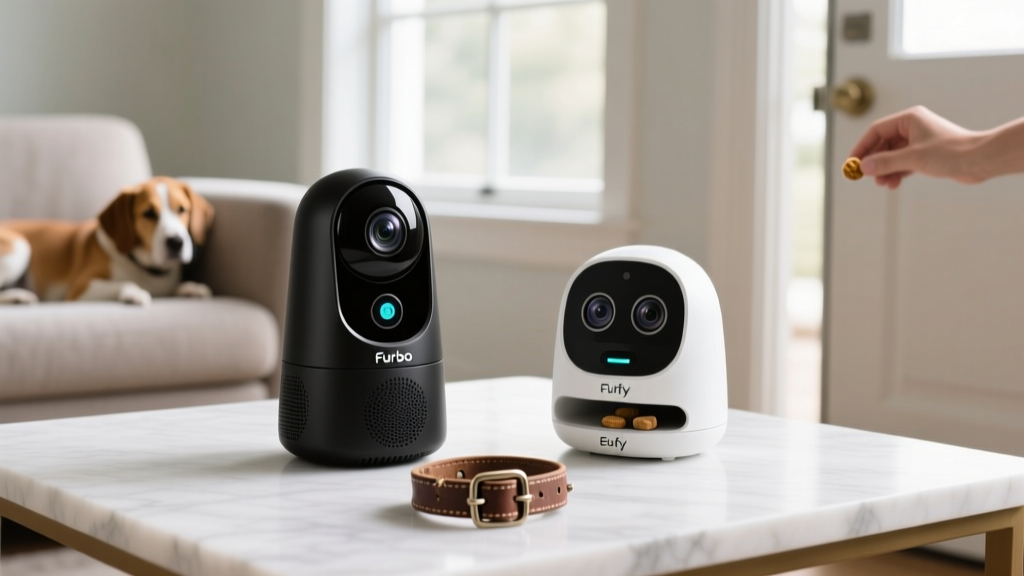
7. Furbo 360° Dog Camera with Treat Toss
Price: $160–$210
Key features: 1080p camera, 360° pan, bark alerts, treat-tossing mechanism, two-way audio, night vision.
Best for: Seniors who leave dogs home alone and want peace of mind without physical check-ins.
- Reduces separation anxiety monitoring stress
- Treat toss provides enrichment remotely
- Cloud recording (subscription $6.99/mo)
- Requires Wi-Fi (min 5 Mbps upload)
- Treat hopper holds ~30 small treats — needs refilling
Product Comparison Table: At-a-Glance
| Product | Category | Price Range | Weight | Recurring Cost | Best For |
|---|---|---|---|---|---|
| Rabbitgoo No-Pull Harness | Walking | $22–$36 | 8 oz / 227 g | None | Arthritis-friendly control |
| PetSafe Easy Walk | Walking | $25–$40 | 6 oz / 170 g | None | Lightweight pull prevention |
| Outward Hound Slo-Bowl | Feeding | $12–$18 | 10 oz / 284 g | None | Bloat prevention |
| Burt's Bees Waterless Foam | Grooming | $7–$10 | 8 oz / 227 g | $7–$10 per 6–8 wk | No-tub bathing |
| Cosequin DS Plus MSM | Health | $28–$45 | 12 oz / 340 g | $7–$11/month | Joint support |
| Kuranda Elevated Bed | Comfort | $110–$180 | 7–12 lb / 3–5 kg | Fabric pad $25–$40/yr | Easy-rise resting |
| Furbo 360° Camera | Monitoring | $160–$210 | 1.5 lb / 680 g | $6.99/mo (optional) | Remote check-ins |
How to Set Up a Senior-Friendly Dog Care Routine (Step by Step)
Products only work if integrated into a manageable routine. Here is a daily framework designed for owners with limited mobility:
- Morning (15 min): Fill slow-feeder bowl with measured kibble. While dog eats, attach harness using color-coded straps (no fumbling).
- Walk (20–30 min): Use front-clip harness to prevent pulling. Carry collapsible water bottle with carabiner — no heavy bags.
- Midday (5 min): Check Furbo camera. Toss 2–3 treats for enrichment. No physical trip home needed.
- Evening (10 min): Administer joint supplement with dinner. Wipe paws with pre-moistened grooming wipes (no bath needed).
- Weekly (20 min): Brush coat using long-handled slicker brush. Spot-clean with waterless foam if needed.
- Monthly: Schedule mobile groomer for breeds requiring professional clipping (Bichon, Shih Tzu, Poodle). Typical cost: $50–$90 per visit.
Safety Considerations and Warnings
- Tripping hazard: Keep elevated beds and food bowls against walls, not in walkways. The CDC reports that 1 in 5 falls among adults 65+ results in serious injury — and pets are a common trip trigger.
- Supplement interactions: Glucosamine can interact with blood thinners (warfarin). Always consult your veterinarian before starting any OTC supplement for your dog, especially if you are also managing your own medications and could accidentally confuse dosages.
- Camera security: Change default passwords on smart pet cameras. Use two-factor authentication to prevent unauthorized access.
- Harness fit: Check harness strap tension weekly — you should fit two fingers between strap and dog's body. Loose harnesses can cause chafing; tight ones restrict breathing, especially in brachycephalic breeds.
- Heat sensitivity: French Bulldogs and other brachycephalic breeds are prone to heatstroke. Never walk when the heat index exceeds 80°F / 27°C. Use the camera to monitor panting at home.
When to Skip OTC Products and See a Veterinarian
Over-the-counter supplements and home-care tools have limits. Contact your vet immediately if you notice:
- Sudden lameness or refusal to bear weight on a limb (possible fracture or ligament tear)
- Repeated vomiting after eating, even with a slow feeder (possible obstruction or GDV)
- Excessive thirst (polydipsia) — more than 100 mL/kg/day — signaling diabetes, Cushing's, or kidney disease
- Behavioral changes such as new aggression, disorientation, or house-soiling in a previously trained dog (possible cognitive dysfunction syndrome)
- Visible pain despite 6+ weeks on a joint supplement — prescription NSAIDs (carprofen, meloxicam) or multimodal pain plans may be necessary
Do not rely on joint supplements alone for dogs with diagnosed osteoarthritis. The Merck Veterinary Manual recommends a multimodal approach combining weight management, prescription medication, physical therapy, and environmental modification.
Natural and DIY Alternatives
If commercial products feel excessive or budget-tight, here are effective alternatives:
- DIY slow feeder: Place a tennis ball or clean, large rock (too big to swallow — minimum 3 in / 7.5 cm diameter) in a regular stainless steel bowl. Cost: $0–$3.
- Homemade joint supplement: Bone broth made from chicken feet (rich in natural glucosamine and chondroitin). Simmer 2 lb / 1 kg chicken feet in water with 2 tbsp apple cider vinegar for 12–24 hours. Strain, cool, and skim fat. Serve 1–2 tbsp daily for small dogs, ¼ cup for medium dogs. Note: this is a supplement, not a complete diet — consult a veterinary nutritionist for balanced homemade meal plans.
- Towel-assisted harness: For dogs needing car or stair assistance, fold a bath towel under the belly and use the two ends as handles. Provides temporary support without purchasing a specialized lift harness ($40–$80).
- Elevated bed alternative: Stack two firm couch cushions and secure with a fitted sheet. Raises sleeping surface 6–8 in / 15–20 cm for a fraction of the Kuranda cost.
Frequently Asked Questions
What is the best overall dog breed for a senior living alone?
The Cavalier King Charles Spaniel is widely regarded as one of the best house dogs for seniors living alone. Their affectionate nature, small size (13–18 lb / 6–8 kg), and moderate exercise needs (20–30 min/day) make them manageable. However, they are prone to mitral valve disease (MVD) — up to 50% develop a heart murmur by age 5 — so budget for cardiology screenings ($200–$400 annually after age 5).
How much does it cost to own one of the best house dogs for seniors?
First-year costs typically range from $2,500–$6,000 including puppy/adoption fee, initial vet visits, spay/neuter, core vaccines, microchip, supplies, and pet insurance. Annual ongoing costs average $1,200–$2,800 depending on breed health needs. Breeds with fewer genetic predispositions (like retired Greyhounds) tend toward the lower end.
Are senior rescue dogs better than puppies for older adults?
Generally, yes. Adult dogs (age 3–8) are past the destructive puppy phase, have established temperaments, and require less intensive training. Organizations like ASPCA partner shelters often have senior-dog adoption programs with reduced fees ($50–$150) and pre-completed vet work.
How do I use a no-pull harness safely on a brachycephalic breed?
Choose a harness that avoids chest pressure entirely — look for designs that distribute force across the sternum rather than the trachea. Never attach a leash to a collar on a French Bulldog or Shih Tzu, as this can worsen brachycephalic obstructive airway syndrome (BOAS). Fit the harness while the dog is standing, and check that you can slide two flat fingers under every strap.
Can I use human joint supplements for my dog?
Not recommended. Human glucosamine products may contain xylitol (toxic to dogs), different dosing concentrations, or added ingredients unsafe for canine metabolism. The ASPCA Animal Poison Control hotline — (888) 426-4435 (24/7, consultation fee applies) — receives thousands of calls annually about human supplement ingestion by pets. Always use veterinary-formulated products.
When should I skip OTC products and see a vet?
If your dog shows no improvement after 6 weeks on a joint supplement, develops acute lameness, has repeated GI issues, or exhibits behavioral changes, schedule a veterinary exam. OTC products manage mild symptoms — they do not treat underlying disease. Early diagnosis of conditions like IVDD, hip dysplasia, or hypothyroidism leads to better outcomes and lower long-term costs.
Marcus Aldridge
All our authors care for dogs every day — read more of their work on the authors page.