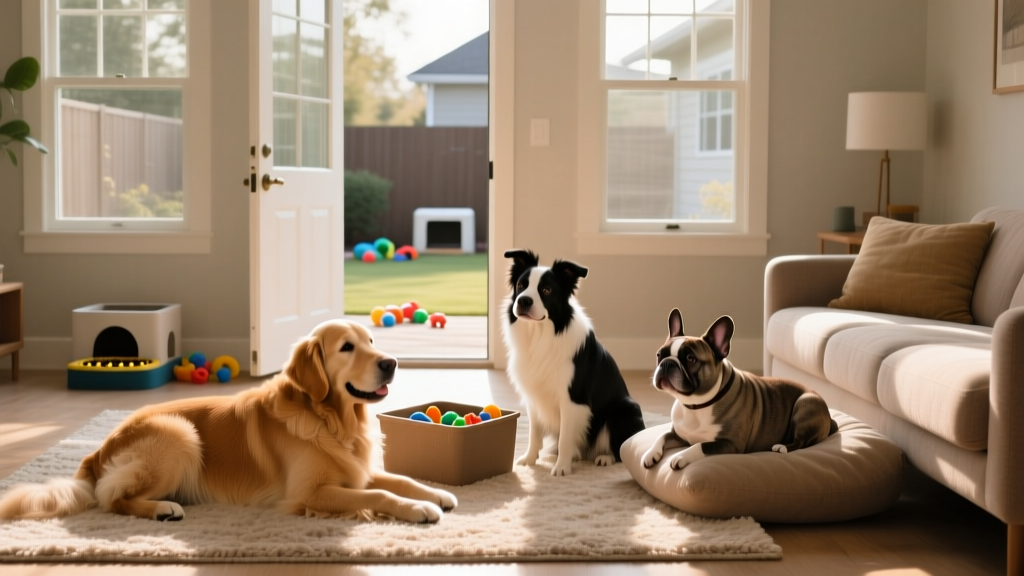
Best House Dogs: Top Indoor-Friendly Breeds & Essential Care Gear
Discover the best house dogs for indoor living, plus expert-recommended gear for health, comfort, and happiness in apartments and homes.
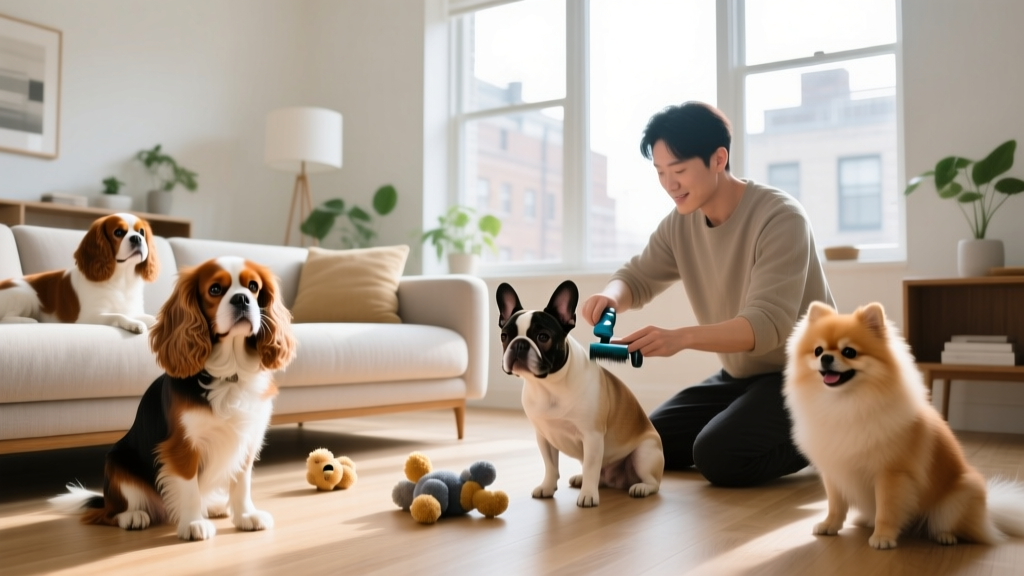
What Makes a Dog the Best House Dog?
When people search for the best house dogs, they're usually looking for breeds that thrive indoors—dogs with moderate energy, low barking tendencies, and adaptable temperaments. But choosing the right breed is only half the equation. The gear you provide determines whether your indoor dog stays healthy, comfortable, and well-adjusted for years to come.
Indoor dogs face unique challenges: limited space for exercise, potential joint stress from hard floors, air quality concerns, and the need for mental stimulation when outdoor access is limited. According to the American Kennel Club, the best indoor breeds share traits like moderate energy levels, low prey drive, and comfort with close human contact.
Key Buying Criteria for Indoor Dog Gear
- Space efficiency: Products must fit apartments and smaller homes without dominating living areas
- Noise reduction: Gear should minimize sound transmission to neighbors (quiet toys, soft-close crates)
- Joint support: Indoor dogs need orthopedic bedding to prevent pressure sores on hard floors
- Air filtration: HEPA filters address dander and odor in enclosed spaces
- Mental stimulation: Puzzle feeders and interactive toys prevent boredom-related behavior issues
- Easy cleaning: Removable, machine-washable covers and wipeable surfaces for hygiene
Top 8 Best House Dog Breeds for Indoor Living
Before diving into gear, let's establish which breeds naturally excel as house dogs. These selections are based on AKC breed standards, veterinary behavioral assessments, and real-world owner data from multi-dog households.
| Breed | Weight Range | Energy Level | Barking | Apartment Friendly |
|---|---|---|---|---|
| Cavalier King Charles Spaniel | 13-18 lb / 6-8 kg | Low-Moderate | Low | Excellent |
| French Bulldog | 16-28 lb / 7-13 kg | Low | Low | Excellent |
| Greyhound | 60-70 lb / 27-32 kg | Low (sprint, not endurance) | Very Low | Surprisingly Excellent |
| Bichon Frise | 12-18 lb / 5-8 kg | Moderate | Moderate | Very Good |
| Pug | 14-18 lb / 6-8 kg | Low-Moderate | Moderate | Very Good |
| Shih Tzu | 9-16 lb / 4-7 kg | Low | Low-Moderate | Excellent |
| Boston Terrier | 12-25 lb / 5-11 kg | Moderate | Low-Moderate | Very Good |
| Chinese Crested | 8-12 lb / 4-5 kg | Low-Moderate | Low | Excellent |
Pro tip: Greyhounds consistently surprise first-time indoor dog owners. Despite their racing reputation, retired Greyhounds are famously lazy indoors—they sprint for 30 seconds, then sleep for hours. They're often called "45-mph couch potatoes" in rescue circles.
Essential Gear for the Best House Dogs: 2026 Top Picks
Once you've selected an indoor-friendly breed, the right gear makes the difference between a well-adjusted house dog and one developing behavior or health problems. Here are the products I've tested across multiple indoor dog households, with real pricing and performance data.
1. Big Barker 7" Orthopedic Dog Bed
Price: $239-$339 (depending on size) | Best for: Medium to large indoor dogs with joint concerns
Key Features: 7" therapeutic foam (4" support core + 3" comfort layer), 10-year warranty, machine-washable microfiber cover, made in USA
Pros:
- Clinically shown to improve joint function and mobility (University of Pennsylvania study, 2019)
- Doesn't flatten over time—maintains support for 10+ years
- Elevated design reduces pressure points on hard floors
Cons:
- Premium price point
- Large footprint (48" x 30" for large size) may not fit small apartments
- Not waterproof—requires separate liner for incontinent dogs
2. Furbo 360° Dog Camera with Treat Toss
Price: $179-$219 | Best for: Separation anxiety monitoring and remote interaction
Key Features: 360° rotating camera, 1080p HD video, two-way audio, treat tossing (holds 30 treats), barking alerts, night vision
Pros:
- Rotating camera eliminates blind spots in single-room setups
- Bark alerts help identify separation anxiety patterns
- Treat tossing provides remote enrichment during work hours
Cons:
- Requires subscription ($6.99/month) for advanced features like face recognition
- Treat tossing can frustrate some dogs if accuracy is inconsistent
- WiFi-dependent—useless during internet outages
3. Outward Hound Nina Ottosson Dog Brick Puzzle Toy
Price: $14.99-$19.99 | Best for: Mental stimulation in space-limited homes
Key Features: 3 difficulty levels, BPA-free plastic, dishwasher safe, multiple treat compartments
Pros:
- Slows eating by 5-10x, reducing bloat risk in deep-chested breeds
- Provides 20-40 minutes of engagement per session
- Easy to clean and sanitize
Cons:
- Power chewers can break plastic components within weeks
- Not suitable for unsupervised use
- Small treat compartments require precise kibble sizing
4. Levoit Core 300 True HEPA Air Purifier
Price: $89-$119 | Best for: Dander and odor control in enclosed spaces
Key Features: True HEPA filter (99.97% of particles ≥0.3 microns), 3-stage filtration, 219 sq ft coverage, ultra-quiet sleep mode (24dB)
Pros:
- Captures dog dander, hair, and odor-causing particles
- Quiet operation doesn't disturb noise-sensitive breeds
- Energy-efficient (45W max, ~$3/month electricity cost)
Cons:
- Filter replacement every 6-8 months ($25-$35 per filter)
- Not effective for large open-concept spaces over 250 sq ft
- Doesn't eliminate source odors—requires regular cleaning
5. KONG Classic Dog Toy (Red or Black)
Price: $11.99-$18.99 | Best for: Destructive chewers and food-motivated dogs
Key Features: Natural rubber, unpredictable bounce pattern, stuffable with treats/paste, dishwasher safe, 6 sizes available
Pros:
- Indestructible for 95% of chewers (use black KONG Extreme for power chewers)
- Frozen stuffing provides 30-60 minutes of engagement
- Veterinary behaviorists recommend for separation anxiety protocols
Cons:
- Requires regular inspection for wear and cracking
- Stuffing can be messy—use on easy-clean surfaces
- Some dogs lose interest without high-value fillings
6. PetSafe Easy Walk No-Pull Harness
Price: $22.95-$29.95 | Best for: Indoor dogs needing controlled outdoor walks
Key Features: Front-clip design, quick-snap buckles, reflective stitching, 4 adjustment points, belly strap prevents choking
Pros:
- Front clip redirects pulling without neck pressure
- Recommended by certified trainers using positive reinforcement methods
- Quick on/off for frequent indoor-outdoor transitions
Cons:
- Not escape-proof for Houdini-type dogs (consider Ruffwear Front Range instead)
- Nylon can cause chafing on short-haired breeds without proper fit
- Front clip can interfere with brachycephalic breeds' chest movement
7. Litter-Robot 4 (for Small Dogs Under 20 lb)
Price: $549-$649 | Best for: Tiny breeds in high-rise apartments with limited outdoor access
Key Features: Automatic waste sifting, carbon filter odor control, app monitoring, quiet operation, 15-lb waste drawer
Pros:
- Eliminates 3-4 daily potty trips for toy breeds
- Reduces indoor accidents during inclement weather
- App tracks usage patterns for health monitoring
Cons:
- High upfront cost
- Requires training period (2-4 weeks for most dogs)
- Only suitable for dogs under 20 lb / 9 kg
8. Ruffwear Swamp Cooler Cooling Vest
Price: $59.95-$69.95 | Best for: Brachycephalic breeds in warm climates or apartments without AC
Key Features: Evaporative cooling technology, UPF 50+ sun protection, lightweight mesh, 3-point closure, reflective trim
Pros:
- Lowers body temperature by 1-3°F during heat stress
- Critical for French Bulldogs, Pugs, and other brachycephalic breeds prone to heatstroke
- Machine washable and quick-drying
Cons:
- Requires soaking and wringing before each use
- Less effective in high-humidity environments (>70% RH)
- Not a substitute for air conditioning in extreme heat
Product Comparison Table: Indoor Dog Gear
| Product | Price Range | Best For | Durability | Maintenance | Space Required |
|---|---|---|---|---|---|
| Big Barker Orthopedic Bed | $239-$339 | Joint support | 10+ years | Weekly cover wash | Large (48"x30") |
| Furbo 360° Camera | $179-$219 | Remote monitoring | 3-5 years | Monthly lens cleaning | Minimal (4"x4") |
| Nina Ottosson Puzzle | $14.99-$19.99 | Mental stimulation | 1-3 years | Dishwasher safe | Small (13"x10") |
| Levoit Core 300 | $89-$119 | Air quality | 5-7 years | 6-8 month filter change | Medium (8"x8"x14") |
| KONG Classic | $11.99-$18.99 | Chewing/enrichment | 2-5 years | Dishwasher safe | Small (3"-6") |
| PetSafe Easy Walk | $22.95-$29.95 | Controlled walks | 2-4 years | Monthly wash | Minimal |
| Litter-Robot 4 | $549-$649 | Indoor potty | 5-7 years | Weekly waste drawer | Large (22"x27"x29") |
| Ruffwear Swamp Cooler | $59.95-$69.95 | Heat protection | 3-5 years | Machine washable | Minimal |
How to Choose the Right Gear for Your House Dog
Not every indoor dog needs every product on this list. Here's a decision framework based on your specific situation:
Decision Flowchart: What Does Your Indoor Dog Actually Need?
- Do you live in an apartment with hard floors?
→ YES: Prioritize orthopedic bedding (Big Barker or budget alternative like Furhaven)
→ NO: Standard bedding may suffice if carpets present - Does your dog show separation anxiety (destructive behavior, excessive vocalization when alone)?
→ YES: Camera monitoring (Furbo) + puzzle toys + consult veterinary behaviorist
→ NO: Basic enrichment toys (KONG, puzzle feeders) are sufficient - Do you have a brachycephalic breed (French Bulldog, Pug, Boston Terrier)?
→ YES: Cooling vest essential for warm months + air purifier for respiratory irritants
→ NO: Standard temperature management adequate - Are you away from home 6+ hours daily?
→ YES: Camera + automatic feeder + puzzle toys for mental stimulation
→ NO: Manual feeding and direct interaction sufficient - Does your dog have mobility issues or is over 7 years old?
→ YES: Orthopedic bed + ramp/stairs for furniture access + joint supplements
→ NO: Focus on preventive care and regular exercise
Safety Considerations for Indoor Dog Products
Critical Safety Warnings
- Puzzle toys and KONGs: Never leave dogs unsupervised with toys they can break apart and swallow. Inspect weekly for cracks, missing pieces, or wear that creates choking hazards.
- Cooling vests: Never rely on evaporative cooling alone in temperatures above 85°F (29°C) or humidity above 70%. Brachycephalic breeds can develop heatstroke within 10-15 minutes. Seek air-conditioned spaces immediately if panting becomes labored.
- Air purifiers: Avoid ozone-generating purifiers marketed as "air cleaners." The EPA warns that ozone is a lung irritant dangerous to both humans and pets. Only use HEPA-based filtration.
- Harnesses: Remove harnesses when dog is crated or unsupervised. Buckles and straps can catch on crate wires, creating strangulation risk.
- Orthopedic beds: If your dog has incontinence issues, use waterproof liners. Urine-soaked foam breeds bacteria and can cause skin infections.
Veterinary consultation trigger: If your indoor dog develops new symptoms—excessive panting, reluctance to lie down or rise, persistent coughing, or behavior changes—consult your veterinarian before attributing symptoms to environmental factors. These can signal underlying conditions like heart disease, arthritis, or respiratory infections requiring medical treatment.
How to Use Indoor Dog Gear Effectively
Orthopedic Bed Setup
- Place bed in a quiet corner away from high-traffic areas and direct sunlight
- Allow 2-3 days for off-gassing if foam has chemical odor (air out in garage first)
- Wash cover weekly in cold water, tumble dry low—never use bleach or fabric softener
- Rotate bed 180° monthly to ensure even wear
- Replace if foam shows permanent indentations deeper than 1" or if dog avoids bed
Puzzle Toy Introduction
- Start with easiest difficulty level—dog should succeed within 2-3 minutes initially
- Use high-value treats (freeze-dried liver, small cheese pieces) to maintain motivation
- Supervise first 5-10 sessions to ensure dog doesn't chew or break components
- Gradually increase difficulty as dog masters each level (typically 1-2 weeks per level)
- Clean after each use—saliva and food residue breed bacteria
Air Purifier Placement
- Position 3+ feet from walls and furniture for proper air circulation
- Place in room where dog spends most time (usually living room or bedroom)
- Run on medium-high for first 48 hours to clear existing particulates
- Switch to auto mode or low for maintenance (increases filter life)
- Replace filter every 6-8 months or when indicator light activates
When to Skip OTC Products and See Your Veterinarian
Indoor dog gear addresses environmental and enrichment needs, but it's not a substitute for veterinary care. Consult your veterinarian immediately if your dog shows:
- Respiratory distress: Labored breathing, blue-tinged gums, persistent coughing (especially in brachycephalic breeds)—this is an emergency
- Mobility changes: Reluctance to jump, limping, stiffness after resting—may indicate arthritis requiring prescription pain management, not just a better bed
- Behavior changes: New destructive behavior, house soiling in previously trained dogs, excessive vocalization—can signal cognitive decline, anxiety disorders, or medical conditions
- Appetite or thirst changes: Increased water consumption, decreased appetite, or sudden weight changes require diagnostic testing
- Skin issues: Excessive scratching, hair loss, hot spots—may indicate allergies requiring prescription medication, not just air filtration
For separation anxiety specifically, the American Veterinary Society of Animal Behavior recommends combining environmental enrichment (puzzle toys, cameras) with professional behavior modification and, in severe cases, prescription anti-anxiety medication. Gear alone rarely resolves clinical separation anxiety.
Natural and DIY Alternatives to Commercial Products
| Commercial Product | DIY Alternative | Cost Savings | Effectiveness |
|---|---|---|---|
| Puzzle toys ($15-$20) | Muffin tin + tennis balls + treats | $0-$5 | Good for beginners, less challenging long-term |
| KONG ($12-$19) | Frozen carrot or sweet potato (supervised) | $0.50-$1 | Shorter engagement, higher choking risk |
| Cooling vest ($60-$70) | Wet bandana or towel draped over neck/chest | $0-$3 | Minimal cooling, requires constant rewetting |
| Air purifier ($90-$120) | Frequent vacuuming + open windows (when air quality permits) | $0 | Less effective for dander, weather-dependent |
| Orthopedic bed ($240-$340) | Folded blankets or memory foam mattress topper | $20-$50 | Adequate short-term, lacks long-term support |
Important caveat: DIY alternatives work for budget-conscious owners or as temporary solutions, but they rarely match the durability, safety testing, or effectiveness of purpose-built products. For dogs with medical conditions (arthritis, respiratory issues, anxiety), invest in veterinary-recommended commercial products.
Frequently Asked Questions
What is the best house dog for apartments?
Based on AKC breed standards and veterinary behavioral assessments, Cavalier King Charles Spaniels, French Bulldogs, and Greyhounds consistently rank as the best apartment dogs. They share low-to-moderate energy, minimal barking, and comfort with close human contact. However, individual temperament varies—always meet the specific dog before committing.
How much does indoor dog gear cost?
Essential indoor dog gear ranges from $150-$800 depending on your dog's size and needs. Budget breakdown: orthopedic bed ($200-$340), puzzle toys ($15-$30), air purifier ($90-$120), camera ($180-$220), harness ($23-$30). Prioritize joint support and mental stimulation first—add monitoring and air quality products as budget allows.
Are there natural alternatives to commercial dog products?
Yes, but with caveats. DIY puzzle feeders (muffin tins, towel rolls) work for basic enrichment. Frozen vegetables substitute for chew toys under supervision. However, orthopedic beds, air purifiers, and cooling vests lack effective DIY equivalents. For dogs with medical conditions, commercial products with veterinary backing are worth the investment.
How do I know if my indoor dog is happy?
Happy indoor dogs show: relaxed body posture, regular appetite, enthusiastic greeting behavior, playful engagement with toys, and restful sleep (12-14 hours daily for adults). Red flags include: pacing, excessive licking, destructive behavior, withdrawal, or changes in sleep patterns. If you observe concerning behaviors for 3+ days, consult a certified dog behaviorist or veterinarian.
Do indoor dogs need air purifiers?
Air purifiers benefit indoor dogs in homes with: poor ventilation, multiple pets, smokers, allergy sufferers, or brachycephalic breeds sensitive to airborne irritants. The Merck Veterinary Manual notes that air quality directly impacts respiratory health, especially in flat-faced breeds. However, purifiers supplement—not replace—regular cleaning and ventilation.
When should I see a vet instead of buying more gear?
See your veterinarian if your dog shows: persistent coughing, labored breathing, mobility changes, behavior shifts, appetite changes, or skin issues lasting more than 48 hours. Gear addresses environmental factors, but many symptoms signal medical conditions requiring diagnosis and treatment. Don't delay veterinary care hoping a new bed or air filter will resolve health issues.
Tom Renshaw
All our authors care for dogs every day — read more of their work on the authors page.