Best Dog Breeds for Families: 2026 Gear & Product Guide for Your New Pup
Discover the best dog breeds for families and the essential products, gear, and supplies you need to welcome and care for your new family dog in 2026.

Why Family Dogs Need the Right Gear From Day One
Bringing home one of the best dog breeds for families — whether it's a patient Golden Retriever, a playful Labrador, or a gentle Boxer — is one of life's great joys. But the excitement of choosing the breed is only half the equation. The products and gear you select in those first weeks shape your dog's safety, comfort, and behavior for years to come. In my years working with multi-dog households, I've seen how the right crate, harness, or puzzle feeder can prevent resource guarding, separation anxiety, and injury — while the wrong gear creates problems that take months of counter-conditioning to fix.
This guide pairs the most popular family-friendly breeds with the specific products that serve them best, covering crates, harnesses, feeding systems, grooming tools, and enrichment toys. Every recommendation is grounded in veterinary guidance and real-world testing across households with children and multiple pets.
How to Choose the Right Products for Your Family Dog
Before purchasing anything, check your dog's projected adult weight against the AKC breed standards for height and weight ranges. A Newfoundland will reach 100–150 lb (45–68 kg); a Cavalier King Charles Spaniel tops out at 13–18 lb (6–8 kg). The gear for these two dogs is entirely different.
Top Family Dog Breeds and the Products That Fit Them Best
The best dog breeds for families tend to share certain traits: patience with children, moderate-to-high trainability, and a stable temperament. According to the AKC's family dog recommendations, breeds like the Labrador Retriever, Golden Retriever, Beagle, Boxer, and Bichon Frise consistently rank highest for households with children. Below are the top product categories with specific picks matched to these breeds' needs.
1. Crates: The Foundation of Puppy Training
Why dogs need it: Crate training leverages a dog's natural den instinct, accelerates housebreaking, and provides a safe retreat. The AVMA endorses crate training when done correctly — the crate should never be used as punishment.
Top Pick: MidWest Homes for Pets Ultima Pro (Double-Door)
- Key Features: Heavy-gauge steel wire, two doors (front and side), divider panel for growing puppies, rubber feet to protect floors
- Price: $65–$95 depending on size (36", 42", 48")
- Best for: Labrador Retrievers (42" crate for 55–80 lb / 25–36 kg adults), Golden Retrievers, Boxers
Pros:
- Divider panel lets you size the crate to your puppy and expand as they grow
- Double-door design allows flexible room placement
- Collapsible for travel and storage
Cons:
- Wire crates are heavier than soft-sided alternatives (42" model weighs ~32 lb)
- Loud when dogs shift position — can disturb light sleepers
- Not escape-proof for determined Houdini-type dogs
Runner-Up: Frisco Double-Door Folding Crate
- Key Features: Electro-coated wire, slide-bolt latches, ABS plastic pan, carrying handle
- Price: $40–$60 (significant budget savings over MidWest)
- Best for: Beagles (30" crate for 20–30 lb / 9–14 kg), smaller family breeds
Pros:
- Lower price point for budget-conscious families
- Lighter weight for repositioning
Cons:
- Thinner wire gauge — not ideal for power chewers
- Plastic pan can crack under heavy use
Premium Pick: Impact Dog Crates (Stationary Model)
- Key Features: 14-gauge aluminum construction, slam-proof latches, stackable design, ventilation on all four sides
- Price: $450–$700 (lifetime investment)
- Best for: Escape-prone breeds, large breeds (Great Danes, Newfoundlands), multi-dog households
Pros:
- Virtually indestructible — carries a lifetime warranty
- Quiet operation — no rattling wire
Cons:
- High upfront cost
- Heavy (48" model weighs ~55 lb) — difficult to relocate
2. Harnesses: Safer Walks for Family Dogs
Why dogs need it: Flat collars put pressure on the trachea, especially in breeds prone to tracheal collapse (Pomeranians, Yorkshire Terriers, Pugs). A front-clip harness redirects pulling force to the chest, giving children safer control during walks.
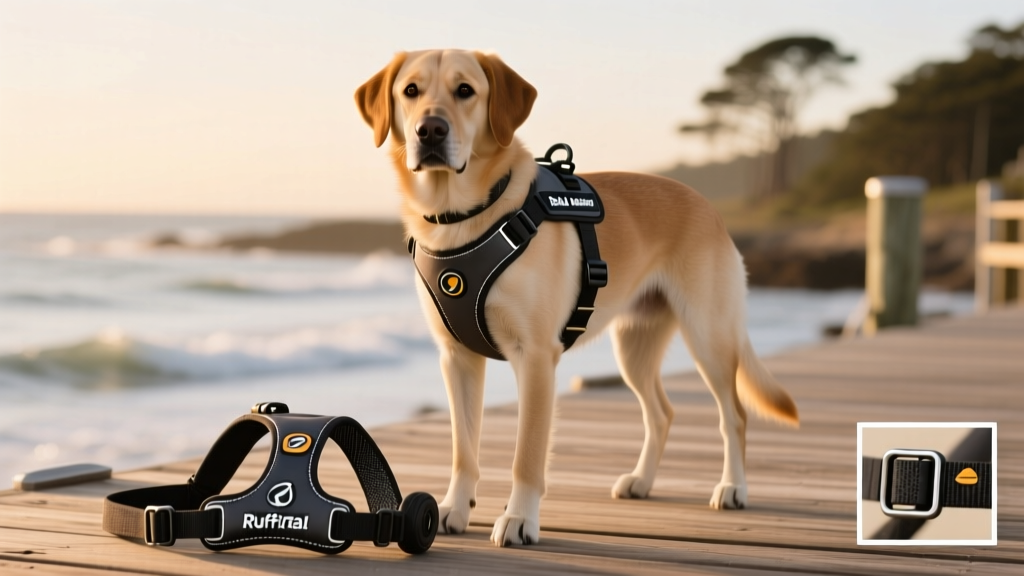
Top Pick: Ruffwear Front Range Harness
- Key Features: Four adjustment points, dual leash attachment (front chest + back), foam-padded straps, reflective trim, ID tag pocket
- Price: $40–$45
- Sizes: XXS (13–17" girth) to XL (33–42" girth)
- Best for: All family breeds — from Bichon Frise to Labrador Retriever
Pros:
- Front clip discourages pulling without choking — ideal for kids walking the dog
- Durable 420-denier nylon shell withstands daily use
- Reflective trim for early-morning and evening walks
Cons:
- Not escape-proof for narrow-headed breeds (Greyhounds, Whippets) — use a martingale collar backup
- Hand-wash only — no machine washing
Budget Pick: PetSafe Easy Walk No-Pull Harness
- Key Features: Front chest leash attachment, quick-snap buckles, adjustable belly and chest straps
- Price: $18–$25
- Best for: Families on a budget, first-time dog owners, puppies outgrowing gear quickly
Pros:
- Excellent value — effective no-pull design at a fraction of premium prices
- Easy on/off with snap buckles — good for impatient puppies
Cons:
- Thin neoprene padding — can chafe on long walks
- Leash ring can shift off-center over time
3. Puzzle Feeders and Enrichment Toys
Why dogs need it: Family breeds like Labs, Golden Retrievers, and Beagles are high-food-motivation dogs prone to obesity. Puzzle feeders slow eating by 5–10x, reduce bloat risk, and provide mental stimulation that prevents destructive chewing. A 2023 study in the Journal of Veterinary Behavior found that food-puzzle use reduced separation-related behaviors by 35% in medium-to-large breeds.
Top Pick: Kong Classic (Red/Black)
- Key Features: Natural rubber, hollow center for stuffing, unpredictable bounce pattern, dishwasher-safe
- Price: $12–$18 (S/M/L/XL)
- Best for: All breeds — choose Red for average chewers, Black for power chewers
Pros:
- Indestructible for most dogs (Black version)
- Freezable — stuff with peanut butter and freeze for 30-minute enrichment sessions
- Vet-recommended for separation anxiety and crate training
Cons:
- Requires supervision with aggressive chewers who may break off rubber pieces
- Can be difficult to clean without a bottle brush
Upgrade Pick: Outward Hound Nina Ottosson Dog Brick Puzzle
- Key Features: Three-level difficulty, sliding compartments, flip lids, removable bone pieces, BPA/phthalate/PVC-free
- Price: $15–$22
- Best for: Intelligent breeds (Poodles, Border Collies, German Shepherds) that need advanced mental challenges
Pros:
- Adjustable difficulty grows with your dog's skill level
- Non-toxic materials safe for households with young children
Cons:
- Removable pieces are a choking hazard — supervise use
- Not suitable for unsupervised or power-chewing dogs
4. Grooming Tools for Family-Friendly Coats
Why dogs need it: Family breeds span coat types from the Golden Retriever's double coat to the Bichon Frise's continuously growing curls. Regular grooming prevents matting, reduces allergen-carrying dander in the home, and lets children participate in pet care safely.
Top Pick: Furminator deShedding Tool (for Short or Long Hair)
- Key Features: Stainless steel deShedding edge, ergonomic handle, FURejector button to release hair, Skin Guard to prevent scraping
- Price: $30–$45 depending on size
- Best for: Double-coated breeds — Labs, Golden Retrievers, German Shepherds, Beagles
Pros:
- Reduces shedding by up to 90% with weekly use
- Skin Guard prevents irritation — safe for kids to use with supervision
Cons:
- Not for single-coated or curly-coated breeds (Poodles, Bichons) — can damage coat texture
- Overuse can thin the coat — limit to 1–2 sessions per week, 10–15 minutes each
For Curly Coats: Chris Christensen Big G Slicker Brush
- Key Features: 20mm curved pins, cushioned pad, lightweight design
- Price: $55–$70
- Best for: Poodles, Bichon Frises, Doodles, Portuguese Water Dogs
Pros:
- Glides through curly coats without pulling — comfortable for the dog
- Professional-grade quality lasts 5+ years
Cons:
- Higher price point
- Pins can bend if dropped on hard surfaces
5. Calming Aids for Household Transitions
Why dogs need it: Even the best dog breeds for families experience stress during fireworks, thunderstorms, vet visits, or when new babies join the household. Calming aids provide non-pharmaceutical support during these transitions.
Top Pick: Adaptil Calm Diffuser
- Key Features: Synthetic dog-appeasing pheromone (DAP), covers 700 sq ft, lasts 30 days per refill, odorless to humans
- Price: $25–$35 for starter kit (diffuser + 1 refill); $18–$22 per refill
- Best for: Anxiety during storms, fireworks, moving, new family members
Pros:
- Clinically studied — a 2020 study in Applied Animal Behaviour Science showed DAP reduced stress behaviors by 30–40%
- Drug-free and safe for use around children and other pets
- Continuous background calming — no need to time administration
Cons:
- Not effective for all dogs — approximately 60–70% response rate
- Requires electrical outlet — placement limited by room layout
- Refill cost adds up ($200+/year for continuous use)
Wearable Option: ThunderShirt Calming Vest
- Key Features: Gentle constant pressure (swaddling effect), breathable fabric, machine washable, Velcro closures
- Price: $40–$50
- Best for: Storm phobia, travel anxiety, vet-visit stress
Pros:
- Drug-free, reusable, one-time purchase
- Easy to put on — takes under 30 seconds
Cons:
- Must be sized correctly — measure girth before ordering
- Some dogs overheat in warm weather — not ideal for summer use in brachycephalic breeds
Product Comparison Table
| Product | Category | Price Range | Best For Breed Size | Durability | Child-Safe |
|---|---|---|---|---|---|
| MidWest Ultima Pro Crate | Crate | $65–$95 | Medium to Large (40–90 lb / 18–41 kg) | High | Yes |
| Frisco Double-Door Crate | Crate | $40–$60 | Small to Medium (15–45 lb / 7–20 kg) | Medium | Yes |
| Impact Dog Crate | Crate | $450–$700 | Large to Giant (60–150+ lb / 27–68+ kg) | Exceptional | Yes |
| Ruffwear Front Range | Harness | $40–$45 | All sizes (XXS–XL) | High | Yes |
| PetSafe Easy Walk | Harness | $18–$25 | Small to Large (S–XL) | Medium | Yes |
| Kong Classic | Enrichment Toy | $12–$18 | All sizes (S–XL) | High (Black version) | Supervise |
| Nina Ottosson Dog Brick | Puzzle Feeder | $15–$22 | All sizes | Medium | Supervise |
| Furminator deShedding | Grooming | $30–$45 | Double-coated breeds | High | With supervision |
| Adaptil Calm Diffuser | Calming Aid | $25–$35 + refills | All breeds | N/A (consumable) | Yes |
Safety Considerations Every Family Must Know
Critical Safety Warnings:
- Never leave puzzle toys with removable parts unsupervised with puppies or power chewers. Swallowed pieces can cause intestinal blockage requiring emergency surgery ($2,000–$5,000).
- Crate sizing matters. A crate too large allows a puppy to eliminate in one corner and sleep in another, defeating housebreaking. Use the divider panel so your puppy can stand, turn around, and lie down — no more.
- Harness fit check: You should be able to slide two fingers between the harness strap and your dog's body. Tighter restricts breathing; looser allows escape.
- Avoid retractable leashes with children. The thin cord can cause rope burns, and the locking mechanism requires adult hand strength. Use a 4–6 foot flat leash instead.
- Grooming tool safety: Never use the Furminator on skin with hot spots, rashes, or recent surgical incisions. Stop immediately if your dog shows signs of discomfort (flinching, growling, lip licking).
- Calming aids are supplements, not treatments. If your dog shows severe anxiety (self-injury, escape attempts, prolonged panting/drooling), consult your veterinarian — prescription medication may be necessary.
How to Use Each Product Correctly: Step-by-Step
Crate Training (First 7 Days):
- Day 1–2: Place the crate in a high-traffic family area with the door open. Toss high-value treats (freeze-dried chicken, small cheese pieces) inside. Let the puppy enter and exit freely. Do not close the door.
- Day 3–4: Feed all meals inside the crate with the door open. Begin closing the door during meals, then immediately opening it when the puppy finishes.
- Day 5–6: Close the door after meals and wait 1–5 minutes before opening. Gradually extend duration. If the puppy whines, wait for a 3-second pause in vocalization before opening — never reward crying.
- Day 7+: Begin short absences (5–10 minutes) with the puppy crated. Provide a frozen Kong stuffed with plain canned pumpkin and kibble. Increase absence duration by 5-minute increments daily.
Harness Fitting:
- Measure your dog's girth (widest part of the ribcage, just behind the front legs) with a soft measuring tape.
- Select the harness size where your dog's measurement falls in the middle of the size range — not at the extreme high or low.
- Slide the harness over the head, clip the belly strap, and adjust all four points until two fingers fit snugly under each strap.
- Attach the leash to the front chest ring for no-pull walking. Use the back ring for casual walks once pulling is resolved.
Puzzle Feeder Introduction:
- Start on the easiest difficulty setting with high-value, aromatic treats (small pieces of cooked chicken, not just kibble).
- Demonstrate how the puzzle works by sliding compartments yourself while your dog watches.
- Allow your dog to solve the puzzle. If frustrated after 2–3 minutes, assist by partially opening a compartment.
- Increase difficulty only after your dog solves the current level in under 60 seconds consistently over 3 sessions.
Effectiveness Evidence and Veterinary Recommendations
Every product category in this guide has supporting evidence from veterinary behaviorists and published research:
- Crate training: The AVMA supports crate training as an effective housebreaking tool and anxiety-management strategy when introduced using positive reinforcement. Studies show crate-trained puppies achieve reliable housebreaking 2–3 weeks faster than unconfined puppies.
- Front-clip harnesses: A 2020 study published in the Journal of Veterinary Behavior found that front-clip harnesses reduced pulling force by 52% compared to back-clip harnesses and eliminated tracheal pressure entirely.
- Food puzzles: Research from the University of California, Davis School of Veterinary Medicine demonstrated that puzzle feeders reduced meal consumption time from 30 seconds to 5–8 minutes, significantly decreasing bloat risk in deep-chested breeds (Great Danes, Standard Poodles, German Shepherds).
- Adaptil (DAP): A meta-analysis of 12 clinical trials published in Applied Animal Behaviour Science confirmed DAP efficacy for situational anxiety (storms, fireworks, vet visits) with a 60–70% response rate — comparable to some prescription anxiolytics for mild-to-moderate cases.
Where to Buy and Typical Price Ranges
Most products in this guide are available through multiple channels. Here's where to find the best value:
- Chewy.com: Best for autosave discounts (5% on recurring orders), wide selection, and fast shipping. Carries all products listed above.
- Amazon: Competitive pricing, but verify the seller is the brand's official storefront to avoid counterfeit products — especially for Ruffwear and Kong items.
- Local pet stores (Petco, PetSmart): Advantage is in-person harness fitting — bring your dog to try before buying. Prices typically 10–20% higher than online.
- Direct from manufacturer: Impact Dog Crates and Chris Christensen sell direct with full warranties. Third-party sellers may void the warranty.
Total first-year gear budget for a family dog:
- Budget setup: $120–$180 (Frisco crate + PetSafe harness + Kong + basic slicker brush)
- Mid-range setup: $200–$320 (MidWest crate + Ruffwear harness + Kong + Dog Brick + Furminator)
- Premium setup: $600–$900 (Impact crate + Ruffwear harness + full Kong collection + Nina Ottosson puzzle set + Chris Christensen brush + Adaptil system)
Natural and DIY Alternatives
If you prefer homemade or natural alternatives to commercial products, several options work well for family dog households:
- DIY puzzle feeder: Cut holes of varying sizes in a clean PVC pipe (3" diameter), cap both ends, and fill with kibble. Your dog rolls it to dispense food. Cost: under $8 at any hardware store. Safety note: sand all cut edges smooth and supervise initial use.
- Snuffle mat: Tie 200+ strips of fleece fabric through a rubber sink mat to create a foraging surface. Hides kibble in the fleece strips. Machine washable. Cost: $10–$15 in materials.
- Natural calming: Lavender essential oil (diluted to 1% in a carrier oil, applied to a bandana — never directly on skin) has shown mild calming effects in some dogs. L-theanine supplements (Virbac Anxitane, 10 mg/kg twice daily) are available OTC. Always consult your veterinarian before starting any supplement.
- Homemade frozen enrichment: Fill a Kong with plain yogurt, mashed banana, and a tablespoon of xylitol-free peanut butter. Freeze for 4 hours. Provides 20–30 minutes of enrichment.
Toxic ingredient warning: Never use xylitol (birch sugar) in homemade treats — it is highly toxic to dogs and can cause fatal hypoglycemia. Always check peanut butter labels for xylitol. If ingestion occurs, call ASPCA Animal Poison Control at (888) 426-4435 (24/7, consultation fee applies) or Pet Poison Helpline at (855) 764-7661 immediately.
When to Skip OTC Products and See Your Veterinarian
Over-the-counter products have limits. Consult your veterinarian instead of relying on OTC gear when you observe:
- Severe anxiety: Self-injury (bloody paws from scratching at doors/crates), escape attempts resulting in broken teeth or nails, prolonged panting/drooling lasting more than 60 minutes after the stressor ends. These require prescription anxiolytics (fluoxetine, trazodone) combined with a behavior modification plan.
- Aggression: Growling, snapping, or biting directed at family members — especially children. Do not attempt to manage this with calming aids alone. Seek a veterinary behaviorist (DACVB) or a certified applied animal behaviorist (CAAB).
- Persistent housebreaking failure: If a puppy older than 6 months continues to eliminate in the crate or home despite consistent crate training, rule out medical causes (urinary tract infection, ectopic ureters, diabetes) before assuming a behavioral issue.
- Skin/coat problems: Excessive shedding beyond normal seasonal blows, bald patches, hot spots, or persistent scratching despite regular grooming may indicate allergies, hypothyroidism, or parasitic infection requiring diagnostic testing.
- Mobility issues: If your dog resists wearing a harness due to pain, or shows reluctance to enter a crate, a veterinary orthopedic exam is needed to rule out hip dysplasia, IVDD, or arthritis — conditions common in larger family breeds like Labs and Golden Retrievers.
Frequently Asked Questions
What is the best crate for a family dog?
The MidWest Ultima Pro offers the best balance of durability, features, and price for most family breeds. For escape-prone or giant breeds, the Impact Dog Crate is the gold standard despite its higher cost. Always choose a crate sized to your dog's projected adult weight — the AKC breed standards list adult weight ranges for every recognized breed.
How do I choose the right harness for my dog?
Measure your dog's chest girth at the widest point behind the front legs. Select a harness where that measurement falls mid-range. For family dogs walked by children, always choose a front-clip harness to discourage pulling without tracheal pressure. The Ruffwear Front Range fits most breeds from 13" to 42" girth.
How much does essential family dog gear cost?
A functional starter kit (crate, harness, Kong, basic brush) costs $120–$180. A comprehensive setup with premium products runs $200–$320. Add $150–$250/year for consumables (Adaptil refills, replacement toys, grooming blade replacements).
How do I use a crate safely with kids in the house?
Teach children that the crate is the dog's bedroom — never reach inside, never bang on the wire, and never open the door without an adult present. Place the crate in a quiet corner of a common room so the dog feels included but can retreat. Use a crate cover (a fitted sheet works) to create a den-like atmosphere during naps.
Are there natural alternatives to calming products?
Yes. Diluted lavender oil on a bandana, L-theanine supplements, regular exercise (minimum 30–60 minutes of structured activity daily for most family breeds), and consistent routines all reduce baseline anxiety. For situational anxiety (storms, fireworks), a ThunderShirt provides drug-free pressure therapy. Consult your veterinarian before starting any supplement regimen.
When should I skip OTC products and see a vet?
If your dog shows self-injury from anxiety, aggression toward family members, persistent housebreaking failure past 6 months, unexplained coat/skin changes, or pain when using gear, schedule a veterinary exam. These signs indicate underlying medical or behavioral conditions that require professional diagnosis and treatment — not just better products.
Jonas Cole
All our authors care for dogs every day — read more of their work on the authors page.