Best Crate for Your Dog in 2026: Top Picks by Size, Breed & Use
Find the best crate for your dog with our 2026 expert review.
Why the Right Crate Matters for Your Dog's Health and Happiness
For many new dog owners, the phrase "crate dog" brings to mind images of confinement, but veterinary behaviorists and certified trainers overwhelmingly agree: when introduced properly, a crate becomes your dog's personal sanctuary. According to the American Kennel Club, crate training taps into a dog's natural den instinct, providing a secure space that reduces anxiety, prevents destructive behavior, and supports housetraining by leveraging a dog's instinct not to soil their sleeping area.
But choosing the wrong crate — one that's too large, poorly ventilated, structurally weak, or made with toxic materials — can create safety hazards and undermine the very benefits crating is meant to provide. A 2024 survey by the American Veterinary Medical Association found that improper crate sizing and inadequate ventilation were among the top owner-reported issues linked to crate-related stress and injury in dogs.
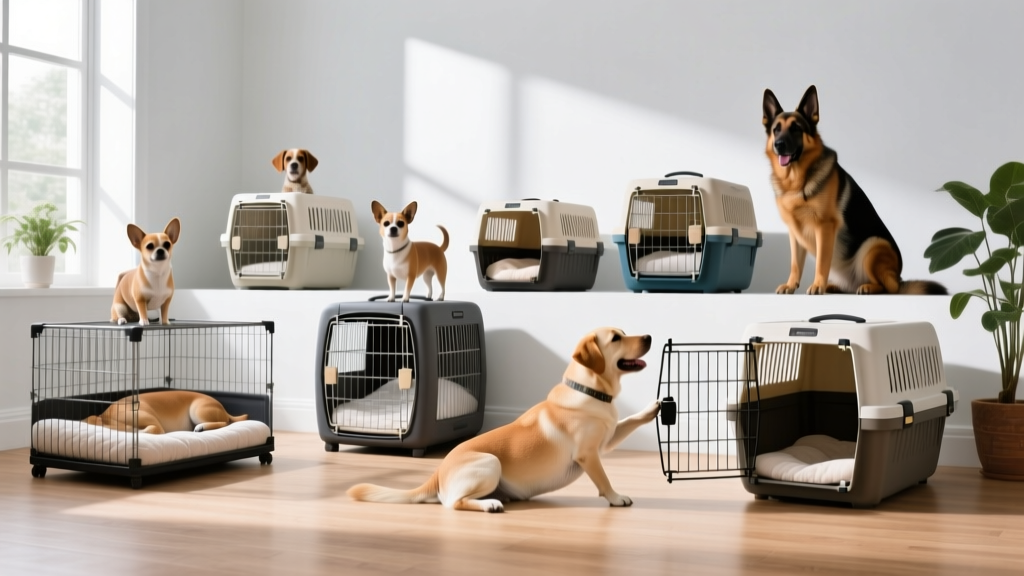
This guide breaks down the seven best crate options across categories — wire, plastic, soft-sided, heavy-duty, and furniture-style — so you can match the right product to your dog's size, temperament, and lifestyle. We'll cover exact sizing formulas, material safety standards, real price ranges, and step-by-step introduction protocols grounded in positive reinforcement.
How to Choose the Right Crate for Your Dog: Buying Criteria That Matter
Top 7 Crate Picks for Every Dog Type and Budget
We evaluated over 30 crates across five categories, prioritizing structural integrity, material safety certifications, ventilation performance, and real-world owner feedback from multi-dog households. Prices reflect typical retail ranges as of early 2026.
1. MidWest Homes for Pets iCrate Double-Door (Best Overall Wire Crate)
Price: $45–$85 depending on size (24" to 48")
Key Features: Dual slide-bolt latches, rounded corners, composite plastic pan, fold-and-carry design, included divider panel, 1-year manufacturer warranty.
Pros:
- Available in seven sizes covering toy to giant breeds
- Divider panel included — ideal for growing puppies
- Electro-coated finish resists rust
- Easy no-tool assembly and collapse
Cons:
- 12-gauge wire may bend under determined chewing from power chewers
- Plastic pan can crack if dog weighs over 90 lb (41 kg) and jumps inside
- Slide-bolt latches can be figured out by clever escape artists
2. Petmate Ultra Traditional Vari Kennel (Best Plastic Travel Crate)
Price: $50–$120 (sizes from 21" to 48")
Key Features: IATA-compliant design for most airlines (verify with carrier), 360-degree ventilation, secure vault-style door latch, tie-down strap holes, durable polypropylene shell.
Pros:
- Airline-compatible for cargo and cabin (check specific airline rules)
- Enclosed design reduces visual overstimulation — great for anxious dogs
- Easy to clean; smooth interior resists odor absorption
- Available with wire door or solid door options
Cons:
- Less airflow than wire crates in hot environments
- Heavier than wire alternatives at equivalent sizes
- Not suitable as a primary home crate for high-energy dogs who need maximum visibility
3. EliteField 3-Door Folding Soft Crate (Best Soft-Sided for Calm Dogs)
Price: $40–$75 (24" to 42")
Key Features: Steel tube frame with 600D nylon fabric, mesh panels on three sides plus top, fleece bed pad included, carrying handle and shoulder strap, machine-washable cover.
Pros:
- Lightweight — under 10 lb (4.5 kg) even at 36" size
- Excellent for car travel, hotel stays, and dog sports events
- Multiple door openings allow flexible placement in rooms or vehicles
- Folds flat in seconds for storage
Cons:
- Not chew-proof or scratch-proof — unsuitable for puppies or destructive dogs
- Cannot be used for housetraining (dog can soil fabric)
- Mesh panels can be clawed through by determined dogs
4. ProSelect Empire Dog Cage (Best Heavy-Duty for Escape Artists)
Price: $450–$700 (37" and 42" sizes)
Key Features: 20-gauge reinforced steel tubing, dual slam-latch locks with padlock compatibility, hammerstone powder-coat finish, casters for mobility, steel floor grate with removable tray.
Pros:
- Virtually indestructible — rated for dogs up to 150 lb (68 kg)
- Designed for separation anxiety cases where dogs destroy standard crates
- Padlock-compatible latches prevent even the cleverest escape attempts
- Welded construction (no weak bolt points)
Cons:
- Extremely heavy — 42" model weighs over 75 lb (34 kg)
- Expensive compared to standard crates
- Industrial appearance doesn't suit all home décor
- Only available in two large sizes (not for small breeds)
5. Impact Dog Crates Collapsible Model (Best Premium Collapsible Heavy-Duty)
Price: $600–$900 (30" to 48")
Key Features: Aircraft-grade aluminum construction, military-spec latches, collapses to 8" flat for storage and transport, made in USA, lifetime warranty, stackable design.
Pros:
- Combines heavy-duty security with genuine portability
- Aluminum won't rust — ideal for humid climates or outdoor use
- Lifetime warranty reflects manufacturer confidence
- Used by professional handlers, military working dog programs, and search-and-rescue teams
Cons:
- Premium price point — highest cost in this roundup
- Limited color options (silver and black only)
- Longer lead times due to made-to-order production
6. Casual Home Wooden Pet Crate End Table (Best Furniture-Style Crate)
Price: $100–$200 (small and large sizes)
Key Features: Solid wood construction doubles as end table, wire door with slide-bolt latch, available in espresso, white, and natural finishes, supports up to 40 lb (18 kg) on top surface.
Pros:
- Blends into living room décor — no visible "cage" look
- Functional furniture piece saves space
- Solid wood frame more durable than MDF alternatives
- Easy wipe-clean interior
Cons:
- Only fits small to medium dogs (up to ~45 lb / 20 kg)
- Wood can absorb odors if not sealed properly
- Limited ventilation compared to wire or plastic crates
- Not suitable for chewers who may damage wood edges
7. Frisco Double-Door Folding Crate with Tray (Best Budget Wire Crate)
Price: $25–$55 (22" to 48")
Key Features: Electro-coated wire, dual slide-bolt latches, ABS plastic pan, fold-flat design, divider panel included, rounded edges.
Pros:
- Lowest price point for a fully functional wire crate
- Includes divider panel — same puppy-training value as premium brands
- Adequate build quality for calm, non-destructive dogs
- Lightweight for easy repositioning
Cons:
- Thinner gauge wire (approximately 14-gauge) — bends more easily
- Latch mechanism less robust than MidWest or heavy-duty alternatives
- Plastic pan is thinner and more prone to cracking
- Shorter expected lifespan under heavy use
Crate Comparison Table: All 7 Picks Side by Side
| Product | Type | Size Range | Weight Capacity | Price Range | Best For |
|---|---|---|---|---|---|
| MidWest iCrate Double-Door | Wire | 24"–48" | Up to 90 lb / 41 kg | $45–$85 | Everyday home use, puppies |
| Petmate Vari Kennel | Plastic | 21"–48" | Up to 90 lb / 41 kg | $50–$120 | Airline travel, anxious dogs |
| EliteField 3-Door Soft | Soft-sided | 24"–42" | Up to 70 lb / 32 kg | $40–$75 | Calm dogs, car travel, events |
| ProSelect Empire | Heavy-duty steel | 37"–42" | Up to 150 lb / 68 kg | $450–$700 | Escape artists, separation anxiety |
| Impact Collapsible | Heavy-duty aluminum | 30"–48" | Up to 150 lb / 68 kg | $600–$900 | Professional use, travel + security |
| Casual Home End Table | Furniture/wood | S, L | Up to 45 lb / 20 kg | $100–$200 | Small-medium dogs, décor-conscious homes |
| Frisco Double-Door | Wire (budget) | 22"–48" | Up to 70 lb / 32 kg | $25–$55 | Budget buyers, calm dogs |
How Dog Crates Work and Why Your Dog Benefits
A crate functions as a controlled micro-environment that supports three core canine needs:
1. Den instinct fulfillment. Dogs are naturally drawn to enclosed spaces that provide overhead cover and limited entry points. A properly sized crate mimics this ancestral preference, lowering cortisol levels and promoting restful sleep. Research published in the Merck Veterinary Manual notes that confined resting areas reduce stress markers in kenneled dogs compared to open-room confinement.
2. Housetraining acceleration. Dogs instinctively avoid soiling their immediate sleeping area. A correctly sized crate — where the dog can stand, turn, and lie down but not walk to a separate corner — leverages this instinct. Puppies typically develop full bladder control between 4–6 months of age, and crate-assisted training can reduce housetraining timelines by 2–4 weeks compared to unstructured methods.
3. Safety during unsupervised time. A crate prevents access to electrical cords, toxic houseplants, small ingestible objects, and furniture that could be destroyed. For puppies in the teething phase (typically 3–6 months), this is especially critical — ingested foreign bodies are among the most common emergency veterinary visits for dogs under one year old.
Step-by-Step: How to Introduce and Use a Crate Safely
Step 1: Set up in a social area. Place the crate in a room where your family spends time (living room, kitchen). Dogs are social animals — isolating the crate in a basement or garage undermines its value as a comforting den. Leave the door open initially.
Step 2: Create positive associations. Toss high-value treats (small pieces of chicken, cheese, or commercial training treats) inside the crate. Let your dog enter and exit freely without closing the door. Do this for 5–10 minutes, 2–3 times daily, for 3–5 days.
Step 3: Feed meals in the crate. Place your dog's food bowl at the back of the crate. If hesitant, start with the bowl near the entrance and gradually move it further back over successive meals.
Step 4: Close the door briefly. Once your dog enters willingly, close the door while they eat. Open it immediately when they finish. Gradually extend the closed-door time by 30-second increments over several days.
Step 5: Build duration. With your dog calm inside, sit nearby for 5 minutes, then 10, then 15. Offer a stuffed Kong or long-lasting chew to create a positive occupied experience.
Step 6: Leave the room briefly. Step out for 1–2 minutes, return calmly without fuss. Gradually extend absences to 5, 10, 15, and then 30 minutes over 1–2 weeks.
Step 7: Overnight crating. Place the crate near your bed initially so your puppy can hear and smell you. Expect nighttime whining from puppies — take them out for a bathroom break if it's been more than 3–4 hours, but avoid letting them out while actively whining (this reinforces the behavior).
⚠️ Critical Crate Safety Rules
- Never leave a collar or harness on your dog inside a crate. Buckles, tags, and D-rings can catch on wire bars and cause strangulation. Remove all neckwear before crating.
- Maximum crating duration: Adult dogs should not be crated more than 6–8 hours total per day (including overnight). Puppies under 6 months: no more than their age in months + 1 hour (e.g., a 3-month-old puppy = max 4 hours).
- Never use a crate as punishment. This destroys the positive den association and creates crate aversion.
- Temperature monitoring: Wire crates in direct sunlight can overheat rapidly. Ambient temperature should stay below 80°F (27°C). Never crate a brachycephalic breed (Bulldog, Pug, Boston Terrier) in warm conditions without air conditioning.
- Inspect regularly: Check wire crates monthly for bent bars, loose latches, and chipped coating. Replace plastic pans that show cracks where bacteria can accumulate.
When to See a Vet or Behaviorist Instead of Crating
While crating is a valuable management tool, it is not a substitute for addressing underlying behavioral or medical issues. Consult your veterinarian or a certified veterinary behaviorist (DACVB) if you observe any of the following:
- Self-injury in the crate: Broken teeth, bloody paws, or facial abrasions from attempting to escape indicate severe distress — often separation anxiety, which requires a comprehensive behavior modification plan and potentially anti-anxiety medication.
- Excessive drooling, panting, or defecation in the crate despite proper sizing and adequate exercise — these may signal anxiety disorders, gastrointestinal issues, or urinary tract infections.
- Inability to settle after 3–4 weeks of consistent, positive-reinforcement-based crate introduction — some dogs with trauma histories or severe noise phobias need professional intervention.
- Physical symptoms: If your dog vomits, has diarrhea, or shows signs of pain (hunched posture, reluctance to move) after crating, schedule a veterinary exam to rule out medical causes before assuming it's behavioral.
A crate is a tool, not a treatment. Dogs with diagnosed separation anxiety, generalized anxiety disorder, or compulsive behaviors benefit most from a multi-modal approach combining environmental management (which may include crating), counter-conditioning, desensitization protocols, and when appropriate, prescription medications like fluoxetine or clomipramine as determined by your veterinarian.
Natural Alternatives and Complementary Approaches to Crating
If crating isn't the right fit for your dog — or you want to supplement crate use with additional calming strategies — consider these alternatives:
- Exercise pens (x-pens): Metal or fabric playpens provide a larger confined area without the enclosed feel of a crate. Ideal for puppies who need more room or dogs who panic in enclosed spaces. Price range: $30–$80.
- Baby gates and dog-proofed rooms: Use pressure-mounted gates to restrict access to a single safe room (laundry room, kitchen) with tile flooring for easy cleanup. Cost: $25–$60 per gate.
- Adaptil (DAP) diffusers: Synthetic dog-appeasing pheromone products have clinical evidence supporting anxiety reduction. Place a diffuser near the crate area. Refills cost approximately $20–$30 per month.
- Calming supplements: Products containing L-theanine, L-tryptophan, or melatonin may help mildly anxious dogs. Always consult your veterinarian before starting any supplement — dosage varies significantly by weight and health status.
- Sniff mats and frozen Kongs: Enrichment-based alternatives that keep dogs occupied during alone time without confinement. A frozen Kong stuffed with peanut butter and banana can occupy most dogs for 20–40 minutes.
How Much Should You Budget for a Dog Crate?
Crate pricing varies dramatically by material, size, and brand tier. Here's what to expect in 2026:
- Budget wire crates (Frisco, generic brands): $25–$55 — adequate for calm adult dogs, temporary use, or as a backup crate.
- Mid-range wire and plastic crates (MidWest, Petmate): $45–$120 — the sweet spot for most households. Good build quality, reliable warranties.
- Soft-sided crates: $40–$75 — suitable only for dogs who won't chew or scratch fabric.
- Furniture-style crates: $100–$250 — décor-driven option for small to medium calm dogs.
- Heavy-duty steel/aluminum crates (ProSelect, Impact, Zinger): $400–$900 — necessary for escape artists, large power breeds, and professional use.
Accessories to budget for:
- Crate pad or bed: $15–$50 (look for chew-resistant options like K9 Ballistics)
- Crate cover: $20–$40 (reduces visual stimulation for anxious dogs)
- Water bottle attachment: $10–$20 (for long crating periods)
- Replacement plastic pan: $15–$30
Frequently Asked Questions
What is the best crate for dogs overall?
For most households, the MidWest iCrate Double-Door offers the best balance of price, durability, sizing options, and included features (divider panel, collapsible design). It covers dogs from 10 lb to 90 lb (4.5–41 kg) across seven size options. For escape-prone or anxious dogs who destroy standard crates, the ProSelect Empire or Impact Collapsible provide necessary heavy-duty security.
How do I know if my dog's crate is the right size?
Your dog should be able to stand up without their head touching the top, turn around in a full circle without their body touching the sides, and lie down stretched out comfortably. If your dog can walk to one end and eliminate at the other, the crate is too large — use a divider panel to reduce the usable space.
Can I leave my dog in a crate while I'm at work for 8 hours?
Healthy adult dogs over 18 months can typically handle 6–8 hours of crating during the day, provided they receive adequate exercise before and after. However, this should be the maximum, not the routine. Arrange a midday dog walker or potty break if possible. Puppies under 6 months should not be crated more than 3–4 hours at a time.
Are soft-sided crates safe for air travel?
Most airlines require hard-sided (plastic or wire) crates for cargo transport. Soft-sided carriers are sometimes permitted in-cabin for small dogs under 20 lb (9 kg), but airline policies vary significantly. Always check your specific carrier's requirements before purchasing. The Petmate Vari Kennel is designed to meet IATA guidelines for most airlines.
My dog cries in the crate at night. Should I let them out?
First, rule out a bathroom need — puppies under 4 months typically need a nighttime potty break every 3–4 hours. Take them out on leash, keep it calm and boring (no play), then return them to the crate. If they continue crying after eliminating, wait for a brief pause in vocalization before opening the door — releasing them mid-cry teaches that crying opens the door. Consistency typically resolves nighttime vocalization within 1–2 weeks.
Are there natural alternatives to crating my dog?
Yes. Exercise pens, baby-gated safe rooms, and dog-proofed areas offer confinement without the enclosed feel of a crate. For dogs who experience crate anxiety despite gradual introduction, these open alternatives — combined with enrichment tools like puzzle feeders and frozen Kongs — can provide safe management while you work with a certified trainer on building crate comfort.
Aaron Whyte
All our authors care for dogs every day — read more of their work on the authors page.