Can the Zorba Dog Beat 1 Wolf? Size, Diet & Strength Compared
Can the Zorba dog beat 1 wolf? We compare the world-record English Mastiff's size, diet needs, bite force, and temperament against a gray wolf.
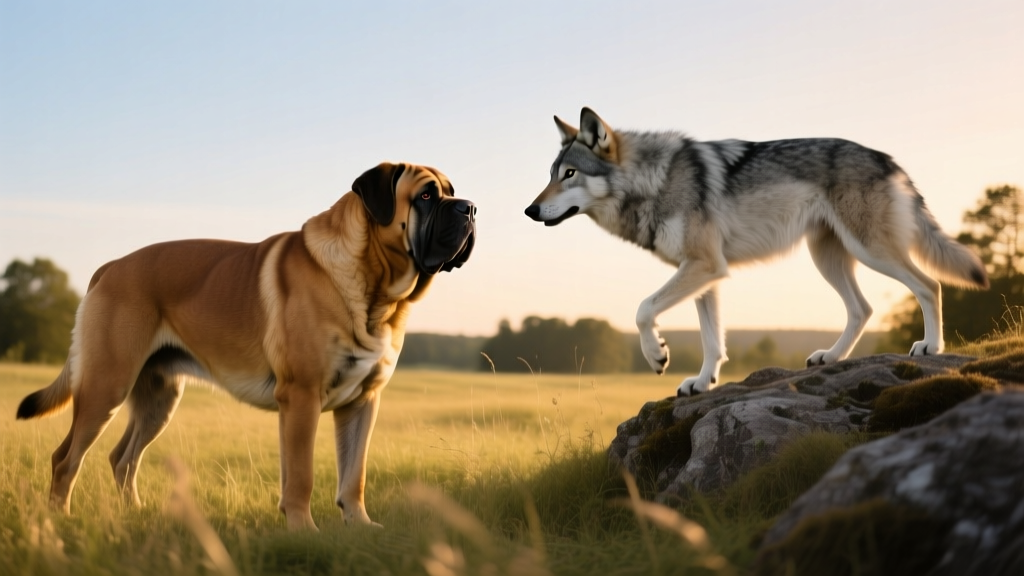
If you've ever watched a massive English Mastiff lumber across the yard and wondered how it would fare against a wild predator, you're not alone. The question "can the Zorba dog beat 1 wolf?" trends in dog forums every few months, usually after a viral video or a nature documentary. Zorba, an Old English Mastiff who held the Guinness World Record for heaviest and longest dog, weighed an astonishing 343 lb (155.6 kg) and measured 8 ft 3 in (251 cm) from nose to tail tip. A typical male gray wolf (Canis lupus) weighs 70–145 lb (32–66 kg) depending on subspecies and region.
On paper, Zorba outweighed even the largest Mackenzie Valley wolves by more than 2:1. But weight alone doesn't decide a confrontation. Below, we break down bite force, agility, predatory instinct, diet, and real-world veterinary considerations so you understand the full picture — and why this matchup matters for how you feed and care for giant-breed dogs today.
Zorba the Mastiff vs. a Gray Wolf: By the Numbers
| Attribute | Zorba (English Mastiff) | Male Gray Wolf (Mackenzie Valley) |
|---|---|---|
| Weight | 343 lb / 155.6 kg | 95–145 lb / 43–66 kg |
| Height at shoulder | 37 in / 94 cm | 31–33 in / 79–84 cm |
| Body length (nose-tail) | 99 in / 251 cm | 63–79 in / 160–200 cm |
| Bite force (estimated) | 552 PSI (measured, Dr. Brady Barr study) | ≈406 PSI (estimated, National Geographic field data) |
| Top sprint speed | ≈15 mph / 24 km/h | 35–40 mph / 56–64 km/h |
| Endurance | Low — brachycephalic build, overheats quickly | Very high — can trot 30+ mi/day |
| Predatory experience | None — domestic companion | Lifelong hunter, pack tactics |
Zorba's bite force reading of 552 PSI comes from a measurement conducted by Dr. Brady Barr for a documentary series, making the Mastiff one of the strongest biters ever recorded in a controlled test. That's roughly 36% higher than the estimated wolf bite force. However, PSI alone doesn't determine damage — jaw geometry, tooth length, and the ability to deliver repeated bites under stress matter enormously. A wolf's carnassial teeth are evolved to shear through hide and bone; a Mastiff's shorter muzzle and brachycephalic skull are not optimized for sustained combat.
Why Weight Isn't Everything: Agility and Predatory Instinct
Mass gives Zorba a clear advantage in a static grapple, but wolves are built for dynamic engagement. A wolf can sustain a 35 mph pursuit for several hundred meters, then disengage, circle, and re-engage. An English Mastiff tires rapidly — giant breeds typically overheat within 5–10 minutes of intense activity, and their loose skin and heavy dewlap make them vulnerable to laceration.
Wolves also hunt cooperatively. Even the question specifies "1 wolf," but in any realistic wilderness encounter, a wolf would likely be near pack members. A lone wolf facing a dog twice its size would almost certainly choose evasion over combat. According to the Merck Veterinary Manual, wild canids avoid confrontations with animals that present injury risk — the cost-benefit calculus of predation doesn't favor fighting a 343-lb opponent.
Diet and Nutrition: Feeding a Giant Like Zorba
The question of whether Zorba could beat a wolf often leads to a more practical one: what do you actually feed a dog this size? Giant-breed nutrition is genuinely complex, and mistakes here lead to hip dysplasia, osteochondrosis, and gastric dilatation-volvulus (GDV/bloat).
Daily Caloric Needs
A 343-lb Mastiff at maintenance requires approximately 5,800–7,200 kcal/day depending on activity level. That's calculated using the Resting Energy Requirement (RER) formula: RER = 70 × (body weight in kg)^0.75, then multiplied by a factor of 1.6–2.0 for a large, low-activity adult. For comparison, a 110-lb wolf in the wild consumes roughly 5–7 lb of meat (≈4,000–5,500 kcal) per successful hunt, but may go days between kills.
Giant-Breed Feeding Schedule
| Dog Weight | Daily Food (Dry Kibble) | Meals/Day | Estimated Monthly Cost |
|---|---|---|---|
| 120–160 lb / 54–73 kg | 7–9 cups | 2 | $120–$180 |
| 160–220 lb / 73–100 kg | 9–13 cups | 2–3 | $180–$260 |
| 220–343 lb / 100–156 kg | 13–18 cups | 3 | $260–$400 |
Splitting meals into 2–3 smaller portions is critical for giant breeds. A single large meal increases GDV risk by up to 320%, according to a study published in JAVMA. Use a slow-feed bowl (brands like Outward Hound Fun Feeder or JW Pet Company's Slow Feed) to extend eating time to 10–15 minutes per meal, and wait at least 60 minutes after eating before any vigorous activity.
Safe Human Foods That Supplement a Giant-Breed Diet
Giant-breed owners often ask about adding human foods for joint support and caloric density. Here are safe options with specific portions for a dog over 160 lb:
- Salmon (cooked, boneless): 3–4 oz per serving, 2×/week. Rich in EPA/DHA omega-3s that reduce joint inflammation. Must be fully cooked — raw salmon carries Neorickettsia helminthoeca (salmon poisoning disease), which is fatal without treatment.
- Sweet potato (cooked, skin removed): ½–1 cup per serving, 2–3×/week. Provides beta-carotene, manganese, and soluble fiber. Avoid if your dog has diabetes — glycemic index is moderate (GI ≈ 61).
- Blueberries: ¼–½ cup per serving, daily. Anthocyanins provide antioxidant support. Low calorie (84 kcal/cup), making them ideal training treats even for calorie-restricted seniors.
- Plain pumpkin purée (not pie filling): 2–4 tablespoons per meal, as needed. Soluble fiber helps regulate stool consistency. The AKC specifically recommends pumpkin for digestive support in large breeds.
- Carrots (raw or steamed): 1–2 whole carrots per serving. Excellent low-calorie chew substitute that promotes dental health. Cut into 2-inch pieces to prevent choking in fast-eating Mastiffs.
Health Risks Giant Breeds Face — and Why Combat Is a Terrible Idea
The fantasy of Zorba vs. a wolf ignores the medical reality of owning a super-giant dog. English Mastiffs have a median lifespan of just 6–10 years, and several conditions make high-intensity exertion genuinely dangerous:
- Gastric Dilatation-Volvulus (GDV/Bloat): Deep-chested giant breeds have a lifetime GDV risk of approximately 20–24%. This is a surgical emergency — without immediate gastropexy, mortality exceeds 50%. Prophylactic gastropexy (surgically tacking the stomach to the body wall) costs $300–$800 when performed during spay/neuter and reduces recurrence risk to under 5%.
- Hip and Elbow Dysplasia: The Orthopedic Foundation for Animals (OFA) reports that approximately 24% of English Mastiffs show radiographic evidence of hip dysplasia. Excessive weight and high-impact activity accelerate cartilage deterioration.
- Dilated Cardiomyopathy (DCM): Giant breeds are predisposed. A 343-lb dog's heart works enormously hard at rest — adding combat-level stress could trigger acute cardiac failure.
- Brachycephalic Obstructive Airway Syndrome (BOAS): While Mastiffs are not as severely brachycephalic as Pugs, their short muzzles still limit efficient panting and heat dissipation. Exertion in temperatures above 75°F (24°C) risks heatstroke within minutes.
The Real Answer: Neither Animal Benefits From This Matchup
So, can the Zorba dog beat 1 wolf? In a controlled, single-engagement scenario with no escape route, Zorba's mass and bite force give him a statistical edge. But wolves don't fight fair — they're endurance predators who disengage, reposition, and target vulnerabilities. A real encounter would likely end with the wolf retreating (it has no incentive to fight) or, in a worst case, with Zorba suffering a life-threatening injury that his domestic anatomy isn't equipped to survive.
The more meaningful question for giant-breed owners is: how do I give my big dog the longest, healthiest life possible? That means controlled exercise (30–45 minutes of leash walking daily, no forced running), a measured diet with joint-supporting supplements (glucosamine 1,500 mg + chondroitin 1,200 mg daily for dogs over 150 lb — consult your veterinarian for exact dosing), and proactive screening for cardiac and orthopedic conditions starting at age 2.
Zorba passed away in 1992, but his legacy endures as a benchmark for canine size. The best tribute to dogs like him isn't hypothetical combat — it's the careful, science-backed nutrition and veterinary care that lets modern giant breeds live comfortably within their extraordinary bodies.
Frequently Asked Questions
Can the Zorba dog beat 1 wolf in a fight?
Zorba's 343-lb weight and 552 PSI bite force give him advantages in mass and jaw strength. However, wolves are faster (35–40 mph vs. 15 mph), have far greater endurance, and possess predatory instincts that a domestic dog lacks. The outcome is uncertain and would depend heavily on circumstances. No responsible owner should ever allow such an encounter.
What was Zorba's actual weight and size?
Zorba, an Old English Mastiff owned by Chris Eraclides of London, weighed 343 lb (155.6 kg) and measured 37 inches (94 cm) at the shoulder and 99 inches (251 cm) from nose to tail tip. He set the Guinness World Record in 1989 at age 8.
How much food does a dog like Zorba need daily?
A 343-lb Mastiff requires approximately 5,800–7,200 kcal per day, which translates to roughly 13–18 cups of high-quality large-breed kibble split across 3 meals. Monthly food costs typically range from $260–$400 depending on brand and formula.
Are English Mastiffs aggressive enough to fight a wolf?
No. English Mastiffs were historically used as guard dogs and war dogs, but modern breeding has selected heavily for gentle, docile temperament. The AKC breed standard describes them as "courageous, docile, and good-natured." They are protective of their families but are not aggression-bred for combat.
What human foods are safe for giant-breed dogs?
Cooked salmon (3–4 oz, 2×/week), sweet potato (½–1 cup, 2–3×/week), blueberries (¼–½ cup daily), plain pumpkin purée (2–4 tbsp/meal), and carrots (1–2 whole) are all safe. Always introduce new foods gradually over 24–48 hours and consult your veterinarian before making dietary changes, especially for dogs with existing health conditions.
Jonas Cole
All our authors care for dogs every day — read more of their work on the authors page.


