Will a Small Amount of Onion Hurt My Dog? Toxicity Dose Guide
Will a small amount of onion hurt my dog? Learn toxic dose thresholds, symptoms of onion poisoning in dogs, and when to call the vet immediately.
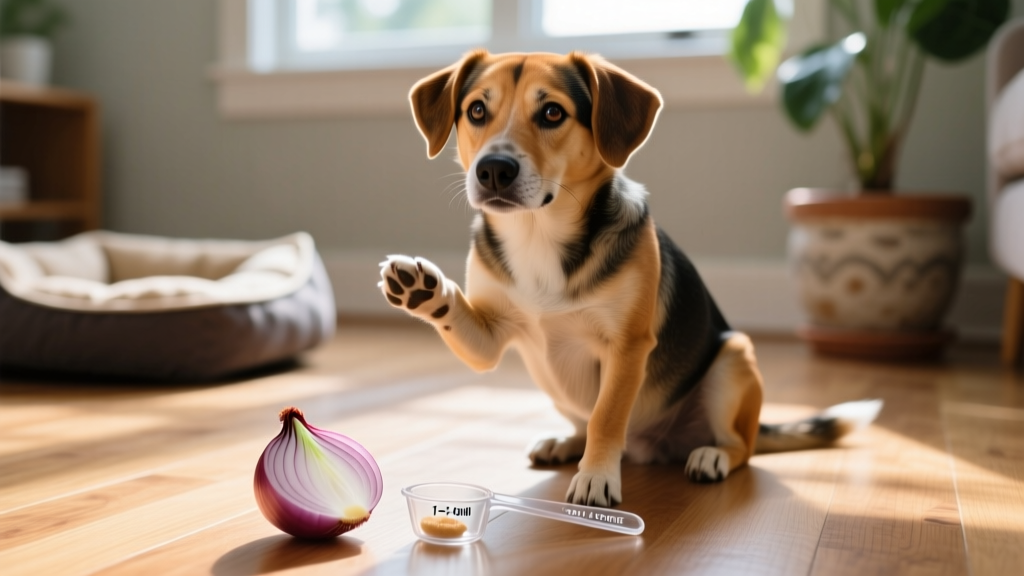
Onions contain N-propyl disulfide, a compound that destroys canine red blood cells and causes hemolytic anemia. There is no safe serving size. Toxicity begins at approximately 0.5% of your dog's body weight — as little as one medium slice for a 20 lb dog. This applies to all forms: raw, cooked, powdered, dehydrated, and fried. If your dog has eaten any amount of onion, contact your veterinarian or the ASPCA Animal Poison Control Center at (888) 426-4435 immediately.
Why Onions Are Dangerous for Dogs
Onions (Allium cepa) belong to the Allium family, which also includes garlic, leeks, chives, and shallots. All members of this family are toxic to dogs, but onions pose the most common household risk because they appear in so many prepared foods.
The toxic mechanism centers on N-propyl disulfide and related organosulfur compounds. Dogs lack the digestive enzyme (glucose-6-phosphate dehydrogenase) needed to neutralize these compounds. When ingested, these sulfur molecules attach to the oxygen-carrying protein hemoglobin inside red blood cells, forming structures called Heinz bodies. The dog's immune system then recognizes these damaged cells as defective and destroys them — a process called hemolysis.
According to the Merck Veterinary Manual, the resulting condition — Heinz body hemolytic anemia — can be life-threatening if enough red blood cells are destroyed. Unlike some toxins that break down with heat, the organosulfur compounds in onions remain toxic whether the onion is raw, sautéed, caramelized, boiled, dried into powder, or baked into bread.
How Much Onion Is Toxic to Dogs?
The toxic dose of onion for dogs is well-documented in veterinary literature:
| Dog Weight | Toxic Dose (0.5% Body Weight) | Approximate Equivalent | Severe Toxicity (1%+ Body Weight) |
|---|---|---|---|
| 5 lb (2.3 kg) — Chihuahua, Toy Poodle | 0.025 lb (11 g) | ~1 thin slice or 1 tsp onion powder | ~½ small onion |
| 15 lb (6.8 kg) — Beagle, Dachshund | 0.075 lb (34 g) | ~2-3 slices or 1 Tbsp onion powder | ~1 medium onion |
| 30 lb (13.6 kg) — Cocker Spaniel, Border Collie | 0.15 lb (68 g) | ~½ medium onion | ~1-2 large onions |
| 60 lb (27.2 kg) — Labrador, Golden Retriever | 0.30 lb (136 g) | ~1 medium onion | ~2-3 large onions |
| 90 lb (40.8 kg) — German Shepherd, Rottweiler | 0.45 lb (204 g) | ~1.5 medium onions | ~3-4 large onions |
Key insight: Smaller dogs face the greatest risk from incidental exposure. A single onion ring or a spoonful of gravy made with onion can approach the toxic threshold for a toy-breed dog. Japanese breeds — particularly Akitas and Shiba Inus — show heightened sensitivity to Allium toxins due to breed-specific red blood cell characteristics, according to the American Kennel Club.
Symptoms of Onion Poisoning in Dogs
Onion toxicity is insidious because symptoms may not appear for 1 to 5 days after ingestion. The delay occurs because it takes time for enough red blood cells to be destroyed before clinical anemia develops. This lag can trick owners into thinking their dog is fine.
| Timeframe | Symptoms | Severity |
|---|---|---|
| 0-12 hours | Vomiting, diarrhea, drooling, oral irritation, abdominal pain | Mild — GI irritation |
| 12-24 hours | Lethargy, reduced appetite, reddish or brown-tinged urine | Moderate — early hemolysis |
| 1-3 days | Pale or bluish gums, weakness, rapid breathing, elevated heart rate, exercise intolerance | Severe — active anemia |
| 3-5 days | Collapse, jaundice (yellow gums/eyes), dark urine, potential organ failure | Critical — life-threatening |
- Your dog consumed any known amount of onion within the past 2 hours (inducing vomiting may still be effective)
- You notice reddish, brown, or orange-tinged urine
- Your dog's gums appear pale, white, blue, or yellow instead of healthy pink
- Your dog is unusually lethargic, weak, or collapses
- Rapid or labored breathing develops
- Your dog is a toy breed or Japanese breed and consumed even a small amount
ASPCA Animal Poison Control: (888) 426-4435 (24/7, consultation fee applies)
Pet Poison Helpline: (855) 764-7661 (24/7, consultation fee applies)
Hidden Sources of Onion Your Dog Might Encounter
In my years working with dog owners, the most common onion poisoning cases don't involve a dog eating a raw onion off the counter. They involve hidden onion in prepared foods that owners don't think to check. Here are the most dangerous hidden sources:
- Onion powder — Found in baby food (some owners use it to entice sick dogs), seasoned chips, crackers, instant mashed potatoes, and spice blends. Onion powder is more concentrated than fresh onion, making it proportionally more toxic.
- Gravy, sauces, and broths — Nearly all commercial gravies, pasta sauces, and soup broths contain onion or onion powder. Even "low sodium" broths often use onion as a flavor base.
- Table scraps from cooked meals — Casseroles, stir-fries, stuffing, meatloaf, and pizza toppings commonly contain cooked onion. Cooking does not neutralize the toxin.
- Fried onion rings and blooming onions — The batter and frying add fat (pancreatitis risk), but the onion itself remains toxic.
- Garlic-onion combinations — Garlic is approximately 5 times more toxic than onion by weight. Foods containing both (garlic bread with onion powder, Italian seasoning blends) present a compounded risk.
- Dehydrated onion flakes — Common in backpacking meals, dry soup mixes, and seasoning packets. Highly concentrated.
What Your Vet Will Do: Diagnosis and Treatment
If you suspect onion ingestion, don't wait for symptoms. Early intervention dramatically improves prognosis. Here's what to expect at the veterinary clinic:
Diagnostic Tests
- Complete Blood Count (CBC) — Reveals decreased red blood cell count (hematocrit), Heinz body formation, and reticulocyte response. Cost: $80-$150.
- Blood Smear — Microscopic examination to identify Heinz bodies (damaged hemoglobin clusters on red blood cells). Often included with CBC.
- Biochemistry Panel — Assesses liver and kidney function, which can be affected by severe hemolysis. Cost: $100-$200.
- Urinalysis — Detects hemoglobinuria (free hemoglobin in urine from destroyed red blood cells), which gives urine a red or brown color. Cost: $40-$80.
Treatment Options
Treatment depends on how recently the onion was consumed and the severity of anemia:
- Decontamination (within 2 hours of ingestion): Your vet may induce vomiting using apomorphine and administer activated charcoal to bind remaining toxins. Cost: $50-$150.
- IV Fluid Therapy: Maintains hydration, supports kidney function, and helps flush free hemoglobin from the bloodstream. Typically requires 24-72 hours of hospitalization. Cost: $150-$400/day.
- Blood Transfusion: In severe cases where the packed cell volume (PCV) drops below 15-20%, a transfusion may be necessary to stabilize oxygen delivery to organs. Cost: $500-$2,000+ depending on volume and blood type matching.
- Supplemental Oxygen: For dogs in respiratory distress due to severe anemia. Cost: $100-$200/day.
- Antioxidant Support: Some veterinarians administer N-acetylcysteine or Vitamin C to help protect remaining red blood cells, though evidence for efficacy is limited.
Total treatment costs for moderate to severe onion poisoning typically range from $500 to $3,000+, depending on hospitalization duration and whether a transfusion is needed. Most dogs with prompt treatment recover fully within 7-14 days, but severe untreated cases can be fatal.
Allium Family Foods: Complete Toxicity Reference
Onions are not the only danger. All Allium species contain the same organosulfur compounds, though toxicity levels vary. According to ASPCA's toxic plant database, the following should never be fed to dogs:
| Food | Relative Toxicity vs. Onion | Common Hidden Sources | Safe for Dogs? |
|---|---|---|---|
| Garlic | ~5x more toxic | Garlic bread, aioli, marinades, spice rubs | NO |
| Leeks | Similar to onion | Soups, quiches, potato-leek soup | NO |
| Chives | Similar to onion | Garnishes, cream cheese spreads, herb butter | NO |
| Shallots | Similar to onion | Vinaigrettes, French sauces, gourmet dishes | NO |
| Scallions / Green Onions | Similar to onion | Asian cuisine, salads, baked potatoes, garnishes | NO |
| Onion Powder / Dehydrated | More concentrated than fresh | Chips, seasoning packets, baby food, bouillon | NO |
Safe Vegetable Alternatives to Share With Your Dog
If you're looking for crunchy, nutritious vegetables to share as treats, these options are safe and provide genuine nutritional benefits:
- Carrots — Rich in beta-carotene and fiber. Serve raw (cut to appropriate size to prevent choking) or steamed. Approximately 4 calories per baby carrot.
- Green beans — Low-calorie source of iron, vitamins A, C, and K. Serve plain steamed or raw. Avoid canned varieties with added sodium or onion/garlic seasoning.
- Cucumber slices — Virtually calorie-free, high water content. Excellent for overweight dogs. About 8 calories per half-cup.
- Sweet potato (cooked, plain) — High in beta-carotene, vitamin B6, and fiber. Must be cooked (raw sweet potato is a choking hazard and difficult to digest). Limit to 1-2 Tbsp for small dogs, ¼ cup for large dogs.
- Broccoli florets (small amounts) — Contains vitamins C and K and fiber. Keep servings under 10% of daily caloric intake — broccoli florets contain isothiocyanates that can cause mild GI irritation in large quantities.
- Blueberries — Antioxidant-rich, low calorie. Approximately 84 calories per cup. Serve fresh or frozen as a training treat.
Always introduce any new food gradually: start with a single small piece, wait 24-48 hours, and monitor for vomiting, diarrhea, or unusual behavior before increasing the portion.
Frequently Asked Questions About Onion Toxicity
Will a small amount of onion hurt my dog?
Yes, even a small amount can be harmful. The toxic dose is approximately 0.5% of your dog's body weight — which translates to roughly 15 grams (half an ounce) for a small 7 lb dog. That's about one thin slice of onion. While a single accidental bite may not cause a full hemolytic crisis in a large dog, there is no established "safe" threshold, and cumulative exposure (small amounts over several days) can be just as dangerous as a single large dose.
What if my dog ate food that was cooked with onion?
Cooking does not destroy the toxic organosulfur compounds in onions. A stew, sauce, or casserole that contains cooked onion is just as toxic as raw onion. Contact your veterinarian with an estimate of how much onion-containing food your dog consumed and your dog's weight. They will advise whether you need to bring your dog in for evaluation.
How long after eating onion will a dog get sick?
Gastrointestinal symptoms (vomiting, diarrhea) may appear within 12 hours, but the dangerous hemolytic anemia typically develops 1 to 5 days after ingestion. This delayed onset is what makes onion toxicity particularly dangerous — owners may assume their dog is fine after the first day. Monitor your dog closely for at least 5 days and watch for pale gums, lethargy, dark urine, or rapid breathing.
Can dogs eat onion powder in baby food?
No. Some commercial baby foods contain onion powder, and this is a common source of accidental poisoning. Always read the ingredient label on any human food before offering it to your dog. If you use baby food to entice a sick dog to eat (a common veterinary recommendation), select varieties that contain only meat and water — no onion, garlic, or seasoning.
My dog ate a tiny piece of onion — should I induce vomiting?
Do not attempt to induce vomiting at home without veterinary guidance. Hydrogen peroxide, the most commonly recommended at-home emetic, carries risks including aspiration pneumonia and stomach irritation if dosed incorrectly. Call your veterinarian or the ASPCA Poison Control hotline at (888) 426-4435 first. They will assess your dog's weight, the amount ingested, and the time elapsed to determine whether inducing vomiting is appropriate and guide you through the correct procedure if so.
Are some dogs more sensitive to onion than others?
Yes. Japanese breeds (Akitas, Shiba Inus, Japanese Chins) have a hereditary predisposition to red blood cell damage from Allium plants due to higher concentrations of reduced glutathione in their red blood cells, which paradoxically makes them more susceptible to oxidative damage. Additionally, dogs with pre-existing anemia, immune-mediated hemolytic anemia (IMHA), zinc deficiency, or those taking medications that affect red blood cells (such as acetaminophen or certain chemotherapy drugs) are at elevated risk. Toy breeds face higher risk simply because a smaller absolute amount of onion reaches their toxic threshold.
Disclaimer: This article is for educational purposes and does not replace professional veterinary advice. If your dog has ingested onion or any Allium family plant, consult your veterinarian or an animal poison control center immediately. Treatment decisions should always be made by a licensed veterinarian who can evaluate your dog's specific condition.
Aaron Whyte
All our authors care for dogs every day — read more of their work on the authors page.


