What to Do When Your Dog Has Diarrhea: A Complete Treatment Guide
Learn exactly what to do when your dog has diarrhea — symptom checklists, vet diagnosis steps, treatment costs, home care tips, and when to seek emergency help.

Diarrhea in dogs is one of the most common reasons pet owners call their veterinarian. It's defined as the passage of abnormally loose, watery, or unformed stools — typically three or more times in a 24-hour period. According to the Merck Veterinary Manual, acute diarrhea affects an estimated 20-30% of dogs at some point each year, while chronic cases (lasting more than three weeks) occur in roughly 5-7% of the canine population. Causes range from simple dietary indiscretion — eating something they shouldn't — to serious infections, parasites, inflammatory conditions, or systemic disease.
If you're searching for what to do when your dog has diarrhea, the answer depends on severity, duration, and accompanying symptoms. Most mild cases resolve within 24-48 hours with supportive home care, but certain red flags demand immediate veterinary attention.
Recognizing the Signs: Diarrhea Symptom Checklist by Severity
Not all diarrhea is created equal. The color, consistency, frequency, and accompanying symptoms tell you a lot about what's happening inside your dog's GI tract. Use this checklist to assess where your dog falls on the severity spectrum.
| Category | Early / Mild Symptoms | Advanced / Severe Symptoms |
|---|---|---|
| Stool Consistency | Soft, pudding-like; formed but loose | Completely liquid, projectile, or uncontrollable |
| Frequency | 3-4 episodes in 24 hours | 6+ episodes, straining with little output |
| Color | Light brown, slightly yellow | Black/tarry (melena), bright red blood (hematochezia), gray/white |
| Appetite | Slightly reduced but still eating | Complete anorexia lasting 24+ hours |
| Energy Level | Mildly lethargic, still responsive | Severe lethargy, weakness, collapse |
| Hydration | Drinking normally, gums moist | Dry/tacky gums, skin tenting, sunken eyes |
| Vomiting | Absent or single episode | Repeated vomiting, unable to keep water down |
| Abdomen | Mild gurgling sounds | Distended, painful, tense abdomen |
| Weight | No noticeable change | Visible weight loss, muscle wasting (chronic) |
What Causes Diarrhea in Dogs? Risk Factors and Triggers
Risk Factors at a Glance
- Age: Puppies (under 1 year) and senior dogs (over 8 years) are most vulnerable due to immature or declining immune systems
- Breed Predisposition: German Shepherds (exocrine pancreatic insufficiency, IBD), Boxers (histiocytic ulcerative colitis), Yorkshire Terriers (protein-losing enteropathy), Labrador Retrievers (food sensitivities), and Shar-Peis (mucinosis-related GI inflammation)
- Weight: Overweight dogs on high-fat diets are prone to pancreatitis-triggered diarrhea
- Environment: Dogs in boarding facilities, dog parks, or multi-dog households face higher pathogen exposure (parvovirus, giardia, campylobacter)
- Diet: Sudden food changes, table scraps, garbage ingestion, and high-fat treats are leading triggers
- Medications: NSAIDs (carprofen, meloxicam), antibiotics (amoxicillin-clavulanate), and chemotherapy agents commonly cause GI upset
- Stress: Travel, new pets, fireworks, or thunderstorms can trigger stress colitis
The underlying mechanism is usually one of four things: increased intestinal secretion (the gut pushes fluid out), decreased absorption (the gut can't pull fluid in), increased motility (things move too fast), or increased permeability (the gut lining leaks). Many diseases cause diarrhea through multiple mechanisms simultaneously.
Common Infectious Causes
Parvovirus remains the most dangerous infectious cause, with mortality rates of 16-35% even with aggressive treatment, and up to 91% without treatment, according to the AVMA. Other infectious agents include giardia (found in 15-20% of shelter dogs), campylobacter, salmonella, clostridium perfringens, and coronavirus. Intestinal parasites — roundworms, hookworms, whipworms, and coccidia — are particularly common in puppies.
Non-Infectious Causes
Dietary indiscretion ("garbage gut"), food allergies or intolerances, inflammatory bowel disease (IBD), exocrine pancreatic insufficiency (EPI), hemorrhagic gastroenteritis (HGE), pancreatitis, liver disease, kidney disease, hypoadrenocorticism (Addison's disease), and intestinal cancers (lymphoma, adenocarcinoma) are all potential culprits.
How Veterinarians Diagnose the Cause of Diarrhea
When home care isn't enough, your vet will follow a systematic diagnostic approach. The depth of workup depends on whether the diarrhea is acute (sudden onset, less than 3 weeks) or chronic (ongoing or recurring for 3+ weeks).
Diagnosis Process Flowchart
- Step 1 — Physical Exam & History ($60-$120): Temperature check, abdominal palpation, hydration assessment, body condition scoring. Your vet will ask about diet, recent changes, travel, exposure to other dogs, deworming history, and vaccination status.
- Step 2 — Fecal Tests ($45-$150): Fecal flotation (parasite eggs), fecal ELISA (giardia antigen), fecal cytology (bacteria, white blood cells), fecal culture if bacterial infection suspected. A fecal panel via IDEXX or Antech typically costs $80-$150.
- Step 3 — Blood Work ($150-$350): Complete blood count (CBC) checks for infection, anemia, and dehydration. Serum biochemistry evaluates liver, kidney, and pancreatic function. Canine pancreatic lipase (cPL or Spec cPL) screens for pancreatitis ($65-$120 add-on).
- Step 4 — Advanced Imaging ($250-$800): Abdominal radiographs ($200-$400) rule out foreign bodies and masses. Abdominal ultrasound ($350-$600) evaluates intestinal wall thickness, layering, lymph nodes, and organ architecture.
- Step 5 — Specialized Tests ($100-$500): TLI (trypsin-like immunoreactivity) for EPI ($80-$120), cobalamin/folate levels for small intestinal bacterial overgrowth ($70-$100), cobalamin B12 levels, food allergy panels, and parvovirus snap tests ($50-$80).
- Step 6 — Endoscopy/Biopsy ($1,500-$3,500): Reserved for chronic, unresponsive cases. Endoscopic biopsies allow histopathology to differentiate IBD from lymphoma and grade inflammation severity.
For acute diarrhea in an otherwise healthy adult dog, most vets stop at Steps 1-2. For chronic cases or puppies with severe symptoms, the full workup may be necessary. Total diagnostic costs typically range from $105-$270 for a simple case to $2,000-$5,000+ for complex chronic cases requiring advanced imaging and biopsies.
Treatment Options: Medical, Supportive, and Surgical
Treatment depends entirely on the underlying cause. Here's a comparison of common approaches:
| Treatment Type | Examples | Indication | Typical Cost | Success Rate / Outcome |
|---|---|---|---|---|
| Supportive Care | Fasting 12-24h, bland diet, oral rehydration | Mild acute diarrhea, dietary indiscretion | $0-$50 (home) or $150-$400 (vet visit) | 85-90% resolve in 48-72 hours |
| Probiotics | FortiFlora (Purina), Proviable (Nutramax), Visbiome Vet | Antibiotic-associated diarrhea, stress colitis, general GI support | $15-$40 per supply | Studies show 30-50% reduction in diarrhea duration |
| Anthelmintics | Fenbendazole (Panacur), pyrantel pamoate, praziquantel | Parasite infections (roundworms, hookworms, whipworms, giardia) | $20-$60 per course | 90-95% effective with proper dosing; follow-up fecal at 2-4 weeks |
| Antibiotics | Metronidazole (10-15 mg/kg BID), tylosin (10-20 mg/kg BID) | Bacterial overgrowth, clostridium, protozoal infections | $20-$80 per course | Variable; metronidazole response in 3-5 days if bacterial cause |
| Anti-emetics | Maropitant (Cerenia, 1 mg/kg SID), ondansetron (0.5 mg/kg TID) | Concurrent vomiting, preventing dehydration | $30-$80 per course | Highly effective at controlling vomiting; does not treat diarrhea directly |
| Fluid Therapy | Subcutaneous (SQ) or intravenous (IV) crystalloids (LRS, Normosol) | Dehydration, HGE, parvovirus | $200-$1,500+ depending on duration | Critical for survival in severe cases; parvo survival jumps from 9% to 64-91% with aggressive IV fluids |
| Immunosuppressants | Prednisone (1-2 mg/kg/day tapering), budesonide, cyclosporine | IBD, immune-mediated enteropathies | $15-$100/month ongoing | 60-70% of IBD dogs achieve remission; some require lifelong management |
| Enzyme Replacement | Pancrezyme, Viokase (pancreatic enzyme powder) | Exocrine pancreatic insufficiency (EPI) | $60-$120/month lifelong | Excellent — most EPI dogs normalize within 1-2 weeks on enzymes |
| Surgery | Intestinal resection, foreign body removal | Intestinal tumors, obstructions, severe strictures | $2,000-$7,000+ | Depends on pathology; benign obstruction recovery 90%+, lymphoma prognosis guarded |
Home Care: What to Do When Your Dog Has Diarrhea (Step by Step)
For mild cases in an otherwise healthy adult dog — meaning your pet is alert, hydrated, and not vomiting — home management is appropriate for the first 24-48 hours.
Step 1: Assess Hydration Status
Perform the skin tent test: gently lift the skin between the shoulder blades and release. It should snap back in under 1-2 seconds. Check gum moisture — they should feel slick, not tacky or dry. Press a finger on the gums until the spot turns white; color should return in under 2 seconds (capillary refill time). If any of these are abnormal, skip home care and call your vet.
Step 2: Short Fasting Period
Withhold food for 12-24 hours (adult dogs only — never fast puppies under 6 months, toy breeds under 10 lb, or diabetic dogs). Provide free access to fresh water. You can offer ice cubes or unflavored Pedialyte (1-2 mL per pound of body weight every 2-3 hours) to maintain electrolyte balance.
Step 3: Introduce a Bland Diet
After fasting, offer small, frequent meals of a bland diet:
- Classic option: Boiled, skinless chicken breast (shredded) mixed with plain white rice in a 1:2 ratio (one part protein, two parts rice)
- Alternative proteins: Boiled lean ground turkey (93% lean), low-fat cottage cheese, or scrambled eggs (no butter or oil)
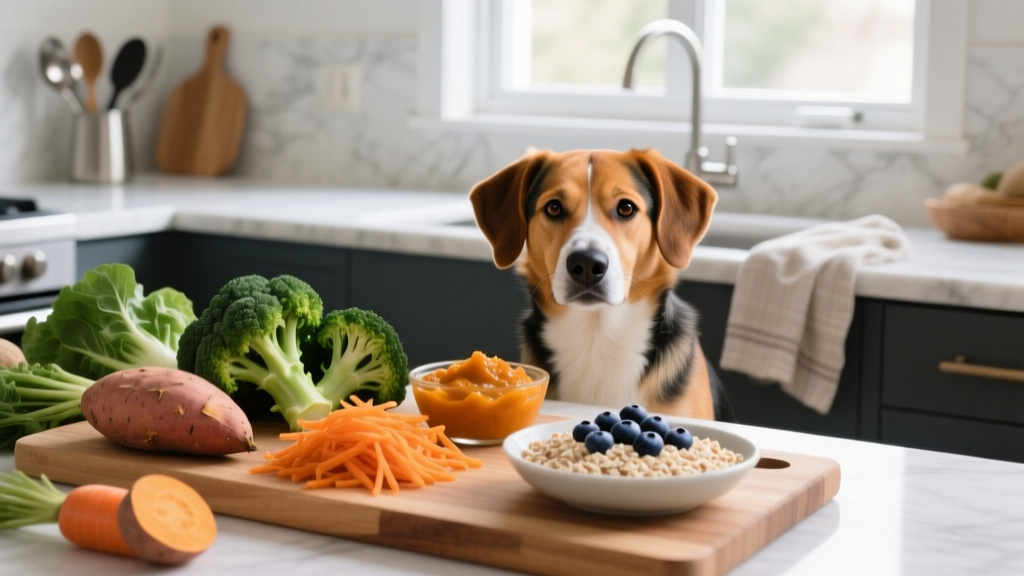
- Alternative carbs: Boiled potato (no skin), plain canned pumpkin (NOT pie filling — check the label for 100% pumpkin), or boiled sweet potato
- Portion guide: Feed approximately 1/4 cup per 10 lb of body weight per meal, offered 4-6 times daily
Step 4: Gradual Reintroduction
Once stools are formed for 2-3 consecutive days, begin mixing the bland diet with your dog's regular food. Start at 75% bland / 25% regular on day 1, then 50/50 on day 2, then 25% bland / 75% regular on day 3, and back to 100% regular on day 4. Rushing this transition is one of the most common reasons diarrhea recurs.
Step 5: Probiotic Support
Add a veterinary-formulated probiotic during and after the episode. Products containing Enterococcus faecium (FortiFlora) or multi-strain blends (Proviable DC) help restore gut microbiome balance. Continue for at least 2 weeks after stools normalize.
Prognosis: What to Expect Based on Severity and Cause
| Condition | Typical Course | Prognosis | Life Expectancy Impact |
|---|---|---|---|
| Dietary indiscretion (mild) | 24-72 hours with supportive care | Excellent — full recovery expected | None |
| Stress colitis | 3-7 days; may recur with triggers | Very good with management | None |
| Parasite infection | 1-3 weeks with proper deworming | Excellent with treatment | None if treated promptly |
| Parvovirus (treated) | 5-10 days hospitalized; 2-4 weeks full recovery | Good — 64-91% survival with aggressive treatment | Full lifespan if recovered |
| Parvovirus (untreated) | Rapid deterioration over 48-72 hours | Poor — up to 91% mortality | Often fatal within 3-5 days of symptom onset |
| Hemorrhagic gastroenteritis (HGE) | 2-5 days hospitalized with IV fluids | Good with prompt treatment; 90%+ survival | Full lifespan; recurrence possible |
| IBD (managed) | Ongoing management; remission periods | Fair to good — 60-70% achieve remission | May reduce lifespan 1-3 years if poorly controlled |
| Intestinal lymphoma | Chemotherapy: 6-12 month remission typical | Guarded — median survival 6-12 months with chemo | Significantly reduced; 12-18 months with aggressive treatment |
| EPI (managed) | Lifelong enzyme supplementation | Very good — most dogs thrive on enzymes | Normal lifespan with consistent treatment |
Cost Breakdown: What You'll Actually Pay
Understanding the financial commitment helps you plan and avoid delayed care. Here's a realistic look at costs based on 2025-2026 veterinary pricing data from across the United States:
- Simple office visit + fecal test: $105-$270 — covers exam, fecal flotation, and possibly a probiotic prescription
- Full diagnostic workup (blood work + imaging): $400-$1,200 — for cases requiring CBC, chemistry panel, abdominal X-rays or ultrasound
- Outpatient treatment (medications + follow-up): $150-$500 — antibiotics, anti-emetics, probiotics, and recheck fecal
- Hospitalization (1-3 days): $1,500-$5,000 — IV fluids, injectable medications, monitoring for HGE or severe gastroenteritis
- Parvovirus treatment (full hospitalization): $2,500-$8,000+ — 5-7 days intensive care, IV fluids, antibiotics, anti-emetics, plasma transfusions in severe cases
- Chronic disease management (IBD, EPI): $100-$400/month ongoing — medications, prescription diets, periodic blood work
- Endoscopy with biopsy: $1,500-$3,500 — for definitive diagnosis of chronic enteropathies
- Worst-case scenario (surgery + extended hospitalization): $5,000-$12,000+ — intestinal resection for tumor or obstruction with complications
Prevention: Reducing Diarrhea Risk in Your Dog
While you can't prevent every case, these evidence-based strategies significantly reduce frequency and severity:
- Maintain consistent diet: Avoid sudden food changes. When transitioning, mix old and new food over 7-10 days using a gradual ratio shift (day 1-2: 75/25, day 3-4: 50/50, day 5-6: 25/75, day 7: 100% new)
- Keep vaccinations current: Parvovirus vaccination (part of DHPP) is a core vaccine recommended by the AAHA. Puppies need a series at 6-8, 10-12, and 14-16 weeks, with a booster at 1 year, then every 3 years
- Regular deworming: Puppies should be dewormed every 2 weeks from 2-8 weeks of age, then monthly until 6 months. Adult dogs need fecal testing 1-2 times yearly with treatment as needed. Monthly heartworm preventives (Heartgard, Interceptor Plus) also cover roundworms and hookworms
- Limit scavenging: Train a solid "leave it" and "drop it" cue using positive reinforcement. Keep trash cans secured and supervise outdoor time in areas where wildlife feces may be present
- Manage stress: For dogs prone to stress colitis, use calming supplements (Zylkene, Solliquin) or Adaptil pheromone products during known stressors (boarding, travel, fireworks season)
- Avoid high-fat treats: Limit fatty table scraps, bacon grease, and rich treats — especially in pancreatitis-prone breeds like Miniature Schnauzers, Yorkshire Terriers, and Cocker Spaniels
- Fecal testing: Annual fecal exams catch subclinical parasite burdens before they cause symptoms
When to See the Vet: Red Flag Symptoms
🚨 Call Your Veterinarian NOW If Your Dog Has:
- Blood in stool — either bright red or black/tarry appearance
- Three or more episodes of diarrhea within 6 hours
- Concurrent vomiting (especially if unable to keep water down)
- Signs of dehydration: dry gums, sunken eyes, skin that doesn't snap back when pinched
- Severe lethargy, weakness, or collapse
- Distended or painful abdomen (dog hunches, whines, or resists belly touch)
- Fever above 103.5°F (39.7°C) or hypothermia below 99°F (37.2°C)
- Known exposure to parvovirus or unvaccinated puppies with any diarrhea
- Diarrhea lasting more than 48 hours despite home care
- Known ingestion of a toxic substance, foreign object, or human medication
- Pre-existing conditions: diabetes, kidney disease, liver disease, Addison's disease, or current chemotherapy
If you suspect toxin ingestion, contact ASPCA Animal Poison Control at (888) 426-4435 (24/7, consultation fee applies) or Pet Poison Helpline at (855) 764-7661 immediately.
Puppies under 6 months of age with diarrhea should be seen within 12-24 hours regardless of severity, as they dehydrate rapidly and parvovirus can be fatal within 48-72 hours of symptom onset. Toy and small-breed puppies (under 10 lb) are at even greater risk due to limited glycogen reserves — hypoglycemia can develop within hours.
Frequently Asked Questions
What is diarrhea in dogs and how common is it?
Diarrhea is the passage of loose, watery, or unformed stools caused by disrupted intestinal function — either through increased secretion, decreased absorption, rapid transit, or inflammation. It's one of the most common canine health complaints, affecting an estimated 20-30% of dogs annually. Most cases are acute and self-limiting, but chronic or severe cases require veterinary diagnosis to identify the underlying cause.
What are the most common symptoms beyond loose stools?
Accompanying symptoms vary by cause but frequently include increased urgency and frequency, straining, flatulence, abdominal gurgling or cramping, decreased appetite, mild lethargy, and occasionally vomiting. In severe cases, you may see blood or mucus in the stool, weight loss, dehydration, fever, or complete refusal to eat or drink.
How is the cause of diarrhea diagnosed?
Veterinarians start with a physical exam and history, then typically run fecal tests (flotation for parasites, ELISA for giardia, cytology for bacteria). Blood work (CBC and biochemistry) evaluates organ function and dehydration. Advanced cases may require abdominal imaging (X-rays or ultrasound), specialized blood tests (cPL for pancreatitis, TLI for EPI), or endoscopic biopsy for chronic conditions like IBD or intestinal lymphoma.
Can diarrhea in dogs be cured or treated?
Most acute diarrhea from dietary indiscretion, stress, or mild infections resolves completely within 48-72 hours with supportive care. Parasite infections are curable with appropriate deworming. Bacterial infections respond to targeted antibiotics. Chronic conditions like IBD and EPI are manageable rather than curable — most dogs achieve good quality of life with ongoing medication and dietary management. Parvovirus is treatable with aggressive supportive care, and dogs that survive the acute phase typically recover fully.
How much does diarrhea treatment cost?
Costs range widely: a simple office visit with fecal test and probiotics runs $105-$270. Full diagnostic workups with blood work and imaging cost $400-$1,200. Hospitalization for HGE or severe gastroenteritis averages $1,500-$5,000. Parvovirus treatment with extended hospitalization can reach $2,500-$8,000+. Chronic disease management (IBD, EPI) typically costs $100-$400 per month ongoing. Pet insurance can significantly offset these expenses.
What is the life expectancy of a dog with chronic diarrhea conditions?
It depends on the underlying cause. Dogs with well-managed IBD or EPI can live a normal lifespan. Dogs with inflammatory conditions that respond to immunosuppressive therapy typically have a good long-term outlook. Intestinal lymphoma carries a guarded prognosis — median survival is 6-12 months with chemotherapy, though some dogs achieve longer remissions. The key factor is early, accurate diagnosis and consistent treatment compliance.
Which breeds are most prone to diarrhea?
German Shepherds have elevated risk for EPI, IBD, and small intestinal bacterial overgrowth. Boxers are predisposed to histiocytic ulcerative colitis ("Boxer colitis"). Yorkshire Terriers and Soft-Coated Wheaten Terriers are prone to protein-losing enteropathy. Labrador Retrievers commonly have food sensitivities. Miniature Schnauzers are prone to pancreatitis-related diarrhea. Shar-Peis develop GI inflammation related to their mucinosis. However, any breed can develop diarrhea from infectious, parasitic, or dietary causes.
This article is for educational purposes and does not replace professional veterinary advice. If your dog is experiencing diarrhea that concerns you, consult your veterinarian for a proper diagnosis and treatment plan tailored to your dog's specific needs.
Dr. Hannah Wickes
All our authors care for dogs every day — read more of their work on the authors page.