What Do Flea Bites Look Like on Dogs? Visual Guide & Treatment
Learn what flea bites look like on dogs, how to spot an infestation, compare prevention products, and treat your dog and home effectively.
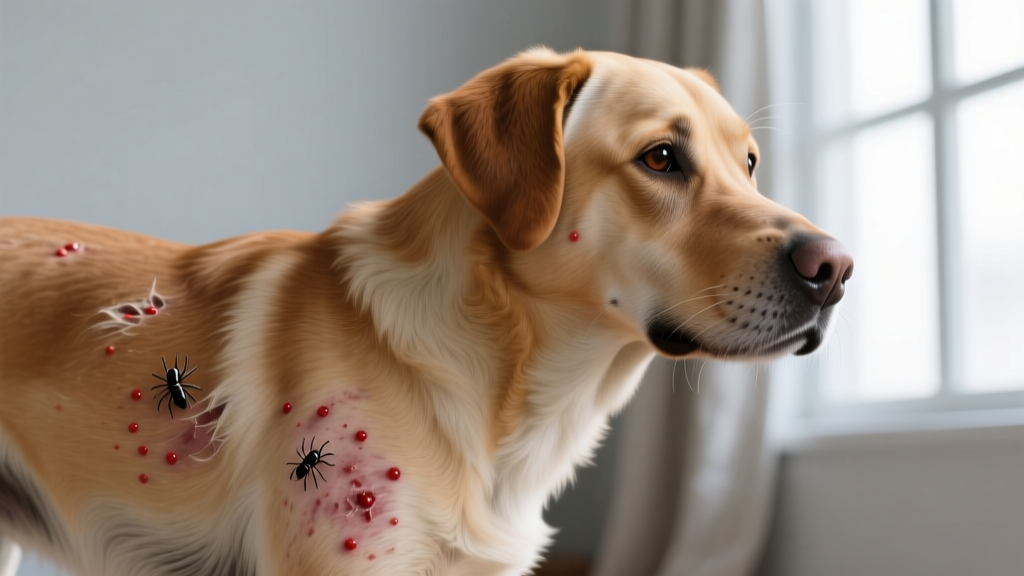
Spotting the Signs: What Do Flea Bites Look Like on Dogs?
If your dog is scratching relentlessly and you're wondering what flea bites look like on a dog, you're not alone. Flea bite reactions vary depending on your dog's sensitivity, coat type, and the severity of the infestation. Here's what to look for during a thorough skin inspection.
Flea Bite Appearance on Dogs
- Small red bumps: Clusters of tiny (1-2 mm) raised red papules, often in groups of three or four in a line or triangle pattern.
- Location: Most concentrated around the base of the tail, lower back, inner thighs, groin, and belly — areas where fleas prefer to feed.
- Flea allergy dermatitis (FAD): In sensitized dogs, even a single bite triggers widespread redness, oozing hot spots, hair loss, and thickened skin. This is the most common skin allergy in dogs, according to the Merck Veterinary Manual.
- Flea dirt: Black or dark brown specks resembling ground pepper on the skin or coat. Place these on a wet paper towel — if they dissolve into reddish-brown streaks, that's digested blood (flea feces), confirming an active infestation.
- Secondary signs: Excessive licking of paws, chewing at the tail base, scooting, and restless behavior, especially at night when fleas are most active.
Quick differentiation: Flea bites are smaller and more clustered than mosquito bites (which are larger, singular, and randomly placed). Tick bites leave a single puncture mark, sometimes with the tick still attached. Mite infestations (mange) cause diffuse hair loss and crusty skin rather than discrete bumps.
The Flea Life Cycle: Why One Sighting Means Hundreds More
Understanding the flea life cycle is critical because treating only the adult fleas on your dog addresses roughly 5% of the total population. The other 95% exists as eggs, larvae, and pupae in your home environment.
Ctenocephalides felis (Cat Flea) — Life Cycle Breakdown
Despite the name, the cat flea is the primary flea species found on dogs in North America.
- Egg (2-12 days): Adult females lay 40-50 eggs per day. Eggs are 0.5 mm, oval, white, and non-sticky — they roll off your dog onto carpets, bedding, and furniture. A single female can produce over 2,000 eggs in her lifetime.
- Larva (4-18 days): Worm-like, 2-5 mm, legless, and light-avoiding. Larvae burrow deep into carpet fibers, floor cracks, and under furniture. They feed on flea dirt (adult flea feces) and organic debris.
- Pupa (5 days to 12 months): The larva spins a sticky cocoon that camouflages with dust and debris. Pupae are the most resilient stage — they can remain dormant for months, emerging only when they detect vibrations, warmth, or CO₂ from a potential host. This is why infestations can flare up months after treatment.
- Adult (2-3 months): Newly emerged adults must find a host within days or they starve. Once on a dog, they begin feeding within minutes and start reproducing within 24-48 hours.
Total cycle time: As short as 14 days in warm, humid conditions (75-85°F / 24-29°C, 70-85% humidity), or up to several months in cooler, drier environments.
How Do Dogs Get Fleas? Transmission Routes Explained
Fleas don't fly — they jump. An adult flea can leap up to 13 inches (33 cm) vertically, making transfer between animals and environments remarkably easy.
Primary transmission routes:
- Other animals: Direct contact with infested dogs, cats, rabbits, or wildlife (raccoons, opossums, foxes, feral cats) at dog parks, boarding facilities, grooming salons, or during neighborhood walks.
- Contaminated environments: Flea eggs and pupae persist in carpets, upholstery, pet bedding, and shaded outdoor areas. Your dog picks up newly emerged adults simply by walking through an infested area.
- Your own clothing and shoes: You can carry flea eggs into your home from visiting an infested location or handling an infested animal.
- Wildlife corridors: If deer, rodents, or stray animals frequent your yard, they deposit flea eggs and pupae in shaded areas under decks, in brush piles, and along fence lines.
Indoor-only dogs are not immune. Fleas thrive in climate-controlled homes year-round. A single fertilized female introduced on a visiting pet or your clothing can establish a full household infestation within 30-60 days.
Symptoms by Infestation Severity
| Severity Level | Flea Burden | Visible Symptoms | Action Required |
|---|---|---|---|
| Mild | 1-10 adult fleas | Occasional scratching, 3-5 small red bumps near tail base, small amount of flea dirt on comb | Apply preventive immediately; treat home environment |
| Moderate | 10-50 adult fleas | Frequent scratching and biting, red patches across lower back and thighs, visible flea dirt throughout coat, mild hair thinning | Fast-acting adulticide + preventive; full home treatment; consult vet if FAD suspected |
| Heavy | 50+ adult fleas | Constant scratching/chewing, widespread hot spots, significant hair loss, pale gums (anemia risk in small dogs/puppies), tapeworm segments in stool, behavioral changes (restlessness, irritability) | Immediate veterinary visit; prescription-strength treatment; possible antibiotics for secondary infection; aggressive home/yard treatment |
Critical warning: Puppies, senior dogs, and small breeds (under 15 lb / 7 kg) can develop flea bite anemia from heavy infestations. A single flea can consume up to 15 times its body weight in blood daily. If your puppy or small dog has pale gums, lethargy, or weakness alongside a flea infestation, seek emergency veterinary care immediately.
Health Risks: Diseases Transmitted by Fleas
Fleas are more than a nuisance — they're disease vectors that can cause serious health complications.
- Tapeworms (Dipylidium caninum): Fleas carry tapeworm larvae. When your dog ingests an infected flea during grooming, the tapeworm matures in the intestine. You'll see rice-like segments around the anus or in stool. Treatment requires a prescription dewormer (praziquantel).
- Flea allergy dermatitis (FAD): An immune hypersensitivity to flea saliva causing severe itching, skin infections, and hot spots. FAD is the number one cause of allergic skin disease in dogs.
- Bartonellosis (Cat Scratch Disease): Fleas transmit Bartonella henselae and Bartonella vinsonii bacteria, which can cause endocarditis, granulomatous inflammation, and lameness in dogs.
- Mycoplasma haemocanis: A blood parasite transmitted by fleas that destroys red blood cells, potentially causing severe anemia, especially in immunocompromised or splenectomized dogs.
- Murine typhus (Rickettsia typhi): Flea-borne bacterial infection that primarily affects humans but can infect dogs in endemic areas (southern California, Texas Gulf Coast).
Note: Unlike ticks, fleas do not transmit Lyme disease. However, both parasites can coexist on your dog, so comprehensive prevention is essential. Learn more about flea-borne diseases from the CDC.
Treatment Protocol: OTC vs. Prescription Options
Step-by-Step Flea Infestation Treatment
Step 1: Kill adult fleas on your dog (Day 1)
For immediate relief, use a fast-acting oral adulticide. Capstar (nitenpyram) kills adult fleas within 30 minutes but only lasts 24 hours — it's a rescue treatment, not a preventive. Cost: $30-$40 for a 6-count box.
Step 2: Apply a long-acting preventive (Day 1-2)
Choose a monthly or extended-duration product (see comparison table below). Prescription options from your veterinarian generally offer broader parasite coverage and higher efficacy than OTC products.
Step 3: Treat secondary skin issues (Days 1-14)
If your dog has hot spots or secondary bacterial infections, your veterinarian may prescribe antibiotics (typically cephalexin or amoxicillin-clavulanate, 14-21 days) and anti-inflammatory medication (Apoquel, Cytopoint, or short-course prednisone) to break the itch-scratch cycle.
Step 4: Treat your home environment (Day 1 and Day 14)
This is the step most owners skip — and the reason infestations persist.
- Wash all pet bedding, human bedding, and washable fabrics in hot water (minimum 140°F / 60°C) and dry on high heat for 30+ minutes.
- Vacuum all carpets, upholstery, and floor cracks thoroughly. Immediately seal and dispose of the vacuum bag or empty the canister outside.
- Apply an insect growth regulator (IGR) spray containing methoprene or pyriproxyfen to carpets, baseboards, and under furniture. These prevent eggs and larvae from developing for 7 months. Products like Siphotrol Plus or Vet's Best Indoor Fogger cost $15-$35.
- For severe infestations, professional pest control treatment costs $150-$300 for a standard home and typically requires 2 visits spaced 14 days apart.
Step 5: Treat your yard (Day 1 and Day 30)
- Focus on shaded, humid areas: under decks, along fence lines, around dog houses, and beneath shrubs.
- Apply a yard spray containing permethrin or bifenthrin combined with an IGR. Products like Virbac Yard Spray ($25-$40) cover up to 2,600 sq ft.
- Warning: Permethrin is highly toxic to cats. Keep cats away from treated areas until completely dry.
- Remove leaf litter, keep grass short, and reduce shade to make your yard less hospitable to fleas.
Step 6: Continue prevention for at least 3 months
Because pupae can emerge weeks after initial treatment, you must maintain your dog's preventive and monitor for re-emergence for a minimum of 90 days.
OTC vs. Prescription Flea Treatment Comparison
| Product Type | Examples | Active Ingredient | Speed of Kill | Duration | Cost/Year | Efficacy |
|---|---|---|---|---|---|---|
| Prescription oral (monthly) | Bravecto 1-Month, Credelio, Comfortis | Fluralaner, Lotilaner, Spinosad | 2-8 hours | 30 days | $150-$250 | 98-100% |
| Prescription oral (extended) | Bravecto 3-Month | Fluralaner | 2-8 hours | 12 weeks | $60-$90 | 98-100% |
| Prescription topical | Revolution Plus, Simparica Trio | Sarolaner + Selamectin; Sarolaner + Moxidectin + Pyrantel | 4-12 hours | 30 days | $180-$280 | 95-100% |
| OTC topical | Frontline Plus, Advantage II, K9 Advantix | Fipronil + (S)-Methoprene; Imidacloprid; Imidacloprid + Permethrin | 12-24 hours | 30 days | $80-$150 | 85-95% |
| OTC collar | Seresto | Imidacloprid + Flumethrin | 24-48 hours | 8 months | $55-$70 | 90-95% |
| OTC shampoo/spray | Various (Vet's Best, Adams) | Pyrethrins, d-Limonene | Minutes (contact kill) | 0-7 days | $10-$20 | Low (no residual effect) |
Key insight: OTC fipronil-based products (Frontline) have documented resistance issues in some flea populations, particularly in the southeastern United States. If you're using Frontline and still seeing fleas after 48 hours, resistance is a likely cause — consult your veterinarian about switching to an isoxazoline-class product (Bravecto, NexGard, Simparica). Always consult your veterinarian before starting any flea treatment, especially for puppies under 12 weeks, pregnant dogs, or dogs with seizure disorders.
Prevention Products: Full Comparison
| Product Name | Type | Active Ingredients | Kills Fleas | Kills Ticks | Heartworm Prevention | Intestinal Parasites | Duration | Rx Required | Min. Age/Weight |
|---|---|---|---|---|---|---|---|---|---|
| Simparica Trio | Oral chew | Sarolaner, Moxidectin, Pyrantel | ✓ | ✓ | ✓ | ✓ (roundworm, hookworm) | 30 days | Yes | 8 weeks / 2.8 lb |
| NexGard Plus | Oral chew | Afoxolaner, Moxidectin, Pyrantel | ✓ | ✓ | ✓ | ✓ (roundworm, hookworm) | 30 days | Yes | 8 weeks / 4 lb |
| Bravecto 1-Month | Oral chew | Fluralaner | ✓ | ✓ | ✗ | ✗ | 30 days | Yes | 8 weeks / 4.4 lb |
| Bravecto 3-Month | Oral chew | Fluralaner | ✓ | ✓ | ✗ | ✗ | 12 weeks | Yes | 6 months / 4.4 lb |
| Revolution Plus | Topical | Sarolaner, Selamectin | ✓ | ✓ | ✓ | ✓ (roundworm, hookworm, ear mites) | 30 days | Yes | 8 weeks / 2.8 lb |
| Frontline Plus | Topical | Fipronil, (S)-Methoprene | ✓ | ✓ | ✗ | ✗ | 30 days | No | 8 weeks |
| Seresto Collar | Collar | Imidacloprid, Flumethrin | ✓ | ✓ | ✗ | ✗ | 8 months | No | 7 weeks |
| K9 Advantix II | Topical | Imidacloprid, Permethrin, Pyriproxyfen | ✓ | ✓ (repels) | ✗ | ✗ | 30 days | No | 7 weeks |
How to choose:
- Best all-in-one coverage: Simparica Trio or NexGard Plus cover fleas, ticks, heartworm, and intestinal parasites in a single monthly chew.
- Best for dogs that swim/bathe frequently: Oral products (Bravecto, NexGard) aren't washed off like topicals.
- Best budget option: Seresto collar at $55-$70 provides 8 months of flea and tick protection (~$7-$9/month).
- Best for multi-parasite households with cats: Revolution Plus — but never use K9 Advantix or any permethrin product in homes with cats, as permethrin is fatally toxic to felines.
Environmental Control: Breaking the Cycle at Home and in Your Yard
No topical or oral product will fully resolve a flea infestation without concurrent environmental treatment. Here's why: for every adult flea you see on your dog, there are an estimated 20 eggs, 10 larvae, and 5 pupae developing in your home.
Indoor treatment protocol:
- Vacuum daily for 14 days. Focus on areas where your dog sleeps, under furniture, along baseboards, and in carpeted areas. Vacuuming stimulates pupae to emerge (so they can be killed by your preventive) and physically removes eggs and larvae. Studies show vacuuming alone removes up to 96% of adult fleas from carpets.
- Wash all fabrics weekly in hot water (140°F / 60°C minimum) for at least 10 minutes. This includes pet beds, throw blankets, couch cushion covers, and your own bedding if your dog sleeps on it.
- Apply IGR spray (methoprene or pyriproxyfen) to carpets, upholstery, and cracks. IGRs mimic juvenile hormones, preventing eggs and larvae from maturing. One application lasts 6-7 months. Cost: $15-$35 per can, 2-3 cans for an average home.
- Consider diatomaceous earth (food-grade) as a supplemental treatment in cracks and along baseboards. It desiccates adult fleas mechanically. Apply a thin layer, leave for 24-48 hours, then vacuum. Cost: $10-$20 for a 4 lb bag.
Yard treatment protocol:
- Keep grass mowed to under 3 inches and trim shrubs to increase sunlight exposure — flea larvae cannot survive in direct sunlight.
- Remove leaf litter, organic debris, and stacked wood near your home's foundation.
- Apply a yard spray with bifenthrin or permethrin + IGR to shaded, high-traffic areas every 30 days during peak season.
- Consider beneficial nematodes (Steinernema carpocapsae) as a biological control. Applied with a garden sprayer, these microscopic worms infect and kill flea larvae in soil. Cost: $30-$50 per application, effective for 60-90 days.
- Discourage wildlife (raccoons, opossums, feral cats) by securing trash cans, sealing crawl spaces, and removing food sources.
Seasonal Risk Calendar: When Fleas Peak by Region
| U.S. Region | Peak Flea Season | Moderate Risk | Low Risk | Year-Round Prevention Needed? |
|---|---|---|---|---|
| Southeast (FL, GA, AL, MS, LA, SC) | March – November | December – February (indoors) | None | Yes — warm winters sustain outdoor populations |
| Gulf Coast (TX, southern FL) | Year-round | — | — | Yes — subtropical climate |
| Southeast Atlantic (VA, NC, TN) | April – October | March, November | December – February | Recommended — indoor infestations occur in winter |
| Midwest (IL, OH, MI, IN, WI, MN) | May – October | April, November | December – March | Recommended — heated homes sustain indoor fleas |
| Northeast (NY, MA, PA, NJ, CT) | June – October | May, November | December – April | Recommended — indoor flea populations persist |
| Pacific Northwest (WA, OR) | May – November | April, December | January – March | Recommended — mild, wet winters |
| Southwest (AZ, NM, NV, southern CA) | March – November | December – February | None (low desert) | Recommended in irrigated/urban areas |
| Mountain (CO, UT, MT, WY, ID) | June – September | May, October | November – April | Seasonal may suffice, but indoor prevention is wise |
Key takeaway: The American Veterinary Medical Association (AVMA) recommends year-round flea prevention for most U.S. dogs, because indoor environments maintain the temperature and humidity fleas need to thrive regardless of outdoor conditions.
Zoonotic Potential: Can Fleas Spread to Humans?
Fleas themselves don't "live" on humans the way they do on dogs, but they will bite people — especially during heavy infestations when host competition is high. Here's what you need to know:
- Flea bites on humans: Small, red, intensely itchy bumps, usually around ankles and lower legs. They appear in clusters or lines of 2-3 bites. Unlike bed bug bites, flea bites have a central red halo and are more random in pattern.
- Diseases transmissible to humans: Fleas can transmit murine typhus (Rickettsia typhi), cat scratch disease (Bartonella henselae), and plague (Yersinia pestis — rare, primarily in the southwestern U.S.). They also carry Dipylidium caninum tapeworm eggs, which can infect young children who accidentally ingest an infected flea.
- Tapeworm risk for children: Children under 5 are at highest risk because they're more likely to put contaminated objects in their mouths. If you see rice-like segments in your child's stool or around their anus, consult a pediatrician — praziquantel treatment is straightforward.
- Other pets: Fleas readily move between dogs, cats, rabbits, and ferrets in the same household. All mammals in the home should be on flea prevention simultaneously.
If you suspect your family has been exposed to flea-borne illness, contact your physician and mention the flea infestation. For pet-related poisoning or toxicity concerns, call the ASPCA Animal Poison Control Center at (888) 426-4435 (24/7, consultation fee applies).
Frequently Asked Questions
How do I know if my dog has fleas?
Use a fine-toothed flea comb (teeth spaced less than 1 mm apart) on your dog's lower back, tail base, and belly. Look for live fleas (small, dark brown, fast-moving, 1-3 mm long, laterally flattened) or flea dirt (black specks that turn reddish-brown on a wet paper towel). Even if you don't see a live flea, flea dirt confirms their presence. Dogs with FAD may show severe symptoms from just one or two bites, so absence of visible fleas doesn't guarantee absence of a problem.
How do dogs get fleas?
Dogs acquire fleas through contact with infested animals (at parks, groomers, kennels), environments (carpets, yards, homes), or via wildlife that passes through your property. Fleas jump from host to host or emerge from pupae in the environment when they sense a nearby animal. Even indoor-only dogs can get fleas if eggs are carried in on shoes or clothing.
What are the best flea prevention products?
The "best" product depends on your dog's lifestyle and your budget. For comprehensive parasite coverage, prescription oral chews like Simparica Trio or NexGard Plus protect against fleas, ticks, heartworm, and intestinal parasites in one monthly dose ($15-$25/month). For budget-conscious owners, the Seresto collar offers 8 months of flea and tick protection at roughly $7-$9/month. Consult your veterinarian to select the right product for your dog's age, weight, health status, and lifestyle.
How do I treat a flea infestation?
Effective treatment requires a three-pronged approach: (1) Kill adult fleas on your dog with a fast-acting product like Capstar, then apply a long-acting monthly preventive. (2) Treat your home with thorough vacuuming, hot-water washing of all fabrics, and IGR sprays on carpets and upholstery. (3) Treat your yard with a permethrin/IGR spray in shaded areas. Continue all three strategies for at least 90 days to ensure all life cycle stages are eliminated.
Can fleas spread to humans or other pets?
Yes. Fleas will bite humans (typically around ankles) and readily transfer between dogs, cats, and other mammals in the household. They can also transmit diseases to humans, including Bartonella, murine typhus, and tapeworms. All pets in the household should be treated simultaneously to prevent cross-infestation.
How often should I treat my dog for fleas?
Monthly for most oral and topical preventives, every 12 weeks for extended-duration products like Bravecto 3-Month, or every 8 months for Seresto collars. Treatment should continue year-round in most U.S. regions, or at minimum from early spring through late fall. Never skip doses during active flea season — even a 2-3 day gap can allow newly emerged fleas to feed and reproduce.
Why is my dog still scratching after flea treatment?
Several reasons: (1) It can take 24-48 hours for all fleas to die after treatment. (2) Flea allergy dermatitis causes itching that persists for days to weeks after the last flea bite, even when no fleas remain. (3) Secondary skin infections (bacterial or yeast) require separate treatment with antibiotics or antifungals. (4) New fleas may be emerging from untreated pupae in your home. If scratching persists beyond 7 days post-treatment, consult your veterinarian.
Are natural flea remedies effective?
Most "natural" flea remedies (essential oils, apple cider vinegar, garlic supplements) lack scientific evidence of efficacy and some are actively dangerous. Garlic and many essential oils (tea tree, eucalyptus, citrus) are toxic to dogs. Diatomaceous earth (food-grade) has mild mechanical insecticidal properties but cannot eliminate an established infestation alone. The FDA recommends using EPA-registered or FDA-approved flea products, which have undergone rigorous safety and efficacy testing.
When to See Your Veterinarian
Seek veterinary care promptly if your dog shows any of the following:
- Pale gums, weakness, or collapse (signs of flea bite anemia — emergency)
- Widespread hot spots, oozing sores, or foul skin odor (secondary bacterial infection)
- Rice-like segments in stool or around anus (tapeworms)
- Persistent scratching beyond 7 days after starting treatment
- Flea infestation in puppies under 8 weeks old (many preventives are not labeled for this age)
- Your dog has a known seizure disorder (some isoxazoline-class products carry seizure warnings)
Flea infestations are frustrating but entirely manageable with a systematic approach: treat the dog, treat the home, treat the yard, and maintain consistent prevention. The key insight most owners miss is that the fleas you see on your dog are just the tip of the iceberg — environmental control is what truly breaks the cycle.
Marcus Aldridge
All our authors care for dogs every day — read more of their work on the authors page.


