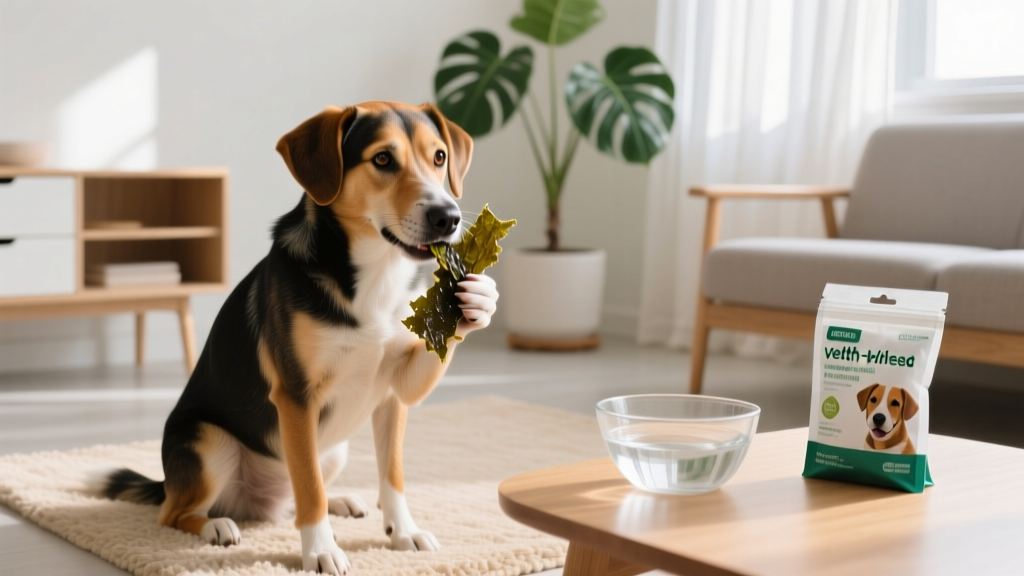
Treat Training a Puppy: Nutrition Guide to Rewards, Calories & Growth
Treat training a puppy requires balancing calories, nutrition, and rewards.

Why Treat Training a Puppy Demands a Nutrition-First Approach
Positive reinforcement is the gold standard for puppy training, and food rewards drive learning faster than any other motivator. But here's the problem most new puppy owners hit: those tiny training treats add up fast. A 15-pound puppy doing two 15-minute training sessions daily might consume 40-60 treats — potentially 15-30% of their daily caloric intake from snacks that aren't nutritionally complete.
When you're treat training a puppy, you're not just teaching sit and stay. You're managing a growing animal's nutritional budget. Puppies between 8 weeks and 12 months have precise requirements for calcium-to-phosphorus ratios (1.1:1 to 1.4:1 for large breeds), minimum protein thresholds, and caloric density needs that change weekly as they grow. Every treat displaces some of that critical nutrition.
This guide gives you the exact numbers: how many calories your puppy needs, what percentage can safely come from training treats, which commercial foods support intensive training schedules, and how to build a treat strategy that accelerates learning without compromising skeletal development or digestive health.
Nutritional Requirements for Puppies in Active Training
Puppies burn more calories per pound than adult dogs — sometimes 2-3 times more depending on breed size and activity level. When you layer training sessions on top of normal puppy play, those requirements shift again.
| Puppy Weight | Calories/Day | Protein (min %) | Fat (min %) | Max Treat Calories (10%) | Calcium (g/day) |
|---|---|---|---|---|---|
| 5 lb / 2.3 kg | 250-300 kcal | 28% | 17% | 25-30 kcal | 0.5-0.8g |
| 10 lb / 4.5 kg | 400-500 kcal | 28% | 17% | 40-50 kcal | 0.8-1.2g |
| 20 lb / 9 kg | 650-800 kcal | 28% | 17% | 65-80 kcal | 1.5-2.0g |
| 40 lb / 18 kg | 1,000-1,300 kcal | 28% | 17% | 100-130 kcal | 2.5-3.5g |
| 60 lb / 27 kg (large breed) | 1,400-1,800 kcal | 26-28% | 14-17% | 140-180 kcal | 3.0-4.5g |
Key insight for training puppies: The WSAVA Global Nutrition Guidelines recommend treats never exceed 10% of total daily caloric intake. For a puppy doing intensive training (3+ sessions daily), you'll need to either use their measured kibble as training rewards or select treats under 3 calories each. More on this strategy below.
Life Stage Context: Why Puppy Nutrition Is Non-Negotiable
Puppies between 8-16 weeks are in their most rapid growth phase. Large and giant breeds (Great Danes, Mastiffs, German Shepherds) continue growing until 18-24 months. During this window:
- Excess calories accelerate growth rate, increasing risk of developmental orthopedic diseases like hip dysplasia and osteochondrosis
- Calcium excess (above 1.5% on a dry matter basis for large breeds) disrupts bone remodeling
- Protein deficiency (below 22% DM) impairs muscle development and immune function
- DHA deficiency reduces cognitive development — directly impacting trainability
This means your training treat strategy isn't just about motivation. It's about protecting your puppy's skeletal and neurological development during the exact period you're trying to teach them.
What to Look for on Puppy Food Labels (AAFCO & Beyond)
Not all puppy foods are created equal, and the marketing on the front of the bag tells you almost nothing useful. Here's your label-reading framework:
The 5-Point Label Check
- AAFCO Statement: Must read "formulated to meet the nutritional levels established by the AAFCO Dog Food Nutrient Profiles for growth" or "all life stages." If it says "maintenance" only, it's not appropriate for puppies.
- First Ingredient: Named animal protein (chicken, lamb, salmon) — not "meat meal" or "animal by-products" without species specification.
- Guaranteed Analysis: Minimum 28% crude protein, minimum 17% crude fat for most breeds. Large breeds should target 26-28% protein with 14-17% fat to control growth rate.
- Calcium Content: Should be listed. For large-breed puppies, calcium should be 1.0-1.5% on a dry matter basis. If it's not listed, contact the manufacturer.
- DHA/EPA Sources: Look for fish oil, algae oil, or named omega-3 sources. DHA supports the cognitive development you're relying on during training.
Red flags to avoid: "Premium" or "gourmet" without AAFCO statement, proprietary blends that hide ingredient ratios, foods with more than 3 unnamed protein sources ("poultry fat" vs. "chicken fat"), and anything marketed as "grain-free" for puppies without veterinary guidance — the FDA's ongoing investigation into grain-free diets and dilated cardiomyopathy (DCM) remains unresolved as of 2026.
Top 7 Puppy Foods That Support Training Schedules
These recommendations prioritize caloric density (so smaller portions still meet nutritional needs, leaving room for training treats), DHA content for cognitive support, and kibble size appropriate for using as training rewards.
1. Purina Pro Plan Puppy Chicken & Rice Formula
Price: $45-55 for 34 lb bag ($1.32-1.62/lb)
Calories: 419 kcal/cup
Protein/Fat: 28% / 18%
Why it works for training: Small kibble size works well as a training reward. DHA from fish oil. Consistent formulation with decades of feeding trial data. The moderate caloric density means you can portion out training kibble without overshooting daily calories.
2. Royal Canin Puppy Small Breed
Price: $38-48 for 10 lb bag ($3.80-4.80/lb)
Calories: 389 kcal/cup
Protein/Fat: 28% / 18%
Why it works for training: Extra-small kibble designed for breeds under 22 lb adult weight. High palatability means strong food motivation during sessions. Breed-specific formulations available for Chihuahuas, Yorkies, and Poodles.
3. Hill's Science Diet Puppy Healthy Development
Price: $52-65 for 27.5 lb bag ($1.89-2.36/lb)
Calories: 385 kcal/cup
Protein/Fat: 25.3% / 15.8%
Why it works for training: Clinically tested DHA levels from fish oil. Lower caloric density gives you more flexibility in your treat budget. Veterinarian-recommended with published feeding trials.
4. Orijen Puppy
Price: $75-95 for 25 lb bag ($3.00-3.80/lb)
Calories: 448 kcal/cup
Protein/Fat: 38% / 20%
Why it works for training: Extremely high protein from named meat sources (chicken, turkey, flounder). Excellent for puppies with high metabolic demands. The rich formulation means you feed less volume, leaving more caloric room for training treats. Best for active, athletic breeds.
5. Fromm Gold Puppy
Price: $55-70 for 26 lb bag ($2.12-2.69/lb)
Calories: 407 kcal/cup
Protein/Fat: 27% / 18%
Why it works for training: Family-owned company with full supply chain transparency. Includes probiotics for digestive stability — important when puppies are eating varied training treats throughout the day. Rotating protein options help identify food sensitivities early.
6. Farmina N&D Pumpkin Puppy (Large Breed)
Price: $68-85 for 26.4 lb bag ($2.58-3.22/lb)
Calories: 380 kcal/cup
Protein/Fat: 35% / 20%
Why it works for training: Specifically formulated to control growth rate in large breeds. Lower glycemic index with pumpkin and pomegranate. The controlled calcium:phosphorus ratio (1.3:1) protects developing joints during the months you're doing foundation training.
7. Ziwi Peak Air-Dried Lamb (All Life Stages)
Price: $95-130 for 5.5 lb bag ($17.27-23.64/lb)
Calories: 5,600 kcal/kg (approximately 300 kcal per 50g scoop)
Protein/Fat: 35% / 33%
Why it works for training: Air-dried raw alternative that's shelf-stable and easy to portion into tiny training pieces. Single protein source makes it ideal for puppies with developing sensitivities. Extremely high palatability — excellent for high-distraction training environments. Budget option: use as a "jackpot" reward for breakthrough moments rather than every repetition.
The Training Treat Budget: How to Make Calories Work
Here's the math that changes everything: if your 15 lb puppy needs 550 kcal/day and treats are capped at 10% (55 kcal), you can use:
| Treat Type | Calories Each | How Many = 55 kcal | Training Utility |
|---|---|---|---|
| Puppy's own kibble (Pro Plan) | 3-5 kcal | 11-18 pieces | Low-value; good for easy behaviors in low distraction |
| Zuke's Mini Naturals (pea-sized) | 3.2 kcal | 17 pieces | Medium-value; reliable for most training sessions |
| Freeze-dried beef liver (1/4" cubes) | 1.5-2 kcal | 27-36 pieces | High-value; excellent for new or difficult behaviors |
| Boiled chicken breast (pea-sized) | 2-3 kcal | 18-27 pieces | High-value; soft texture slows some dogs (good for focus) |
| Commercial soft training treats (average) | 5-8 kcal | 7-11 pieces | Variable; often too large — break into quarters |
Pro strategy from experienced trainers: Use your puppy's measured daily kibble as the primary training reward. Weigh out their full daily portion in the morning, then use it throughout the day for training sessions, enrichment puzzles, and mealtime. This eliminates the treat budget problem entirely while increasing your puppy's food motivation and engagement with you.
High-Value vs. Low-Value Reward Hierarchy
Not every behavior needs a premium reward. Build a treat hierarchy:
- Low-value (kibble): Known behaviors, warm-up repetitions, low-distraction environments
- Medium-value (Zuke's, small training treats): New skill acquisition, moderate distractions
- High-value (boiled chicken, freeze-dried liver): Breakthrough moments, high-distraction environments, recall training, counter-conditioning
- Jackpot (3-5 high-value treats at once): Major milestones, first successful proofing of a behavior
Foods to Avoid During Puppy Training
Some foods are outright toxic. Others are problematic specifically because they undermine your training or nutritional goals.
- Grapes and raisins (kidney failure — toxic dose as low as 0.7 oz/kg)
- Onions, garlic, chives (hemolytic anemia — cumulative toxicity)
- Xylitol-sweetened anything (liver failure, hypoglycemia — toxic at 0.1g/kg)
- Macadamia nuts (weakness, hyperthermia)
- Chocolate (theobromine toxicity — darker = more dangerous)
If your puppy ingests any toxic substance, call ASPCA Animal Poison Control: (888) 426-4435 (24/7, consultation fee applies) or Pet Poison Helpline: (855) 764-7661 immediately.
Problematic but not toxic:
- Cheese: High fat (1 oz cheddar = 115 kcal — that's 20%+ of a small puppy's daily intake), lactose intolerant in many dogs
- Peanut butter: Calorie-dense (1 tbsp = 95 kcal), some brands contain xylitol, high fat can trigger pancreatitis in predisposed breeds
- Hot dogs/processed meats: Extreme sodium content (1 hot dog = 500+ mg sodium), nitrates, too calorie-dense for training volume
- Bread/crackers: Empty calories, no nutritional benefit, wheat sensitivities common in developing puppies
- Rawhide and pig ears: Not appropriate training treats — choking hazard, calorie-dense, and digestion risks for puppies under 6 months
Homemade Training Treats: Recipes & Safety Considerations
Making your own training treats gives you complete control over ingredients and calorie content. However, there's a critical distinction: treats vs. complete diets.
Safe Homemade Training Treat Recipes
Sweet Potato Chews (2 kcal each)
- Slice sweet potato into 1/8" rounds
- Bake at 250°F (121°C) for 2-3 hours until leathery
- Cut into pea-sized pieces for training
- Store refrigerated up to 2 weeks; freeze for longer
Frozen Yogurt Bites (3 kcal each)
- Mix 1 cup plain, unsweetened Greek yogurt with 2 tbsp pureed pumpkin (not pie filling)
- Drop pea-sized portions onto parchment paper
- Freeze solid; store in freezer bag
- Use as high-value summer training rewards
Dehydrated Chicken Strips (2 kcal per pea-sized piece)
- Slice chicken breast into thin strips
- Dehydrate at 165°F (74°C) for 6-8 hours until brittle
- Break into training-sized pieces
- Refrigerate up to 1 week
How to Transition Your Puppy to a New Food (7-10 Day Protocol)
If you're switching your puppy's base food — whether to support training better or address a sensitivity — a gradual transition prevents the digestive upset that will derail your training progress entirely. A puppy with diarrhea can't focus on learning "leave it."
| Day | Old Food | New Food | What to Watch For |
|---|---|---|---|
| Days 1-2 | 75% | 25% | Normal stool, appetite, energy |
| Days 3-4 | 50% | 50% | Soft stool is common here — if watery, slow down |
| Days 5-6 | 25% | 75% | Stool should firm up; if not, hold this stage 2 more days |
| Days 7-10 | 0% | 100% | Full transition — monitor for 48 hours |
Training tip during transition: Use the old food as low-value training treats and the new food as higher-value rewards. Your puppy is already motivated by novelty, and this turns a necessary management protocol into a training advantage.
When to stop and consult your veterinarian: Persistent diarrhea (48+ hours), vomiting, refusal to eat for 24 hours, lethargy, or visible blood in stool. These may indicate food intolerance, allergy, or an unrelated illness that needs diagnosis.
Feeding Amounts: Calculating Portions for Training Puppies
The feeding guide on your puppy food bag is a starting point, not a prescription. Active training puppies often need adjustments based on individual metabolism, session frequency, and growth rate.
Step-by-Step Portion Calculation
- Find your puppy's Resting Energy Requirement (RER): RER = 70 × (body weight in kg)^0.75
- Multiply by the puppy factor: For puppies 4-12 months, multiply RER by 2.0. For puppies under 4 months, multiply by 3.0.
- Adjust for activity: Add 10-20% for puppies doing 3+ training sessions daily or high-activity breeds (Border Collies, Australian Shepherds, Vizslas).
- Subtract treat calories: Whatever you use in training treats comes out of the total.
Example: A 6-month-old Labrador puppy weighing 40 lb (18 kg) doing daily training:
- RER = 70 × (18)^0.75 = 70 × 8.43 = 590 kcal
- Puppy factor: 590 × 2.0 = 1,180 kcal/day
- Activity adjustment: 1,180 × 1.1 = 1,298 kcal/day
- Treat budget (10%): 130 kcal from treats, 1,168 kcal from meals
- If using Pro Plan Puppy (419 kcal/cup): approximately 2.8 cups/day from meals
Adjustment Factors
- Spayed/neutered puppies: Reduce by 10-15% after surgery (metabolic rate drops)
- Winter months: May need 5-10% increase if spending significant time outdoors
- Growth spurts: Puppies may eat 20-30% more during rapid growth weeks — this is normal
- Body condition score trending high: Reduce by 5-10% and reassess in 2 weeks
Monitoring Success: Is Your Training Puppy's Nutrition on Track?
You can't manage what you don't measure. Here are the four indicators that tell you whether your puppy's nutrition is supporting their training and development:
Body Condition Score (BCS)
Use the 9-point Purina BCS scale. Your puppy should be at a 4-5 (ideal) — you should feel ribs easily without pressing, see a visible waist from above, and observe an abdominal tuck from the side. Puppies should be lean, not round. Excess weight during growth increases orthopedic disease risk by up to 25% in large breeds.
Coat Quality
A well-nourished puppy has a glossy, soft coat without flaking, dull patches, or excessive shedding. Dull or brittle coat after 4-6 weeks on a food may indicate insufficient omega fatty acids or overall caloric deficit.
Energy & Training Focus
Puppies should be eager to engage in training sessions, recover quickly between reps, and maintain focus for age-appropriate durations (5-15 minutes depending on age). A puppy that consistently loses interest, lies down during sessions, or seems lethargic between meals may need more calories or a food with higher fat content.
Stool Quality
Use the 4-point fecal scoring system: ideal stool is firm, moist, holds its shape, and is easy to pick up (score 2). Consistently soft (score 3) or hard/dry (score 1) stools indicate the food isn't being properly digested or the fiber balance is off. Frequent loose stools during training may mean you're overfeeding treats or using treats with ingredients your puppy can't tolerate.
Does Your Training Puppy Need Supplements?
If your puppy is eating a complete-and-balanced AAFCO-approved puppy food and treats stay under 10% of daily calories, additional supplements are usually unnecessary — and some can be harmful.
Supplements that may benefit training puppies (consult your veterinarian first):
- Fish oil (DHA/EPA): If your puppy's food contains less than 0.05% DHA on a dry matter basis, supplementation of 20-50 mg/kg body weight daily may support cognitive development. Brands: Nordic Naturals Omega-3 Pet ($18-25), Grizzly Salmon Oil ($15-22).
- Probiotics: Puppies under stress (new home, intensive training, travel) may benefit from FortiFlora ($25-30 for 30 packets) or Proviable ($22-28). Give 1 packet/capsule daily during stressful periods.
- Joint support (large breeds only): Glucosamine/chondroitin is generally not needed before 12 months unless your vet identifies early joint concerns. If recommended: Dasuquin for Dogs ($45-60, dosage by weight on label).
Supplements to avoid in puppies:
- Calcium supplements (unless prescribed — excess calcium causes skeletal deformities in growing dogs)
- Vitamin D supplements (toxicity risk, and complete foods already contain adequate levels)
- Any supplement marketed for "growth acceleration" — faster growth is not better growth
Frequently Asked Questions
What is the best dog food for a puppy in active training?
The best food is one that meets AAFCO growth standards, provides minimum 28% protein and 17% fat, contains DHA for cognitive development, and has a kibble size you can use as training rewards. Purina Pro Plan Puppy, Royal Canin Puppy, and Hill's Science Diet Puppy all meet these criteria with extensive feeding trial data. For high-drive breeds, Orijen Puppy's 38% protein supports intense activity. The "best" food is ultimately the one your puppy thrives on — measured by body condition score, coat quality, stool consistency, and training engagement.
How much should I feed my puppy during training?
Calculate using the RER formula: 70 × (weight in kg)^0.75, then multiply by 2.0 for puppies 4-12 months old. Add 10-20% for active training schedules. Then subtract whatever calories you're using as training treats. A 15 lb puppy doing daily training typically needs 500-600 kcal/day total, with no more than 50-60 kcal from treats. Weigh your puppy weekly during growth phases and adjust based on body condition score rather than the number alone.
Can I feed my puppy a homemade or raw diet during training?
Homemade treats within the 10% calorie budget are safe and practical. A fully homemade or raw complete diet for a growing puppy carries significant risk: the UC Davis veterinary nutrition service found 95% of homemade diets deficient in at least one essential nutrient, and raw diets carry salmonella and bacterial contamination risks documented by the AVMA. If you're committed to homemade, work with a board-certified veterinary nutritionist and use the BalanceIT recipe system. Never feed a puppy a raw or homemade diet without professional formulation — the consequences of calcium or vitamin D deficiency during growth are irreversible.
What ingredients should I avoid in puppy training treats?
Avoid xylitol (artificial sweetener — extremely toxic), grapes/raisins, onion/garlic powder, macadamia nuts, chocolate, and excessive sodium (processed meats). Also avoid treats where the first ingredient is corn syrup, sugar, or unnamed "animal digest." For puppies with developing sensitivities, avoid treats with more than 3 protein sources — it makes identifying allergens nearly impossible if a reaction occurs.
How do I switch my puppy to a new food?
Follow a 7-10 day gradual transition: 75% old/25% new for days 1-2, 50/50 for days 3-4, 25% old/75% new for days 5-6, and 100% new by day 7-10. If loose stools develop at any stage, hold that ratio for 2-3 extra days before advancing. If diarrhea persists beyond 48 hours or you see blood, vomiting, or appetite loss, stop the transition and consult your veterinarian. During the transition, use old food as low-value training treats and new food as higher-value rewards.
Does my puppy need supplements during training?
Most puppies on AAFCO-complete foods don't need supplements. Exceptions: fish oil for additional DHA if the food is low in omega-3s (20-50 mg/kg/day), and probiotics during high-stress periods like the first weeks home or intensive training phases. Never supplement calcium, vitamin D, or fat-soluble vitamins without veterinary guidance — excess is more dangerous than deficiency in growing puppies. Always consult your veterinarian before starting any supplement, as individual needs vary by breed, size, and health status.
How many training treats can my puppy have per day?
Cap training treats at 10% of total daily calories. For most puppies, this means 25-180 kcal from treats depending on their weight. Use the lowest-calorie effective reward: pea-sized pieces (1.5-3 kcal each) allow 15-30+ rewards per session. If you're doing multiple training sessions daily, use your puppy's measured kibble as the primary reward to stay within the calorie budget while maintaining nutritional balance.
My puppy isn't food-motivated during training — what do I do?
First, check timing: train before meals, not after. A full puppy has no motivation. Second, increase treat value — move from kibble to freeze-dried liver or boiled chicken. Third, check for stress: puppies in overwhelming environments can't eat. Lower distractions and try again. Fourth, rule out medical causes: persistent appetite reduction warrants a veterinary visit. Some breeds (sighthounds, some spitz breeds) are naturally less food-driven — for these, incorporate toy rewards and life rewards (access to the yard, sniff time) alongside food.
Jonas Cole
All our authors care for dogs every day — read more of their work on the authors page.