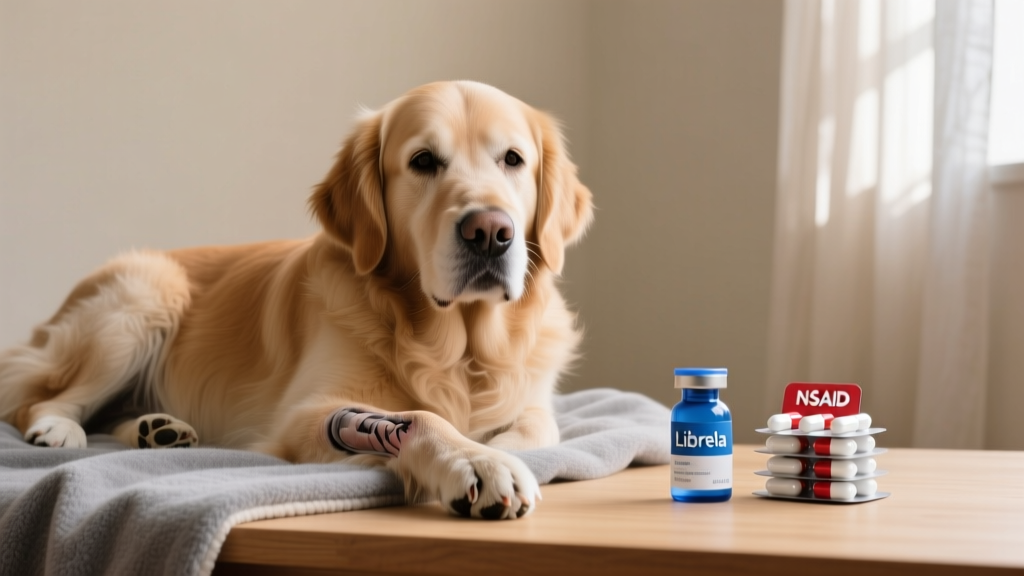
Therapy for Dogs With Torn ACL: Complete Recovery Guide
Explore therapy for dogs with torn ACL including surgical and conservative options, costs, recovery timelines, and prognosis by severity level.

What Is a Torn ACL (CCL) in Dogs?
The canine cranial cruciate ligament (CCL) is the functional equivalent of the human anterior cruciate ligament (ACL). It stabilizes the knee (stifle) joint by preventing the tibia from sliding forward relative to the femur. When this ligament tears — partially or fully — the joint becomes unstable, leading to pain, inflammation, and progressive arthritis.
Unlike human ACL tears that often result from a single traumatic event, most canine CCL tears develop through chronic degeneration of the ligament fibers over months or years. According to the Merck Veterinary Manual, CCL disease is the single most common orthopedic injury in dogs, affecting an estimated 20-40% of dogs at some point in their lives. Approximately 60% of dogs with one torn CCL will rupture the opposite side within 1-2 years.
The tear may be partial (incomplete) or complete. Partial tears involve only a portion of the ligament fibers and can progress to full rupture if not managed. Complete tears result in total joint instability and require more aggressive intervention.
Symptoms of a Torn ACL in Dogs
Recognizing CCL injury early can mean the difference between a partial tear managed conservatively and a complete rupture requiring surgery. Symptoms vary by severity and whether the tear is acute or chronic.
| Severity Level | Early Warning Signs | Advanced Symptoms |
|---|---|---|
| Mild / Partial Tear | Occasional hind-leg limp after exercise Reluctance to jump into car or onto furniture Slight stiffness after resting that improves with movement Subtle swelling around the knee | Consistent limp during walks Noticeable muscle atrophy in affected thigh "Sit test" positive — dog extends injured leg outward when sitting |
| Moderate / Progressive | Audible "click" or "pop" during activity Sudden yelp and three-legged hopping Visible joint thickening (medial buttress) | Persistent lameness lasting more than 48 hours Difficulty rising from lying position Decreased activity and play drive |
| Severe / Complete Rupture | Non-weight-bearing lameness (leg held up entirely) Acute pain vocalization Refusal to walk or bear any weight | Severe muscle wasting within 2-4 weeks Secondary meniscal tear symptoms (catching, locking) Compensatory strain on opposite hind leg and spine |
Risk Factors and Breed Predisposition
Key Risk Factors for CCL Tears
- Breed predisposition: Rottweilers, Newfoundlands, Labrador Retrievers, Staffordshire Terriers, Mastiffs, and Saint Bernards show the highest incidence rates
- Body weight: Dogs over 50 lb (23 kg) face significantly higher risk; obesity increases mechanical stress on the ligament by up to 3x normal load
- Age: Peak incidence occurs between 5-7 years old, though degenerative changes can begin as early as 2-3 years in predisposed breeds
- Tibial plateau angle: Dogs with steeper tibial plateau angles (>25°) experience greater shear forces on the CCL — this is largely genetic and breed-dependent
- Neuter status: Early spay/neuter (before skeletal maturity) may alter growth plate closure timing, potentially affecting joint conformation
- Activity pattern: "Weekend warrior" dogs — sedentary during the week with intense weekend activity — show higher acute rupture rates
- Previous injury: Any prior stifle trauma or contralateral CCL tear increases risk
Small breeds are not immune. Dachshunds, Bichon Frises, and Chihuahuas can develop CCL tears, though the mechanism more often involves acute trauma (jumping off furniture, slipping on floors) rather than chronic degeneration. According to the American Kennel Club, any dog of any size can experience this injury.
How Veterinarians Diagnose a Torn ACL
A proper diagnosis requires hands-on veterinary evaluation. Here's what to expect during the diagnostic process:
- Step 1: Orthopedic Examination
Your vet will perform a cranial drawer test and tibial compression test to assess joint laxity. These manual tests detect forward sliding of the tibia relative to the femur — the hallmark of CCL rupture. Sedation is often needed because muscle tension in a conscious dog can mask instability. Cost: $50-$150 (included in exam or sedation fee). - Step 2: Radiographs (X-rays)
While X-rays don't show the ligament itself, they reveal secondary signs: joint effusion (swelling), osteophyte formation (bone spurs), and tibial plateau angle. These images also rule out fractures, tumors, or other causes of lameness. Cost: $150-$400 depending on views needed and whether sedation is required. - Step 3: Advanced Imaging (if needed)
MRI or CT scans may be recommended for partial tears that are difficult to confirm clinically, or to evaluate meniscal damage. Arthroscopy (a small camera inserted into the joint) provides direct visualization and is sometimes performed at the time of surgery. Cost: $800-$2,500 for MRI; arthroscopy typically bundled with surgical cost. - Step 4: Pre-Surgical Blood Work (if surgery planned)
A complete blood count (CBC) and chemistry panel ensure your dog is a safe anesthesia candidate. Cost: $80-$200.
Therapy Options for Dogs With Torn ACL
Treatment falls into two broad categories: surgical stabilization and conservative (non-surgical) management. The right choice depends on your dog's size, age, activity level, degree of tear, and your budget. Consult your veterinarian to determine the best path for your individual dog.
| Factor | Surgical Repair | Conservative Management |
|---|---|---|
| Best candidates | Dogs over 30 lb (14 kg), active dogs, complete tears | Dogs under 30 lb (14 kg), poor surgical candidates, partial tears, financial constraints |
| Common procedures | TPLO, TTA, lateral suture (extracapsular repair) | Strict rest, NSAIDs, physical therapy, knee brace |
| Success rate | 85-95% return to normal or near-normal function | Variable: 50-70% achieve acceptable function in small dogs; poor outcomes in large dogs |
| Recovery time | 8-12 weeks restricted activity; full recovery 4-6 months | 8-16 weeks of restricted activity; ongoing management often needed |
| Arthritis progression | Slows but does not stop degenerative joint disease | Arthritis progresses more rapidly without stabilization |
| Cost range | $1,500-$5,000+ per knee | $300-$1,500 (braces, medications, rehab sessions) |
| Complication risk | 5-15% (infection, implant failure, meniscal tear) | Low acute risk; high long-term risk of chronic pain and contralateral tear |
Surgical Options Explained
Tibial Plateau Leveling Osteotomy (TPLO): The gold standard for large and giant breeds. The surgeon cuts the tibia and rotates the tibial plateau to a flatter angle (typically 5-6°), eliminating the need for the CCL entirely. A bone plate and screws hold the correction while the bone heals over 8-12 weeks. Cost: $3,000-$5,000+. Most veterinary orthopedic specialists consider TPLO the procedure of choice for dogs over 50 lb (23 kg).
Tibial Tuberosity Advancement (TTA): The front portion of the tibia is cut and moved forward to change the angle of the patellar tendon, neutralizing shear forces. Similar outcomes to TPLO in many cases, though some studies suggest TPLO has a slight edge in very large dogs. Cost: $2,500-$4,500.
Lateral Suture (Extracapsular Repair): A heavy-gauge nylon suture is placed outside the joint to mimic the function of the torn ligament. Best suited for dogs under 50 lb (23 kg) or as a lower-cost option. The suture may stretch or break over time, and outcomes are less predictable in heavy or very active dogs. Cost: $1,500-$2,500.
Conservative (Non-Surgical) Therapy
For dogs that are poor surgical candidates or owners managing budget constraints, conservative therapy can provide meaningful relief — especially in dogs under 30 lb (14 kg) with partial tears.
- Strict activity restriction: 8-12 weeks of crate rest or confined small-room living. Leash-only bathroom breaks. No running, jumping, stairs, or roughhousing. This is the single most important component.
- NSAIDs (prescription): Carprofen (Rimadyl), meloxicam (Metacam), or grapiprant (Galliprant) manage pain and inflammation. Your vet will determine the appropriate medication and dosage based on your dog's weight and health status. Never give human NSAIDs like ibuprofen — they are toxic to dogs.
- Canine knee brace: Custom-fitted stifle braces (such as those from OrthoPets or Hero Braces) provide external stabilization. Cost: $800-$1,800 for a custom brace. Off-the-shelf neoprene sleeves ($30-$80) offer compression and proprioceptive feedback but minimal mechanical stabilization.
- Physical rehabilitation: Certified canine rehabilitation therapists (CCRT or CCRP) guide structured exercise programs including underwater treadmill therapy, therapeutic exercises, laser therapy, and neuromuscular electrical stimulation. Sessions typically cost $75-$150 each, with 1-2 sessions per week recommended for 8-16 weeks.
- Weight management: Every pound of excess weight places approximately 4 lb of additional force on the stifle during movement. Getting an overweight dog to ideal body condition (BCS 4-5/9) is one of the most impactful non-surgical interventions.
- Joint supplements: Omega-3 fatty acids (EPA/DHA at 75-100 mg/kg combined), glucosamine hydrochloride, chondroitin sulfate, and undenatured type II collagen (UC-II) may support joint health. Look for products with the National Animal Supplement Council (NASC) quality seal.
Prognosis and Long-Term Outcomes
Prognosis depends heavily on the treatment approach, the dog's size, and how quickly the injury is addressed.
| Scenario | Expected Outcome | Timeline |
|---|---|---|
| Complete tear, large dog, TPLO/TTA surgery | 85-95% return to full or near-full function. Mild-moderate arthritis expected long-term but usually manageable. | Walking normally by 10-12 weeks; full athletic function by 4-6 months |
| Complete tear, small dog (<30 lb), conservative | 60-75% achieve functional, pain-free gait. Intermittent flare-ups common. Arthritis progresses. | Improvement over 8-16 weeks; ongoing management needed |
| Partial tear, any size, conservative management | May stabilize if caught early. 40-60% of partial tears progress to complete rupture within 6-18 months. | Variable; re-evaluation every 4-6 weeks recommended |
| Complete tear, large dog, no treatment | Poor. Chronic pain, severe arthritis, muscle wasting. High risk of contralateral tear within 6-12 months due to overcompensation. | Progressive deterioration over months |
| Bilateral tears (both knees) | Staged surgeries (one knee at a time, 8-12 weeks apart) yield good results. Mobility significantly impaired until both are addressed. | 6-9 months total recovery for staged bilateral repair |
Life expectancy is generally not affected by a CCL tear itself. However, chronic pain from untreated tears can reduce quality of life, decrease activity (contributing to obesity), and accelerate the need for end-of-life decisions in senior dogs. Dogs that receive appropriate therapy — whether surgical or well-managed conservative care — typically live full, normal lifespans.
Home Care and Recovery Management
Whether your dog is post-surgery or being managed conservatively, home care is critical to a successful outcome.
Weeks 1-2: Strict Rest Phase
- Confine to a crate or small, carpeted room (no slippery floors)
- Leash-walk only for bathroom breaks — use a sling or towel under the belly for support if needed
- Administer all prescribed medications on schedule
- Apply ice packs to the stifle for 10-15 minutes, 3-4 times daily (post-surgery)
- Monitor incision site daily for redness, discharge, or swelling (post-surgery)
- Prevent licking with an Elizabethan collar or recovery suit
Weeks 3-6: Controlled Mobilization
- Gradually increase leash walks by 5 minutes per week (follow your vet or rehab therapist's specific protocol)
- Begin passive range-of-motion exercises: gently flex and extend the stifle through its comfortable arc, 10-15 repetitions, twice daily
- Introduce sit-to-stand exercises: lure your dog to sit squarely and stand, 5-10 repetitions, building gradually
- Continue to prevent running, jumping, stairs, and play with other dogs
Weeks 7-12: Strengthening Phase
- Progress to longer walks on varied terrain (gravel paths, gentle hills)
- Add balance exercises: standing on a cushion or balance disc
- Underwater treadmill sessions if available (the buoyancy reduces joint load while building muscle)
- Follow-up radiographs at 8 weeks (post-TPLO/TTA) to confirm bone healing
- Gradual return to off-leash activity only after veterinary clearance at 12-week recheck
Cost Breakdown: What to Budget For
CCL treatment is one of the most expensive common orthopedic procedures in veterinary medicine. Here's a realistic cost breakdown for 2026:
| Item | Low Range | Mid Range | High Range (Specialist) |
|---|---|---|---|
| Initial exam and diagnosis | $280 | $450 | $750 |
| TPLO surgery (per knee) | $2,800 | $3,800 | $5,500 |
| TTA surgery (per knee) | $2,500 | $3,500 | $4,800 |
| Lateral suture repair | $1,200 | $1,800 | $2,500 |
| Post-op rechecks (2-3 visits) | $150 | $300 | $500 |
| Follow-up X-rays | $120 | $200 | $350 |
| Physical rehabilitation (8-16 sessions) | $600 | $1,200 | $2,400 |
| Medications (NSAIDs, pain control) | $50 | $150 | $300 |
| Total surgical path | $4,000 | $6,100 | $9,800 |
| Total conservative path | $400 | $1,200 | $3,000 |
Bilateral cases: If both knees are affected (common — remember the 60% contralateral tear statistic), expect to nearly double these figures. Some surgeons offer a discount for staging both surgeries, but plan for $6,000-$12,000+ total.
Pet insurance considerations: Most comprehensive pet insurance plans cover CCL surgery if the condition develops after the policy effective date and outside the waiting period (typically 14-30 days for injuries, longer for orthopedic conditions with some insurers). Check for orthopedic sub-limits — some policies cap orthopedic coverage at $1,000-$2,500 per condition. Policies with no sub-limits and 80-90% reimbursement are ideal for this scenario.
Prevention Strategies
While you cannot entirely prevent CCL degeneration — especially in genetically predisposed breeds — you can significantly reduce risk:
- Maintain ideal body condition: Keep your dog at BCS 4-5 out of 9. Research published in the Journal of the American Veterinary Medical Association demonstrates that lean dogs develop orthopedic conditions later and with less severity than overweight counterparts.
- Build core and hindquarter strength: Regular conditioning exercises — hill walking, balance work, swimming — strengthen the muscles that support the stifle joint.
- Avoid explosive activity on slippery surfaces: Hardwood floors, tile, and wet pavement contribute to sudden stifle loading. Use area rugs and yoga mats in high-traffic areas of your home.
- Warm up before intense exercise: Just like human athletes, dogs benefit from 5-10 minutes of walking before sprinting, agility, or fetch sessions.
- Limit repetitive high-impact activities: Excessive ball chasing, frisbee, and jumping from heights (truck beds, high furniture) create cumulative micro-trauma to the CCL.
- Consider genetic screening: If you're selecting a puppy from a predisposed breed, ask the breeder about orthopedic history in the lineage. While CCL disease isn't screened by OFA like hip dysplasia, breeders who prioritize sound structure and moderate angulation may produce dogs with lower risk.
When to See the Vet Immediately
Red Flag Symptoms — Seek Veterinary Care Now
- Non-weight-bearing lameness: Your dog refuses to put any weight on the leg and holds it completely off the ground
- Acute pain vocalization: Yelping, crying, or trembling when the leg is touched or when attempting to move
- Sudden inability to stand: Dog collapses or cannot rise, especially if both hind legs seem affected (could indicate bilateral tear or spinal issue)
- Rapid, severe swelling: The stifle visibly swells within hours of an injury
- Leg appears deformed or at an abnormal angle: This may indicate a fracture rather than or in addition to a ligament tear
- Lethargy, fever, or loss of appetite accompanying lameness: Could signal infection or a more systemic condition
For after-hours emergencies, contact your nearest emergency veterinary hospital. If you suspect your dog has ingested a toxic substance, call the ASPCA Animal Poison Control Center at (888) 426-4435 (24/7, consultation fee applies).
For non-emergency symptoms — mild limping that comes and goes, slight stiffness after rest, gradual decrease in activity — schedule a regular appointment within 1-2 weeks. Early evaluation of partial tears gives you the most treatment options and the best prognosis.
Frequently Asked Questions
Can a dog's torn ACL heal on its own without surgery?
The ligament itself does not regenerate or heal like a cut on the skin. However, in small dogs (under 30 lb / 14 kg), the body can form enough scar tissue and fibrosis around the joint to provide a degree of stability over 8-16 weeks. This is not a true "healing" — the joint remains somewhat unstable and arthritis will progress — but it can result in functional, relatively comfortable ambulation. In large dogs, the forces on the joint are too great for scar tissue to adequately compensate, and surgery is strongly recommended.
How long does recovery take after TPLO surgery?
Most dogs are bearing weight on the operated leg within 2-5 days post-surgery. By 8 weeks, follow-up X-rays typically show sufficient bone healing to begin gradually increasing activity. Full return to unrestricted activity — running, playing, agility — usually takes 4-6 months. The rehabilitation process is a marathon, not a sprint, and premature return to activity is the leading cause of complications.
Is a knee brace a viable alternative to surgery?
Custom stifle braces can be a viable component of conservative management, particularly for small dogs, dogs that are poor anesthesia candidates, or as a bridge while awaiting surgery. They are not a substitute for surgery in large, active dogs with complete tears. A well-fitted brace combined with strict rest and physical therapy can produce acceptable outcomes in select cases, but expect to invest $800-$1,800 in a properly fitted custom device.
Will my dog need surgery on both knees eventually?
Statistics suggest approximately 40-60% of dogs with one CCL tear will rupture the opposite CCL within 1-2 years. This is due to both underlying bilateral degeneration and the increased load placed on the uninjured leg during recovery. Maintaining ideal weight, following a structured conditioning program, and addressing the first tear promptly can reduce — but not eliminate — this risk.
What is the life expectancy of a dog with a torn ACL?
A CCL tear does not shorten life expectancy. Dogs that receive appropriate treatment — surgical or conservative — go on to live full, normal lifespans. The concern is quality of life: untreated tears in large dogs lead to chronic pain, severe arthritis, and reduced mobility that may contribute to difficult end-of-life decisions in senior dogs. Early, appropriate therapy preserves quality of life for years to come.
Anouk Beaumont
All our authors care for dogs every day — read more of their work on the authors page.