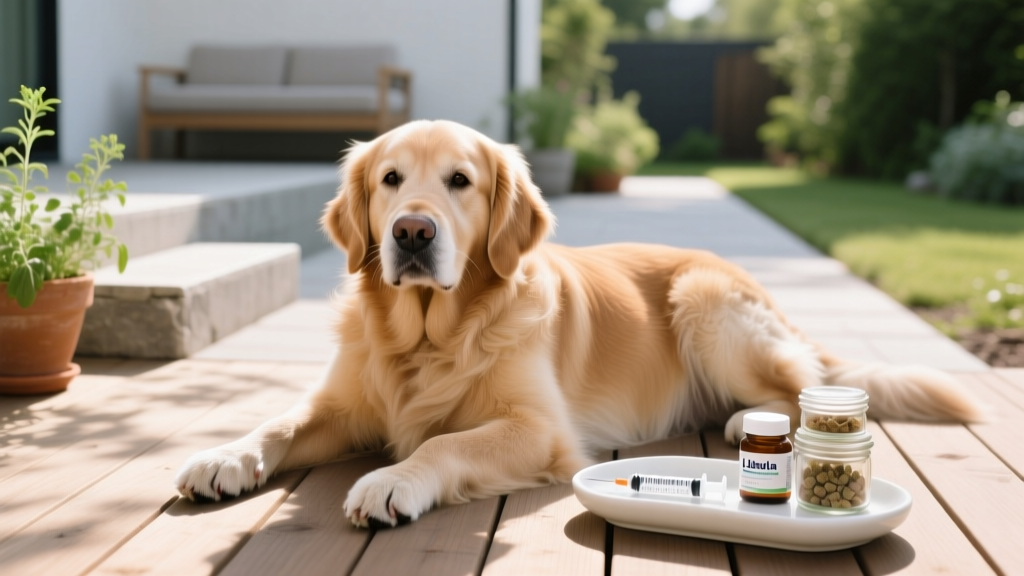
Signs of Dog Dementia: Early Symptoms, Diagnosis & Care Guide
Recognize the early signs of dog dementia, understand diagnosis and treatment options, and learn how to support your senior dog's cognitive health.

What Is Dog Dementia? Understanding Canine Cognitive Dysfunction
Canine Cognitive Dysfunction (CCD) is a progressive neurodegenerative disease in aging dogs that mirrors Alzheimer's disease in humans. It occurs when age-related changes in the brain — including beta-amyloid plaque accumulation, neuronal loss, and decreased neurotransmitter function — cause a measurable decline in memory, learning, perception, and awareness. According to the Merck Veterinary Manual, approximately 28% of dogs aged 11-12 years show clinical signs of CCD, rising to over 68% in dogs aged 15-16 years. Despite its prevalence, an estimated 85% of affected dogs go undiagnosed because owners dismiss symptoms as "normal aging."
CCD is not a single event but a spectrum. Dogs may show mild cognitive impairment (MCI) before progressing to full dementia. The disease is idiopathic in origin — meaning the exact cause is unknown — but oxidative stress, chronic inflammation, and reduced cerebral blood flow all play documented roles. While CCD is not curable, early identification of the signs of dog dementia allows for interventions that can slow progression and significantly improve quality of life.
Recognizing the Signs of Dog Dementia: Symptom Checklist
Veterinarians use the acronym DISHA (Disorientation, Interactions changes, Sleep-wake cycle disruption, House-soiling, Activity changes) to categorize CCD symptoms. Below is a severity-organized checklist to help you monitor your dog.
| Severity | Category | Specific Signs |
|---|---|---|
| Early / Mild | Disorientation | Occasionally stares blankly at walls or corners; hesitates at familiar doorways |
| Interactions | Slightly less responsive to commands; greets family with less enthusiasm | |
| Sleep | Mild restlessness at night; waking 1-2 times per night | |
| Activity | Reduced interest in walks or play; mild decrease in exploration | |
| Moderate | Disorientation | Gets stuck behind furniture; walks to the wrong side of the door; gets lost in familiar rooms |
| House-soiling | Accidents indoors despite prior house-training; appears not to signal to go out | |
| Sleep | Pacing or vocalizing at night; sleeping significantly more during the day | |
| Interactions | Fails to recognize familiar people or pets intermittently; increased clinginess or withdrawal | |
| Advanced / Severe | Disorientation | Cannot navigate own home; repeatedly walks into walls or objects; appears lost in yard |
| Activity | Repetitive behaviors (licking, circling, head-pressing); inability to perform learned tasks | |
| Interactions | Fails to recognize owner; no response to name; fear or aggression toward family members | |
| House-soiling | Complete loss of house-training; urinates/defecates without apparent awareness |
Head-pressing (pushing the head firmly against a wall or surface) is a red-flag symptom that requires immediate veterinary evaluation, as it can indicate serious neurological conditions beyond CCD, including brain tumors or hepatic encephalopathy.
Risk Factors: Which Dogs Are Most Likely to Develop Dementia?
Key Risk Factors for Canine Cognitive Dysfunction
- Age: Primary risk factor. Risk increases sharply after age 10. Dogs over 15 have a 68%+ prevalence rate.
- Breed Predisposition: No breed is immune, but Boxers, Doberman Pinschers, and Cavalier King Charles Spaniels may show earlier onset due to genetic factors. Smaller breeds often live longer, meaning they have a longer window for CCD development.
- Chronic Health Conditions: Dogs with untreated hypothyroidism, Cushing's disease, chronic kidney disease, or uncontrolled diabetes face accelerated cognitive decline due to vascular and metabolic effects on the brain.
- Sedentary Lifestyle: Dogs with minimal physical and mental stimulation show faster cognitive deterioration. A 2023 study in Scientific Reports found that dogs with regular enrichment activities had measurably better cognitive scores in senior years.
- Weight: Obesity (Body Condition Score 7-9/9) increases systemic inflammation and reduces cerebral blood flow, compounding age-related brain changes.
- Genetics: Dogs carrying the APOE ε4 gene variant (analogous to the human Alzheimer's risk gene) show increased beta-amyloid deposition.
How Veterinarians Diagnose Dog Dementia
There is no single definitive test for CCD. Diagnosis is a process of exclusion — your veterinarian must rule out other conditions that produce similar symptoms before confirming cognitive dysfunction. Here is the typical diagnostic pathway:
- Comprehensive History & Behavioral Questionnaire — Your vet will ask you to complete a CCD screening tool such as the CADES (Canine Dementia Scale) or the DISHA assessment. Bring a written log of your dog's symptoms with dates and frequency. Cost: Included in exam fee ($65-$120).
- Full Physical & Neurological Examination — Assessment of cranial nerves, proprioception, reflexes, and pain response to differentiate central brain disease from peripheral issues. Cost: Included in exam fee.
- Blood Work & Urinalysis — Complete blood count (CBC), serum chemistry panel, thyroid panel (total T4, free T4, TSH), and urinalysis to rule out metabolic causes like hypothyroidism, hepatic encephalopathy, and urinary tract infections. Cost: $150-$350.
- Advanced Imaging (MRI or CT Scan) — Brain imaging rules out tumors, strokes, hydrocephalus, and structural abnormalities. MRI is the gold standard for soft tissue evaluation. Cost: $1,200-$3,500 depending on facility and whether sedation/anesthesia is required.
- Cerebrospinal Fluid (CSF) Analysis — In some cases, a CSF tap may be performed to check for inflammatory or infectious CNS diseases. Cost: $200-$500 (in addition to imaging costs, as it requires anesthesia).
Total diagnostic costs typically range from $350 to $4,500+ depending on how extensive the workup needs to be. Many general practice veterinarians will start with blood work and a behavioral assessment, then refer to a veterinary neurologist (DACVIM-Neurology) if imaging is warranted.
Treatment Options: Medical, Supportive & Lifestyle Interventions
While CCD cannot be cured, a multi-modal approach combining medication, nutrition, and environmental management can slow progression and improve your dog's daily functioning. Below is a comparison of current treatment strategies:
| Treatment | Type | Mechanism | Evidence & Outcomes | Monthly Cost |
|---|---|---|---|---|
| Selegiline (Anipryl®) | Prescription (FDA-approved) | MAO-B inhibitor; increases dopamine levels in the brain | 77% of dogs showed improvement in at least one CCD sign within 12 weeks in clinical trials | $40-$120 |
| Propentofylline (Vivitonin®) | Prescription (available in Europe/UK; limited US availability) | Xanthine derivative; improves cerebral blood flow and oxygen utilization | Improvement in alertness and activity reported in 60-70% of cases in European studies | $30-$80 |
| Prescription Diets (Hill's b/d®, Purina NeuroCare®) | Therapeutic nutrition | Antioxidant blend (vitamins E & C, selenium, flavonoids) + medium-chain triglycerides to reduce oxidative brain damage | Hill's b/d showed significant improvement in disorientation, activity, and sleep patterns in a 6-month controlled study | $70-$150 (depending on dog size) |
| Supplements: SAMe (Novifit®), Phosphatidylserine, Omega-3s | OTC supplements | Support cell membrane integrity, neurotransmitter production, and reduce inflammation | SAMe studies show improvement in activity and awareness; Omega-3 (DHA) supports neuronal health | $20-$60 |
| Environmental Enrichment & Mental Stimulation | Lifestyle intervention | Promotes neuroplasticity; slows cognitive decline through novel experiences and problem-solving | Dogs receiving daily enrichment + exercise showed significantly slower CCD progression in longitudinal studies | $0-$50 (puzzle toys, training sessions) |
| Melatonin | OTC supplement | Regulates sleep-wake cycles; mild sedative effect for nighttime restlessness | Widely recommended by veterinary behaviorists for CCD-related sleep disruption; dosage typically 3-9 mg at bedtime depending on dog size | $5-$15 |
Your veterinarian will determine the most appropriate treatment protocol based on your dog's specific symptoms, stage of disease, and any comorbidities. Never start or adjust prescription medications without veterinary guidance.
Prognosis: What to Expect at Each Stage
| Stage | Clinical Presentation | Typical Progression Timeline | Management Focus |
|---|---|---|---|
| Mild (Early) | 1-2 DISHA categories affected; dog remains functional in daily life | May remain at this stage 1-3 years with treatment; some dogs progress within 6-12 months without intervention | Medication + diet + enrichment; most responsive to treatment at this stage |
| Moderate | 3-4 DISHA categories affected; noticeable impact on daily routines and house-training | Progression to severe stage typically within 1-2 years; treatment slows but does not halt decline | Multi-modal therapy; increased home supervision; environmental modifications for safety |
| Severe (Advanced) | All 5 DISHA categories affected; dog unable to function independently | Quality of life assessment critical; many owners elect humane euthanasia at this stage due to distress | Palliative care; quality of life scoring (HHHHHMM scale); end-of-life planning with veterinarian |
According to the American Veterinary Medical Association (AVMA), early diagnosis and treatment can extend the period of good quality of life by months to years. Dogs diagnosed at the mild stage and placed on a comprehensive management plan often maintain stable cognition for 2+ years. However, CCD is ultimately progressive, and there is no cure.
Home Care & Daily Management Strategies
Managing a dog with dementia requires patience, routine, and environmental modifications. Here are specific, actionable strategies organized by need:
Maintaining Orientation & Reducing Anxiety
- Keep furniture in the same place. Rearranging your home disorients a dog already struggling with spatial memory.
- Use nightlights. Low-level LED nightlights in hallways and near the dog's bed reduce nighttime confusion and anxiety.
- Place non-slip rugs or yoga mats on slippery floors. Dogs with CCD may forget how to navigate tile or hardwood, and traction loss increases fall risk.
- Use baby gates to block stairs. Dogs with advanced CCD may forget how to navigate stairs, leading to dangerous falls.
Supporting Sleep-Wake Cycles
- Increase daytime activity. A 20-30 minute walk during daylight hours helps regulate circadian rhythm. Even senior dogs benefit from short, gentle walks.
- Avoid naps after 4 PM. Gently engage your dog with low-stress activities like sniffing games or gentle petting in the evening.
- Consider melatonin supplementation. Ask your vet about dosing — typically 3 mg for dogs under 25 lb (11 kg), 6 mg for 25-50 lb (11-23 kg), and 9 mg for dogs over 50 lb (23+ kg), given 30-60 minutes before bedtime.
- White noise or calming music. Products like Through a Dog's Ear (bioacoustic music designed for canine nervous systems) can reduce nighttime vocalization.
Mental Enrichment (Critical for Slowing Decline)
- Puzzle feeders: Use slow-feed bowls or Kong toys stuffed with soft food. Start with easy difficulty and adjust — the goal is engagement, not frustration.
- Scent work: Hide treats around a room and encourage your dog to find them using nose work. This taps into instinctual foraging behavior and requires minimal physical exertion.
- Short training sessions: 5-minute sessions reviewing known cues (sit, touch, look) with high-value treats. Do not teach complex new behaviors — reinforce existing neural pathways.
- Novel walking routes: New sights and smells provide cognitive stimulation. Even a slow walk around a different block counts.
House-Soiling Management
- Increase potty break frequency to every 3-4 hours during the day. Set phone alarms as reminders.
- Use washable pee pads or indoor grass patches (e.g., Fresh Patch, DoggieLawn) near the door for dogs who can no longer hold it or signal to go out.
- Never punish accidents. Dogs with CCD have lost the cognitive ability to control elimination — punishment increases anxiety and accelerates decline.
Treatment Cost Breakdown: Budgeting for CCD Care
| Expense Category | Low Estimate | High Estimate | Frequency |
|---|---|---|---|
| Initial diagnostic workup (exam + bloodwork + urinalysis) | $250 | $600 | One-time |
| Advanced imaging (MRI/CT) if needed | $1,200 | $3,500 | One-time |
| Selegiline (Anipryl) prescription | $40/month | $120/month | Ongoing |
| Prescription therapeutic diet | $70/month | $150/month | Ongoing |
| Supplements (SAMe, Omega-3, melatonin) | $25/month | $75/month | Ongoing |
| Follow-up vet visits | $65 | $150 | Every 3-6 months |
| Puzzle toys, enrichment supplies | $20 | $80 | As needed |
| Estimated First-Year Total | $2,100 | $6,800+ | — |
| Estimated Annual Ongoing Cost (after first year) | $1,600 | $4,200 | — |
Pet insurance may cover some diagnostic and medication costs if CCD is not classified as a pre-existing condition. Check your policy's coverage for age-related conditions. Some insurers (Trupanion, Healthy Paws) cover prescription medications and therapeutic diets with appropriate riders.
When to See the Vet: Red Flags That Require Immediate Attention
🚨 Call Your Veterinarian Immediately If Your Dog Shows:
- Sudden onset of confusion or disorientation — Rapid cognitive changes suggest acute conditions (stroke, toxin exposure, metabolic crisis), not gradual CCD.
- Head-pressing against walls or objects — Can indicate increased intracranial pressure from a tumor, infection, or hepatic encephalopathy.
- Seizures or collapse — Not a symptom of CCD; requires emergency evaluation.
- Sudden blindness or inability to stand — Neurological emergency.
- Aggression that is new and unprovoked — Could indicate pain, a brain lesion, or rabies risk depending on vaccination status.
- Refusal to eat or drink for 24+ hours — Especially in senior dogs, this signals systemic illness beyond cognitive decline.
- Vocalizing continuously for hours — May indicate severe pain or acute distress rather than CCD-related anxiety.
Emergency contacts: ASPCA Animal Poison Control: (888) 426-4435 (24/7, consultation fee applies) if you suspect toxin ingestion. Pet Poison Helpline: (855) 764-7661.
For gradual-onset symptoms that match the early or moderate DISHA checklist, schedule a non-emergency veterinary appointment within 1-2 weeks. Bring a written symptom log with dates, frequency, and specific behaviors observed. Video clips of unusual behaviors are extremely helpful for your vet's assessment.
Prevention: Can You Reduce Your Dog's Dementia Risk?
While age-related cognitive decline cannot be entirely prevented, research shows that proactive measures during middle age (7-10 years, depending on breed size) can delay onset and reduce severity:
- Consistent physical exercise: Minimum 30 minutes of daily activity appropriate to your dog's fitness level. Aerobic exercise increases cerebral blood flow and stimulates brain-derived neurotrophic factor (BDNF), a protein that supports neuron health.
- Daily mental enrichment: Puzzle feeders, scent work, training sessions, and novel environments. A dog's brain follows a "use it or lose it" principle — cognitive reserve built through lifelong learning provides a buffer against age-related decline.
- Antioxidant-rich nutrition: Diets supplemented with vitamins E and C, selenium, L-carnitine, and alpha-lipoic acid have been shown to reduce oxidative brain damage. Transitioning to a senior-formulated or cognitive-support diet around age 7-8 (earlier for giant breeds) is recommended.
- Regular veterinary screenings: Biannual wellness exams after age 7 allow early detection of conditions (hypothyroidism, hypertension, dental disease) that accelerate cognitive decline when untreated.
- Dental health maintenance: Chronic periodontal disease is linked to systemic inflammation that affects the brain. Daily tooth brushing and professional cleanings under anesthesia (when recommended by your vet) reduce inflammatory burden.
- Weight management: Maintaining a Body Condition Score of 4-5/9 throughout life reduces chronic inflammation and vascular damage that contribute to brain aging.
Frequently Asked Questions
Can dog dementia be cured?
No. CCD is a progressive, irreversible neurodegenerative disease. However, treatment with selegiline, therapeutic diets, supplements, and environmental enrichment can slow progression and maintain quality of life for months to years after diagnosis. The goal of treatment is management, not cure.
What is the life expectancy of a dog with dementia?
Life expectancy depends on the age at diagnosis and the rate of progression. Dogs diagnosed at the mild stage often live 2-4 more years with treatment. Dogs diagnosed at an advanced stage may have a significantly shorter timeline, and quality of life becomes the primary consideration. CCD itself is not directly fatal, but the secondary effects — inability to eat, drink, or move safely — often lead owners and veterinarians to discuss humane euthanasia when quality of life declines below acceptable thresholds.
Which breeds are most prone to dog dementia?
CCD affects all breeds, but prevalence correlates with lifespan. Small breeds that live into their mid-to-late teens (Chihuahuas, Toy Poodles, Dachshunds) have a higher cumulative risk simply because they reach the high-risk age range. Some studies suggest Boxers and Doberman Pinschers may have genetic predispositions to earlier onset. Mixed-breed dogs are not protected — the AKC notes that CCD affects purebreds and mixed breeds alike.
Is dog dementia the same as Alzheimer's disease?
CCD shares striking pathological similarities with Alzheimer's, including beta-amyloid plaque accumulation and neurofibrillary changes. However, dogs do not develop the tau protein tangles that are a hallmark of advanced Alzheimer's. The clinical presentation is analogous — memory loss, disorientation, personality changes — but the underlying pathology differs in some key respects.
How can I tell the difference between normal aging and dementia?
Normal aging in dogs involves gradual slowing: slightly less energy, longer naps, mild stiffness. CCD involves cognitive dysfunction — the dog forgets learned behaviors, becomes disoriented in familiar spaces, loses house-training, or fails to recognize family members. If the changes are primarily physical (slower movement, greying muzzle, mild hearing loss), that is normal aging. If the changes are cognitive and behavioral, schedule a veterinary assessment.
Should I get another dog to keep my senior dog company?
Generally, no — at least not without careful consideration. A dog with CCD is already struggling to process their environment. Adding a new dog introduces stress, disruption of routine, and potential conflict. If your dog has a lifelong history of enjoying other dogs, a calm, low-energy companion might help, but consult a veterinary behaviorist before making this decision.
Robin Maitland
All our authors care for dogs every day — read more of their work on the authors page.