Signs of Canine Pregnancy: Week-by-Week Guide for Dog Owners
Canine pregnancy signs by week: behavioral changes, physical symptoms, vet care, nutrition, and whelping prep.
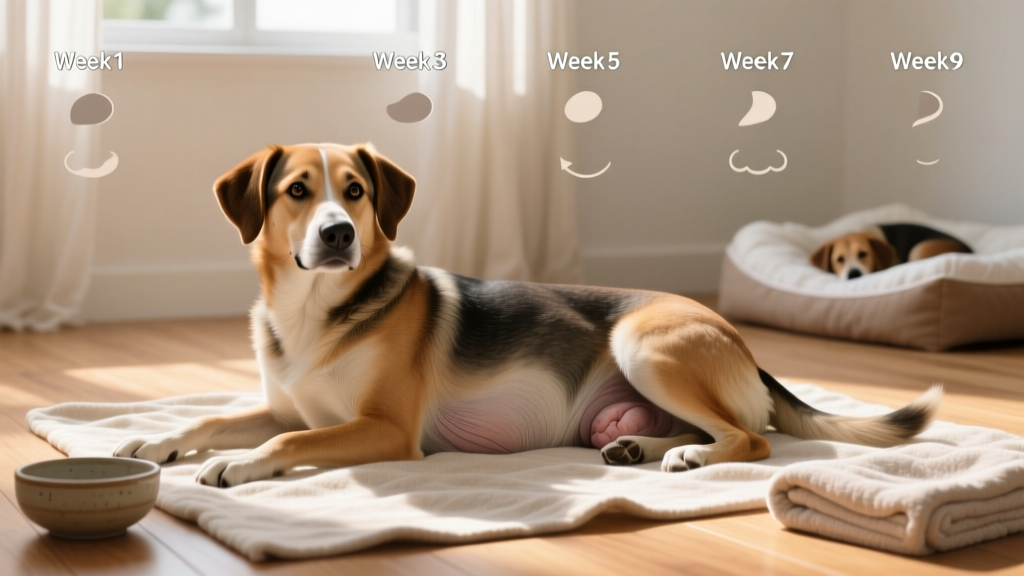
Understanding Canine Pregnancy: The Life Stage Overview
Canine pregnancy — also called gestation — is one of the most transformative life stages a female dog will experience. Lasting approximately 63 days (roughly 9 weeks), it demands precise nutritional support, environmental adjustments, and veterinary monitoring that differ dramatically from routine adult dog care.
If you suspect your dog might be pregnant — whether through a planned breeding with a responsible breeder who performed health testing (OFA hips, cardiac clearance, genetic panels) or an accidental mating — recognizing the signs of canine pregnancy early allows you to adjust her care before critical developmental windows close.
Life Stage Timeline: Pregnancy Within Your Dog's Reproductive Window
Unlike human pregnancy, canine pregnancy compresses all fetal development into just over two months. A dog's reproductive life stage spans from her first estrus cycle (heat) until spaying or natural reproductive senescence. Here's how that timeline breaks down by breed size:
| Breed Size Category | First Heat (Estrus) | Recommended Minimum Breeding Age | Typical Weight Range | Recommended Retirement from Breeding |
|---|---|---|---|---|
| Small (under 22 lb / 10 kg) | 6–9 months | 2 years (after 2nd–3rd heat) | 5–22 lb / 2–10 kg | 5–6 years |
| Medium (22–55 lb / 10–25 kg) | 6–12 months | 2 years | 22–55 lb / 10–25 kg | 5–6 years |
| Large (55–90 lb / 25–41 kg) | 9–15 months | 2 years (some breeds 2.5 years) | 55–90 lb / 25–41 kg | 5–6 years |
| Giant (over 90 lb / 41 kg) | 12–24 months | 2.5–3 years | 90+ lb / 41+ kg | 5 years |
Breeding a dog before her skeletal and organ maturity is complete increases the risk of dystocia (difficult birth), inadequate milk production, and maternal health complications. The Merck Veterinary Manual emphasizes that physical maturity — not just sexual maturity — should dictate breeding readiness.
Early Signs of Canine Pregnancy: Weeks 1–3
The first three weeks of canine pregnancy are notoriously difficult to confirm without veterinary diagnostics. Fertilization occurs in the oviducts, and embryos don't implant in the uterine wall until approximately day 18–20. During this window, visible signs are subtle or absent.
What You Might Observe (Weeks 1–3)
- Decreased appetite (similar to morning sickness in humans, affecting roughly 30–40% of pregnant dogs)
- Lethargy or reduced activity — your normally energetic dog may sleep 2–4 extra hours per day
- Slight nipple enlargement — the areolae may appear more pink and prominent, though this also occurs during false pregnancy (pseudocyesis)
- Behavioral shifts — some dogs become more clingy or seek quiet spaces; others show no change
- Clear vaginal discharge around week 3–4 (small amounts are normal; bloody or foul-smelling discharge is not)
• Day 21–25: Relaxin hormone blood test (the only definitive biochemical pregnancy test for dogs — available through most vet clinics, costs $50–$120)
• Day 25–35: Abdominal ultrasound (can visualize fetal heartbeats by day 25–28, costs $150–$350 depending on clinic)
• Day 45+: Abdominal X-rays (best for counting fetal skeletons to know expected litter size, costs $150–$400)
Mid-Pregnancy Changes: Weeks 4–6
By week 4, the embryos have implanted and organogenesis (organ formation) is underway. This is when the signs of canine pregnancy become more reliably observable at home — and when your dog's care needs shift most dramatically.
Physical Changes (Weeks 4–6)
- Weight gain begins: Expect a 10–15% increase over her pre-pregnancy weight by week 5, accelerating to 20–50% total gain by whelping (varies by litter size)
- Abdominal enlargement: Noticeable by week 5 in most dogs; more subtle in large-breed dogs carrying small litters
- Mammary development: Nipples darken, enlarge, and may begin producing small amounts of colostrum by week 6
- Appetite increase: Food intake typically rises 25–50% above maintenance by week 5
Nutritional Modifications During Mid-Pregnancy
This is the stage where switching to a puppy formula or performance diet becomes critical. Adult maintenance food does not provide adequate calcium, phosphorus, DHA, or caloric density for fetal development.
| Gestation Period | Caloric Increase | Food Type | Feeding Frequency | Key Supplements |
|---|---|---|---|---|
| Weeks 1–4 | No increase (maintenance) | Current adult diet | 2x daily | None unless vet-directed |
| Weeks 5–6 | +10–20% above maintenance | Transition to AAFCO "growth/reproduction" formula | 2–3x daily | DHA/EPA if not in food |
| Weeks 7–8 | +25–50% above maintenance | Puppy or all-life-stages formula (high-quality) | 3–4x daily (smaller meals) | Continue prenatal support per vet |
| Week 9 (pre-whelping) | Appetite may drop 20–30% | Same diet, offered frequently | 4+ small meals | Ensure calcium availability post-whelping |
| Lactation (weeks 1–4 post-whelping) | +200–400% above maintenance | Puppy formula continued | Free-choice or 4–6x daily | Calcium support (vet-guided only) |
Specific food brands that meet AAFCO growth/reproduction standards and are commonly recommended include Royal Canin Mother & Babycat (Small/Medium/Maxi Starter), Purina Pro Plan Sport 30/20, and Hill's Science Diet Puppy. Expect to spend $60–$120/month on food during peak pregnancy and lactation for a medium-sized dog.
Late Pregnancy: Weeks 7–9 and Preparing for Whelping
The final weeks bring rapid fetal growth — puppies gain approximately 75% of their birth weight in the last two weeks of gestation. Your dog's body is under significant metabolic stress, and your role shifts to active preparation.
Physical and Behavioral Signs (Weeks 7–9)
- Visible abdominal distension — you may see or feel puppy movement (quickening) by week 7–8, especially when the dog is relaxed on her side
- Nesting behavior — shredding bedding, seeking dark enclosed spaces, rearranging blankets (typically starts week 8)
- Frequent urination — the gravid uterus compresses the bladder
- Restlessness and panting — especially in the final 48–72 hours before whelping
- Temperature drop — rectal temperature falls from a normal 101–102.5°F (38.3–39.2°C) to below 99°F (37.2°C) within 24 hours of labor onset
- Appetite decrease — many dogs refuse food 12–24 hours before active labor
Exercise Modifications Throughout Pregnancy
Exercise needs change progressively. Here's what's appropriate at each stage:
- Weeks 1–4: Maintain normal exercise routine (30–60 min walks, play sessions). Avoid new high-impact activities.
- Weeks 5–6: Reduce intensity by ~20%. Replace running/jumping with leash walks. Swimming remains excellent low-impact exercise.
- Weeks 7–8: Short, frequent walks (15–20 min, 3x daily). No jumping on/off furniture. Provide ramps for elevated sleeping spots.
- Week 9: Minimal forced exercise. Allow her to self-regulate. Short potty walks only. Keep her close to the whelping area.
- Post-whelping (weeks 1–3): Brief outdoor potty breaks only. The dam will want to return to puppies quickly.
- Post-whelping (weeks 4–6): Gradually reintroduce 15–20 min leash walks as puppies begin supplemental feeding.
Health Screening Schedule for Pregnant Dogs
A structured veterinary screening protocol protects both the dam and her puppies. Here's the recommended schedule with typical cost ranges (US averages, 2026 pricing):
| Timing | Test/Procedure | Purpose | Typical Cost |
|---|---|---|---|
| Pre-breeding (ideally) | Brucellosis screening | Rule out infectious cause of abortion | $40–$80 |
| Pre-breeding | Thyroid panel (full) | Hypothyroidism affects fertility and litter viability | $80–$150 |
| Day 21–25 | Relaxin pregnancy test | Confirm pregnancy biochemically | $50–$120 |
| Day 28–35 | Abdominal ultrasound | Confirm viability, estimate litter size, check fetal heartbeats | $150–$350 |
| Day 45–55 | Abdominal radiographs (X-ray) | Count fetal skeletons for accurate litter size (critical for detecting retained puppies during whelping) | $150–$400 |
| Day 55–58 | Pre-whelping exam + bloodwork | CBC, chemistry panel to assess metabolic readiness | $100–$250 |
| Day 58–60 | Progesterone level (optional) | Helps predict whelping timing if breeding date uncertain | $60–$120 |
Total veterinary costs for pregnancy monitoring typically range from $500–$1,500 for an uncomplicated pregnancy, excluding emergency C-section costs ($1,500–$4,000+).
Common Health Problems During Canine Pregnancy
While most canine pregnancies proceed without major complications, certain conditions require immediate veterinary intervention. Knowing the early warning signs can save your dog's life.
Conditions to Watch For
- Pyometra (uterine infection): Can occur if breeding introduces bacteria. Signs include fever, lethargy, foul vaginal discharge, and increased thirst. This is a surgical emergency. Treatment cost: $1,500–$5,000+.
- Pregnancy toxemia: Rare but serious. Occurs in late gestation, especially in small breeds carrying large litters. Signs: anorexia, lethargy, sweet-smelling breath (ketones), collapse.
- Eclampsia (hypocalcemia): Typically occurs during lactation rather than pregnancy. Signs include muscle tremors, rigidity, seizures, and hyperthermia. IV calcium gluconate is the emergency treatment.
- Fetal resorption or abortion: May present as sudden disappearance of pregnancy signs, vaginal discharge, or fever. Ultrasound monitoring helps detect early.
- Dystocia (difficult birth): Brachycephalic breeds (Bulldogs, Pugs, Boston Terriers) have dystocia rates exceeding 80% due to fetal head size relative to the birth canal. Plan a C-section proactively with your vet for these breeds.
- Rectal temperature above 103.5°F (39.7°C) at any stage
- Foul-smelling, green, or bloody vaginal discharge before day 58
- Complete food refusal lasting more than 24 hours (weeks 5–8)
- Active straining for more than 30 minutes without producing a puppy
- More than 4 hours between puppies during active labor
- Visible puppy or fluid-filled sac protruding without progress for 15+ minutes
- Seizures, collapse, or extreme lethargy at any point
For after-hours toxic ingestion concerns, contact the ASPCA Animal Poison Control: (888) 426-4435 (24/7, consultation fee applies).
Home Environment Adjustments for Pregnant and Whelping Dogs
Preparing your home environment reduces stress on the dam and improves puppy survival rates. Start modifications by week 6–7.
Whelping Box Setup
A proper whelping box should be:
- Size: 1.5x the dam's body length (nose to tail base) in width, and 2x in length. For a 50 lb (23 kg) dog, that's approximately 48" x 36" (122 cm x 91 cm).
- Pig rails: Install 4–6" (10–15 cm) rails around the interior perimeter, 3–4" above the floor, to prevent the dam from accidentally crushing puppies against the wall.
- Bedding: Use washable whelping pads (Vetbed or similar — $30–$60 for a set) rather than towels, which can snag puppy claws.
- Temperature: Maintain 85°F (29.4°C) in the whelping area for the first week post-birth, using a heat lamp or ceramic heat emitter positioned over one corner (not the entire box — puppies need to be able to move away from heat). Reduce by 5°F per week to 75°F (23.9°C) by week 4.
- Location: A quiet, low-traffic room with dimmable lighting. Restrict visitor access for the first 2 weeks.
Commercial whelping boxes (e.g., EZ Whelp at $150–$300 depending on size) offer easy-clean surfaces and built-in pig rails. DIY options using sealed plywood and PVC rails work well at $50–$100 in materials.
Additional Home Modifications
- Ramps: Install low-angle ramps (15–18° incline) for any elevated sleeping areas or vehicle access. Cost: $30–$80 for pet-grade ramps.
- Non-slip flooring: Place rubber-backed mats on hardwood/tile to prevent splaying injuries during late pregnancy when the dog's center of gravity shifts.
- Separation from other pets: Introduce the whelping room 2–3 weeks before due date so the dam establishes it as her territory. Other household dogs should be separated during whelping and the first 2 weeks postpartum.
Veterinary Visit Frequency and What to Discuss
A pregnant dog requires more frequent veterinary contact than a typical adult dog. Here's the recommended schedule:
- Pre-breeding or day 1 post-mating: Initial consultation — review health testing, vaccination status (vaccines should be current BEFORE breeding, not during), and deworming protocol
- Day 21–28: Pregnancy confirmation (relaxin test and/or ultrasound)
- Day 45–55: Radiograph for fetal count
- Day 58–60: Pre-whelping exam — discuss emergency C-section plan, after-hours vet availability, and when to call
- Within 48 hours post-whelping: Post-partum check — vet evaluates dam for retained placentas/puppies, mastitis, and milk production; checks puppies for cleft palate, umbilical health, and weight
- 2 weeks post-whelping: Follow-up for dam and litter assessment
Total vet visits during a standard pregnancy: 5–7 appointments from confirmation through weaning.
Behavioral Changes and Emotional Support During Pregnancy
Hormonal fluctuations during canine pregnancy drive significant behavioral shifts. Understanding these helps you respond appropriately rather than misinterpreting them as disobedience or illness.
Common Behavioral Shifts
- Increased clinginess or attachment (weeks 3–6) — the dog may follow you room to room and resist being alone
- Nesting and denning (weeks 7–9) — digging, shredding, rearranging bedding in the whelping area
- Appetite fluctuations — early nausea followed by voracious hunger, then late-pregnancy appetite drop
- Reduced tolerance for other dogs — especially in multi-dog households; resource guarding of space and food may emerge
- Vocalization increases — whining, panting, and restlessness intensify in the final 48 hours
Support these changes with patience and environmental management. Use positive reinforcement to reward calm behavior in the whelping area. Never punish nesting instincts — redirect inappropriate nesting (e.g., destroying couch cushions) by providing acceptable nesting materials like clean fleece blankets in the whelping box.
Frequently Asked Questions About Canine Pregnancy
How can I tell if my dog is pregnant without a vet visit?
Home observation alone cannot definitively confirm canine pregnancy. Nipple enlargement, weight gain, and behavioral changes also occur in false pregnancy (pseudocyesis), which affects up to 50–75% of intact female dogs after estrus. The relaxin blood test (day 21+) is the only reliable at-home-indicator confirmation. Ultrasound at day 28+ provides visual confirmation with fetal heartbeat detection.
When should I see the vet more frequently during pregnancy?
Increase vet visits from the standard annual checkup to a minimum of 5–7 visits spanning confirmation through post-whelping. If your dog has a history of dystocia, is a brachycephalic breed, is carrying a large litter, or shows any concerning symptoms, additional monitoring visits may be needed. Discuss an emergency plan with your vet by week 8.
Can I continue training my pregnant dog?
Yes, with modifications. Continue positive reinforcement training sessions at reduced intensity through week 6. After week 7, limit training to gentle, low-stress exercises. Avoid any training involving physical corrections, jumps, or prolonged holds. Mental enrichment (puzzle toys, scent work at low level) is beneficial throughout pregnancy.
How do I know if my pregnant dog is suffering or in distress?
Key distress indicators include: sustained fever above 103.5°F (39.7°C), green or bloody discharge before day 58, complete food refusal beyond 24 hours in mid-pregnancy, labored breathing, collapse, or signs of pain (whining when touched, hunched posture, trembling). Any of these warrant immediate veterinary evaluation.
What is the emotional toll on owners during canine pregnancy and whelping?
Canine pregnancy and whelping carry genuine emotional weight — especially for first-time breeders. Sleep disruption (checking temperature every few hours near term, monitoring whelping through the night), anxiety about potential complications, and the possibility of puppy loss are real stressors. Line up support: have a trusted friend or family member available for night shifts, connect with experienced breeders through breed clubs, and know your emergency vet's after-hours protocol before you need it. The AVMA's whelping resources offer additional guidance for owners navigating this process.
What are the costs of canine pregnancy and whelping?
Budget realistically for the following ranges (US, 2026):
- Routine prenatal vet care: $500–$1,500
- Food cost increase (pregnancy + 8 weeks lactation): $200–$600
- Whelping supplies (box, pads, heat lamp, scale, emergency kit): $200–$500
- Emergency C-section: $1,500–$4,000+
- Puppy care (deworming, first vaccines, microchipping): $50–$100 per puppy
Total expected range for an uncomplicated pregnancy: $1,200–$3,000. With complications or C-section: $3,000–$7,000+.
Aaron Whyte
All our authors care for dogs every day — read more of their work on the authors page.


