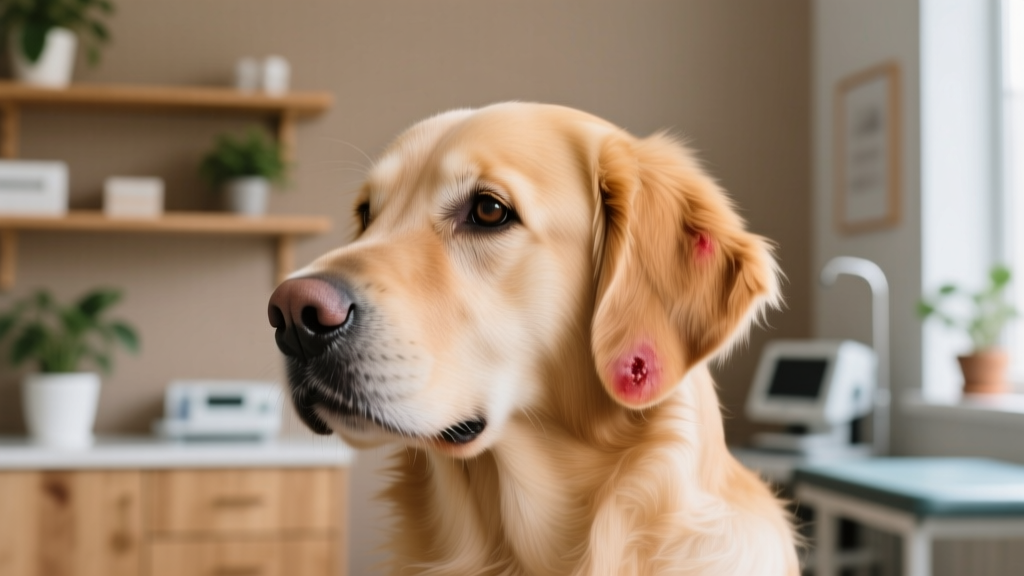
Sebaceous Cysts in Dogs: Identification, Treatment & Cost Guide
Complete guide to sebaceous cysts in dogs — symptoms, diagnosis, treatment options, costs, and when to see the vet.

If you've noticed a smooth, round lump under your dog's skin that feels like a small marble or grape, you may be dealing with a sebaceous cyst. A sebaceous cyst in dogs is a benign, fluid- or semi-solid-filled sac that develops when a sebaceous (oil) gland or hair follicle becomes blocked. These cysts are lined with epithelial cells and typically contain a thick, white-to-yellowish substance called sebum or keratinous material. They are among the most common skin growths seen in general veterinary practice, accounting for a significant portion of cutaneous masses presented during routine exams.
While the term "sebaceous cyst" is widely used by pet owners and even some clinicians, veterinary dermatologists more accurately classify many of these as follicular cysts or infundibular keratinizing acanthomas (IKAs). True sebaceous cysts originate from sebaceous glands specifically, but the practical management remains similar across these related types. The good news: the vast majority are harmless, slow-growing, and non-cancerous. However, any new lump on your dog warrants professional evaluation to rule out more serious conditions like mast cell tumors or soft tissue sarcomas.
What Are Sebaceous Cysts in Dogs?
Sebaceous cysts form when the duct of a sebaceous gland — a tiny gland attached to hair follicles that produces oily sebum to lubricate the skin and coat — becomes obstructed. Sebum and dead skin cells accumulate inside the blocked gland, creating a contained, rounded sac beneath the skin's surface. According to the Merck Veterinary Manual, these cysts can range from a few millimeters to several centimeters in diameter, though most remain under 2 cm (roughly 0.8 inches).
These cysts can appear anywhere on a dog's body but are most commonly found on the:
- Head and neck region
- Back and flanks
- Chest and shoulder area
- Legs (particularly the upper limbs)
- Near the base of the tail
Most sebaceous cysts are solitary, but some dogs develop multiple cysts, particularly breeds with genetic predisposition to follicular disorders. They typically grow slowly over weeks to months and may remain stable in size for years.
Recognizing the Symptoms: Early Warning Signs vs. Advanced Presentation
Sebaceous cysts have a characteristic appearance, but symptoms evolve as the cyst matures, becomes inflamed, or ruptures. Use this checklist to assess what stage your dog's cyst may be in.
| Severity Level | Symptoms | Urgency |
|---|---|---|
| Early / Mild | Small, smooth, round lump under skin; freely movable; normal skin color over lump; no pain on palpation; no discharge | Schedule routine vet visit within 1–2 weeks |
| Moderate / Inflamed | Lump increasing in size; skin over cyst appears red or warm; dog shows mild discomfort when touched; slight swelling of surrounding tissue; occasional thin discharge (clear or whitish) | Vet visit within 3–5 days |
| Advanced / Ruptured or Infected | Cyst has burst open; thick white/yellow/bloody discharge; foul odor; surrounding skin ulcerated or raw; dog licking or scratching area excessively; signs of pain (whimpering, guarding); possible fever or lethargy; secondary bacterial infection | Vet visit within 24–48 hours |
A key distinguishing feature: sebaceous cysts typically feel like a well-defined, round structure beneath the skin that you can gently roll between your fingers. If a lump feels irregular, fixed to underlying tissue, rapidly growing, or has an ulcerated surface, these are red flags for more serious conditions and require prompt veterinary attention.
Breed Predisposition and Risk Factors
🔍 Key Risk Factors for Sebaceous Cysts
Breeds at higher risk: Cocker Spaniels, Schnauzers (all sizes), Basset Hounds, Beagles, Poodles, Yorkshire Terriers, Airedale Terriers, Labrador Retrievers, and German Shepherds show higher incidence rates. Dogs with corded or dense double coats are also somewhat predisposed due to increased follicular occlusion risk.
Age: Most commonly seen in middle-aged to senior dogs (6–10 years). Rare in dogs under 2 years old unless associated with a breed-specific follicular disorder.
Genetics: Dogs with a family history of cystic skin conditions are more likely to develop multiple cysts. Certain inherited conditions, such as multiple epitrichial follicular cysts, are documented in breeds like Miniature Schnauzers.
Coat and skin type: Dogs with oily skin (seborrhea) or those prone to recurrent skin infections have increased risk of gland blockages.
Environmental factors: Frequent exposure to dirt, dust, or environmental debris can contribute to follicular occlusion. Dogs that spend significant time outdoors in brush or wooded areas may have slightly higher incidence.
Weight: Obesity is not a direct cause, but overweight dogs with skin folds (particularly around the neck, armpits, and groin) may experience more glandular blockages in those areas due to friction and moisture accumulation.
How Veterinarians Diagnose Sebaceous Cysts
While a sebaceous cyst often has a characteristic appearance, your veterinarian will not diagnose based on visual inspection alone. Several types of skin masses — including mast cell tumors, lipomas, histiocytomas, and soft tissue sarcomas — can mimic the look and feel of a benign cyst. Proper diagnosis follows a systematic process.
Diagnostic Steps Your Vet Will Follow
- Physical Examination ($50–$90 office visit fee): Your vet will palpate the mass — noting its size, shape, mobility, consistency (soft vs. firm), and whether it's attached to underlying structures. They'll check for additional masses and assess overall skin and coat health.
- Fine Needle Aspirate (FNA) / Cytology ($40–$120): This is typically the first diagnostic test. A thin needle is inserted into the mass to extract cells, which are then examined under a microscope. For sebaceous cysts, the aspirate usually yields keratin debris, sebaceous material, or cholesterol crystals. FNA can often differentiate a cyst from a tumor in a single visit.
- Surgical Biopsy and Histopathology ($200–$500): If FNA results are inconclusive, if the mass has atypical features, or if the cyst is being surgically removed anyway, the tissue is sent to a veterinary pathology lab for definitive diagnosis. This is the gold standard and provides a confirmed tissue-level diagnosis. Results typically return in 5–10 business days.
- Additional Testing (if indicated): Blood work ($80–$200) may be recommended before surgical removal to ensure your dog is a safe anesthesia candidate. In rare cases where a mass is near critical structures, imaging such as ultrasound ($300–$500) may be used to assess depth and involvement.
The American Kennel Club emphasizes that any lump larger than a pea, growing in size, or changing in appearance should be evaluated by a veterinarian rather than monitored at home without a baseline diagnosis.
Treatment Options: What Works and When
Not every sebaceous cyst requires treatment. The decision depends on the cyst's size, location, whether it's causing discomfort, and whether it has ruptured or become infected. Here's how the main approaches compare.
| Treatment Approach | Best For | Cost Range | Success / Recurrence |
|---|---|---|---|
| Watchful Waiting (Monitoring) | Small, stable cysts confirmed benign by FNA; no discomfort or cosmetic concern | $40–$120 (initial FNA only) | Cyst may remain stable indefinitely; ~15–30% may slowly enlarge over months/years |
| Medical Management (Infected Cysts) | Inflamed or secondarily infected cysts; dogs that are poor surgical candidates | $80–$250 (antibiotics + anti-inflammatories + recheck) | Resolves acute infection/inflammation but does not eliminate the cyst; high recurrence rate if cyst wall remains |
| Surgical Excision | Large, recurrent, ruptured, or bothersome cysts; masses where malignancy hasn't been fully ruled out | $300–$1,200 (depends on size, location, anesthesia needs) | Curative when entire cyst wall is removed intact; recurrence rate <5% with complete excision |
| Laser Ablation / Cryotherapy | Small superficial cysts; dogs where general anesthesia is risky; multiple small cysts | $150–$500 per session | Variable; less data on long-term recurrence; may require repeat sessions |
Surgical Removal: What to Expect
When surgical excision is recommended, the procedure is typically straightforward. Your veterinarian will sedate or place your dog under general anesthesia, make an elliptical incision around the cyst, and carefully dissect the entire cyst wall from surrounding tissue. The critical step is removing the intact cyst lining — if any portion of the epithelial wall remains, the cyst can reform.
Post-surgery, your dog will likely go home the same day with:
- An Elizabethan collar (cone) to prevent licking or scratching the incision
- Oral antibiotics (typically cephalexin or amoxicillin-clavulanate) for 7–14 days
- NSAID pain medication (carprofen or meloxicam) for 3–5 days
- Suture removal at 10–14 days post-op (unless absorbable sutures were used)
The removed tissue is almost always submitted for histopathology as a confirmation step, even when the diagnosis seems clear.
Why You Should Never "Pop" a Sebaceous Cyst at Home
This cannot be overstated: do not attempt to squeeze, lance, or drain a sebaceous cyst yourself. While it may seem logical to simply drain the contents, this approach causes several problems:
- The cyst wall remains intact, guaranteeing recurrence (often within weeks)
- Squeezing can rupture the cyst internally, releasing keratin into surrounding tissue and triggering a severe inflammatory response or granuloma formation
- Introducing bacteria through non-sterile technique leads to secondary abscesses
- You cannot confirm the mass is actually a cyst — draining a mast cell tumor can cause massive histamine release and anaphylaxis
Prognosis and Long-Term Outlook
The prognosis for dogs with sebaceous cysts is excellent. These are benign growths that do not metastasize, invade surrounding tissue, or progress to cancer. A confirmed sebaceous cyst does not shorten a dog's life expectancy in any measurable way.
| Cyst Status | Prognosis | Expected Outcome |
|---|---|---|
| Small, stable, unruptured | Excellent | May remain unchanged for dog's lifetime; no treatment needed; normal lifespan |
| Enlarging but intact | Excellent | Surgical removal is curative; full recovery in 2 weeks; normal lifespan |
| Ruptured or infected | Good to Excellent | Requires medical management to resolve infection, followed by elective surgical removal; healing takes 2–4 weeks; normal lifespan |
| Multiple recurrent cysts | Good | May require periodic surgical removal of problematic cysts; not life-threatening but ongoing management needed; normal lifespan |
The main complications are secondary infection and local tissue irritation from rupture — both manageable with veterinary care. Dogs that develop multiple cysts over their lifetime may need several minor surgical procedures, but each individual cyst remains a benign, solvable problem.
Home Care and Daily Management
If your veterinarian has confirmed a cyst is benign and recommended monitoring rather than immediate removal, here's how to manage it at home.
Monitoring Protocol
- Measure weekly: Use a soft tape measure or calipers to record the cyst's diameter. Photograph it next to a coin for scale. Keep a log in your phone notes with dates and measurements.
- Check for changes: Note any color changes in the overlying skin, new discharge, warmth, or if your dog begins paying attention to the area (licking, scratching, rubbing against furniture).
- Set a threshold: Discuss with your vet what size increase should trigger re-evaluation. A common guideline: if the cyst doubles in diameter or exceeds 2–3 cm, schedule a recheck.
Grooming and Skin Care
- Gentle brushing: Regular brushing helps prevent matting and debris accumulation around hair follicles. Use a slicker brush or pin brush appropriate for your dog's coat type.
- Bathing: Bathe your dog with a mild, veterinary-formulated shampoo (such as one containing chlorhexidine 2% or oatmeal-based formulas) every 2–4 weeks if your dog is prone to cysts. Avoid harsh human shampoos or heavily fragranced products.
- Avoid friction: If a cyst is in an area where a harness or collar rubs, switch to a different style or add padding to prevent chronic irritation that could trigger rupture.
Nutrition and Skin Health
While no specific diet prevents sebaceous cysts, supporting overall skin health may reduce the frequency of follicular blockages:
- Feed a diet meeting AAFCO nutritional adequacy standards for your dog's life stage
- Consider omega-3 fatty acid supplementation (fish oil providing EPA and DHA at approximately 50–100 mg combined EPA+DHA per kg of body weight daily) to support skin barrier function — discuss dosing with your veterinarian
- Maintain your dog at an ideal body condition score (BCS 4–5 out of 9) to reduce skin fold irritation
Cost Breakdown: What to Budget For
Treatment costs for sebaceous cysts vary significantly based on your geographic location, whether you see a general practitioner or a veterinary dermatologist, and the complexity of the case. Here are realistic 2026 cost ranges for US-based veterinary care:
| Service | Low-End Cost | Average Cost | High-End Cost |
|---|---|---|---|
| Initial exam / office visit | $50 | $75 | $120 |
| Fine needle aspirate + cytology | $40 | $80 | $150 |
| Surgical removal (simple, small cyst) | $300 | $500 | $800 |
| Surgical removal (large, complex, or multiple cysts) | $600 | $900 | $1,500 |
| Histopathology (lab analysis) | $150 | $200 | $350 |
| Pre-surgical blood work | $80 | $130 | $200 |
| Post-op medications (antibiotics + pain relief) | $30 | $60 | $120 |
| Total (diagnosis + simple surgical removal) | $500 | $850 | $1,400 |
Worst-case scenario budgeting: A dog that develops multiple recurrent cysts requiring 2–3 surgical sessions over several years, combined with periodic infections, could accumulate $2,000–$4,000 in total veterinary costs over a lifetime. Pet insurance policies that cover illness (most comprehensive plans from providers like Trupanion, Healthy Paws, or Lemonade) typically cover sebaceous cyst diagnosis and surgical treatment, minus your deductible and co-pay. Expect to pay $30–$60/month for a comprehensive illness policy on a medium-sized dog.
Prevention: Can You Stop Sebaceous Cysts From Forming?
Because genetics play the dominant role in cyst formation, there is no guaranteed way to prevent sebaceous cysts entirely. However, you can reduce risk factors and support follicular health:
- Regular grooming: Professional grooming every 4–8 weeks for breeds prone to cysts helps keep follicles clear. For wire-coated breeds like Schnauzers, hand-stripping (rather than clipping) maintains proper coat cycling and may reduce follicular occlusion.
- Skin fold management: For breeds with skin folds (Basset Hounds, Cocker Spaniels), clean folds regularly with veterinary-recommended wipes to prevent moisture and debris buildup.
- Weight management: Keeping your dog lean reduces friction in body-fold areas and decreases mechanical stress on sebaceous glands.
- Avoid over-bathing: Excessive bathing with harsh products strips natural oils and can trigger compensatory sebum overproduction. Stick to bathing every 2–4 weeks with gentle, dog-specific products.
- Annual veterinary skin checks: During wellness exams, ask your vet to do a full-body skin palpation. Early detection of new cysts allows for simpler, less costly management.
🚨 When to See the Vet Immediately
Do not wait for a routine appointment if your dog shows any of the following:
- A lump that is rapidly growing (noticeable size increase within days)
- A mass that is firm, irregular, or fixed to underlying tissue (cannot be moved between your fingers)
- Active bleeding from a ruptured mass that does not stop with 5 minutes of gentle pressure
- Foul-smelling discharge accompanied by redness, swelling, and warmth (signs of abscess or severe infection)
- Your dog is lethargic, has a fever (normal canine temperature: 101.0–102.5°F / 38.3–39.2°C), or has lost appetite alongside a skin mass
- Multiple new lumps appearing in a short timeframe (weeks)
- Any mass that appears darkly pigmented, ulcerated, or has an irregular border — these features warrant ruling out malignancy
Remember: A mast cell tumor — one of the most common malignant skin tumors in dogs — can look and feel similar to a benign cyst on casual examination. Only cytology or histopathology can reliably distinguish between the two.
Frequently Asked Questions
What is the difference between a sebaceous cyst and a lipoma?
A sebaceous cyst is a fluid- or keratin-filled sac originating from a blocked sebaceous gland or hair follicle, typically attached to or just under the skin. A lipoma is a benign fatty tumor that forms in the subcutaneous fat layer and feels soft, doughy, and very movable. On fine needle aspirate, a lipoma yields fat cells (adipocytes), while a sebaceous cyst yields keratin debris or sebaceous material. Both are benign, but they require different management approaches — lipomas rarely need removal unless they grow large enough to cause mechanical interference.
Can sebaceous cysts in dogs turn into cancer?
No. Sebaceous cysts do not undergo malignant transformation. A confirmed sebaceous cyst will not become cancerous. However, the concern is misidentification — a mass that appears to be a cyst may actually be a sebaceous gland carcinoma, a basal cell tumor, or another malignancy. This is why veterinary diagnosis via FNA or biopsy is essential for any new mass.
Which breeds are most prone to sebaceous cysts?
Cocker Spaniels, Schnauzers (Miniature, Standard, and Giant), Basset Hounds, Beagles, Poodles, Yorkshire Terriers, Airedale Terriers, Labrador Retrievers, and German Shepherds are overrepresented in veterinary dermatology literature for sebaceous and follicular cysts. However, any breed can develop them.
How long does recovery take after surgical removal?
Most dogs recover from simple sebaceous cyst excision within 10–14 days. Sutures are typically removed at the 10–14 day mark (or dissolve on their own if absorbable sutures were used). Activity should be restricted for the first 7–10 days to prevent wound dehiscence (opening). Most dogs return to normal activity by day 14.
What is the life expectancy of a dog with sebaceous cysts?
Sebaceous cysts have no impact on life expectancy. A dog with one or even multiple sebaceous cysts will live a normal, full lifespan. These are cosmetic and comfort concerns, not life-threatening conditions. The only scenario where a skin mass affects prognosis is if it turns out to be malignant — which is precisely why diagnostic confirmation matters.
Is it safe to use warm compresses on a sebaceous cyst?
A warm compress applied for 5–10 minutes, 2–3 times daily, may help soothe an inflamed cyst and encourage natural drainage. Use a clean washcloth soaked in warm (not hot) water — test the temperature on your own wrist first. However, this will not eliminate the cyst, and you should not apply pressure or attempt to squeeze it. If the cyst does not improve within 3–5 days of warm compress application, or if it worsens, see your veterinarian.
Can I use over-the-counter creams or ointments on my dog's cyst?
Avoid applying human topical medications (including antibiotic ointments like Neosporin, steroid creams, or acne treatments) to your dog's cyst without veterinary guidance. Many human products contain ingredients toxic to dogs when licked (such as zinc oxide or certain essential oils), and topical steroids can actually worsen infection or delay wound healing. Your vet can prescribe a safe, dog-appropriate topical if one is needed.
Key Takeaways for Dog Owners
Sebaceous cysts are one of the most common and least dangerous skin growths your dog can develop. The essential points to remember:
- Any new lump should be evaluated by a veterinarian — never assume it's "just a cyst" without diagnostic confirmation
- Fine needle aspirate is a quick, affordable first step that can differentiate benign cysts from concerning masses
- Small, stable cysts confirmed as benign can be safely monitored without surgery
- Surgical removal is curative when the entire cyst wall is excised, with a recurrence rate below 5%
- Never attempt to pop or drain a cyst at home — this causes more harm than good
- Sebaceous cysts do not affect your dog's lifespan or overall health prognosis
If you've found a lump on your dog and you're unsure what it is, the best next step is a simple vet visit. A $75–$120 exam and a $40–$120 FNA can give you peace of mind and a clear plan — whether that's "keep an eye on it" or "let's schedule a minor procedure." Either way, you'll have the information you need to make the right decision for your dog.
Dr. Hannah Wickes
All our authors care for dogs every day — read more of their work on the authors page.