Recipe for Dog Food: Homemade & Commercial Diet Guide
Find the right recipe for dog food whether homemade or commercial.
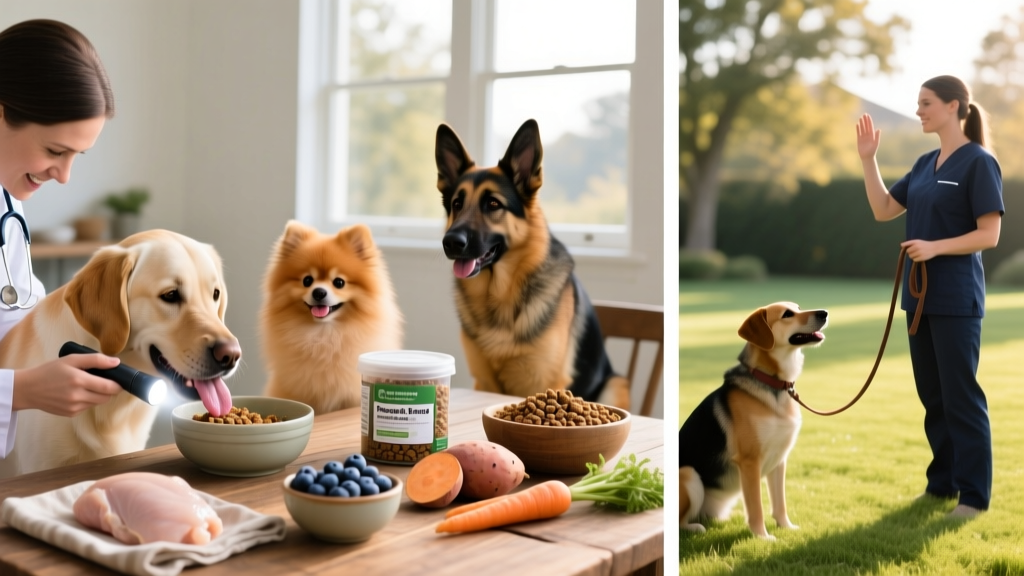
Nutritional Requirements by Life Stage and Condition
Before you search for a recipe for dog food, lock in the numbers your dog actually needs. The Merck Veterinary Manual and AAFCO nutrient profiles set minimums, but most dogs thrive slightly above those floors. Here are the targets I use when counseling owners.
| Life Stage / Condition | Protein (% DM) | Fat (% DM) | Calories/Day (50 lb / 23 kg dog) | Key Notes |
|---|---|---|---|---|
| Adult Maintenance | 22–28% | 12–18% | 900–1,100 kcal | AAFCO minimum 18% protein, 5.5% fat |
| Puppy (large breed) | 26–30% | 14–18% | 1,400–1,800 kcal | Calcium ≤ 1.5% DM to protect joints |
| Senior (8+ years) | 25–32% | 10–15% | 750–950 kcal | Higher protein counters sarcopenia |
| Active / Working | 28–35% | 20–30% | 1,500–2,200 kcal | Fat drives endurance; add omega-3s |
| Weight Loss | 28–35% | 8–12% | 650–800 kcal | High protein preserves lean mass |
| Kidney Disease (CKD) | 14–18% | 18–25% | 900–1,100 kcal | Phosphorus ≤ 0.6% DM; sodium restricted |
| Food Allergies | 24–30% | 14–20% | 900–1,100 kcal | Novel or hydrolyzed protein required |
DM means dry matter basis — the percentage after water is removed. Canned food is roughly 75% water, so a label showing 8% crude protein is actually around 32% DM. Always convert before comparing products.
Best Commercial Dog Foods in 2026: What to Look For
A reliable recipe for dog food starts with label literacy. Ignore front-of-bag marketing and flip straight to the back.
Label Red Flags vs. Green Lights
- Green: AAFCO statement reading "formulated to meet the nutritional levels established by the AAFCO Dog Food Nutrient Profiles" or "animal feeding tests using AAFCO procedures substantiate…"
- Green: Named animal protein (chicken, lamb, salmon) as the first ingredient by weight.
- Green: Guaranteed analysis listing minimum protein, minimum fat, maximum fiber, maximum moisture.
- Red: "Made for all life stages" fed to large-breed puppies — it may exceed safe calcium limits.
- Red: Generic terms like "meat by-products" without a named species.
- Red: Exotic proteins (kangaroo, alligator) marketed for everyday feeding — these are best reserved for elimination diet trials.
Top Recommended Commercial Foods
1. Hill's Science Diet Adult Healthy Mobility Large Breed — $55–$68 per 30 lb bag. Glucosamine and EPA from fish oil support joints. Meets AAFCO adult maintenance. Ideal for Labs, Goldens, and Shepherds over 2 years.
2. Royal Canin Veterinary Diet Hydrolyzed Protein HP — $85–$100 per 25 lb bag (prescription). Gold standard for food allergy elimination trials. Hydrolyzed soy protein is too small to trigger immune response.
3. Purina Pro Plan Savor Adult Shredded Blend — $48–$60 per 35 lb bag. 26% protein, 16% fat. Widely available, palatable, consistent quality control. Solid everyday pick for most adults.
4. Orijen Senior Dry Dog Food — $80–$95 per 25 lb bag. 38% protein, 15% fat on as-fed basis. High fresh-animal inclusion supports aging muscle mass. Calorie-dense so portion carefully.
5. JustFoodForDogs Pantry Fresh Chicken & White Rice — $7–$9 per 18 oz shelf-stable pack. Gently cooked, AAFCO-complete, refrigeration-free. Bridges the gap between kibble and homemade.
6. Nom Nom Fresh Turkey Recipe — $5–$8 per day for a 30 lb dog (subscription). Human-grade ingredients, lightly cooked, portioned by caloric need. USDA-verified supply chain.
7. Farmina N&D Ancestral Grain Chicken & Pomegranate — $65–$80 per 26 lb bag. Low-glycemic ancient grains (spelt, oats), 30% protein. Good middle ground for owners avoiding grain-free but wanting quality carbs.
8. Hill's Prescription Diet k/d Kidney Care — $75–$90 per 27.5 lb bag (prescription). Restricted phosphorus, supplemented omega-3s, B-complex vitamins. Clinically shown to extend survival in CKD dogs.
Prices reflect typical U.S. retail in 2026 and fluctuate with supply chain conditions. Always verify the AAFCO statement matches your dog's life stage.
How Much Should I Feed My Dog?
Bag feeding guides are starting points, not prescriptions. Individual metabolism can vary 20–30% between dogs of the same weight. Use the Resting Energy Requirement (RER) formula, then multiply by an activity factor.
RER = 70 × (body weight in kg)^0.75
For a 50 lb (23 kg) dog: 70 × (23^0.75) = 70 × 10.5 ≈ 735 kcal/day at rest. Multiply by the factor below:
| Category | Multiplier | Example (50 lb dog) |
|---|---|---|
| Neutered adult, average activity | 1.6× | ~1,175 kcal/day |
| Intact adult | 1.8× | ~1,325 kcal/day |
| Senior / low activity | 1.2–1.4× | ~880–1,030 kcal/day |
| Weight loss target | 1.0× (of ideal weight RER) | ~735 kcal/day (at ideal weight) |
| Active / working dog | 2.0–3.0× | ~1,470–2,200 kcal/day |
| Puppy (2–6 months) | 2.5–3.0× | Varies with growth curve |
| Puppy (6–12 months) | 2.0× | Varies with growth curve |
Adjust every 2–3 weeks based on body condition score. If ribs become harder to feel, reduce by 10%. If the waist disappears, cut another 10%. Your vet can confirm ideal weight at annual exams.
Homemade Dog Food Recipes: Proceed With Caution
A homemade recipe for dog food can be appropriate, but a 2023 study in the Journal of the American Veterinary Medical Association found that only 9 of 200 published recipes met all AAFCO nutrient minimums without supplementation. Most were deficient in calcium, vitamin D, zinc, or choline.
Sample Balanced Home-Cooked Template (Veterinary Nutritionist Approval Required)
This framework illustrates proportions. Exact gram amounts must be calculated for your dog's weight, life stage, and health status by a qualified professional.
- 40% lean protein: Cooked chicken breast, turkey, lean beef, or white fish (no seasoning, no onions, no garlic)
- 30% complex carbohydrate: Cooked sweet potato, brown rice, or quinoa
- 20% vegetables: Steamed green beans, carrots, zucchini, or spinach
- 10% supplement blend: Calcium carbonate or bone meal, fish oil (EPA/DHA), vitamin E, zinc, B-complex, iodine — dosed per kg body weight
A 50 lb dog typically needs roughly 800–1,000 mg elemental calcium per day to maintain a calcium-to-phosphorus ratio between 1.1:1 and 2:1. Missing this ratio is the single most common homemade-diet mistake.
Raw Diet Safety Considerations
If you're considering raw feeding, understand the documented risks. The AVMA discourages raw diets due to pathogen exposure. Salmonella and Listeria are shed in the stool of up to 30% of raw-fed dogs, creating zoonotic risk for household members. Nutritional imbalance is equally common — raw meat alone is severely calcium-deficient. If you pursue raw feeding, work with a veterinary nutritionist and follow HACCP-based handling protocols to reduce contamination risk.
Ingredients to Avoid in Any Dog Food Recipe
Whether you're evaluating kibble or building a homemade recipe for dog food, exclude these entirely:
- Grapes and raisins: Cause acute kidney failure; toxic dose as low as 0.05 oz/kg body weight.
- Onions, garlic, chives, leeks: Allium family compounds destroy red blood cells (Heinz body anemia). Garlic toxic at roughly 5 g/kg.
- Xylitol (birch sugar): Rapidly triggers insulin release and liver failure. Lethal dose ~100 mg/kg.
- Macadamia nuts: Cause tremors, hyperthermia, and weakness at doses as low as 2.4 g/kg.
- Cooked bones: Splinter and cause intestinal perforation or obstruction.
- Chocolate (especially dark/baking): Theobromine toxicity at 20 mg/kg (mild) to 60 mg/kg (seizures).
- Alcohol, caffeine, hops: No safe threshold for dogs.
If your dog ingests any of these, contact ASPCA Animal Poison Control: (888) 426-4435 (24/7, consultation fee applies) or your emergency vet immediately.
How to Transition to a New Dog Food
Sudden diet switches cause diarrhea in up to 40% of dogs due to gut microbiome disruption. Use a gradual 10-day protocol:
| Days | Old Food | New Food | Notes |
|---|---|---|---|
| 1–3 | 75% | 25% | Monitor stool consistency |
| 4–6 | 50% | 50% | Add 1 tsp plain canned pumpkin per 10 lb body weight if stools soften |
| 7–9 | 25% | 75% | Watch for appetite changes, gas |
| 10+ | 0% | 100% | Full transition complete |
For dogs with sensitive stomachs or IBD, stretch this to 14–21 days. If vomiting or persistent diarrhea occurs at any stage, hold the current ratio for 2–3 extra days before advancing. Consult your veterinarian if symptoms persist beyond 48 hours.
Does My Dog Need Supplements?
Most dogs eating an AAFCO-complete commercial diet do not need additional supplements. However, specific conditions and homemade diets create gaps that targeted supplementation can fill.
| Supplement | When to Add | Typical Dose | Evidence Level |
|---|---|---|---|
| Fish Oil (EPA/DHA) | Arthritis, skin allergies, CKD, senior dogs | 50–100 mg combined EPA+DHA per kg body weight/day | Strong — multiple RCTs |
| Glucosamine + Chondroitin | Hip dysplasia, osteoarthritis, large breeds 5+ years | 500–1,000 mg glucosamine/day for 50 lb dog | Moderate — mixed clinical data |
| Probiotics (Enterococcus faecium SF68) | Antibiotic recovery, stress diarrhea, food transitions | 1 capsule (1×10⁸ CFU) per day | Moderate |
| Calcium Carbonate | Mandatory for all homemade diets | ~800–1,000 mg elemental Ca/day for 50 lb dog | Essential (not optional) |
| Vitamin E | High-fat diets, homemade diets, skin conditions | 2–5 IU per kg body weight/day | Moderate |
| MCT Oil | Cognitive dysfunction, seizure adjunct therapy | Start at ¼ tsp per 10 lb, titrate up | Emerging |
Never double-supplement fat-soluble vitamins (A, D, E, K) without veterinary guidance — toxicity risk is real. Always consult your veterinarian before starting any supplement, especially if your dog takes medications (fish oil can interact with NSAIDs, for example).
Monitoring Success: Is the Diet Working?
The 9-Point Body Condition Score (BCS) System
A dog at ideal weight scores 4–5 out of 9. Here's how to check at home:
- Ribs: You should feel each rib easily with light fingertip pressure (like feeling your knuckles with a flat hand), but not see them protruding.
- Waist (top view):strong> Visible hourglass taper behind the ribcage.
- Abdominal tuck (side view):strong> The belly line angles upward from the ribcage to the hind legs.
Beyond Weight: Four Additional Indicators
- Coat quality: Shiny, smooth, minimal shedding beyond seasonal norms. Dull, flaky, or greasy coats signal fatty acid deficiency or food intolerance.
- Energy level: Consistent stamina through daily activity. Lethargy after meals may indicate blood sugar swings from excessive simple carbohydrates.
- Stool quality: Firm, formed, easy to pick up (score 2–3 on the Purina Fecal Scoring System). Consistently loose stools suggest fiber imbalance, food sensitivity, or parasite load.
- Muscle condition: Palpate the spine, hips, and shoulders monthly. Muscle wasting over the spine (prominent vertebrae) is an early sarcopenia sign in seniors, even if weight appears stable.
Track these metrics monthly. Photograph your dog from the same angles every 4–6 weeks — visual trends reveal what daily observation misses.
Frequently Asked Questions
What is the best dog food for my senior dog with kidney disease?
Prescription renal diets like Hill's k/d or Royal Canin Renal Support are clinically proven to extend survival in CKD dogs by reducing phosphorus load and supplementing B-vitamins. These require veterinary authorization. Do not attempt a homemade renal diet without a veterinary nutritionist — the phosphorus and protein restrictions are extremely precise.
Can I feed my dog a homemade or raw diet safely?
Yes, but only with a recipe formulated by a board-certified veterinary nutritionist and periodic blood work to verify nutrient adequacy. Raw diets carry additional pathogen risks for both dogs and humans. A 2024 FDA review found Salmonella in 25% of raw pet food samples tested. If you pursue homemade feeding, plan quarterly veterinary checkups with CBC, chemistry panel, and taurine levels (especially for predisposed breeds like Golden Retrievers).
How do I know if my dog is allergic to their food?
True food allergies affect roughly 1–2% of dogs with itchy skin (most allergies are environmental). Signs include year-round itching focused on paws, ears, and rear; chronic ear infections; and GI upset. The only reliable diagnosis is an 8–12 week strict elimination diet trial using a prescription hydrolyzed or novel-protein diet — followed by challenge feeding to confirm. Over-the-counter "limited ingredient" diets are not reliable for trials due to cross-contamination during manufacturing.
Is grain-free dog food dangerous?
The FDA investigated a potential link between grain-free diets (specifically those high in peas, lentils, and potatoes) and dilated cardiomyopathy (DCM) in non-predisposed breeds. As of 2025, the agency has not established causation, but the association remains under study. Unless your dog has a diagnosed grain allergy (rare — true grain allergy prevalence is under 1%), a diet including whole grains like rice, oats, or barley is a conservative, evidence-supported choice.
How often should I change my dog's food?
There is no nutritional benefit to rotating brands or flavors for most dogs. Frequent switching increases the risk of developing food sensitivities and GI upset. Stick with a food that meets your dog's BCS targets, coat quality, and stool consistency. Change only when life stage, health condition, or product availability requires it — and always use the 10-day transition protocol.
Does my puppy need a large-breed-specific formula?
If your puppy will mature to over 50 lb (23 kg), yes. Large-breed puppy formulas cap calcium at ≤ 1.5% DM and control caloric density to slow growth rate, reducing the risk of developmental orthopedic diseases like hip dysplasia and osteochondrosis. Look for an AAFCO statement specifying "growth" or "all life stages including growth of large-size dogs."
Aaron Whyte
All our authors care for dogs every day — read more of their work on the authors page.